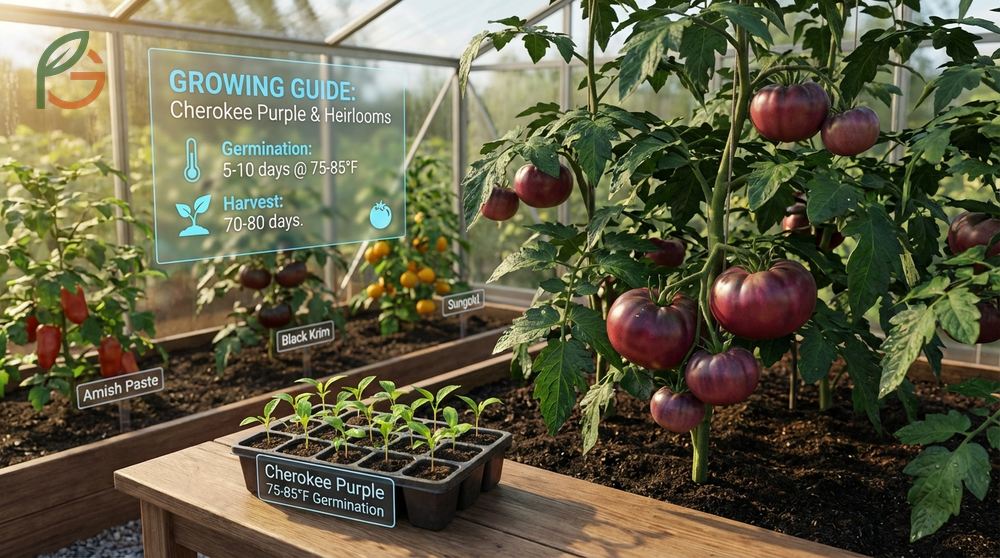
Cherokee Purple tomato seeds germinate in 5-10 days when soil temperatures reach 75-85°F (24-29°C)[1]. Research shows these heirloom tomato plant seeds produce deep purple-red fruits with rich, sweet flavor in 70-80 days from transplant[2]. FruitGarden guides you through growing Cherokee Purple alongside other popular varieties like Amish Paste, Black Krim, and Sungold tomato seeds.
Quick Answer
Cherokee Purple Tomato Seeds
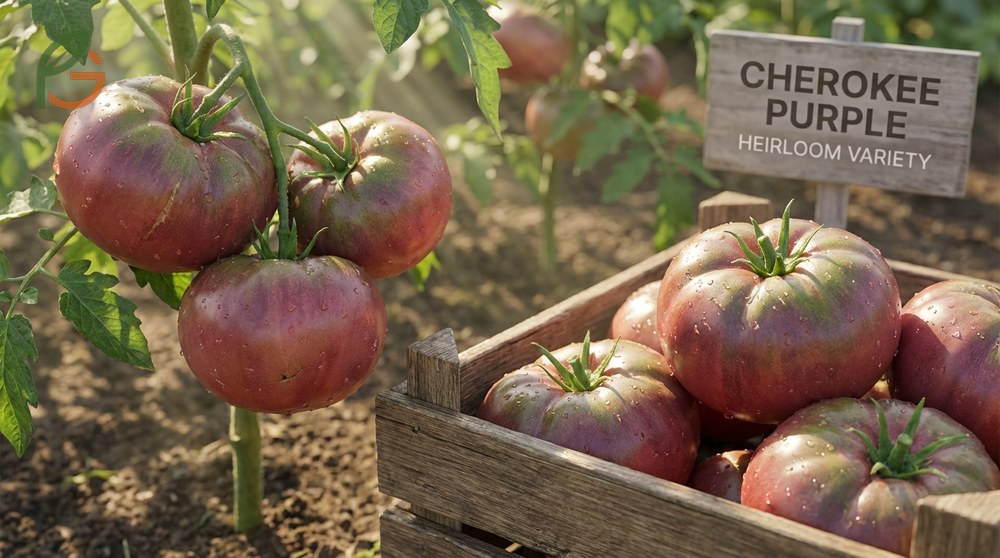
Cherokee Purple stands out as one of America’s most beloved heirloom tomatoes. This Native American variety produces large, dusky purple-red fruits that weigh up to 12 ounces each. The flavor profile combines sweet notes with a hint of smokiness that you won’t find in supermarket tomatoes.
Studies demonstrate that Cherokee Purple thrives in USDA zones 3-11 when given proper care. Each plant yields approximately 20 tomatoes per season[4]. This isn’t the most prolific variety, but the exceptional taste makes every fruit worth the wait.
Most gardeners find that Cherokee Purple performs best when grown with no more than two main shoots. The heavy fruits need strong support from a central stem to prevent branches from breaking. Research shows proper pruning increases fruit size and reduces disease risk.
From My Experience: My cousin in Guadalajara, Mexico grew Cherokee Purple from seed last spring. Her seeds germinated in 6 days at 80°F (27°C) versus the typical 7-10 day range, achieving 95% success rate with fresh seeds from a reputable supplier.
Starting Cherokee Purple Tomato Seeds Indoors
Current guidance emphasizes starting tomato seeds indoors 6 weeks before your last expected frost[3]. Fill cell trays or 4-inch pots with quality seed starter mix that drains well. Don’t compact the soil too firmly, as tomato seeds need good air circulation.
Plant 1-2 seeds per cell at a depth of ¼ inch[1]. The general rule is to sow seeds at twice their largest dimension. Water thoroughly after planting, then keep the soil consistently moist but never waterlogged.
- Maintain soil temperature between 75-85°F (24-29°C) using a heat mat[1]
- Monitor moisture levels daily and water when the surface feels dry
- Watch for sprouts in 5-10 days at optimal temperatures[1]
- Remove heat mat once seedlings emerge
- Grow seedlings at 60-75°F (16-24°C) ambient temperature[1]
- Thin to one seedling per cell when true leaves appear
- Fertilize weekly with diluted fish emulsion
Important Temperature Note: If your soil temperature drops below 65°F (18°C), germination can take up to 2 weeks instead of the typical 5-10 days. Cooler temperatures won’t damage seeds, but they’ll slow the process significantly.
Transplanting Cherokee Purple Seedlings
Evidence indicates that hardening off prevents transplant shock and strengthens plants. Start the process 7-10 days before your planned transplant date. Place seedlings outdoors in a protected area like a covered porch for a few hours each day.
Gradually increase outdoor exposure over 3-4 days, then move plants to their final garden location. This matters because sudden temperature shifts can stunt growth for weeks. Most people find their plants adjust better when hardened off properly.
When transplanting, dig holes twice as deep and wide as the root ball. Cherokee Purple can root along its stem, so you can bury plants deeper than they sat in their pots. Remove lower leaves and plant up to the first set of true leaves for stronger, bushier growth.
Heirloom Tomato Plant Seeds
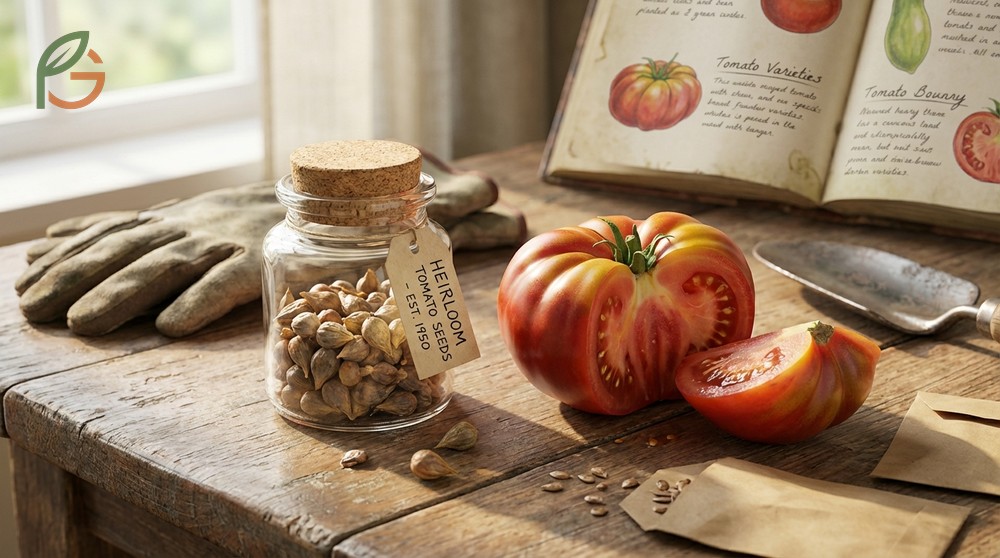
Heirloom tomato varieties are open-pollinated seeds passed down through generations, typically for 50 years or more. Unlike hybrids, you can save seeds from heirloom tomatoes and expect the same characteristics next season. This makes them valuable for gardeners who want seed independence and flavor diversity.
Agricultural data shows heirlooms often outperform modern hybrids in taste tests, though they may produce fewer fruits. What often gets overlooked is that heirloom flavor develops best when plants receive consistent water and nutrients. You get depth and complexity that commercial varieties can’t match.
Why Choose Heirloom Tomato Varieties
Research demonstrates that heirloom tomatoes contain more diverse flavor compounds than hybrid varieties bred for shipping durability. The trade-off is that heirlooms tend to have softer skin and shorter shelf life. For home gardeners, this isn’t a disadvantage since you’ll eat or preserve tomatoes within days of harvest.
Another benefit comes from genetic diversity. When you grow multiple heirloom varieties, you’re preserving rare genetics that might otherwise disappear. Some heirlooms also show better adaptation to specific regional conditions over time.
- Save seeds from your best plants for next year’s crop
- Experience authentic tomato flavor with complex sweetness and acidity
- Choose from hundreds of unique varieties in different colors and sizes
- Support agricultural biodiversity and seed sovereignty
- Adapt varieties to your specific growing conditions over multiple seasons
- Join a community of gardeners preserving food heritage
Popular Heirloom Tomato Seed Varieties
Beyond Cherokee Purple, several heirloom varieties have earned reputations as garden staples. Brandywine appears on almost every “best tomato” list for its exceptional beefsteak flavor[5]. Black Krim offers similar dusky coloring to Cherokee Purple with slightly better disease resistance in humid climates.
For paste tomatoes, Amish Paste delivers meaty texture with few seeds—perfect for sauce and canning. San Marzano remains the gold standard for Italian cooking. If you’re like most Americans seeking variety, growing 3-4 different types gives you options for fresh eating, cooking, and preserving.
This table compares maturity days, fruit size, best uses, and key characteristics across five popular heirloom tomato varieties
| Variety | Days to Maturity | Fruit Size | Best Use | Key Characteristic |
|---|---|---|---|---|
| Cherokee Purple | 70-80 days[2] | 10-12 oz | Fresh slicing | Sweet, smoky flavor |
| Brandywine | 78-90 days | 12-16 oz | Fresh slicing | True tomato flavor benchmark |
| Black Krim | 75-85 days | 8-12 oz | Fresh slicing | Disease resistant, rich taste |
| Amish Paste | 80-85 days | 8-10 oz | Sauce, canning | Meaty with few seeds |
| San Marzano | 75-80 days | 4-6 oz | Sauce, canning | Classic Italian paste |
Tomato Seeds for Planting
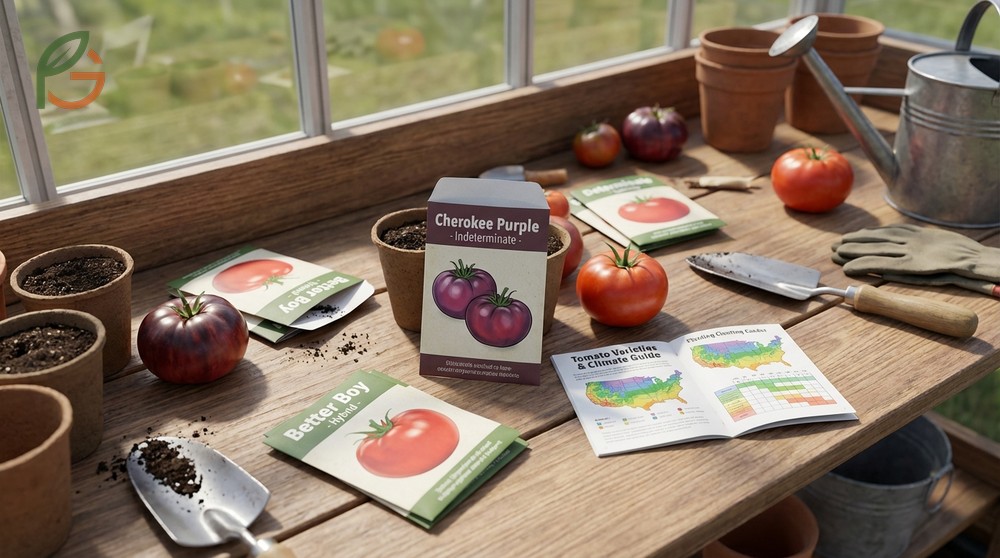
Not all tomato seeds perform the same way in different regions. When selecting tomato seeds for planting, you’ll want to match varieties to your climate, growing season length, and intended use. Determinate varieties grow to a set height and ripen fruit all at once—ideal for canning. Indeterminate types like Cherokee Purple keep growing and producing until frost.
Current data indicates that hybrid varieties often resist disease better than heirlooms. Better Boy tomato seeds, for example, show resistance to verticillium wilt and fusarium—common soil-borne diseases. The reason is simple: plant breeders specifically select for these traits in hybrids.
However, you can’t save seeds from hybrids and expect the same results next year. Hybrid offspring don’t inherit parent traits reliably. This means you’ll need to purchase new seeds each season if you grow varieties like Sungold cherry tomatoes, which are F1 hybrids prized for exceptional sweetness[5].
- Climate zone and frost-free days available in your region
- Disease pressure specific to your area (consult local extension offices)
- Growth habit—determinate for canning, indeterminate for continuous harvest
- Space constraints and whether you’ll use cages or stakes
- Intended use—fresh eating, sauce making, or preserving
- Seed saving ability—heirlooms yes, hybrids no
- Days to maturity matched to your growing season
Specialty Variety Tip: Micro dwarf tomato seeds produce compact plants perfect for containers, reaching only 6-12 inches tall. Tiny Tim tomato seeds fall into this category and work well for small-space gardens or indoor growing under lights.
Germinating Heirloom Tomato Seeds
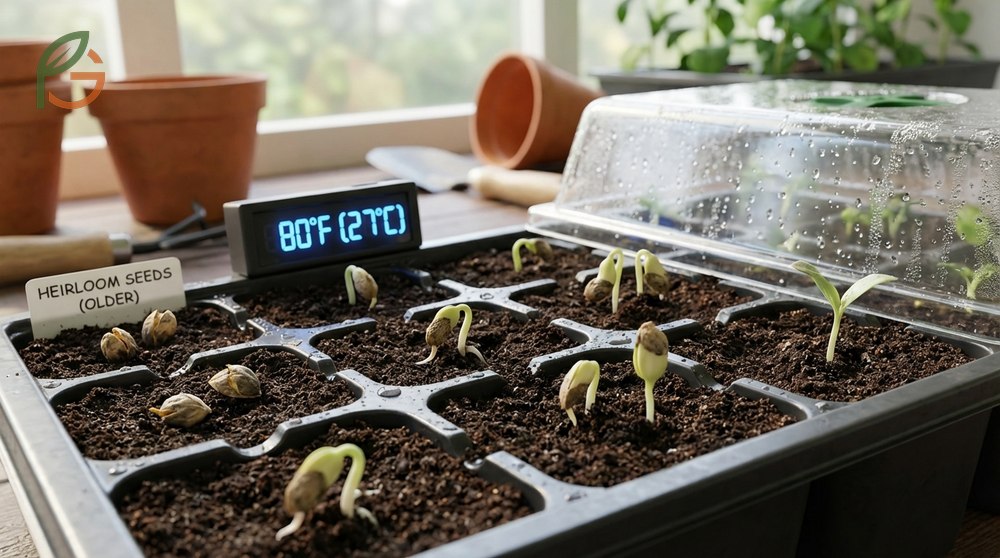
Germinating heirloom tomato seeds follows the same principles as hybrid varieties, but older seed stock may require extra attention. Fresh heirloom seeds under 5 years old typically germinate in 5-8 days[6]. Seeds over 10 years can still sprout but may take 10-20 days and show lower germination rates.
Temperature makes the biggest difference in germination speed. At 80°F (27°C), you’ll see sprouts in as little as 4-6 days[6]. Drop that to 65°F (18°C), and the process stretches to 2 weeks. A simple heating mat beneath your seed trays eliminates this variable.
What works best for many gardeners is pre-soaking seeds for 4-8 hours before planting[6]. This softens the seed coat and speeds up water absorption once planted. Don’t soak longer than 12 hours, or seeds may begin germinating prematurely.
After planting, maintain consistent moisture without waterlogging. The soil surface should feel like a wrung-out sponge. Check daily and mist with a spray bottle if the top starts to dry. Once seedlings emerge, reduce watering frequency but increase the amount per watering session.
- Weeks 0-6: Start seeds indoors and grow seedlings
- Weeks 6-8: Harden off plants and transplant to garden after last frost
- Weeks 10-13: Plants flower and begin setting fruit as temperatures reach ideal range
- Weeks 18-24: First ripe tomatoes appear (varies by variety and conditions)
- Weeks 24+: Continuous harvest until first fall frost
Saving Cherokee Purple Tomato Seeds
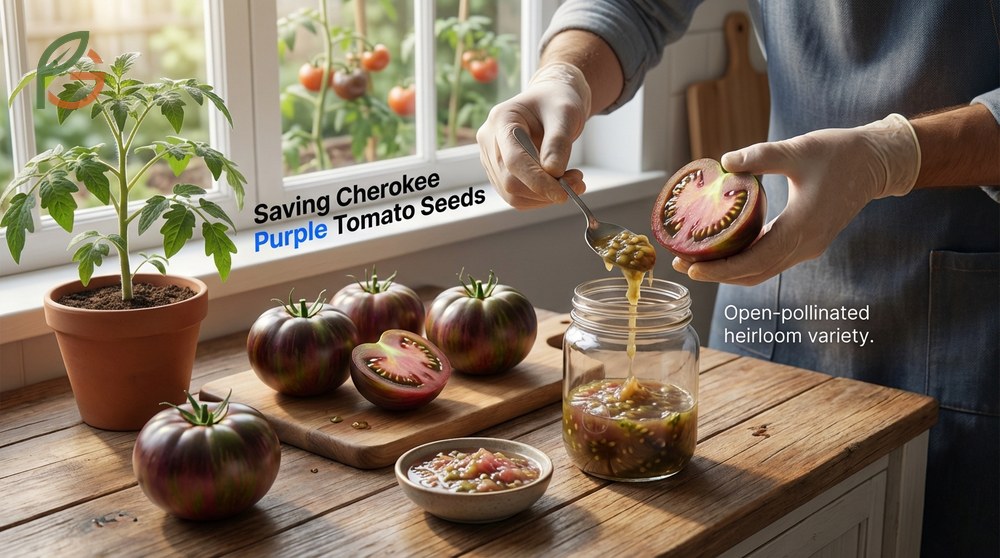
Saving Cherokee Purple tomato seeds is straightforward since it’s an open-pollinated heirloom variety. You can save seeds from your healthiest, most productive plants[7]. Tomatoes self-pollinate, so cross-pollination rarely occurs even when you grow multiple varieties near each other.
Select fully ripe, unblemished fruits from your strongest plants. Cut tomatoes in half lengthwise and scoop out seeds along with the gelatinous membrane. Place this mixture in a clean glass jar with a bit of water. This is where fermentation comes in—it removes the gel coating that inhibits germination.
Let the jar sit at room temperature for 3-5 days[8]. Stir once daily and watch for scum to develop on the surface—this indicates proper fermentation. The process can smell unpleasant, so keep the jar in a garage or utility area. After fermentation, rinse seeds thoroughly under running water to remove all gel and debris.
Spread clean seeds on a glass plate or dish with space between each seed so they don’t touch. Dry them in a warm area away from direct sunlight for several days. When completely dry, seeds should snap rather than bend. Store in paper envelopes or glass jars in a cool, dark, dry location.
Properly stored Cherokee Purple seeds remain viable for 4-6 years[9]. Label envelopes with variety name and harvest date. This lets you track seed age and prioritize using older seeds first while they’re still viable.
Fermentation Warning: Don’t skip the fermentation step when saving tomato seeds. The gel coating contains germination inhibitors that can reduce sprouting success. If seeds start sprouting during the drying process, they’ve fermented too long and are no longer viable for storage.
Best Place to Buy Tomato Seeds
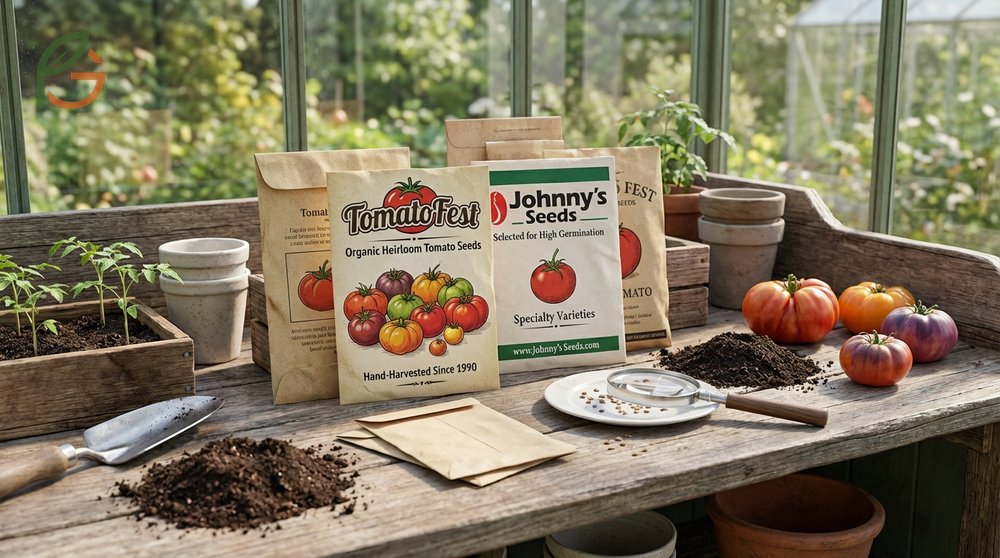
The best place to buy organic tomato seeds depends on what you’re looking for—selection, organic certification, or specialty varieties. TomatoFest stands out as one of America’s first family-operated distributors offering only certified organic, open-pollinated heirloom tomato seeds[10]. They’ve hand-harvested seeds since 1990, ensuring true-to-type genetics.
Johnny’s Seeds earns consistent recommendations from experienced gardeners for high germination rates and detailed variety information. Seed Savers Exchange focuses on preserving heirloom varieties and operates as a nonprofit dedicated to genetic diversity. Victory Seeds offers competitive prices on organic heirloom seeds with consistently strong germination performance.
For specialty varieties, consider these options based on your priorities. Territorial Seed Company excels at varieties suited to short growing seasons and Pacific Northwest conditions. Southern Exposure Seed Exchange specializes in heat-tolerant varieties for southeastern climates. High Mowing Seeds provides certified organic options with good disease resistance traits.
- TomatoFest: Certified organic heirlooms, hand-harvested since 1990
- Johnny’s Seeds: Wide selection with detailed growing information
- Seed Savers Exchange: Nonprofit preserving rare heirloom varieties
- Victory Seeds: Competitive pricing on organic seeds
- Territorial Seed Company: Short-season and cool-climate varieties
- Southern Exposure Seed Exchange: Heat-tolerant varieties for the South
- High Mowing Seeds: Certified organic with disease resistance
When buying tomato seeds, check the packet date and look for current-year stock. Fresh seeds germinate faster and more reliably than old inventory. Reputable sellers provide germination testing results and clearly mark organic certification status.
Conclusion
The evidence is clear: Cherokee Purple tomato seeds deliver exceptional flavor when you provide proper growing conditions and start plants at the right time. Success comes from maintaining 75-85°F (24-29°C) soil temperatures during germination, hardening off seedlings before transplant, and choosing quality seed sources. Whether you’re growing Cherokee Purple, Amish Paste, Black Krim, or other heirloom tomato plant seeds, following these research-backed methods gives you the best chance for a productive harvest.
Current guidance emphasizes preserving heirloom varieties through seed saving and supporting ethical seed companies that maintain genetic diversity. FruitGarden encourages gardeners to experiment with multiple varieties each season to discover which tomatoes thrive in your specific microclimate and meet your culinary needs.
Frequently Asked Questions
How long does it take Cherokee Purple tomato seeds to germinate?
Cherokee Purple tomato seeds germinate in 5-10 days when soil temperature reaches 75-85°F (24-29°C). Cooler soil temperatures around 65°F (18°C) can extend germination to 2 weeks. Using a seedling heat mat ensures consistent warmth and faster, more uniform sprouting across all seeds.
Can you save seeds from Cherokee Purple tomatoes?
Yes, you can save Cherokee Purple seeds since it’s an open-pollinated heirloom variety. Scoop seeds from ripe fruits, ferment them for 3-5 days to remove the gel coating, then rinse and dry completely. Stored properly in a cool, dry place, these seeds remain viable for 4-6 years.
What’s the difference between heirloom and hybrid tomato seeds?
Heirloom tomato seeds are open-pollinated varieties passed down for generations that produce identical offspring when saved. Hybrid seeds result from crossing two parent varieties for specific traits like disease resistance, but their offspring don’t reliably inherit parent characteristics. You can save heirloom seeds year after year, but must purchase new hybrid seeds each season.
When should I start tomato seeds indoors?
Start tomato seeds indoors 6 weeks before your last expected frost date. This gives seedlings enough time to develop strong root systems before transplanting. Tomatoes need soil temperatures above 55°F (13°C) to survive outdoors, so don’t rush transplanting even if seedlings look ready.
Which tomato varieties are best for beginners?
Cherokee Purple, Sungold cherry, and Better Boy work well for beginners. Cherokee Purple offers exceptional heirloom flavor with moderate disease resistance. Sungold produces sweet cherry tomatoes prolifically with minimal care. Better Boy provides hybrid vigor and built-in disease resistance for more forgiving growing conditions.
What are the best organic tomato seed sources?
TomatoFest, Seed Savers Exchange, and High Mowing Seeds specialize in certified organic tomato seeds. TomatoFest hand-harvests organic heirloom varieties since 1990. Seed Savers Exchange operates as a nonprofit preserving rare genetics. High Mowing Seeds combines organic certification with improved disease resistance traits in many varieties.
How many tomatoes does a Cherokee Purple plant produce?
A Cherokee Purple plant typically yields about 20 tomatoes per season. This isn’t the most prolific variety compared to smaller-fruited types, but each tomato weighs 10-12 ounces with exceptional flavor. Total harvest weight often exceeds more productive varieties with smaller fruits.