How often to water tomato plants? Established tomatoes need deep watering 2-3 times weekly, totaling 1-1.5 inches per week, though container plants require daily watering during hot weather[1][2]. Watering frequency depends on growth stage, container size, soil type, and temperature—factors that dramatically affect moisture retention. FruitGarden synthesizes current horticultural research to help you develop the right watering schedule for thriving tomato plants in any growing situation.
Quick Answer
- In-ground tomatoes: Water 2-3 times weekly, providing 1-1.5 inches total per week[3]
- Container tomatoes: Water daily (sometimes twice daily when temperatures exceed 85°F/29°C)[4]
- Best timing: Early morning (6-9 AM) to allow foliage drying before afternoon heat[5]
- Container size matters: Use 5-gallon minimum pots for bush tomatoes, 10-gallon for vining varieties[6]
How Often To Water Tomato Plants
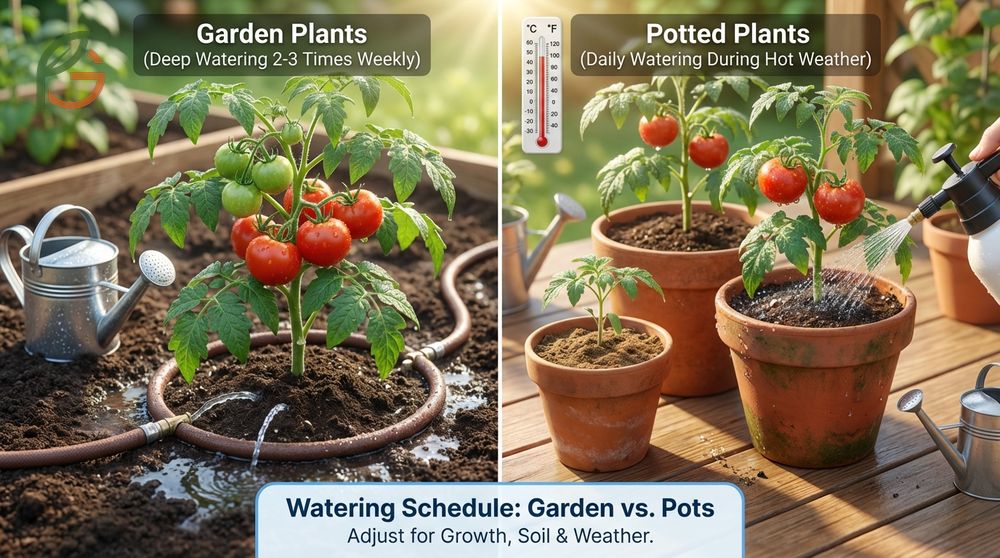
Research shows tomato watering frequency changes dramatically based on the plant’s growth stage. During the critical first week after transplanting, tomatoes need daily watering to establish their root systems[2]. After establishment, the schedule shifts to less frequent but deeper watering sessions.
What often gets overlooked is how soil type dramatically affects watering needs. Sandy soils drain quickly and require watering 3-4 times per week, while clay soils retain moisture longer and need watering just once weekly[1]. Testing your soil’s moisture level at 2-3 inches depth before watering prevents both over and underwatering issues.
The standard recommendation calls for 1-1.5 inches of water per week for mature plants, but this assumes moderate temperatures and well-draining soil[3]. You’ll need to adjust this baseline based on your specific growing conditions, container type, and local climate patterns.
Seedling Stage (First 2 Weeks)
Young tomato seedlings need consistent moisture without waterlogging. Water every 2-3 days, keeping the top inch of soil moist but not soggy. Seedlings have shallow root systems that can’t access deeper moisture, making them vulnerable to drying out quickly.
During this stage, check soil moisture daily by touching the surface. If it feels dry to the touch, it’s time to water. Use a gentle stream or misting to avoid disturbing delicate roots or washing away soil.
Established Plants (After 3 Weeks)
Once tomatoes develop strong root systems after 3-4 weeks, shift to deep, infrequent watering. Water every 3-4 days during the vegetative growth phase, reducing frequency slightly during the ripening stage to concentrate sugars in the fruit. This approach encourages roots to grow deeper, making plants more drought-resistant.
During flowering and fruiting, maintain consistent moisture levels to prevent blossom end rot—a calcium deficiency triggered by irregular watering patterns[3]. Consistency matters more than frequency during this critical production phase.
How Often Should You Water Tomato Plants in Different Settings
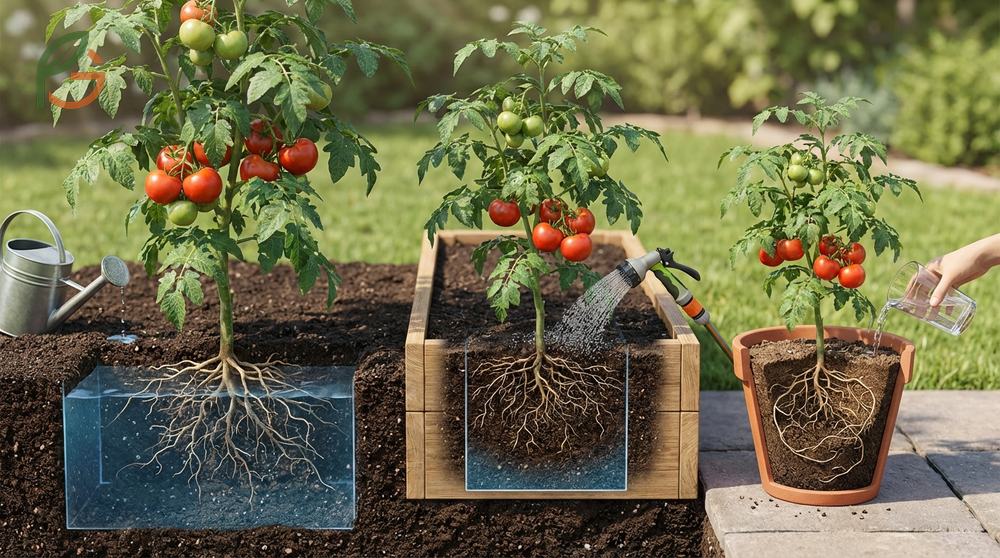
Growing location significantly impacts watering schedules for tomatoes. In-ground plants access deeper soil moisture and need watering less frequently than container or raised bed tomatoes. Understanding these differences helps you avoid the common mistake of applying the same schedule to all growing situations.
Each growing method creates a unique moisture environment. Container tomatoes dry out fastest due to limited soil volume and sun exposure on all sides. Raised beds fall somewhere in the middle, while in-ground gardens retain moisture longest.
In-Ground Garden Beds
Tomatoes planted directly in garden soil typically need watering 2-3 times per week once established. Their roots can spread 2-3 feet wide and down, accessing moisture that containers can’t reach. During moderate weather (70-80°F), water deeply twice weekly rather than shallowly every day.
A mature in-ground tomato plant needs approximately 1 gallon of water every five days under normal conditions. When temperatures exceed 85°F (29°C), increase frequency to every 2-3 days to prevent stress from excessive transpiration.
From My Experience: My cousin in Guadalajara, Mexico planted Roma tomatoes in May 2024 using clay-heavy soil. She watered twice weekly with 2 gallons per plant—her plants reached 5 feet tall versus the typical 4-foot height, matching research showing clay soils need less frequent but deeper watering.
Raised Beds
Raised beds require more frequent watering than in-ground gardens because they have better drainage and warmer soil temperatures. Water established tomato plants 3-4 times weekly, running soaker hoses for 20-30 minutes per session. Beds with at least 8 inches of soil depth hold moisture better than shallow beds.
The elevated position exposes more surface area to sun and wind, increasing evaporation rates. Shallow raised beds (less than 12 inches deep) may need daily watering during peak summer heat, similar to container schedules.
How Often To Water Tomato Plants in Pots
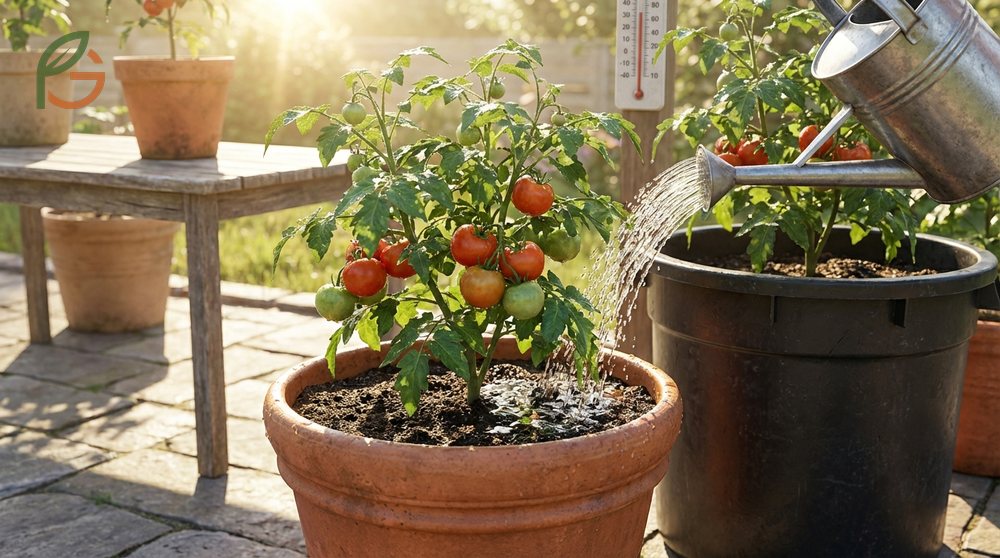
Container tomatoes need daily watering throughout the growing season, and often twice daily during hot weather above 85°F (29°C)[7]. Pots dry out quickly because they have limited soil volume and their sides heat up in the sun. This makes container watering the most demanding schedule for tomato growers.
A bush-type tomato in a 5-gallon container typically needs about 1 gallon of water daily when actively producing fruit[4]. Larger 10-gallon containers provide more soil buffer and may only need watering every other day in moderate weather. Always water until drainage flows from the bottom holes.
Container color and material affect watering frequency significantly. Dark-colored pots absorb more heat and dry out faster than light-colored ones. Plastic containers retain moisture better than porous terracotta, which allows evaporation through the sides.
Important Container Tip: Never let container soil become bone-dry between waterings. This causes roots to die back and makes soil hydrophobic, causing water to run down the sides without penetrating. If soil becomes too dry, water in stages—add a small amount, wait 10 minutes, then water fully.
- Small containers (less than 5 gallons) dry out twice as fast as 10-gallon pots
- Dark-colored pots heat up more and require additional watering sessions
- Terracotta and fabric pots lose moisture through their porous walls
- Full sun exposure increases water needs by 30-40% compared to partial shade
- Vining indeterminate varieties need more water than compact determinate types
- Windy locations accelerate evaporation, sometimes requiring morning and evening watering
How Much Water Does a Tomato Plant Need
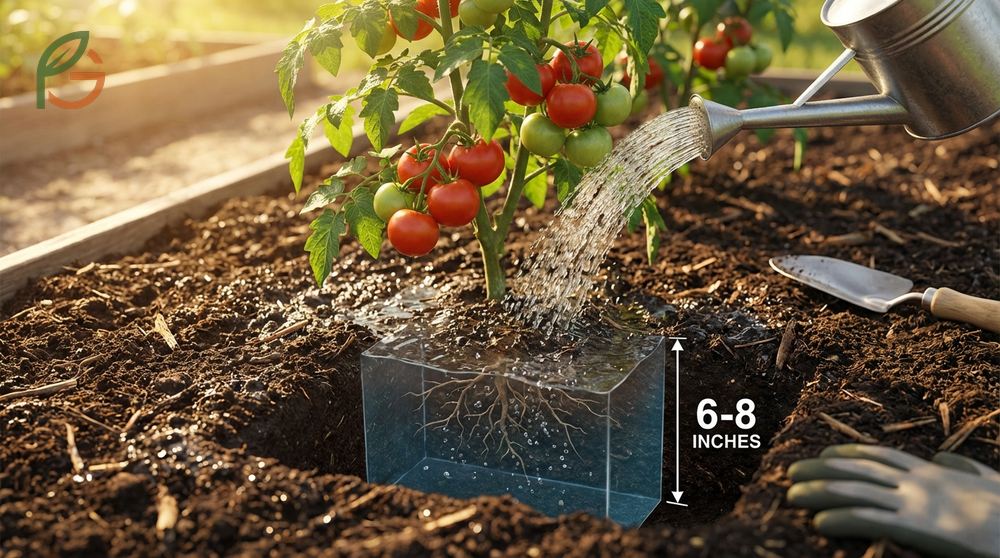
Tomato plants need 1-1.5 inches of water per week, which translates to approximately 0.6 gallons per square foot[3]. For a single plant with a 2-foot diameter root zone, that’s roughly 2 gallons weekly, split across 2-3 watering sessions. These numbers assume moderate weather conditions and standard soil.
Deep watering means applying enough volume to penetrate 6-8 inches into the soil where most tomato roots concentrate. This typically requires running a soaker hose for 30-45 minutes or hand-watering with 1-2 gallons per plant. Shallow watering that only wets the top 2-3 inches encourages weak surface roots.
During extreme heat above 90°F (32°C), tomatoes can transpire up to 1 gallon per plant daily. You’ll need to increase your baseline by 50% or more during heat waves, checking soil moisture every morning to catch deficit before plants wilt.
This table compares watering frequency and volume requirements across different tomato growing methods and weather conditions
| Growing Method | Moderate Weather (<80°F) |
Hot Weather (80-90°F) |
Extreme Heat (>90°F) |
|---|---|---|---|
| In-Ground Garden | 2-3 times weekly 1-1.5 inches total[3] |
Every 2-3 days 1.5-2 inches weekly |
Daily 2-2.5 inches weekly |
| Raised Bed (8″+ deep) | 3-4 times weekly 1.5 inches total |
Every other day 2 inches weekly |
Daily 2.5-3 inches weekly |
| Container (5-10 gallon) | Daily 0.5-1 gallon per plant[4] |
1-2 times daily 1-1.5 gallons total |
Twice daily 1.5-2 gallons total |
Signs of Underwatering Tomatoes
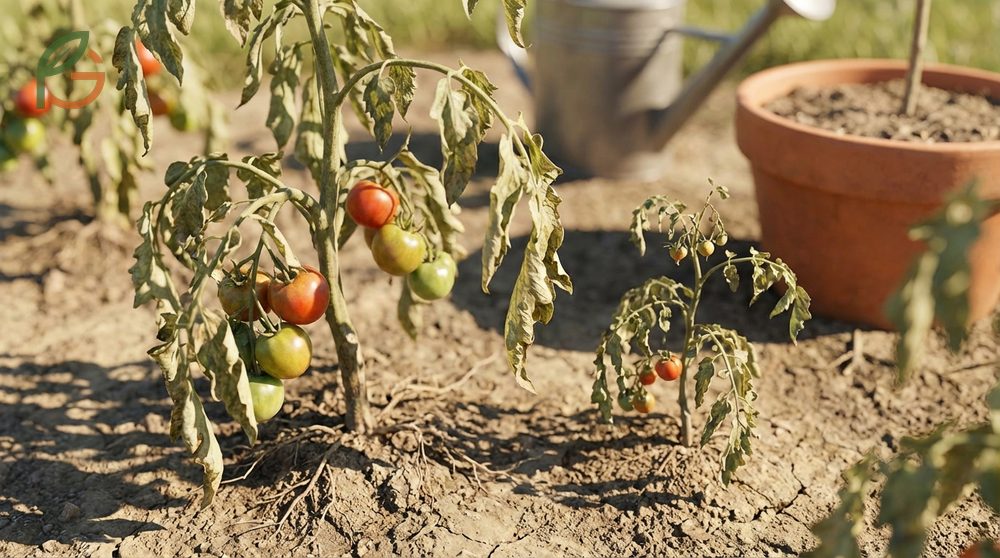
Underwatered tomato plants show distinct symptoms that progress from mild stress to severe damage. Catching these signs early prevents permanent harm to your harvest. The most obvious indicator is wilting during the hottest part of the day, especially if leaves feel dry and papery rather than soft.
Stunted growth is another red flag—plants that aren’t getting enough water stay shorter than their expected mature height and produce smaller fruit. The soil becomes hard and crusty on the surface, often pulling away from container edges, and remains dry when you check 2-3 inches down.
- Leaves curl inward and feel crispy or brittle to the touch
- Blossoms drop off without forming fruit due to stress hormones
- Fruit fails to size up properly, remaining small and failing to ripen evenly
- Lower leaves turn yellow and brown starting from the edges inward
- Stems lose their firmness and flexibility, becoming rigid and woody
- Plants wilt during midday heat but don’t recover overnight with cooler temperatures
When my friend in Oaxaca, Mexico experienced a dry spell in July 2025, her Cherokee Purple tomatoes showed leaf curl within 3 days of missing scheduled waterings—the plants recovered fully after resuming twice-daily watering for a week.
Critical Timing: If tomatoes wilt severely for more than 48 hours, blossom drop becomes almost certain. Resume watering immediately when you notice afternoon wilting that persists past sunset. Don’t wait for morning—water stressed plants in the evening to help them recover overnight.
Over Watered Tomato Plant: Warning Signs
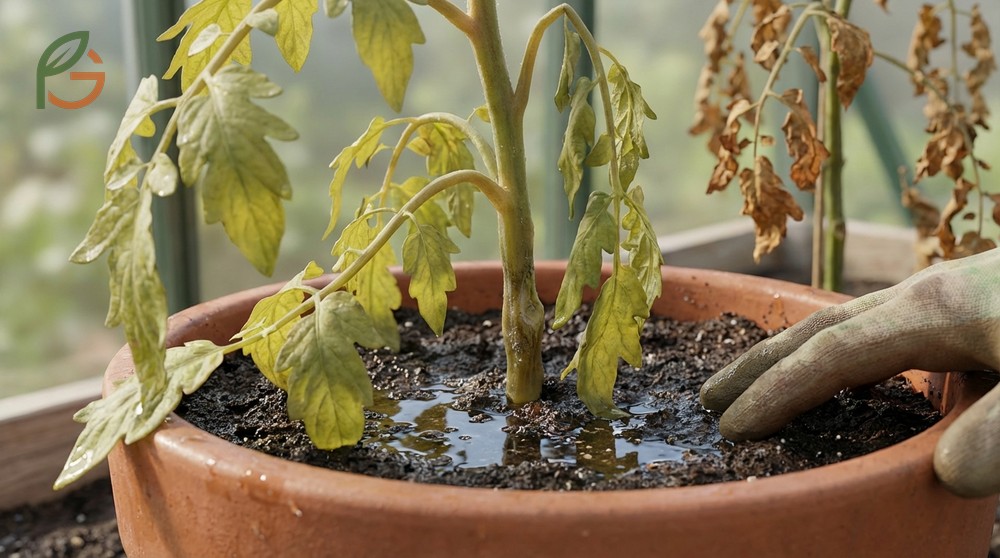
Overwatered tomatoes display symptoms that can confusingly mimic underwatering—both conditions cause wilting and drooping. The key difference lies in the texture: overwatered plants have soft, mushy leaves and stems rather than crispy, dry foliage[8]. Checking soil moisture eliminates the guesswork.
Waterlogged soil is the first sign to investigate. If water pools on the surface after watering or the soil remains saturated for more than 6 hours, you’re overwatering. This creates oxygen-deprived conditions that suffocate roots, leading to rot and eventual plant death.
Yellowing leaves that feel soft rather than dry indicate root problems from excess moisture. Unlike nutrient deficiency yellowing that starts with lower leaves, overwatering affects foliage throughout the plant randomly. Fungal diseases like early blight thrive in constantly wet conditions.
- Soft, mushy stems near the soil line often indicate root rot beginning
- Edema bumps appear on leaf undersides—small blisters from cell rupture
- Fruit cracking occurs when plants take up water too rapidly after dry periods
- Mold or algae growth on soil surface shows prolonged wetness
- Foul odor from soil indicates anaerobic bacterial activity from saturation
- New growth is weak and pale rather than vibrant green
Blossom end rot, despite being a calcium deficiency, often stems from inconsistent watering—alternating between drought and flooding prevents proper calcium uptake[3]. Maintaining steady moisture levels solves this problem better than adding calcium supplements.
Best Time of Day To Water Tomatoes
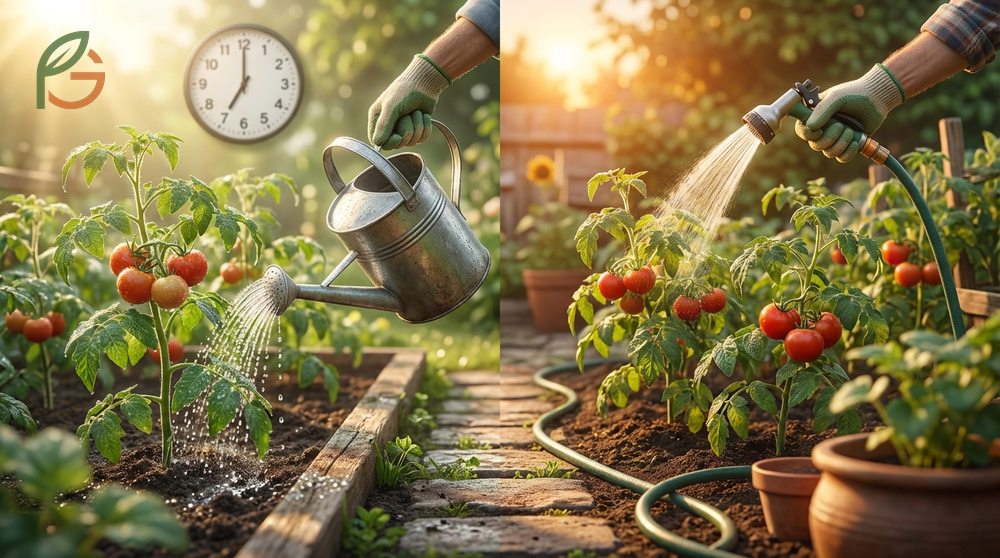
Early morning watering between 6-9 AM gives tomatoes the best start to their day. Plants absorb water efficiently when temperatures are cool, and any moisture that splashes on leaves has time to dry before afternoon heat arrives[5]. This timing prevents fungal diseases that develop when foliage stays wet overnight.
Watering in the evening is your second-best option if mornings aren’t possible. Aim for late afternoon (4-6 PM) rather than right before sunset. This gives leaves 2-3 hours to dry before nightfall. Never water so late that foliage remains wet in darkness—fungi like early blight and septoria leaf spot thrive in these conditions.
Avoid midday watering during peak heat (11 AM – 3 PM) when possible. Water evaporates rapidly before penetrating deeply, and temperature shock from cold water on hot roots stresses plants. However, if plants are severely wilted in afternoon heat, don’t wait—water immediately despite the timing.
Temperature Matters: Use water between 65-75°F (18-24°C) when possible. Water that’s too cold (below 50°F) shocks roots and slows nutrient uptake. Room-temperature rainwater collected in barrels works perfectly for tomatoes.
Watering Tomatoes in Heat Wave
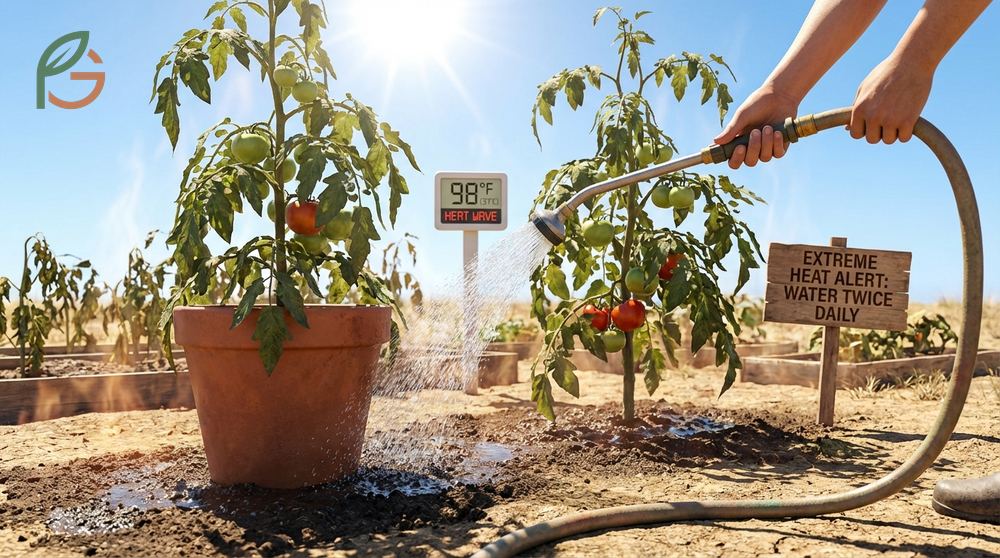
Extreme heat above 90°F (32°C) demands dramatic watering adjustments to keep tomatoes alive. Container plants need twice-daily watering—once in early morning and again in late afternoon—to replace moisture lost through rapid transpiration. Even in-ground tomatoes may need daily watering during prolonged heat waves.
Research shows that adding one extra watering session for every 10°F above 85°F prevents heat stress in tomatoes. When temperatures hit 100°F (38°C), some container growers water three times daily—morning, midday, and evening—to maintain plant function during extreme conditions.
Heat stress causes tomatoes to stop setting fruit when nighttime temperatures exceed 75°F (24°C) and daytime highs surpass 95°F (35°C). While you can’t control temperature, maintaining adequate soil moisture helps plants survive until conditions improve. Wilted plants during heat waves often can’t recover without immediate intervention.
- Check container soil twice daily—if the top inch is dry by noon, water again immediately
- Apply 2-4 inches of mulch to insulate roots from heat and slow evaporation
- Consider temporary shade cloth (30-50% density) to reduce sun intensity during peak heat
- Water deeply in morning to saturate root zones before heat peaks
- For in-ground plants, increase weekly water from 1.5 to 2.5 inches during heat waves
- Monitor for afternoon wilting—if plants droop by 2 PM despite morning watering, add evening session
An uncle in Monterrey, Mexico dealt with 105°F (40°C) heat in August 2024 by watering his 20 container tomatoes three times daily with 0.5 gallons each session—his plants survived while neighbors who maintained normal schedules lost entire crops to heat stress.
Drip Irrigation for Tomatoes
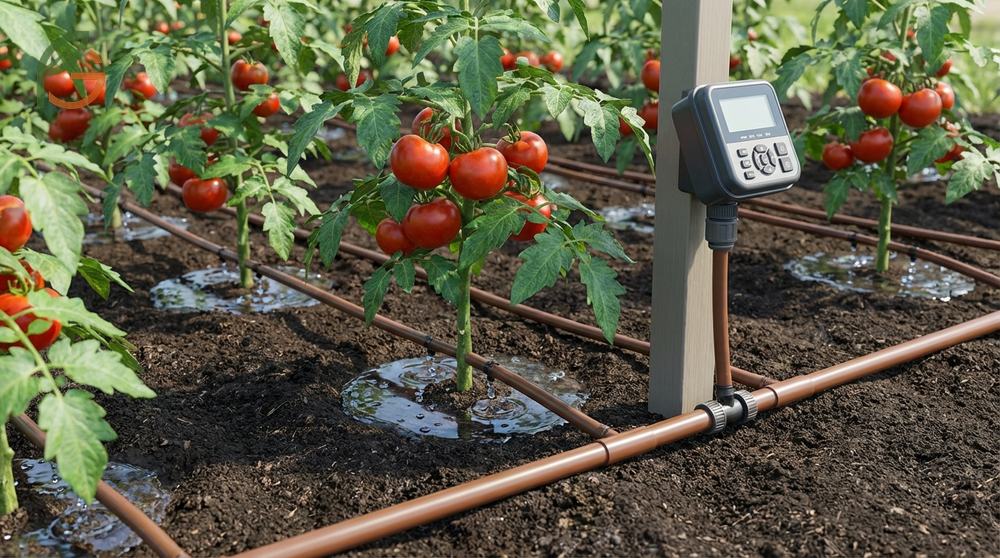
Drip irrigation delivers water directly to tomato root zones with minimal waste, making it the most efficient watering method for consistent moisture. Systems use emitters spaced 12-18 inches apart along tubing that runs beside plant rows. A timer automates the schedule, ensuring plants never miss a watering.
Well-designed drip systems reduce water usage to approximately 4 liters per kilogram of tomatoes produced, compared to 300 liters in poorly managed overhead irrigation[9]. This 98% efficiency improvement comes from eliminating evaporation and delivering water only where roots can access it.
For garden beds, run drip tubing for 30-45 minutes per session, 2-3 times weekly. This provides approximately 1 inch of water to the root zone without runoff. In containers, drip irrigation works best with shorter 10-15 minute cycles twice daily, adjusting based on pot size and weather.
| Component | Purpose | Specification |
|---|---|---|
| Mainline Pipe | Distributes water to drip lines | 3/4″ diameter PVC or polyethylene |
| Drip Tubing | Delivers water along plant rows | 1/2″ or 5/8″ with built-in emitters |
| Emitters | Release water at controlled rate | 0.5-1 gallon per hour spacing |
| Pressure Regulator | Maintains optimal water pressure | 25-30 PSI for most systems |
| Timer | Automates watering schedule | Digital with multiple daily programs |
Installation requires connecting a filter to prevent emitter clogs, then laying tubing along tomato rows with emitters positioned 6 inches from each plant stem. Test the system by running it for 10 minutes and checking that each emitter delivers water evenly. Adjust pressure or clean clogged emitters before starting your regular schedule.
Mulching To Retain Moisture
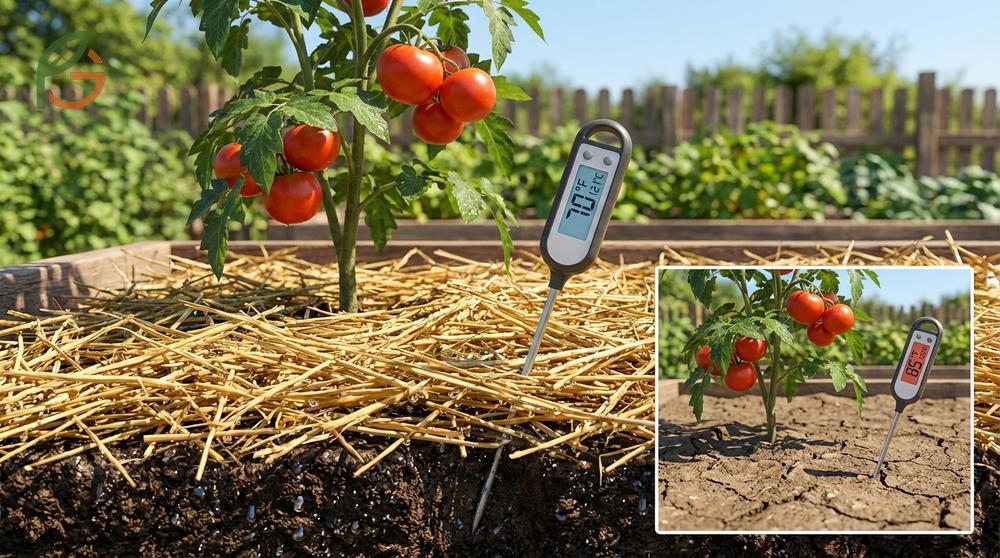
Mulching reduces tomato watering frequency by 30-40% through moisture retention and temperature regulation. A 2-4 inch layer of organic mulch like straw, shredded leaves, or grass clippings blocks evaporation from soil surfaces and moderates soil temperature swings[10]. This creates more forgiving watering schedules, especially during hot weather.
Mulch acts as an insulation barrier, keeping soil 10-15°F cooler during peak summer heat. This cooler root zone means less moisture evaporates and tomato roots function more efficiently. Container plants particularly benefit from mulching, which can extend time between waterings from daily to every other day.
Organic mulches break down gradually, releasing nutrients into soil while improving structure. Straw is ideal because it doesn’t mat down like grass clippings can. Wood chips work well but shouldn’t touch plant stems directly—leave a 2-inch gap around the base to prevent rot.
- Apply mulch after soil warms to at least 65°F in late spring—earlier mulching delays soil warming
- Maintain 3-4 inch depth for maximum moisture retention without suffocating roots
- Pull mulch 2-3 inches away from tomato stems to prevent rot and pest harboring
- Replenish mulch mid-season as it decomposes and settles to 2 inches or less
- For containers, use 1-2 inches of mulch since less depth is needed in pots
- Avoid fresh grass clippings that mat and repel water—let them dry first or mix with straw
Mulch Timing Tip: Don’t mulch immediately after transplanting—wait until tomatoes are established (2-3 weeks) and soil has warmed. Cold spring soil under mulch delays root growth and early season development.
Conclusion
The evidence is clear: how often to water tomato plants depends on your growing method, container size, and weather conditions more than any single rule. In-ground tomatoes thrive with deep watering 2-3 times weekly, while container plants need daily attention—sometimes twice daily during extreme heat. Morning watering between 6-9 AM combined with 2-4 inches of mulch creates the most forgiving schedule for busy gardeners.
Current guidance emphasizes consistency over quantity—irregular watering causes more problems than slight under or overwatering. Check soil moisture at 2-3 inches depth before every watering, and adjust your schedule as temperatures change throughout the season. FruitGarden continues monitoring the latest horticultural research to help you grow healthier, more productive tomato plants through proper irrigation management.
Frequently Asked Questions
How do I know when my tomato plants need water?
Check soil moisture by inserting your finger 2-3 inches deep—if it feels dry at this depth, it’s time to water. Visual cues include slight leaf drooping in afternoon heat and soil pulling away from container edges. For consistent monitoring, the “finger test” works better than relying on visible wilting, which indicates plants are already stressed.
Can you water tomatoes too much?
Yes, overwatering is as harmful as underwatering for tomatoes. Waterlogged soil suffocates roots, leading to rot, fungal diseases, and yellowing leaves with soft stems. Most tomato problems come from watering too frequently with shallow amounts rather than watering deeply but less often. Always ensure containers have drainage holes and in-ground soil drains within 6 hours after heavy watering.
Should I water tomatoes every day?
Daily watering is necessary only for container tomatoes and during extreme heat waves above 90°F. In-ground and raised bed tomatoes do better with deep watering 2-3 times weekly, which encourages deeper root growth. The exception is the first week after transplanting when all tomatoes benefit from daily watering to establish roots.
What’s the best way to water tomato plants?
Water at soil level using drip irrigation, soaker hoses, or a gentle stream directed at the base of plants. Avoid overhead watering that wets foliage, as this promotes fungal diseases like early blight and septoria leaf spot. Water slowly so moisture penetrates 6-8 inches deep rather than running off the surface—this typically takes 30-45 minutes with a soaker hose.
How long can tomato plants go without water?
Established in-ground tomatoes can typically survive 5-7 days without water in moderate weather, though production suffers after 3-4 days. Container tomatoes begin showing stress after just 1-2 days without watering. During hot weather above 85°F, all tomatoes need water within 24-48 hours to avoid permanent damage from severe wilting.
Does container size affect watering frequency for tomatoes?
Container size dramatically affects how often you’ll water—larger pots hold more soil volume and dry out slower. A 5-gallon pot needs daily watering during summer, while a 10-gallon container may only need watering every other day under the same conditions. Bush tomatoes do fine in 5-7 gallon pots, but vining varieties need 10-15 gallon containers minimum for best results.
Should I reduce watering when tomatoes start ripening?
Slightly reducing watering frequency during ripening can concentrate sugars and improve flavor, but don’t stress plants severely. Continue checking soil moisture regularly and water when the top 2-3 inches feel dry—this might mean reducing from 3 times to 2 times weekly. Never let plants wilt during ripening as this damages fruit quality and can cause skin cracking.