What To Do With Large Zucchini? Remove the seeds and watery center, then use for stuffed boats, bread, fritters, or soup. Research shows oversized zucchini work perfectly when properly prepped—the key is scooping out the seed cavity and squeezing excess moisture[1]. FruitGarden provides expert guidance on transforming garden abundance into delicious meals.
Quick Answer
- Ideal zucchini harvest size is 6-8 inches, but oversized ones work great when prepped properly
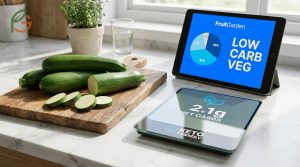
- Zucchini contains only 17 calories and 3.1g carbs per 100g[3], making it perfect for low-carb cooking
- Large zucchini are better for stuffing than smaller ones—they hold more filling and have higher stuffing-to-vegetable ratios[1]
- Always remove seeds and squeeze out moisture before cooking to avoid soggy results
What To Do With Large Zucchini
Large zucchini develop when they’re left on the vine past the ideal 6-8 inch harvest window[2]. These oversized vegetables aren’t ruined—they just need different handling than their smaller counterparts.
The main difference is texture and moisture content. As zucchini grows larger, it develops a spongy seed cavity filled with water and large seeds that must be removed before cooking. Most people don’t realize that skipping this step leads to watery, bitter results.
Studies show zucchini’s nutritional profile remains excellent regardless of size—17 calories, 1g fiber, and 18mg vitamin C per 100g[3]. This makes oversized zucchini perfect for volume cooking without adding significant calories.
Why Large Zucchini Need Special Prep
When zucchini exceeds 10 inches, the seeds become hard and the flesh turns spongy. The center contains excess water that dilutes flavor and creates mushy textures in finished dishes.
The skin also thickens and can taste bitter on giant specimens. Unlike tender young zucchini that you can slice and cook immediately, large ones require deliberate preparation steps to achieve good results.
Removing Seeds Properly
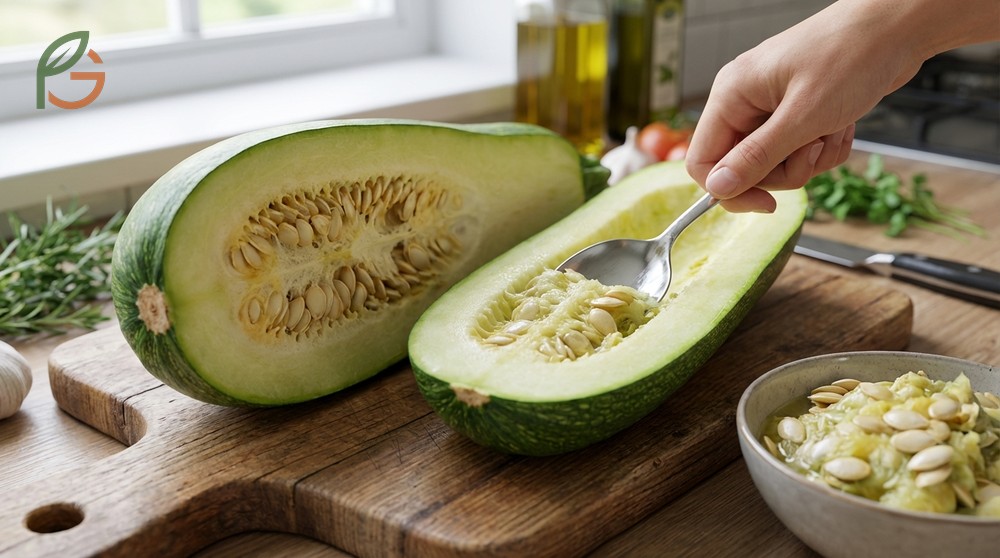
Cut the zucchini in half lengthwise and use a spoon to scrape out the entire seed cavity. You’ll see a clear distinction between the firm outer flesh and the softer, seed-filled center[1].
For crosswise slices intended for stuffing, cut the zucchini into 2-3 inch rounds first. Then use a melon baller or spoon to hollow out the seedy center, leaving about ½ inch of firm flesh as walls.
From My Experience: My cousin in Guadalajara, Mexico grew Black Beauty zucchini last summer. She forgot to harvest for two weeks and ended up with 14-inch monsters—after scooping seeds and grilling them, they tasted just as good as smaller ones.
Using Oversized Zucchini
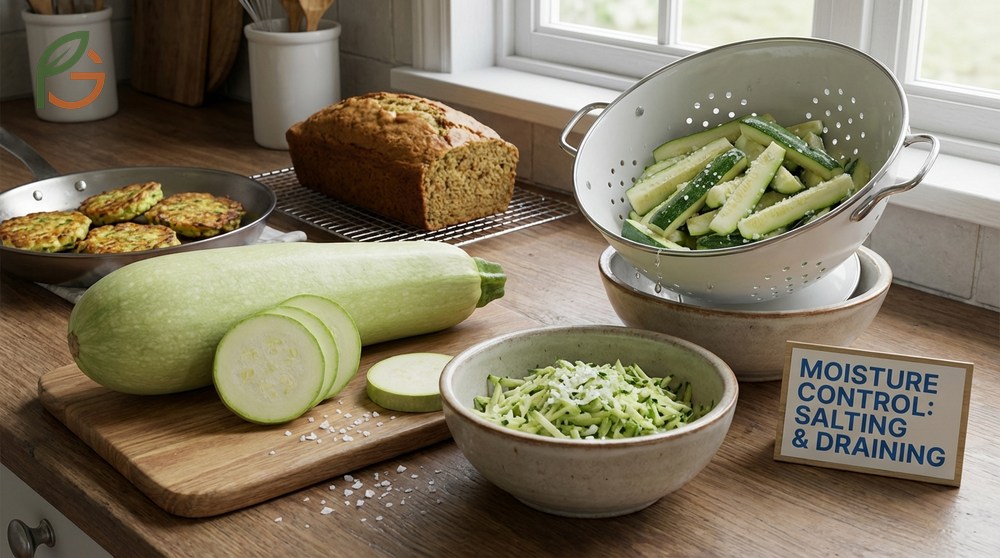
After removing seeds, the next critical step is controlling moisture. Oversized zucchini contains significantly more water than young ones, which can ruin the texture of baked goods and make cooked dishes soggy.
Research shows salting and draining removes 30-40% of water content without affecting nutritional value. This concentrates flavor and prevents waterlogged results in recipes like bread, fritters, and casseroles.
The best approach depends on your recipe type. Baked goods require aggressive moisture removal, while soups and stews can accommodate the extra water content without issues.
Moisture Control Techniques
For grated zucchini, toss it with 1-2 teaspoons of salt and let it sit in a colander for 10 minutes[4]. The salt draws out water through osmosis.
After the waiting period, pile the grated zucchini onto a clean kitchen towel, gather the corners, and twist firmly. You’ll be surprised how much liquid comes out—often ¼ to ½ cup from one large zucchini.
- For fritters and pancakes: Salt, drain, and squeeze in towel until barely any liquid remains
- For bread and muffins: Grate, squeeze immediately without salting to preserve mild flavor
- For sautéing: Cut into pieces, salt lightly, pat dry with paper towels after 5 minutes
- For grilling: Slice thick, salt both sides, let sit 10 minutes, rinse and pat completely dry
- For stuffing: Scoop seeds, brush cut surfaces with olive oil, roast 10 minutes to evaporate moisture before filling
When to Peel the Skin
The skin on extra-large zucchini becomes tough and bitter, especially on specimens over 12 inches long. Taste a small piece raw—if it’s noticeably bitter, peel it before cooking[1].
For recipes where appearance matters, like zucchini bread with visible green flecks, you can peel alternating strips. This creates a striped pattern while removing half the potentially bitter skin.
Important Tip: Don’t assume all large zucchini need peeling. Varieties like Costata Romanesco maintain tender skin even at larger sizes, while standard green types often turn bitter past 10 inches.
Large Zucchini Recipes
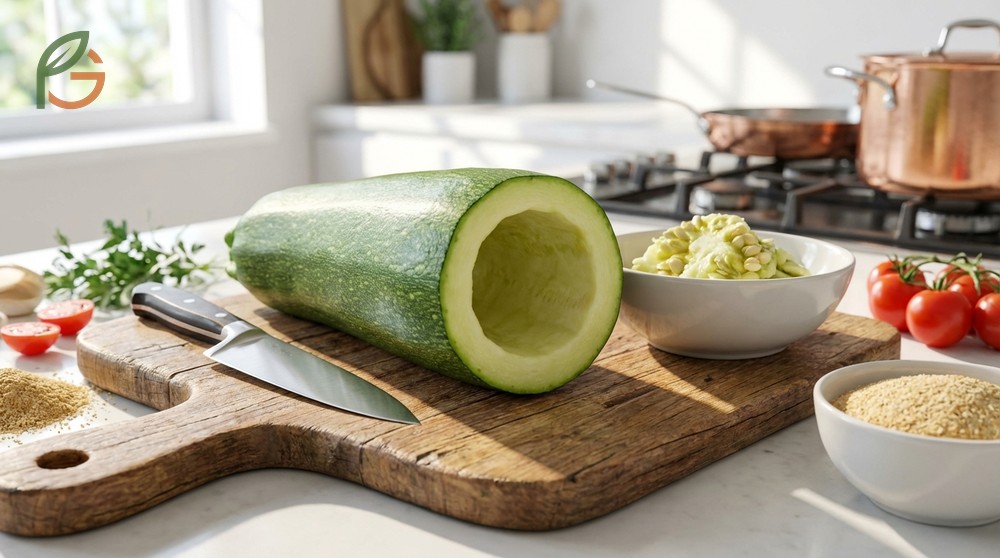
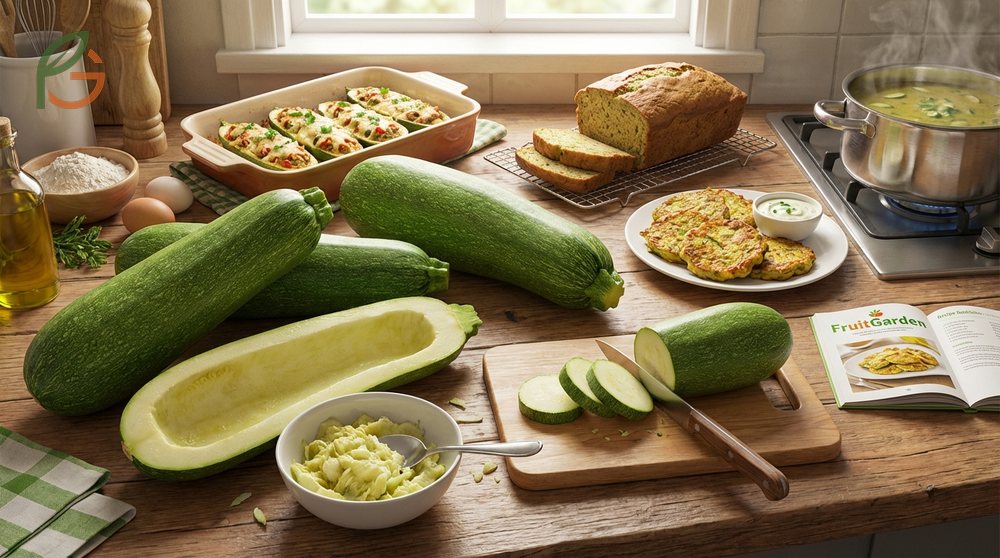
Large zucchini excel in recipes specifically designed for their size and structure. Current culinary guidance emphasizes matching the preparation method to the vegetable’s physical characteristics rather than forcing it into recipes meant for small, tender specimens.
The hollow-and-stuff approach works particularly well because you’re removing the problematic seedy center anyway. What remains is firm, flavorful flesh that holds shape during cooking and provides excellent structural support for fillings.
Weight-based scaling helps adapt standard recipes. A medium zucchini weighs ½ to ¾ pound[1], so a recipe calling for two medium zucchini needs 1-1.5 pounds total. One 3-pound monster can replace six medium zucchini.
Stuffed Zucchini Boats
Cut large zucchini in half lengthwise and scoop out the seeds to create boat-shaped shells. These hold significantly more filling than small zucchini—you can pack in ½ to ¾ cup of stuffing per half compared to 2-3 tablespoons in smaller versions.
Popular stuffing combinations include Italian sausage with breadcrumbs and cheese, taco-seasoned ground beef with salsa, or quinoa with roasted vegetables for vegetarian options[5]. The zucchini boats become complete meals that need only a side salad.
- Italian sausage version: Brown 1 pound sausage with onions and garlic, mix with ½ cup breadcrumbs and 1 cup mozzarella
- Taco boats: Season ground beef with taco spices, top with cheese, salsa, and sour cream after baking
- Mediterranean style: Combine quinoa, feta, olives, sun-dried tomatoes, and fresh herbs
- Breakfast boats: Fill with scrambled eggs, cheese, and cooked bacon or sausage
- Pizza boats: Layer marinara, pepperoni, and mozzarella for kid-friendly appeal
Zucchini Bread Variations
Zucchini bread is the classic solution for garden abundance. One large zucchini typically yields 3-4 cups grated, enough for two standard loaves. The moisture in zucchini keeps bread tender for days without drying out.
Classic versions include cinnamon and nutmeg, while modern variations add chocolate chips, cream cheese swirls, or lemon glaze. The key is squeezing out just enough moisture—leave some for tenderness, but remove excess that would make bread gummy.
Baker’s Note: Don’t pack grated zucchini into measuring cups. Spoon it in loosely—packed zucchini contains more water and throws off the recipe’s moisture balance.
Giant Zucchini Ideas
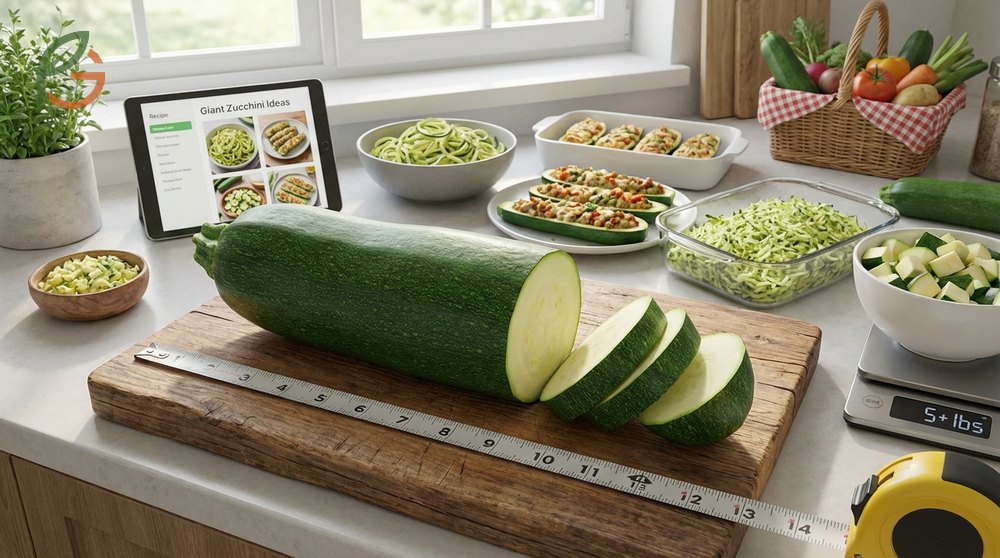
When zucchini reaches truly giant proportions—14 inches or longer—you need recipes that celebrate bulk rather than fighting against it. These creative approaches transform quantity into an advantage.
Agricultural data shows a single oversized zucchini can exceed 5 pounds, providing enough vegetable matter for multiple meals. Planning several different preparations from one giant specimen reduces waste and maximizes garden productivity.
The firmness of large zucchini makes it suitable for cooking methods that would turn small, tender zucchini into mush. High-heat grilling, long-cooking stews, and pickling all work exceptionally well with oversized specimens.
Grilled Zucchini Pizza Slices
Slice giant zucchini lengthwise into ½-inch thick planks. Salt them and let drain for 10 minutes, then grill over very high heat for 3-4 minutes per side until grill marks appear[5].
The grilling evaporates excess moisture and creates a sturdy base. Top the grilled planks with marinara sauce, mozzarella, and your favorite pizza toppings, then finish under the broiler for 2-3 minutes until cheese bubbles.
Zucchini Fritters and Latkes
Fritters are perfect for using multiple cups of grated zucchini at once. The formula is simple: 2 cups squeezed zucchini, 1 egg, ⅓ cup flour, and seasonings[4].
Form small patties and fry in hot oil for 4 minutes on the first side, then 3-4 minutes on the flip side. The key is aggressive moisture removal before mixing—soggy zucchini makes fritters that fall apart and splatter when frying.
- Zucchini noodles: Spiralize the firm outer flesh into zoodles for pasta alternatives
- Pickled zucchini: Quarter lengthwise and pickle in vinegar brine with dill and garlic
- Zucchini cups: Cut into 2-3 inch rounds, hollow out, and stuff with meat and cheese mixtures
- Grilled zucchini lasagna: Use thick grilled slices as lasagna noodles in layered casseroles
- Zucchini soup: Simmer with onions, broth, and herbs, then purée until smooth
- Roasted zucchini chips: Slice thin, toss with oil and parmesan, bake at 225°F (107°C) until crispy
Cooking Big Zucchini
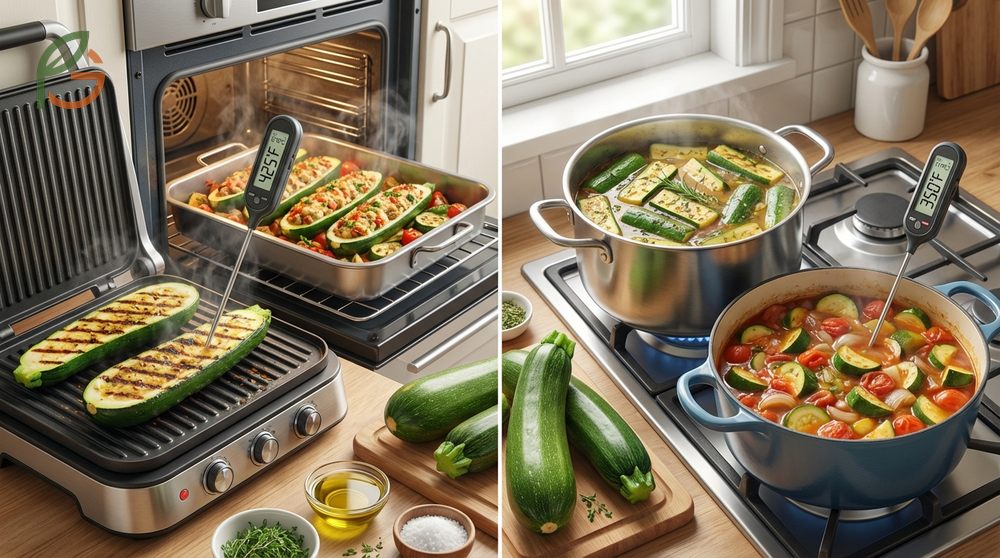
The cooking method you choose determines success with oversized zucchini. High-heat methods like grilling, roasting, and sautéing drive off moisture and concentrate flavor, while low-and-slow methods like braising and stewing benefit from the extra water content.
Temperature control matters more with large zucchini than small. At 350°F (177°C), stuffed zucchini boats need 35-40 minutes to cook through completely. At 425°F (218°C), roasting time drops to 25-30 minutes but requires checking to prevent burning.
One large zucchini provides multiple serving opportunities. Cube half for a stir-fry tonight, grate the other half for bread tomorrow, and use the scooped-out seeds and pulp in vegetable stock. Nothing goes to waste.
This table compares cooking methods, temperatures, timing, and best uses for large zucchini across five preparation styles from grilling to soup making
| Method | Temperature | Time | Best For |
|---|---|---|---|
| Grilling | High heat (450-500°F / 232-260°C) | 3-4 minutes per side | Thick slices, pizza bases, lasagna layers |
| Roasting | 425°F (218°C) | 25-30 minutes | Stuffed boats, wedges, chunks |
| Sautéing | Medium-high (375°F / 191°C) | 5-7 minutes | Diced zucchini, stir-fries |
| Baking | 350°F (177°C) | 35-40 minutes | Casseroles, stuffed preparations |
| Soup/Stew | Simmer (180-200°F / 82-93°C) | 15-20 minutes | Chunks, pureed soups |
Parmesan-crusted zucchini works exceptionally well with large specimens. Slice into ½-inch rounds, dip in egg wash, coat with breadcrumbs mixed with parmesan, and air fry at 380°F (193°C) for 12 minutes[6]. The result is crispy on the outside with tender centers.
For soup applications, oversized zucchini actually saves preparation time. One large specimen provides enough volume for a pot of soup that would require 4-5 small zucchini. Dice it roughly, simmer with onions and broth for 15-20 minutes, then purée until smooth.
Texture Tip: If your cooked zucchini turns mushy, you didn’t remove enough moisture beforehand. Next time, squeeze harder in the towel or add an extra 5 minutes to the draining time.
Conclusion
The evidence is clear: What To Do With Large Zucchini comes down to proper preparation and choosing recipes that work with their size rather than against it. Remove seeds, control moisture, and you’ll transform garden monsters into delicious stuffed boats, bread, fritters, and more.
Current guidance from home cooking experts emphasizes treating oversized zucchini as a different ingredient than their tender young counterparts. When you follow the seed removal and moisture control techniques outlined here, those giant specimens deliver results just as good as—and sometimes better than—perfectly sized zucchini. FruitGarden helps gardeners maximize every harvest, no matter how large.
Frequently Asked Questions
Can you eat oversized zucchini?
Yes, oversized zucchini are completely edible when prepared correctly. Remove the seeds and spongy center, squeeze out excess moisture, and check if the skin tastes bitter. If so, peel it before cooking. The flesh remains nutritious with the same 17 calories and 1g fiber per 100g as smaller zucchini.
What’s the best way to remove seeds from large zucchini?
Cut the zucchini in half lengthwise and use a spoon to scrape out the entire seed cavity. You’ll see a clear distinction between firm outer flesh and softer, seed-filled center. For rounds intended for stuffing, cut crosswise first, then hollow out the center with a melon baller, leaving ½ inch walls.
How do you keep grated zucchini from being watery?
Toss grated zucchini with 1-2 teaspoons salt and let drain in a colander for 10 minutes. Then pile it onto a clean kitchen towel, gather corners, and twist firmly to squeeze out liquid. This removes 30-40% of water content and prevents soggy bread, fritters, and casseroles.
What size zucchini is too big?
No zucchini is too big to use, but preparation requirements increase with size. Zucchini over 10 inches long need seed removal and moisture control. Those over 12 inches often have bitter skin that should be peeled. Even giant 14-16 inch specimens work perfectly for stuffed boats, bread, and soup when properly prepped.
Can large zucchini be used for zucchini bread?
Yes, large zucchini are excellent for bread. One oversized zucchini yields 3-4 cups grated, enough for two standard loaves. Grate it, squeeze out excess moisture in a kitchen towel, and use in your favorite recipe. The key is removing enough water to prevent gummy texture while keeping some moisture for tenderness.
Are stuffed zucchini boats better with large zucchini?
Research shows large zucchini are actually better for stuffing than smaller ones. They hold ½ to ¾ cup filling per half compared to 2-3 tablespoons in small versions, creating a higher stuffing-to-vegetable ratio. The firm flesh holds shape during baking and you’re removing the problematic seeds anyway.
How long do you cook stuffed large zucchini?
Bake stuffed large zucchini at 350°F (177°C) for 35-40 minutes until the flesh is tender and filling reaches safe internal temperature. At higher temperatures like 425°F (218°C), reduce time to 25-30 minutes but watch carefully to prevent burning. The zucchini should pierce easily with a fork when done.