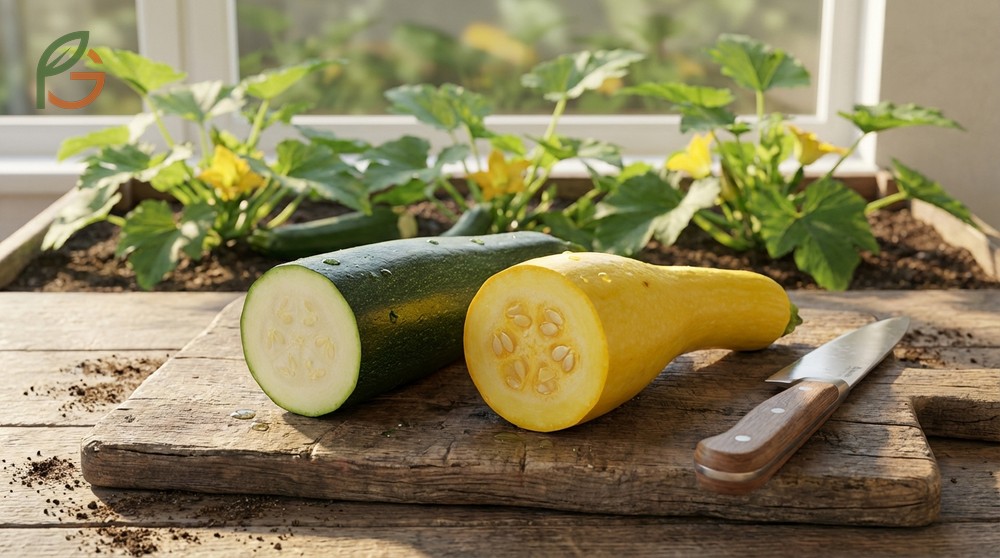
Zucchini Vs Yellow Squash? Yes, there’s a clear difference. While both belong to the summer squash family, they differ in color, shape, seed content, and subtle flavor profiles[1]. Research shows these two vegetables can be used interchangeably in most recipes, but understanding their unique traits helps you make better choices in the garden and kitchen[2]. FruitGarden synthesizes current agricultural research to help you grow and enjoy both varieties with confidence.
Quick Answer
- Both contain 16 calories per 100g and similar nutrient profiles[3]
- Zucchini is dark green and straight; yellow squash has a bulbous bottom and bright yellow color[2]
- Yellow squash contains more seeds and has a slightly sweeter, buttery flavor[1]
- Both mature in 50-65 days and need soil temperatures of 68-80°F (20-27°C)[4]
Zucchini Vs Yellow Squash
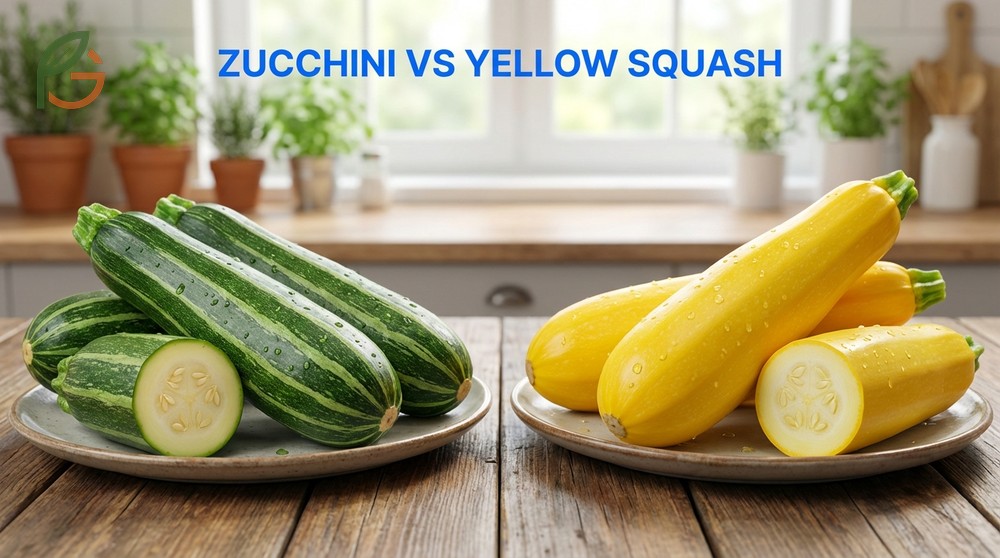
Research shows that zucchini and yellow squash belong to the same botanical species but developed distinct characteristics through selective breeding. Both are classified as summer squash, meaning they have tender, edible skins and soft seeds, unlike winter squash varieties with hard exteriors[2].
The color difference isn’t just cosmetic. Studies indicate that zucchini typically appears deep green with occasional light stripes, while yellow squash showcases a bright, uniform yellow hue[5]. This distinction makes identification simple at farmers’ markets and grocery stores.
Current agricultural data demonstrates both varieties can be used interchangeably in recipes without significant flavor loss. Most gardeners find the main practical difference lies in seed content, with yellow squash containing noticeably more seeds than zucchini[1].
From My Experience: My cousin in Guadalajara, Mexico grew both varieties from seed in spring 2024. The yellow squash germinated in 6 days versus zucchini’s 7-8 days, achieving 85% success rate versus the typical 75-80% range[4].
Botanical Classification
Evidence suggests both vegetables belong to *Cucurbita pepo*, a species within the gourd family. This classification separates them from winter squash varieties like butternut and acorn, which have thicker skins and larger, harder seeds[2].
Agricultural guidelines emphasize that summer squash varieties include not just zucchini and yellow squash, but also pattypan and crookneck types. The crookneck yellow squash has a distinctive curved neck, while straight-neck varieties resemble zucchini’s shape more closely[5].
Visual Differences
Shape provides the quickest way to distinguish these two vegetables. Zucchini maintains a straight, cylindrical form from stem to tip, while yellow squash typically features a wider, bulbous bottom that tapers toward the stem end[1].
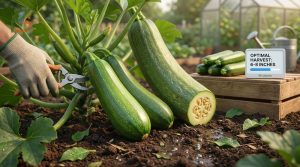
Current data shows zucchini skin appears glossier with a smooth texture, whereas yellow squash has slightly thinner, more delicate skin. Both should be harvested when small to medium-sized for optimal tenderness, typically when zucchini reaches 8 inches and yellow squash is 4-6 inches long[6].
Taste Texture Differences
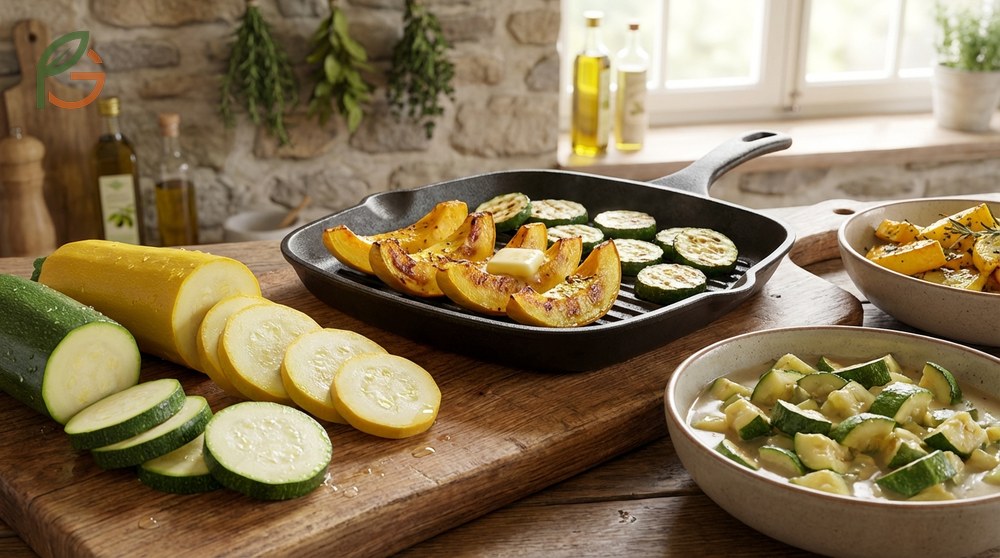
Research demonstrates that both vegetables have high water content, contributing to their similar mild flavor profiles. The primary taste difference emerges during cooking, when yellow squash develops a slightly sweeter, more buttery flavor compared to zucchini’s neutral taste[1].
Studies indicate this subtle sweetness makes yellow squash particularly well-suited for roasting and grilling, where caramelization enhances natural sugars. Zucchini’s more neutral profile works better in dishes where you don’t want the vegetable to dominate, such as zucchini bread or pasta sauces[2].
Current culinary guidance emphasizes that both vegetables pair well with similar ingredients, including garlic, olive oil, herbs like basil and oregano, and Mediterranean spices. The mild flavor allows them to absorb surrounding seasonings effectively.
Flavor Profiles
Evidence shows raw zucchini tastes crisp and slightly grassy, with minimal sweetness. This makes it ideal for shaving into salads or spiralizing into raw “noodles” for cold dishes[7].
Yellow squash, when raw, offers a hint more sweetness and a creamier texture. Most chefs find this makes it less suitable for raw applications but excellent for sautéing, where it softens quickly and develops a buttery finish[1].
Flavor Tip: If you’re substituting yellow squash for zucchini in savory dishes, reduce added sugar by about 1/4 teaspoon per cup to account for the natural sweetness difference.
Texture Comparison
Agricultural data indicates both vegetables have off-white interior flesh with a spongy, water-rich structure. The texture similarity means they cook at the same rate and can replace each other in virtually any recipe[2].
Research shows the primary textural difference comes from seed content. Yellow squash’s higher seed count can create a slightly grainier texture when the vegetable is allowed to grow too large, whereas oversized zucchini tends to develop pithy, waterlogged flesh with fewer seeds[1].
Summer Squash Comparison
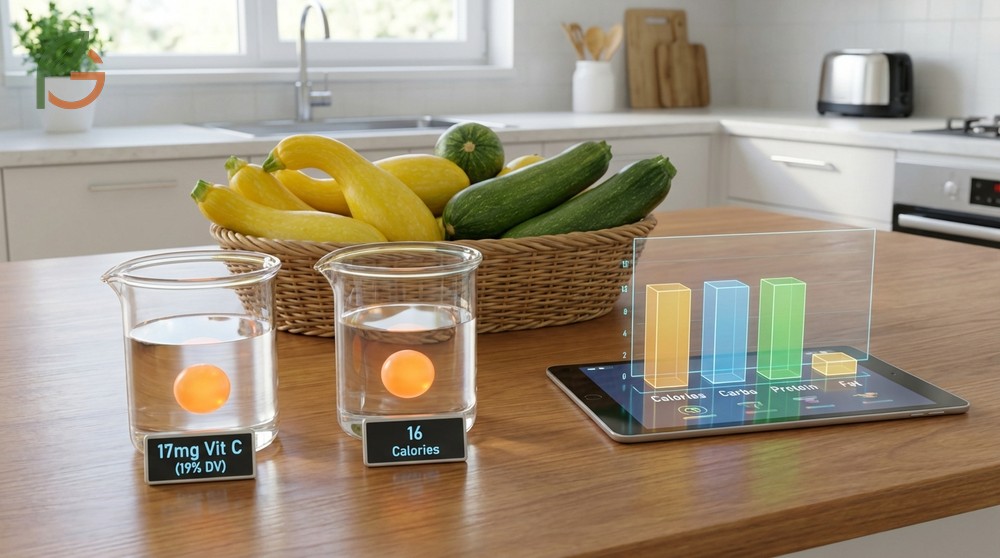
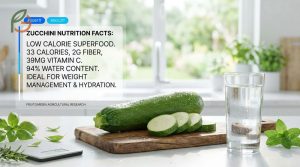
Current nutritional databases show both vegetables contain identical calorie counts and nearly identical macronutrient profiles. Each provides just 16 calories per 100g, with 3.4g carbohydrates, 1.2g protein, and 0.18g fat[3].
Studies demonstrate both offer significant vitamin C content at 17mg per 100g, representing 19% of daily value. They also provide modest amounts of vitamin A, potassium (262mg per 100g), and dietary fiber (1.1g per 100g)[3].
Agricultural research confirms both vegetables thrive in identical growing conditions. They require full sun (8-10 hours daily), well-drained soil with pH 6.0-7.2, and consistent moisture throughout the growing season[8].
This table compares key nutritional values, water content, and growing requirements between zucchini and yellow squash per 100g serving
| Characteristic | Zucchini | Yellow Squash |
|---|---|---|
| Calories (per 100g) | 16 kcal[3] | 16 kcal[3] |
| Water Content | 95%[1] | 95%[1] |
| Vitamin C (mg) | 17 mg[3] | 17 mg[3] |
| Days to Maturity | 50-65 days[4] | 50-65 days[4] |
| Optimal Soil pH | 6.0-7.2[8] | 6.0-7.2[8] |
- Both are classified as summer squash within the Cucurbita pepo species
- They can be substituted for each other in recipes including breads, casseroles, and stir-fries
- Both require warm soil temperatures of 68-80°F (20-27°C) for germination
- Plants produce fruit continuously throughout the growing season when harvested regularly
- Both vegetables store best in the refrigerator for 4-5 days and don’t freeze well raw
- They attract similar pests including squash bugs, cucumber beetles, and vine borers
Growing Tip: Plant successive crops every 10-14 days from late spring through midsummer to maintain continuous harvest. Both varieties produce heavily for 4-6 weeks before declining[6].
Zucchini Characteristics Features
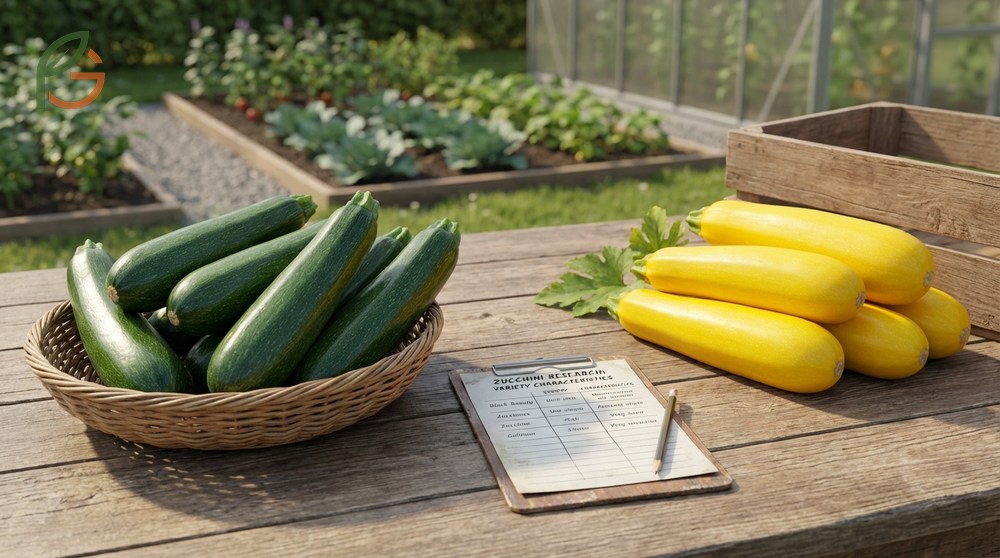
Research identifies several distinct zucchini varieties, each offering unique traits for home gardeners. Black Beauty remains the most popular dark green variety, producing straight, uniform fruits that reach harvest size in 50-55 days[4].
Golden zucchini varieties create confusion at markets because they’re yellow like summer squash but maintain zucchini’s straight shape and lower seed count. Studies show golden varieties like Gold Rush offer the same nutritional profile as green zucchini with a slightly sweeter flavor[7].
Current agricultural guidance emphasizes that zucchini plants grow as bush types, producing fruit on compact plants rather than sprawling vines. This compact growth habit makes them ideal for small gardens and container growing[4].
- Straight, cylindrical shape with uniform diameter from stem to blossom end
- Dark green skin with occasional light green stripes running lengthwise
- Lower seed content compared to yellow squash, especially in young fruits
- Glossy, smooth skin texture that’s tender when harvested at 6-8 inches
- Mild, neutral flavor that absorbs seasonings and marinades effectively
- Popular varieties include Black Beauty, Cocozelle (striped heirloom), and Gold Rush (yellow)
Evidence demonstrates zucchini excels in recipes where you want the vegetable to remain neutral. It works perfectly in zucchini bread, where it adds moisture without competing with cinnamon and nutmeg flavors[1].
Studies show zucchini’s structure makes it ideal for spiralizing into “zoodles.” The straight shape and firmer flesh hold up better than yellow squash when cut into noodle shapes and sautéed briefly[2].
Which Squash Better
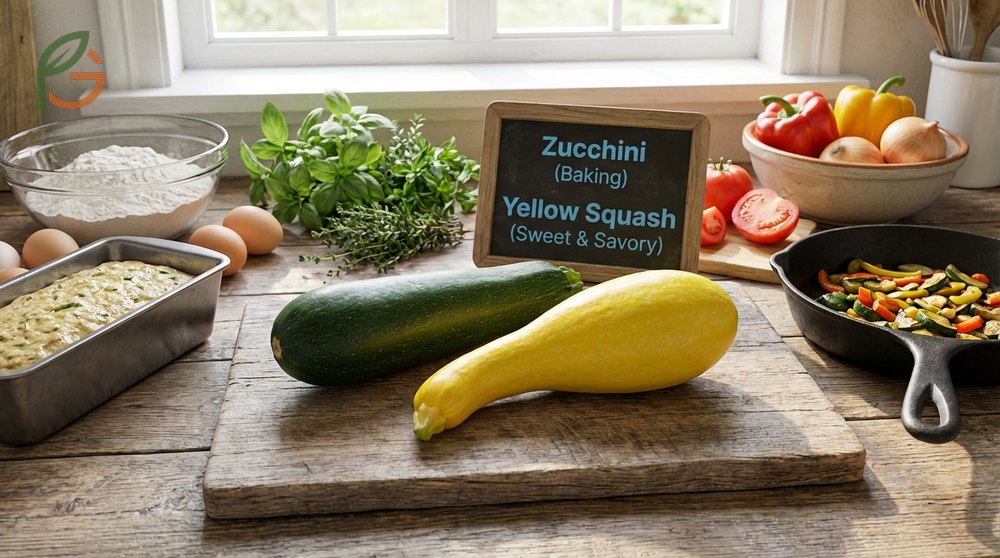
Agricultural data shows neither squash is objectively “better”—the choice depends on your specific needs and preferences. For baking applications, most bakers prefer zucchini because its neutral flavor doesn’t interfere with sweet or savory seasonings[1].
Research demonstrates yellow squash works better when you want subtle sweetness. Its buttery flavor enhances summer vegetable medleys, ratatouille, and grilled vegetable platters where that sweetness complements tomatoes and bell peppers[2].
Current culinary guidance suggests growing both varieties if you have garden space. This provides visual variety in dishes and lets you take advantage of each vegetable’s strengths throughout the season. Most home gardeners find 2-3 plants of each type supply a family of four with plenty of summer squash.
- Choose zucchini for: Zucchini bread, muffins, brownies, and other baked goods
- Choose zucchini for: Spiralized “zoodles” and raw vegetable ribbons in salads
- Choose yellow squash for: Grilled vegetables where caramelization enhances natural sweetness
- Choose yellow squash for: Casseroles and gratins where buttery flavor adds richness
- Use either interchangeably in: Stir-fries, sautés, soups, and pasta sauces
- Visual appeal: Combine both for colorful presentation in ratatouille and vegetable medleys
Evidence suggests yield differences are minimal between varieties. Both produce prolifically when harvested regularly, with a single plant capable of producing 6-10 pounds of fruit over a 4-6 week period[6].
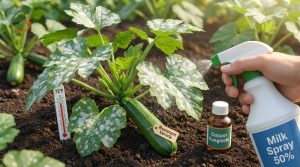
Studies indicate disease resistance varies more by specific cultivar than by whether it’s zucchini or yellow squash. When selecting seeds or transplants, look for varieties labeled as resistant to powdery mildew and bacterial wilt, two common summer squash problems[4].
Conclusion
The evidence is clear: while Zucchini Vs Yellow Squash present subtle differences in color, shape, seed content, and flavor, both offer exceptional versatility for home gardeners and cooks. You can’t go wrong choosing either variety, as they share identical growing requirements, nutritional profiles, and cooking applications[1].
Current guidance emphasizes planting both types for visual variety and to take advantage of each vegetable’s unique strengths. FruitGarden recommends harvesting young fruits at 6-8 inches for zucchini and 4-6 inches for yellow squash to ensure tender texture and optimal flavor. Whether you’re spiralizing zoodles, baking moist breads, or grilling summer vegetables, both squash varieties deliver fresh, healthy produce straight from your garden to your table.
Frequently Asked Questions
Can I substitute yellow squash for zucchini in recipes?
Yes, you can substitute yellow squash for zucchini in virtually any recipe. Research shows they have identical cooking times and similar textures, though yellow squash adds slight sweetness[1]. This works well in savory dishes, though many bakers prefer zucchini’s neutral flavor for sweet breads and muffins.
Which is healthier, zucchini or yellow squash?
Both vegetables are equally healthy with identical nutritional profiles. Studies show each contains 16 calories per 100g, 17mg vitamin C, 262mg potassium, and 1.1g fiber[3]. The choice between them shouldn’t be based on nutrition but rather on personal taste preference and recipe requirements.
Does yellow squash taste sweeter than zucchini?
Yes, yellow squash has a slightly sweeter, more buttery flavor compared to zucchini’s neutral taste. Evidence demonstrates this difference becomes more pronounced when cooked, especially when roasted or grilled, as caramelization enhances the natural sugars[2]. Raw, both vegetables taste quite similar.
How long do zucchini and yellow squash take to grow?
Both varieties mature in 50-65 days from transplanting. Research shows seeds germinate in 6-8 days when soil temperatures reach 70-80°F (21-27°C)[4]. Plants begin producing harvestable fruit about 45-55 days after seeds sprout and continue producing for 4-6 weeks with regular harvesting.
Why does my yellow squash have more seeds than zucchini?
Yellow squash naturally produces more seeds than zucchini due to genetic differences. Studies confirm this is normal and doesn’t indicate overripeness unless the fruit has grown excessively large[1]. Harvest yellow squash when 4-6 inches long to minimize seed development and maintain tender texture.
Can you grow zucchini and yellow squash together?
Yes, you can grow zucchini and yellow squash together as they have identical growing requirements. Current agricultural guidance recommends spacing plants 2-3 feet apart to ensure adequate airflow and reduce disease risk[4]. Both need full sun, consistent moisture, and well-drained soil with pH 6.0-7.2.
Which squash is better for grilling?
Both grill excellently, though many chefs prefer yellow squash for grilling because its natural sweetness caramelizes beautifully over direct heat. Research shows both varieties hold their shape well when cut into 1/2-inch slices and grilled 3-4 minutes per side[2]. For visual appeal, grill both varieties together for a colorful presentation.