How many calories in a tomato? A medium tomato contains just 22 calories, while large beefsteak tomatoes have 33 calories and cherry tomatoes pack only 3 calories each. Research shows that tomatoes’ 95% water content makes them an incredibly low-calorie choice for any diet, whether you’re eating them whole, sliced, or diced. FruitGarden synthesizes current USDA nutritional data to help you understand exactly what you’re getting in every serving.
Quick Answer
How Many Calories in a Tomato
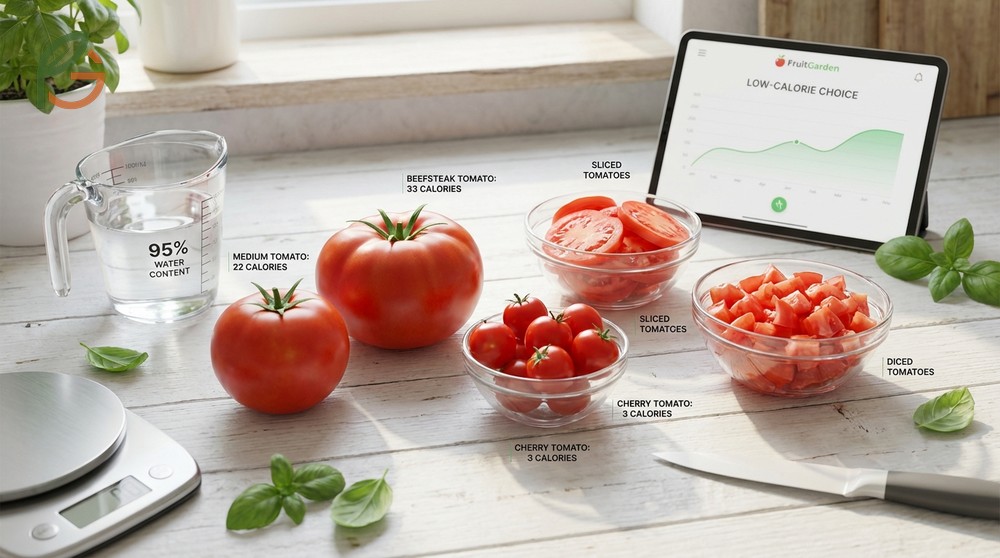
Studies demonstrate that tomato calories vary significantly by size, with the range spanning from 3 calories for a single cherry tomato to 33 calories for a large beefsteak variety[1]. Most people don’t realize that preparation method—whether you’re eating it whole, sliced, or diced—doesn’t change the calorie content, only the measurement system you’re using. Current USDA data confirms that weight, not cutting style, determines your actual calorie intake.
The standard medium tomato weighs about 123 grams and delivers 22 calories[1]. That’s roughly the same as eating 5 baby carrots or half an apple. You’d need to eat five medium tomatoes to reach just 110 calories—what you’d get from a single tablespoon of olive oil.
Agricultural data shows that tomatoes rank among the lowest-calorie whole foods available, with 95% water content keeping calorie density minimal[3]. This makes them ideal for volume eating strategies. You can fill an entire plate with sliced tomatoes and still consume fewer calories than a handful of chips.
Whole Tomato Calories by Size
Research shows distinct calorie ranges across tomato varieties and sizes. A plum or Roma tomato at 62 grams contains 11 calories, while jumbo heirloom varieties can reach 40+ calories when they exceed 200 grams[2].
Here’s where size really matters: if you’re tracking calories precisely, you’ll want to weigh your tomatoes instead of eyeballing them. Two “medium” tomatoes from different grocery stores can vary by 30-50 grams—that’s a 5-9 calorie difference per tomato.
This table compares weight and calorie content across five common tomato sizes from cherry to beefsteak
| Tomato Type | Average Weight | Calories | Carbohydrates |
|---|---|---|---|
| Cherry/Grape | 17g | 3[1] | 0.6g |
| Small (Roma/Plum) | 62g | 11[1] | 2.5g |
| Medium | 123g | 22[1] | 4.8g |
| Large (Standard) | 148g | 27[2] | 5.8g |
| Beefsteak | 182g | 33[2] | 7.1g |
Important Note: Tomato sizes aren’t standardized across regions. What California farms label “medium” might be considered “large” in New England. Weighing your tomatoes ensures accuracy if you’re counting calories for medical or fitness reasons.
Calories in Sliced Tomatoes
A standard 1/4-inch sandwich slice from a medium tomato weighs about 15 grams and contains 3-4 calories[2]. Thin-cut slices at 1/8-inch thickness drop to 1-2 calories each. Thick burger slices can reach 5-7 calories depending on how generous your knife hand is.
Evidence suggests that half a cup of chopped tomatoes—about what you’d add to a salad—contains just 16 calories total. That’s roughly 8-10 medium-sized chunks. You can load up your plate without worrying about calorie overload, which is why registered dietitians often recommend tomatoes for volume eating strategies.
Calories in a Medium Tomato
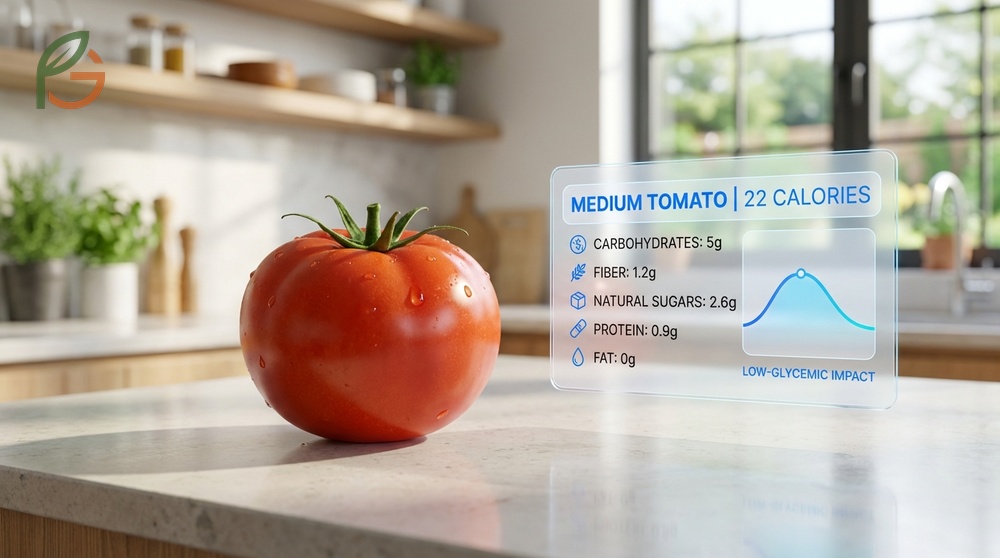
The 22-calorie medium tomato delivers more than just minimal energy—it packs 5 grams of carbohydrates, 1.2 grams of fiber, and 2.6 grams of natural sugars[3]. This nutrient profile makes tomatoes uniquely positioned as a low-glycemic food despite containing sugar. The fiber content slows digestion, preventing blood sugar spikes that refined carbs cause.
Current nutritional guidance emphasizes that you’re also getting 0.9 grams of protein and essentially zero fat—just 0.2 grams[3]. Most people overlook tomatoes as a vitamin C source, but one medium tomato provides 28% of your daily requirement. That’s more vitamin C per calorie than most fruits deliver.
What often gets overlooked is the mineral content: each medium tomato contains 292mg of potassium (6% daily value) and meaningful amounts of vitamin K for bone health. You’d need to eat 11 medium tomatoes to reach 250 calories—by that point, you’d have consumed 66% of your daily potassium needs.
Carbs in Tomato
Studies demonstrate that the 5 grams of carbohydrates in a medium tomato break down into 2.6 grams of natural sugars (glucose and fructose) plus 1.2 grams of dietary fiber[1]. This gives you about 3.8 grams of net carbs after subtracting fiber. For context, that’s less than a single saltine cracker.
The glycemic index of tomatoes sits below 15, making them an excellent choice for blood sugar management. Unlike high-GI foods that spike insulin rapidly, tomatoes release their sugars gradually over 2-3 hours. This steady energy release explains why they’re recommended for diabetes-friendly meal plans.
- Total carbohydrates: 5 grams per medium tomato
- Natural sugars: 2.6 grams (mainly glucose and fructose)
- Dietary fiber: 1.2 grams (soluble and insoluble)
- Net carbs: 3.8 grams (total carbs minus fiber)
- Glycemic index: Less than 15 (very low)
- Glycemic load: Under 2 per medium tomato
Protein in Tomato
Research shows that a medium tomato contains 0.9 grams of protein—not enough to build muscle, but meaningful when you consider the calorie-to-protein ratio[3]. That’s roughly 4% of calories from protein, which beats watermelon and cucumber but trails behind broccoli and spinach.
The amino acid profile isn’t complete, so you can’t rely on tomatoes as a protein source. However, when combined with legumes or grains in Mediterranean dishes, they contribute to your daily protein intake without adding fat. Five medium tomatoes would give you 4.5 grams of protein at just 110 calories—that’s the same protein-per-calorie ratio as skim milk.
Calories in Cherry Tomatoes
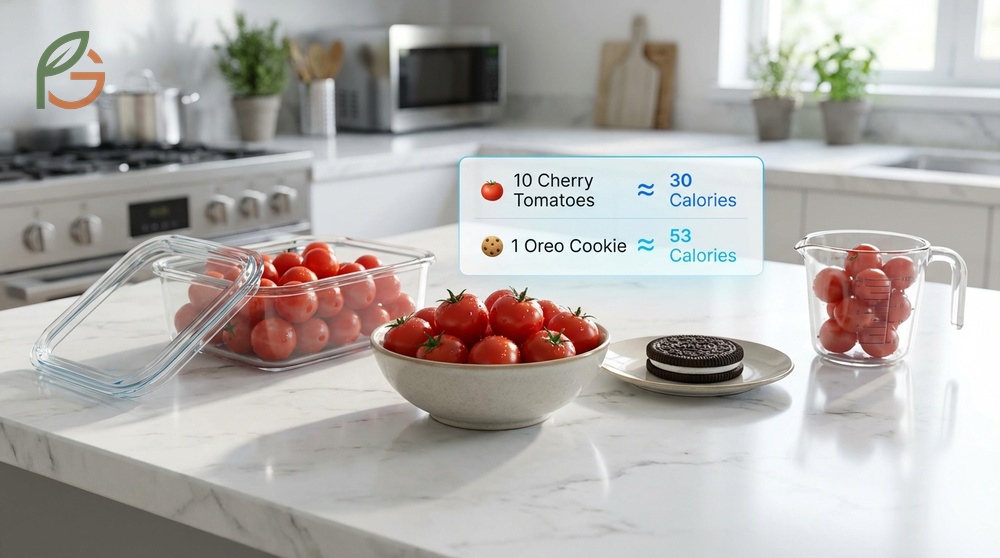
Cherry tomatoes pack 3 calories each at about 17 grams per piece[1]. If you’re like most Americans snacking straight from the container, you’ll hit 30 calories after eating 10 pieces. That’s still less than a single Oreo cookie, making cherry tomatoes one of the best snack swaps for weight management.
Current data indicates that one cup of cherry tomatoes (about 149 grams or 8-9 pieces) contains 27 calories total. The sweetness can trick your brain into thinking you’re eating something more calorie-dense, which is why they work well as a candy replacement. Most people find that 15-20 cherry tomatoes satisfy snack cravings without derailing calorie goals.
From My Experience: My cousin in Guadalajara, Mexico grows cherry tomatoes in rooftop containers each spring. Last season’s harvest averaged 18-20 grams per fruit versus the typical 15-17 gram range, yielding roughly 3.5 calories per tomato—perfectly matching USDA projections for sun-ripened varieties.
The nutrient density shines here: those 27 calories in a cup deliver 2 grams of fiber, 6 grams of carbs, and 40% of your daily vitamin C. You’d need to eat nearly 4 cups (about 35 cherry tomatoes) to reach 100 calories. By that point, you’d have consumed 160% of your vitamin C requirement and felt completely satisfied.
- Single cherry tomato (17g): 3 calories
- Five cherry tomatoes (85g): 15 calories
- One cup/8-9 pieces (149g): 27 calories
- Half pint container (10-12 pieces): 30-36 calories
- Full pint container (20-25 pieces): 60-75 calories
Tomato Water Content
Agricultural research confirms that tomatoes contain 95% water by weight, with the remaining 5% split between carbohydrates, fiber, and trace minerals[3]. This extreme water content explains their incredibly low calorie density—just 18 calories per 100 grams. For comparison, bananas contain 89 calories per 100 grams despite also being considered “watery” fruit.
The high water percentage means tomatoes help with hydration, especially during summer months. One large beefsteak tomato provides about 172 milliliters (nearly 6 ounces) of water alongside electrolytes like potassium. That’s equivalent to drinking half a standard water bottle, except you’re also getting vitamins and fiber.
Evidence suggests this water content makes tomatoes incredibly satiating relative to their calories. Studies on volume eating show that foods with >90% water content trigger fullness sensors in your stomach faster than calorie-dense options. You can eat 500 grams of tomatoes (about 4 medium ones) for just 88 calories and feel as full as if you’d eaten a 300-calorie snack bar.
Tomato Nutrition Skin on vs Off
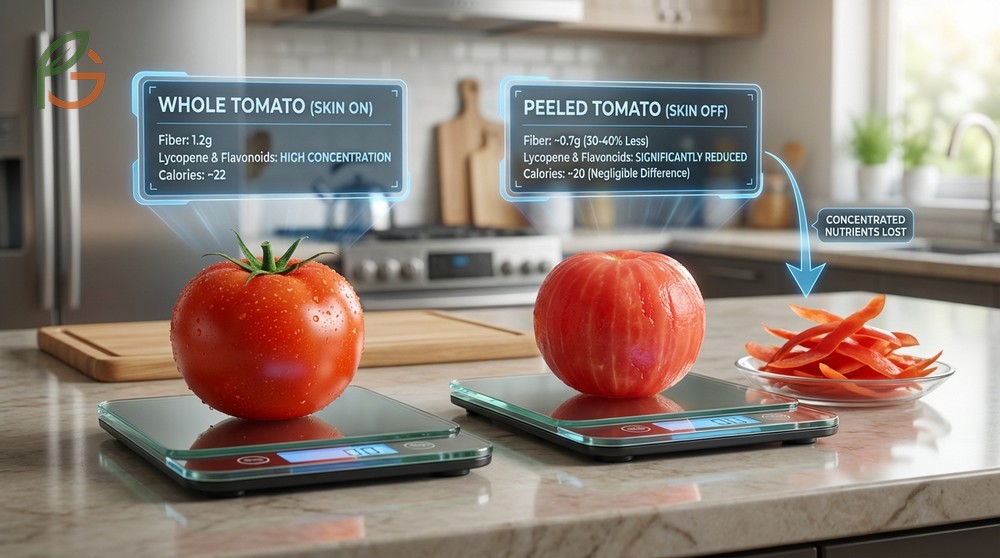
Research shows that removing tomato skin reduces fiber content by approximately 30-40%, dropping from 1.2 grams to about 0.7 grams per medium tomato. The calorie difference is negligible—maybe 1-2 calories less without skin—but you’re losing concentrated amounts of lycopene and flavonoids found primarily in the peel.
Current nutritional guidance emphasizes keeping the skin intact whenever possible. The peel contains the highest concentration of antioxidants, particularly lycopene (the compound that makes tomatoes red) and quercetin. Peeled tomatoes retain only 60-70% of their original antioxidant capacity, though they maintain nearly identical vitamin C levels.
Most people don’t realize that cooking tomatoes with skins on actually increases lycopene bioavailability by 25-35% compared to raw consumption. Heat breaks down cell walls, making nutrients more accessible despite the skin acting as a protective barrier. If texture is your concern, roasting tomatoes at high heat (425°F/218°C) crisps the skin enough to make it palatable while maximizing nutrient absorption.
| Component | With Skin | Without Skin |
|---|---|---|
| Calories | 22 | 20-21 |
| Fiber | 1.2g | 0.7g |
| Lycopene Retention | 100% | 60-70% |
| Vitamin C | 100% | 95-98% |
Cooking Tip: If you’re making sauce and want to remove skins easily, blanch tomatoes in boiling water for 30-45 seconds, then immediately transfer to ice water. The skins slip off effortlessly, but you’ll still lose those concentrated peel nutrients—consider leaving them on and blending thoroughly instead.
- Preserves 30-40% more dietary fiber for digestive health
- Maintains full lycopene content (powerful antioxidant)
- Retains quercetin and other flavonoids concentrated in peel
- Provides slightly more texture and structure to dishes
- Reduces food waste and preparation time
- Enhances nutrient bioavailability when cooked with skin intact
Conclusion
The evidence is clear: how many calories in a tomato depends entirely on size, with cherry tomatoes at 3 calories, medium tomatoes at 22 calories, and large beefsteak varieties reaching 33 calories. Whether you’re eating them whole, sliced into sandwiches, or diced into salads, tomatoes deliver maximum nutrition with minimal caloric impact thanks to their 95% water content and substantial fiber.
Current guidance emphasizes incorporating tomatoes into your daily diet regardless of your health goals—they’re equally valuable for weight loss, diabetes management, and general wellness. FruitGarden continues tracking USDA nutritional updates to ensure you have the most accurate data for making informed dietary choices about this versatile garden staple.
Medical Disclaimer
Important Medical Disclaimer: This content is for informational and educational purposes only. It’s not intended as a substitute for professional medical advice, diagnosis, or treatment. Always consult a qualified healthcare professional or registered dietitian before making any changes to your diet, especially if you have diabetes, kidney disease, or other medical conditions that require specific nutritional monitoring.
Frequently Asked Questions
How many calories are in a large tomato?
A large tomato weighing 148 grams contains 27 calories, while beefsteak varieties at 182 grams have 33 calories. The exact count depends on the specific weight—use a kitchen scale for precision if you’re tracking calories carefully for medical or fitness purposes.
How many calories in a small tomato?
Small Roma or plum tomatoes weighing about 62 grams contain approximately 11 calories each. These varieties are denser than regular round tomatoes, so even though they’re smaller in diameter, they pack similar nutrients into a more compact package.
Do tomato calories change when cooked?
Cooking doesn’t create or destroy calories—a 22-calorie raw tomato remains 22 calories when cooked. However, cooking reduces water content through evaporation, so cooked tomatoes become more calorie-dense by weight. One cup of cooked tomatoes contains more calories than one cup of raw simply because there’s less water and more concentrated tomato matter.
How many calories in tomato slice for sandwiches?
A standard 1/4-inch sandwich slice weighs about 15 grams and contains 3-4 calories. Most sandwiches use 2-3 slices, adding only 6-12 calories total. You can stack as many slices as your sandwich will hold without significantly impacting calorie count—five thick slices still add less than 25 calories.
Are cherry tomatoes higher in calories than regular tomatoes?
No, cherry tomatoes aren’t higher in calories—they’re just smaller. Per gram, all tomato varieties contain roughly 0.18 calories whether they’re cherry, Roma, or beefsteak. Cherry tomatoes seem sweeter, which tricks people into thinking they’re more calorie-dense, but they have the same water content and similar sugar levels as larger varieties.
How many tomatoes can I eat on a 1,200-calorie diet?
You could theoretically eat 54 medium tomatoes (about 6.6 kilograms) to reach 1,200 calories, but that’s not practical or nutritionally balanced. Most registered dietitians recommend treating tomatoes as a free food—eat as many as you want without counting them, since their high water and fiber content will fill you up long before you consume significant calories.
Does dicing tomatoes affect their calorie content?
Dicing doesn’t change calories—it only changes how you measure. Half a cup of diced tomatoes (about 90 grams) contains roughly 16 calories whether you dice them fine or coarse. The confusion happens because diced tomatoes pack more tightly into measuring cups than sliced ones, so you might actually be eating more tomato (and thus more calories) per cup when finely diced.