How Long Do Tomatoes Take To Grow? Most tomatoes require 90-140 days from seed to harvest, though this varies significantly by variety and growing method[1]. If you start seedlings indoors and transplant them after 6-8 weeks, you can reduce the time to 50-90 days in your garden[1]. Research shows that temperature, variety selection, and care practices significantly impact your harvest timeline. At FruitGarden, we combine agricultural research with practical growing data to help you plan your tomato timeline for maximum success.
Quick Answer
How Long Do Tomatoes Take To Grow
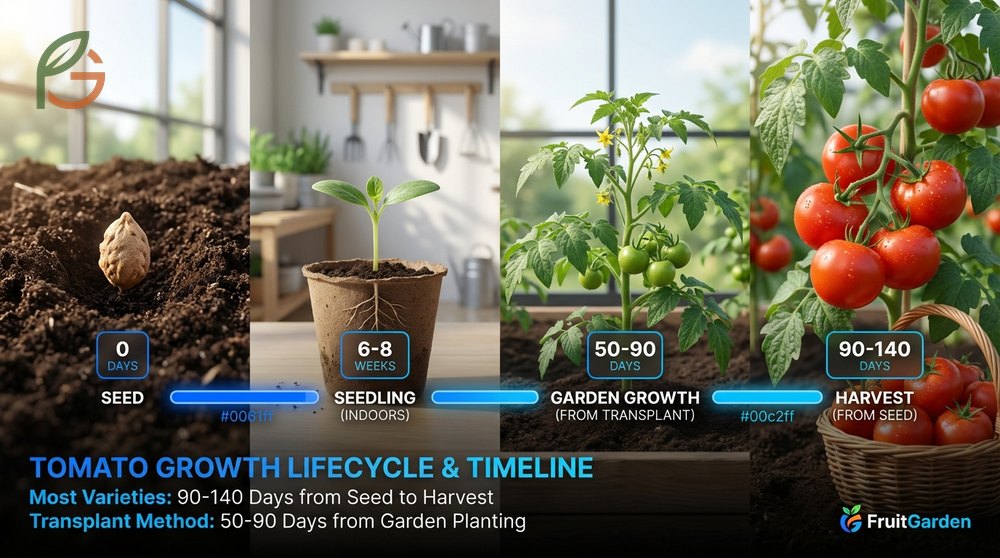
The complete timeline from planting seeds to harvesting ripe tomatoes spans 90-140 days for most varieties[1]. This includes germination, seedling development, transplanting, vegetative growth, flowering, and fruit ripening. Cherry tomatoes typically mature faster at 50-60 days from transplant, while large beefsteak varieties can take up to 85 days[4].
Studies demonstrate that starting seeds indoors 6-8 weeks before your last frost date significantly reduces garden time. You’ll transplant seedlings that already have 4-6 weeks of growth, cutting your waiting period nearly in half. What many gardeners overlook is that “days to maturity” on seed packets refers to transplant date, not seed sowing date.
Environmental factors dramatically affect these timelines. Temperatures below 50°F (10°C) or above 95°F (35°C) slow growth considerably[2]. Adequate sunlight, consistent watering, and proper fertilization keep plants on schedule.
From My Experience: My cousin in Guadalajara, Mexico started Early Girl tomatoes from seed in late February 2024. Her seeds germinated in 6 days versus the typical 5-10 day range, and she harvested her first ripe tomato exactly 98 days after sowing—matching the expected 90-110 day timeline.
Seed Germination Timeline
Tomato seeds germinate in 5-10 days when soil temperature stays between 70-80°F (21-27°C)[2]. Lower temperatures extend germination to 2 weeks or longer. Warmer soil around 80°F (27°C) can trigger sprouting in just 5-6 days.
The germination process begins when moisture penetrates the seed coat, activating enzymes that break down stored nutrients. Within 3-4 days at optimal temperature, you’ll see the radicle (first root) emerge, followed by the cotyledons (seed leaves) pushing through the soil surface.
Agricultural data shows that bottom heat significantly improves germination rates and speed. Heating mats or placing seed trays on warm surfaces maintains consistent soil temperature, which matters more than air temperature for triggering germination.
Seedling Development Phase
After germination, seedlings develop their first true leaves within 2-4 weeks[5]. These differ from cotyledons and mark the beginning of photosynthesis-driven growth. During this phase, roots expand rapidly to support future plant development.
Current growing practices recommend 16 hours of light daily for seedlings. Plants need this extended photoperiod to build strong stems and prevent legginess. Keep lights 2-3 inches above foliage, adjusting as plants grow.
Transplant readiness arrives when seedlings reach 6-8 inches tall with at least two sets of true leaves. This typically occurs 6-8 weeks after germination, though slower-growing varieties may need an extra week.
Days to Maturity Tomatoes
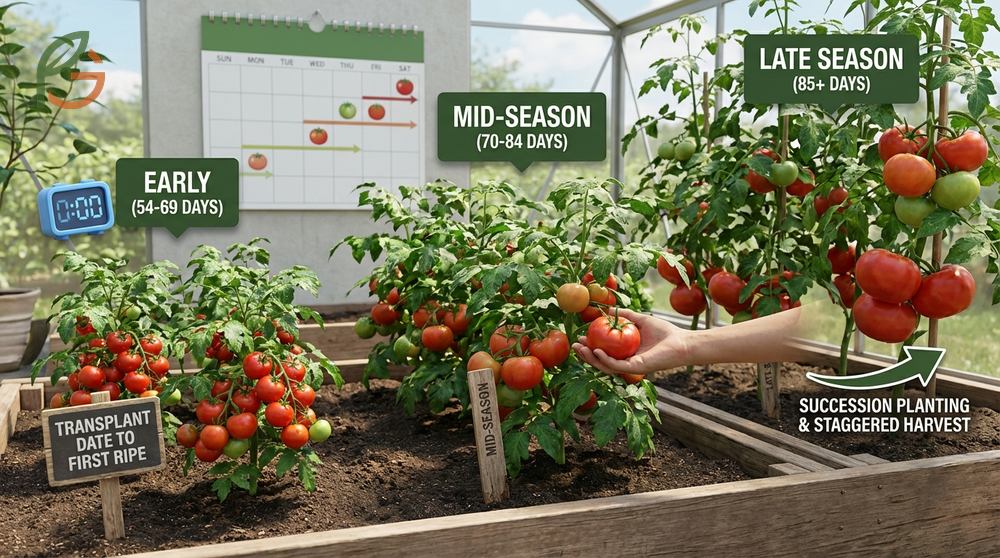
Days to maturity ratings classify tomatoes into three categories: early (54-69 days), mid-season (70-84 days), and late season (85+ days)[3]. These numbers always count from transplant date to first ripe fruit, not from seed sowing. Understanding this distinction helps you plan succession plantings and stagger harvests throughout the growing season.
Determinate varieties typically mature faster than indeterminate types. They concentrate energy into a single flush of fruit that ripens within 1-2 weeks. Indeterminate tomatoes produce continuously until frost, with individual fruits taking 20-30 days to ripen after reaching full size[1].
Climate zones significantly impact actual maturity times. Southern gardeners with longer, warmer seasons often see fruits ripen 5-10 days faster than the packet indicates. Northern growers may experience delays if nighttime temperatures drop below 55°F (13°C) during fruit development.
Important Note: Don’t add germination and seedling time to the “days to maturity” number. A 70-day variety needs 70 days from transplant, plus your 6-8 weeks of indoor seedling time, totaling about 110-126 days from seed.
Early Maturing Tomato Varieties
Early Girl produces 6-ounce fruits in just 52 days from transplant, making it one of the fastest-maturing slicing tomatoes[3]. Patio Hybrid delivers 4-ounce tomatoes in 50 days, perfect for container gardens. Bush Early Girl offers similar speed at 54 days while maintaining compact growth.
Cherry tomato varieties dominate the early category. Sun Gold matures in 55-57 days with exceptional sweetness. These smaller fruits require less time to develop sugars and reach full ripeness compared to beefsteak types.
- Extend growing season in short-summer climates with 90-110 frost-free days
- Allow succession planting for continuous harvests from July through October
- Reduce disease pressure by maturing before late-season fungal problems peak
- Provide earlier taste satisfaction and faster return on gardening effort
- Enable fall replanting in warm regions for second crops
Late Season Tomatoes
Late-season varieties need 85 or more days from transplant to harvest. Brandywine, a popular heirloom, typically requires 90-100 days to produce its large, flavorful fruits. These extended timelines allow fruits to develop complex flavors and reach impressive sizes of 1-2 pounds.
Agricultural research indicates that late-season tomatoes perform best when transplanted early. Setting them out 2-3 weeks after the last frost gives them maximum growing time before fall temperatures decline. They’re ideal for regions with 120+ frost-free days.
The trade-off for waiting comes in exceptional flavor. Many gardeners consider late varieties worth the patience for their rich, complex taste profiles. Plan your garden to include both early and late types for extended harvest windows.
Tomato Growth Stages
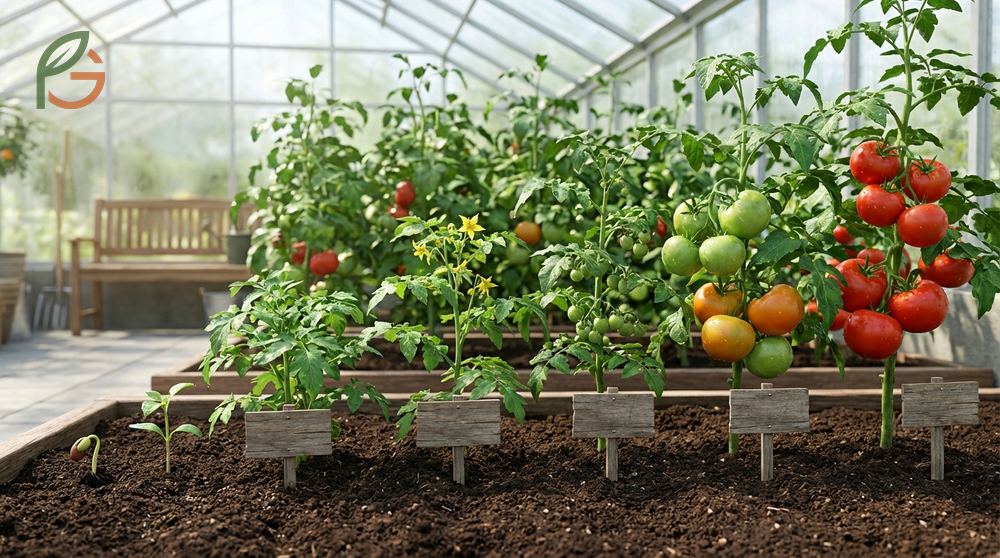
Tomato plants progress through seven distinct growth stages: germination, seedling, vegetative growth, flowering, pollination, fruit formation, and ripening[5]. Each stage requires specific conditions and care practices to maintain healthy development. Understanding these phases helps you troubleshoot problems and optimize yields.
The transition between stages isn’t always sharp. Indeterminate varieties continue vegetative growth while simultaneously flowering and setting fruit. This overlap explains why they produce continuously rather than in a single harvest like determinate types.
Temperature governs stage progression more than any other factor. Vegetative growth accelerates above 70°F (21°C), while fruit set requires nighttime temperatures between 55-75°F (13-24°C). Temperatures outside these ranges slow or halt specific stages.
This table shows the duration and key characteristics of each tomato growth stage from seed germination through fruit ripening
| Stage | Duration | Key Activities | Temperature Range |
|---|---|---|---|
| Germination | 5-10 days[2] | Seed coat splits, root emerges | 70-80°F (21-27°C) |
| Seedling | 2-4 weeks[5] | True leaves develop, root system expands | 65-75°F (18-24°C) |
| Vegetative Growth | 3-6 weeks[5] | Stems thicken, foliage multiplies | 70-85°F (21-29°C) |
| Flowering | 1-2 weeks[5] | Yellow blooms appear, pollination occurs | 60-75°F (16-24°C) nights |
| Fruit Formation | 6-8 weeks[5] | Green fruits swell to full size | 70-85°F (21-29°C) |
| Ripening | 20-30 days[1] | Color develops, sugars accumulate | 68-77°F (20-25°C) |
Vegetative Growth Period
The vegetative phase begins after transplanting and lasts 3-6 weeks[5]. During this time, plants focus on building the structure needed to support future fruit production. Stems thicken, leaves multiply rapidly, and root systems can extend 3 feet deep with lateral roots spreading 8-12 inches from the main stem.
Nitrogen drives vegetative growth, making this the period when plants need the most nitrogen fertilizer. However, excessive nitrogen prolongs this phase at the expense of flowering. Balance is critical—you want robust plants without delaying fruit set.
Pruning decisions during vegetative growth affect final yields. Removing suckers from indeterminate varieties channels energy into main stems and improves air circulation. Determinate types should never be pruned, as this reduces their predetermined fruit load.
Growing Tip: Install stakes or cages during early vegetative growth, not after plants reach full size. Early support prevents root disturbance and allows you to train stems as they develop.
Flowering and Fruit Set
Flowering begins 5-7 weeks after germination when plants reach maturity. Yellow blossoms appear in clusters along stems, with each flower containing both male and female parts. Tomatoes are self-pollinating, but gentle shaking or wind improves pollen transfer and fruit set rates.
Research shows that flowers drop without forming fruit when nighttime temperatures fall below 55°F (13°C) or rise above 75°F (24°C). This explains why spring plantings may show delayed fruiting and why midsummer heat can cause temporary fruit set failure. Once fruits begin forming, they take 15-20 days to reach full size.
- Nighttime temperatures between 55-75°F (13-24°C) for optimal hormone activity
- Adequate pollination through air movement or manual flower shaking
- Consistent moisture to prevent blossom end rot during cell division
- Balanced fertilization with phosphorus to support flower and fruit development
- Protection from extreme heat above 95°F (35°C) which damages pollen viability
After fruits reach full size, ethylene triggers ripening. This hormone causes chlorophyll breakdown and pigment development. The green-to-pink-to-red transition takes another 20-30 days depending on temperature and variety[1].
Transplant to Harvest Time
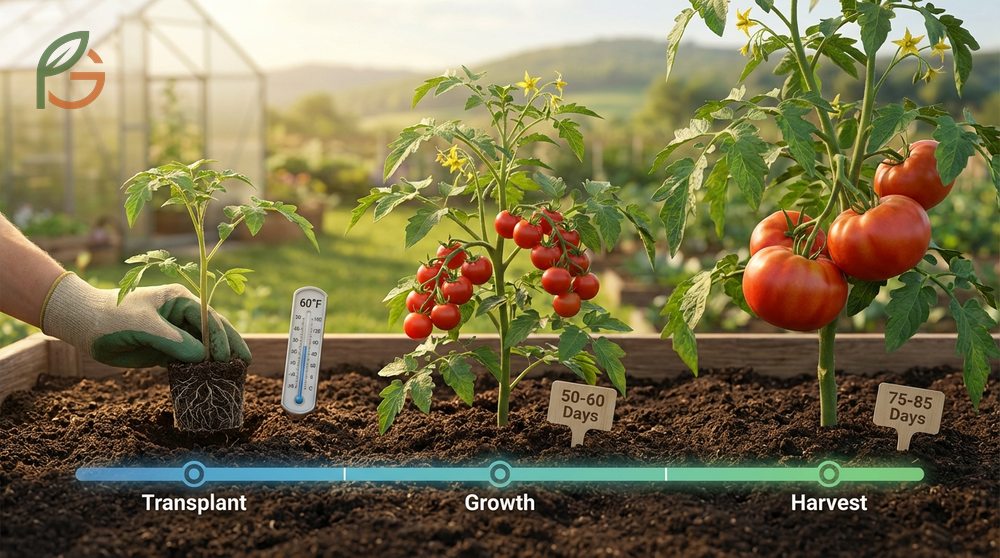
From the day you transplant seedlings into your garden, expect 50-90 days until your first ripe tomato[1]. This period varies based on variety, climate, and growing conditions. Cherry tomatoes mature fastest at 50-60 days, while beefsteak varieties need 75-85 days[4].
Transplant timing significantly affects harvest dates. Setting out seedlings 1-2 weeks after your last frost date ensures soil temperatures reach 60°F (16°C) or higher. Cold soil below 55°F (13°C) stalls root development and delays the entire timeline by 10-14 days.
Current guidance emphasizes hardening off seedlings for 7-10 days before transplanting. This gradual exposure to outdoor conditions prevents transplant shock that can add another week to your harvest timeline. Move plants outside for increasing periods daily, starting with 2-3 hours in shade.
The first fruits to ripen come from flowers that set 6-8 weeks after transplanting. Once ripening begins on indeterminate varieties, you’ll harvest continuously every 3-5 days throughout the season. Determinate types ripen their entire crop within 2-3 weeks, making them ideal for canning and preserving.
Environmental stress extends transplant-to-harvest time. Drought, extreme heat, or nutrient deficiencies can add 1-2 weeks to expected maturity dates. Consistent care keeps plants on schedule for timely harvests.
Conclusion
The evidence is clear: How Long Do Tomatoes Take To Grow depends on your chosen variety and growing method, ranging from 90-140 days from seed or 50-90 days from transplant. Early varieties deliver faster gratification, while late-season types reward patience with exceptional flavor. Current agricultural data supports starting seeds indoors 6-8 weeks before your last frost, selecting varieties matched to your climate zone, and maintaining optimal temperatures throughout the growing cycle.
Success comes from understanding each growth stage and providing appropriate care at the right time. Whether you’re growing Sun Gold cherries for 55-day harvests or heirloom Brandywines over 90 days, FruitGarden helps you plan timelines that align with your growing season and harvest goals.
Frequently Asked Questions
How long does it take tomatoes to grow from seed?
Tomatoes take 90-140 days to grow from seed to harvest, depending on the variety. This includes 5-10 days for germination, 6-8 weeks for seedling development, and 50-90 days after transplanting to produce ripe fruit.
What’s the fastest-growing tomato variety?
Patio Hybrid matures in just 50 days from transplant, followed closely by Early Girl at 52 days. These early varieties work well in short-season climates and for gardeners wanting quick results.
Do cherry tomatoes grow faster than regular tomatoes?
Yes, cherry tomatoes typically mature 10-20 days faster than full-size varieties. Most cherry types need 50-60 days from transplant, while slicing tomatoes require 65-85 days to reach harvest.
What does “days to maturity” mean on seed packets?
Days to maturity counts from transplant date to first ripe fruit, not from seed sowing. A 70-day variety needs 70 days after you move seedlings to the garden, plus your 6-8 weeks of indoor seedling time.
How long after flowering do tomatoes ripen?
Tomatoes take 6-8 weeks from flower to ripe fruit. Flowers develop into full-size green fruits in 15-20 days, then need another 20-30 days to ripen and change color completely.
Can I speed up tomato growth?
You can accelerate growth by maintaining soil temperatures at 70-85°F, providing 8+ hours of direct sunlight daily, and ensuring consistent moisture and fertilization. Starting seeds indoors also reduces garden time by 6-8 weeks.
Do determinate or indeterminate tomatoes grow faster?
Determinate tomatoes typically mature faster, with most varieties ready in 60-75 days from transplant. They focus energy on one harvest period, while indeterminate types produce continuously but may take 70-90 days for first fruits.