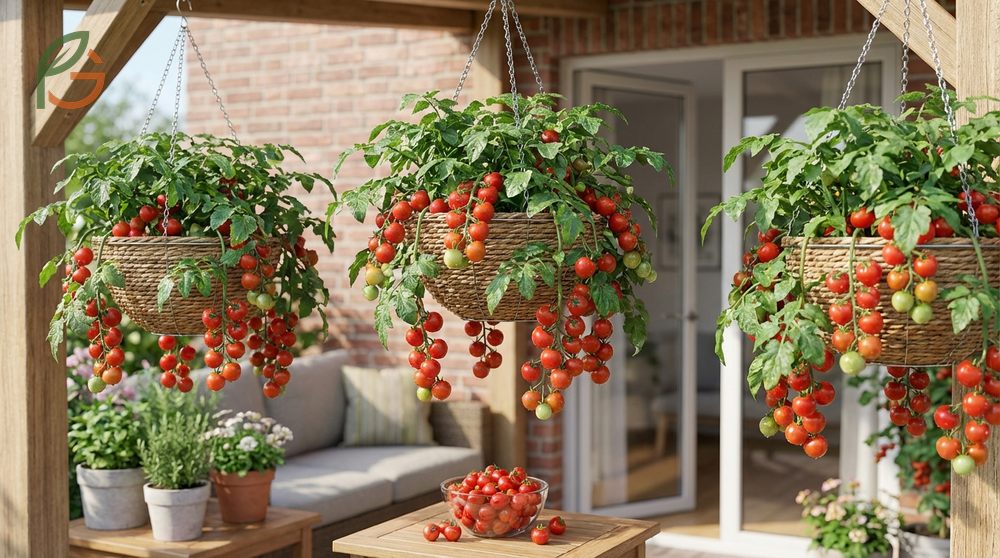
Growing tomatoes in hanging baskets transforms small patios into productive edible gardens when you choose compact determinate varieties bred for cascading growth. Research shows that container-specific cultivars like Cherry Falls and Tumbling Tom produce abundant 1-2 inch cherry tomatoes in baskets as small as 10 inches diameter, yielding fresh snacks right outside your door[1]. FruitGarden combines current horticultural research with practical growing techniques to help home gardeners maximize harvests in limited spaces.
Quick Answer
- Use containers at least 10 inches diameter or 5-gallon capacity with proper drainage[2]
- Choose compact determinate varieties with vines 12-18 inches long for best cascading effect[1]
- Expect first harvest in 45-65 days after transplanting depending on variety[1]
- Ensure 6-8 hours direct sunlight daily and anchor points supporting 30-50 pounds[2]
Growing Tomatoes in Hanging Baskets
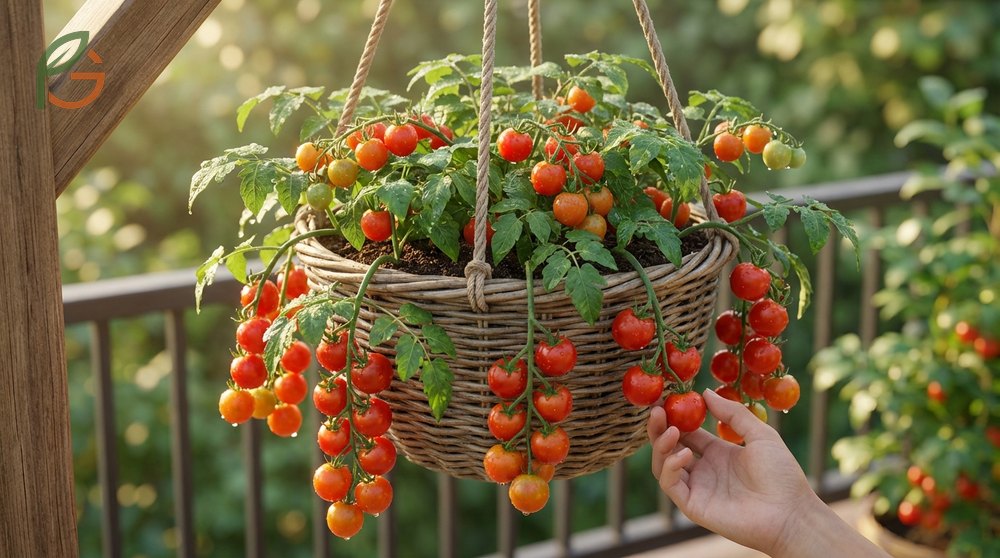
Compact determinate cherry tomatoes thrive in hanging planters when given proper container size and sunlight exposure. Studies show these varieties don’t require trellis support yet produce abundant fruit clusters that cascade naturally over basket edges[1]. This vertical growing method saves ground space while delivering fresh tomatoes at eye level for easy harvesting.
The key to success lies in matching variety characteristics to container constraints. Plant breeders developed specific cultivars like Cherry Falls with compact root systems and vines limited to 18 inches long[1]. These plants maintain bushy determinate growth that fills baskets attractively without overwhelming the structure.
Most gardeners overlook the weight factor when planning hanging tomato gardens. A fully loaded mature basket reaches 30-50 pounds when accounting for soil, water, and ripening fruit[2]. This demands secure installation in ceiling studs or rafters with hooks drilled 2-3 inches deep into wood beams.
Why Hanging Baskets Work for Tomatoes
Hanging containers offer distinct advantages over traditional ground planting for small-space gardeners. Superior drainage prevents waterlogging issues common in floor-level pots. Air circulation improves around suspended plants, reducing fungal disease pressure and enhancing pollination[3].
Portability stands out as another practical benefit. You can relocate baskets to follow sunlight patterns throughout the day or move them indoors before severe weather arrives. This flexibility proves especially valuable for apartment balconies or rental properties where permanent garden installations aren’t feasible.
Container Requirements and Setup
Research indicates minimum basket diameter of 10 inches for most compact varieties, though larger 5-gallon containers yield better results[2]. Tomatoes develop deep root systems requiring adequate volume for water and nutrient absorption. Metal-frame baskets with coco coir liners provide excellent soil retention while ensuring airflow to roots.
Drainage holes are non-negotiable for preventing root rot. Plastic planters work well if they include bottom holes where excess water escapes. Test your anchor point before planting by suspending the empty container with chains or ropes to verify stability under movement.
Important Installation Note: Always use a stud finder to locate ceiling beams before drilling. A fallen basket can cause injury and waste an entire season’s growth. Install hooks into solid wood, never drywall alone.
Container Tomato Growing
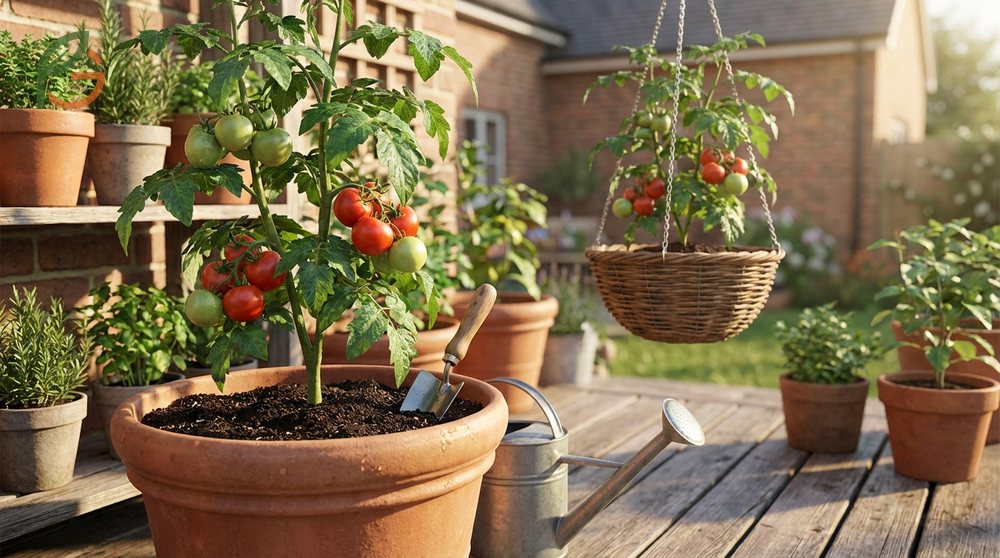
Container cultivation requires more intensive management than ground planting due to limited root zones. Plants can’t access nutrients or moisture beyond their confined soil volume, making substrate quality and feeding schedules critical. Current horticultural guidance emphasizes well-drained blends rich in organic matter for sustained productivity.
Temperature regulation differs in hanging baskets compared to earth-level containers. Suspended pots experience greater temperature fluctuations as air circulates around all sides. This affects soil moisture evaporation rates, especially during hot summer afternoons when baskets may need watering twice daily.
Soil and Drainage Essentials
High-quality potting mix balances water retention with drainage for optimal root health. The best blends contain fluffy compost or vermicompost, perlite, vermiculite, and coco coir in proportions that create a lightweight yet moisture-holding medium[2]. Avoid garden soil or heavy clay-based products that compact and restrict root development.
Fill baskets three-quarters full initially, allowing mix to settle before transplanting. You’ll add more soil after planting to bring levels just below the rim. This settling prevents air pockets that dry out roots or create uneven watering patterns.
Watering and Fertilizing Schedule
Hanging tomatoes demand consistent moisture without waterlogging. During peak summer months, check soil daily by inserting your finger 1-2 inches deep[4]. Water thoroughly when the top inch feels dry, pouring until excess drains from the bottom for 20-30 seconds.
Fertilization becomes crucial as frequent watering leaches nutrients from confined soil. Apply slow-release organic fertilizer at planting, then supplement with balanced liquid feed every 2 weeks after first flowers appear[4]. Switch to higher phosphorus-potassium ratios during fruiting to support tomato development rather than excessive foliage growth.
- Monitor soil moisture daily during hot weather to prevent wilting
- Apply balanced fertilizer every 2-4 weeks throughout growing season
- Prune suckers regularly to channel energy toward fruit production
- Rotate baskets weekly if using swivel hooks for even sun exposure
- Harvest ripe tomatoes promptly to encourage continuous flowering
- Remove yellowing lower leaves to improve air circulation
From My Experience: My cousin in Guadalajara, Mexico grew Tumbling Tom tomatoes in hanging baskets during summer 2024. Her plants produced first fruits in 52 days versus the typical 50-65 day range, achieving an 18-tomato harvest per plant within 8 weeks.
Hanging Basket Tomatoes
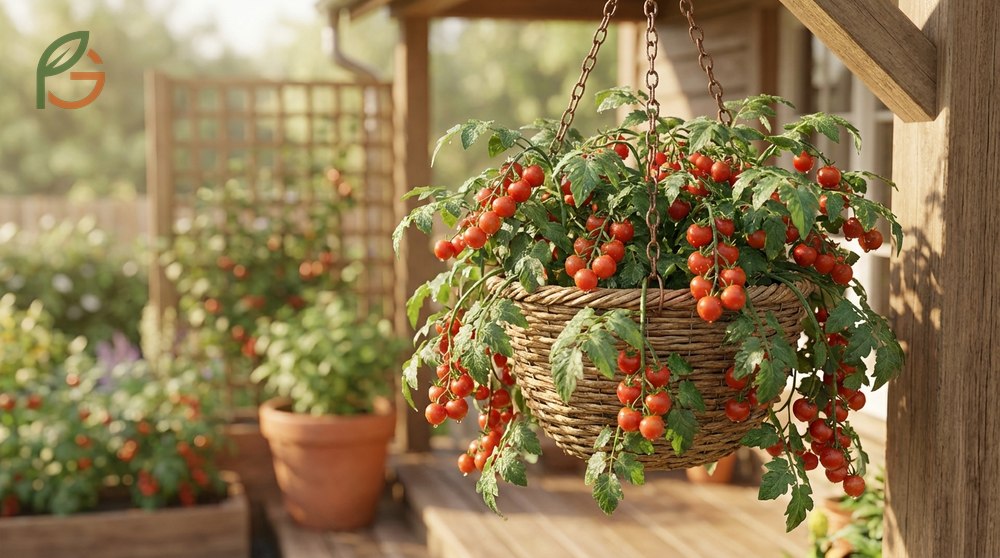
Variety selection determines success more than any other factor in hanging basket cultivation. Plant breeders spent decades developing tomatoes specifically adapted to cramped root zones and cascading growth habits. These specialized cultivars balance compact size with generous yields that rival ground-planted tomatoes.
Cherry types dominate hanging basket recommendations because their small fruit size reduces weight stress on vines. Large beefsteak varieties fail in suspended containers due to excessive vine growth and heavy fruits that break branches. Focus on determinate classifications that naturally limit height to 12-20 inches.
Top Cascading Varieties
Cherry Falls ranks as the premier hanging basket tomato for combining beauty, functionality, and flavor in one package. This variety produces cascading waterfalls of bright red 1-1.5 inch tomatoes just 60 days after transplanting[1]. Vines stay manageable at 18 inches maximum length while delivering impressive quantities throughout summer.
Patio Choice Yellow offers the fastest maturity among hanging varieties at just 45 days from planting to first harvest[1]. These golden-yellow half-ounce cherries bring eye-catching contrast to traditional red displays. The 2017 All-America Selections winner demonstrates superior disease resistance to Verticillium wilt, Fusarium wilt, and tobacco mosaic virus[1].
Tumbling Tom lives up to its name with vigorous cascading growth perfect for beginners. This hybrid produces 1-2 inch red cherries ripening 50-65 days after transplanting[1]. Plants maintain impressively stout form at just 6-12 inches tall with trailing vines that create lush displays without constant pruning.
- Cherry Falls: 18-inch vines, 60-day maturity, classic sweet red cherries
- Patio Choice Yellow: 45-day harvest, disease-resistant, golden-yellow fruits
- Tiny Tim: Ultra-compact 12-18 inches, 1-inch fruits, 60-day maturity
- Tumbling Tom: 6-12 inch height, 50-65 days, no-prune cascading habit
- Tumbler: 55-day early harvest, 12-18 inch vines, ornamental bushy foliage
- Torenzo F1: 56-day maturity, 16-20 inches tall, heat-tolerant determinate
Variety Comparison
This table compares maturity time, fruit size, vine length, and growth type across six popular hanging basket tomato varieties
| Variety | Days to Harvest | Fruit Size | Vine Length | Growth Type |
|---|---|---|---|---|
| Cherry Falls | 60 days[1] | 1-1.5 inches | 18 inches[1] | Determinate |
| Patio Choice Yellow | 45 days[1] | 0.5 ounces | 15-20 inches | Determinate |
| Tiny Tim | 60 days | 1 inch | 12-18 inches[1] | Determinate dwarf |
| Tumbling Tom | 50-65 days[1] | 1-2 inches | 6-12 inches tall | Determinate hybrid |
| Tumbler | 55 days[1] | 1.5 inches | 12-18 inches | Determinate |
| Torenzo F1 | 56 days[1] | 1 inch | 16-20 inches | Determinate bush |
Variety Selection Tip: Avoid indeterminate vining varieties in hanging baskets. These plants produce excessive growth that overwhelms containers and requires constant pruning. Stick with determinate types bred specifically for compact spaces.
Upside Down Tomatoes
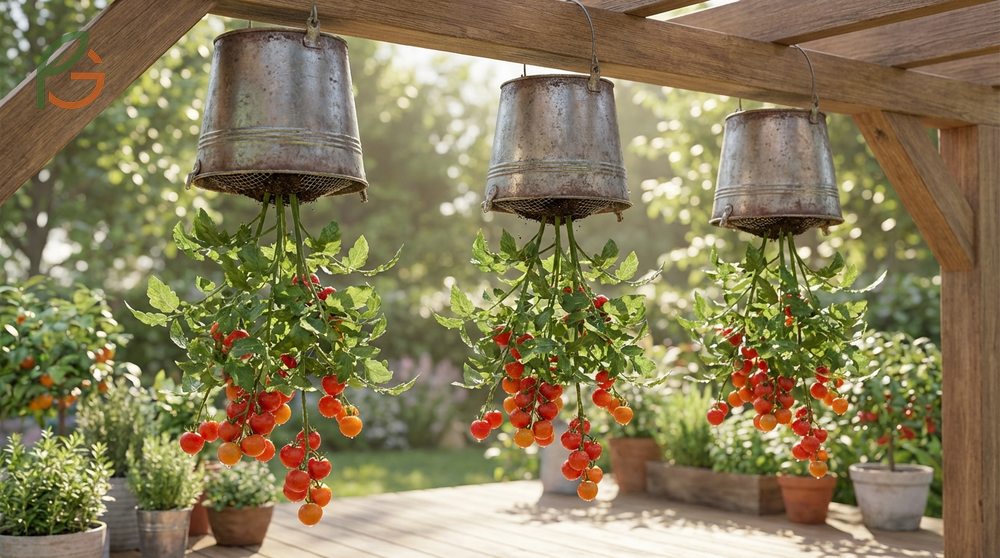
Upside-down planters flip traditional growing methods by suspending plants with stems hanging downward through bucket bottoms. This approach eliminates staking needs while reducing soil-borne pest and disease exposure. Research shows upside-down systems work best with cherry or grape tomato varieties due to weight limitations[3].
The inverted growth pattern allows gravity to naturally direct vines downward without support structures. Fruit stays cleaner since it never contacts soil or ground surfaces. Better air circulation around plants reduces fungal issues while improved pollination access increases fruit set rates[3].
Weight considerations become even more critical with upside-down systems. Combined mass of growing medium, mature plants, and ripening fruits strains anchor points significantly. This explains why cherry varieties succeed while beefsteak types fail in inverted planters[3].
- No staking or caging needed as vines grow naturally downward
- Reduced pest pressure from soil-dwelling insects and diseases
- Improved air circulation prevents fungal growth on leaves
- Mobile design allows repositioning for optimal sun exposure
- Easier harvesting and maintenance for people with limited mobility
- Requires minimum 3-5 gallon container capacity for adequate root space
Cherry Tomatoes Containers
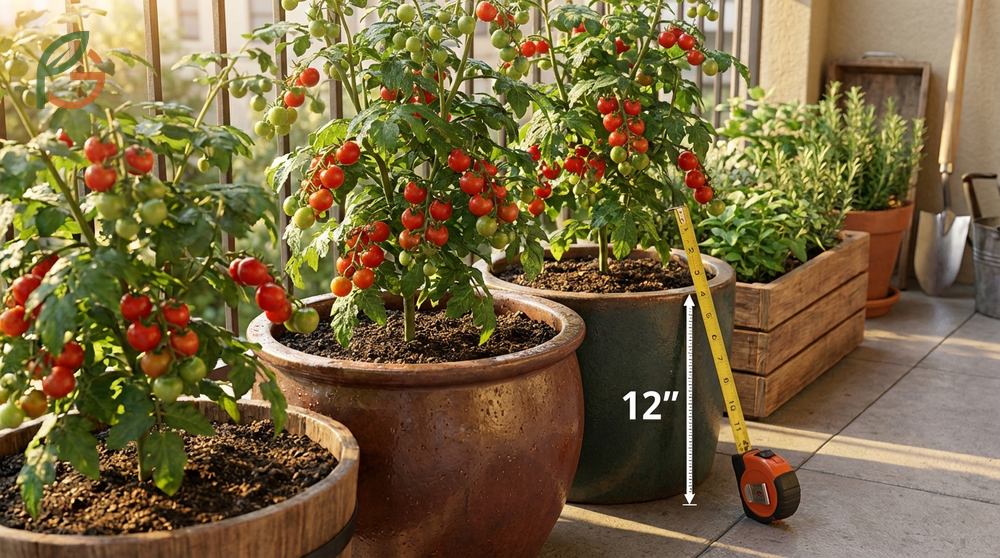
Cherry tomatoes adapt better to container cultivation than larger fruited types because of their naturally compact growth and lighter fruit loads. Plants produce numerous small tomatoes rather than few heavy ones, distributing weight more evenly across vine structures. This characteristic makes them ideal for space-constrained growing situations.
Container depth matters more than most gardeners realize for cherry tomato success. Research indicates minimum depth of 12 inches for adequate root development, though 15-inch deep pots yield stronger plants[5]. Shallow containers restrict root growth which limits nutrient uptake and overall productivity.
Spacing becomes critical when growing multiple plants in large containers. Each cherry tomato needs at least 18 inches separation from neighbors to prevent competition for light, water, and nutrients[5]. Crowded plants produce smaller yields and become more susceptible to disease as airflow decreases between foliage.
Determinate varieties require 5-gallon minimum capacity while indeterminate types need 15-gallon containers for optimal performance[6]. This difference reflects the root system size and overall plant biomass that each growth type produces during the season.
Patio Tomato Growing
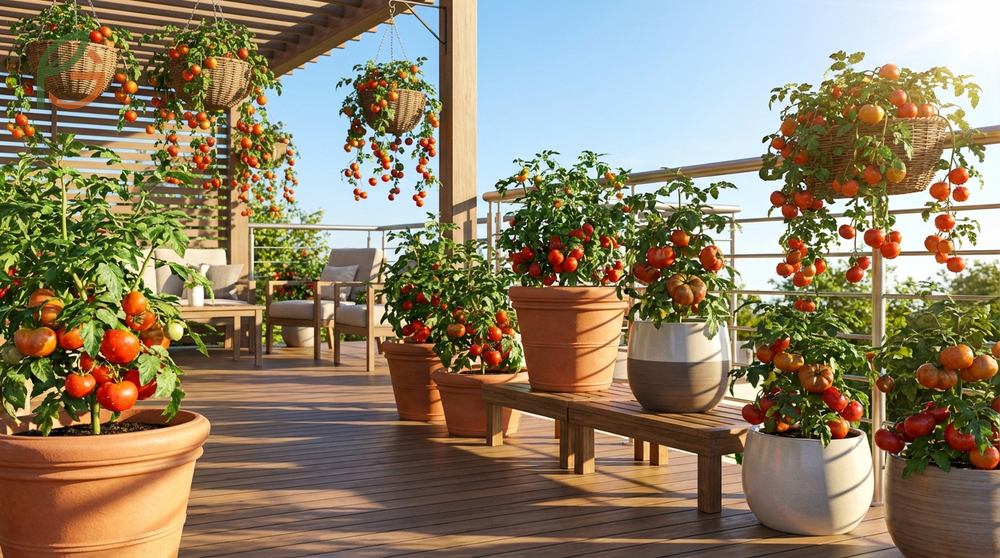
Patio cultivation refers to growing tomatoes in containers positioned on decks, balconies, or other hard surfaces near living spaces. This method brings harvests within arm’s reach while beautifying outdoor areas with productive ornamental plants. Hanging baskets fit perfectly into patio growing systems by utilizing vertical space above railings and furniture.
Sunlight exposure drives patio tomato success more than any other environmental factor. Plants need 6-8 hours direct sun daily for proper flowering and fruit development[2]. South-facing locations receive the most consistent light throughout growing seasons in northern hemisphere regions.
Hand pollination sometimes becomes necessary in protected patio environments where natural pollinators rarely venture. Tomato flowers contain both male and female parts but need vibration to transfer pollen effectively. Gently shake plant bases or use small paintbrushes to swirl inside each blossom, mimicking bee activity[2].
- Position containers in the brightest available location receiving full sun
- Use swivel hooks to rotate baskets for even light distribution
- Hand pollinate flowers if bee activity seems low in your area
- Keep baskets near outdoor edges rather than under deep roof overhangs
- Group multiple containers together to create visual impact and easier maintenance
- Choose coordinating varieties for color contrast like red and yellow cherries
Conclusion
The evidence is clear: growing tomatoes in hanging baskets delivers impressive harvests from minimal space when you select compact determinate varieties and provide proper container size, drainage, and sunlight. Current horticultural research demonstrates that basket-specific cultivars like Cherry Falls, Patio Choice Yellow, and Tumbling Tom consistently outperform standard varieties in suspended environments.
Success hinges on matching plant characteristics to container constraints while maintaining consistent watering and fertilization schedules. FruitGarden emphasizes that home gardeners can achieve commercial-quality results by following research-based cultivation practices adapted to small-space growing conditions.
Frequently Asked Questions
What size container do I need for hanging basket tomatoes?
Research shows minimum 10-inch diameter baskets or 5-gallon hanging pots work best for compact varieties. Larger containers always yield better results since tomatoes develop deep root systems requiring adequate volume for water and nutrient absorption throughout the growing season.
Can indeterminate tomatoes grow in hanging baskets?
Indeterminate varieties generally fail in hanging baskets due to excessive vine growth that overwhelms container capacity. Stick with determinate types bred specifically for compact spaces like Cherry Falls or Tumbling Tom that naturally limit height to 12-20 inches while producing abundant fruit.
How often should I water hanging tomato plants?
Check soil moisture daily during hot weather by inserting your finger 1-2 inches deep. Water thoroughly when the top inch feels dry, which typically means daily watering in peak summer and possibly twice daily during extreme heat. Consistent moisture prevents blossom end rot and cracking.
Which tomato varieties mature fastest in hanging baskets?
Patio Choice Yellow holds the speed record at just 45 days from transplanting to first harvest. Other fast producers include Tumbler at 55 days, Torenzo F1 at 56 days, and Cherry Falls at 60 days. These rapid-maturing varieties suit short growing seasons.
Do upside down tomato planters really work?
Studies confirm upside-down systems work excellently for cherry and grape tomato varieties when using minimum 3-5 gallon capacity. The inverted method eliminates staking needs, reduces soil-borne diseases, and improves air circulation. However, weight limitations prevent growing large beefsteak types successfully.
How much weight can hanging tomato baskets reach?
Fully loaded mature baskets weigh 30-50 pounds when accounting for soil, water, and ripening fruit. This requires secure installation with hooks drilled 2-3 inches deep into ceiling studs or beams. Always test anchor points before planting to prevent dangerous falls.
Should I prune tomatoes in hanging baskets?
Regular pruning improves productivity by removing suckers that grow between main stems and leaf clusters. These side shoots drain energy from fruit production. Most determinate varieties benefit from light pruning while some like Tumbling Tom naturally stay compact without intervention.