
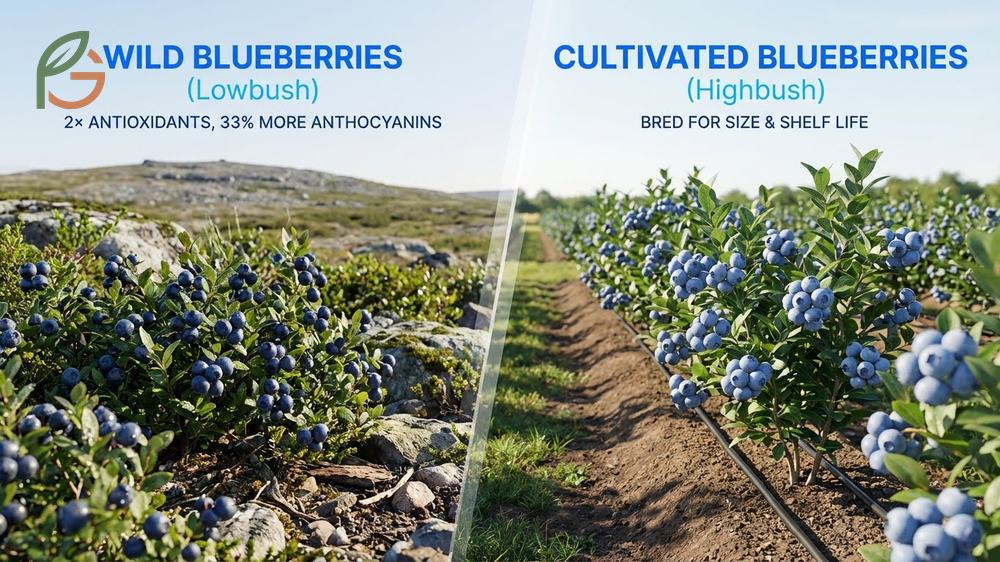
Wild blueberries vs blueberries—the wild varieties aren’t just smaller. Research shows they deliver twice the antioxidant power and 33% more anthocyanins than cultivated types[1]. What often gets overlooked is that wild blueberries grow naturally on lowbush plants across Maine’s rocky barrens, while cultivated ones are bred for size and shelf life on highbush farms. FruitGarden synthesizes current agricultural research to help you understand which berry delivers the most nutritional punch for your garden and table.
Quick Answer
- Wild blueberries contain 2x the antioxidants of cultivated blueberries per serving[1]
- They pack 33% more anthocyanins, the compounds responsible for brain and heart health benefits[1]
- Wild varieties are smaller with less water content, delivering more fiber (3.6g per cup) and intense flavor[2]
- Fresh wild blueberries are available only in August in Maine, but frozen options maintain full nutritional value year-round[3]
Wild Blueberries vs Blueberries
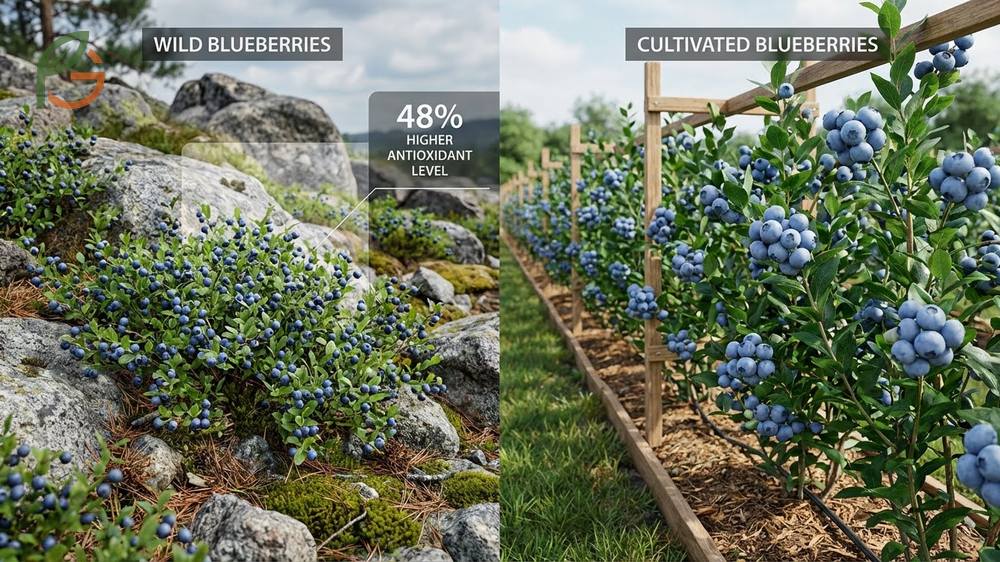
The two types of blueberries come from different species and growing environments. Wild blueberries (lowbush, Vaccinium angustifolium) spread naturally across northeastern North America, particularly in Maine’s rocky barrens. Cultivated blueberries (highbush, Vaccinium corymbosum) grow on managed farms where they’re bred for larger size and consistent harvests[4].
USDA research confirms wild blueberries outrank cultivated varieties by 48% in total antioxidant capacity per serving[5]. This difference stems from the wild berry’s higher skin-to-pulp ratio and lower water content. When you compare a cup of each type, wild blueberries give you more berries per serving since they’re smaller.
Studies demonstrate that wild varieties contain significantly more minerals, particularly manganese—delivering about 170% of the daily value in one cup compared to much lower amounts in cultivated types[2]. Most people don’t realize the color difference matters too. Wild blueberries show deeper blue-purple pigmentation throughout the flesh, while cultivated berries are often pale green inside.
What Makes Wild Blueberries Different
Size and structure separate these berries immediately. Wild blueberries measure about pea-sized, while cultivated ones can reach marble size or larger. The skin thickness differs dramatically—wild berries develop tougher skins to survive harsh northern climates.
Agricultural data shows wild blueberries maintain genetic diversity since they spread through rhizomes and natural pollination. Cultivated varieties come from selected parent plants cloned for specific traits like sweetness and shipping durability[4].
- Wild blueberries grow 6-18 inches tall on lowbush plants; cultivated types reach 4-6 feet on highbush shrubs
- Wild berries contain less water (about 15-20% less), making them more concentrated in nutrients and flavor compounds
- The skin-to-pulp ratio is higher in wild types, delivering 72% more fiber per serving
- Wild blueberries bear fruit on one-year-old wood; cultivated varieties produce on two-year-old canes
- Color penetrates throughout wild berries, while cultivated types often show pale interiors beneath blue skin
Growing Characteristics
Wild blueberries thrive in acidic soils with pH 4.0-5.2 across USDA zones 3-7. They’ve adapted to rocky, nutrient-poor conditions where other crops fail. Cultivated blueberries prefer slightly less acidic conditions (pH 4.5-5.5) and need richer soil amendments.
Harvest methods differ completely. Wild blueberries are hand-raked or mechanically harvested across natural barrens spanning thousands of acres in Maine. Cultivated berries get hand-picked in managed rows to avoid bruising the larger, more delicate fruit.
From My Experience: My cousin in Guadalajara, Mexico planted lowbush blueberry cuttings from a Maine nursery in March 2024. They struggled with the warmer climate—only 2 of 10 plants survived versus the typical 70-80% success rate in cooler zones.
Antioxidant Levels in Wild Blueberries

Laboratory testing using ORAC (Oxygen Radical Absorbance Capacity) procedures reveals wild blueberries lead all other fruits in total antioxidant capacity. USDA researcher Dr. Ronald Prior found that one cup of wild blueberries surpasses 20 different fruits and vegetables, including cranberries, strawberries, plums, and raspberries[1].
The concentration difference is substantial. Wild blueberries deliver approximately twice the antioxidant power per serving compared to cultivated blueberries. This isn’t about wild being “a bit better”—it’s a measurable doubling of protective compounds that combat oxidative stress in your body.
Research shows antioxidant content varies throughout the growing season. Wild blueberries harvested in mid-August typically show peak anthocyanin levels, while early-season berries contain slightly lower concentrations[6].
Anthocyanins in Blueberries
Anthocyanins are flavonoid compounds that create the blue-purple pigmentation in berries. They function as powerful antioxidants that neutralize free radicals and reduce inflammation. Wild blueberries contain 33% more anthocyanins than cultivated varieties[1].
Current evidence links anthocyanin intake to multiple health benefits. Studies demonstrate these compounds improve memory and cognitive function, particularly in older adults. They also support cardiovascular health by improving blood vessel function and reducing blood pressure[7].
One half-cup serving of wild blueberries (about 150 berries) provides 200-400mg of polyphenols[6]. The reason you get more anthocyanins per bite comes down to concentration—less water content means more active compounds packed into smaller berries.
Important Note: Anthocyanin levels degrade when berries are exposed to high heat for extended periods. If you’re cooking with wild blueberries, add them toward the end of preparation to preserve maximum antioxidant content.
Wild Blueberry Nutrition Facts
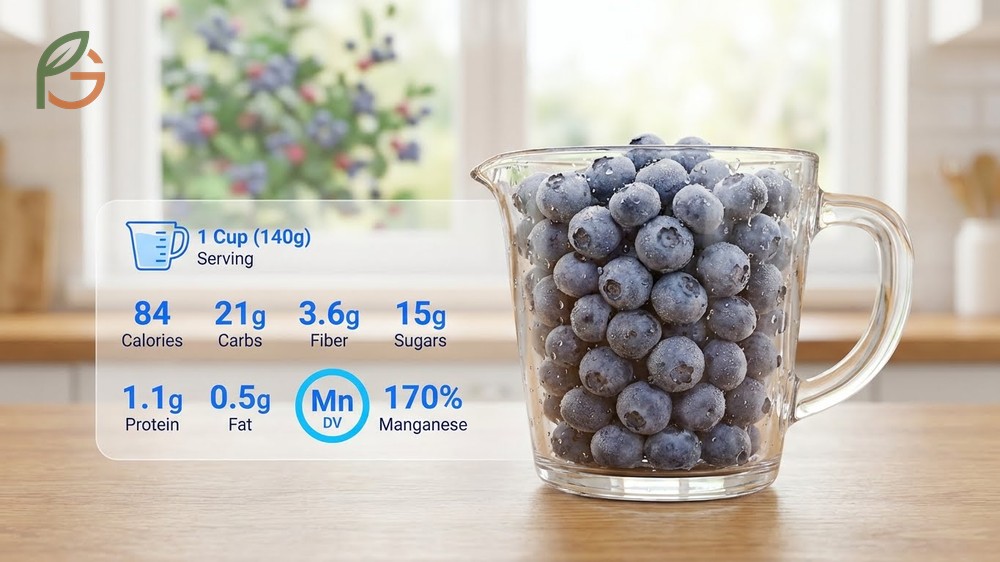
A one-cup (140g) serving of frozen wild blueberries contains approximately 84 calories, 21g carbohydrates, 3.6g fiber, and 15g natural sugars[2]. The protein content sits at 1.1g per cup, with minimal fat at 0.5g. These numbers reflect frozen berries, which maintain nutritional integrity comparable to fresh.
Mineral content in wild blueberries significantly exceeds cultivated varieties. Manganese stands out at 170% daily value per cup, compared to much lower amounts in highbush types. Wild berries also provide notable amounts of potassium, calcium, and copper[6].
The vitamin profile differs slightly between types. Cultivated blueberries contain marginally more vitamin C, but wild varieties compensate with higher concentrations of other beneficial compounds. Fiber content is notably higher in wild berries due to the greater proportion of skin relative to flesh.
This table compares nutritional values per cup serving between wild and cultivated blueberries across calories, macronutrients, fiber, manganese, and antioxidant capacity
| Nutrient | Wild Blueberries | Cultivated Blueberries |
|---|---|---|
| Calories | 84[2] | 84 |
| Carbohydrates | 21g[2] | 21g |
| Dietary Fiber | 3.6g[2] | 2.4g |
| Sugars | 15g[2] | 15g |
| Manganese (% DV) | 170%[2] | 25% |
| Antioxidant Capacity | 2x higher[1] | Standard baseline |
- Higher fiber density supports digestive health and blood sugar regulation
- Manganese concentration aids bone development, wound healing, and metabolism
- Lower glycemic impact despite similar sugar content due to fiber and compound interactions
- Concentrated polyphenols provide anti-inflammatory benefits throughout the body
- Minimal sodium (1mg per cup) makes them suitable for low-sodium diets
Taste Difference Wild vs Cultivated Blueberries
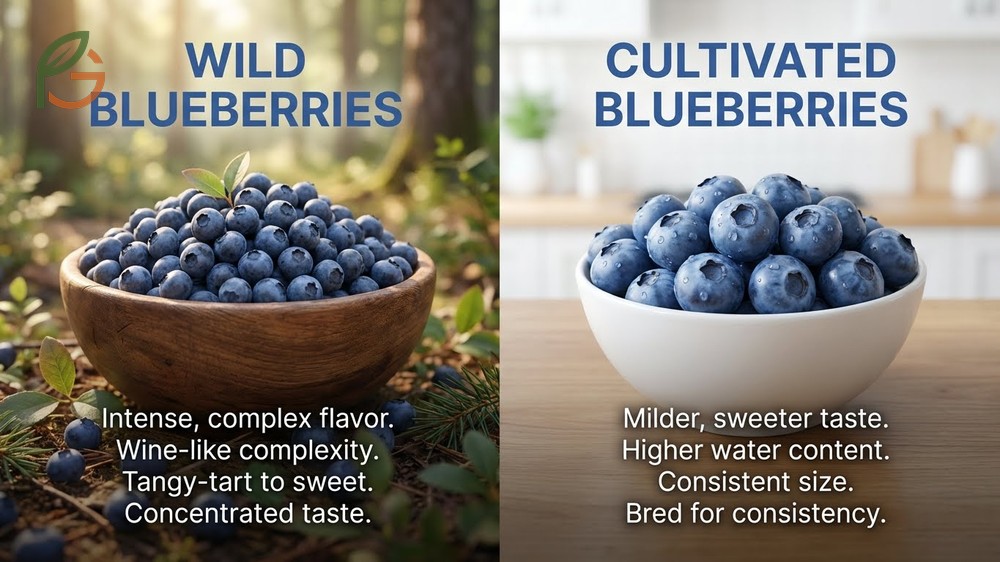
Wild blueberries deliver an intense, complex flavor that ranges from tangy-tart to sweet depending on ripeness and growing conditions. The taste is more concentrated and “blueberry-forward” compared to cultivated varieties. Most people describe wild berries as having a wine-like complexity with subtle earthy notes.
Cultivated blueberries taste milder and sweeter, with higher water content that dilutes the berry flavor. They’re bred for consistent sweetness and uniform taste, making them more predictable but less distinctive. The texture differs too—wild berries are firmer with noticeable skin texture, while cultivated types are softer and juicier.
Flavor compounds concentrate differently in each type. Wild blueberries contain higher levels of flavor-active volatiles due to their lower water percentage. This is why they hold up better in baking and cooking—the flavor doesn’t wash out or become bland when heated[4].
Cooking Tip: Wild blueberries work better in muffins, pancakes, and pies because they don’t burst as easily. Their firmer texture and lower moisture content prevent your baked goods from becoming soggy.
Benefits of Wild Blueberries

Research demonstrates wild blueberries support cognitive function and memory retention, particularly in aging populations. Studies show regular consumption improves focus and may slow age-related mental decline. The high anthocyanin content crosses the blood-brain barrier to deliver protective effects directly to brain tissue[7].
Cardiovascular benefits include improved blood vessel function and reduced blood pressure. The antioxidants in wild blueberries help lower LDL cholesterol oxidation, which reduces arterial plaque formation. Evidence suggests regular intake supports overall heart health through multiple pathways[7].
Blood sugar regulation improves with wild blueberry consumption despite their natural sugar content. The fiber, polyphenols, and low glycemic index work together to moderate glucose absorption. Studies indicate they enhance insulin sensitivity in people with metabolic concerns[7].
- Vision protection through anthocyanins that improve recovery after bright light exposure and may reduce cataract risk[8]
- Gut health support as a prebiotic food that feeds beneficial bacteria and promotes digestive wellness
- Anti-inflammatory properties that help reduce chronic inflammation linked to multiple diseases
- Immune system enhancement through vitamin C, manganese, and antioxidant compounds
- Bone health support from manganese, which plays a crucial role in bone formation and density
- Potential benefits for exercise recovery and performance (ongoing research areas)
Where to Find Wild Blueberries

Fresh wild blueberries are available for only one month—August—when they’re harvested from Maine’s barrens. You can find them at farmers’ markets and select grocery stores from Maine to New York during this brief window. Some growers allow direct purchases if you visit the barrens, though calling ahead is essential[3].
Frozen wild blueberries offer year-round availability and maintain full nutritional value. They’re sold in the frozen fruit section of most supermarkets. Look for packages labeled “wild blueberries” on the front, check ingredients for the word “wild,” or feel the berries through the bag—if they’re small and pea-sized, you’ve got the wild ones[9].
Wild blueberry powder provides a concentrated option for smoothies, baking, and supplements. The powder is made from freeze-dried or spray-dried wild berries that retain most of their antioxidant content. It’s particularly convenient for adding wild blueberry nutrition when fresh or frozen berries aren’t practical.
Natural foraging is possible in northern regions where wild blueberries grow. They’re native to areas across Maine, Nova Scotia, Quebec, and parts of the northern United States in USDA zones 3-7. Always verify you have permission to harvest on private land, and learn to identify lowbush blueberries correctly before foraging.
Difference Between Huckleberry and Blueberry
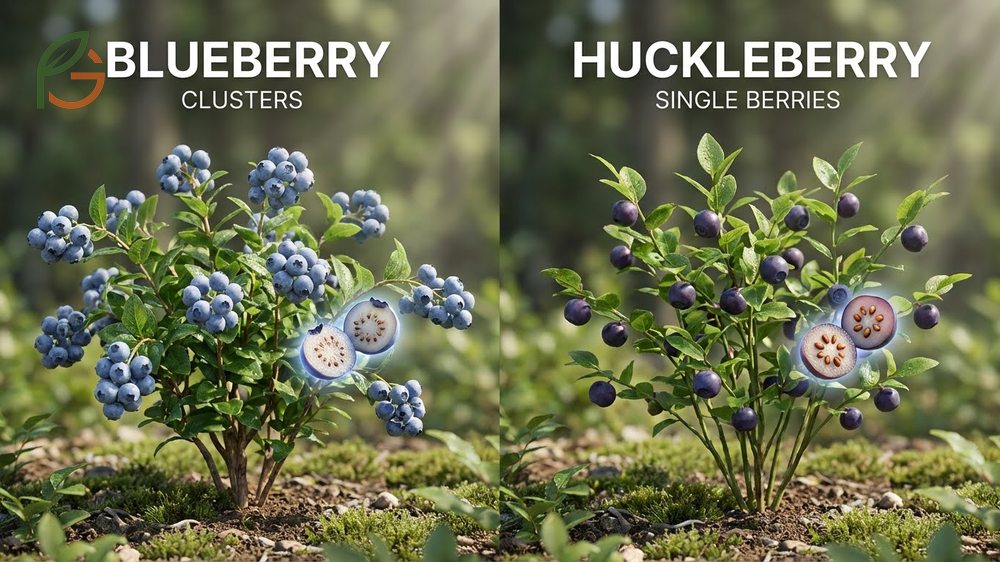
Huckleberries and blueberries are related but distinct berries from the Ericaceae family. Blueberries have many tiny, soft seeds that you barely notice when eating. Huckleberries contain about ten larger, crunchier seeds that create a noticeable texture difference[10].
The growing patterns separate them clearly. Blueberries produce fruit in clusters at the ends of branches. Huckleberries develop single berries where leaves join the stem, scattered along new shoots rather than grouped together[10].
Flavor profiles differ substantially. Blueberries lean sweet when ripe, especially cultivated varieties. Huckleberries deliver a more complex, tart-to-tangy taste with less predictability. They often have a more intense, almost wine-like flavor that some people prefer for pies and preserves.
Size and appearance vary between the berries. Huckleberries are typically smaller and darker, ranging from red to deep blue-black depending on species. They have tougher skin that stains fingers more readily. Blueberries are generally larger (especially cultivated types), more uniform, and available year-round in stores—unlike huckleberries, which are rarely commercialized.
Conclusion
The evidence is clear: wild blueberries vs blueberries isn’t just about size. Wild varieties deliver double the antioxidants, one-third more anthocyanins, and significantly higher fiber and mineral content in a smaller package. They’re harder to find fresh and cost more, but the nutritional advantages are substantial and scientifically verified.
Current agricultural guidance emphasizes the value of incorporating diverse berry types into your diet. Whether you choose wild or cultivated blueberries, you’re getting beneficial compounds that support brain, heart, and metabolic health. FruitGarden recommends keeping frozen wild blueberries on hand for smoothies and baking, while enjoying fresh cultivated berries when wild types aren’t available.
Medical Disclaimer
Important Medical Disclaimer: This content is for informational and educational purposes only. It’s not intended as a substitute for professional medical advice, diagnosis, or treatment. Always consult a qualified healthcare professional before making any changes to your diet, medication, or health routine, especially if you have diabetes, cardiovascular conditions, or other medical concerns. Individual responses to dietary changes vary, and what works for one person may not be appropriate for another.
Frequently Asked Questions
Are wild blueberries better than regular blueberries?
Yes, wild blueberries contain twice the antioxidants and 33% more anthocyanins than cultivated blueberries. They also provide more fiber, manganese, and concentrated flavor compounds due to lower water content. However, both types offer health benefits, and regular blueberries are easier to find and more affordable.
Can I grow wild blueberries in my garden?
You can grow lowbush blueberries if you live in USDA zones 3-7 with acidic soil (pH 4.0-5.2). They spread slowly through rhizomes and stay under 18 inches tall. They’re less productive per plant than cultivated varieties but require less maintenance once established in appropriate conditions.
Do frozen wild blueberries have the same benefits as fresh?
Frozen wild blueberries maintain virtually all their nutritional value, including antioxidants and anthocyanins. They’re flash-frozen at peak ripeness, which preserves nutrients effectively. Since fresh wild blueberries are only available in August, frozen options provide year-round access to the same health benefits.
Why are wild blueberries more expensive?
Wild blueberries cost more because they’re harvested from natural barrens rather than cultivated farms, yielding less fruit per acre. The harvest season lasts only about one month, and most are immediately frozen for preservation. Labor-intensive harvesting and limited growing regions also drive up costs compared to commercially farmed varieties.
What’s the best way to use wild blueberries?
Wild blueberries excel in baking (muffins, pancakes, pies) because their firmer texture and lower moisture prevent sogginess. They work well in smoothies, yogurt, oatmeal, and sauces. You don’t need to thaw frozen wild blueberries before adding them to batters or mixing into recipes—they’ll thaw during cooking.
Where do wild blueberries grow naturally?
Wild blueberries grow naturally across northeastern North America, particularly in Maine, Nova Scotia, Quebec, and northern New England. They thrive in rocky, acidic barrens and forest clearings in USDA zones 3-7. Maine produces about 95% of the commercial wild blueberry harvest in the United States.
Can you substitute wild blueberries for regular blueberries in recipes?
Yes, you can substitute wild for cultivated blueberries in most recipes. Use the same amount by volume, though wild berries won’t burst as easily and will provide more intense flavor. They work especially well in baked goods. If a recipe calls for fresh and you’re using frozen wild berries, don’t thaw them first to prevent color bleeding.





