
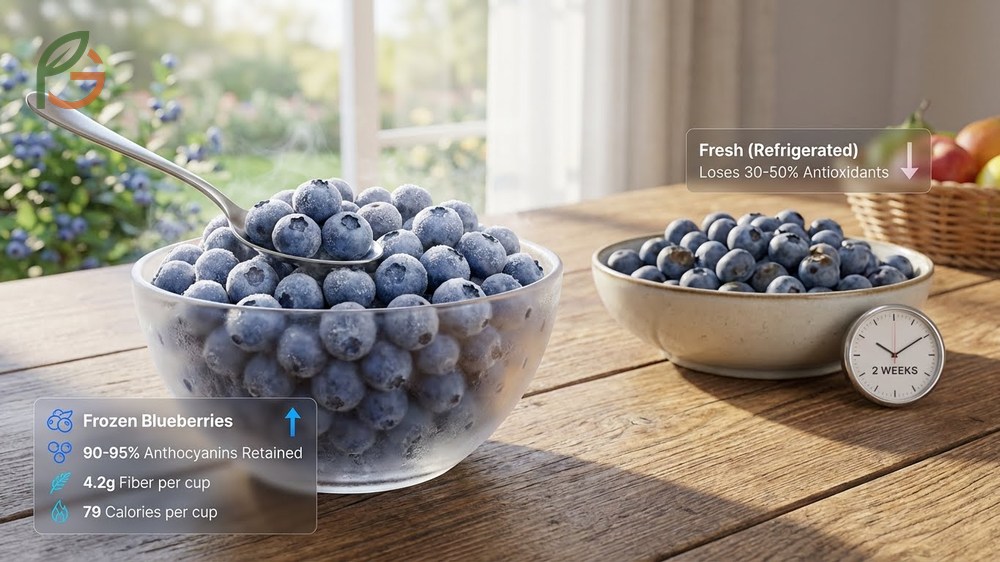
Are frozen blueberries good for you? Yes, research shows frozen blueberries retain 90-95% of their powerful anthocyanins while providing just 79 calories[1] and 4.2g fiber[2] per cup. Studies demonstrate that freezing actually preserves more antioxidants than refrigerated fresh berries, which lose 30-50% within two weeks[3]. FruitGarden helps gardeners and fruit enthusiasts understand how frozen blueberries stack up nutritionally against fresh and dried varieties.
Quick Answer
- One cup of frozen blueberries contains 79 calories[1], 18.9g carbs[4], and 4.2g fiber[2]
- Frozen blueberries retain 90-95% of anthocyanins[3] compared to fresh berries stored in refrigerators
- Anthocyanins account for 84% of blueberry antioxidant capacity[5], fighting oxidative stress and inflammation
- Best consumed with dietary fats like yogurt or nut butter for 36% higher nutrient absorption[6]
Are Frozen Blueberries Good for You
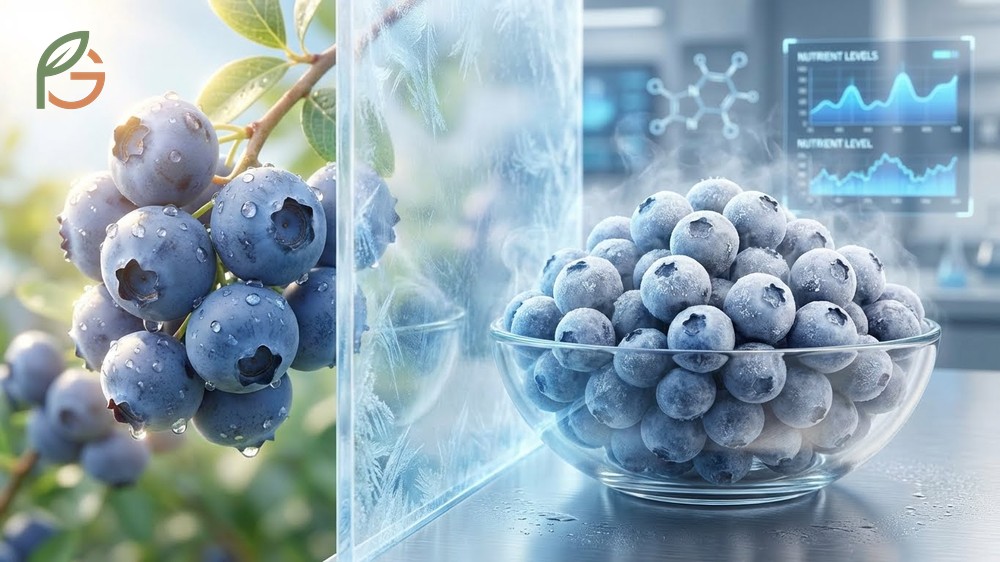
Frozen blueberries deliver exceptional nutritional value because flash-freezing locks in nutrients at peak ripeness. Research shows that frozen berries often contain higher levels of certain nutrients than fresh berries sitting in your refrigerator for days[3]. The freezing process doesn’t diminish the fruit’s health benefits.
Current data indicates that frozen blueberries maintain their anthocyanin content remarkably well during storage. While vitamin C may decrease by 10-20% during freezing, the preserved anthocyanins far outweigh this minor loss[6]. Fresh blueberries begin nutrient degradation within three days post-harvest.
Evidence suggests that freezing ruptures blueberry cell walls, which actually improves nutrient absorption. A 2021 randomized crossover study found 36% higher plasma anthocyanin levels when participants consumed thawed berries compared to fresh ones[6]. This makes frozen blueberries uniquely beneficial for maximizing antioxidant intake.
Most people don’t realize that frozen blueberries work best when paired with fat-containing foods. Adding them to Greek yogurt, oatmeal with nuts, or smoothies with almond butter enhances polyphenol transport into your bloodstream. This simple pairing strategy can significantly boost the health returns you get from every serving.
Frozen Blueberries Nutrition Facts
Calories and Macronutrients
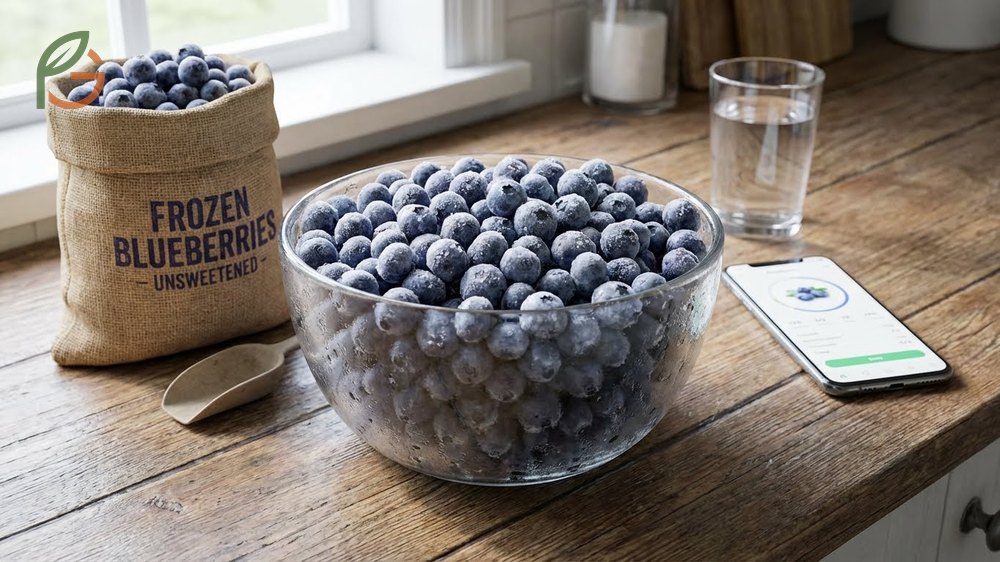
One cup (155g) of unsweetened frozen blueberries contains just 79 calories[1], making them an excellent low-calorie nutrient source. The macronutrient breakdown includes 18.9g total carbohydrates with 4.2g dietary fiber[2], resulting in only 14.7g net carbs[4].
The fiber content represents 16% of the daily value, supporting digestive health and blood sugar stability. Frozen blueberries contain approximately 13g natural sugars per cup with zero added sugars[2]. The fruit provides less than 1g each of fat and protein.
Vitamins and Minerals
Frozen blueberries provide modest amounts of several essential micronutrients. Studies show they contain approximately 2mg vitamin C (3% daily value) and 100mg potassium (2% daily value) per cup[7]. While vitamin C levels are lower than fresh-picked berries, the difference becomes negligible compared to refrigerated fresh berries after one week.
The mineral profile includes small amounts of calcium (20mg), iron (0.8mg), and manganese. What often gets overlooked is that frozen blueberries retain significantly higher folate levels than fresh-stored berries[3]. This makes them particularly valuable during storage periods when fresh options aren’t available.
Important Note: Wild frozen blueberries typically contain higher antioxidant levels than cultivated varieties. Look for products labeled “wild blueberries” for maximum anthocyanin content.
Benefits of Frozen Blueberries
Antioxidant Power
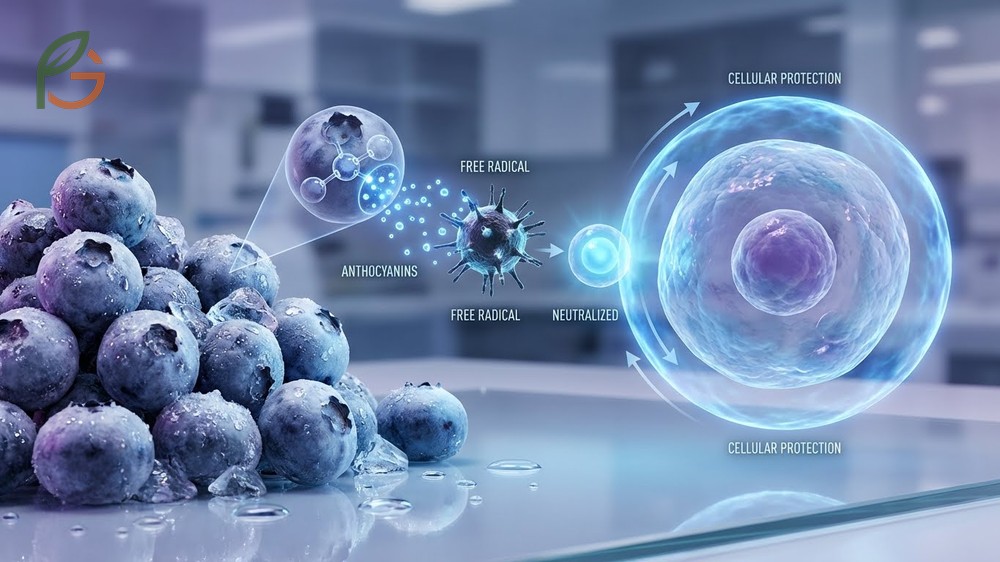
Anthocyanins in frozen blueberries account for approximately 84% of their total antioxidant capacity[5], making them one of nature’s most concentrated antioxidant sources. These compounds neutralize free radicals by donating hydrogen atoms from their phenolic rings, protecting cells from oxidative damage. Research demonstrates that high-purity blueberry anthocyanins show median effective concentrations of 14.99 μg/mL for scavenging radicals[5].
The freezing process enhances anthocyanin availability through cellular breakdown. When blueberry cell walls rupture during freezing, the released anthocyanins become more accessible during digestion. This structural change explains why frozen blueberries can deliver superior antioxidant absorption compared to intact fresh berries.
- Reduce oxidative stress markers by up to 28% in clinical trials[6]
- Lower inflammation markers (hsCRP) by approximately 12-32% with daily consumption[6]
- Protect cardiovascular cells from reactive oxygen species (ROS) damage[5]
- Decrease expression of NADPH oxidase subunits at 50 μM concentrations[5]
- Maintain antioxidant stability for 6-10 months when stored at -18°C (-0.4°F)[6]
Heart and Metabolic Health
Multiple investigations indicate that frozen blueberries support cardiovascular and metabolic function through several mechanisms. Studies demonstrate that blueberry polyphenols improve insulin sensitivity, potentially reducing type 2 diabetes risk[8]. The fiber content helps slow digestion and glucose absorption, promoting more stable blood sugar levels throughout the day.
Research on participants consuming half a cup daily showed 24% reductions in fasting insulin levels and 22% decreases in inflammatory markers over eight weeks[6]. These metabolic improvements occurred alongside better cardiovascular markers. The anthocyanins work by enhancing endothelial function and reducing arterial stiffness.
- Enhance beneficial gut bacteria including Bifidobacterium and Akkermansia species
- Increase short-chain fatty acid production for improved gut barrier function
- Support healthy blood pressure through improved vascular flexibility
- Reduce lipid peroxidation in cardiovascular tissues
- Improve glucose uptake in liver cells during high-glucose conditions[9]
Pro Tip: For maximum metabolic benefits, consume frozen blueberries in the morning with protein and healthy fats. This combination supports sustained energy and stable blood sugar for 4-5 hours.
Fresh vs Frozen Blueberries Nutrition
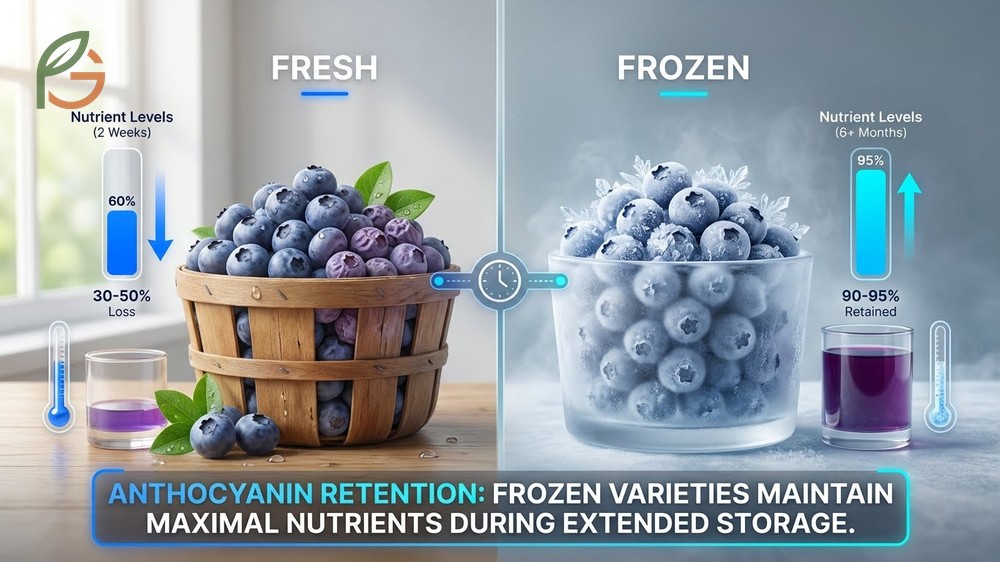
The nutritional comparison between fresh and frozen blueberries reveals surprising advantages for frozen varieties during extended storage. Fresh blueberries picked at peak ripeness contain maximum nutrient levels initially, but studies show these levels decline rapidly during refrigerated storage. Within two weeks, fresh blueberries lose 30-50% of their anthocyanin content[3].
Frozen blueberries maintain 90-95% of their anthocyanins for six months or longer when properly stored[6]. This stark difference means that frozen blueberries purchased in winter often contain more beneficial compounds than fresh berries shipped long distances. Nutrient degradation begins within three days post-harvest for fresh berries, making frozen options nutritionally superior in most real-world scenarios.
Research comparing fresh, frozen, and fresh-stored samples found no significant differences in vitamin C content between the three groups. However, frozen blueberries showed significantly greater anthocyanin levels than fresh-stored varieties[3]. Beta-carotene levels were slightly lower in frozen berries, but folate content was significantly higher.
This table compares nutrient retention, anthocyanin levels, storage duration, and cost-effectiveness between fresh and frozen blueberries across five key metrics
| Metric | Fresh Blueberries | Frozen Blueberries | Advantage |
|---|---|---|---|
| Anthocyanin Retention | 50-70% after 2 weeks at 4°C (39°F)[3] | 90-95% after 6 months at -18°C (-0.4°F)[6] | Frozen |
| Vitamin C | Similar to frozen initially, degrades within 3 days | 10-20% loss during freezing, stable thereafter[6] | Tie |
| Folate Content | Decreases during storage | Significantly higher than fresh-stored[3] | Frozen |
| Bioavailability | Standard absorption | 36% higher anthocyanin plasma levels[6] | Frozen |
| Cost Per Serving | $0.40-0.60 (varies seasonally) | $0.25-0.40 (consistent year-round) | Frozen |
The evidence suggests a possible nutrient advantage for frozen when considering losses during refrigerated storage. If you’re buying fresh blueberries and won’t consume them within three days, frozen options provide better nutritional value. Fresh blueberries work best when purchased locally in-season and eaten immediately.
Dried Blueberries Nutrition Comparison
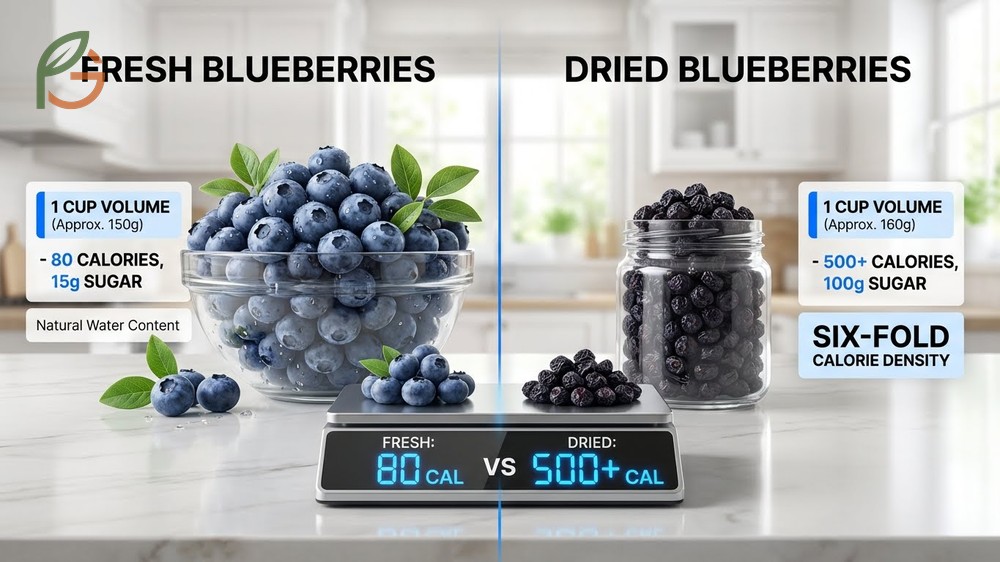
Dried blueberries concentrate nutrients through water removal, but this process dramatically increases calorie and sugar density. One cup of dried blueberries contains over 500 calories and 100g sugar[10], compared to just 80 calories and 15g sugar in the same volume of frozen or fresh berries. This six-fold increase makes portion control critical when consuming dried varieties.
A typical quarter-cup serving (46g) of dried blueberries provides 160 calories, 38g carbohydrates, and 5g fiber[11]. While the fiber content remains beneficial, many commercial dried blueberries contain added sugars and oils. Always check labels for “unsweetened” or “no sugar added” varieties to avoid excess calories.
Research shows dried blueberries retain antioxidants reasonably well, but their concentrated sugar content can spike blood glucose levels more than frozen varieties. The rapid sugar absorption makes dried blueberries less suitable for individuals managing diabetes or metabolic conditions. Frozen blueberries offer better blood sugar stability due to their higher water and fiber-to-sugar ratio.
- Dried blueberries contain 6-7 times more calories per cup than frozen
- Sugar content increases from 15g to 100g per cup through dehydration[10]
- Portion sizes must shrink dramatically (1/4 cup dried vs 1 cup frozen)
- Many brands add sweeteners, oil, or preservatives to dried products
- Freeze-dried blueberry powder offers concentrated nutrients without added sugars
Healthy Swap: If you love dried blueberries’ concentrated flavor, try freeze-dried powder instead. It provides intense taste and nutrients without added sugars or the calorie density of traditional dried berries.
Best Ways to Eat Frozen Blueberries
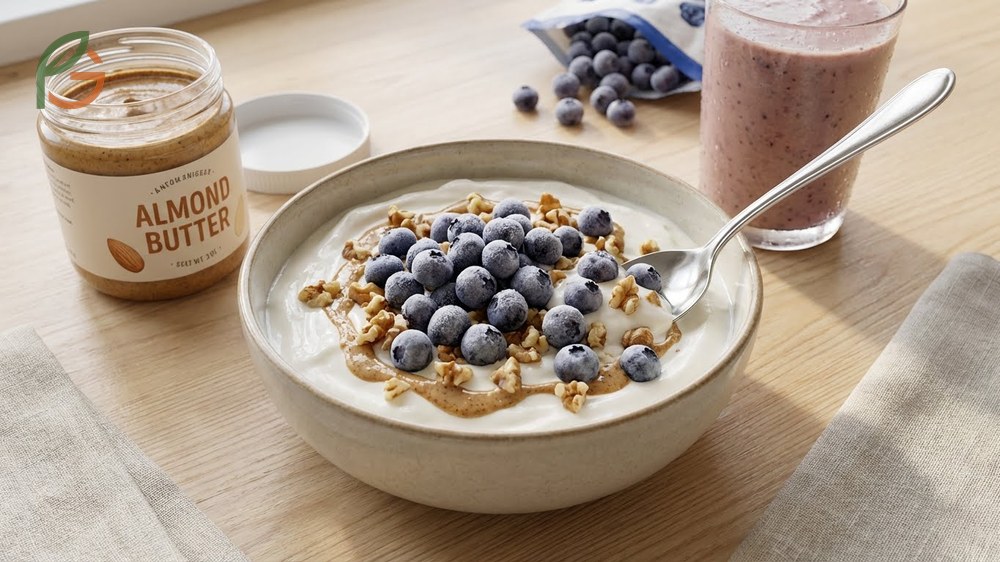
The healthiest way to eat frozen blueberries involves pairing them with protein and healthy fats for maximum nutrient absorption. Studies show consuming berries with fat-containing foods increases anthocyanin bioavailability by 36%[6]. This means adding frozen blueberries to Greek yogurt, oatmeal with nuts, or smoothies with almond butter delivers superior health benefits compared to eating them alone.
You can use frozen blueberries directly from the freezer in most applications without thawing. Tossing frozen berries into hot oatmeal creates a naturally chilled, perfectly textured breakfast. For smoothies, frozen blueberries eliminate the need for ice while providing thick, creamy consistency. The convenience factor makes frozen berries easier to incorporate into daily routines than fresh varieties that require washing and quick consumption.
Smoothie Recipes with Frozen Blueberries
The classic blueberry smoothie combines 1 cup frozen blueberries, 1 frozen banana, 1/2 cup Greek yogurt, 1 cup milk (dairy or plant-based), and 2 tablespoons nut butter. Blend until smooth for a breakfast that provides approximately 350 calories, 15g protein, and powerful antioxidants. This combination keeps you satisfied for 4-5 hours while delivering sustained energy.
For a lower-calorie option, mix 3/4 cup frozen blueberries with 1/2 banana, 1/4 cup yogurt, 1 cup unsweetened almond milk, and a handful of spinach. This variation provides just 180 calories while sneaking in leafy greens you won’t taste. Add 1 tablespoon ground flaxseed for omega-3 fatty acids that enhance anthocyanin absorption.
- Use frozen fruit exclusively to eliminate watery texture from ice cubes
- Add protein powder (20-25g) for post-workout recovery smoothies
- Include 1 tablespoon almond or peanut butter for satiety and fat-soluble nutrient absorption
- Blend in 1/4 teaspoon vanilla extract to enhance natural sweetness without added sugar
- Top with fresh berries, granola, or chia seeds for added texture and nutrients
Baking with Frozen Blueberries
When baking with frozen blueberries, don’t thaw them before adding to batters. Thawed berries release excess moisture that turns muffins or pancakes soggy and creates purple streaks throughout. For best results, rinse frozen berries under cold water until the water runs nearly clear, removing surface ice crystals and excess color.
Pat berries thoroughly dry with paper towels before gently folding them into batter. This critical step prevents color bleeding and maintains batter consistency. Fold just 2-3 times maximum—as soon as you see the first hint of blue streaks, stop mixing immediately. Overmixing guarantees purple batter that looks unappetizing despite tasting delicious.
Pro bakers coat frozen blueberries in 1-2 tablespoons flour before adding to batters. This technique creates a barrier that prevents berries from sinking to the bottom during baking. You may need to add 2-3 extra minutes to baking time when using frozen berries versus fresh, so check doneness with a toothpick before removing from the oven.
Thawing Frozen Blueberries
Refrigerator thawing is the most recommended method for preserving texture and flavor. Transfer frozen blueberries to a bowl and refrigerate overnight or for at least 8 hours. This gradual process maintains berry structure better than rapid thawing methods. Plan ahead when you need thawed berries for recipes like fruit salads or toppings.
For quick thawing, place frozen blueberries in a sealed plastic bag and submerge in cold water. Change the water every 30 minutes until berries thaw completely, typically 1-2 hours. This method works well when you forgot to thaw overnight but need berries soon. Avoid microwave thawing, which creates mushy berries with uneven texture.
Never refreeze thawed blueberries, as this compromises texture and flavor quality. Store any excess thawed berries in an airtight container in the refrigerator for 3-5 days maximum. Use them as yogurt toppings, salad additions, or blend into smoothies within this window for best quality.
Storage Tip: Keep frozen blueberries at -18°C (-0.4°F) or colder. They maintain peak anthocyanin levels for 6-10 months with only 5-12% nutrient loss when properly stored.
Conclusion
The evidence is clear: frozen blueberries are exceptionally good for you, often surpassing fresh varieties in antioxidant content and nutrient retention. With just 79 calories per cup, 4.2g fiber, and 90-95% anthocyanin preservation, frozen blueberries deliver powerful health benefits year-round at a lower cost than seasonal fresh options. Research confirms they support cardiovascular health, metabolic function, and antioxidant defense when consumed regularly.
Current guidance emphasizes choosing frozen blueberries over dried varieties for better blood sugar control and calorie management. Pair them with healthy fats like yogurt or nut butter to maximize nutrient absorption, and use them directly from the freezer in smoothies, oatmeal, or baking. FruitGarden recommends stocking your freezer with wild blueberries for maximum nutritional impact and convenient access to this superfruit regardless of season.
Medical Disclaimer
Important Medical Disclaimer: This content is for informational and educational purposes only. It is not intended as a substitute for professional medical advice, diagnosis, or treatment. Always consult a qualified healthcare professional or registered dietitian before making any changes to your diet, medication, or health routine, especially if you have diabetes, cardiovascular conditions, or other medical concerns. Individual nutritional needs vary based on age, activity level, and health status.
Frequently Asked Questions
Are Frozen Blueberries as Healthy as Fresh Blueberries?
Yes, frozen blueberries are often healthier than refrigerated fresh berries. Research shows frozen varieties retain 90-95% of anthocyanins for six months, while fresh berries lose 30-50% within two weeks of refrigerated storage. The freezing process locks in nutrients at peak ripeness and may even enhance bioavailability through cell wall rupture.
How Many Calories Are in a Cup of Frozen Blueberries?
One cup (155g) of unsweetened frozen blueberries contains 79 calories. This serving provides 18.9g carbohydrates, 4.2g dietary fiber, and 13g natural sugars with no added sweeteners, making frozen blueberries an excellent low-calorie nutrient source for weight management.
Do Frozen Blueberries Have Antioxidants?
Absolutely. Frozen blueberries contain high levels of anthocyanins, which account for 84% of their total antioxidant capacity. Studies demonstrate that properly frozen blueberries maintain antioxidant levels for 6-10 months at -18°C, and freezing may actually improve anthocyanin bioavailability by 36% compared to fresh berries when consumed with dietary fats.
Are Dried Blueberries Healthier Than Frozen?
No, frozen blueberries are healthier for most people. Dried blueberries contain over 500 calories and 100g sugar per cup compared to just 80 calories and 15g sugar in frozen varieties. The concentrated sugar in dried berries can spike blood glucose levels, while frozen blueberries provide better satiety and blood sugar stability due to their water content and fiber-to-sugar ratio.
What’s the Best Way to Eat Frozen Blueberries for Maximum Health Benefits?
Pair frozen blueberries with protein and healthy fats for optimal nutrient absorption. Add them to Greek yogurt with nuts, blend into smoothies with almond butter, or top oatmeal that contains walnuts. Studies show this combination increases anthocyanin plasma levels by 36% compared to eating berries alone, maximizing antioxidant benefits.
Can You Bake with Frozen Blueberries Without Thawing?
Yes, use frozen blueberries directly from the freezer for best baking results. Don’t thaw them first, as this creates excess moisture that makes baked goods soggy. Instead, rinse frozen berries to remove surface ice, pat thoroughly dry with paper towels, and gently fold into batter. You may need to add 2-3 extra minutes to baking time.
How Long Do Frozen Blueberries Keep Their Nutritional Value?
Frozen blueberries maintain peak nutritional quality for 6-10 months when stored at -18°C (-0.4°F) or colder. Anthocyanin levels remain stable with only 5-12% loss during this period, especially in individually quick-frozen (IQF) varieties. This extended shelf life makes frozen blueberries nutritionally superior to fresh berries stored in refrigerators beyond one week.





