
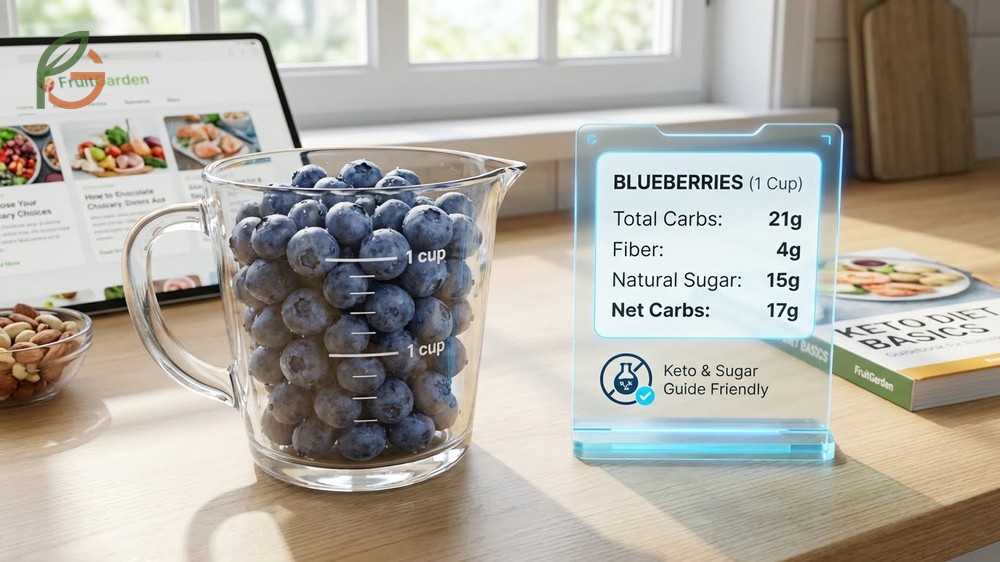
How many carbs in blueberries? One cup of fresh blueberries contains 21 grams of total carbohydrates, 4 grams of fiber, and 15 grams of natural sugar[1]. Research shows that blueberries pack about 17 grams of net carbs per cup, which matters if you’re watching your carb intake or following a keto diet. FruitGarden synthesizes current USDA nutrition data and dietary research to help you make informed choices about incorporating blueberries into your eating plan.
Quick Answer
- One cup (148g) of blueberries has 21g total carbs and 17g net carbs[1]
- A half cup contains 10.5g net carbs, while a quarter cup has just 3.4g net carbs[1]
- Blueberries have a low glycemic index of 25-53 and glycemic load of 2-6[2]
- Not strictly keto-friendly, but you can enjoy small portions (1/4 to 1/2 cup) if you’re staying under 20-50g daily carbs
How Many Carbs in Blueberries
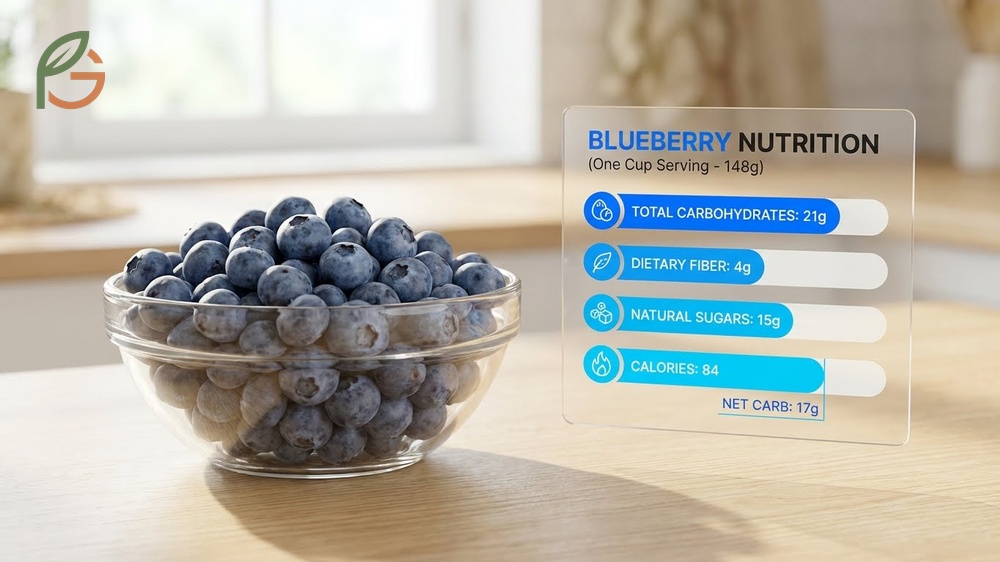
Studies demonstrate that a standard one-cup serving of fresh blueberries delivers 21 grams of total carbohydrates[1]. This cup weighs about 148 grams and provides 84 calories along with those carbs.
Within that carb count, you’ll find 4 grams of dietary fiber and 15 grams of natural sugars[3]. The fiber content is significant because it doesn’t spike your blood sugar the way digestible carbs do. What matters most for blood sugar management and keto diets is the net carb count, which we’ll dive into shortly.
Current agricultural data shows that blueberries contain no added sugars—all 15 grams come naturally from the fruit itself[3]. This makes them a whole-food choice compared to processed snacks with added sweeteners. Most people don’t realize that a single blueberry contains roughly 0.2 grams of carbs, which means you’re getting about 80-100 berries per cup.
Fresh vs Frozen Blueberries
Frozen unsweetened blueberries contain nearly identical carbohydrate levels to fresh ones. One cup of frozen blueberries has 18.9 grams of total carbs and 14.7 grams of net carbs[4], which is just slightly lower than fresh. The freezing process doesn’t destroy the carbohydrates or fiber—it actually preserves them well.
Research shows frozen blueberries maintain their nutritional value for up to 12 months when stored properly. The key difference you’ll notice is texture rather than nutrition. Frozen berries release more liquid when thawed, which can affect recipes but doesn’t change the carb content you’re consuming.
Portion Size Matters
Evidence suggests that portion control makes the biggest difference for carb-conscious eaters. Here’s how the numbers break down across common serving sizes you’ll actually use in your kitchen.
- 1/4 cup (37g): 5.25g total carbs, 1g fiber, 4.25g net carbs
- 1/2 cup (74g): 10.5g total carbs, 2g fiber, 8.5g net carbs
- 1 cup (148g): 21g total carbs, 4g fiber, 17g net carbs
- 1 pint (approximately 2 cups or 296g): 42g total carbs, 8g fiber, 34g net carbs
- 100g serving: 14.5g total carbs, 2.4g fiber, 12.1g net carbs
Important Note: Don’t eyeball your portions if you’re tracking carbs strictly. A quarter cup of blueberries fits easily in your palm, but it’s surprisingly easy to double that without realizing it.
Net Carbs in Blueberries
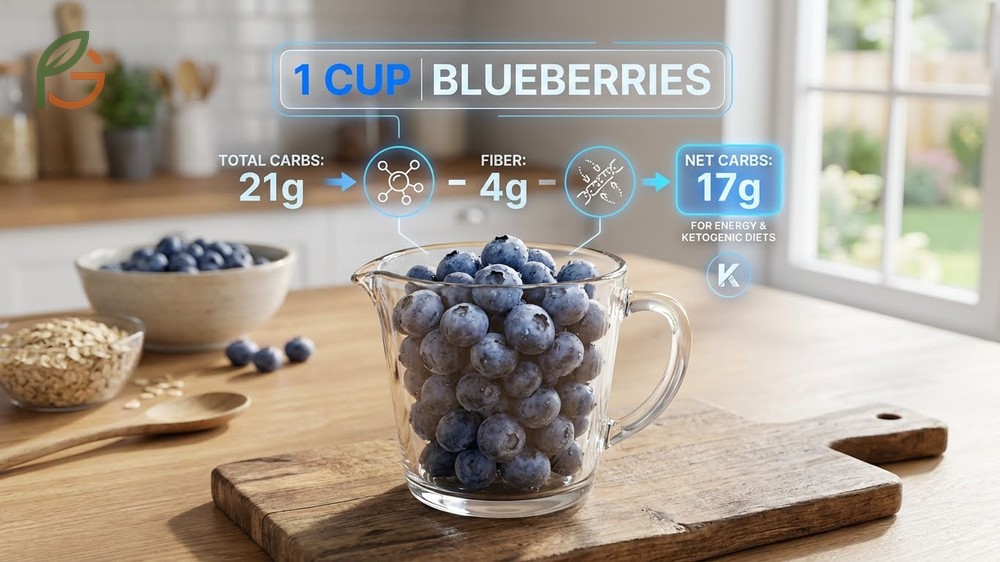
Net carbs represent the carbohydrates your body actually digests and uses for energy. You calculate this by subtracting fiber from total carbs because fiber passes through your digestive system without raising blood sugar. For one cup of blueberries, that’s 21g total carbs minus 4g fiber, giving you 17g net carbs[1].
Current dietary guidance emphasizes net carbs for anyone following low-carb or ketogenic eating patterns. Unlike total carbs, net carbs directly impact your ketosis state and blood sugar levels. This distinction matters more with high-fiber foods like berries than with refined carbs that contain minimal fiber.
How to Calculate Net Carbs
The formula is simple: Total Carbohydrates – Dietary Fiber = Net Carbs. You’ll find both numbers on any nutrition label or USDA database entry. Some people also subtract sugar alcohols if they’re present, though natural blueberries don’t contain any.
For practical tracking, most apps and food databases now display net carbs automatically. If you’re manually calculating, just make sure you’re using measurements for the same serving size. Mixing up serving sizes is the most common calculation mistake people make when tracking their macros.
Why Fiber Matters
Studies demonstrate that the 4 grams of fiber in each cup of blueberries slow down sugar absorption[3]. This creates a more gradual blood sugar rise compared to eating 15 grams of sugar from candy or juice. The fiber also supports digestive health and helps you feel fuller longer.
What often gets overlooked is that blueberry fiber contains both soluble and insoluble types. Soluble fiber feeds beneficial gut bacteria, while insoluble fiber promotes regularity. This combination makes blueberries more than just a carb source—they’re a functional food that supports multiple body systems.
Are Blueberries Keto Friendly
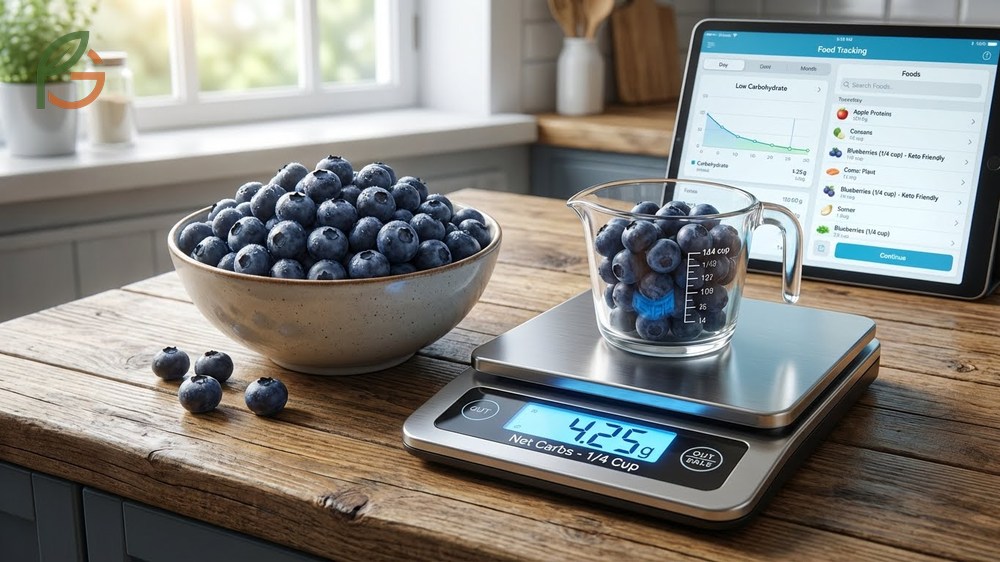
Blueberries sit in the gray zone for keto dieters. With 17 grams of net carbs per cup[1], they’re not strictly keto-friendly in full-cup portions. However, you can work them into a keto plan if you stick to smaller servings and track your daily totals carefully.
Research shows that most successful keto dieters limit fruit to 1/4 to 1/2 cup servings once or twice daily. A quarter cup of blueberries delivers only 4.25 grams of net carbs, which fits comfortably within most people’s 20-50 gram daily carb allowance. The key is planning your entire day’s meals around that fruit serving rather than adding it on top of other carbs.
Current guidance emphasizes that nutrient density matters on keto, not just carb counts. Blueberries provide antioxidants, vitamin C, and vitamin K that many keto dieters miss from eliminating most fruits. If you’re choosing between blueberries and processed “keto snacks” with the same carb count, the berries offer superior nutrition.
Daily Carb Limits on Keto
Evidence suggests that standard ketogenic diets restrict daily net carbs to 20-50 grams depending on your body size, activity level, and metabolic goals. Strict keto typically means 20-25 grams, moderate keto allows 25-40 grams, and flexible low-carb approaches permit up to 50 grams. Athletes doing high-intensity training might go even higher while maintaining ketosis.
What this means for blueberries is that a single cup would consume 34-85% of your daily carb budget on strict keto. That’s why keto veterans rarely eat berries by the cupful. They’ll add a small handful to Greek yogurt, blend a quarter cup into a protein smoothie, or use them as a topping rather than a standalone snack.
How to Fit Blueberries Into Keto
The strategy is treating blueberries as a garnish rather than a snack. Measure your portion, account for the carbs in your daily tracking, and pair them with high-fat foods to maintain your macro ratios. Most people find success with these practical approaches.
- Add 2-3 tablespoons (about 15-20 berries) to full-fat Greek yogurt with nuts
- Blend 1/4 cup into a smoothie with avocado, spinach, and coconut milk
- Top keto pancakes or waffles with 10-15 berries instead of syrup
- Mix a small handful into chia seed pudding made with heavy cream
- Freeze individual berries and eat them slowly as a sweet treat (makes portions last longer)
- Use blueberry extract or flavoring for zero-carb options when you want the taste without the carbs
Keto Tip: Eat blueberries earlier in the day when you’re more active and can use the carbs for energy. Avoid them before bed when your body’s less likely to burn through that glucose efficiently.
Sugar Content in Blueberries
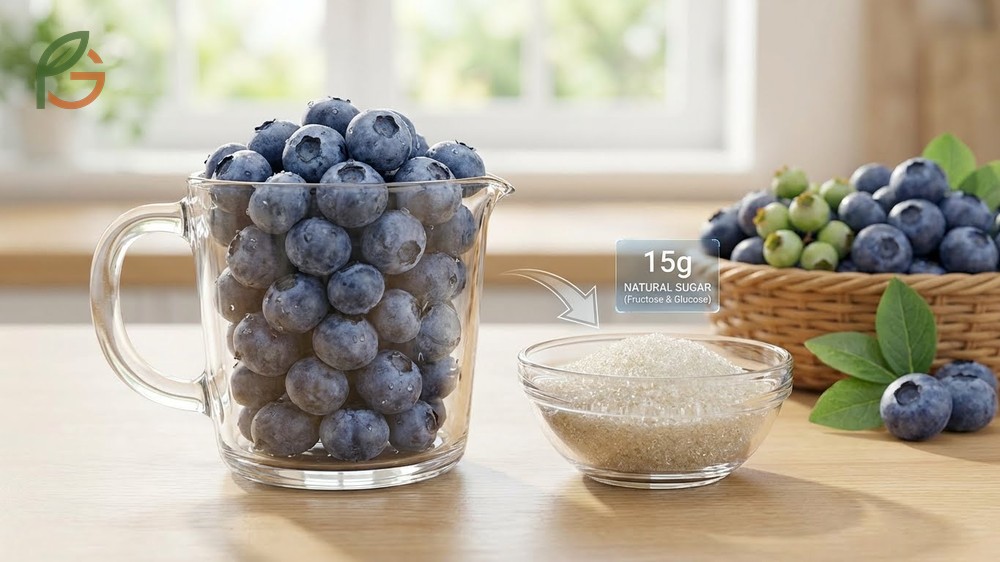
Current data indicates that one cup of blueberries contains 15 grams of natural sugar[3]. This sugar comes entirely from fructose and glucose naturally present in the fruit—there’s zero added sugar unless you buy sweetened dried or canned varieties. The sugar concentration increases as blueberries ripen, which is why sweeter berries tend to have slightly higher carb counts.
Research shows that natural fruit sugars affect your body differently than refined sugars because they’re packaged with fiber, water, and nutrients. The 4 grams of fiber in blueberries slow down how quickly that 15 grams of sugar enters your bloodstream. This creates a gentler, more sustained energy release compared to eating 15 grams of sugar from candy or soda.
For context, 15 grams of sugar equals about 3.75 teaspoons. That’s less than you’d find in a single 12-ounce can of soda, which typically contains 39 grams. If you’re watching sugar intake for weight management or blood sugar control, blueberries give you sweetness in a more metabolically friendly package than processed alternatives.
What often surprises people is that sugar content varies slightly by variety and growing conditions. Wild blueberries tend to be smaller and more concentrated in flavor, sometimes containing marginally higher sugar per gram than cultivated highbush varieties. However, this difference is minor enough that it won’t significantly impact your carb tracking.
Blueberries vs Other Berries
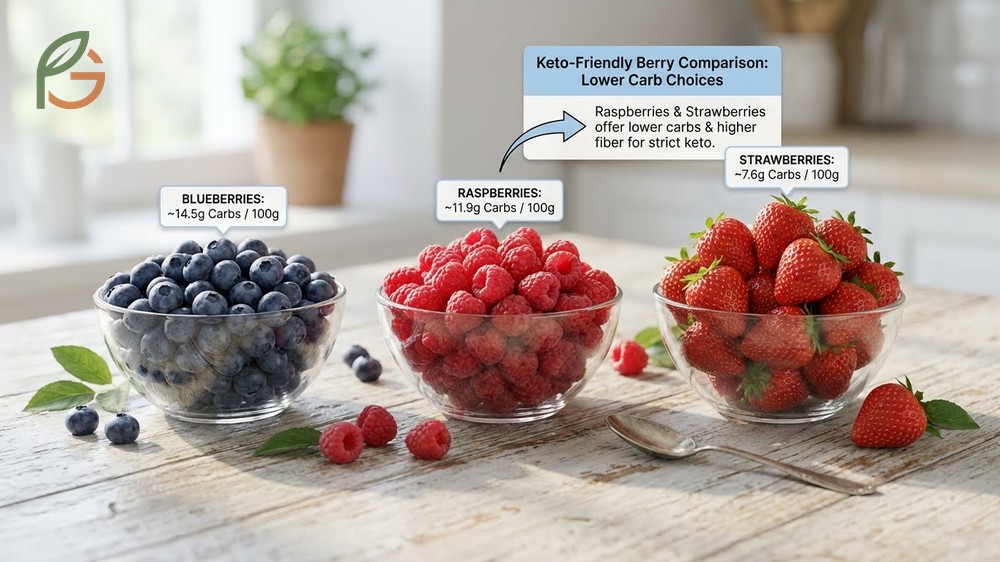
Studies demonstrate that raspberries and strawberries offer lower carb counts than blueberries, making them better choices for strict keto dieters[5]. Raspberries contain only 11.9 grams of carbs per 100 grams compared to blueberries’ 14.5 grams. Strawberries sit even lower, giving you more volume for fewer carbs.
The fiber advantage also shifts with different berries. Raspberries pack more fiber per serving, which further reduces their net carb impact. This makes them the go-to berry for many keto dieters who want maximum flavor and volume without exceeding their carb budget.
This table compares total carbohydrates, fiber, net carbs, and sugar content across four common berries per 100-gram serving
| Berry Type | Total Carbs | Fiber | Net Carbs | Sugar |
|---|---|---|---|---|
| Blueberries | 14.5g[5] | 2.4g | 12.1g | 10g |
| Raspberries | 11.9g[5] | 6.5g | 5.4g | 4.4g |
| Strawberries | 7.7g | 2.0g | 5.7g | 4.9g |
| Blackberries | 9.6g | 5.3g | 4.3g | 4.9g |
Current nutritional guidance shows that all berries beat high-carb fruits like bananas (24g per fruit) or grapes (19g per half cup) by a wide margin. If you’re choosing between berries for a low-carb lifestyle, prioritize blackberries and raspberries first, strawberries second, and save blueberries for occasional treats or very small portions.
Glycemic Index of Blueberries
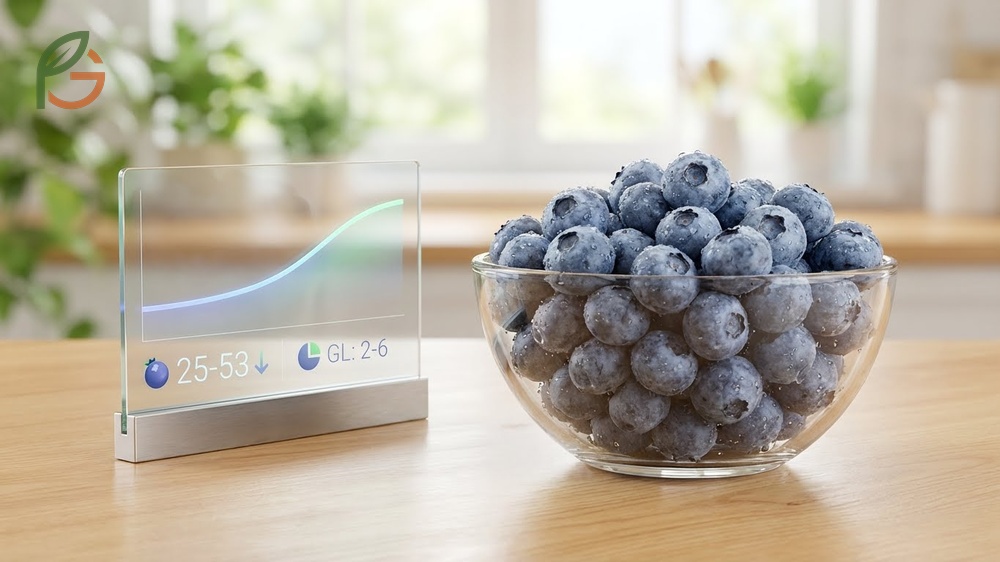
Research shows that blueberries have a low glycemic index (GI) of 25-53 depending on variety and ripeness[2]. Foods scoring below 55 are considered low GI, meaning they cause a slower, gentler rise in blood sugar. The glycemic load (GL) of blueberries rates even better at just 2-6 per serving, which classifies them as low-impact for blood sugar[2].
What this means practically is that despite containing 15 grams of sugar per cup, blueberries won’t spike your blood sugar the way white bread or candy would. The combination of fiber, water content, and natural plant compounds slows digestion and glucose absorption. This makes blueberries a reasonable choice for people managing blood sugar, though portion control still matters.
Current guidelines emphasize that glycemic load matters more than glycemic index alone because it accounts for serving size. A small handful of blueberries has minimal impact on blood sugar, while eating an entire pint could still cause noticeable rises despite the low GI rating. The key is matching your portion to your metabolic goals and activity level.
- Ripeness: Sweeter, riper berries have higher sugar and slightly elevated GI
- Pairing: Eating blueberries with protein or fat lowers the overall glycemic response
- Processing: Fresh and frozen berries have lower GI than dried blueberries (which concentrate sugars)
- Individual metabolism: Your blood sugar response varies based on insulin sensitivity and recent activity
- Timing: Consuming berries post-workout when muscles are primed for glucose uptake minimizes blood sugar impact
Blood Sugar Management: If you’re monitoring glucose levels, test your individual response to blueberries. Some people tolerate them well, while others experience more significant rises depending on insulin sensitivity and genetic factors.
Conclusion
The evidence is clear: blueberries contain 21 grams of total carbs and 17 grams of net carbs per cup[1], making them a moderate-carb fruit that requires portion control on keto diets. Current nutritional guidance emphasizes that small servings (1/4 to 1/2 cup) can fit into low-carb eating plans when you track carefully and pair them with high-fat foods to maintain your macros.
Agricultural research demonstrates that blueberries’ low glycemic index and high fiber content make them a smarter choice than processed sweets when you want something naturally sweet[2]. FruitGarden recommends measuring your portions, tracking your daily carb totals, and choosing fresh or frozen unsweetened varieties to maximize nutrition while managing carbohydrate intake effectively.
Medical Disclaimer
Important Medical Disclaimer: This content is for informational and educational purposes only. It’s not intended as a substitute for professional medical advice, diagnosis, or treatment. Always consult a qualified healthcare professional or registered dietitian before making any changes to your diet, especially if you have diabetes, metabolic disorders, or other medical conditions. Individual carbohydrate tolerance varies significantly based on factors including insulin sensitivity, activity level, medications, and overall health status.
Frequently Asked Questions
How Many Carbs Are in a Cup of Blueberries?
One cup of fresh blueberries (148g) contains 21 grams of total carbohydrates, 4 grams of dietary fiber, and 17 grams of net carbs[1]. This serving size also provides 15 grams of natural sugar and 84 calories. The net carb count matters most if you’re tracking for keto or low-carb diets.
How Many Carbs in a Half Cup of Blueberries?
A half cup of blueberries (74g) contains approximately 10.5 grams of total carbs, 2 grams of fiber, and 8.5 grams of net carbs. This smaller portion is more manageable for people following strict low-carb or ketogenic eating plans while still providing beneficial antioxidants and vitamins.
Do Blueberries Have Carbs?
Yes, blueberries contain carbohydrates primarily from natural sugars and fiber. They’re considered a moderate-carb fruit with 14.5 grams of carbs per 100 grams[5]. Unlike zero-carb foods such as meat or oils, all fruits contain carbohydrates because they’re plant-based foods that store energy as sugars.
Are Blueberries High in Carbs?
Blueberries aren’t considered high-carb compared to foods like bread or pasta, but they’re higher in carbs than other berries. Raspberries and strawberries contain fewer carbs per serving, making blueberries a moderate choice for low-carb dieters. They’re definitely lower than bananas, grapes, or tropical fruits.
How Many Carbs Do Blueberries Have Compared to Other Fruits?
Blueberries sit in the middle range for fruit carbs. Raspberries (11.9g per 100g) and strawberries (7.7g per 100g) are lower[5], while bananas (24g per fruit) and grapes (19g per half cup) are significantly higher. Among berries, blueberries contain more carbs than most but still beat typical fruits.
What’s the Difference Between Total Carbs and Net Carbs in Blueberries?
Total carbs include all carbohydrates—sugars, starches, and fiber. Net carbs subtract the fiber because it doesn’t raise blood sugar or get digested for energy. For blueberries, that’s 21g total carbs minus 4g fiber equals 17g net carbs per cup. Keto and low-carb dieters track net carbs rather than total carbs.
Can You Eat Blueberries on a Keto Diet?
You can eat blueberries on keto in small portions. A quarter cup provides only 4.25 grams of net carbs, which fits within most keto carb limits of 20-50 grams daily. The key is measuring portions carefully and accounting for them in your daily totals. Many keto dieters successfully include small amounts of berries without disrupting ketosis.





