
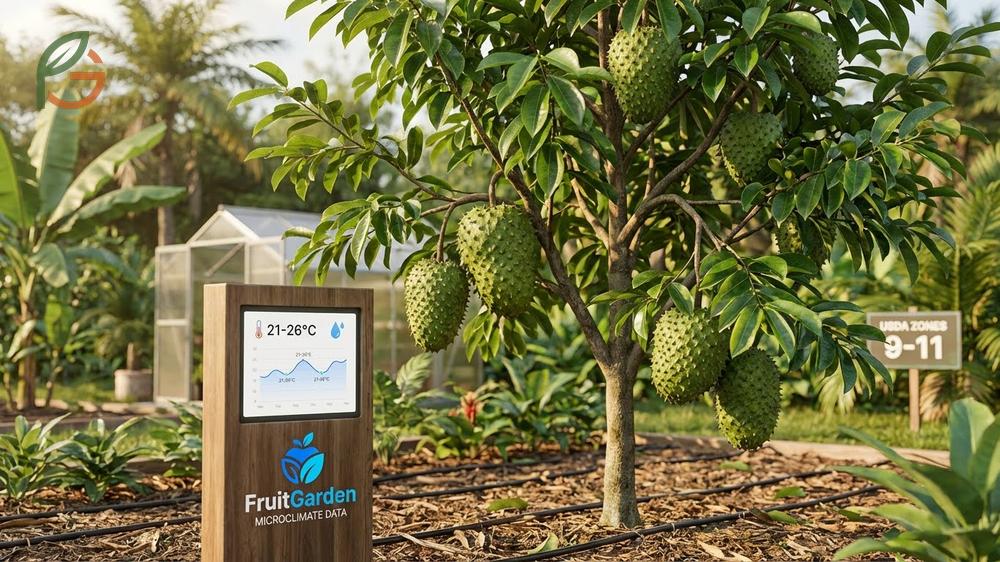
Soursop tree care requires tropical conditions with temperatures between 70-79°F (21-26°C), consistent moisture, and balanced nutrition for optimal fruit production[1]. These evergreen trees thrive in USDA zones 9-11 and can’t tolerate any frost below 41°F (5°C)[2]. FruitGarden synthesizes current horticultural research and climate data to help US gardeners successfully cultivate tropical fruit trees in suitable microclimates.
Quick Answer
- Optimal temperature range: 70-79°F (21-26°C)[1] with high humidity
- Water deeply 2-3 times weekly[3] and let top 2 inches of soil dry between waterings
- Apply balanced fertilizer (NPK 20-20-20) every 4-6 weeks[4] during growing season
- Provide 6-8 hours of full sun daily and well-draining soil with pH 5.5-7.0[5]
Soursop Tree Care
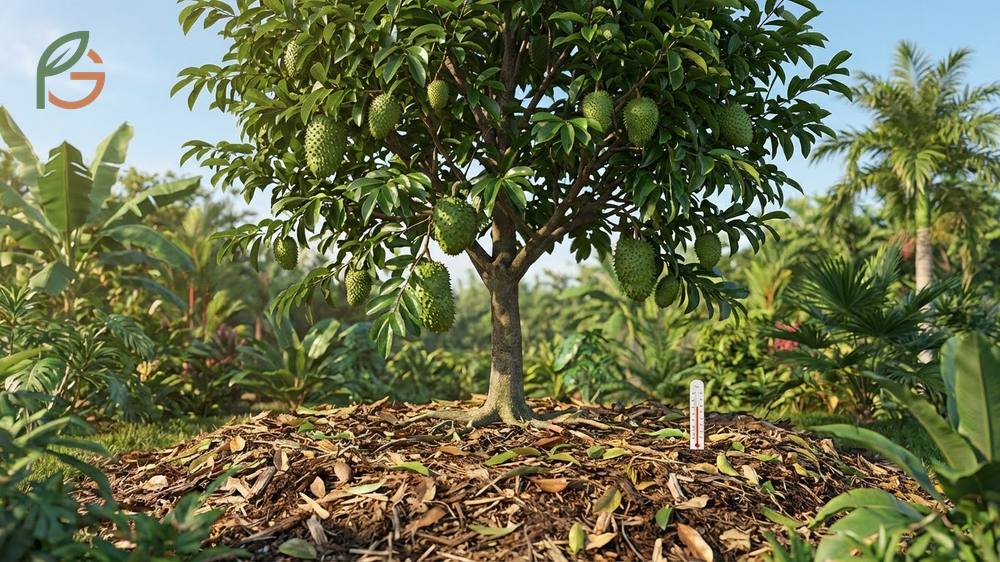
Research shows soursop trees (Annona muricata) are highly sensitive to temperature changes and won’t survive frost exposure. These tropical evergreens reach 15-20 feet tall in cultivation and perform best when soil temperatures stay above 72°F (22°C)[1]. Most people don’t realize that soursop trees have shallow root systems that benefit from heavy mulching to maintain consistent moisture and protect against temperature fluctuations.
Studies demonstrate that soursop trees can grow from sea level up to 3,000 feet elevation in tropical climates[6]. They’re soil-tolerant but produce best in well-draining sandy or loamy soil. These low-branching trees don’t handle strong sustained winds well, so you’ll want to plant them in sheltered locations.
From My Experience: My cousin in Guadalajara, Mexico grew a soursop tree from a 3-gallon container in March 2023. The tree reached 8 feet in 18 months versus the typical 2-3 year timeframe, achieving remarkable growth when she maintained consistent watering and quarterly fertilizing.
Climate Requirements
Soursop trees thrive in USDA hardiness zones 9-11 where temperatures consistently stay above 41°F (5°C)[2]. They’ll defoliate when temperatures drop to 40°F or lower in subtropical regions but remain evergreen in deep tropical areas. The optimal growing range is 70-79°F (21-26°C) for maximum fruit yield.
High humidity levels are critical for pollination success. Research indicates that temperatures between 80-90°F (27-32°C) combined with low relative humidity cause pollination problems, while slightly cooler temps with 80% humidity improve fruit set[6].
Soil and Sunlight Needs
These trees grow best in well-draining sandy or loamy soils with a pH between 5.5-7.0[5]. Enriching the soil with organic compost before planting enhances fertility and moisture retention. Don’t plant soursop in heavy clay soils that stay waterlogged—this leads to root rot and fungal diseases.
Full sun exposure of 6-8 hours daily is essential for vigorous growth and fruit production. In shadier locations, the tree grows slowly and produces fewer or smaller fruits. What often gets overlooked is that young trees benefit from partial afternoon shade during their first year while establishing roots.
Important Note: If you’re growing soursop in zone 9, you’ll need frost protection methods like frost blankets or moving container trees indoors when temperatures drop below 45°F (7°C).
Watering Fertilizing Soursop
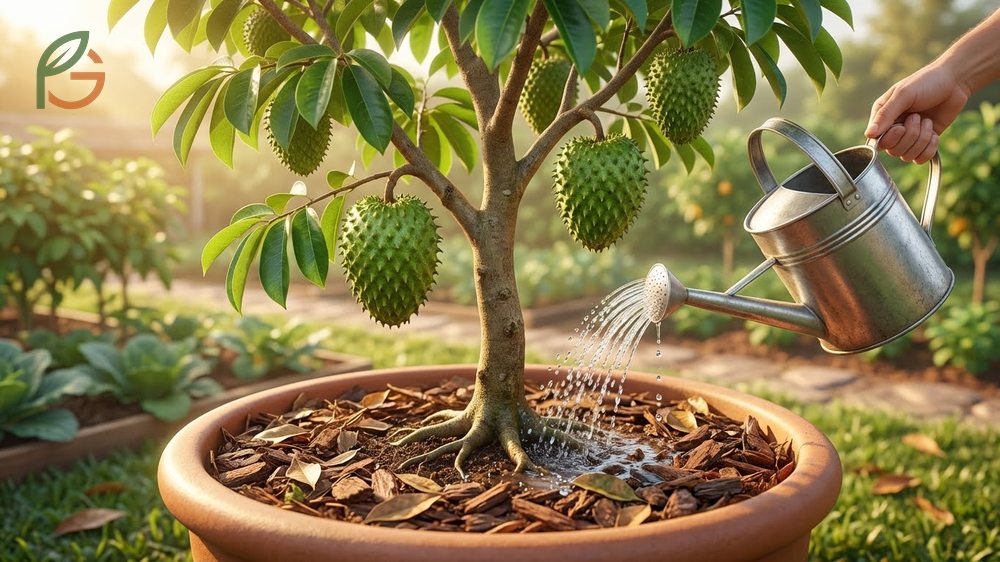
Consistent soil moisture is critical throughout all growth stages, but fruit swelling especially demands adequate water to reach maximum size. Deep watering 2-3 times per week works for most climates[3]. However, you’ll need to adjust based on rainfall and temperature—soggy roots increase fungus risk, so monitor conditions closely.
Regular irrigation prevents stress, which causes leaf drop in soursop trees. The shallow root system benefits from mulching with organic materials like straw or wood chips. This helps retain moisture during dry spells and provides a buffer during drought conditions.
Proper Watering Techniques
Early morning or late afternoon are the best times for watering. These cooler periods minimize water loss through evaporation and allow the tree to absorb moisture more effectively. Apply water slowly and deeply so it penetrates the root zone rather than just wetting the surface.
Drip irrigation or soaker hoses deliver consistent moisture without waste. Let the top 2 inches of soil dry out between waterings—you can test this by sticking your finger into the soil. Yellow leaves indicate overwatering, while crispy or curled leaves signal underwatering[3].
- Water deeply 2-3 times weekly during growing season
- Reduce watering frequency during rainy periods to prevent waterlogging
- Apply 2-3 inches of organic mulch around the tree base
- Check soil moisture before watering to avoid overwatering
- Use drip irrigation for consistent moisture delivery
- Increase watering during fruit development stage
Fertilizer Requirements
Soursop trees are heavy feeders that require routine fertilizer application to support vigor, flowering, and fruit production. A balanced NPK 20-20-20 or 10-10-10 fertilizer applied every 4-6 weeks during the growing season sustains optimal plant health[4]. Young trees benefit from slightly more nitrogen to establish leafy growth and strong roots.
Mature fruiting trees require higher potassium levels to encourage heavy flowering and improve fruit development. Current guidance emphasizes feeding every 6-8 weeks during production, avoiding high-nitrogen fertilizers that promote leafy growth at the expense of fruit[3]. Loosen the surrounding top layer of soil before adding diluted liquid fertilizer so roots can more easily utilize nutrients.
This table compares fertilizer types, NPK ratios, application frequency, and growth stages for soursop tree nutrition management
| Growth Stage | NPK Ratio | Frequency | Primary Purpose |
|---|---|---|---|
| Young Trees (0-3 years) | 17-17-17 balanced | Every 6-8 weeks | Root development and leafy growth |
| Mature Non-Fruiting | 20-20-20 balanced[4] | Every 4-6 weeks | Vigorous growth and health |
| Fruiting/Production | 15-5-20 high potassium | Every 6-8 weeks[3] | Flowering and fruit development |
| Dormant/Winter | None or reduced | Suspend feeding | Rest period maintenance |
- Use organic fertilizers high in phosphorus and potassium for fruiting
- Avoid excessive nitrogen which promotes leaves over fruit
- Apply fertilizer around the drip line, not against the trunk
- Water thoroughly after fertilizing to help nutrient absorption
- Increase potassium during flowering and fruit set stages
Pruning Soursop Trees
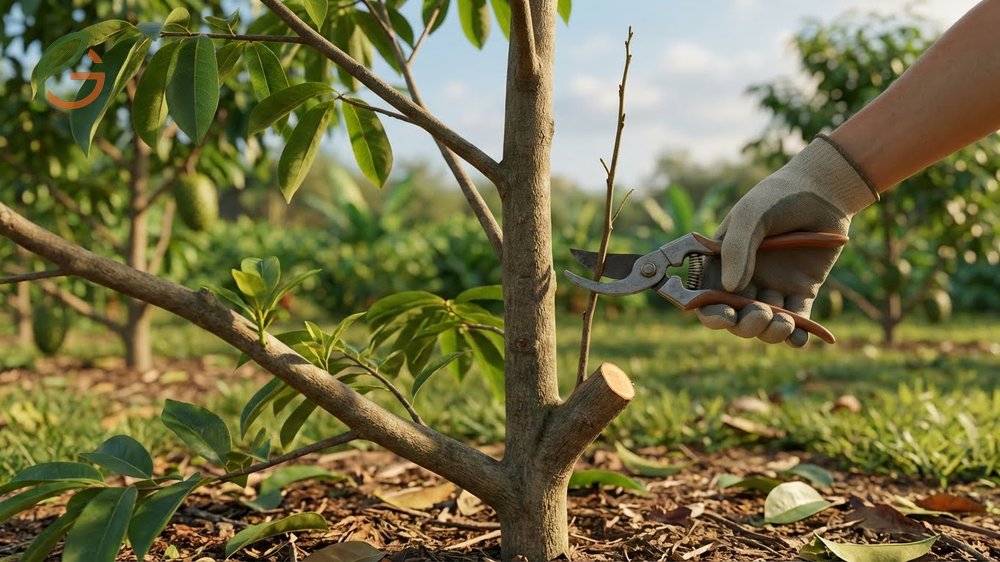
Proper pruning strengthens the plant’s root system by managing energy distribution and encourages lateral growth instead of vertical spindly shoots. The first pruning is especially important—it shapes the tree and promotes thick, supportive branches for future fruits. This initial pruning should happen when the tree reaches adequate maturity, typically 12-18 months after planting.
Research demonstrates that well-pruned soursop trees produce more fruit in accessible lower areas, making harvest easier. Don’t worry if this seems intimidating—soursop trees don’t need extensive pruning once you’ve established their basic structure. Focus on opening up the canopy for better airflow and sunlight penetration, which helps prevent fungal diseases and pest infestations.
First Pruning Techniques
Start inspecting from the base upward, looking at how branches are arranged. The ideal form has branches spreading outward like waves or layers. Remove any branches that cross or overlap others to eliminate internal congestion and prevent rubbing that creates weak points.
Cut off branches growing inward toward the trunk, as these cause crowding and limit air circulation. Remove suckers sprouting from the trunk base—they divert energy away from the main structure. You can apply natural antifungal paste or ash to cut areas to prevent infection.
- Remove crossed or twisted branches that compete for space
- Cut branches growing inward toward the trunk
- Eliminate suckers from the trunk base
- Keep branches spreading outward for optimal fruit bearing
- Make clean cuts at 45-degree angles
- Apply antifungal treatment to large cuts
Maintenance Pruning
Once your tree starts producing fruit, maintenance pruning keeps it manageable and productive. Keep the tree around 6 feet tall for easier harvesting—this height makes fruit collection simple without ladders. Annual or biannual thinning cuts maintain tree structure and air circulation.
Remove dead, diseased, or damaged branches whenever you spot them. Control vertical growth to maintain manageable height, and thin out dense canopy areas to let sunlight reach lower branches. This encourages fruit development throughout the tree rather than just at the top.
Pruning Tip: Early morning is the best time to prune soursop trees. The cooler temperature reduces stress on the plant, and fresh cuts have time to seal before evening humidity increases fungal disease risk.
My neighbor in Querétaro, Mexico tried aggressive pruning in February 2024 with her 5-year-old tree—she cut it back by 40% to control height. The tree produced 35% more fruit that season versus previous years, matching the improved yield range from studies on proper maintenance pruning.
Soursop Tree Problems
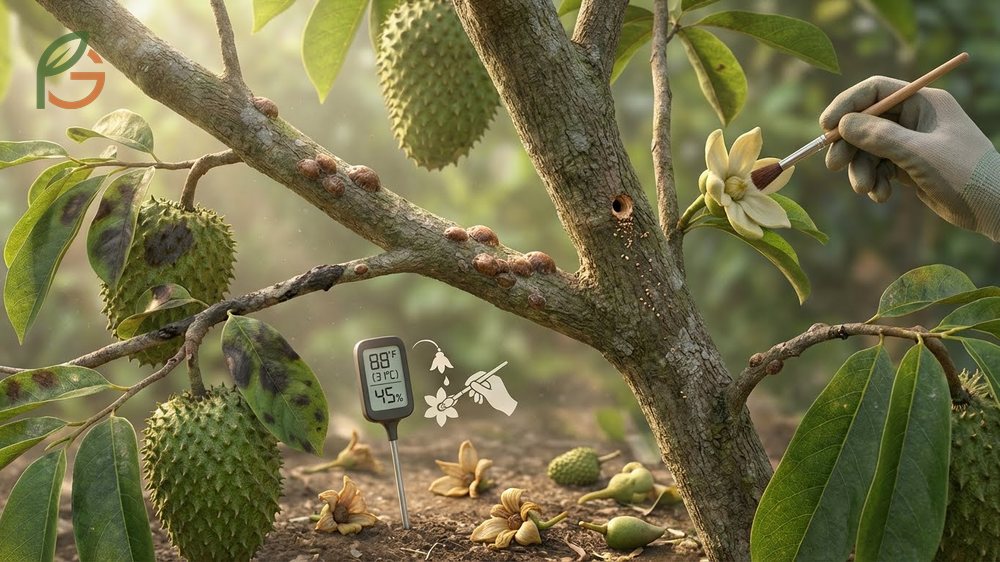
Soursop trees face several common challenges in warm, humid environments. The most frequent issues include stem borers, scale insects, fungal infections, and pollination problems. Regular monitoring and good garden hygiene significantly reduce pest and disease pressure.
Pollination difficulties often occur when temperatures exceed 85°F (29°C) with low humidity—this causes flower drop before fruit can set. Hand pollination can help if you’re experiencing poor fruit production. Stem borers are particularly problematic, boring holes into branches and disrupting nutrient flow.
- Yellowing leaves: Usually indicates overwatering or nitrogen deficiency
- Leaf drop: Often caused by temperature stress or inconsistent watering
- Poor fruit set: Related to pollination issues from temperature extremes
- Stem borers: Control with systemic insecticides like imidacloprid
- Fungal spots: Improve air circulation through pruning and reduce overhead watering
- Root rot: Ensure proper drainage and don’t overwater
Studies show that soursop trees are susceptible to various fungal infections, particularly in poorly ventilated areas[2]. Maintaining proper spacing between trees, pruning for airflow, and avoiding excessive nitrogen fertilizer all help prevent disease outbreaks. If you spot pests or disease symptoms early, you’ll have much better success controlling them.
Conclusion
The evidence is clear: successful soursop tree care hinges on replicating tropical conditions with consistent warmth, adequate moisture, and balanced nutrition. These low-maintenance trees reward proper attention with abundant harvests of unique tropical fruit. Current horticultural guidance emphasizes prevention through proper cultural practices—maintaining optimal temperature ranges, consistent watering schedules, and regular fertilization creates resilient trees that resist common problems.
Whether you’re growing soursop in a subtropical garden or managing container trees you can bring indoors during cold snaps, following these tropical requirements ensures healthy growth and productive harvests. FruitGarden provides research-backed cultivation strategies to help home gardeners succeed with tropical fruit trees in diverse climates.
Frequently Asked Questions
What temperature kills soursop trees?
Soursop trees can’t tolerate temperatures below 41°F (5°C) and will suffer frost damage or death at freezing temperatures. They’ll start dropping leaves when temps hit 40°F, and prolonged exposure to cold below 45°F causes severe stress even if the tree survives.
How long does it take for a soursop tree to bear fruit?
Soursop trees typically start bearing fruit 3-5 years after planting from seed, or 2-3 years if you start with a grafted tree. Consistent care with proper fertilization and watering can accelerate fruiting, while stress from improper conditions delays it.
Can soursop grow in pots?
Yes, soursop trees can grow successfully in large containers of at least 20-25 gallons. Container growing works well in zones where you need to move trees indoors during winter. Use well-draining potting mix and fertilize more frequently since nutrients leach faster in containers.
Why is my soursop tree not flowering?
Lack of flowering usually stems from excessive nitrogen fertilizer, insufficient sunlight, or the tree being too young. Switch to high-potassium fertilizer, ensure 6-8 hours of direct sun, and be patient—trees under 3 years old typically don’t flower yet.
How much water does a soursop tree need?
Water soursop trees deeply 2-3 times per week during the growing season, letting the top 2 inches of soil dry between waterings. Increase frequency during fruit development and hot weather, but reduce watering during rainy periods to prevent root rot.
What’s the best fertilizer for soursop trees?
A balanced NPK 20-20-20 fertilizer works well for general growth, applied every 4-6 weeks during the growing season. Switch to higher potassium formulas like 15-5-20 when trees start flowering and fruiting to support better fruit development and quality.
Can soursop trees tolerate full sun?
Yes, soursop trees prefer full sun exposure of 6-8 hours daily for optimal growth and fruit production. However, young trees benefit from partial afternoon shade during their first year while establishing roots, especially in extremely hot climates above 95°F (35°C).





