

Are blueberries keto friendly? They’re moderately compatible with ketogenic diets when consumed in controlled portions. Research shows that half a cup of blueberries contains 9g net carbs[1], which fits within the standard keto limit of 20-50g daily net carbs[2] if you’re mindful of other carb sources. FruitGarden synthesizes current nutritional research and agricultural data to help you make informed decisions about incorporating fruits into specialized diets.
Quick Answer
- Blueberries contain 9g net carbs per half cup (74g)[1] or 12g net carbs per 100g[3]
- They’re higher in carbs than raspberries (6.7g), blackberries (5g), and strawberries (6g) per 100g[4][5]
- Keep portions to ¼-½ cup to stay within keto macros without disrupting ketosis[6]
- Pair blueberries with fats or proteins to minimize blood sugar impact and extend satiety
Are Blueberries Keto Friendly
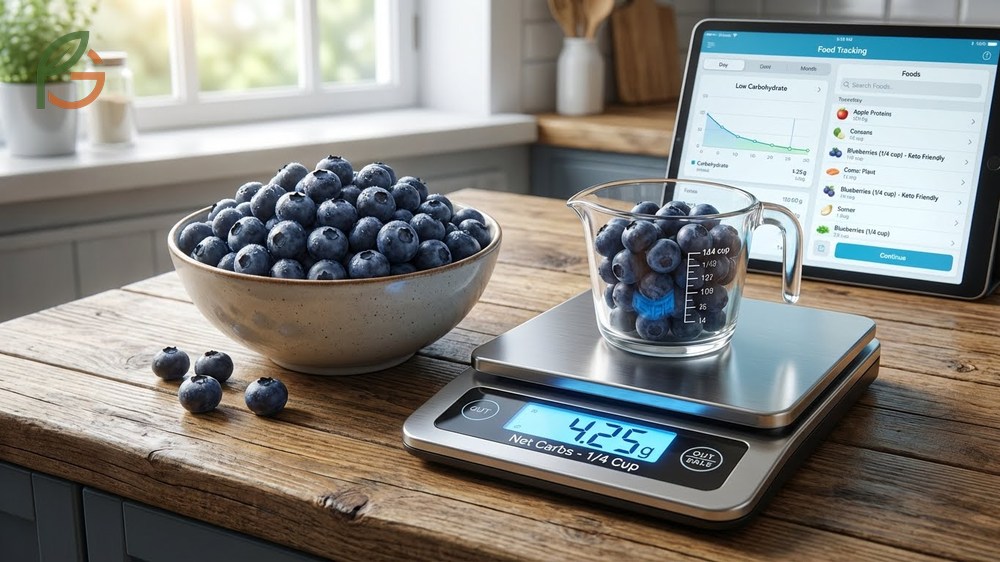
Blueberries occupy a middle ground in the keto fruit spectrum. Studies demonstrate they can fit into ketogenic eating patterns, but they’re not the most carb-efficient choice compared to other berries[5]. Their natural sugar content positions them as a “use sparingly” option rather than a daily staple for strict keto followers.
The ketogenic diet typically restricts net carbohydrates to 20-50g per day to maintain ketosis, where your body burns fat for fuel instead of glucose[2]. A half-cup serving of fresh blueberries delivers 9g net carbs[1], consuming 18-45% of your daily carb allowance depending on how strict your protocol is. This means you’ll need to budget carefully around other carb sources throughout the day.
Current nutritional guidance emphasizes that blueberries provide valuable anthocyanin antioxidants that support metabolic health[4]. The trade-off is that you’re sacrificing carb budget that could accommodate larger volumes of lower-carb vegetables. Most keto practitioners reserve blueberries for occasional treats rather than regular meal components.
Important Note: Dried blueberries contain concentrated sugars and can have 3-4 times the net carbs of fresh berries. Always choose fresh or frozen varieties without added sweeteners for keto compatibility.
Blueberry Carb Content
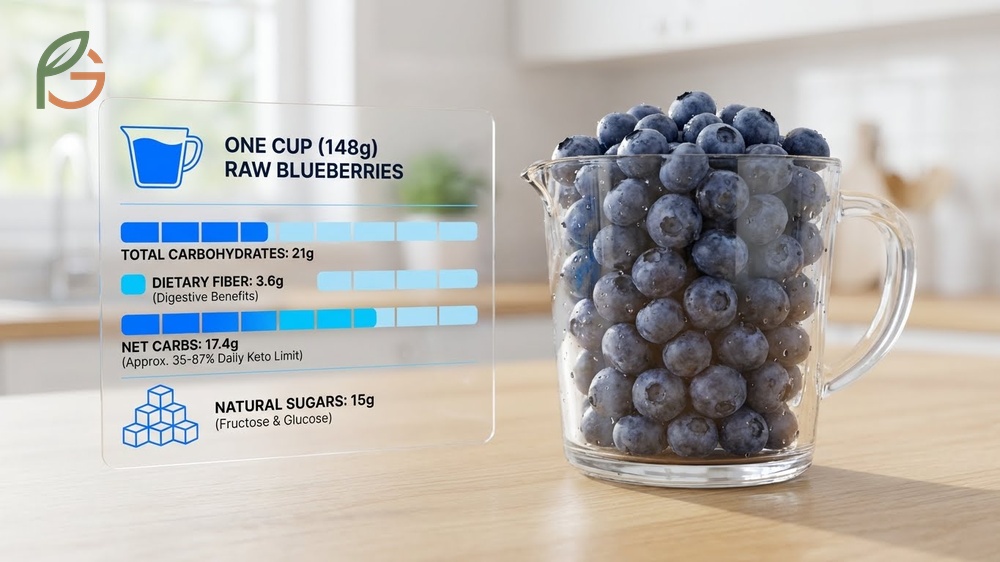
Evidence indicates that one cup (148g) of raw blueberries contains 21g total carbohydrates and 3.6g dietary fiber[7]. The fiber content provides digestive benefits but doesn’t significantly offset the carb load for keto purposes. You’re looking at approximately 17.4g net carbs per full cup, which represents 35-87% of the daily keto carb limit.
Agricultural data shows blueberries contain 15g natural sugars per cup, primarily fructose and glucose[7]. This sugar composition contributes to their glycemic load score below 10, which is considered low[7]. While this makes them better than high-glycemic fruits like watermelon or pineapple, the total carb volume still matters more than glycemic response for maintaining ketosis.
Total vs Net Carbs in Blueberries
Net carbs represent the carbohydrates your body can digest and convert to glucose, calculated by subtracting fiber from total carbs. Research shows blueberries consist of 83% net carbs and 17% dietary fiber by carbohydrate composition[3]. This ratio means fiber provides minimal protective effect against carb impact compared to higher-fiber foods like raspberries.
Per 100g serving, blueberries deliver 14.5g total carbohydrates and 2.4g fiber, yielding 12.1g net carbs[3]. The fiber content does support gut health and can slow sugar absorption, but it won’t prevent the carbs from affecting your ketone levels if you exceed your daily threshold.
Serving Size Variations
Standard serving measurements vary, creating confusion about actual carb intake. Current guidelines use these common portions for blueberries:
- ¼ cup (37g): approximately 4-5g net carbs
- ½ cup (74g): 9g net carbs[1]
- 1 cup (148g): 17-18g net carbs[4]
- 100g (metric): 12g net carbs[3]
- Handful (approximately 30-40g): 3-4g net carbs
This table compares net carbs, fiber content, and keto suitability ratings across four common berries per 100 gram serving
| Berry Type | Total Carbs | Fiber | Net Carbs | Keto Rating |
|---|---|---|---|---|
| Raspberries | 12g | 8g | 6.7g[4] | Best |
| Blackberries | 9.6g | 5g | 5g[5] | Excellent |
| Strawberries | 8g | 2g | 6g[5] | Very Good |
| Blueberries | 14.5g | 2.4g | 12g[3] | Moderate |
Net Carbs in Blueberries
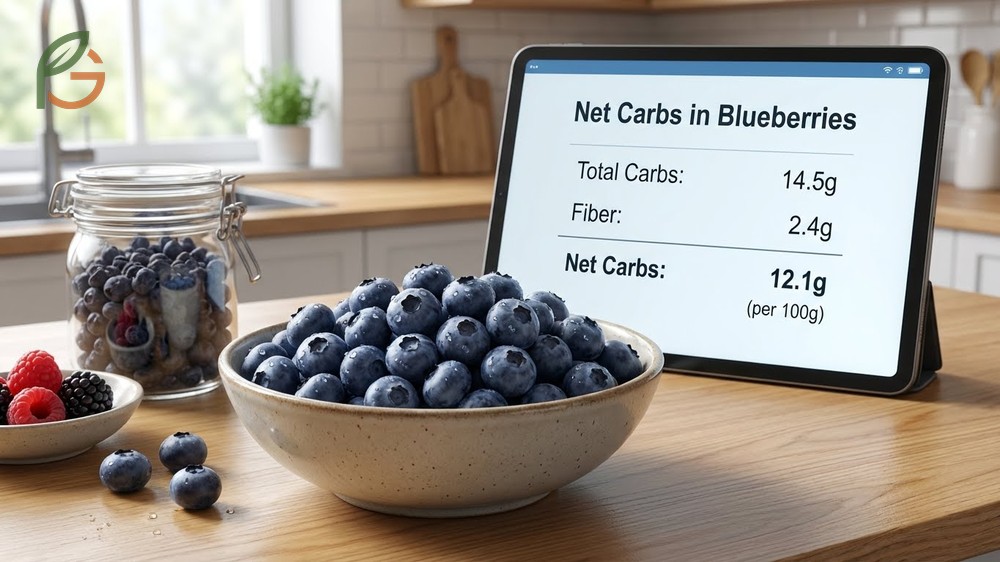
Net carb calculation matters more than total carbs for ketogenic dieters tracking macros. Research shows that subtracting the 2.4g fiber from 14.5g total carbs per 100g yields 12.1g net carbs[3]. This fiber-to-carb ratio of approximately 1:6 is less favorable than raspberries (1:1.5) or blackberries (1:2), meaning you get less metabolic benefit from the fiber content.
The net carb density of blueberries varies by freshness and preparation method. Fresh blueberries contain about 80-85% water, which dilutes carb concentration[4]. Frozen unsweetened blueberries maintain similar nutritional profiles, typically showing 9g total carbs and 2g fiber per 70g serving. Avoid frozen varieties with added sugars, which can double or triple the net carb count.
Studies demonstrate that berry consumption can decrease post-meal blood sugar spikes and improve insulin sensitivity when eaten in controlled portions[8]. However, this benefit applies primarily to lower-carb berries consumed after fibrous vegetables. The 12g net carbs in 100g of blueberries still requires careful budgeting within your daily macro targets to maintain ketosis.
- Ripeness level: Sweeter, fully ripe blueberries contain slightly more sugar than tart, underripe berries
- Wild vs cultivated: Wild blueberries are smaller with more concentrated nutrients but similar net carb ratios
- Processing method: Dried blueberries lose water, concentrating carbs to 60-80g per 100g
- Pairing foods: Combining with fats (cream, nuts) or protein slows glucose absorption
- Individual metabolism: Some people maintain ketosis at 50g carbs while others need 20g or less
Tracking Tip: Use a food scale for accuracy. “Eyeballing” blueberry portions typically leads to 30-50% underestimation of actual carb intake, potentially disrupting ketosis without you realizing it.
Keto Berry Options
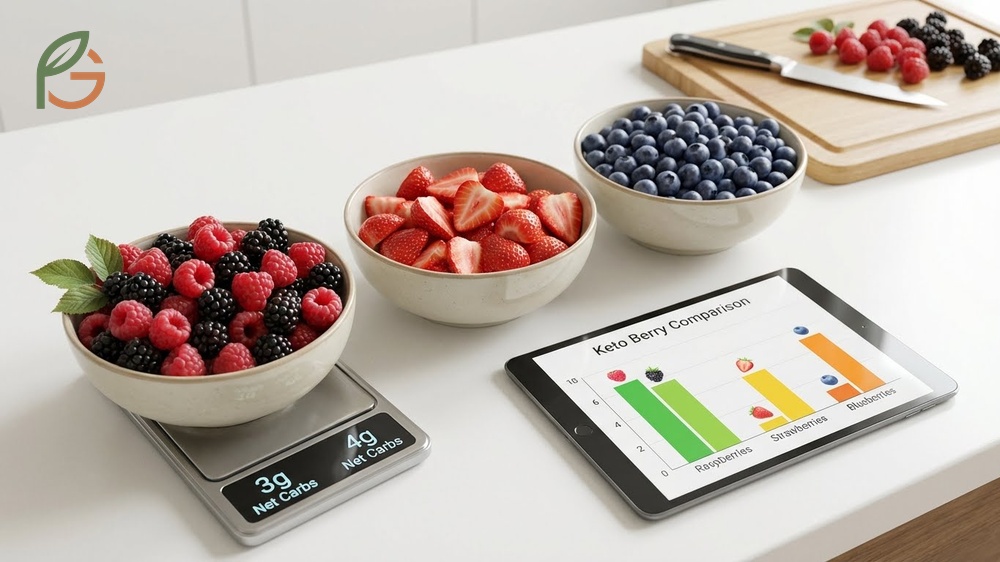
Evidence indicates that raspberries and blackberries provide superior keto compatibility compared to blueberries. Half a cup of raspberries (60g) contains only 3g net carbs, while the same volume of blackberries (70g) delivers 4g net carbs[5]. This translates to roughly 40-60% fewer net carbs than equivalent blueberry servings, allowing you to eat more volume while staying within macro limits.
Strawberries occupy the middle ground with 6g net carbs per eight medium berries (100g)[5]. Their larger size makes portion control easier than tiny blueberries that you might pop into your mouth without counting. Most keto dieters find they can satisfy sweet cravings with 100-150g of strawberries while consuming less total carbs than a half-cup of blueberries.
Nutritional data shows raspberries provide 8g fiber per cup alongside 6.7g net carbs[4], delivering exceptional satiety per carb consumed. The high fiber content supports digestive health and helps stabilize blood sugar, making them the gold standard for keto berry consumption. Studies also show raspberry compounds may reduce inflammation and insulin resistance more effectively than other berries.
- Raspberries: Best choice for maximum volume with minimal carb impact; excellent in yogurt bowls
- Blackberries: Tied for lowest net carbs; larger size makes them ideal for satisfying hand-to-mouth eating
- Strawberries: Good middle option; slice them to make portions feel more substantial
- Cranberries (fresh, unsweetened): Very low carb but extremely tart; best used as garnish or in savory dishes
- Mixed berry blends: Combining berries dilutes blueberry carb density while maintaining flavor variety
Current dietary guidance emphasizes eating berries after fibrous vegetables like kale, broccoli, or asparagus to minimize blood sugar spikes[8]. The vegetable fiber creates a digestive buffer that slows sugar absorption. If you’re committed to eating blueberries on keto, this strategy helps mitigate their higher carb impact compared to other berry options.
Blueberry Portion Size for Keto
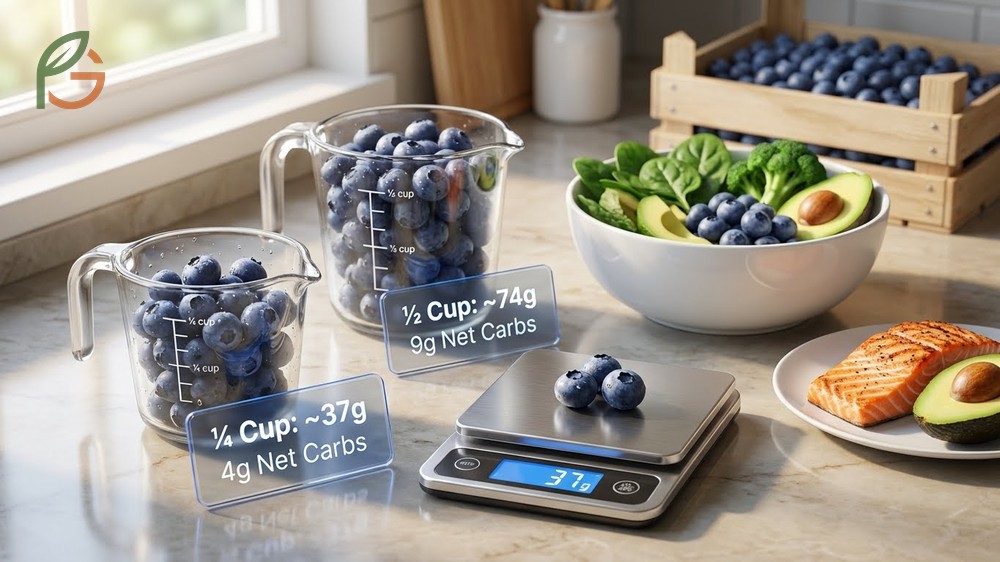
Research demonstrates that ¼ to ½ cup represents the maximum blueberry portion that won’t derail most keto diets[6][9]. This translates to approximately 37-74g of fresh blueberries, delivering 4-9g net carbs depending on whether you choose the smaller or larger end of the range. Most strict keto practitioners stick to the ¼ cup serving to preserve carb budget for nutrient-dense vegetables.
Studies indicate that pairing blueberries with protein or fat sources significantly reduces their glycemic impact[9]. Adding 2 tablespoons of heavy cream (1g net carbs) or 1 ounce of almonds (3g net carbs) to your blueberry portion slows sugar absorption and extends satiety. This combination approach allows you to enjoy the antioxidant benefits while minimizing blood sugar fluctuations that could disrupt ketosis.
Portion Control Strategies
Evidence shows that pre-portioning blueberries prevents overconsumption that sabotages keto macros. Measure your serving immediately after purchase, dividing bulk containers into ¼-cup portions stored in small containers or bags. This eliminates the temptation to grab “just a few more” berries that accumulate into macro-breaking quantities throughout the day.
Visual portion guides help when you don’t have measuring tools available. A ¼ cup of blueberries roughly equals the volume of a golf ball or the size of your closed fist excluding fingers. Half a cup approximates a tennis ball or your cupped palm. These reference points enable reasonable portion estimates when eating away from home.
- Use small bowls: An 8-oz ramekin naturally limits serving size to ½ cup maximum
- Count individual berries: 15-20 medium blueberries equals approximately ¼ cup
- Freeze in ice cube trays: Each standard cube holds about 2 tablespoons (6-8 berries)
- Mix with higher-fat foods: Combine with Greek yogurt, cottage cheese, or chia pudding to extend volume
- Reserve for dessert: Eating blueberries after protein-rich meals reduces appetite for larger portions
Best Meal Timing for Blueberries
Current metabolic research suggests consuming blueberries after meals rich in protein and healthy fats rather than on an empty stomach. This meal sequencing approach slows gastric emptying and glucose absorption, helping maintain stable ketone levels. Most keto dieters report better satiety when they add 10-15 blueberries to the end of breakfast or lunch rather than eating them as standalone snacks.
Post-workout timing provides another strategic window for blueberry consumption. The 30-60 minute window after resistance training or high-intensity exercise shows increased insulin sensitivity and glucose uptake by muscles rather than fat storage. A ¼ cup of blueberries during this period is less likely to disrupt ketosis compared to sedentary consumption, though you’ll still need to account for the carbs in your daily total.
Evening consumption deserves caution for strict keto followers. Eating carbohydrates within 2-3 hours of bedtime can blunt overnight ketone production and fat burning. If you crave blueberries in the evening, limit portions to 10-15 berries combined with high-fat foods like mascarpone cheese or almond butter to minimize metabolic impact during sleep hours.
Meal Integration Tip: Add 5-8 blueberries to salads with leafy greens, goat cheese, and walnuts. The high fiber and fat content of the meal dilutes the carb impact while the berries provide flavor contrast and antioxidants.
Conclusion
The evidence is clear: blueberries can fit into keto diets when you respect strict portion limits of ¼-½ cup and budget their 4-9g net carbs within your daily allowance. They’re not the most carb-efficient berry choice, with raspberries and blackberries delivering 40-60% fewer net carbs per serving. Strategic consumption paired with fats or proteins after vegetable-rich meals minimizes their impact on ketosis.
Current nutritional guidance emphasizes that blueberries offer valuable antioxidants and micronutrients, but these benefits don’t override the fundamental carb math. For optimal keto results, treat blueberries as occasional additions rather than daily staples, measuring portions carefully and tracking your individual response. FruitGarden continues monitoring emerging research on fruit cultivation and nutritional science to help you grow and enjoy berries that align with your dietary goals.
Medical Disclaimer
Important Medical Disclaimer: This content is for informational and educational purposes only. It’s not intended as a substitute for professional medical advice, diagnosis, or treatment. Always consult a qualified healthcare professional or registered dietitian before making any changes to your diet, especially if you have diabetes, metabolic disorders, or other medical conditions. Individual carbohydrate tolerance varies, and what works for one person may not be appropriate for another. The ketogenic diet may not be suitable for everyone, and medical supervision is recommended when beginning any restrictive eating plan.
Frequently Asked Questions
Can I Eat Blueberries Every Day on Keto?
You can eat small portions of blueberries daily if you carefully budget the 4-9g net carbs within your 20-50g daily limit. Most keto dieters find that rotating between lower-carb berries like raspberries and blackberries allows for more dietary variety without exceeding carb thresholds. Daily consumption requires meticulous tracking of all other carb sources throughout the day.
Do Frozen Blueberries Have More Carbs Than Fresh?
Unsweetened frozen blueberries contain essentially the same net carbs as fresh blueberries, typically 9g per half cup. The freezing process doesn’t significantly alter carbohydrate content. However, many commercial frozen blueberries include added sugar or syrup, which can double or triple the carb count—always read nutrition labels carefully and choose varieties with no added ingredients.
Will Blueberries Kick Me Out of Ketosis?
Blueberries will disrupt ketosis only if their carbs push you over your personal carb threshold, which varies by individual metabolism and activity level. A ¼ cup portion containing 4-5g net carbs typically won’t break ketosis if it’s your only fruit serving and you minimize carbs from other sources. Portions exceeding ½ cup increase the risk of exiting ketosis for people with stricter 20-25g daily limits.
What’s the Best Time to Eat Blueberries on Keto?
The optimal time is after protein and fat-rich meals or within 30-60 minutes post-workout when insulin sensitivity peaks. Eating blueberries on an empty stomach causes faster blood sugar spikes that may temporarily suppress ketone production. Evening consumption should be limited since carbohydrates eaten near bedtime can blunt overnight fat burning and ketosis.
How Do Blueberries Compare to Other Keto Fruits?
Blueberries rank in the moderate range for keto compatibility with 12g net carbs per 100g. They’re higher than raspberries (6.7g), blackberries (5g), strawberries (6g), and avocados (2g), but lower than apples (14g), bananas (23g), and grapes (18g). Among berries specifically, blueberries are the least keto-friendly option, though still manageable in small portions.
Should I Choose Wild or Cultivated Blueberries for Keto?
Wild blueberries are smaller with slightly more concentrated antioxidants but similar net carb ratios to cultivated varieties—both contain approximately 12g net carbs per 100g. The main difference is that wild blueberries’ smaller size makes them easier to overeat since you get more individual berries per portion. Cultivated blueberries’ larger size aids portion awareness.
Can I Use Blueberries in Keto Smoothies?
You can include ¼ cup of blueberries in keto smoothies if you balance them with high-fat, low-carb ingredients like avocado, coconut cream, MCT oil, and protein powder. The liquid format may cause faster sugar absorption than whole berries, so pair with chia seeds or psyllium husk to add fiber and slow gastric emptying. Track the total carbs from all smoothie ingredients to avoid exceeding your macro targets.





