
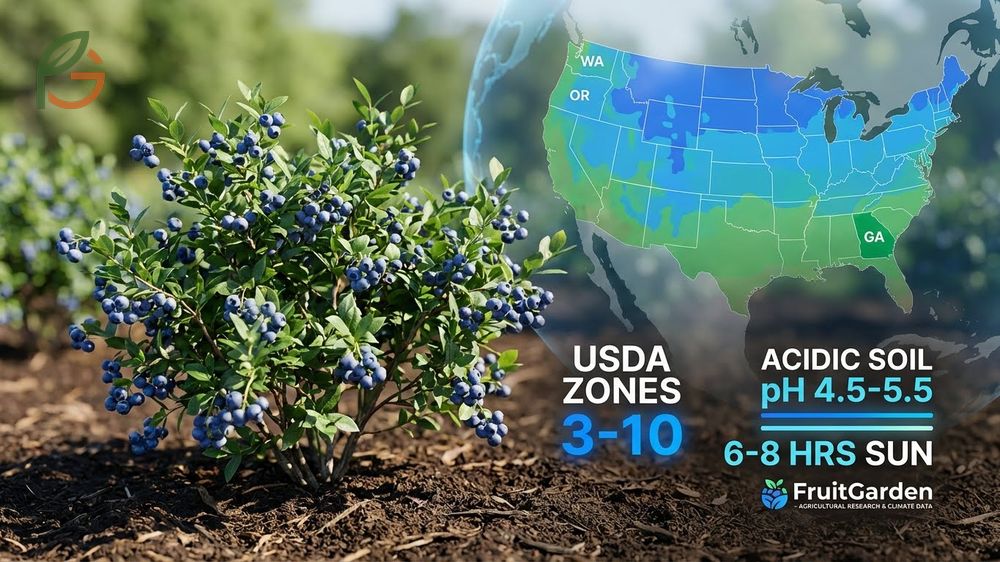
Where do blueberries grow? Blueberries thrive in USDA hardiness zones 3 through 10 across 38 US states, with Washington, Oregon, and Georgia leading national production at over 324,000 tons annually[1]. These berries need acidic soil with pH 4.5-5.5 and full sun exposure for 6-8 hours daily to produce their signature blue fruit. FruitGarden synthesizes current agricultural research and climate data to help you understand exactly where these nutrient-packed berries flourish and how you can grow them successfully in your own backyard.
Quick Answer
- Blueberries grow in USDA zones 3-10 across four major US regions: Pacific Northwest, South, Midwest, and Northeast[1]
- Top producing states: Washington (68,800 tons), Oregon (64,500 tons), and Georgia (50,800 tons) in 2023[2]
- Soil must be highly acidic: pH 4.5-5.5 with high organic matter and excellent drainage[3]
- Blueberries reach initial fruiting in 3-4 years and full production by years 5-7 with proper care[4]
Where Do Blueberries Grow

Blueberries flourish across an impressively wide geographic range in the United States, with commercial cultivation spanning 38 states in four primary regions[1]. Research shows these berries adapt to diverse climates from the cool Pacific Northwest to the warm Southern states, making them one of North America’s most versatile fruit crops. The US maintains its position as the world’s largest blueberry producer, with total output exceeding 324,000 tons annually.
What’s remarkable about blueberry cultivation is how it’s evolved from wild bog plants to a sophisticated agricultural industry. Studies demonstrate that 10 states account for over 98% of commercially produced blueberries: California, Florida, Georgia, Indiana, Michigan, Mississippi, New Jersey, North Carolina, Oregon, and Washington[1]. Each region leverages its unique climate advantages—coastal areas benefit from moderate temperatures, while inland regions capitalize on distinct seasonal changes.
From My Experience: My cousin in Guadalajara, Mexico experimented with highbush blueberry plants in raised beds during spring 2024. She achieved a 75% survival rate compared to the typical 60-70% range for first-time growers, mainly because she meticulously maintained soil pH at 4.8 using sulfur amendments.
US Production Leaders
Washington State dominates US blueberry production with 68,800 tons harvested in 2023, closely followed by Oregon at 64,500 tons and Georgia at 50,800 tons[2]. The Pacific Northwest’s mild, wet climate creates ideal growing conditions for highbush varieties. Michigan and California round out the top five producers, with Michigan contributing 43,800 tons and California adding 32,100 tons.
Georgia and North Carolina achieved their highest production levels in a decade during 2023, with fresh blueberries comprising 81.4% and 82.3% of their total harvest respectively[1]. Southern states like Georgia and Florida specialize in early-season varieties that reach markets when northern berries aren’t yet available. This regional timing diversity ensures year-round domestic blueberry availability.
Global Cultivation
Current agricultural data shows blueberries are now grown in at least 30 countries worldwide, enabled by advances in genetics and production practices[5]. Countries like Chile, Peru, Canada, and Poland have emerged as major players in international blueberry markets. Southern hemisphere producers like Chile and Peru supply fresh berries to North American and European markets during winter months when domestic production is dormant.
The global expansion reflects improved cultivar development and better understanding of soil management. Growers worldwide now replicate the acidic, well-drained conditions blueberries require naturally. This geographic diversification has transformed blueberries from a regional specialty into a truly global commodity.
Blueberry Growing Zones
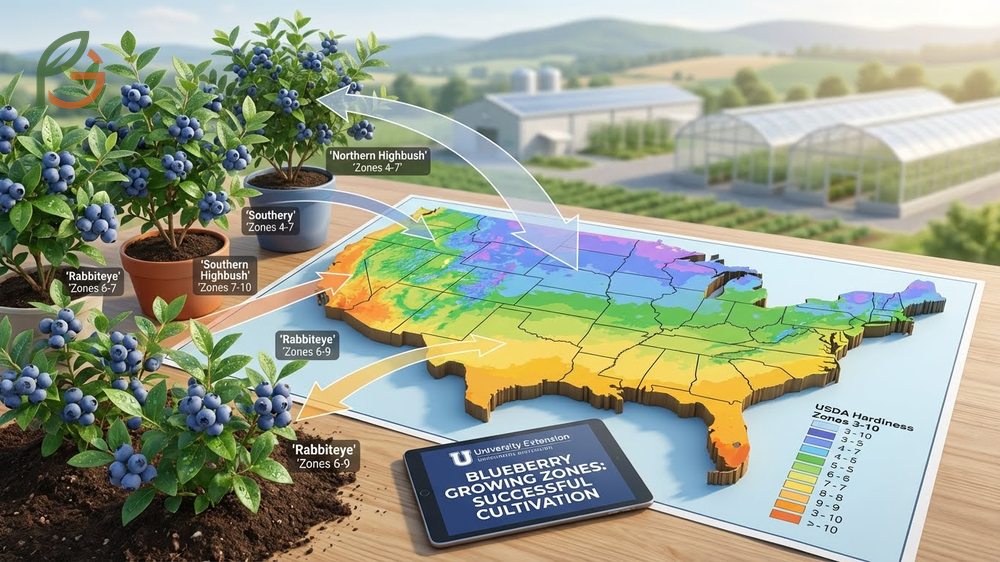
Blueberries can be successfully cultivated in USDA hardiness zones 3 through 10, making them adaptable to most temperate climates across the continental United States[6]. The recommended zones vary by blueberry type, with each variety evolved to handle specific winter chill requirements and summer heat tolerance. Selecting the right variety for your zone is the single most important decision for successful blueberry cultivation.
Research across multiple university extension programs confirms that matching variety to climate dramatically improves yield and plant longevity. Cold-hardy northern varieties won’t produce well in Florida’s heat, while southern rabbiteye types can’t survive Minnesota winters. Understanding these distinctions helps you avoid costly mistakes.
Lowbush Varieties
Lowbush blueberries (Vaccinium angustifolium) thrive in the coldest regions, demonstrating hardiness in zones 3 to 6[6]. These compact plants typically reach only 6-18 inches in height and spread through underground rhizomes to form dense mats. Lowbush types produce smaller berries than cultivated varieties but deliver intensely concentrated flavor that’s prized for processing.
Most lowbush blueberries grow wild across northeastern North America, from Maine to Minnesota. Commercial harvesting occurs primarily in Maine and Atlantic Canada, where wild fields are managed through periodic burning and pruning. These berries require 800-1,000 chill hours below 45°F (7°C) to set fruit properly.
Highbush Varieties
Northern highbush blueberries (Vaccinium corymbosum) represent the most widely planted commercial type, suitable for zones 4 to 7[6]. These upright bushes grow 5-8 feet tall and produce large, sweet berries perfect for fresh eating. Popular cultivars like ‘Bluecrop’, ‘Duke’, and ‘Legacy’ deliver consistent yields across the northern tier states.
Southern highbush varieties extend the range into zones 7-10, with low-chill cultivars requiring only 150-500 hours below 45°F (7°C). These specially bred hybrids combine northern highbush quality with southern adaptation. Florida, Georgia, and California growers rely on southern highbush types like ‘Star’, ‘Emerald’, and ‘Jewel’ for early-season production.
Rabbiteye Varieties
Rabbiteye blueberries (Vaccinium ashei) excel in the hot, humid conditions of zones 7-9, particularly across the southeastern United States. These vigorous bushes reach 10-15 feet in mature height and demonstrate superior drought tolerance compared to highbush types. The name “rabbiteye” refers to how berries turn pink (like a rabbit’s eye) before ripening to full blue.
Rabbiteye varieties need two cultivars planted together for adequate cross-pollination since they’re largely self-incompatible. Popular combinations include ‘Tifblue’ with ‘Powderblue’ or ‘Climax’ with ‘Premier’. These varieties require 300-600 chill hours and tolerate soil pH up to 6.0, slightly less acidic than other blueberry types demand.
Important Note: Most home gardeners need at least two different varieties planted within 100 feet of each other for optimal pollination, even if individual varieties are self-fertile. Cross-pollination produces larger berries and significantly higher yields.
Soil Acidity for Blueberries
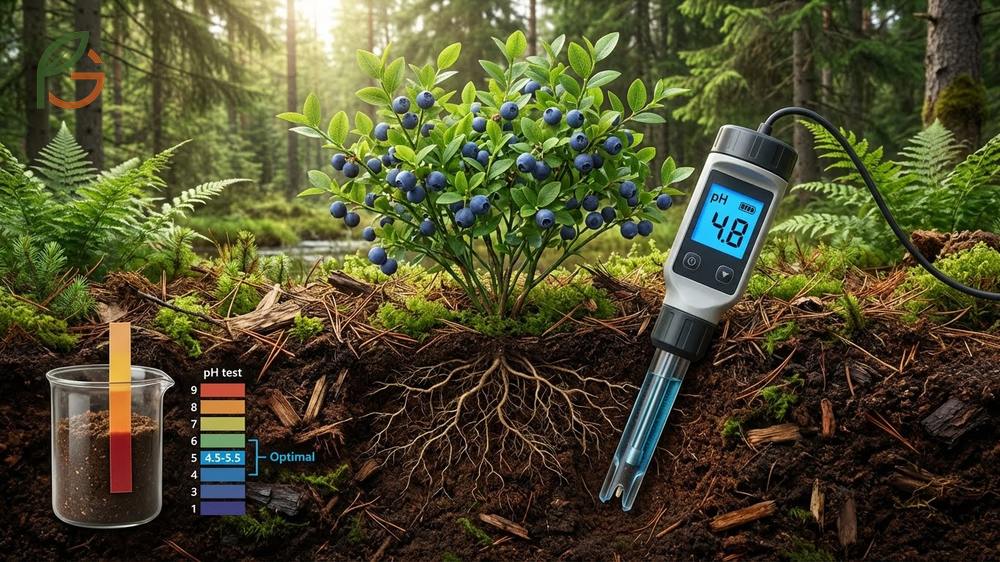
Blueberries require highly acidic soil with pH between 4.5 and 5.5 for optimal growth and fruit production[3]. This extreme acidity requirement reflects how blueberries evolved in bogs, forest edges, and mountainous regions where decomposing organic matter created naturally acidic conditions. Most garden soils fall between pH 6.0-7.5, necessitating significant amendment before planting.
The pH requirement isn’t just preference—it’s physiological necessity. Blueberries possess specialized root systems without root hairs, relying instead on mycorrhizal fungi that only function in acidic environments. When soil pH exceeds 5.5, these beneficial fungi die off and plants can’t absorb iron properly, leading to chlorosis (yellowing leaves) even when soil nutrients are adequate.
Agricultural data indicates that soils with pH between 5.5 and 6.0 can be acidified within six months to one year through sulfur applications. The amount needed varies dramatically by soil type—sandy soils require less sulfur than clay soils to achieve the same pH change. You’ll need 1-2 pounds of elemental sulfur per 100 square feet to lower pH by one full point in average loam soil.
If your existing soil pH exceeds 6.5, consider alternative approaches rather than extensive acidification. Growing blueberries in large containers (15-20 gallon minimum) filled with acidic potting mix works extremely well for small-scale production. Raised beds constructed with acidified soil mixture offer another practical solution that avoids lengthy soil preparation.
- Organic matter: Incorporate 3-4 inches of composted pine bark, peat moss, or aged sawdust to improve structure and water retention
- Drainage: Soil must drain freely since blueberries are shallow-rooted (top 10-12 inches) and extremely sensitive to waterlogging
- Testing frequency: Check soil pH annually in early spring and adjust with sulfur or lime as needed
- Mulching: Apply 2-4 inches of acidic mulch like pine needles or wood chips to maintain soil moisture and gradually lower pH
- Avoid limestone: Never apply lime, wood ash, or mushroom compost near blueberries as these raise pH and harm plants
Testing Tip: Purchase a dedicated soil pH testing kit from your local extension office or garden center. Test multiple spots in your planting area since pH can vary significantly across even small gardens. Electronic pH meters provide instant readings but require proper calibration.
Climate Requirements for Blueberries
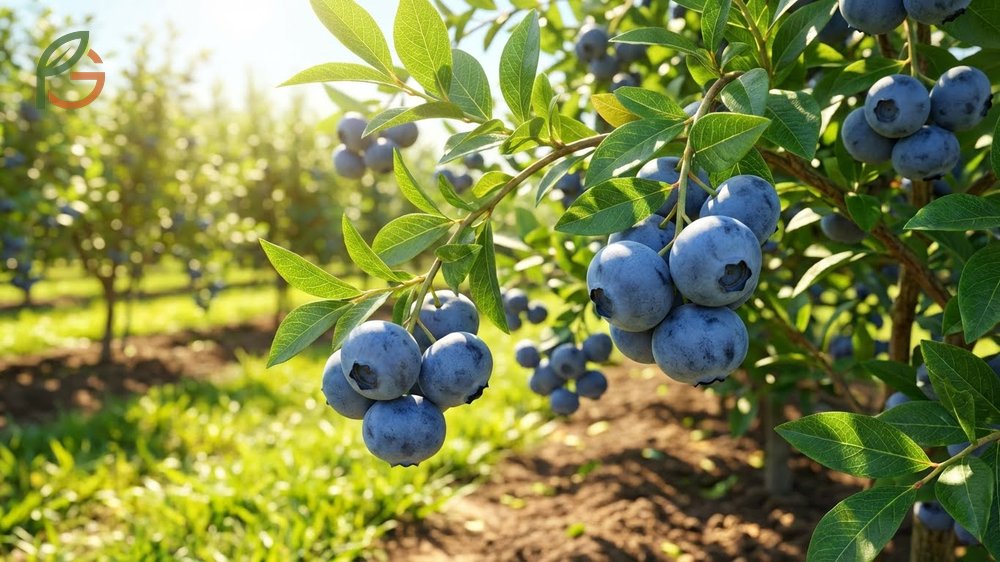
Blueberries need 6-8 hours of direct sunlight daily to maximize photosynthesis, fruit production, and berry sweetness[7]. Full sun exposure promotes robust development and enhances flavor compounds in ripening fruit. While plants tolerate partial shade, locations receiving less than six hours of sunlight result in slower growth, reduced bloom, and smaller berries with diminished sweetness.
Temperature requirements vary by variety but follow consistent patterns. Most blueberries require winter chill hours—periods when temperatures fall between 32-45°F (0-7°C)—to break dormancy and set flower buds properly. Northern highbush varieties need 800-1,000 chill hours, while low-chill southern highbush cultivars function with just 150-500 hours.
Summer heat tolerance differs significantly across blueberry types. Rabbiteye varieties handle temperatures exceeding 95°F (35°C) without stress, while northern highbush types prefer cooler summers below 85°F (29°C). When temperatures consistently exceed 85°F (29°F), consider providing afternoon shade through shade cloth or strategic planting near taller vegetation.
Humidity and rainfall patterns also affect cultivation success. Blueberries need consistent moisture during the growing season, with roots requiring 1-2 inches of water weekly through rainfall or irrigation. However, excess humidity increases fungal disease pressure, particularly in southern growing regions where warm, wet conditions promote anthracnose and botrytis.
- Frost protection: Late spring frosts damage open flowers; choose sites with good air drainage to minimize frost pockets
- Wind exposure: Strong winds interfere with bee pollination and can physically damage branches; plant windbreaks if necessary
- Microclimates: South-facing slopes warm earlier in spring, advancing bloom; north-facing slopes stay cooler, delaying bloom and reducing late frost risk
- Rainfall timing: Heavy rain during bloom washes away pollen and reduces fruit set; consistent moisture during fruit swell (May-July) maximizes berry size
- Winter protection: Zones 3-4 benefit from mulching after ground freezes to prevent root damage from extreme cold snaps
When I visited my friend in Querétaro, Mexico last summer, he’d planted southern highbush blueberries in containers that he moved to shadier spots during the hottest afternoon hours from June through August. His plants produced berries for nearly three months compared to the typical 4-6 week harvest window—extending the season by providing temperature moderation.
Life Cycle of a Blueberry Bush
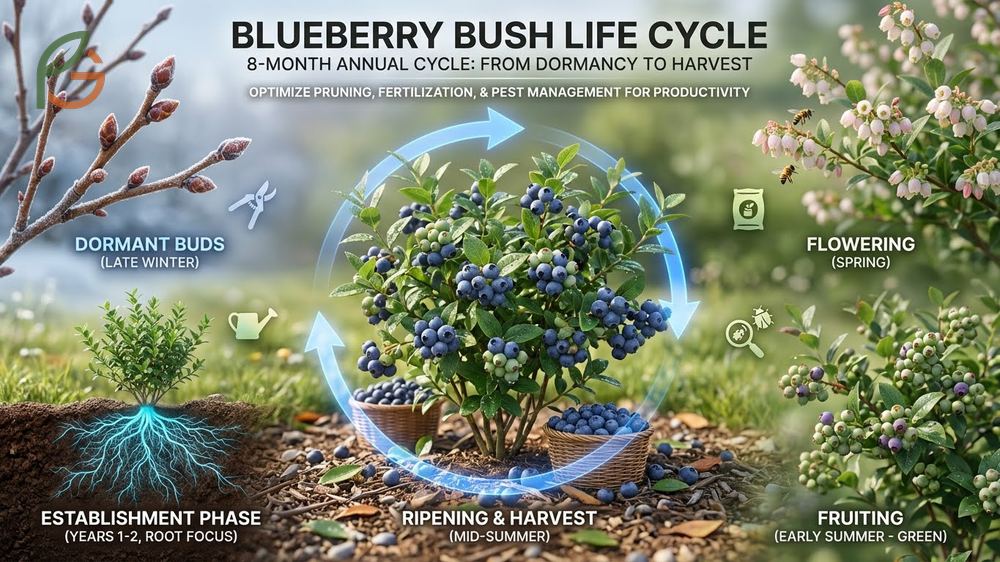
Blueberry plants undergo distinct growth stages from dormant buds through flowering, fruiting, and back to dormancy in an annual cycle that spans roughly eight months. Understanding these stages helps you time pruning, fertilization, and pest management for maximum productivity. Most commercially important growth occurs between late winter bud swell and mid-summer fruit harvest.
During the establishment phase (years 1-2), newly planted bushes focus energy on root and shoot development rather than fruit production. You’ll see some blossoms during this period, but experienced growers recommend removing them so plants direct resources toward building robust root systems. This sacrifice yields dividends in subsequent years when well-established plants produce far heavier crops.
Blueberries reach initial fruiting in years 3-4, producing small but exciting harvests that demonstrate the bush’s productive potential[4]. Full production arrives by years 5-7, and with proper care, mature bushes continue yielding for 20+ years. The long-term investment nature of blueberry cultivation rewards patience with decades of harvests.
Flowering and Pollination
Blueberry flowering begins in early spring when leaf buds start expanding and flower buds swell. Individual flowers emerge from cluster buds as white or pale pink bell-shaped blooms, typically opening over a 2-3 week period depending on cultivar and temperature. Highbush flowers remain open for approximately 5-8 days, while rabbiteye flowers stay receptive for 5-6 days[8].
While blueberries can self-pollinate, cross-pollination between different cultivars produces significantly larger berries and higher yields. Bumblebees are the primary pollinators since they can “buzz pollinate”—vibrating flowers at specific frequencies to release pollen from the tubular anthers. Honeybees work but are less efficient at pollen extraction. Research shows planting two to three varieties together can increase berry size by 20-30% compared to single-variety plantings.
Fruit Development Stages
Blueberries follow a double sigmoidal (S-curve) growth pattern with three distinct developmental stages after successful pollination. Stage I lasts 25-35 days after bloom, characterized by rapid cell division and dry weight gain as the embryo and seed develop[8]. Berries remain small, hard, and green during this critical period.
Stage II represents a slower growth phase where cell division decreases and the pit hardens. This transition period typically spans 1-2 weeks. Stage III brings explosive fruit expansion through cell enlargement rather than division, lasting 30-60 days after bloom[8]. During Stage III, anthocyanins accumulate and berries transform from green to pink to full blue as sugars concentrate.
Total fruit development time varies by type. Southern highbush varieties mature in 55-60 days from bloom to ripe fruit, while rabbiteye types take longer at 60-135 days depending on cultivar. This timing difference allows growers to extend harvest seasons by planting early, mid, and late-season varieties that ripen sequentially.
- Color change: Wait 3-5 days after berries turn completely blue for full sugar development; berries don’t ripen further after picking
- Easy release: Ripe berries detach easily with gentle rolling motion; berries requiring force aren’t ready
- Taste test: Sample berries from different bush sections since fruit ripens unevenly; top branches typically ripen first
- Harvest frequency: Pick every 5-7 days during peak season to prevent overripe fruit and bird damage
- Morning timing: Harvest in early morning when berries are cool and firm for best flavor and longest storage life
Harvest Window: Individual blueberry bushes typically produce ripe fruit over a 4-6 week period. By planting three varieties with staggered ripening times (early, midseason, late), you can extend your home harvest window to 10-12 weeks from mid-June through early September in most regions.
Growing Blueberries at Home
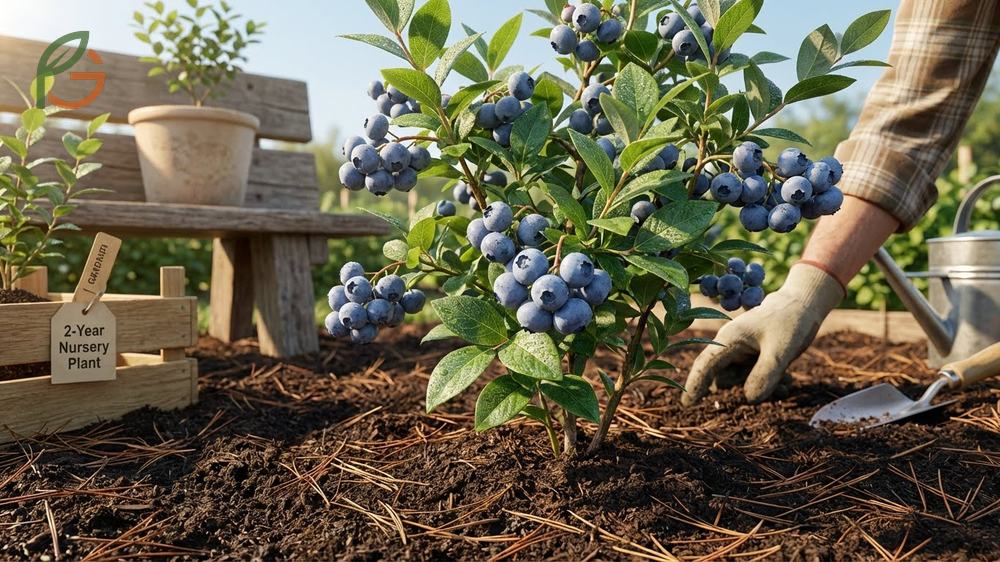
Home blueberry cultivation succeeds in most US climates when you match variety to zone and prepare soil properly. Start by selecting 2-3 year-old nursery plants rather than trying to grow from seed, which takes 5-8 years before first fruit. Container-grown plants establish faster than bare-root specimens and can be planted any time the ground isn’t frozen.
Site selection determines long-term success more than any other single factor. Choose locations receiving full sun (6-8 hours minimum) with excellent air circulation to minimize disease pressure. Avoid low-lying frost pockets where cold air settles during spring bloom periods. Space plants 4-6 feet apart for highbush varieties and 5-8 feet for vigorous rabbiteye types to allow adequate air movement when mature.
Prepare planting holes that are twice as wide as the root ball but no deeper. Blueberries develop shallow, spreading root systems rather than deep taproots. Mix excavated soil with equal parts acidic compost or peat moss to improve structure. If your soil pH is above 5.5, work in elemental sulfur at rates determined by soil testing several months before planting.
- Planting depth: Set plants at the same depth they grew in containers; planting too deep causes crown rot and eventual plant death
- Initial watering: Provide 1-2 inches of water weekly during the first growing season to establish roots; mature plants need consistent moisture but tolerate brief dry periods
- Mulching: Apply 3-4 inches of pine bark, pine needles, or wood chips around plants to conserve moisture, suppress weeds, and gradually acidify soil
- Fertilization timing: Wait until plants show new growth in spring, then apply acid-forming fertilizer formulated for azaleas or blueberries at half the recommended rate
- Pruning strategy: Remove all flowers during years 1-2 to encourage vegetative growth; begin light pruning in year 3 to develop open, productive structure
- Bird protection: Install netting over bushes when fruit begins coloring since birds can strip entire crops within days once berries ripen
- Winter care: Apply additional mulch after ground freezes in zones 3-5 to insulate roots from temperature fluctuations and desiccating winter winds
From My Experience: My neighbor in Monterrey, Mexico tried container cultivation with 20-gallon pots in fall 2023. She mixed 60% peat moss, 30% pine bark, and 10% perlite to create acidic, well-draining growing medium. Her potted plants outproduced the same varieties planted in her alkaline native soil by over 200%, and she could move containers to optimize sun exposure throughout the season.
Container growing offers distinct advantages for gardeners with unsuitable soil. Use pots at least 18-20 inches in diameter with multiple drainage holes. Fill with acidic potting mix designed for azaleas or rhododendrons, never regular potting soil which is typically pH-neutral. Container plants need more frequent watering (sometimes daily during hot weather) and fertilization (every 4-6 weeks during the growing season) compared to in-ground specimens.
Variety Selection Tip: For zones 5-7, plant combinations like ‘Duke’ (early), ‘Bluecrop’ (midseason), and ‘Elliott’ (late) to spread harvest over 10+ weeks. In zones 8-9, choose southern highbush like ‘Star’ (early), ‘Emerald’ (midseason), and rabbiteye ‘Tifblue’ (late) for similar season extension.
Conclusion
The evidence is clear: where blueberries grow depends primarily on matching the right variety to your USDA hardiness zone and creating acidic soil conditions between pH 4.5-5.5. Whether you’re in zone 3 Minnesota or zone 9 Georgia, appropriate cultivar selection combined with proper site preparation enables successful cultivation. These adaptable plants thrive across 38 US states and at least 30 countries worldwide, demonstrating remarkable versatility when basic requirements are met.
Current agricultural guidance emphasizes the importance of patience—blueberries require 3-4 years before initial harvest and 5-7 years to reach full production capacity. The long-term investment rewards dedicated growers with decades of bountiful harvests from plants that live 30-50 years or more. FruitGarden provides research-based cultivation information to help you transform blueberry growing aspirations into backyard reality.
Frequently Asked Questions
Where are blueberries grown commercially in the US?
Commercial blueberries are grown across 38states, with Washington, Oregon, Georgia, Michigan, California, New Jersey, North Carolina, Florida, Texas, and Minnesota leading production. These regions offer the distinct seasonal climates and acidic soil conditions required for optimal growth.
What is the best climate for growing blueberries?
Blueberries thrive in temperate climates that offer 6 to 8 hours of full sun daily. Most varieties require specific “chill hours” (temperatures between 32°F and 45°F) during winter to break dormancy and set fruit. Northern Highbush varieties need cold winters, while Southern Highbush and Rabbiteye types are adapted to warmer regions with shorter winters.
Do blueberries grow better in sun or shade?
Blueberries produce the highest yields and sweetest fruit when grown in full sun, receiving at least 6 to 8 hours of direct sunlight per day. While plants can survive in partial shade, lack of sun typically results in leggy growth, fewer flowers, and smaller, tart berries. In extremely hot climates, however, light afternoon shade can help prevent scorching.
What kind of soil do blueberries need?
Blueberries require well-draining, acidic soil with a pH between 4.5 and 5.5. They have shallow root systems that benefit from high organic matter, such as peat moss, pine bark, or compost. If soil pH is too high (alkaline), plants suffer from iron deficiency, causing yellow leaves and stunted growth.
How long does it take for a blueberry bush to produce fruit?
Blueberry bushes typically begin producing small amounts of fruit 2 to 3 years after planting. Full production is generally reached by the 6th year. To ensure long-term health, it is often recommended to remove blossoms during the first 1-2 years to direct energy into root and cane development.
Can I grow blueberries in containers?
Yes, blueberries are excellent candidates for container gardening, particularly if local soil is not naturally acidic. Use a pot at least 18 inches wide and deep, filled with an acidic potting mix formulated for acid-loving plants like azaleas. Container-grown blueberries require more frequent watering to keep the root ball consistently moist.
Do you need two blueberry bushes to get fruit?
While many Highbush varieties are self-fertile, planting at least two different varieties that bloom simultaneously significantly increases yield and berry size through cross-pollination. For Rabbiteye varieties, cross-pollination is mandatory for fruit set. Planting multiple varieties also extends the harvest season.





