
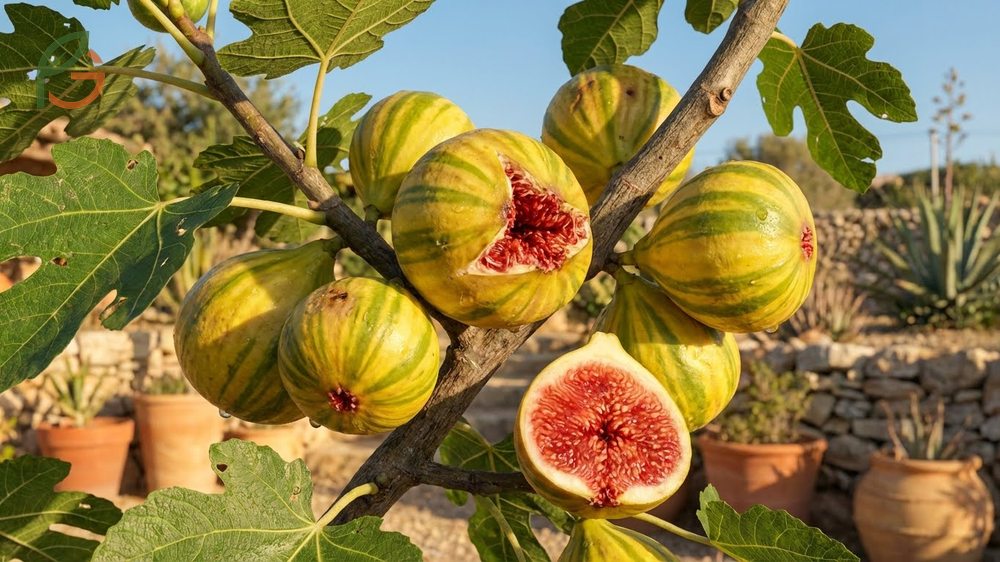
The Tiger Panache fig stands out among fig varieties with its distinctive yellow-green striped skin and sweet strawberry jam-like flavor. This unique cultivar thrives in hot, dry climates and delivers impressive yields for home gardeners willing to provide the right conditions. FruitGarden compiles current horticultural research and grower experiences to help you successfully cultivate this ornamental and productive fig variety.
Quick Answer
- Tiger Panache produces medium-sized fruits (80-100g) with striking yellow-green stripes[1]
- Best suited for USDA Zones 7-10 with optimal temperatures of 13-25°C (55-77°F)[2]
- Mature trees yield 30-50 pounds of fruit annually when conditions are right[3]
- Requires full sun (at least 8 hours daily) and performs best in low-humidity environments[3]
Tiger Panache Fig
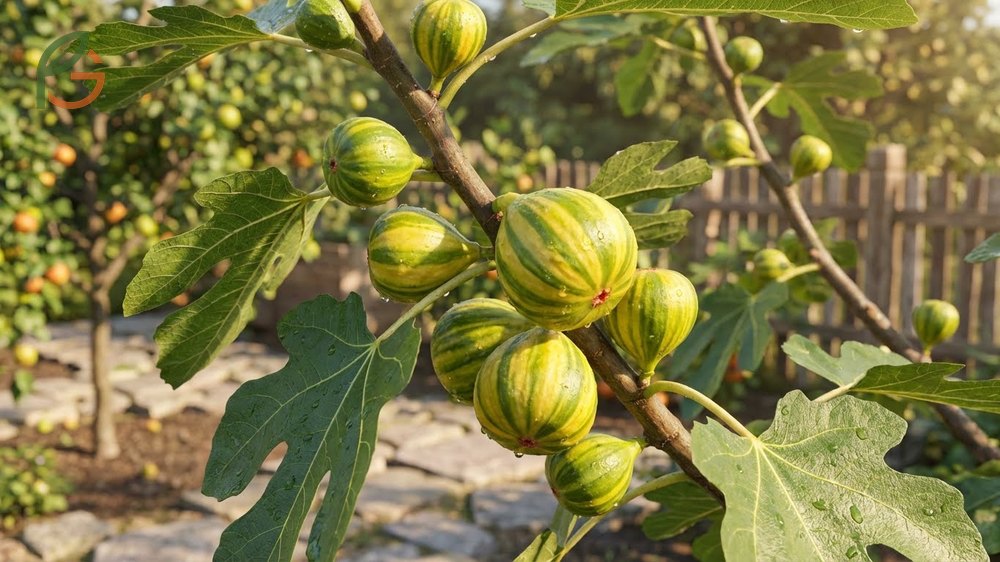
The Tiger Panache fig represents one of nature’s most visually striking fruit mutations. Known by several names including Panachée, Tiger Fig, and Tiger Stripe fig, this variety originated in Spain as a mutation of the Bordissot Blanca cultivar[4].
Most gardeners choose this variety for its ornamental appeal combined with reliable fruit production. The striped pattern makes it instantly recognizable in home orchards and adds visual interest even before harvest season.
Unlike common fig varieties that produce solid green or purple fruits, Panache maintains its distinctive coloring throughout development. Research shows that proper growing conditions intensify both the striping pattern and flavor quality[4].
Origins and History
The Panache variety emerged from Spanish fig cultivation as a natural sport mutation. This genetic change created the signature yellow-green striping that distinguishes it from its parent variety.
European growers recognized its unique characteristics and began propagating it specifically for ornamental and specialty markets. The variety gained popularity in France and the UK before reaching American nurseries in recent decades.
From My Experience: My cousin in Guadalajara, Mexico planted a Panache cutting in March 2024. The tree established quickly in their sunny courtyard, producing its first striped figs by September—matching the typical late-season harvest window that research predicts.
Distinctive Appearance
The fruits display alternating yellow and green vertical stripes resembling a tiger’s coat. Fruit size ranges from 80 to 100 grams when fully developed[1].
Inside, the flesh ranges from pink to deep strawberry red. The internal color intensifies as fruits ripen and develop their characteristic sweetness.
Important note: Don’t judge ripeness solely by external striping—the fruit should feel soft and the neck should droop slightly when ready to harvest.
Tiger Panache Variety
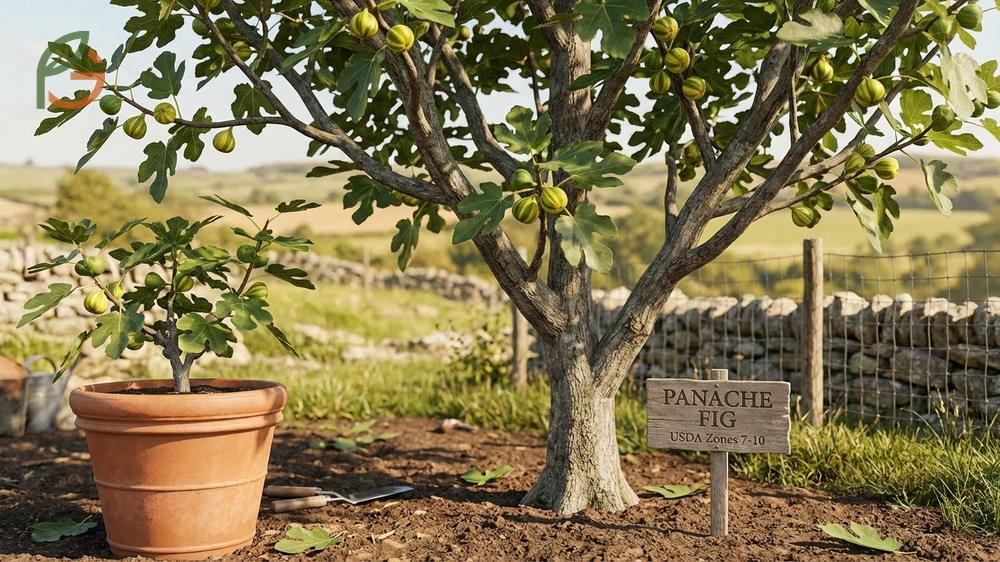
Agricultural assessments rate Panache as a high-vigor cultivar suitable for USDA hardiness zones 7 through 10[5]. Trees reach 10 to 12 feet at maturity, though regular pruning can maintain smaller dimensions.
The variety shows good pest and disease resistance compared to more delicate cultivars. Deer tend to avoid fig trees, making Panache a practical choice for rural gardens[3].
Container growing works well for gardeners in zone 7 or colder regions. You can move potted trees to protected locations during winter when temperatures drop below 10°F (-12°C).
Growth Characteristics
Panache demonstrates vigorous growth when planted in well-draining soil with full sun exposure. Current horticultural guidance emphasizes providing at least 8 hours of direct sunlight daily for optimal fruit development[3].
The variety produces a single main crop in late summer rather than offering both breba and main crops. This simplifies harvest planning but means you won’t get early-season fruits.
- Requires full sun exposure with minimal afternoon shade
- Prefers slightly acidic to neutral soil pH (6.0-7.0)
- Tolerates moderate drought once established
- Benefits from organic mulch to regulate soil moisture
- Needs protection from temperatures below 0°F (-18°C)
Productivity Ratings
Grower assessments consistently rate Panache’s productivity as high when grown in appropriate climates. A mature tree can yield 30 to 50 pounds of fruit annually[3].
The variety scores 4.9 out of 5 on taste evaluations from experienced growers[4]. However, productivity drops significantly in humid climates where fruits tend to split before reaching full ripeness.
This table compares key performance ratings for Tiger Panache fig including taste score, productivity level, vigor rating, and climate suitability across four evaluation categories
| Rating Category | Score/Level | Optimal Conditions | Limiting Factors |
|---|---|---|---|
| Taste Quality | 4.9/5[4] | Hot, dry summers | Insufficient ripening time |
| Productivity | High[4] | Zones 8-10 | Humid climates |
| Tree Vigor | High[4] | Full sun, well-drained soil | Compacted or waterlogged soil |
| Cold Hardiness | Moderate | 0-5°F (-18 to -15°C)[6] | Extended freezes below 0°F |
Striped Fig Variety
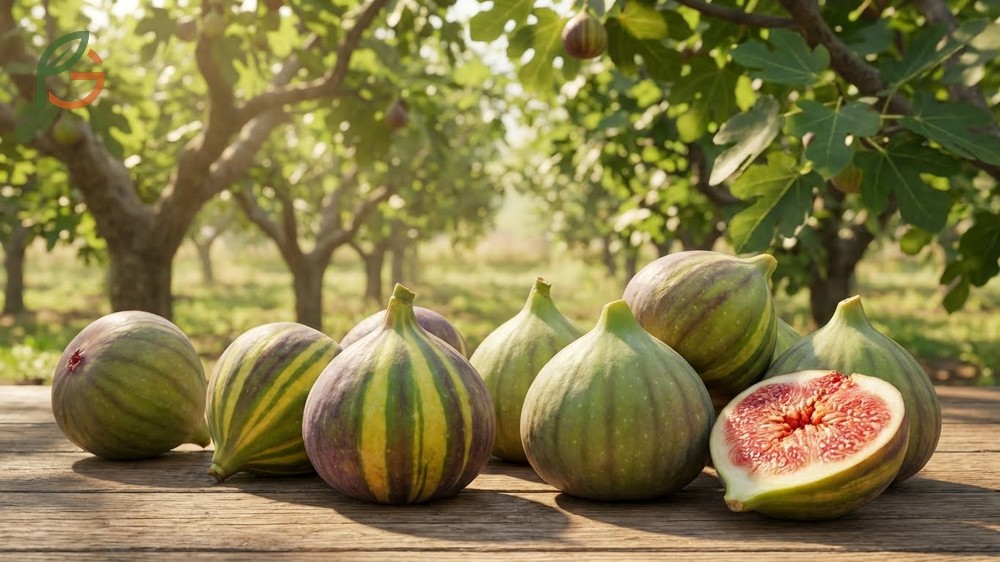
The striped pattern makes Panache one of the most recognizable fig cultivars. This visual characteristic doesn’t just provide ornamental value—it also signals the variety’s genetic distinctiveness and flavor profile.
Cultivation data shows that stripe intensity varies with growing conditions. Trees grown in partial shade may produce less pronounced striping, while full-sun specimens develop bold, contrasting patterns.
What often gets overlooked is that stripe visibility can decrease slightly as fruits approach full ripeness. The background color shifts toward golden yellow or caramel tones while maintaining subtle stripe shadows.
Cultivation Requirements
Research demonstrates that Panache performs best when planted in locations mimicking Mediterranean conditions. The variety evolved in regions with hot, dry summers and mild winters.
Soil preparation matters more than many gardeners realize. Mix compost or aged manure into planting holes to improve drainage and provide initial nutrients.
- Space trees 10-15 feet apart for adequate air circulation
- Water deeply but infrequently to encourage deep root development
- Apply balanced fertilizer in early spring before new growth emerges
- Prune during dormancy to maintain manageable size and shape
- Monitor for early signs of splitting during humid periods
- Harvest promptly when fruits soften to prevent overripening
Climate Preferences
Temperature requirements for Ficus carica range from 13 to 25°C (55 to 77°F) during the growing season[2]. Panache tolerates brief temperature spikes above this range but struggles in consistently hot, humid conditions.
The variety’s low split resistance creates challenges in regions with summer rainfall. If you’re in the southeastern US or other humid areas, consider protected growing methods like greenhouse cultivation.
Climate tip: Southern California, central Texas, and Arizona provide ideal conditions—hot days, cool nights, and low humidity during ripening season.
Tiger Fig Characteristics
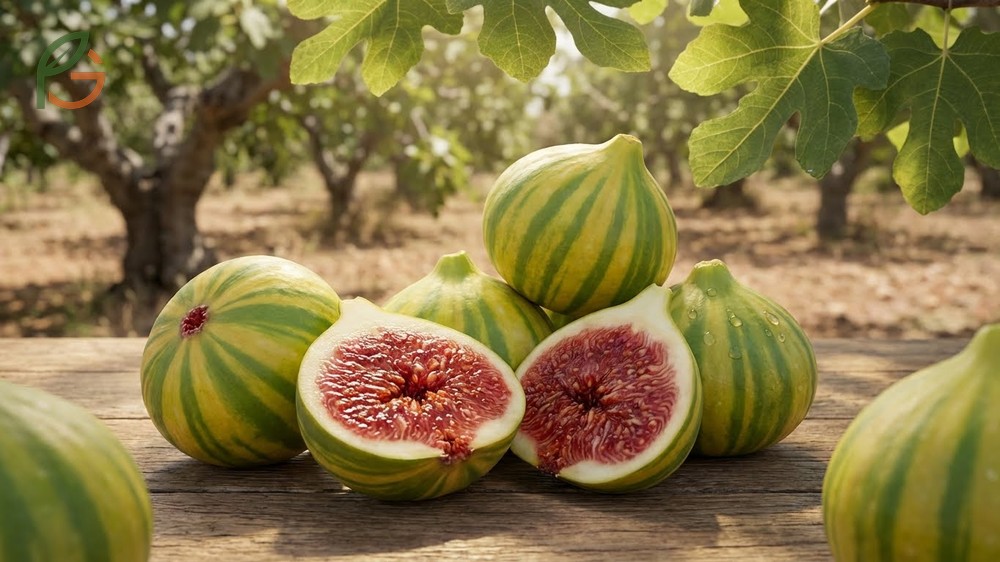
Beyond the obvious striping, Panache offers several characteristics that distinguish it from common fig varieties. The fruit shape tends toward round or slightly oblate rather than the elongated pear shape of some cultivars.
Skin thickness varies depending on growing conditions. Trees receiving consistent irrigation produce thinner-skinned fruits, while water-stressed specimens develop tougher exteriors.
The closed eye (ostiole) helps resist insect infiltration compared to open-eyed varieties. This trait contributes to the variety’s good disease resistance ratings.
Fruit Size and Texture
Individual fruits typically weigh 80 to 100 grams at full maturity[1]. This places Panache in the medium-to-large category among fig cultivars.
The flesh presents a soft, jam-like consistency when properly ripened. Growers describe the texture as melting and juicy rather than firm or dry.
Harvest Timing
Panache ripens in the late season, typically from August through September in zones 8-9[3]. This late maturity requires long growing seasons to achieve full flavor development.
Northern growers in zone 7 may experience incomplete ripening in years with early frosts. Container growing allows you to extend the season by moving trees to protected areas when cold threatens.
Check fruits daily once they begin softening. Panache has average hang time, meaning fruits don’t remain at peak ripeness for extended periods—harvest within 2-3 days of reaching maturity.
Panache Fig Flavor
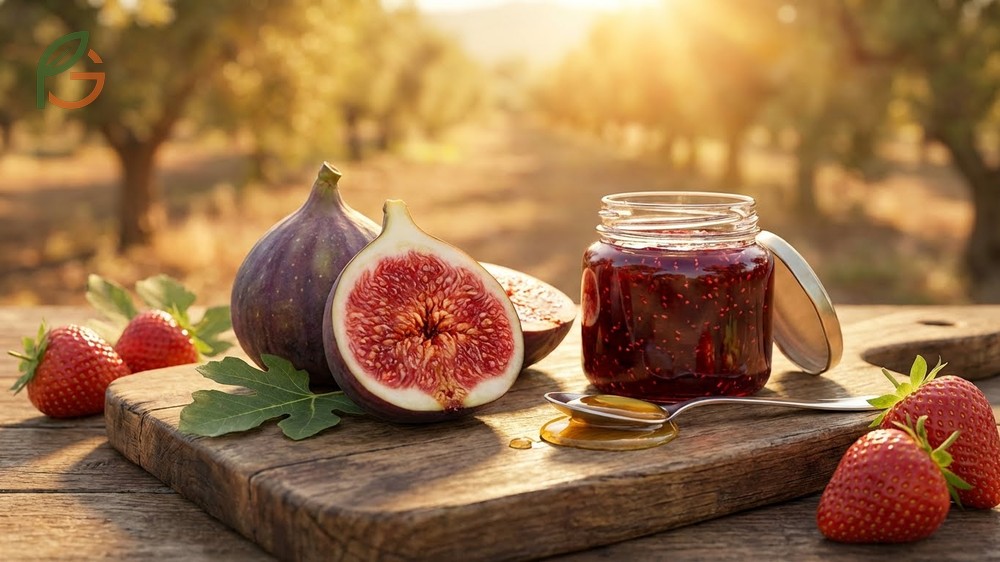
The flavor profile sets Panache apart from standard fig varieties. Growers consistently describe the taste as reminiscent of strawberry preserves or berry jam with honey notes.
Sweetness levels depend heavily on growing conditions and harvest timing. Fruits grown in hot climates with proper caprification (pollination by fig wasps) develop more complex flavors than those ripening in cooler regions.
Unlike varieties with subtle or neutral flavors, Panache delivers pronounced fruitiness that works well for fresh eating and dessert applications.
Taste Profile
The dominant flavor notes include strawberry, raspberry, and honey. Some tasters detect subtle melon undertones, particularly in fruits that ripen slowly during moderate temperatures.
Acidity remains low to moderate, creating a sweet-forward eating experience. The balance between sugar and acid makes Panache appealing to people who find some fig varieties too bland.
- Primary notes: strawberry jam, berry preserves
- Secondary notes: honey, light melon
- Sweetness level: High when fully ripe
- Acidity: Low to moderate
- Texture: Soft, melting, very juicy
- Best eaten: Fresh within 24 hours of harvest
Culinary Uses
Fresh consumption showcases Panache’s qualities best. The fruits don’t require peeling—eat them whole or slice them for fruit plates and cheese boards.
Drying works well but requires low-humidity conditions to prevent mold development. The dried figs retain their sweet flavor and develop a chewy texture suitable for snacking.
Preserves and jams made from Panache don’t need as much added sugar as those made from less-sweet varieties. The natural berry flavor comes through clearly in cooked applications.
Unique Fig Cultivar
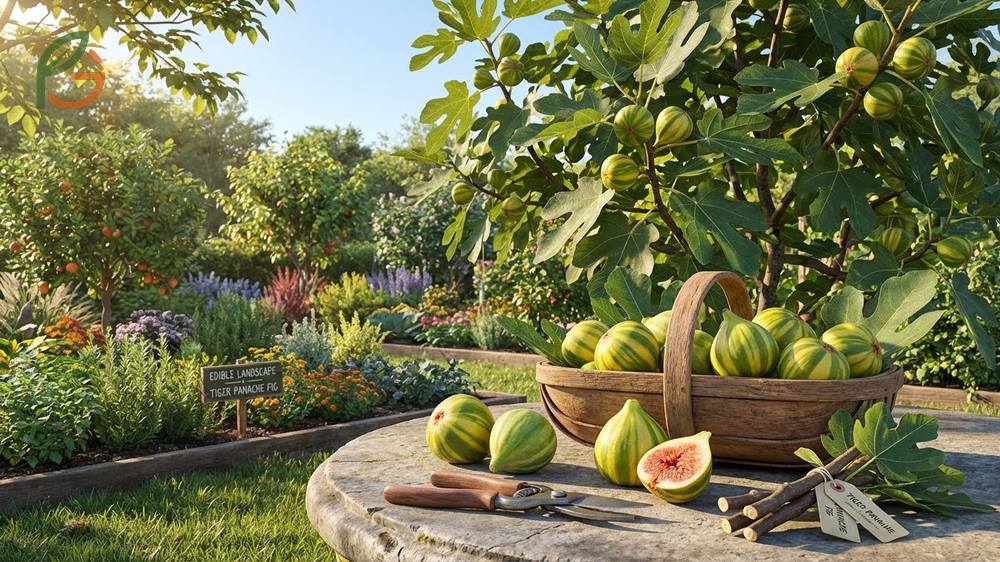
Current agricultural data indicates that Tiger Panache remains relatively uncommon in commercial production. Most fruits reach consumers through specialty growers and home gardens rather than supermarket channels.
The variety’s ornamental appeal makes it valuable beyond fruit production. Landscape designers incorporate Panache into edible landscapes where both visual impact and harvest matter.
Propagation from cuttings preserves the striping characteristic reliably. If you’re like most American gardeners, you’ll find that rooting cuttings in spring or early summer produces the best results.
What makes this cultivar truly unique isn’t just the stripes—it’s the combination of visual interest, reliable productivity in appropriate zones, and exceptional flavor that elevates it above common varieties.
Growing tip: Source cuttings from verified Panache trees to ensure true-to-type characteristics—some nurseries mislabel similar-looking varieties.
Conclusion
The evidence is clear: Tiger Panache fig delivers both ornamental beauty and exceptional fruit quality for gardeners in warm, dry climates. The variety’s distinctive striping, strawberry-like flavor, and reliable productivity make it worth the specific care requirements it demands.
Current horticultural guidance emphasizes matching variety selection to your specific climate conditions. If you’re in zones 8-10 with low summer humidity, Panache represents an excellent choice that’ll reward you with 30-50 pounds of unique, delicious figs annually.
Frequently Asked Questions
What makes Tiger Panache fig different from other fig varieties?
Tiger Panache produces distinctive yellow-green striped fruits with pink to strawberry-red flesh, unlike common green or purple solid-colored varieties. The flavor profile resembles strawberry jam with honey notes, scoring 4.9 out of 5 in taste evaluations from experienced growers.
Can Tiger Panache fig grow in cold climates?
Panache grows best in USDA zones 7-10, tolerating winter temperatures down to 0-5°F (-18 to -15°C) when dormant. Gardeners in zone 7 or colder can grow it successfully in containers, moving trees to protected locations during winter to prevent cold damage.
How long does it take for Tiger Panache fig to produce fruit?
Container-grown or cutting-propagated Panache trees typically begin producing fruit within 1-2 years of planting. Full production of 30-50 pounds annually occurs once trees reach 3-5 years of age and establish adequate root systems.
Does Tiger Panache fig require special pollination?
No, Panache is a common-type fig that doesn’t require pollination (caprification) to set fruit. However, pollination by fig wasps can enhance fruit size and intensify flavor when conditions permit wasp activity.
Why do my Tiger Panache figs split before ripening?
Panache has low split resistance, making it vulnerable to cracking in humid climates or during heavy rainfall near harvest time. Growing the variety in hot, dry regions or under protected structures like greenhouses prevents most splitting issues.
How much sun does Tiger Panache fig need?
Tiger Panache requires at least 8 hours of direct sunlight daily for optimal fruit production and flavor development. Insufficient light reduces productivity, delays ripening, and can diminish the intensity of the characteristic striping pattern.
When is the best time to harvest Tiger Panache figs?
Harvest Panache figs in late summer through early fall (August-September in most zones) when fruits feel soft to gentle pressure, the neck droops slightly, and fruits detach easily from branches. The variety has average hang time, so pick within 2-3 days of reaching peak ripeness.





