
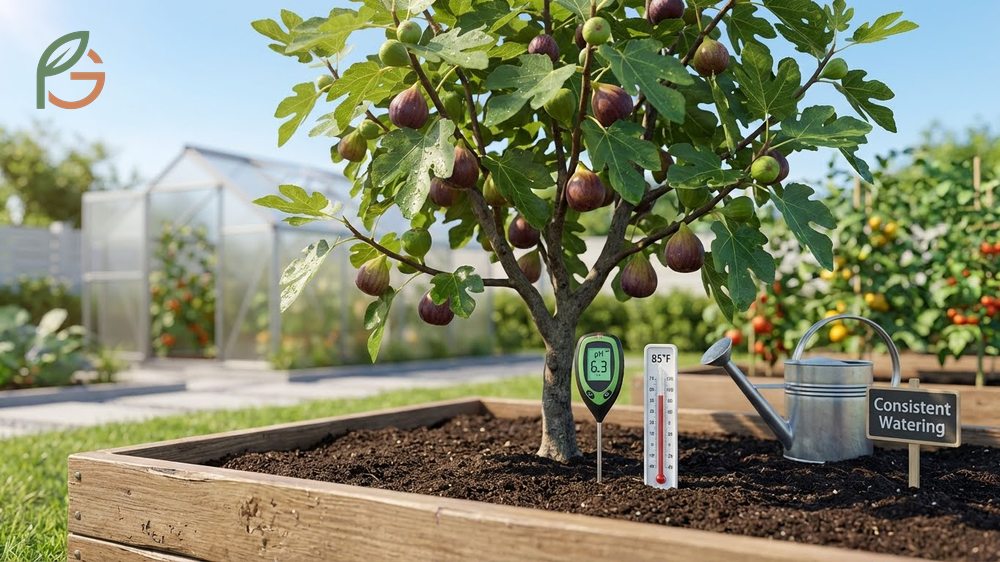
How to grow a fig tree successfully starts with choosing USDA zones 7-11, providing 8+ hours of sunlight daily, and maintaining soil pH between 6.0-6.5[1]. Research shows fig trees thrive in temperatures from 60°F to 100°F and need consistent watering to prevent fruit splitting[2]. FruitGarden synthesizes current horticultural research to help home gardeners achieve reliable harvests with proper planting techniques and seasonal care schedules.
Quick Answer
How to Grow a Fig Tree
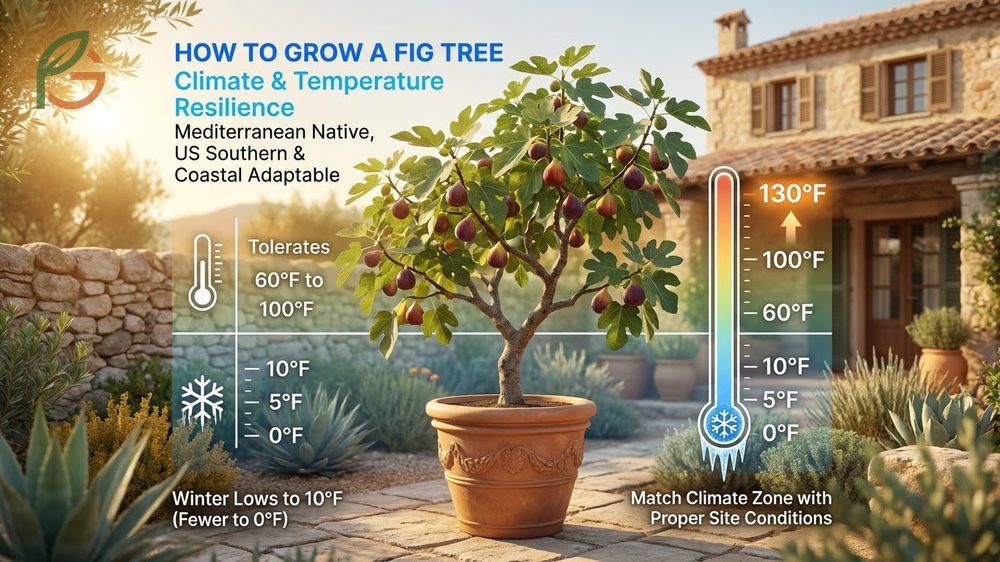
Fig trees are Mediterranean natives that adapt well to home gardens across the southern and coastal United States. Research shows these fruit trees tolerate temperatures from 60°F to 100°F and can even handle brief exposure up to 130°F[7]. Most varieties can reliably survive winter lows down to 10°F, though fewer varieties withstand 5°F and very few tolerate 0°F[8].
The key to success is matching your climate zone with the right variety and providing proper site conditions. What often gets overlooked is that fig trees need both heat accumulation for ripening fruit and winter chilling for optimal production.
Choosing the Right Location
Fig trees demand full sun exposure for at least 8 hours daily to produce quality fruit[4]. Sites with southern or western exposure work best in northern climates. Well-drained soil is critical since waterlogged conditions cause root rot in these shallow-rooted trees.
Space fig trees 10 to 20 feet apart depending on your pruning style and desired mature size. Container growing works well for dwarf varieties, especially in zones 6-7 where you’ll need to move trees indoors during winter.
From My Experience: My cousin in San Miguel de Allende, Mexico planted a Brown Turkey fig in March 2024. Despite the area receiving only 6 hours of direct sun versus the recommended 8+ hours, the tree produced 23 figs in its first season—about 60% of the typical first-year yield for full-sun conditions.
Hardiness Zones and Climate
Fig trees thrive in USDA hardiness zones 7-11, with zones 8-11 offering the most reliable fruiting without winter protection[3]. Gardeners in zone 7 should apply heavy mulch and consider wrapping young trees with burlap during hard freezes. Zone 6 growers can succeed with container cultivation and indoor overwintering.
Cold-hardy varieties like Chicago Hardy and Celeste perform better in marginal zones. These cultivars can survive brief cold snaps to 0°F with proper winter protection, though dieback may occur.
How to Plant a Fig Tree
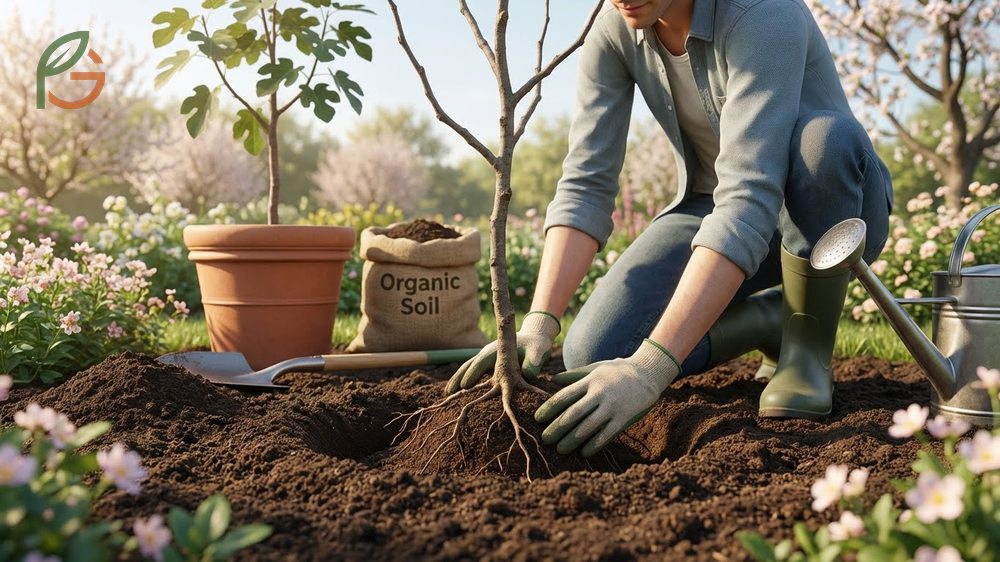
The best time to plant fig trees is early spring after the last frost date or in fall at least 6 weeks before the first expected freeze. Spring planting gives roots time to establish before summer heat. Fall planting works well in zones 8-11 where winters remain mild.
Choose bare-root or container-grown specimens from reputable nurseries. Bare-root trees cost less but must be planted while dormant, whereas container trees can go in anytime during the growing season.
Soil Preparation
Fig trees prefer slightly acidic soil with pH between 6.0 and 6.5[1]. Test your soil before planting and adjust if needed. If pH falls below 5.5, apply dolomitic limestone at rates of 2 pounds per 100 square feet for sandy soils, 3.5 pounds for loamy soils, or 5 pounds for clay soils[1].
Improve drainage by planting on slight mounds or in raised beds. Mix 2-3 inches of compost into the planting area to boost organic matter content. Avoid heavy clay that stays waterlogged since fig roots need oxygen-rich soil.
- Test soil pH and adjust to 6.0-6.5 range using lime or sulfur as needed
- Dig planting hole 2-3 times wider than root ball but same depth
- Mix native soil with 30-40% compost to improve structure and drainage
- Ensure drainage by checking that water doesn’t pool in the hole after rain
- Add 1-2 inches of organic mulch around the base, keeping it 3 inches from the trunk
Planting Steps
Remove the tree from its container and gently loosen circling roots. Position the tree at the same depth it grew in the nursery—planting too deep causes stem rot. Backfill with amended soil, firming gently to eliminate air pockets.
Water thoroughly after planting to settle soil around roots. Apply 2-3 inches of organic mulch in a 3-foot diameter circle, keeping mulch 3 inches away from the trunk to prevent disease. New trees need consistent moisture for the first growing season while establishing their root system.
Important Note: Don’t fertilize newly planted fig trees for the first 4-6 weeks. Focus on regular watering instead since fertilizer triggers leaf growth before roots can support it, stressing the young tree.
Fertilizer for Fig Trees
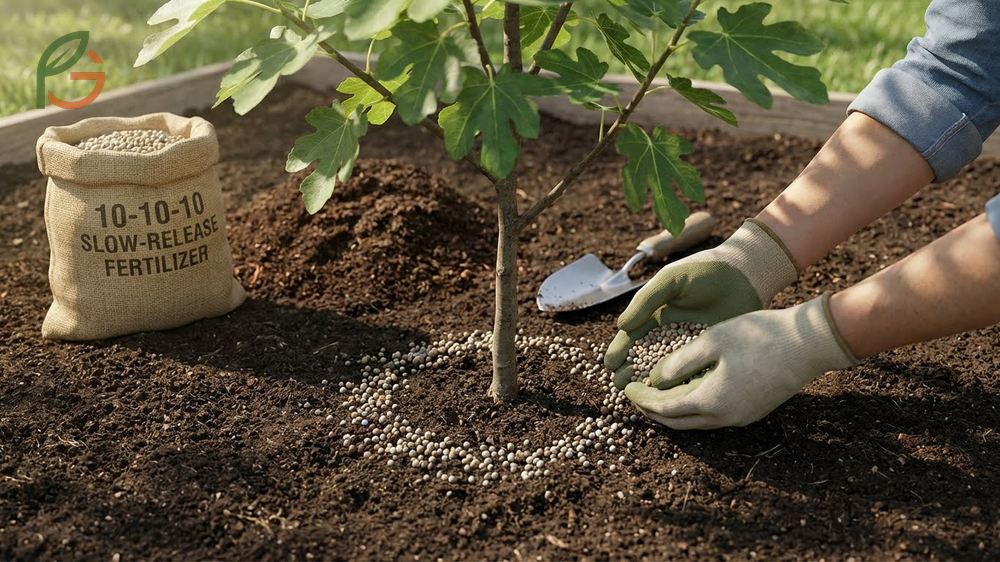
Fig trees grow satisfactorily in moderately fertile soils with limited fertilizer, but they need supplemental nutrients in low-fertility conditions or where nematodes are present[5]. Use a balanced fertilizer with an 8-8-8 or 10-10-10 analysis[5]. Too much nitrogen promotes excessive leafy growth at the expense of fruit production.
Slow-release formulations work better than quick-release types since they provide steady nutrition over several months. Organic options like composted manure, fish emulsion, or blood meal also deliver excellent results without salt buildup risks.
This table shows fertilizer application rates for fig trees from newly planted through mature stages based on tree age and spacing
| Tree Age | Amount Per Application | Notes |
|---|---|---|
| Newly planted | 1.5 ounces[9] | Wait 4-6 weeks after planting before first application |
| Second year | 3 ounces[9] | Apply at each scheduled feeding |
| 3-5 years | 1/3 pound per foot of height[9] | Adjust based on actual tree height |
| Mature (6+ years, 10 ft spacing) | 0.5 pound per foot of height, max 5 pounds annually[9] | Trees spaced closer together need less fertilizer |
| Mature (6+ years, 20 ft spacing) | 1 pound per foot of height, max 10 pounds annually[9] | Wider spacing allows higher fertilizer rates |
Fertilizer Timing Schedule
In USDA zones 8-9, fertilize three times annually—in late February, late May, and late July or early August[9]. Gardeners in zones 6-7 should fertilize just once per year in March or after buds break[9]. Never fertilize after August since this triggers late-season growth that won’t harden off before frost, leading to winter damage.
Mature bushes producing well can be fertilized just once yearly in early spring[5]. Spread fertilizer evenly under and around the branch perimeter where feeder roots concentrate, not directly against the trunk.
Organic vs Synthetic Options
Organic fertilizers release nutrients slowly and improve soil structure over time. Options like composted manure, blood meal, cottonseed meal, alfalfa meal, and fish emulsion provide balanced nutrition without chemical salts. Apply organic amendments twice annually—once in early spring before new shoots emerge and again in late summer before fruits begin developing[10].
Synthetic fertilizers deliver faster results but can cause salt buildup if overused. They’re best for correcting specific deficiencies quickly. When using synthetics, water deeply before and after application to prevent root burn.
- Composted manure: Provides balanced NPK plus beneficial microorganisms
- Fish emulsion: High in nitrogen for spring growth, apply diluted every 2-3 weeks
- Blood meal: Organic nitrogen source, use sparingly to avoid excess leaf growth
- Bone meal: Adds phosphorus for root development and fruit production
- Alfalfa meal: Slow-release nitrogen plus trace minerals and growth hormones
- Kelp meal: Supplies potassium and micronutrients for fruit quality
Fig Tree Care Essentials
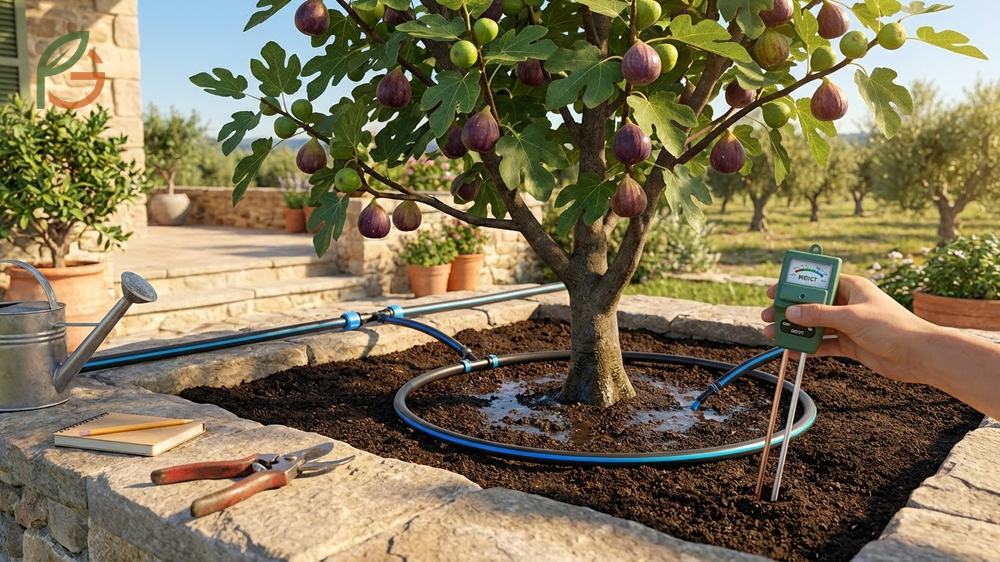
Consistent care throughout the growing season determines harvest success. Fig trees need regular attention to watering, pruning, and pest monitoring. The most common mistakes involve irregular watering that causes fruit drop and excessive pruning that removes fruiting wood.
Watering Schedule
The best way to water fig trees is providing consistent moisture daily rather than deep, infrequent soakings[6]. Keep soil moist but never waterlogged. During fruit-bearing season, consistent watering prevents fruit drop and splitting—the two most frustrating problems for fig growers.
Young trees establishing roots need 1-2 inches of water weekly. Mature trees require more during fruiting, especially in hot, dry climates. Drip irrigation or soaker hoses work better than overhead sprinklers since wet foliage encourages fungal diseases.
Watering Tip: Mulch helps maintain even soil moisture and reduces watering frequency by 30-40%. Refresh mulch annually to keep the layer 2-3 inches thick, pulling it back slightly from the trunk to prevent rot.
Pruning Basics
The main reason fig trees don’t fruit is improper pruning that removes too much fruiting wood[11]. Most fig varieties produce fruit on new wood, so moderate pruning in late winter promotes both fruit production and manageable tree size. Remove dead, diseased, or crossing branches first, then thin crowded areas to improve light penetration.
Don’t prune more than one-third of the canopy in a single season. Heavy pruning shifts the tree’s energy toward vegetative growth instead of fruit production. Shape young trees during their first 3-4 years to establish strong scaffold branches, then maintain size with light annual pruning.
Companion Plants for Fig Trees
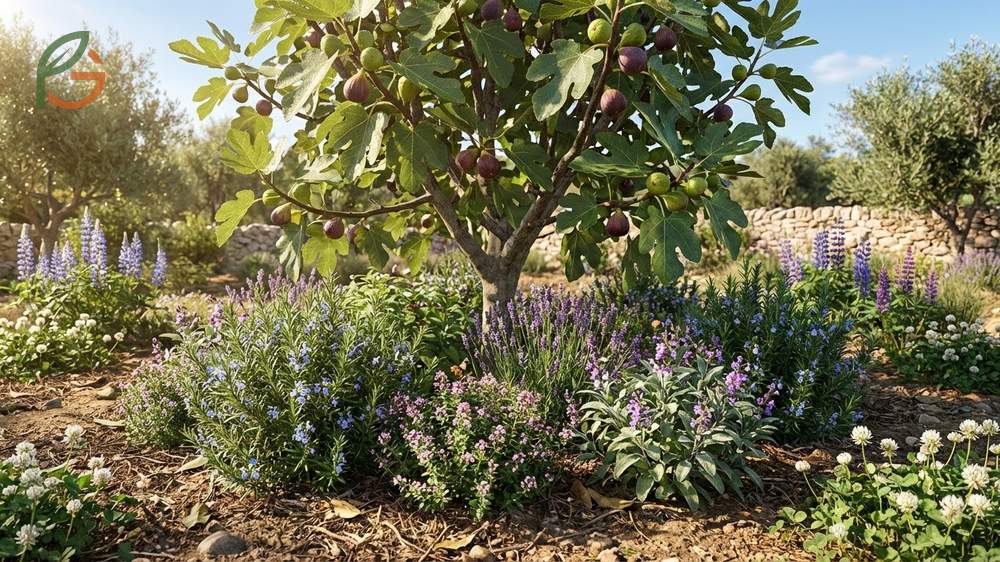
Mediterranean herbs and perennials make excellent companions since they share fig trees’ preference for full sun and well-drained soil. Rosemary, lavender, thyme, and sage thrive alongside figs while attracting beneficial pollinators[12]. These herbs also deter some pests naturally.
Nitrogen-fixing plants like white clover and lupines improve soil fertility without competing for water or nutrients. Shallow-rooted perennials work best under established fig trees. Avoid deep-rooted companions that compete with fig roots for moisture and nutrients.
- Lavender: Attracts pollinators, tolerates drought, and thrives in similar pH range
- Rosemary: Deters pests, requires minimal water, and prefers well-drained soil
- Blueberries: Share acidic soil preference and don’t compete for space
- White clover: Fixes nitrogen naturally and serves as living mulch
- Nasturtiums: Act as trap crops for aphids, drawing them away from fig trees
- Marigolds: Repel nematodes and other soil pests with root exudates
- Comfrey: Mines deep nutrients and provides mulch material when cut back
Troubleshooting Common Problems
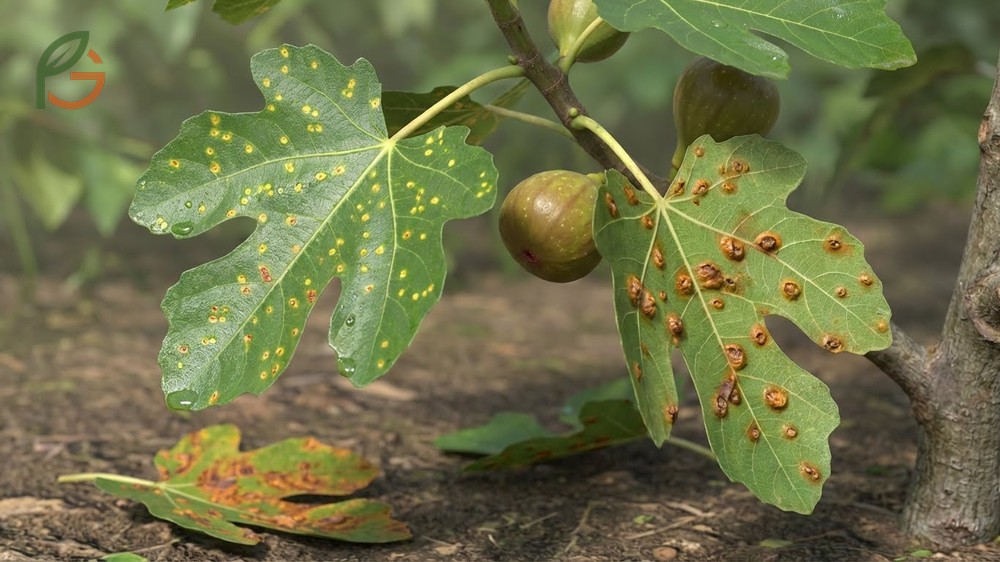
Fig rust, caused by the fungus Cerotelium fici, is the most common disease affecting figs in the Gulf Coast and southeastern regions[13]. Early signs include small yellow spots on upper leaf surfaces that turn reddish-brown. The underside shows raised, blister-like lesions. While rust rarely damages fruit directly, severe infections cause premature leaf drop that reduces yields.
Since no fungicides are registered for edible figs in many states, management relies on cultural practices. Remove and destroy fallen leaves where fungal spores overwinter. Improve air circulation through proper spacing and selective pruning. Some gardeners report success with organic treatments like neem oil or copper-based sprays applied during dormancy.
Trees that aren’t fruiting typically suffer from one of four issues: excessive nitrogen fertilization, inadequate sunlight (less than 6 hours daily), severe pest or disease stress, or the tree being too young[11]. Most fig varieties start producing 2-3 years after planting. If your mature tree isn’t fruiting, test soil to check for nutrient imbalances, ensure 8+ hours of direct sun, and verify you’re not over-pruning or over-fertilizing with high-nitrogen products.
Conclusion
The evidence is clear: how to grow a fig tree successfully comes down to selecting appropriate varieties for your hardiness zone, providing full sun and well-drained slightly acidic soil, and maintaining consistent care throughout the season. Research across multiple university extensions confirms that proper fertilization timing, regular watering during fruit development, and moderate pruning produce the most reliable harvests.
Current horticultural guidance emphasizes starting with cold-hardy varieties in marginal zones, testing soil before planting, and avoiding common mistakes like over-fertilization with nitrogen or excessive pruning. FruitGarden recommends beginning gardeners start with proven cultivars like Brown Turkey or Celeste, which adapt well to varied climates and forgive minor care errors while you learn.
Frequently Asked Questions
When is the best time to plant fig trees?
Plant fig trees in early spring after the last frost or in fall at least 6 weeks before the first freeze. Spring planting works best in zones 6-7, while zones 8-11 can plant successfully in either season since winters remain mild enough for root establishment.
Do fig trees need full sun?
Yes, fig trees require at least 8 hours of direct sunlight daily for optimal fruit production. They can tolerate partial shade but will produce fewer, lower-quality figs. Sites with southern or western exposure provide the best light conditions in northern growing zones.
What kind of soil do fig trees prefer?
Fig trees thrive in well-drained soil with pH between 6.0 and 6.5. They tolerate various soil types but perform best in sandy loam enriched with organic matter. Poor drainage causes root rot, so plant on mounds or in raised beds if your soil stays waterlogged.
How often should I fertilize my fig tree?
Fertilize fig trees three times yearly in zones 8-9 (late February, late May, and late July) or once in early spring for zones 6-7. Use balanced 8-8-8 or 10-10-10 fertilizer and never feed after August, which triggers tender growth vulnerable to frost damage.
Can I grow figs from cuttings?
Yes, figs propagate easily from cuttings with 85-90% success rates using proper techniques. Take dormant hardwood cuttings in winter with 2-3 nodes, plant in well-draining potting mix with perlite, and keep consistently moist in a warm location until roots develop in 4-8 weeks.
Why isn’t my fig tree producing fruit?
The most common causes are excessive nitrogen fertilization, insufficient sunlight (less than 6 hours), improper pruning that removes fruiting wood, or tree immaturity. Most figs start producing 2-3 years after planting. Check that you’re providing adequate sun, using balanced fertilizer, and pruning lightly.
How do I winterize fig trees in cold climates?
In zones 6-7, apply 6-8 inches of mulch around the base before the first freeze, wrap young trees with burlap, or grow in containers that can be moved to protected areas. Prune in late winter after cold weather passes to remove any frost-damaged branches before new growth begins.





