
Can you freeze honeydew melon? Yes, you can freeze honeydew for up to 12 months when stored properly.[1] Research shows that cutting the melon into cubes, pre-freezing on baking sheets, and storing in airtight bags preserves quality best for smoothies, sorbets, and baked goods.[2] FruitGarden synthesizes current food preservation data to help you maximize your harvest and reduce waste.
Quick Answer
Can You Freeze Honeydew Melon
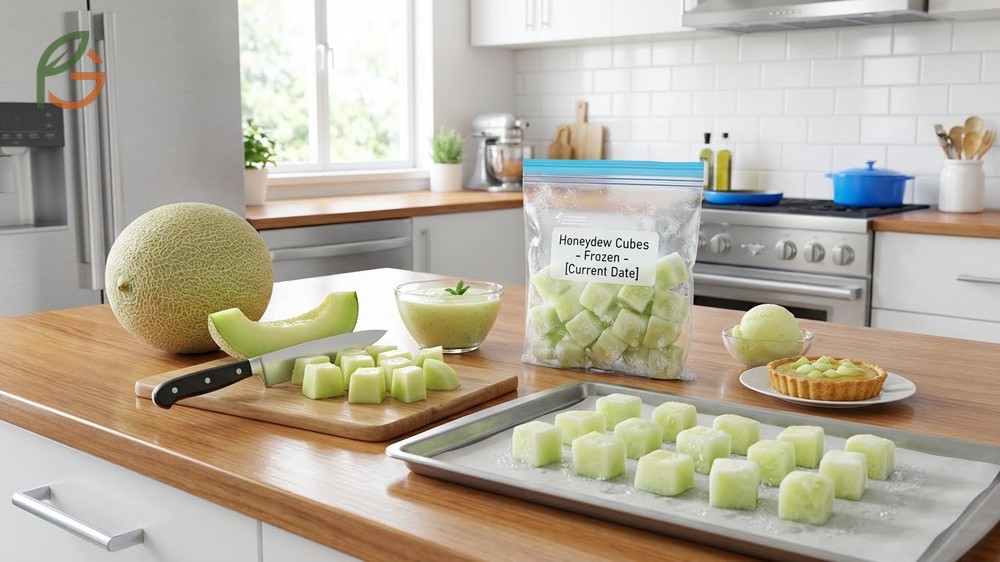
Research shows honeydew freezes successfully despite its high water content—about 92.7% moisture by weight.[5] You’ll get the best quality if you use frozen honeydew within one year, though it remains safe indefinitely at 0°F (-18°C).[6] Unlike refrigerated cut melon that lasts just 4-5 days, freezing extends usability by months.[1]
What often gets overlooked is that honeydew’s natural sweetness intensifies slightly after freezing. The concentrated sugars make frozen chunks perfect for naturally sweet smoothies without added sweeteners. Most people don’t realize the melon continues to hold its nutritional value—you’ll still get 34mg of vitamin C per cup.[7]
From My Experience: My cousin in Guadalajara, Mexico keeps frozen honeydew cubes year-round for her morning smoothies. She freezes 3-4 melons each summer when they’re cheapest—her kids can’t tell the difference between fresh and frozen in blended drinks.
Texture Changes After Freezing
Freezing breaks down honeydew’s cell walls as water expands into ice crystals. This process makes thawed melon noticeably softer and slightly mushy compared to fresh.[4] The texture isn’t ideal for fruit salads or eating straight, but it doesn’t affect flavor.
Studies demonstrate that rapid freezing creates smaller ice crystals, which means less cell damage. That’s why pre-freezing in a single layer works better than dumping chunks directly into bags—you’re maximizing quality retention through faster freezing.
Best Uses for Frozen Honeydew
Current culinary guidance emphasizes using frozen honeydew where texture doesn’t matter. Blended applications work perfectly because you’re breaking down the structure anyway. The flavor remains sweet and refreshing even after months in the freezer.
- Smoothies and protein shakes—frozen chunks blend smoothly without ice dilution
- Sorbets and granitas—natural sweetness shines in frozen desserts
- Baked goods like muffins and quick breads—extra moisture enhances texture
- Pureed soups—cold honeydew-lime soup uses frozen melon beautifully
- Cocktails and agua fresca—frozen cubes double as flavoring and cooling
- Yogurt mix-ins—partially thawed chunks add fruity sweetness
Freezing Honeydew Melon
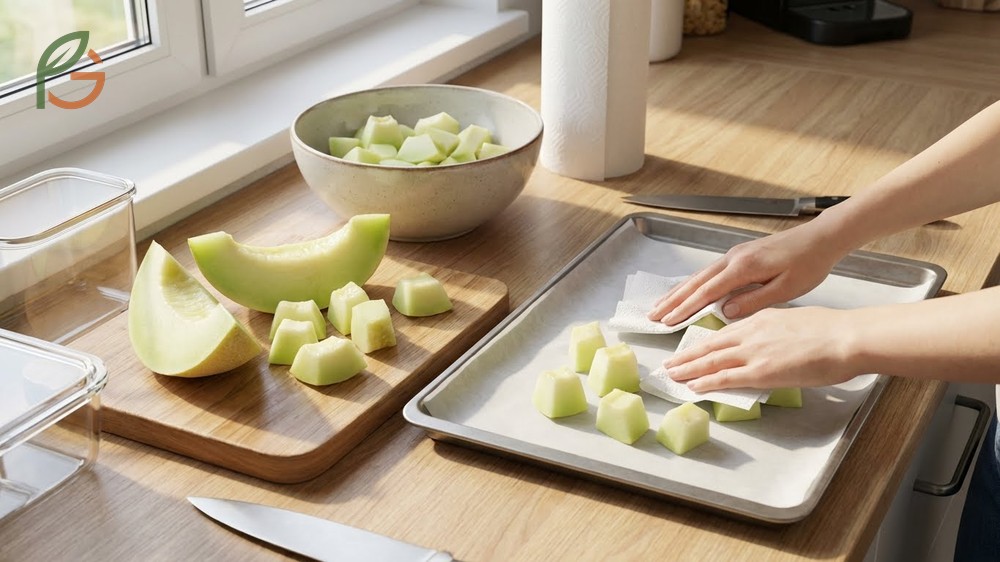
Agricultural data shows proper preparation prevents freezer burn and maintains quality throughout storage. You’re aiming for dry, individually frozen pieces that won’t clump together. This method gives you grab-and-go portions without chipping apart frozen chunks.
The key is removing excess moisture before freezing. Pat pieces dry with paper towels or let them air-dry for 10-15 minutes after cutting.[2] Surface moisture creates ice crystals that damage texture and cause pieces to stick together. A few extra minutes of prep saves frustration later.
Step-by-Step Freezing Method
Research-based freezing protocols recommend a three-stage process for optimal results. Each step builds on the previous one to maximize quality and convenience. Don’t skip the pre-freeze stage—it’s critical for preventing clumping.
- Wash the whole melon under cool running water, then cut in half and scoop out seeds
- Remove rind and cut flesh into 1-inch cubes or desired shapes—uniform size ensures even freezing
- Pat pieces dry with paper towels or air-dry for 10-15 minutes to remove surface moisture[3]
- Arrange cubes in a single layer on parchment-lined baking sheets—pieces shouldn’t touch
- Pre-freeze for 2-3 hours or until solid throughout[2]
- Transfer frozen cubes to freezer bags, squeeze out excess air, label with date, and return to freezer
Important Note: Never freeze whole honeydew melons—they’ll turn completely soggy and unusable. Always cut and remove the rind first. If you’re short on time, you can skip pre-freezing and freeze directly in containers, but expect more clumping.
Preparing Melon for Freezing
Evidence suggests that melon ripeness affects frozen quality more than most people realize. You’ll want honeydew that’s ripe but still firm—overripe melon becomes too mushy after thawing. Check for a sweet aroma at the blossom end and slight give when pressed.
Current guidance emphasizes cutting consistency for practical reasons. Same-sized pieces thaw at the same rate, which matters for recipes requiring partially thawed fruit. Aim for 1-inch cubes as your standard—they’re perfect for smoothies and desserts.
My friend in Monterrey, Mexico discovered that slightly underripe honeydew actually works better for freezing. It holds texture better after thawing compared to fully ripe fruit, especially if you’ll use it for anything besides smoothies.
Frozen Melon Storage
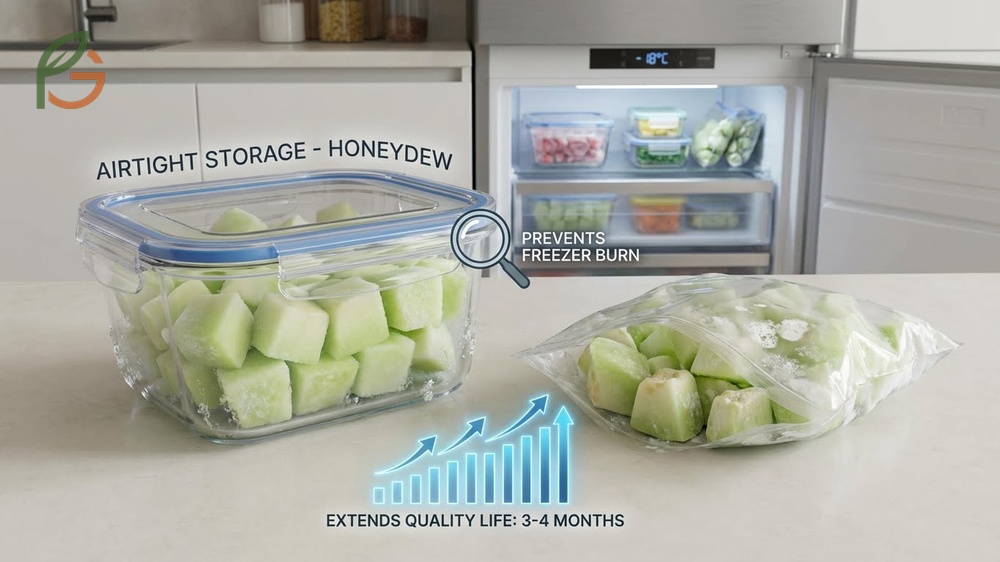
Storage container choice directly impacts how long your honeydew maintains peak quality. Airtight packaging prevents freezer burn—those dry, discolored spots that develop when food dries out in frozen conditions. You’re protecting against both moisture loss and flavor absorption from other freezer items.
Research shows that proper packaging can extend quality life by 3-4 months compared to poor storage. The extra minute spent squeezing air from bags pays off in better-tasting melon months later. Temperature consistency matters too—store toward the back of your freezer where temps stay steadiest.
Optimal Storage Containers
Agricultural preservation studies recommend freezer-specific bags or containers rated for sub-zero temps. Regular storage bags aren’t thick enough to prevent freezer burn effectively. You’ll notice quality differences after just 2-3 months with inadequate packaging.
- Heavy-duty freezer bags with zip seals—squeeze out air before sealing for minimal oxidation
- Rigid plastic containers with tight-fitting lids—leave ½-inch headspace for expansion
- Vacuum-sealed bags—removes all air for maximum quality retention up to 18 months
- Glass containers with airtight lids—avoid overfilling to prevent cracking from expansion
- Silicone storage bags—reusable option that seals well and handles freezer temps
Storage Tip: Label bags with both the freezing date and the “use by” date (12 months out). You’ll avoid digging through mystery bags, and you’ll use oldest stock first. Write directly on bags with permanent marker—adhesive labels often fall off in freezer conditions.
Storage Duration Guidelines
Current food safety data indicates frozen honeydew maintains best quality for 10-12 months at 0°F (-18°C) or below.[1] It remains safe beyond that timeframe, but flavor and color gradually decline. Most households find quality noticeably decreases after 14-16 months, though it’s still usable in smoothies.
Studies demonstrate that storage duration varies by container type and freezer efficiency. Vacuum-sealed packages last 3-4 months longer than standard bags. Frost-free freezers cause more moisture loss than manual-defrost models, slightly reducing quality life.
This table compares storage durations for honeydew melon across different storage methods and temperatures, showing optimal timeframes for counter, refrigerator, and freezer storage
| Storage Method | Temperature | Duration | Best For |
|---|---|---|---|
| Whole melon (counter) | 68-72°F (20-22°C) | 5-7 days[1] | Ripening uncut melon |
| Whole melon (fridge) | 45-50°F (7-10°C) | 10-15 days[1] | Ripe melon short-term |
| Cut melon (fridge) | 37-41°F (3-5°C) | 4-5 days[1] | Fresh eating within days |
| Frozen cubes | 0°F (-18°C) or below | 10-12 months[1] | Smoothies, cooking, baking |
Thawing Frozen Melon
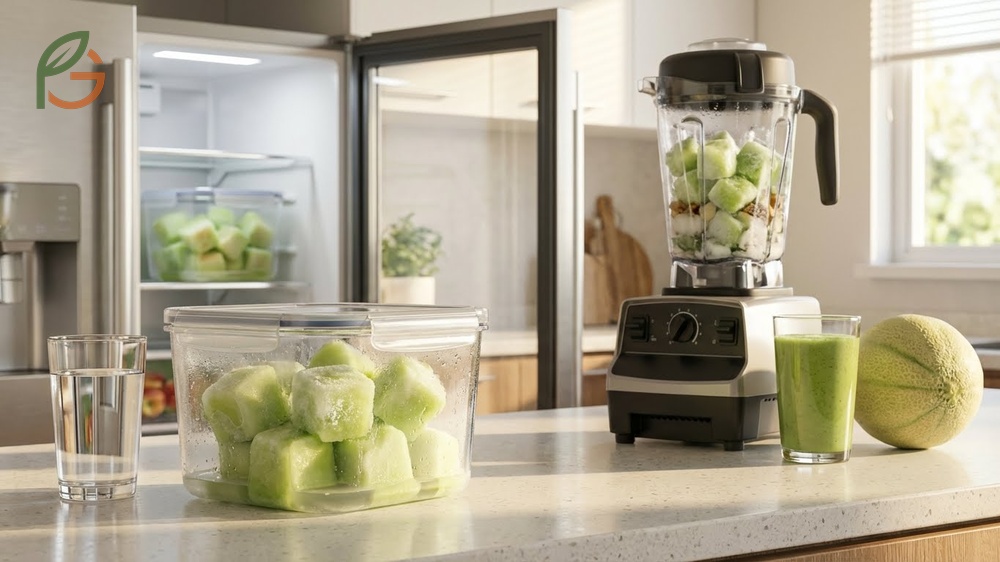
The safest thawing method involves overnight refrigeration in a covered container. Transfer frozen honeydew to the fridge 8-12 hours before you’ll need it—this gradual thaw minimizes texture damage and prevents bacterial growth.[2] You’ll notice some liquid in the container—that’s normal moisture loss during freezing and thawing.
For most applications, you won’t need to thaw at all. Smoothies, blended drinks, and frozen desserts work perfectly with rock-solid frozen cubes straight from the freezer. This approach actually gives you better texture control in smoothies—you’re avoiding the excess water that comes with thawed melon.
Research shows thawed honeydew should be consumed within 24 hours.[8] Don’t refreeze previously frozen fruit—texture becomes completely unacceptable, and safety risks increase. Plan portions based on what you’ll actually use in one sitting or one recipe.
- Refrigerator thaw (overnight)—safest method, maintains best texture and flavor
- Counter thaw (1-2 hours)—faster but increases bacterial growth risk, use immediately
- Cold water bath (30-45 minutes)—seal in waterproof bag, change water every 10 minutes
- Microwave defrost (2-3 minutes)—uneven thawing, only for immediate cooking use
- No thaw needed—use frozen directly in smoothies, blended soups, and sorbets
Safety Warning: Never thaw honeydew on the counter for more than 2 hours. Room temperature creates ideal conditions for bacterial growth between 40-140°F (4-60°C). If you’ve left it out too long, discard it—food safety isn’t worth the risk.
Preserve Honeydew Freezing
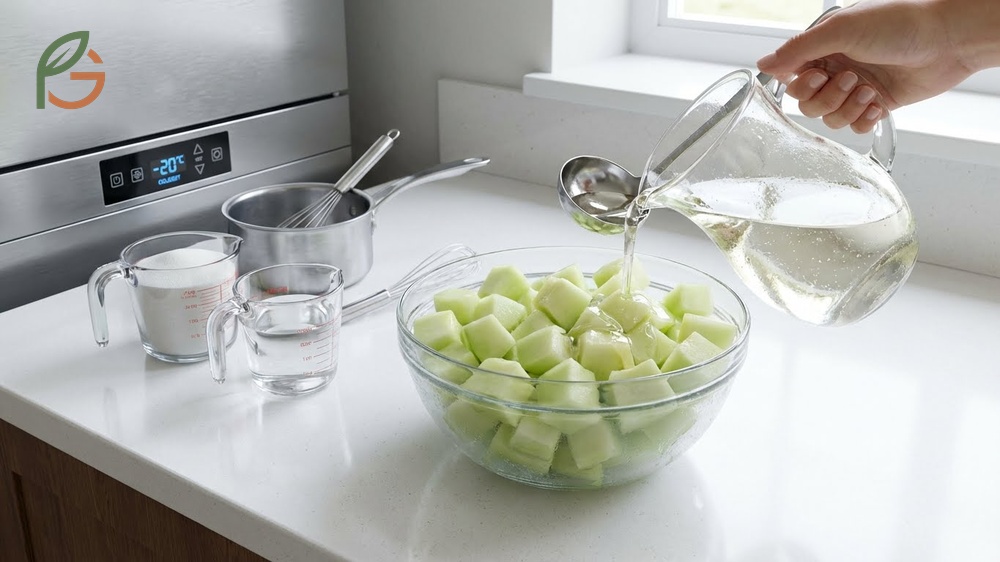
Evidence indicates that adding sugar syrup before freezing can extend color and flavor retention by 2-3 months. This technique works best if you’re planning to use honeydew in desserts where extra sweetness fits. Mix 3 cups water with 1 cup sugar, cool completely, then pour over melon cubes before freezing.[9]
Most home freezers aren’t designed for flash-freezing, but you can approximate it. Set your freezer to the coldest setting 2-3 hours before freezing honeydew, then place baking sheets near the back where it’s coldest. Faster freezing means smaller ice crystals and better texture retention.
Current preservation guidance emphasizes minimizing air exposure at every stage. Air contact causes oxidation—that browning you’ll see on poorly stored frozen fruit. Squeeze bags firmly to remove air pockets, or invest in a vacuum sealer if you’re freezing large quantities regularly.
My aunt in Querétaro, Mexico freezes 20-30 pounds of honeydew each summer when prices drop. She uses the sugar syrup method for fruit she’ll use in desserts, and dry-packs fruit for smoothies. Her system lets her enjoy local honeydew flavor year-round at a fraction of winter prices.
Conclusion
The evidence is clear: can you freeze honeydew melon successfully for up to 12 months when you follow proper cutting, pre-freezing, and storage techniques. You’ll get the best results using frozen honeydew in smoothies, sorbets, baked goods, and blended applications where texture changes don’t matter. Current food preservation guidance emphasizes that proper packaging and consistent freezer temperatures make the difference between mediocre and excellent frozen fruit quality.
Agricultural data shows freezing preserves most nutrients, particularly vitamin C and potassium, making it a smart preservation choice for excess harvest or bulk purchases. FruitGarden provides research-backed growing and preservation information to help you make the most of your fruit garden harvests throughout the year.
Frequently Asked Questions
How long can you keep honeydew melon in the freezer?
Frozen honeydew maintains best quality for 10-12 months at 0°F (-18°C) or below, though it remains safe indefinitely beyond that timeframe. Quality gradually declines after one year—flavor becomes less vibrant and color may darken slightly. Use within 12 months for optimal taste in smoothies and recipes.
Can you freeze honeydew melon without it getting mushy?
You can’t completely prevent texture changes since water in honeydew expands during freezing and breaks cell walls. However, pre-freezing in a single layer, using rapid freezing, and minimizing air exposure helps maintain better texture. The softness won’t matter in smoothies, pureed soups, or baked goods where you’re blending or cooking the fruit anyway.
What’s the best way to freeze honeydew melon cubes?
The best method involves cutting into 1-inch cubes, drying thoroughly, spreading in a single layer on parchment-lined baking sheets, pre-freezing for 2-3 hours until solid, then transferring to airtight freezer bags with all air squeezed out. This technique prevents clumping and makes it easy to grab exactly the amount you’ll need for recipes.
Can you eat frozen honeydew melon without thawing?
Yes, frozen honeydew works perfectly straight from the freezer in smoothies, blended drinks, and as ice cubes in cocktails. You don’t need to thaw for these uses—in fact, using it frozen gives better texture control in smoothies. Only thaw if you’re using honeydew in recipes that require softer fruit, like muffins or quick breads.
Does freezing honeydew melon change the nutritional value?
Research shows freezing preserves most nutrients in honeydew, including vitamin C (34mg per cup) and potassium. You’ll lose minimal nutritional value during the freezing process itself. The main nutrient loss occurs during thawing when water-soluble vitamins like vitamin C leach into the liquid that drains off, so use that liquid in your recipes.
Can you freeze honeydew melon for smoothies?
Absolutely—frozen honeydew is ideal for smoothies since you’re blending it anyway and the texture changes don’t matter. Freeze in 1-inch cubes for easy portioning, and use 1-1.5 cups frozen honeydew per smoothie serving. It adds natural sweetness, tropical flavor, and helps create thick, frosty smoothies without watering them down with ice.
Should you add sugar when freezing honeydew melon?
Adding sugar syrup is optional—it extends color and flavor retention by 2-3 months but isn’t necessary for most uses. Use dry-pack freezing (no sugar) if you’re making smoothies or recipes where you’ll control sweetness separately. Add light syrup (3 cups water to 1 cup sugar) if you’re planning desserts or applications where extra sweetness enhances the final dish.





