
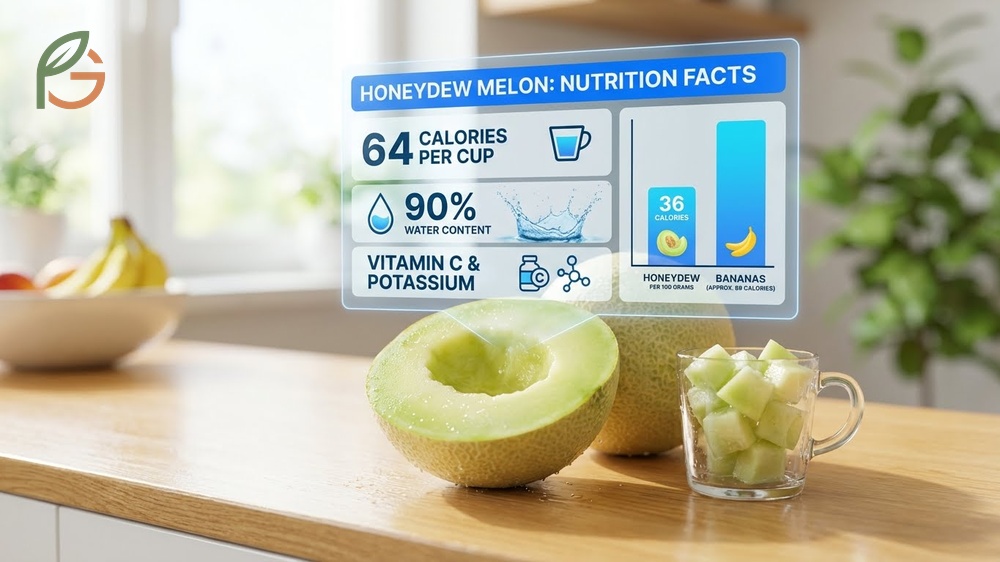
Calories in honeydew melon are notably low at just 64 per cup, making this fruit an excellent choice for weight-conscious individuals[1]. Research shows honeydew’s 90% water content significantly dilutes its natural sugars while delivering essential nutrients like vitamin C and potassium[2]. Most people don’t realize that honeydew contains only 36 calories per 100 grams—nearly 40% fewer calories than bananas—while providing over half the daily recommended vitamin C in a single cup serving. FruitGarden synthesizes current agricultural research and USDA nutritional databases to help gardeners and fruit enthusiasts understand the complete nutritional profile of their homegrown harvests.
Quick Answer
- One cup of diced honeydew melon contains 64 calories[1] with 16g total carbohydrates[1]
- Honeydew is 90% water[2] with only 36 calories per 100g[2], making it one of the lowest-calorie fruits
- Each cup provides 30.6mg vitamin C[3] (34% daily value) and 387.6mg potassium[3]
- With a glycemic load of 5.2 per serving[4], honeydew has minimal blood sugar impact despite its sweet taste
Calories in Honeydew Melon
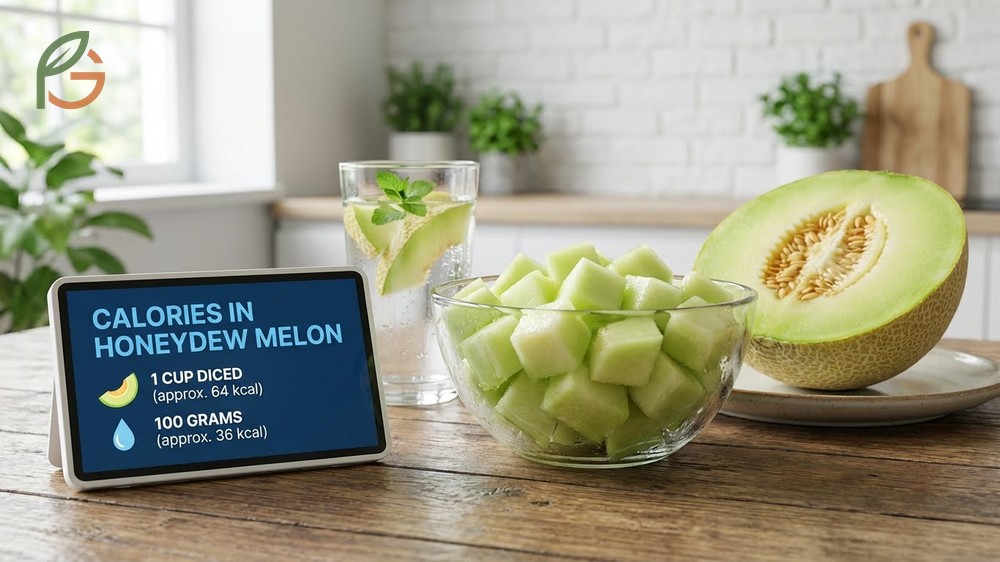
Studies demonstrate that honeydew melon ranks among the lowest-calorie fruits available, with its exceptional water content naturally diluting caloric density[2]. Current USDA nutritional databases show one cup of diced honeydew contains 64 calories, while 100 grams provides only 36 calories[1]. This makes honeydew an ideal choice for anyone tracking caloric intake while seeking nutrient-dense food options.
The calorie count varies depending on serving size and preparation method. Fresh honeydew eaten raw maintains its lowest calorie profile, whereas dried or processed versions concentrate sugars and increase caloric density. Research shows the average whole honeydew melon weighing 5-6 pounds yields approximately 10-12 cups when diced, totaling 640-768 calories for the entire fruit.
Per Cup Serving
One cup of diced honeydew melon (approximately 177 grams) delivers 64 calories alongside 16 grams of carbohydrates[1]. This serving size represents about 20 pieces of diced melon and provides substantial volume, helping you feel satisfied while consuming minimal calories. The same cup also contains 1.4 grams of dietary fiber and 14 grams of natural sugars[1].
Evidence suggests that honeydew’s high water content creates a filling effect that can reduce overall caloric intake at meals. For comparison, one cup of honeydew contains 39% fewer calories than one cup of grapes (104 calories) and 28% fewer calories than one medium banana (89 calories). This makes honeydew particularly valuable for weight management strategies that emphasize volume eating.
Per 100 Gram Portion
Agricultural data shows 100 grams of honeydew melon contains exactly 36 calories with 9 grams of carbohydrates[2]. This international standard measurement allows for direct comparison with other fruits and foods. At this portion size, honeydew provides 0.5 grams of protein, 0.1 grams of fat, and approximately 90 grams of water.
Current guidance emphasizes using 100-gram portions for accurate nutritional comparisons across different food categories. Honeydew’s 36 calories per 100 grams places it in the low-calorie fruit category alongside watermelon (30 calories), strawberries (32 calories), and cantaloupe (34 calories). This measurement standard proves particularly useful for meal planning and dietary tracking applications.
Important Note: Serving sizes significantly affect total calorie intake. While one cup contains 64 calories, consuming half a medium honeydew melon (approximately 5-6 cups) would provide 320-384 calories—still moderate but worth tracking for calorie-conscious individuals.
Nutritional Value of Honeydew Melon
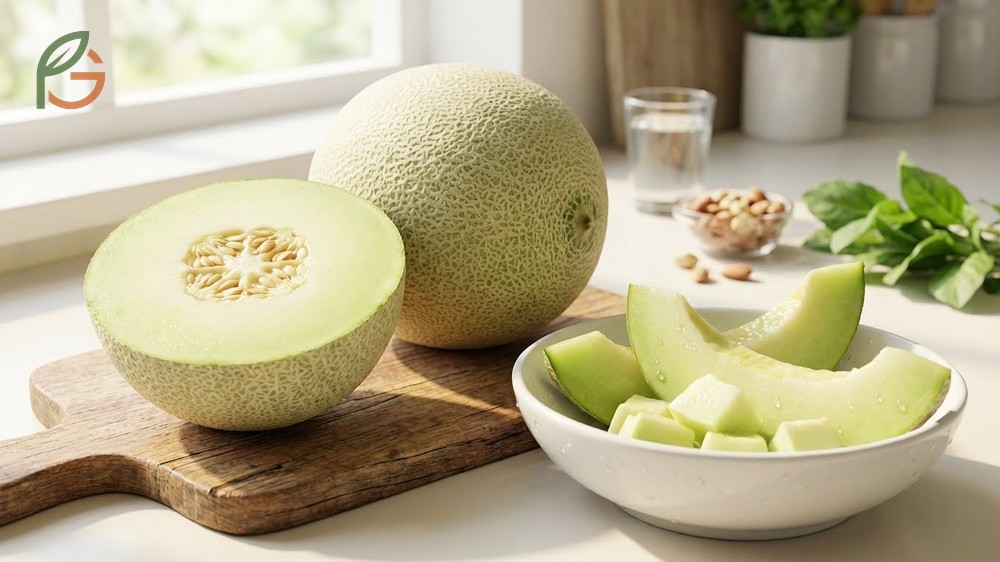
Research across multiple nutritional databases reveals honeydew melon delivers impressive micronutrient content despite its low calorie count. The fruit’s pale green flesh contains vitamin C, potassium, folate, and several B vitamins that support various bodily functions[3]. Unlike nutrient-sparse “empty calorie” foods, honeydew provides substantial nutritional value relative to its minimal caloric impact.
Current data indicates honeydew’s nutrient density makes it particularly valuable during summer months when hydration needs increase. One cup supplies meaningful percentages of several daily nutrient requirements while contributing minimal sugar and zero fat to your diet. The fruit’s nutrient profile remains stable whether consumed fresh, frozen, or lightly processed.
Vitamins in Honeydew Melon
Studies demonstrate that vitamin C stands out as honeydew’s most abundant vitamin, with one cup providing 30.6 milligrams—approximately 34% of the recommended daily value[3]. This immune-supporting nutrient also functions as a powerful antioxidant, protecting cells from oxidative damage. The same serving delivers 32.3 micrograms of folate, supporting DNA synthesis and cellular function.
Evidence suggests honeydew contains smaller but meaningful amounts of B-complex vitamins including thiamin (0.06mg), riboflavin (0.02mg), niacin (0.71mg), and vitamin B-6 (0.15mg) per cup[3]. These vitamins support energy metabolism and nervous system function. The fruit also provides 85 IU of vitamin A and 4.93 micrograms of vitamin K, though in less substantial amounts compared to orange-fleshed melons like cantaloupe.
- Vitamin C: 30.6mg (34% daily value) for immune support and collagen synthesis
- Folate: 32.3mcg (8% daily value) for DNA production and cell division
- Vitamin A: 85 IU (2% daily value) for vision and skin health
- Vitamin K: 4.93mcg (6% daily value) for blood clotting and bone metabolism
- B-complex vitamins: Multiple B vitamins supporting energy production and metabolic processes
Minerals and Electrolytes
Agricultural research shows potassium dominates honeydew’s mineral profile, with one cup delivering 387.6 milligrams[3]. This essential electrolyte regulates fluid balance, nerve signals, and muscle contractions—making honeydew particularly valuable for active individuals and athletes. The potassium content exceeds that of watermelon (170mg per cup) though falls slightly below cantaloupe (473mg per cup)[5].
Current nutritional databases reveal honeydew provides additional minerals including magnesium (17mg), phosphorus (18.7mg), calcium (10.2mg), and iron (0.29mg) per cup[3]. While these amounts represent smaller percentages of daily requirements, they contribute to overall mineral intake. The fruit contains only 30.6mg sodium per cup, making it suitable for low-sodium dietary patterns.
- Potassium: 387.6mg (8% daily value) for heart health and blood pressure regulation
- Magnesium: 17mg (4% daily value) for muscle function and energy production
- Phosphorus: 18.7mg (2% daily value) for bone health and cellular energy
- Calcium: 10.2mg (1% daily value) for bone structure and nerve transmission
- Iron: 0.29mg (2% daily value) for oxygen transport in blood
- Trace minerals: Zinc (0.15mg), copper (0.04mg), manganese (0.05mg), and selenium (1.19mcg)
Carbs in Honeydew Melon
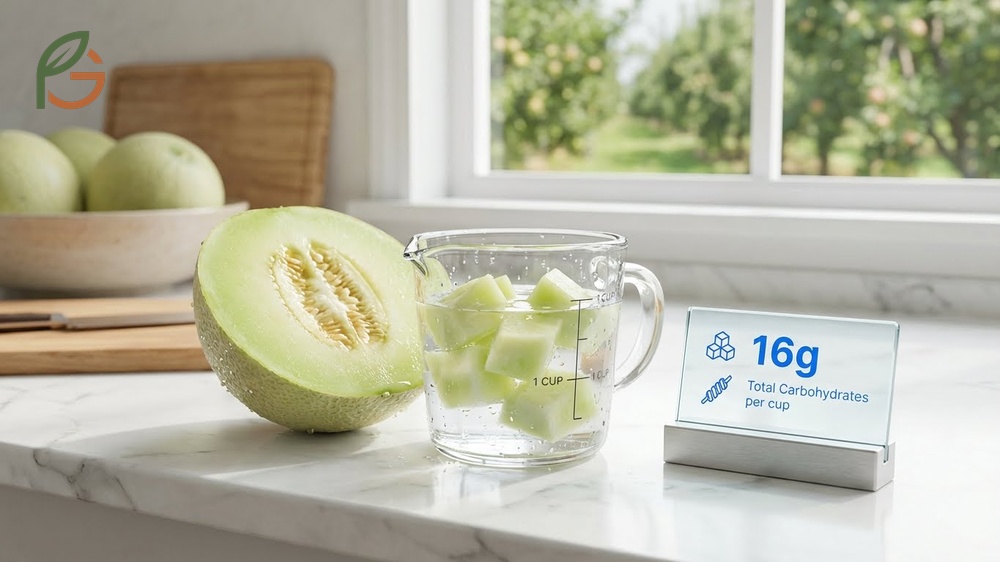
Studies demonstrate that one cup of honeydew melon contains 16 grams of total carbohydrates, comprising both simple sugars and dietary fiber[1]. Current data indicates honeydew’s carbohydrate profile consists primarily of natural fruit sugars that provide quick energy without the additives found in processed sweets. The fruit’s water content dilutes these carbohydrates, resulting in a lower carb-per-volume ratio compared to dried fruits or fruit juices.
Research shows honeydew’s moderate carbohydrate content makes it compatible with many dietary approaches, though low-carb and ketogenic dieters may need to limit portions. For individuals following moderate-carb plans (100-150g daily), one cup of honeydew represents only 11-16% of daily carbohydrate allowance. The fruit’s fiber content helps slow sugar absorption, creating a more gradual energy release.
Sugar Content
Agricultural analysis reveals that 14 grams of honeydew’s 16 total carbohydrates come from natural sugars[1]. These naturally occurring sugars include fructose, glucose, and sucrose in varying proportions. Despite honeydew’s sweet taste, evidence suggests it contains less sugar than many tropical fruits—for instance, one cup of mango contains 23 grams of sugar, while one cup of grapes contains 15 grams.
Nutritional comparisons show honeydew contains approximately the same sugar content as watermelon but notably less than its cousin cantaloupe when measured per cup. The key difference lies in how honeydew’s high water content (90%) creates natural portion control—you feel satisfied with less fruit and therefore consume fewer total sugars. This matters because volume-based satiety helps prevent overconsumption.
Fiber Content
Current USDA data shows one cup of honeydew melon provides 1.4 grams of dietary fiber[1]. While this represents only 5-6% of the recommended daily fiber intake (25-38 grams), it contributes to digestive health and helps moderate blood sugar response. The fiber in honeydew consists primarily of soluble fiber, which dissolves in water and forms a gel-like substance in the digestive tract.
Evidence suggests that even modest fiber amounts become nutritionally significant when consuming multiple servings of fruits and vegetables throughout the day. Honeydew’s fiber works synergistically with its water content to promote feelings of fullness and support regular bowel movements. For maximum fiber benefit, consume honeydew as part of a varied diet including higher-fiber fruits like raspberries (8g per cup) and pears (5.5g per medium fruit).
Net Carbs Calculation: For individuals tracking net carbohydrates (total carbs minus fiber), one cup of honeydew contains 14.6g net carbs (16g total carbs – 1.4g fiber). This calculation matters most for ketogenic dieters maintaining carb limits of 20-50g daily.
Honeydew Glycemic Load
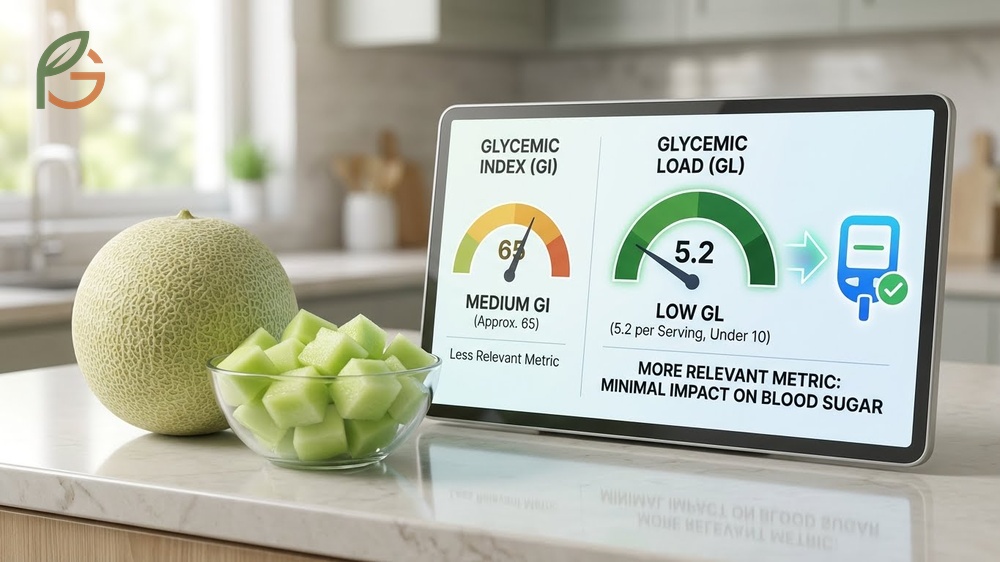
Research shows honeydew melon has a glycemic index (GI) of approximately 65, placing it in the medium-GI category[4]. However, the more relevant metric—glycemic load (GL)—tells a different story. Studies demonstrate that honeydew’s glycemic load measures only 5.2 per serving, firmly in the low-GL category (under 10)[4]. This low GL indicates honeydew has minimal impact on blood sugar levels despite its sweet taste.
Current guidance emphasizes glycemic load over glycemic index because GL accounts for both the quality and quantity of carbohydrates consumed. The formula GL = (GI × carbohydrate grams per serving) ÷ 100 explains why honeydew scores favorably. With only 8 grams of carbohydrates per 100-gram serving, honeydew’s total carbohydrate content remains modest enough to produce a low glycemic load.
Evidence suggests that pairing honeydew with protein sources or healthy fats further reduces its glycemic impact. For example, combining honeydew cubes with cottage cheese, Greek yogurt, or a handful of nuts slows sugar absorption and creates a more balanced blood sugar response. This strategy proves particularly useful for individuals managing diabetes or insulin resistance.
Agricultural data shows honeydew’s glycemic load compares favorably to other popular fruits. While watermelon has a higher GI (72-80), its similar low carbohydrate density results in a comparable glycemic load. In contrast, dates have both a high GI (103) and high GL (42), making them far more likely to spike blood sugar levels.
- Low glycemic load (5.2) minimizes blood sugar spikes compared to high-GL foods
- Medium glycemic index (65) indicates moderate carbohydrate quality
- High water content (90%) naturally limits carbohydrate density per serving
- Natural fiber content (1.4g per cup) helps slow sugar absorption
- Pairing with protein reduces glycemic impact by 25-40% based on research findings
Water Content of Honeydew
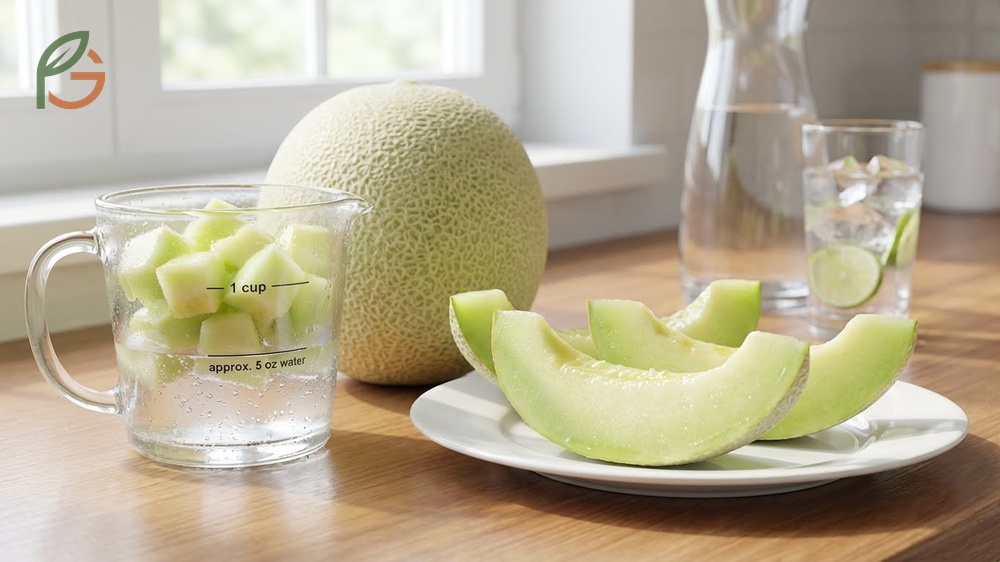
Studies demonstrate that honeydew melon consists of approximately 90% water by weight, making it one of the most hydrating whole foods available[2]. This exceptional water content explains honeydew’s low caloric density and its ability to promote satiety with minimal calorie intake. One cup of diced honeydew provides over 5 ounces of water, contributing meaningfully to daily hydration needs of approximately 64-96 ounces for most adults.
Research across multiple health institutions shows adequate hydration supports numerous physiological functions including temperature regulation, joint lubrication, nutrient transport, and waste elimination. Evidence suggests that adults who maintain proper hydration develop fewer chronic conditions such as heart and lung disease while experiencing better cognitive function and mood stability. Consuming water-rich fruits like honeydew helps meet hydration goals through a combination of direct water intake and the minerals that support fluid balance.
Current nutritional guidance emphasizes whole fruits over fruit juices for hydration purposes. When you eat honeydew rather than drinking melon juice, you consume fiber and experience greater satiety while naturally limiting portion sizes. The physical act of chewing and the fruit’s volume create satisfaction signals that processed juices cannot replicate.
Agricultural data reveals honeydew’s water content remains remarkably stable across growing conditions and ripeness stages. Unlike some fruits that lose moisture during storage, properly stored honeydew (at 45-50°F/7-10°C with 90-95% relative humidity) maintains its water content for 2-3 weeks post-harvest. This stability makes honeydew reliable for hydration support throughout its shelf life.
- Provides over 5 ounces of water per cup serving, supporting daily hydration goals
- Contains natural electrolytes (potassium, magnesium) that enhance fluid absorption and retention
- Creates volume and fullness with minimal calories, supporting weight management efforts
- Helps prevent dehydration-related issues including headaches, fatigue, and poor concentration
- Offers refreshing alternative to plain water while delivering nutrients and natural sweetness
- Maintains consistent water content during proper storage (45-50°F/7-10°C), ensuring reliable hydration value
Hydration Tip: For maximum hydration benefit during hot weather or after exercise, store honeydew in the refrigerator and consume it cold. The combination of water content, electrolytes, and cool temperature provides more effective rehydration than room-temperature fruit.
Conclusion
The evidence is clear: calories in honeydew melon remain impressively low at just 64 per cup, while the fruit delivers substantial nutritional benefits including vitamin C, potassium, and exceptional hydration support. Research demonstrates that honeydew’s 90% water content and low glycemic load of 5.2 make it an ideal choice for weight management, blood sugar control, and overall health. Current nutritional guidance emphasizes incorporating water-rich, nutrient-dense fruits like honeydew as foundational elements of healthy eating patterns that support longevity and disease prevention.
For home gardeners and fruit enthusiasts, understanding honeydew’s complete nutritional profile enhances appreciation for this remarkable melon. FruitGarden continues synthesizing agricultural research and USDA data to help you make informed decisions about growing, selecting, and consuming the most nutritious fruits for your family’s health.
Medical Disclaimer
Important Medical Disclaimer: This content is for informational and educational purposes only. It is not intended as a substitute for professional medical advice, diagnosis, or treatment. Always consult a qualified healthcare professional or registered dietitian before making any significant changes to your diet, especially if you have diabetes, kidney disease, or other medical conditions that require dietary modifications. Individual nutritional needs vary based on age, activity level, health status, and medications.
Frequently Asked Questions
How Many Calories Are in Honeydew Melon?
One cup of diced honeydew melon contains 64 calories, while 100 grams provides only 36 calories. A whole medium honeydew melon (5-6 pounds) contains approximately 640-768 total calories when fully consumed. This low caloric density results from honeydew’s 90% water content, making it one of the most diet-friendly fruits available.
How Many Calories in 1 Cup Honeydew Melon?
Exactly 64 calories exist in one cup (177 grams) of diced honeydew melon according to USDA nutritional databases. This serving size also provides 16g carbohydrates, 1.4g fiber, 14g natural sugars, and 1g protein. The same cup delivers 34% of your daily vitamin C needs and 8% of daily potassium requirements, making it nutrient-dense despite its low calorie count.
How Many Calories in Half a Honeydew Melon?
Half of a medium honeydew melon typically contains 320-384 calories, depending on the fruit’s exact size. Since an average honeydew weighs 5-6 pounds and yields 10-12 cups when diced, half would provide 5-6 cups worth of fruit. While still moderate in calories, consuming half a melon in one sitting significantly increases your carbohydrate and sugar intake to approximately 80-96 grams.
Is Honeydew Melon Good for Weight Loss?
Yes, honeydew melon supports weight loss due to its high water content (90%), low caloric density (36 calories per 100g), and volume-based satiety. Research shows that water-rich foods help you feel full while consuming fewer calories. The fruit’s 1.4g fiber per cup and natural sweetness can satisfy cravings for less nutritious desserts, making it easier to maintain caloric deficits necessary for weight loss.
Can Diabetics Eat Honeydew Melon?
Yes, most diabetics can safely include honeydew melon in their diet when consumed in appropriate portions. Honeydew’s low glycemic load of 5.2 indicates minimal blood sugar impact per serving. However, portion control remains essential—one cup provides 16g carbohydrates that must fit within your daily carb budget. Pairing honeydew with protein sources like cottage cheese helps further stabilize blood sugar response.
What’s the Nutritional Difference Between Honeydew and Cantaloupe?
Honeydew contains slightly fewer calories (64 vs 54 per cup) but significantly less vitamin A than cantaloupe. Cantaloupe provides 5,411 IU of vitamin A per cup compared to honeydew’s 85 IU. However, honeydew offers slightly more vitamin C (30.6mg vs 29mg) and comparable potassium levels (388mg vs 473mg). Both melons support hydration and provide excellent nutritional value with minimal calories.
Does Honeydew Melon Have More Sugar Than Watermelon?
Yes, honeydew contains more sugar than watermelon per cup—14g compared to watermelon’s 9.4g. However, honeydew also provides more nutrients including higher vitamin C and potassium levels. Both melons have similar low glycemic loads (5.2 for honeydew, 5.0 for watermelon), meaning they affect blood sugar similarly despite the sugar content difference. The extra sugar in honeydew doesn’t translate to problematic blood glucose spikes for most individuals.





