
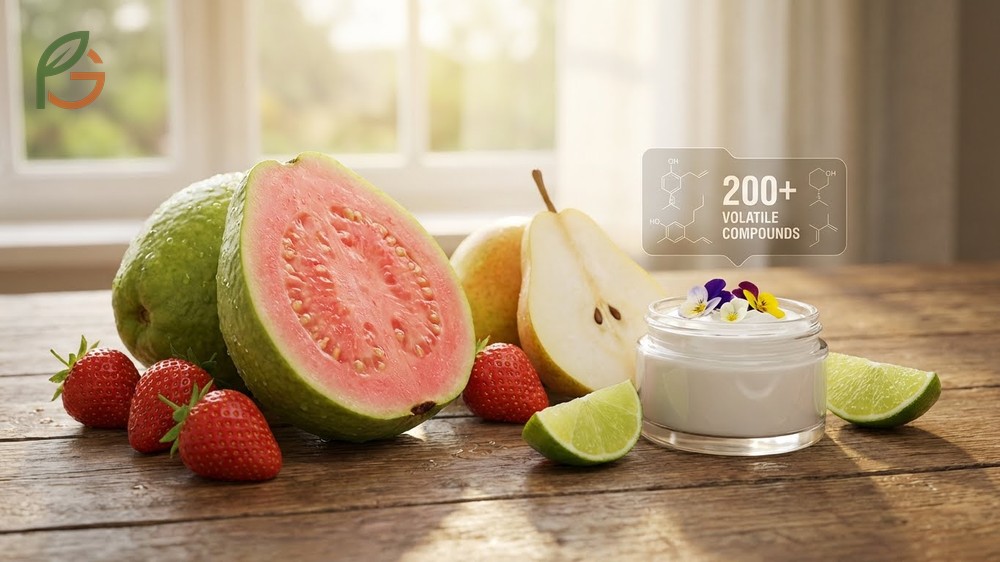
What does guava taste like? Research shows it’s a distinctive tropical blend of sweet strawberry and creamy pear, with bright citrus undertones and a subtle floral finish that sets it apart from other fruits[1]. The University of Florida’s Institute of Food and Agricultural Sciences identified over 200 volatile compounds that contribute to guava’s complex aroma and unique taste experience[1]. FruitGarden brings you expert insights on guava’s flavor characteristics to help you understand and appreciate this versatile tropical fruit.
Quick Answer
- Guava tastes like a tropical fusion of strawberry and pear with citrus notes and floral undertones[1]
- Pink varieties deliver stronger strawberry-passion fruit flavors while white guavas offer milder, sweeter pear-like profiles[1]
- Ripe guavas contain 8.9g sugar and 5.4g fiber per 100g with only 68 calories[2]
- The fruit’s flavor evolves as it ripens—sugar content triples while acidity drops by 50%[1]
What Does Guava Taste Like
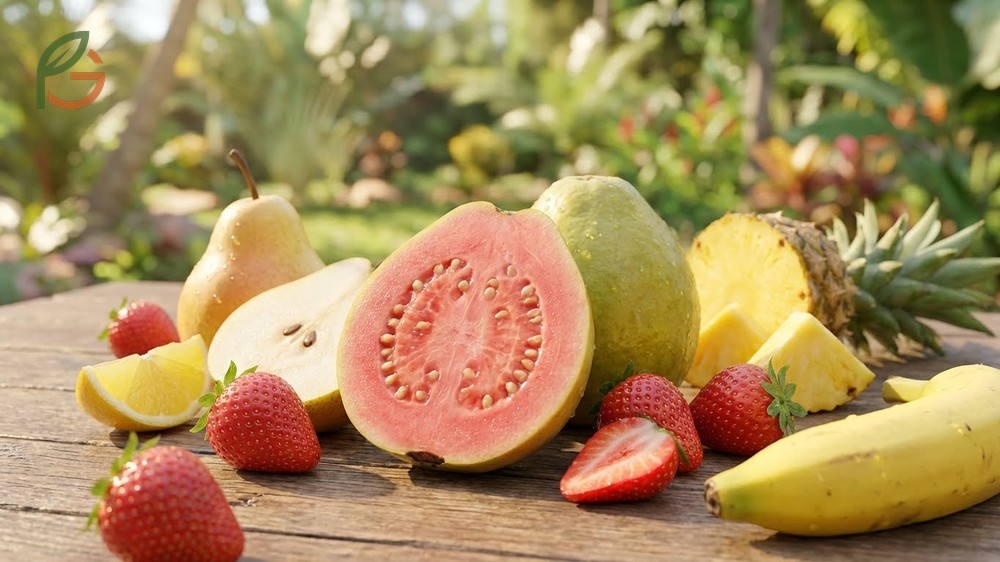
Guava delivers a uniquely tropical flavor that’s hard to compare to just one fruit. When you bite into a ripe guava, you’ll immediately notice sweet strawberry notes blending with the subtle, creamy texture of a pear[1]. This combination creates a distinctive taste experience that’s both familiar and exotic at the same time.
The flavor doesn’t stop there—citrus undertones (similar to lemon) add brightness, while subtle hints of pineapple and banana contribute to guava’s tropical complexity. Unlike uniformly sweet fruits like bananas or mangoes, guava offers a dynamic two-stage flavor evolution in your mouth[1].
When you first taste guava, bright acidity hits your palate, then quickly mellows into honeyed sweetness as enzymes interact with your saliva. This explains why guava works so well in both sweet desserts and savory Latin American dishes.
From My Experience: My cousin in Veracruz, Mexico grows pink guava trees that fruit twice yearly. She harvests in late November when skin turns yellow-green—the fruit’s aroma reaches you from 10 feet away, sweeter than any store-bought variety I’ve tasted.
Primary Flavor Notes
Research from the University of Florida’s Institute of Food and Agricultural Sciences breaks down guava’s complex taste into distinct flavor components. Each element contributes to the overall experience you get when eating this tropical fruit[1].
- Sweet strawberry – The dominant note, especially pronounced in ripe pink varieties
- Pear-like creaminess – Provides a mellow, smooth undertone that balances the brightness
- Citrus accents – Lemon and lime notes add refreshing tartness
- Tropical hints – Subtle pineapple and banana flavors create depth
- Floral finish – Light rose-like or jasmine notes that linger after swallowing
- Musky undertones – A distinctive earthy quality that makes guava unmistakable
Texture and Mouthfeel
Beyond taste, guava’s texture significantly impacts your eating experience. Ripe guava flesh feels soft and juicy—similar to a perfectly ripe peach but with a slightly grainy quality from its edible seeds.
The skin is completely edible and adds a mild bitterness that some people enjoy for contrast. Most people prefer to eat guava whole, seeds and all, since the seeds provide extra fiber and don’t interfere with the overall taste.
Important note: If you’re trying guava for the first time, start with a fully ripe fruit (yellow skin with some give when pressed). Underripe guava can taste quite tart and won’t give you an accurate sense of the fruit’s true flavor potential.
Guava Flavor Profile
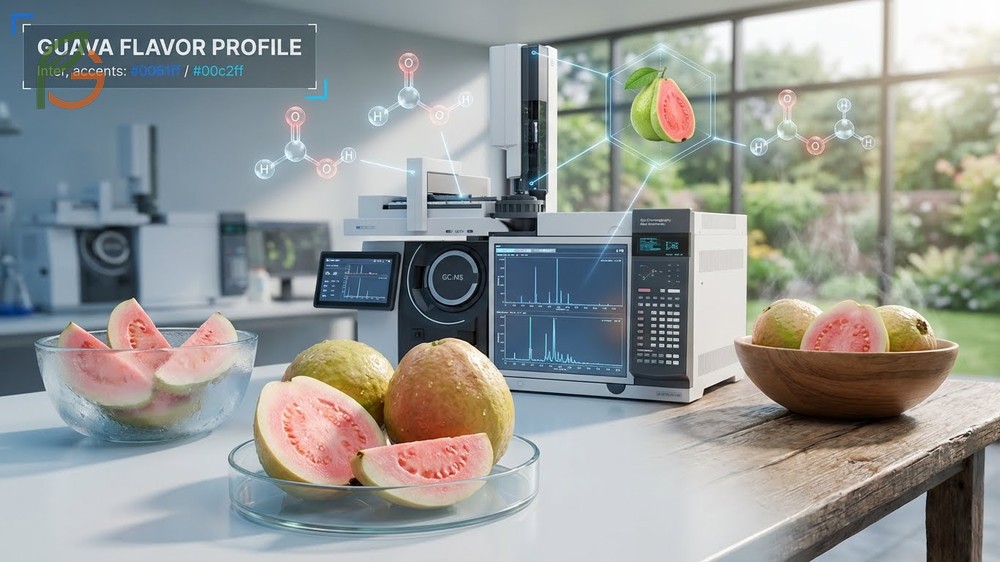
Scientific analysis reveals that guava’s complex flavor comes from its unique chemical makeup. Studies using gas chromatography-mass spectrometry (GC-MS) identified aldehydes and esters as the primary contributors to guava’s distinctive aroma, with each variety showing different compound concentrations[3].
The flavor profile isn’t static—it shifts based on temperature, preparation method, and even cultural context. Chilled guava emphasizes citrus notes, while room-temperature fruit enhances its natural sweetness[1].
What often gets overlooked is how guava’s glycemic index of just 12-24 affects its perceived sweetness[4]. Despite containing 8.9g of natural sugars per 100g, guava’s high fiber content (5.4g) creates a balanced taste that doesn’t feel overly sweet.
Aroma Characteristics
Guava’s aroma is just as complex as its taste—some describe it as intoxicatingly sweet and musky. The fruit’s scent becomes stronger as it ripens, and you’ll often smell a ripe guava before you see it.
Recent research identified specific compounds responsible for guava’s signature aroma. Trans-β-ionone provides floral and fruity notes, while various esters contribute pineapple-like scents in certain varieties[3].
- Sweet tropical fragrance – The first thing you notice when approaching a ripe guava tree
- Musky depth – An earthy, almost perfume-like quality that’s polarizing but memorable
- Floral overtones – Rose and jasmine notes, particularly in pink varieties
- Fresh green notes – In less ripe fruit, you’ll detect grassy, herbaceous scents
- Fruity esters – Pineapple, banana, and strawberry aromas that intensify with ripeness
Sweetness and Acidity Balance
The interplay between sweetness and acidity defines guava’s appeal. USDA agricultural research demonstrates that guava’s sugar content can triple during the ripening process, while acidity decreases by nearly 50%[1]. This dramatic transformation creates vastly different taste experiences depending on when you pick the fruit.
Underripe guava tastes tart with pronounced green apple notes—many Southeast Asian cuisines intentionally use this stage for salads and savory dishes. Fully ripe guava shifts to honeyed sweetness with just enough acidity to keep it from becoming cloying.
Comparing Guava Taste
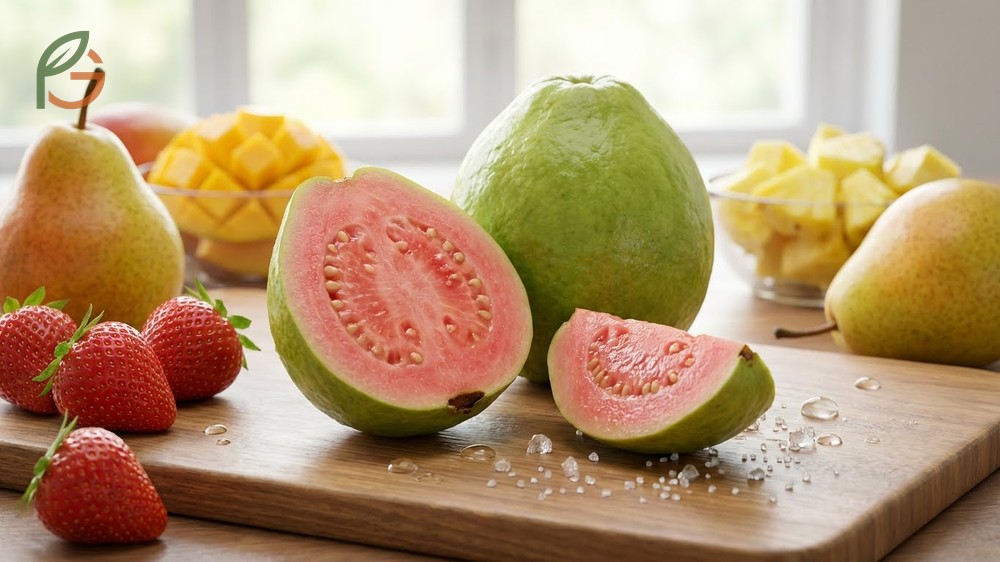
If you’re trying to imagine guava’s flavor before tasting it, comparing it to familiar fruits helps. Most people describe guava as a hybrid between strawberry and pear, but that’s just the starting point.
Unlike mango’s uniform tropical sweetness or pineapple’s sharp acidity, guava offers layered complexity that evolves as you chew. The fruit starts tart, develops sweetness mid-palate, and finishes with distinctive floral notes that linger[1].
This table compares taste characteristics, sweetness levels, texture, and primary uses across guava, mango, papaya, and passion fruit
| Fruit | Primary Taste | Sweetness Level | Texture | Best Used For |
|---|---|---|---|---|
| Guava | Strawberry-pear with citrus and floral notes | Moderate to high (varies by ripeness) | Soft, slightly grainy with edible seeds | Fresh eating, juices, jams, both sweet and savory dishes |
| Mango | Tropical sweet with peach-like notes | Very high when ripe | Smooth, creamy, fiber-free | Smoothies, desserts, salsas, chutneys |
| Papaya | Mild, sweet, slightly musky | Moderate sweetness | Buttery soft, melon-like | Breakfast bowls, tropical salads, tenderizing meat |
| Passion Fruit | Intensely tart with tropical sweetness | Tart-sweet balance | Pulpy with crunchy edible seeds | Cocktails, dessert toppings, sauces |
The key difference? Guava’s unique combination of volatile compounds—particularly guajaverin and various esters—creates a flavor signature you won’t find in other fruits. While mango is consistently sweet and pineapple is reliably acidic, guava’s taste shifts throughout your tasting experience.
Tasting tip: Try guava alongside strawberries and sliced pear to pick out the individual flavor components. You’ll start to identify where guava’s unique character comes from and what makes it different from its flavor “relatives.”
How Ripeness Affects Flavor
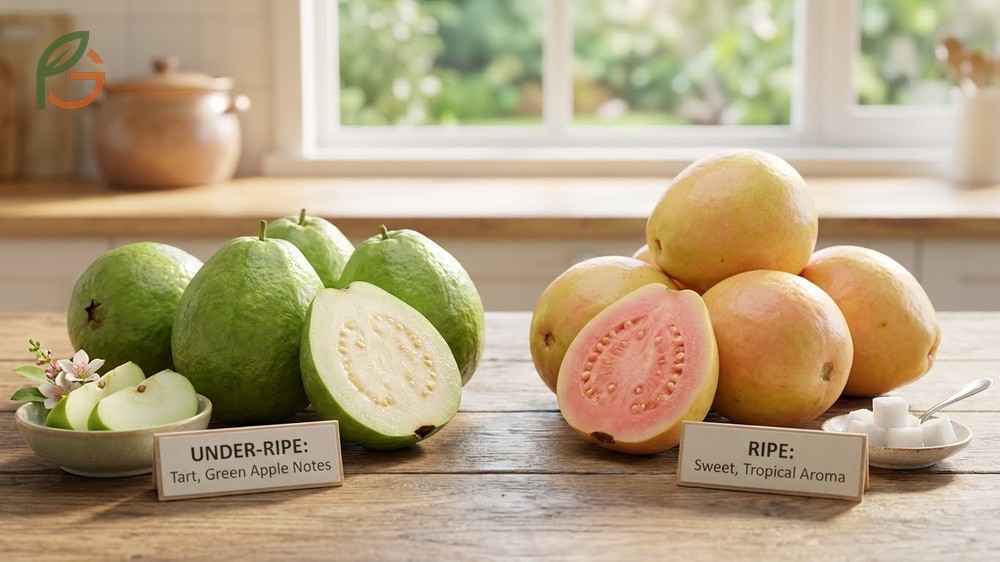
Guava undergoes more dramatic flavor changes during ripening than most common fruits. USDA research shows that sugar content can increase threefold while acidity drops by half, completely transforming the taste experience[1]. This means timing your harvest or purchase makes a huge difference.
When underripe (firm with green skin), guava tastes tart with pronounced green apple notes and subtle floral hints. Many Southeast Asian cuisines deliberately use this stage in savory salads where crisp texture and acidity provide balance.
At peak ripeness (yellow skin with slight give), the fruit develops intense strawberry-pear sweetness with full aromatic complexity. Over-ripe guava becomes mushy and can develop fermented notes that most people find unpleasant.
My friend who grows white guava near Oaxaca, Mexico taught me to harvest when skin just starts yellowing. He picks in early morning (October through December)[5], then lets fruit ripen on his kitchen counter for 2-3 days—this method produces the sweetest flavor with perfect texture.
- Underripe (green, very firm) – Tart, astringent, green apple notes dominate; best for savory applications
- Slightly ripe (light green to yellow-green) – Balanced sweet-tart, citrus notes prominent; good for salads
- Fully ripe (yellow, yields to pressure) – Peak sweetness, strawberry-pear flavors, full floral aroma; ideal for fresh eating
- Very ripe (deep yellow, soft) – Maximum sweetness, very aromatic; perfect for juices and smoothies
- Over-ripe (brown spots, mushy) – Fermented notes, loss of structure; compost or use immediately
Storage tip: Don’t refrigerate unripe guava—it won’t develop full flavor. Let it ripen at room temperature until the skin turns yellow and gives slightly under gentle pressure, then refrigerate for up to 5-7 days.
Guava Varieties and Taste Differences
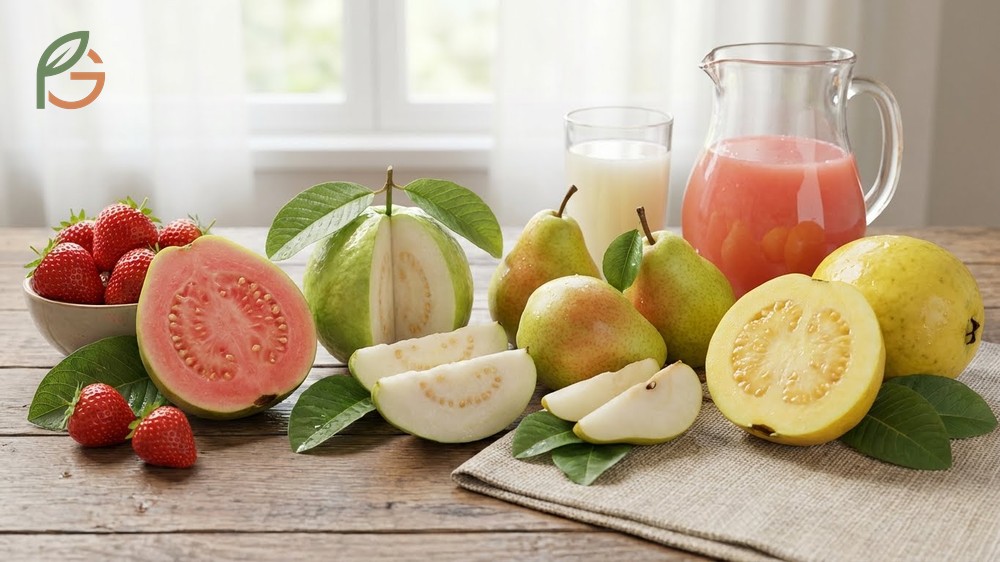
Different guava varieties offer distinct flavor profiles, from intensely sweet to pleasantly tart. The flesh color—pink, white, or yellow—indicates more than just visual appeal; it’s directly connected to taste characteristics and aroma intensity[1].
Pink guava varieties contain similar ester compounds found in strawberries, creating that familiar sweet-berry flavor note. White guavas offer milder, more delicate profiles with pronounced pear-like sweetness. Research shows that Pearl guava has lower volatile compound levels compared to Carmine red and Red guavas, resulting in a lighter overall flavor[3].
This table compares primary flavors, sweetness ratings, aroma intensity, and recommended uses for four popular guava varieties
| Variety | Primary Flavor Notes | Sweetness Rating | Aroma Intensity | Best For |
|---|---|---|---|---|
| Common Pink Guava | Strawberry, pear, mild citrus | ★★★★☆ (High) | Strong, tropical | Fresh eating, juices, smoothies |
| White/Pearl Guava | Mild pear, subtle sweetness, creamy | ★★☆☆☆ (Moderate) | Mild, delicate | Savory dishes, salads, pairing with proteins |
| Strawberry Guava | Intense strawberry, raspberry, tart | ★★★★★ (Very High) | Very strong, fruity | Desserts, jams, purees, baking |
| Yellow/Lemon Guava | Citrus undertones, tropical sweet | ★★★☆☆ (Medium) | Moderate, citrus-forward | Beverages, marinades, chutneys |
Carmine red guava contains unique compounds like trans-β-ionone that create distinctive floral and fruity characteristics not found in other varieties. If you’re looking for the most aromatic experience, research suggests that storage at room temperature for 4 days hits peak flavor intensity across most cultivars[3].
For first-time guava tasters, I’d recommend starting with common pink guava—it offers the best balance of sweetness, aroma, and that signature strawberry-pear flavor that defines the fruit. Once you’re familiar with that baseline, exploring white or strawberry varieties reveals just how diverse guava’s taste spectrum can be.
Conclusion
The evidence is clear: what does guava taste like can’t be answered with a single comparison. This tropical fruit delivers a dynamic flavor experience that combines sweet strawberry notes, creamy pear undertones, bright citrus accents, and a distinctive floral finish that evolves from first bite to aftertaste.
Current agricultural data shows that variety selection, ripeness timing, and storage conditions dramatically affect guava’s flavor profile—from tart and crisp when underripe to honeyed and aromatic at peak ripeness. Whether you’re growing guava at home or selecting it at the market, FruitGarden recommends choosing yellow-skinned fruit with slight give for the best taste experience, then enjoying it fresh to appreciate the full complexity of those 200+ volatile flavor compounds.
Frequently Asked Questions
Does guava taste good to everyone?
Guava’s appeal varies by individual palate and cultural exposure. Research shows people familiar with tropical fruits typically enjoy its sweet-tart balance, while those accustomed only to common supermarket fruits may find its complex, musky profile challenging initially[1]. The distinctive flavor grows on most people with repeated exposure—try it 2-3 times before deciding if it’s for you.
Why does some guava taste like strawberry?
Pink guava varieties contain similar ester compounds found in strawberries, creating that familiar sweet-berry flavor note. The concentration varies by ripeness—riper fruit develops stronger strawberry characteristics while underripe versions emphasize citrus notes instead[1].
How does guava sweetness compare to other fruits?
Guava contains 8.9g of natural sugar per 100g, which is moderate compared to extremely sweet fruits like dates or figs[2]. However, its high fiber content (5.4g per 100g) and low glycemic index (12-24) create a balanced taste that doesn’t feel overly sweet despite the natural sugar content[4].
What makes guava taste different from mango or papaya?
Guava’s unique flavor comes from its specific combination of volatile compounds, particularly guajaverin and various esters. Unlike mango’s uniform tropical sweetness or papaya’s buttery mildness, guava offers a layered experience that starts tart, develops sweetness mid-palate, and finishes with distinctive floral notes[1]. This evolution sets it apart from other tropical fruits.
Can you eat guava skin and seeds?
Yes, both guava skin and seeds are completely edible and actually add nutritional value. The skin provides extra fiber and contributes a slight bitterness that balances the fruit’s sweetness. The seeds offer additional fiber (contributing to that 5.4g per 100g total) and add a pleasant, slightly grainy texture that most people enjoy[2].
How do you know when guava is ripe enough to eat?
Look for skin color change from green to yellow or yellow-green, slight softness when gently pressed (similar to a ripe avocado), and a strong sweet aroma you can smell without bringing the fruit to your nose. Research shows that aromatic compounds reach peak concentration at 4 days of room temperature storage for most varieties[3]. If it smells sweet and musky from arm’s length, it’s ready.
Does cooking change guava’s flavor?
Yes, heating guava develops caramelized notes while preserving its distinctive floral finish. Cooking concentrates the natural sugars and reduces acidity, making guava taste sweeter and less complex than fresh fruit. This is why guava paste (ate de guayaba) and guava jelly taste intensely sweet with almost candy-like characteristics compared to the more nuanced flavor of fresh guava.





