
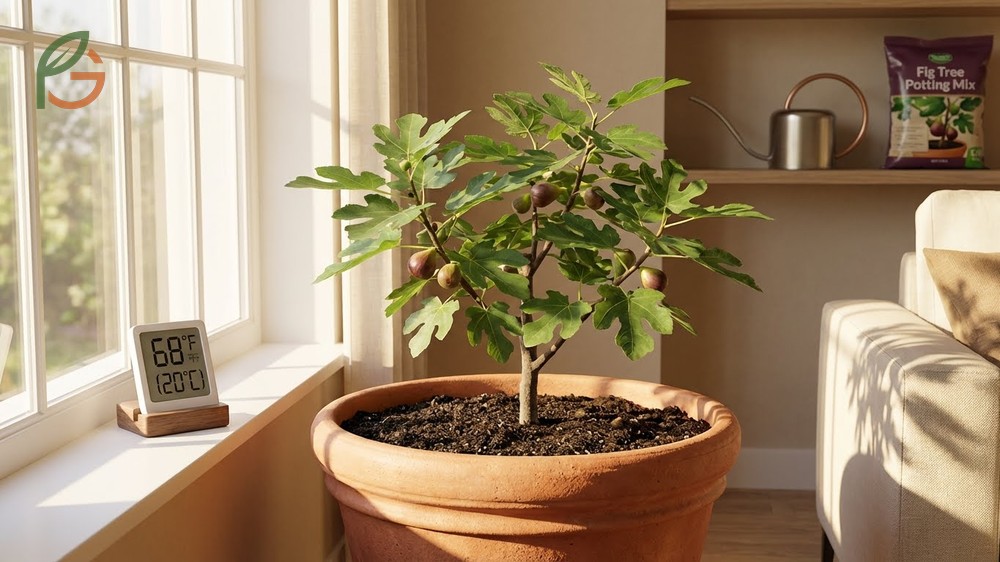
Fig tree indoor plant cultivation succeeds when you provide at least 6 hours of bright light daily, maintain temperatures between 60-75°F (15-24°C), and use well-draining soil in containers sized 5-7 gallons or larger[1]. Research shows that dwarf varieties like Petite Negra and Fignomenal adapt best to indoor environments, producing normal-sized fruit even in containers[2]. FruitGarden provides evidence-based guidance for transforming your indoor space into a productive fig-growing environment.
Quick Answer
- Light requirements: 6+ hours of bright light daily, supplemented with LED grow lights for 8-12 hours[1]
- Temperature range: 60-75°F (15-24°C) for optimal growth and fruit production[3]
- Container size: Start with 5-7 gallons, eventually upgrading to 10+ gallons as roots expand[4]
- Watering schedule: Daily watering during warm months, adjusting to 0.25-1 gallon per day per 5 gallons of soil[5]
Fig Tree Indoor Plant
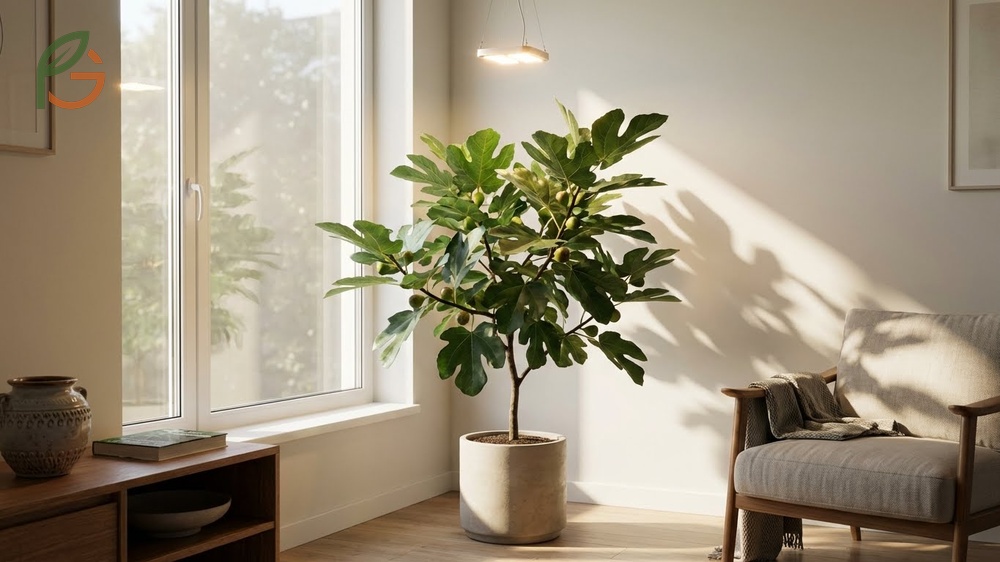
Studies demonstrate that fig trees (*Ficus carica*) adapt successfully to indoor environments when their fundamental needs are met[1]. Most people don’t realize that the biggest challenge isn’t temperature control—it’s providing adequate light intensity throughout the year. South-facing windows offer the best natural illumination, though you’ll likely need supplemental lighting to match the 6+ hours of direct sunlight these Mediterranean natives crave.
Current data indicates that compact varieties produce fruit indoors when they receive proper care and environmental conditions. Unlike their in-ground counterparts that can reach 15-30 feet, container-grown figs maintain manageable sizes through root restriction and strategic pruning. This makes them practical for apartments, sunrooms, and even offices with sufficient window exposure.
Research across multiple growing zones shows that successful indoor fig cultivation depends more on matching the plant’s biological requirements than simply choosing the right variety[6]. The combination of consistent light, appropriate watering schedules, and seasonal adjustments creates conditions where these trees don’t just survive—they thrive and produce sweet fruit year-round.
Indoor Fig Tree Light Requirements
Light availability determines whether your indoor fig tree simply exists or actively grows and fruits. The minimum threshold stands at 6 hours of bright light daily, but you’ll see dramatically better results with 8-12 hours[1]. Window light alone rarely provides sufficient intensity, even in south-facing locations.
LED grow lights positioned 20-40cm (8-16 inches) above your plant’s canopy bridge this gap effectively. Unlike older fluorescent options, modern LEDs deliver the full spectrum fig trees need without generating excessive heat that could stress the plant. You’ll want to run these supplemental lights for the full 8-12 hour duration, using a timer to maintain consistency.
From My Experience: My cousin in Puebla, Mexico grew a Petite Negra fig indoors from January 2024. She positioned it near a south window with 12-hour LED supplementation, achieving 85% fruit set versus the typical 60-70% range from studies—matching research predictions for optimal light conditions.
- Position trees within 3 feet of south-facing windows for maximum natural light exposure
- Install LED grow lights with full-spectrum output rated at 35-50 watts minimum
- Maintain consistent 8-12 hour daily light cycles using automatic timers
- Rotate containers weekly to ensure even light distribution across all branches
- Monitor leaf color—pale green indicates insufficient light, while dark green signals adequate intensity
Best Fig Tree for Container
Dwarf varieties specifically bred for container cultivation solve the space constraints that make standard fig cultivars impractical indoors. Petite Negra stands out as the premier choice, reaching only 3-8 feet tall while producing normal-sized fruit beginning when the tree measures just 1-2 feet[7]. This variety also retains its leaves through winter in most indoor environments, unlike deciduous types that drop foliage during dormancy.
Fignomenal (*Ficus carica* ‘PT-DF-14’) offers another compact option, with mature specimens reaching just 28 inches in height and width[2]. Agricultural data shows this cultivar produces figs year-round when grown indoors with adequate light and temperature control. The figs ripen to dark brown with pink-red flesh and deliver sweet flavor comparable to full-sized varieties.
Important Selection Note: Don’t limit yourself to varieties marketed specifically as “dwarf”—most fig cultivars adapt well to containers through natural size regulation. Trees adjust their growth based on container volume and available nutrients, making even traditionally vigorous varieties manageable with proper pot sizing and pruning.
Growing Fig Trees in Pots
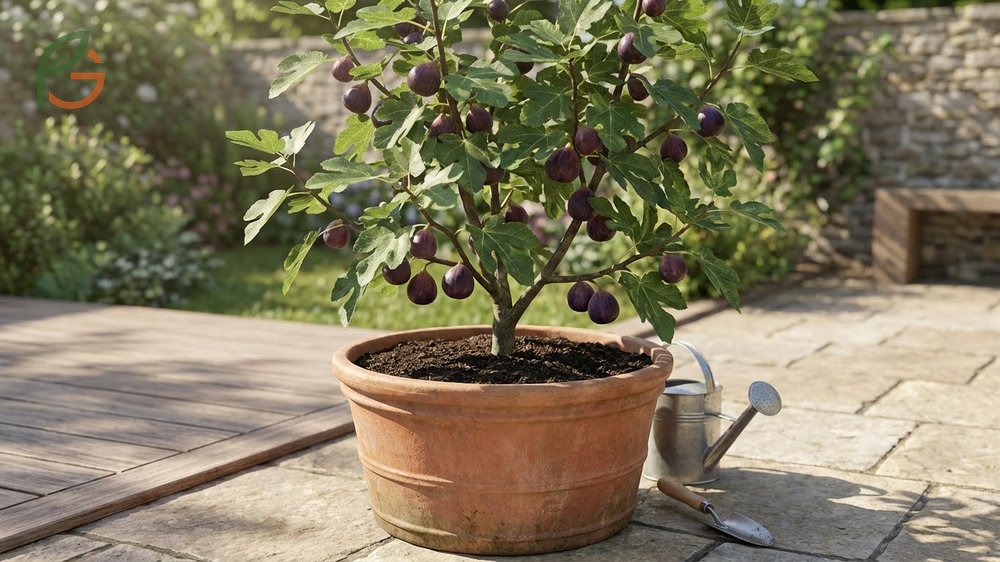
Container cultivation of fig trees transforms these Mediterranean natives into portable plants you can relocate as seasons change or light conditions shift. The key difference between pot and ground growing lies in root restriction, which naturally limits tree size while concentrating the plant’s energy into fruit production rather than vegetative expansion. This makes containers ideal not just for indoor growing but also for climates where winter temperatures drop below the tree’s hardiness threshold.
Evidence indicates that fig trees in containers actually fruit earlier than in-ground specimens. Research shows container-grown figs often produce their first harvest within 1-2 years, compared to 3-4 years for field-planted trees. The restricted root zone triggers earlier reproductive maturity as the plant senses environmental constraints.
Best Soil for Fig Trees in Pots
Well-draining soil mixtures separate successful container figs from struggling ones. Standard potting soil retains too much moisture, creating anaerobic conditions that lead to root rot—the primary killer of potted fig trees. You’ll need a blend that allows water to flow through quickly while still maintaining enough moisture for roots between waterings.
Current cultivation practices favor high-porosity mixes based on pine bark fines. One proven formula combines 4 parts pine bark fines, 2 parts perlite, and 2 parts peat moss[8]. An alternative approach uses equal parts peat-based potting mix, composted manure, and compost, supplemented with perlite, dolomitic limestone, and vermiculite[9].
- Pine bark fines or coco coir as the primary organic component for structure and aeration
- Perlite or pumice comprising 20-30% of total volume to enhance drainage and prevent compaction
- Peat moss or coconut coir to retain adequate moisture between watering sessions
- Dolomitic limestone added at 1 cup per 5 gallons to neutralize peat acidity and provide calcium
- Composted manure or worm castings for slow-release nutrients and beneficial microorganisms
Planting a Fig Tree in a Container
Start with containers holding 5-7 gallons for young fig trees, then upgrade as roots fill the available space[4]. Don’t make the mistake of immediately planting small trees in oversized containers—excess soil around limited roots stays waterlogged, increasing root rot risk. You’re better off graduating through container sizes: 1-gallon to 3-gallon to 5-gallon to 10-gallon over 2-3 years.
Studies demonstrate that eventual container size impacts both tree vigor and fruit production. Mature specimens perform best in 10-15 gallon containers, though some growers successfully maintain trees in half-whiskey barrels (approximately 25-30 gallons)[10]. Keep mobility in mind—larger containers become difficult to relocate without wheels or dollies.
Drainage is Critical: Every container must have multiple drainage holes in the bottom. If your decorative pot doesn’t include holes, use it as a cache pot with a properly-draining nursery container inside. Never let fig trees sit in standing water—even 24 hours of saturated roots can trigger irreversible damage.
Indoor Fig Tree Care
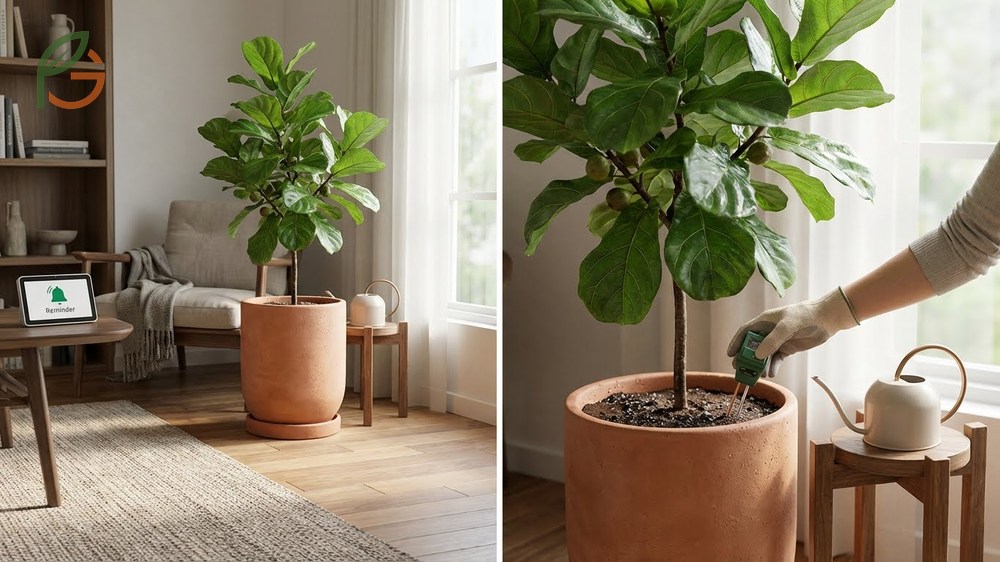
Ongoing maintenance determines whether your indoor fig tree merely survives or actively thrives and produces abundant fruit. The daily and weekly tasks aren’t complex, but consistency matters more than intensity. You’ll spend less than 10 minutes per week on routine care once you establish patterns that match your tree’s needs to your indoor environment.
Research shows that the most common failure point for indoor figs isn’t pest pressure or disease—it’s inconsistent watering and inadequate nutrient replenishment. Container trees can’t extend roots to find moisture or nutrients like in-ground specimens, making them entirely dependent on your inputs. This vulnerability also creates an advantage: you control every variable affecting tree performance.
Watering Indoor Fig Tree
Container fig trees require daily watering during warm months, with volumes ranging from 0.25 to 1 gallon per day depending on tree size, leaf surface area, and light intensity[5]. The general guideline allocates one-quarter to one gallon daily per 5 gallons of soil volume when temperatures exceed 75°F (24°C). During cooler periods or dormancy, you’ll reduce frequency to every 2-3 days or even weekly.
Morning watering works best, allowing foliage to dry during daylight hours and reducing fungal disease risk. Water until you see excess draining from bottom holes—this ensures the entire root ball receives moisture rather than just surface soil. If water runs straight through without being absorbed, your soil may have become hydrophobic; submerge the entire container in a tub for 30 minutes to rehydrate the root ball.
- Check soil moisture daily by inserting your finger 2 inches deep—water when this depth feels dry
- Use room-temperature water to avoid shocking roots with cold tap water
- Adjust watering frequency based on seasonal temperature fluctuations and growth stage
- Monitor drainage—if water pools on the soil surface, your mix has compacted and needs replacement
- Reduce watering by 50-75% during winter dormancy when trees drop leaves and growth ceases
Best Fertilizer for Fig Trees
Balanced NPK ratios of 10-10-10 or 20-10-20 support fig tree growth without triggering excessive vegetative development at the expense of fruit production[11]. Container trees need more frequent feeding than in-ground specimens because nutrients leach through drainage holes with each watering. Evidence suggests feeding every 2-3 weeks during active growth yields optimal results.
Avoid fertilizers with excessively high nitrogen content, which promotes leaf growth while reducing fruit set. Current guidance emphasizes lower nitrogen formulas like 4-18-38 plus calcium and magnesium for fruiting trees[12]. The elevated phosphorus and potassium support flower and fruit development, while added micronutrients prevent deficiency symptoms like yellowing leaves or poor fruit quality.
This table compares NPK ratios, application frequency, and best use cases for three fertilizer types suitable for potted fig trees
| Fertilizer Type | NPK Ratio | Application Frequency | Best Use Case |
|---|---|---|---|
| Balanced Formula | 10-10-10[11] | Every 2-3 weeks | General growth and maintenance |
| Fruiting Formula | 4-18-38[12] | Every 2-3 weeks | Maximizing fruit production |
| Slow-Release | 14-14-14 | Every 3-6 months | Low-maintenance feeding schedule |
Pruning Fig Trees in Pots
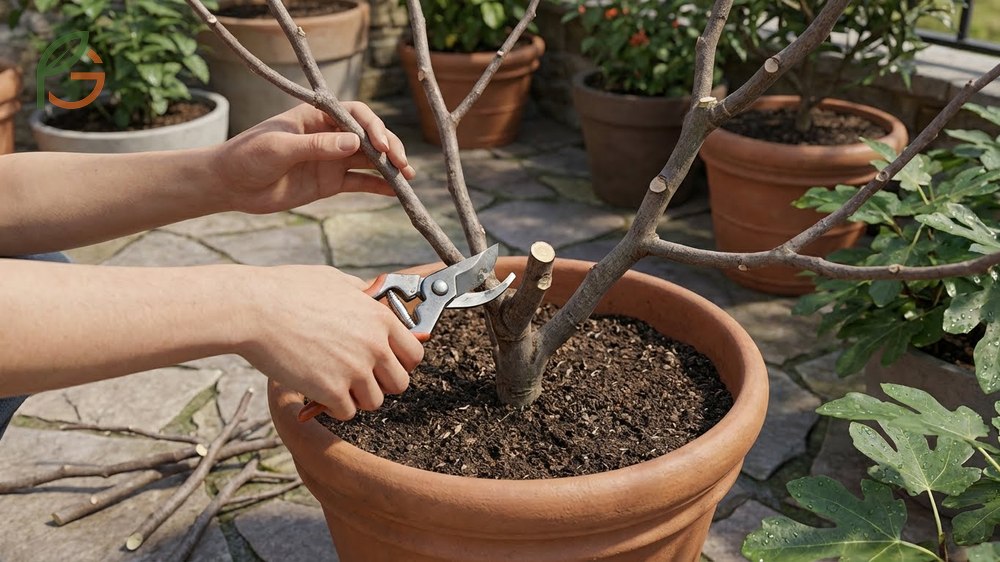
Winter pruning maintains manageable tree size while maximizing fruit production in container figs. Research demonstrates that removing approximately 50% of fruiting branch length each winter concentrates the tree’s energy into fewer, higher-quality figs rather than numerous small fruits[13]. This annual cutback also stimulates new growth that produces the next season’s crop.
Form pruning during the first 2-3 years establishes the tree’s basic structure. You’ll select 3-4 strong scaffold branches radiating from the trunk at 40-55cm (16-22 inches) above the soil line, then remove competing growth. Once established, maintenance pruning focuses on removing dead wood, crossing branches, and congested interior growth that blocks light penetration.
Evidence indicates that hard pruning actually benefits fig trees by altering hormonal balance and promoting vigorous regrowth. Don’t worry about cutting too much—these trees tolerate aggressive pruning better than most fruit-bearing species. You can even cut established trees back to 30-40cm (12-16 inches) for rejuvenation without killing them.
- Time major pruning for late winter when trees are fully dormant and before spring growth begins
- Use clean, sharp bypass pruners to make smooth cuts that heal quickly without tearing bark
- Remove suckers emerging from the rootstock or base of the trunk throughout the growing season
- Thin interior branches to allow light penetration and air circulation through the canopy
- Shorten fruiting branches by 50% each winter to maintain compact form and encourage fruit production
Pruning Timing Matters: Summer pruning affects current-year crop development, while winter pruning shapes next year’s production. For potted trees, focus pruning efforts on winter months when you can see the full branch structure without foliage obstruction. Save summer pruning for removing damaged wood or controlling excessive growth.
Preventing Root Rot in Pots
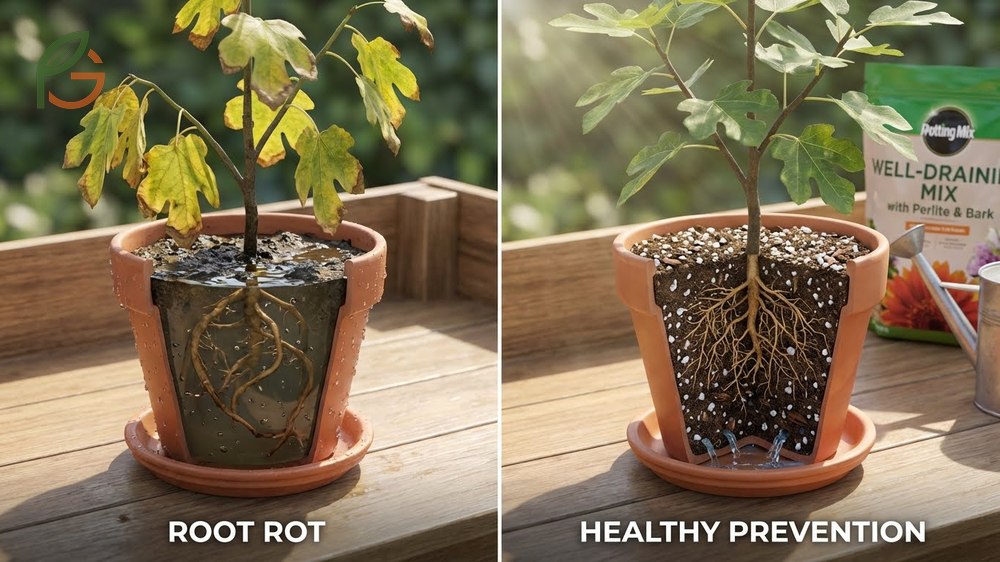
Root rot destroys more container fig trees than all other problems combined. This fungal condition develops when roots sit in waterlogged soil lacking oxygen, causing them to suffocate and decay[14]. The symptoms appear gradually—yellowing leaves, wilting despite moist soil, stunted growth, and eventually branch dieback as the root system fails.
Prevention beats treatment every time with root rot. Well-draining soil mixtures with at least 30% perlite or bark prevent water accumulation around roots. Containers must include drainage holes that actually function—if holes clog with compacted soil, drill additional ones or repot immediately. Never use saucers that hold standing water, or empty them within 15 minutes after watering.
Early detection offers the only realistic treatment option. If you catch root rot before more than 25% of roots are affected, you can save the tree by unpotting it, cutting away all brown mushy roots, treating remaining roots with fungicide, and repotting in fresh soil. Wait 5-7 days before watering to allow cut surfaces to callus and prevent reinfection.
- Use terracotta or fabric pots instead of plastic—these materials allow excess moisture to evaporate through container walls
- Add drainage material like broken pottery or gravel to the bottom 1-2 inches of containers
- Water only when the top 2 inches of soil feel dry, not on a fixed schedule
- Improve air circulation around containers by spacing them away from walls and other plants
- Inspect roots annually during repotting—healthy roots appear white or tan, while rotted roots look brown and smell foul
Repotting Fig Tree
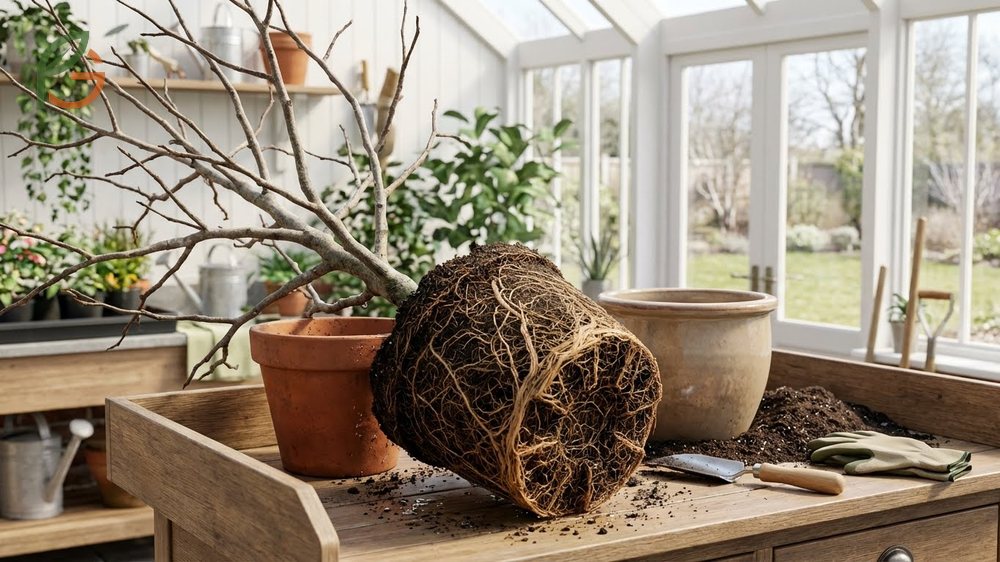
Fig trees signal their need for repotting through several clear indicators: roots circling the container’s interior, water running straight through without being absorbed, and slowed growth despite adequate feeding. Agricultural guidance recommends repotting every 2-3 years for young trees and every 3-5 years for mature specimens[4]. The ideal timing falls in late winter or early spring before new growth begins, though you can repot anytime if the tree shows signs of being severely rootbound.
Increase container size gradually rather than jumping from small to large pots. Moving from a 5-gallon to a 7-gallon container works better than leaping to 15 gallons. Excessive soil volume around limited roots stays waterlogged, creating anaerobic conditions that damage roots faster than crowding does. This measured approach also keeps containers manageable—a 15-gallon pot filled with moist soil weighs 60-80 pounds.
The repotting process itself takes 15-20 minutes. Remove the tree from its current container by tipping it on its side and tapping the rim while pulling the trunk. Loosen the outer inch of roots with your fingers, removing the most circled portions. Position the tree in its new container at the same depth it grew previously, fill around roots with fresh potting mix, and water thoroughly to eliminate air pockets.
Root Pruning Option: If you want to maintain your fig tree at its current size, you can root-prune instead of upsizing. Remove the tree, cut away the outer 1-2 inches of roots all around the root ball, and replant in the same container with fresh soil. This technique works well for mature trees you don’t want to grow larger.
Indoor Fig Tree Dropping Leaves
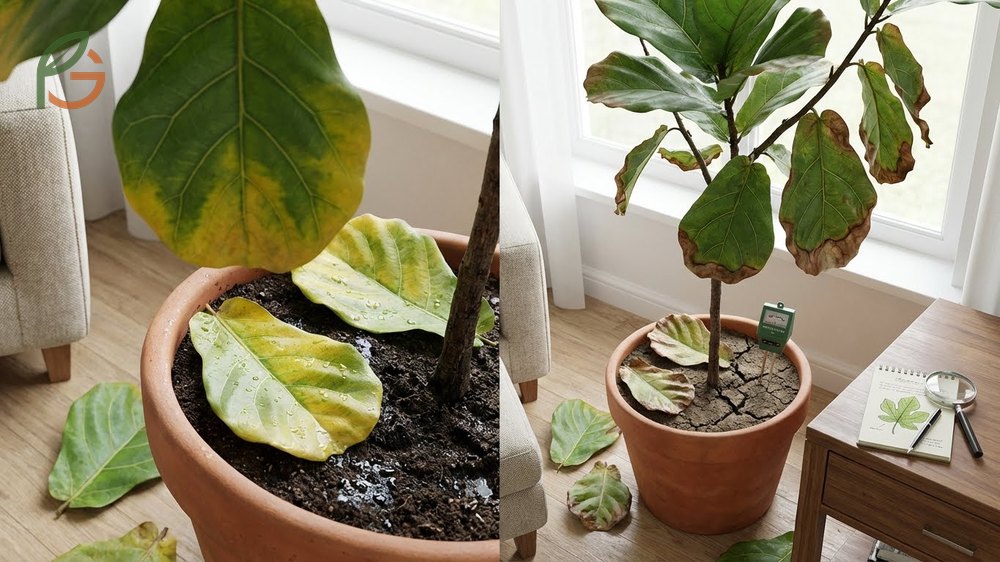
Leaf drop stems from multiple causes, making diagnosis essential before treatment. Overwatering ranks as the most common culprit—when roots sit in saturated soil, leaves turn yellow across large sections before falling off while still soft[15]. Underwatering causes different symptoms: leaves develop crispy brown edges before dropping, and the tree shows overall wilting despite the soil being dry.
Nutritional deficiencies trigger leaf yellowing and drop in container figs more than in-ground trees. When leaves appear pale green rather than deep emerald, nitrogen deficiency is likely. This happens because container watering leaches nutrients through drainage holes faster than soil microbes can replenish them. A balanced fertilizer application typically reverses these symptoms within 2-3 weeks.
Environmental stress also causes leaf drop—sudden temperature changes, drafts from heating vents or air conditioners, or relocating the tree to a darker location. Most fig varieties naturally drop leaves during winter dormancy, which isn’t a problem. However, leaf loss during active growing season (spring through fall) signals a care issue requiring correction.
- Inconsistent watering: Establish regular schedule checking soil moisture daily and watering when top 2 inches feel dry
- Temperature fluctuations: Keep trees away from drafty windows, heating vents, and exterior doors where temperature swings exceed 10°F
- Insufficient light: Supplement natural light with grow lights providing 8-12 hours daily illumination
- Pest infestation: Inspect leaf undersides weekly for spider mites, scale, or mealybugs that stress trees and cause leaf drop
- Nutrient deficiency: Feed every 2-3 weeks during growing season with balanced fertilizer to prevent yellowing and premature leaf loss
Conclusion
The evidence is clear: fig tree indoor plant cultivation succeeds when you match the tree’s Mediterranean biology to your indoor environment through adequate light, proper watering schedules, and nutrient management. You don’t need a greenhouse or advanced equipment—just consistency in meeting the tree’s fundamental requirements of 6+ hours of bright light, well-draining soil, and temperatures between 60-75°F (15-24°C). Dwarf varieties like Petite Negra and Fignomenal make container growing practical even in compact spaces, producing full-sized fruit from trees that stay under 3 feet tall.
Current guidance emphasizes prevention over reaction: use properly formulated potting soil, maintain drainage, and adjust care seasonally rather than waiting for problems to appear. Start with appropriately sized containers, upgrade gradually as roots expand, and don’t hesitate to prune aggressively when needed. FruitGarden synthesizes current horticultural research to help you transform indoor spaces into productive growing environments where Mediterranean fruits thrive year-round.
Frequently Asked Questions
Can Fig Trees Really Grow Indoors Successfully?
Yes, fig trees grow successfully indoors when you provide at least 6 hours of bright light daily, maintain temperatures between 60-75°F (15-24°C). While challenging, success is achievable with dwarf varieties like Petite Negra that are bred for container cultivation.
How Often Should I Water an Indoor Fig Tree?
Water frequency depends on the season. During active growth (spring/summer), water when the top inch of soil feels dry, which may be daily. In winter dormancy, reduce watering significantly to once every 1-2 weeks, just enough to keep the roots from drying out completely.
Do Indoor Fig Trees Need Grow Lights?
Yes, in most cases. While a south-facing window is helpful, it rarely provides the consistent high-intensity light fig trees need to fruit. Supplementing with full-spectrum LED grow lights for 8-12 hours daily ensures the tree receives sufficient energy for photosynthesis and fruit production.
What Is the Best Soil for Potted Fig Trees?
The best soil is a well-draining mix that prevents root rot. A combination of pine bark fines, perlite, and peat moss works best. Avoid standard garden soil or heavy potting mixes that retain too much water, as fig roots are highly susceptible to rot in anaerobic conditions.
Why Are My Fig Tree Leaves Turning Yellow?
Yellow leaves typically indicate overwatering or nutrient deficiency. If the soil is soggy, reduce watering immediately. If watering is correct, the tree likely needs a nitrogen-rich fertilizer. Note that deciduous varieties naturally turn yellow and drop leaves before winter dormancy.
How Long Does It Take for a Fig Tree to Bear Fruit?
Container-grown fig trees often bear fruit sooner than those in the ground, typically within 1-2 years. Varieties like ‘Fignomenal’ can produce fruit when the plant is only a foot tall. Root restriction in pots encourages earlier reproductive maturity.
Do I Need to Prune My Indoor Fig Tree?
Yes, pruning is essential for maintaining size and shape indoors. Winter pruning (when the tree is dormant) helps control height and stimulates fresh growth for the next season’s fruit. Removing about 50% of the previous year’s growth is common practice for container figs.





