
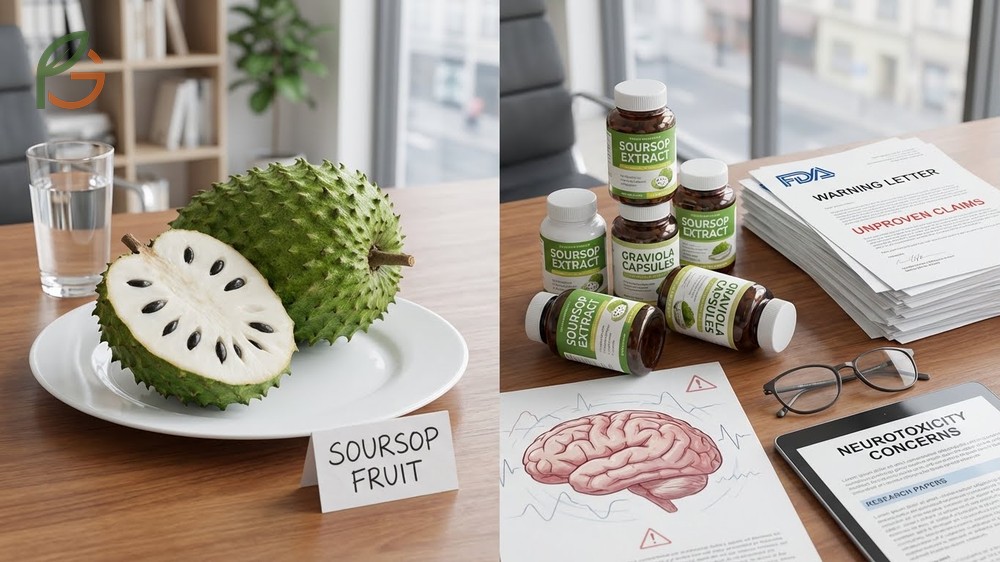
Why Is Soursop Illegal? Soursop fruit itself isn’t illegal in the United States, but supplements and extracts face strict FDA restrictions due to unproven cancer treatment claims and serious neurotoxicity concerns linked to annonacin, a compound that may cause Parkinson’s-like symptoms. Research shows the FDA has issued multiple warning letters to companies marketing soursop products as cancer cures without clinical evidence[1]. FruitGarden synthesizes current regulatory guidance and peer-reviewed research to help US gardeners understand the scientific facts behind this tropical fruit controversy.
Quick Answer
- Fresh soursop fruit is legal to buy and eat in the US, but supplements remain unapproved by the FDA[2]
- The compound annonacin in soursop is 100 times more toxic than other neurotoxins in lab studies[3]
- No human clinical trials have confirmed soursop’s anti-cancer effects despite decades of lab research[4]
- Mexico-grown soursop can legally enter the US if commercially irradiated to eliminate agricultural pests[5]
Why Is Soursop Illegal
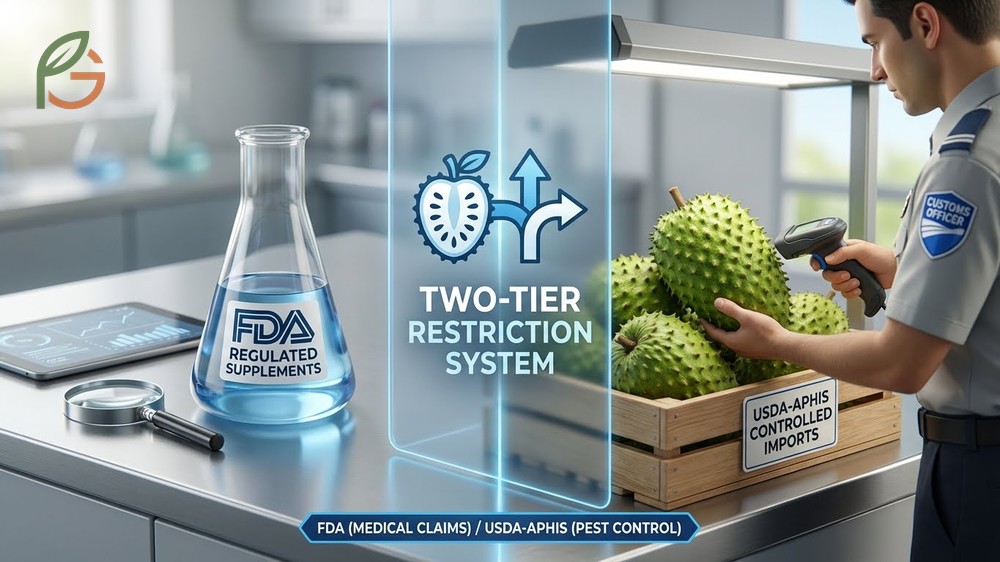
Soursop isn’t completely banned in the United States, but it faces a two-tier restriction system. The FDA regulates supplements making medical claims, while USDA-APHIS controls fresh fruit imports to prevent agricultural pest introductions. Most confusion stems from conflating these separate regulatory pathways.
Fresh soursop fruit from Mexico became legal in 2018 under specific conditions requiring commercial irradiation treatment[6]. Before this rule, imports were heavily restricted due to concerns about fruit flies and other tropical pests. Current data indicates frozen and canned soursop products remain widely available in ethnic grocery stores nationwide.
The supplement controversy emerged when companies began marketing soursop capsules, teas, and extracts with claims that the fruit could “cure cancer” or work “10,000 times better than chemotherapy”[1]. These products are classified as unapproved new drugs when marketed with therapeutic claims. The FDA takes enforcement action not because soursop is inherently illegal, but because manufacturers violate drug approval requirements.
FDA Import Restrictions and Agricultural Concerns
Agricultural import restrictions on soursop stem from biosecurity rather than health concerns. The fruit can harbor Caribbean fruit flies and other invasive species that threaten domestic citrus and tropical crops. Import Alert 31-03 specifically lists soursop among products requiring pest risk assessments[7].
Commercial shipments from Mexico must undergo gamma irradiation at approved facilities before entering US territory. This treatment kills insect larvae and eggs without affecting fruit quality. The Federal Register published updated guidelines in 2024 clarifying acceptable treatment protocols and inspection procedures.
Important Note: If you’re growing soursop in Hawaii, Florida, or California, check local regulations first. Some counties prohibit cultivation due to invasive species concerns, while others require quarantine permits for plant material.
Supplement Ban Versus Fresh Fruit
The distinction between fresh fruit and supplements matters significantly. Eating fresh soursop pulp in smoothies or desserts carries no legal restrictions in the US. Studies show people have consumed the fruit safely for centuries in tropical regions without reported widespread toxicity when eaten occasionally[8].
Supplements concentrate soursop’s active compounds, including annonacin, to levels far exceeding normal dietary intake. Research demonstrates that concentrated extracts deliver toxic doses that wouldn’t occur through moderate fruit consumption. The FDA classifies these supplements as unapproved new drugs when sold with disease treatment claims.
- Fresh frozen soursop pulp: legal to purchase and consume
- Canned soursop nectar or juice: legal as a food product
- Dried soursop leaves sold as tea: legal if no medical claims are made
- Soursop capsules marketed for cancer treatment: illegal without FDA approval
- Concentrated soursop extracts claiming to cure diseases: prohibited by FDA
- Live soursop plants or seeds: restricted, require USDA permits in most states
Soursop Fruit and Cancer
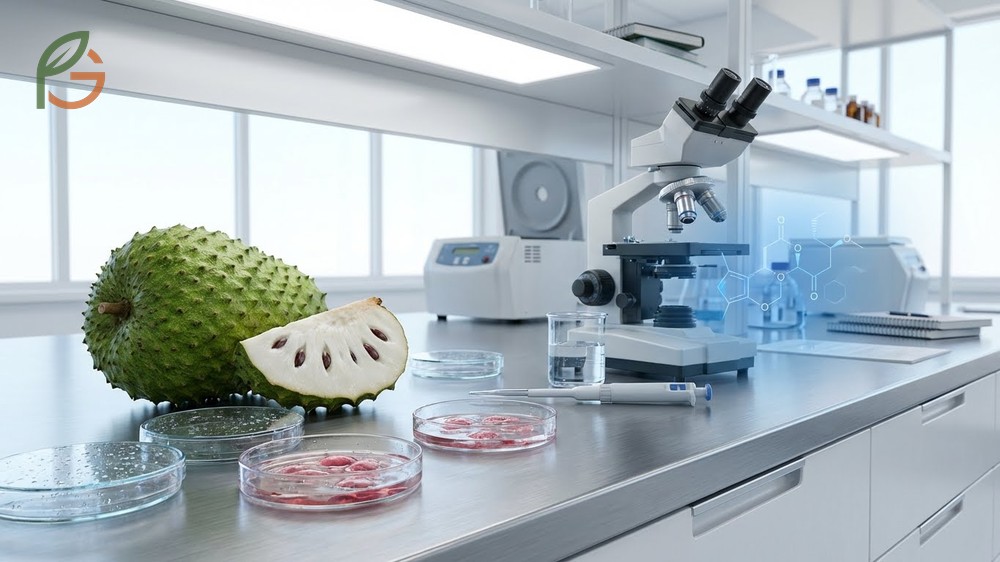
Lab research on soursop compounds began in the 1970s and accelerated in the 1990s when scientists isolated acetogenins with apparent anti-tumor activity. A 1997 study in the Journal of Medicinal Chemistry found soursop compounds destroyed breast cancer cells in petri dishes more effectively than some chemotherapy agents[4]. These promising in-vitro results sparked widespread interest and eventually led to exaggerated marketing claims.
The critical gap between lab dishes and human patients remains unbridged decades later. No pharmaceutical company or research institution has completed Phase I safety trials or Phase II efficacy studies on soursop extracts in cancer patients. Current evidence shows annonacin’s extreme toxicity to all cells makes it unsuitable for development as a targeted cancer therapy.
Most people don’t realize that compounds effective at killing cells in lab experiments often fail in human trials. Cancer cells in culture dishes lack the complex biological defenses present in living organisms. Evidence suggests soursop compounds can’t distinguish between cancerous and healthy cells, particularly neurons.
Lab Studies Versus Human Trials
Laboratory studies on soursop typically expose isolated cancer cell lines to purified acetogenins for 24-72 hours. A 2016 Scientific Reports study showed soursop extracts reduced prostate cancer growth in mice, but researchers used concentrations impossible to achieve safely in humans[4]. The doses that slowed tumor growth also caused significant toxicity.
Human clinical trials require demonstrating both safety and efficacy through rigorous multi-phase testing. Phase I trials establish maximum tolerated doses in small patient groups. Annonacin’s neurotoxicity profile makes passing Phase I safety screening nearly impossible with current formulations.
Cancer Treatment Reality: If you’re considering soursop for cancer, understand that no oncology guidelines or cancer treatment centers recommend it. Always consult your oncologist before adding any supplements to your treatment plan.
FDA Warning Letters to Supplement Companies
The FDA issued a widely-cited warning letter in April 2017 to Amazing Sour Sop, Inc. for marketing products with therapeutic claims. The letter detailed multiple violations including statements that soursop “kills cancer cells” and testimonials claiming tumor shrinkage[1]. These claims classified the products as unapproved new drugs under federal law.
Companies receiving warning letters must either substantiate their claims through FDA’s drug approval process or remove therapeutic statements from marketing materials. Most choose the latter, reformulating their advertising to avoid medical terminology. The FDA continues monitoring online retailers and social media for prohibited claims about soursop supplements.
- Claims that soursop cures, treats, or prevents cancer of any type
- Statements comparing soursop’s effectiveness to chemotherapy drugs
- Testimonials describing disease remission after using soursop products
- References to specific cancer types like prostate, breast, or colon cancer
- Claims about soursop’s ability to target cancer cells selectively
- Marketing suggesting soursop works as well as or better than medical treatments
Annonacin Toxicity Symptoms
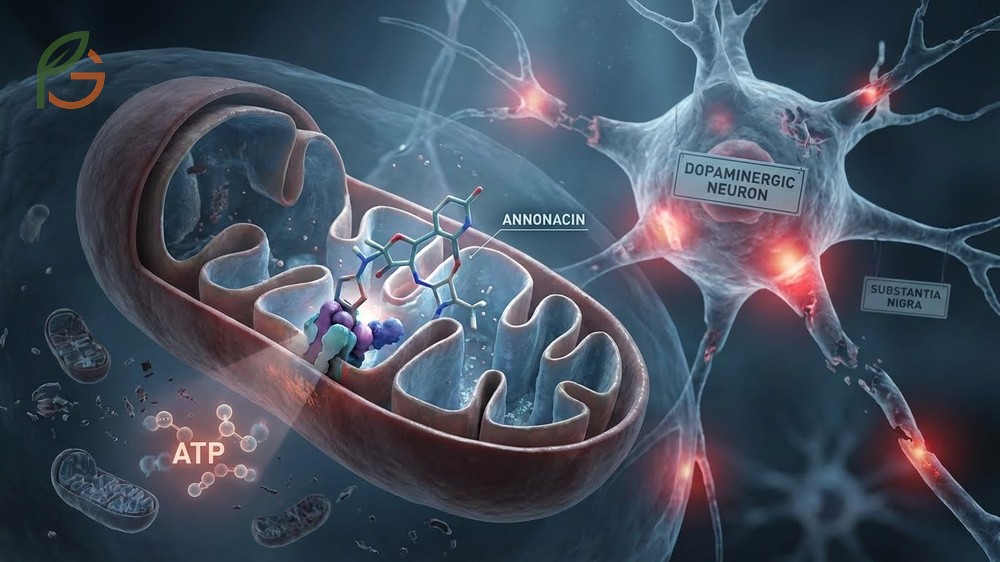
Annonacin functions as a mitochondrial complex I inhibitor, blocking cells’ ability to generate ATP through normal oxidative phosphorylation. Research demonstrates this mechanism leads to energy depletion in neurons, particularly dopaminergic cells in the substantia nigra brain region[9]. When these cells can’t produce adequate energy, they die through apoptosis or necrosis.
The toxic threshold for annonacin appears lower than previously thought. A 2022 study in Movement Disorders journal found cumulative consumption above modest levels correlated with cognitive decline in Parkinson’s patients. The minimal threshold identified was 50 times lower than earlier estimates suggested[10].
Symptoms don’t appear immediately after exposure but develop over months or years of regular consumption. This delayed onset makes establishing cause-and-effect relationships difficult in individual cases. Current data shows effects depend on total lifetime exposure rather than single high-dose events.
Dopaminergic Neuron Damage
Dopaminergic neurons proved especially vulnerable to annonacin in laboratory studies. The compound’s LC50 (lethal concentration for 50% of cells) was measured at just 0.018 μM, making it approximately 100 times more potent than MPP+, another known neurotoxin[3]. These neurons manage motor control, motivation, and cognitive function.
Unlike MPP+ which primarily affects the nigrostriatal pathway, annonacin causes wider neuronal loss throughout the basal ganglia and brainstem nuclei. This broader damage pattern explains why soursop-associated Parkinsonism often presents differently than classic Parkinson’s disease. Studies show patients develop more severe cognitive symptoms earlier in disease progression.
Movement Disorders and Atypical Parkinsonism
Atypical Parkinsonism in Guadeloupe sparked initial investigations into soursop neurotoxicity. Researchers noticed unusually high rates of Parkinson’s-like symptoms in populations consuming Annonaceae fruits and teas regularly. Case-control studies found strong associations between soursop consumption frequency and movement disorder risk[4].
Symptoms resemble classic Parkinson’s disease but progress faster and respond poorly to standard treatments like levodopa. Patients experience tremors, rigidity, bradykinesia (slowed movement), and postural instability. Additional features include early cognitive decline and behavioral changes not typical of standard Parkinson’s presentations.
Warning Signs: If you consume soursop tea or supplements regularly and notice hand tremors, difficulty initiating movements, or memory problems, discuss these symptoms with your neurologist immediately. Stopping Annonaceae consumption may stabilize or improve symptoms.
- Resting tremor in hands or limbs similar to classic Parkinson’s disease
- Muscle rigidity and stiffness affecting movement quality
- Bradykinesia or significantly slowed voluntary movements
- Balance problems and increased fall risk from postural instability
- Early cognitive decline affecting memory, attention, and executive function
- Poor response to standard Parkinson’s medications like carbidopa-levodopa
- Behavioral and personality changes including apathy or impulsivity
Parkinson’s and Soursop Link
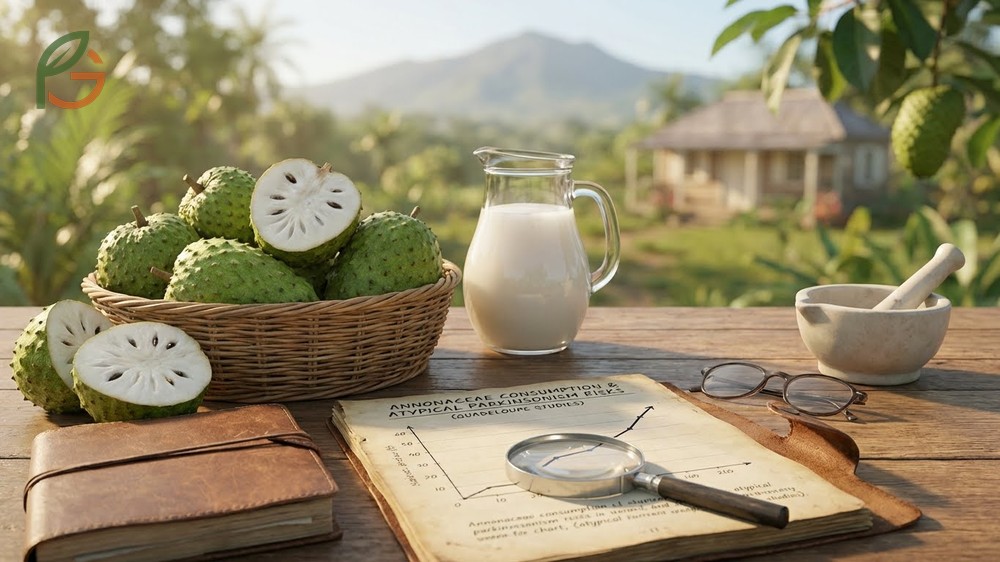
The connection between Parkinson’s disease and soursop consumption emerged from epidemiological research in the French Caribbean. Researchers documented rates of atypical Parkinsonism significantly higher than expected based on global averages. These cases clustered in regions with high Annonaceae fruit consumption, particularly rural Guadeloupe.
Studies demonstrate a dose-response relationship between lifetime cumulative soursop intake and Parkinson’s symptom severity. Research published in Movement Disorders evaluated 180 patients with degenerative Parkinsonism in the French Caribbean. Results showed consumption above a threshold worsened motor symptoms by measurable degrees on standardized rating scales[10].
The mechanism involves chronic exposure to annonacin gradually depleting dopaminergic neurons beyond their regenerative capacity. Unlike acute poisoning, this process unfolds over years or decades. Evidence suggests even typical Parkinson’s disease patients who consume soursop products experience accelerated cognitive decline compared to non-consumers.
Researchers found stabilization or improvement in some patients after they stopped consuming Annonaceae products completely. This observation supports annonacin’s role as a contributing factor rather than sole cause. Genetic susceptibility and other environmental factors likely interact with dietary exposure to determine individual risk.
This table compares disease characteristics between Annonaceae-exposed and non-exposed Parkinson’s patients across four clinical dimensions
| Clinical Feature | Annonaceae Consumers | Non-Consumers | Key Difference |
|---|---|---|---|
| Cognitive Decline Timing | Early onset within 2-3 years[10] | Later onset after 5-7 years | 2-4 year acceleration |
| Levodopa Response | Poor or minimal improvement | Moderate to good response | Reduced medication efficacy |
| Motor Symptom Severity | More severe on UPDRS-3 scale[10] | Moderate severity | Higher disability scores |
| Disease Progression Rate | Faster deterioration | Slower, typical progression | Accelerated decline pattern |
What often gets overlooked is that stopping Annonaceae consumption doesn’t reverse existing neuronal damage but may prevent further deterioration. Patients who quit consuming soursop products showed symptom stabilization in follow-up assessments. This finding suggests ongoing exposure contributes actively to disease progression rather than causing irreversible damage in a single threshold event.
Where Is Soursop Banned
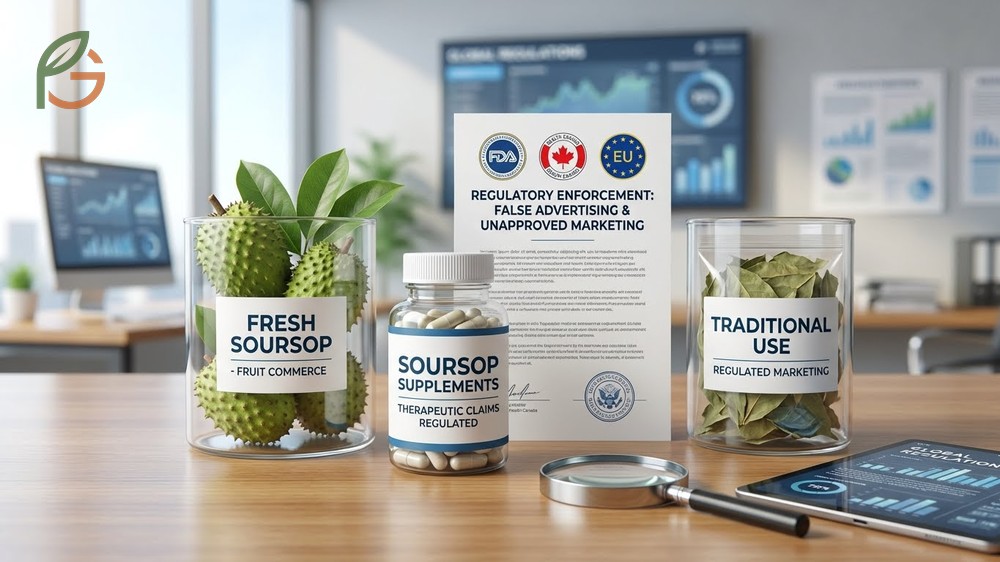
Complete bans on soursop fruit or products exist in very few jurisdictions worldwide. Most countries regulate supplements making therapeutic claims while allowing fresh fruit commerce. The United States, Canada, and European Union nations focus enforcement on false advertising and unapproved drug marketing rather than prohibiting the fruit itself.
Canada’s Health Canada agency issued warnings similar to the FDA’s position. Soursop supplements don’t meet natural health product safety standards due to neurotoxicity concerns and lack of efficacy evidence[2]. Fresh soursop fruit remains available in Canadian markets serving Caribbean and Latin American communities.
California’s agricultural regulations create confusion about soursop’s status. The California Department of Food and Agriculture restricts importation of live plants and fresh fruit without permits to prevent pest introductions. These rules apply to many tropical species, not just soursop. Frozen pulp and processed products face no restrictions beyond standard food safety requirements.
Australia and New Zealand maintain strict biosecurity borders that limit fresh soursop imports primarily due to fruit fly concerns. Commercially processed products like frozen pulp or juice can enter these markets after proper documentation. Most Asian countries including Thailand, Malaysia, and the Philippines grow soursop domestically with no legal restrictions.
- United States: Fresh fruit legal with irradiation; supplements illegal when marketed as drugs
- Canada: Fresh fruit legal; supplements don’t meet natural health product standards
- European Union: Fresh imports allowed from approved sources; supplement claims regulated
- Australia: Fresh imports heavily restricted due to biosecurity; processed products allowed
- Mexico, Brazil, Colombia: No restrictions; soursop grown and sold domestically
- Philippines, Thailand, Vietnam: Legal for cultivation, sale, and consumption without limits
For US Gardeners: Before planting soursop trees in your home garden, verify local regulations. Hawaii, Florida, and Southern California counties may require permits or prohibit cultivation entirely due to invasive species concerns about Annonaceae family plants.
Conclusion
The evidence is clear: Why Is Soursop Illegal stems from a regulatory distinction most people miss. Fresh soursop fruit isn’t banned in the US, but concentrated supplements marketed as cancer treatments violate federal drug laws. Research demonstrates the real concern centers on annonacin neurotoxicity rather than agricultural restrictions, though both contribute to soursop’s complex legal status.
Current guidance emphasizes that decades of lab studies showing anti-cancer properties haven’t translated into safe, effective treatments for humans. The same compounds that kill cancer cells in petri dishes also damage healthy neurons, particularly in the brain regions controlling movement and cognition. FruitGarden recommends US gardeners and consumers focus on scientifically-supported fruit options rather than pursuing soursop for unproven therapeutic benefits.
Medical Disclaimer
Important Medical Disclaimer: This content is for informational and educational purposes only. It is not intended as a substitute for professional medical advice, diagnosis, or treatment. Always consult a qualified healthcare professional before making any changes to your diet, medication, or health routine, especially if you have Parkinson’s disease, cancer, or other medical conditions. Never disregard professional medical advice or delay seeking it because of information you read here. The neurotoxicity risks discussed in this article require medical evaluation if you’ve consumed soursop products regularly.
Frequently Asked Questions
Can soursop cure cancer?
No human clinical trials have proven soursop can cure cancer despite promising laboratory studies on isolated cells. Research shows annonacin’s extreme toxicity to all cells, not just cancer cells, makes it unsuitable for cancer treatment development. The FDA has issued multiple warning letters to companies making cure claims without evidence.
Is it safe to eat fresh soursop fruit occasionally?
Occasional consumption of fresh soursop fruit appears safer than concentrated supplements or frequent tea consumption. Evidence suggests problems arise from chronic, high-dose exposure to annonacin over months or years. Current data indicates moderate intake similar to traditional dietary patterns in tropical regions presents lower risk than supplement use.
Why does soursop cause Parkinson’s-like symptoms?
Annonacin in soursop blocks mitochondrial function in dopaminergic neurons, causing energy depletion and cell death. Studies demonstrate this compound is 100 times more toxic to these neurons than other known neurotoxins. The damage accumulates over time with repeated exposure, eventually producing movement disorders and cognitive decline resembling Parkinson’s disease.
Can I legally buy soursop products in the United States?
Yes, you can legally purchase fresh frozen soursop pulp, canned nectar, and dried leaves for tea in US stores. Supplements become illegal only when marketed with disease treatment claims that classify them as unapproved new drugs. Research shows most ethnic grocery stores carry soursop products without legal issues when sold as food items.
Where is soursop completely banned?
No country has completely banned all soursop products outright. Agricultural import restrictions in the US, Australia, and New Zealand limit fresh fruit entry due to pest concerns. Canada and the EU regulate supplements making health claims but allow fresh fruit commerce. Current evidence shows enforcement targets false advertising rather than the fruit itself.
How much soursop consumption is dangerous?
Recent research identified toxic thresholds 50 times lower than previously estimated, though exact safe limits remain uncertain. Studies show daily consumption of soursop tea or supplements poses the highest risk. Occasional fresh fruit intake appears less problematic, but people with Parkinson’s disease or neurological conditions should avoid soursop entirely.
Should I stop consuming soursop if I’ve used it regularly?
If you’ve consumed soursop supplements or tea regularly for months or years, consult a neurologist about potential neurotoxicity assessment. Evidence indicates stopping consumption may stabilize symptoms in some patients, though existing neuronal damage isn’t reversible. Discuss any tremors, movement difficulties, or cognitive changes with your healthcare provider immediately.





