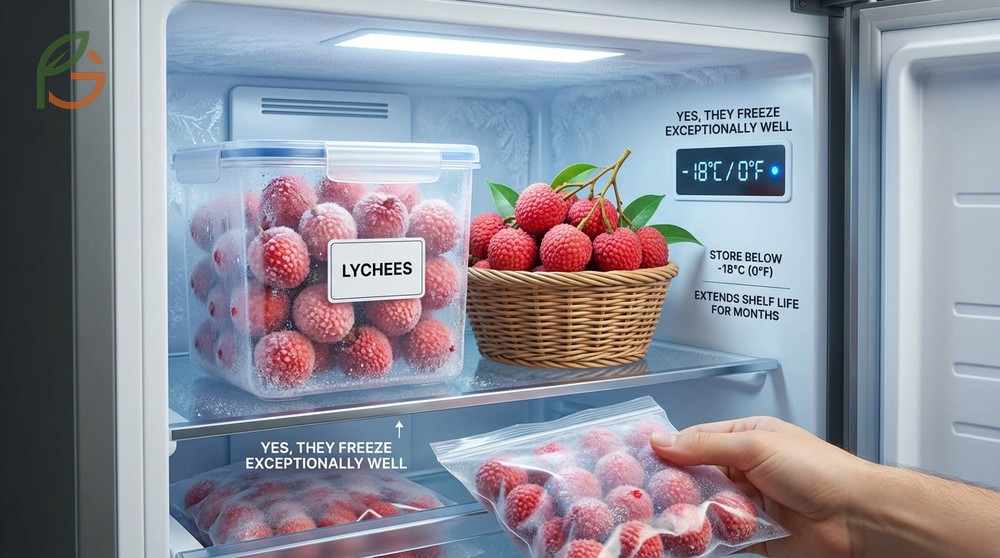
Can you freeze lychees? Yes, lychees freeze exceptionally well and maintain their sweet flavor for months. Research shows that proper freezing techniques preserve texture and taste when stored at temperatures below -18°C (0°F)[1]. Whether you’ve got a bumper crop from your backyard tree or found fresh lychees at the market, freezing extends their short 3-5 day shelf life to several months. FruitGarden synthesizes current agricultural research to help you preserve tropical fruits at peak quality.
Quick Answer
Can You Freeze Lychees
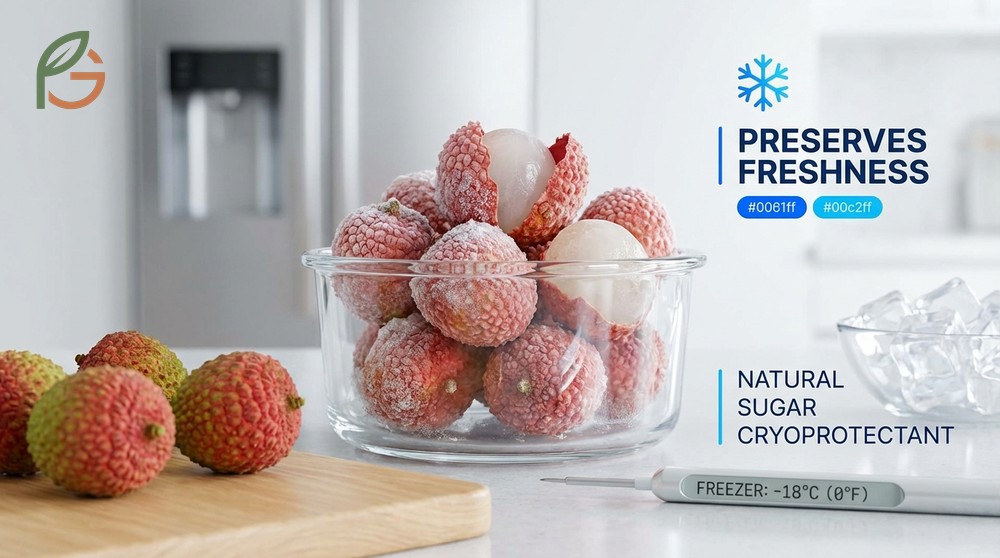
Lychees are among the easiest tropical fruits to freeze successfully. Unlike many delicate fruits that turn mushy, lychees maintain their structural integrity when frozen properly. The fruit’s natural sugar content acts as a cryoprotectant, preventing excessive ice crystal formation that damages cell walls.
Research demonstrates that lychees stored at room temperature last only 3-5 days at 20°C (68°F)[1]. This short window makes freezing essential for anyone who can’t consume fresh lychees immediately. Commercial growers and home gardeners both rely on freezing to extend the fleeting lychee season.
What sets frozen lychees apart is their versatility after thawing. You can eat them partially frozen like sorbet, fully thawed for smoothies, or use them straight from the freezer in beverages. The texture changes slightly—becoming denser when frozen—but the characteristic floral sweetness remains intact.
Why Freezing Works for Lychees
Lychees contain about 82% water and 16.5% carbohydrates, primarily sugars. This composition makes them ideal candidates for freezing. The high sugar concentration lowers the freezing point slightly and reduces ice crystal size during the freezing process.
Current data from preservation studies shows that rapid freezing at temperatures between -30°C to -40°C (-22°F to -40°F) creates smaller ice crystals that don’t rupture cell membranes[3]. Even standard home freezers at -18°C (0°F) work well because the fruit’s natural structure withstands moderate ice crystal formation better than softer fruits like berries.
Important Note: Don’t wash lychees before freezing if you’re keeping the shell on. Excess moisture on the peel can lead to freezer burn and crystallization that affects texture.
How Long Frozen Lychees Last
Storage duration depends on your freezing method and equipment. Home freezers typically maintain temperatures around -18°C (0°F), which preserves lychees for 3-6 months[2]. Commercial IQF (individually quick frozen) lychees stored at -40°C can last up to 24 months while retaining quality.
Most people find that quality starts declining after 6 months in standard freezers. The peel may darken considerably, though this doesn’t affect the flesh inside. If you’re using a chest freezer that maintains more consistent temperatures, you’ll get closer to the 12-month mark.
This table compares storage duration, optimal temperature ranges, and quality retention across four different lychee storage methods from refrigeration to commercial freezing
| Storage Method | Temperature | Duration | Quality Retention |
|---|---|---|---|
| Room Temperature | 20°C (68°F)[1] | 3-5 days | Rapid deterioration |
| Refrigeration | 2-5°C (36-41°F)[1] | 3-5 weeks | Good with 90-95% humidity |
| Home Freezer | -18°C (0°F) | 3-6 months[2] | Excellent texture and flavor |
| Commercial IQF | -40°C (-40°F) | 12-24 months | 80-90% original quality[3] |
Freezing Fresh Lychees
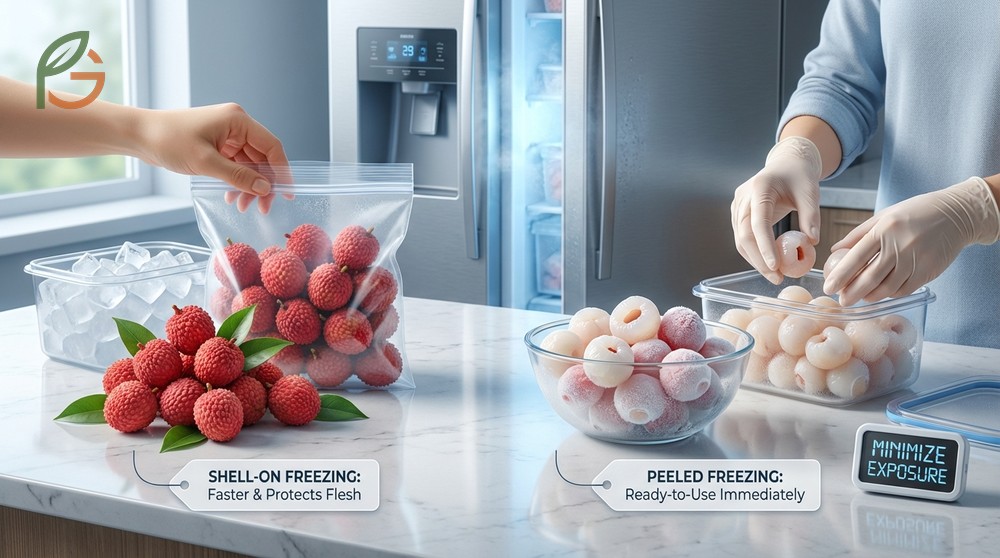
You’ve got two main approaches when freezing lychees: shell-on or peeled. Each method has distinct advantages depending on how you plan to use them later. Shell-on freezing is faster and protects the delicate flesh, while peeled lychees are ready to use immediately after thawing.
Studies demonstrate that both methods preserve quality effectively when proper techniques are followed. The key is working quickly to minimize exposure to warm air and preventing moisture loss that leads to freezer burn.
Shell-On Freezing Method
Freezing lychees with shells intact is the simplest approach. Don’t wash the fruit—just remove any damaged or moldy pieces from your batch. Place unwashed lychees directly into freezer bags, removing as much air as possible before sealing.
This method works exceptionally well because the shell provides natural protection against freezer burn. When you’re ready to eat them, the peel slips off easily even when the fruit is partially frozen. Many people prefer eating them slightly frozen, which creates a sorbet-like texture.
- Sort through lychees and discard any with cracks, mold, or insect damage
- Pack unwashed fruit into freezer-safe bags in portions you’ll use at once
- Squeeze out excess air to prevent ice crystals and freezer burn
- Label bags with the date and freeze immediately at -18°C (0°F) or colder
- Store flat in a single layer until frozen solid, then stack for space efficiency
Pro Tip: Portion lychees into 15-20 fruit bags rather than freezing large quantities together. This prevents the need to thaw more than you’ll eat, and smaller portions freeze faster, which improves texture.
Peeled and Pitted Method
For smoothies, desserts, or quick snacking, pre-peeling saves time later. Peel each lychee and remove the seed, then flash-freeze the flesh on a parchment-lined baking sheet. This prevents clumping and lets you grab individual pieces as needed.
After 2-3 hours when the lychees are completely frozen, transfer them to freezer bags or airtight containers. This two-step process creates individually frozen pieces that don’t stick together. Current guidance emphasizes vacuum sealing or removing all air to maximize storage life and prevent oxidation.
- Peel lychees and remove seeds, keeping flesh as intact as possible
- Arrange peeled fruit in a single layer on a rimmed baking sheet
- Freeze uncovered for 2-3 hours until each piece is solid
- Transfer frozen lychees to labeled freezer bags or vacuum-sealed containers
- Remove excess air and seal tightly to prevent moisture loss
- Return to freezer immediately and use within 6 months for best quality
Frozen Lychee Storage
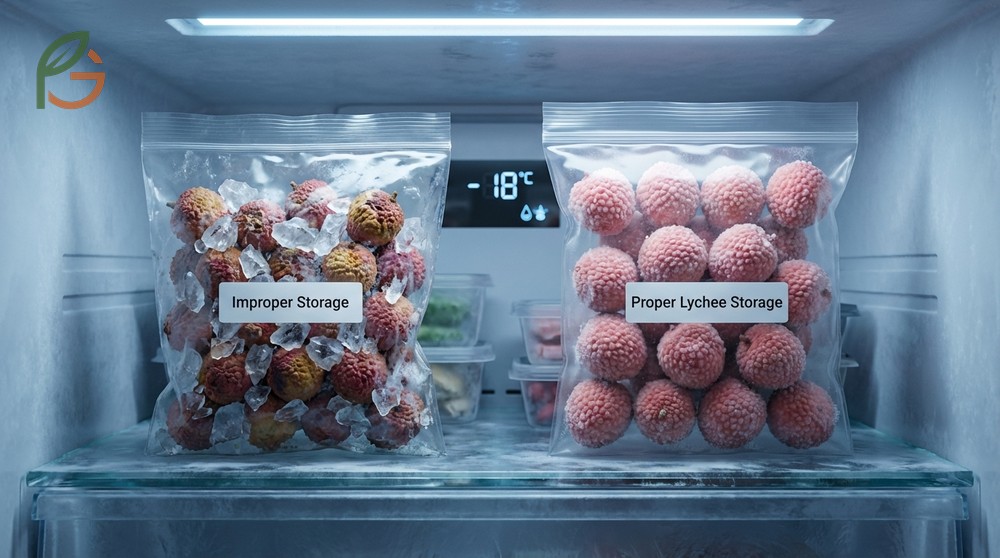
Proper storage techniques make the difference between freezer-burned fruit and lychees that taste nearly fresh months later. Temperature consistency matters more than you might think—every time your freezer goes through a defrost cycle, ice crystals grow larger and damage cell structure.
Research shows that maintaining humidity control even in frozen storage helps preserve quality. If you’re storing lychees in bags, use freezer-grade plastic rated for long-term storage. Standard produce bags become brittle and crack at freezer temperatures, allowing moisture to escape.
Keep frozen lychees away from strongly flavored foods like fish or onions. The porous nature of the fruit, even when frozen, can absorb odors over time. Store them in the back of your freezer where temperature fluctuations are minimal, not in the door where warm air enters frequently.
- Maintain consistent freezer temperature at -18°C (0°F) or colder throughout storage
- Use airtight, freezer-grade containers or heavy-duty freezer bags designed for long-term use
- Store in the coldest part of your freezer, typically at the back or bottom
- Keep frozen lychees away from pungent foods to prevent flavor absorption
- Label containers with freezing date and use oldest batches first
- Don’t refreeze thawed lychees as this significantly degrades texture and increases bacterial risk
Storage Warning: If your freezer experiences power outages lasting more than 4 hours, check lychees for thawing. Partially thawed fruit can be refrozen if ice crystals remain, but quality will suffer. Completely thawed fruit should be used within 24 hours.
Thawing Frozen Lychees
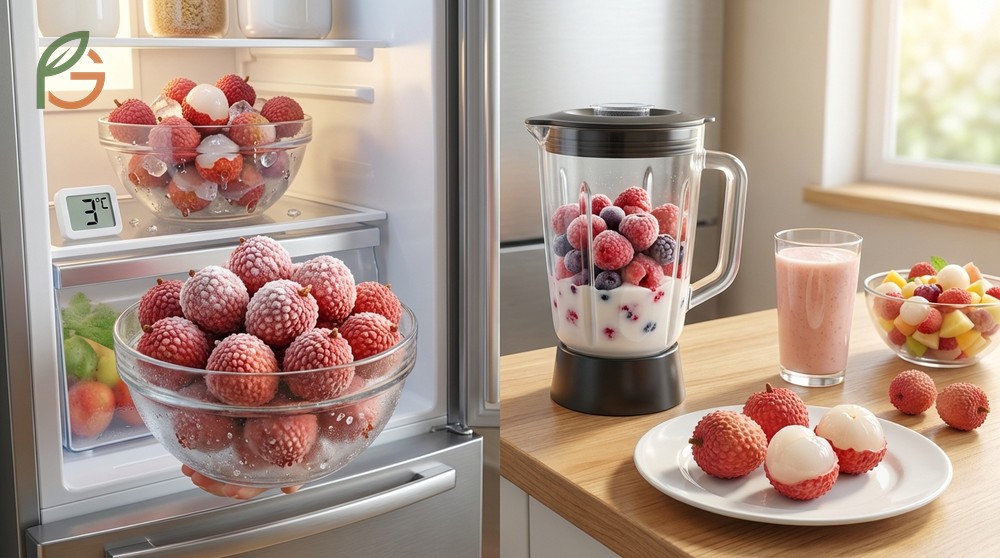
How you thaw frozen lychees depends entirely on your intended use. For smoothies and blended drinks, there’s no need to thaw at all—just toss them in frozen. For eating fresh or adding to fruit salads, you’ve got several options that balance convenience with texture preservation.
The slowest thawing method produces the best texture. Transfer frozen lychees to the refrigerator 3-4 hours before you need them, allowing gradual temperature adjustment. This prevents the flesh from becoming waterlogged, which happens with rapid thawing methods.
Many people discover they actually prefer lychees eaten partially frozen, especially on hot days. The semi-frozen texture resembles Italian ice or sorbet, and the fruit stays firmer and less slippery. Peel them when they’re still slightly frozen for the easiest removal.
- Refrigerator thawing: Transfer to fridge 3-4 hours before use for best texture retention
- Room temperature: Leave on counter for 30-45 minutes for partial thaw and sorbet-like consistency
- Cold water bath: Submerge sealed bag in cold water for 15-20 minutes if you’re in a hurry
- Microwave defrost: Use 30-second intervals on defrost setting, though this can create uneven thawing
- No thawing needed: Add frozen directly to smoothies, cocktails, or blended desserts
Once thawed, lychees will release more juice than fresh ones due to ice crystal damage to cell walls. This makes them perfect for drinks where you want extra liquid, but less ideal for garnishes where you need firm fruit. Use thawed lychees within 24 hours and keep them refrigerated—don’t leave them at room temperature where bacteria multiply rapidly.
Studies indicate that frozen lychees retain 80-90% of their original vitamin C content, antioxidants, and flavor compounds when thawed properly[3]. This makes them nutritionally comparable to fresh fruit, though the texture will always be slightly softer.
Quick Use Tip: For cocktails and mocktails, freeze peeled lychees in ice cube trays with a bit of water or simple syrup. These frozen cubes chill drinks while adding flavor as they melt, eliminating the need for separate ice.
Conclusion
The evidence is clear: can you freeze lychees has a resounding yes as the answer. Freezing extends the life of this delicate tropical fruit from days to months while preserving most of the flavor, nutrients, and versatility. Whether you freeze them with shells intact for protection or peeled for convenience, you’ll enjoy near-fresh quality when stored properly at -18°C (0°F) or colder.
Current agricultural guidance emphasizes speed and air removal as the two critical factors for successful lychee freezing. Work quickly to minimize warm exposure, remove as much air as possible from storage containers, and maintain consistent freezer temperatures. FruitGarden synthesizes these research-backed methods to help home gardeners and fruit enthusiasts make the most of seasonal harvests year-round.
Frequently Asked Questions
How long do frozen lychees last in the freezer?
Frozen lychees last 3-6 months in a standard home freezer at -18°C (0°F). Commercial individually quick frozen (IQF) lychees can last up to 24 months at colder temperatures. Quality begins declining after 6 months in home freezers, though the fruit remains safe to eat beyond that timeframe if kept consistently frozen.
Should I peel lychees before freezing them?
You don’t need to peel lychees before freezing. Freezing with shells intact is actually easier and provides natural protection against freezer burn. However, peeling before freezing makes them more convenient for smoothies and desserts since you can use them immediately after thawing. Choose based on your intended use.
Can you eat lychees straight from the freezer?
Yes, you can eat lychees straight from the freezer. Many people prefer them partially frozen because they develop a sorbet-like texture that’s refreshing on hot days. Peel frozen lychees while they’re still solid—the shell removes more easily than when fully thawed. They’re also perfect for adding directly to blended drinks.
Do frozen lychees lose their flavor?
Frozen lychees retain 80-90% of their original flavor, color, and nutrients when frozen properly using rapid freezing methods. The characteristic floral sweetness remains intact, though the texture becomes slightly denser. Home-frozen lychees maintain excellent flavor for 3-6 months if stored in airtight containers with minimal air exposure.
What’s the best way to thaw frozen lychees?
The best method is refrigerator thawing, which takes 3-4 hours and preserves texture better than rapid methods. For quicker results, leave them at room temperature for 30-45 minutes to achieve a partially frozen, sorbet-like consistency. You can also submerge sealed bags in cold water for 15-20 minutes, but avoid hot water which degrades quality.
Can you refreeze lychees after thawing?
While technically safe if thawed in the refrigerator, refreezing lychees significantly degrades texture and flavor. Ice crystals grow larger with each freeze-thaw cycle, making the fruit mushy and waterlogged. It’s better to freeze lychees in smaller portions so you only thaw what you’ll use within 24 hours.
How do you prevent freezer burn on frozen lychees?
Prevent freezer burn by removing as much air as possible from storage containers before sealing. Use heavy-duty freezer bags or vacuum-sealed packaging for best results. Don’t wash shell-on lychees before freezing, as excess surface moisture increases ice crystal formation. Store in the coldest part of your freezer away from the door.