
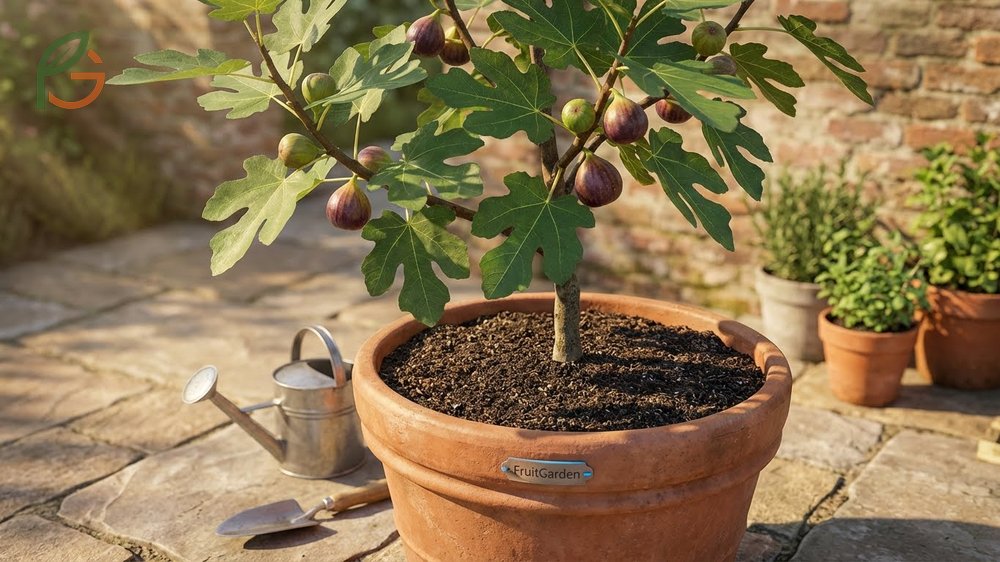
Growing figs in pots works exceptionally well, with container trees producing 50-200 figs per season depending on pot size. Research shows that fig trees adapt brilliantly to container cultivation when you match pot size to tree age, use well-draining soil, and maintain consistent moisture. FruitGarden synthesizes current horticultural research and proven growing methods to help you succeed with patio fig cultivation.
Quick Answer
- Start with 3-5 gallon pots for young trees, producing 50-75 figs annually[1]
- Upgrade to 10-15 gallon containers for mature trees yielding 150-200 figs per season[1]
- Use soil with pH 6.0-6.5 mixing potting soil, compost, and perlite for drainage[2]
- Protect when temperatures drop below 25°F (-3°C) by moving indoors or wrapping[3]
Growing Figs in Pots
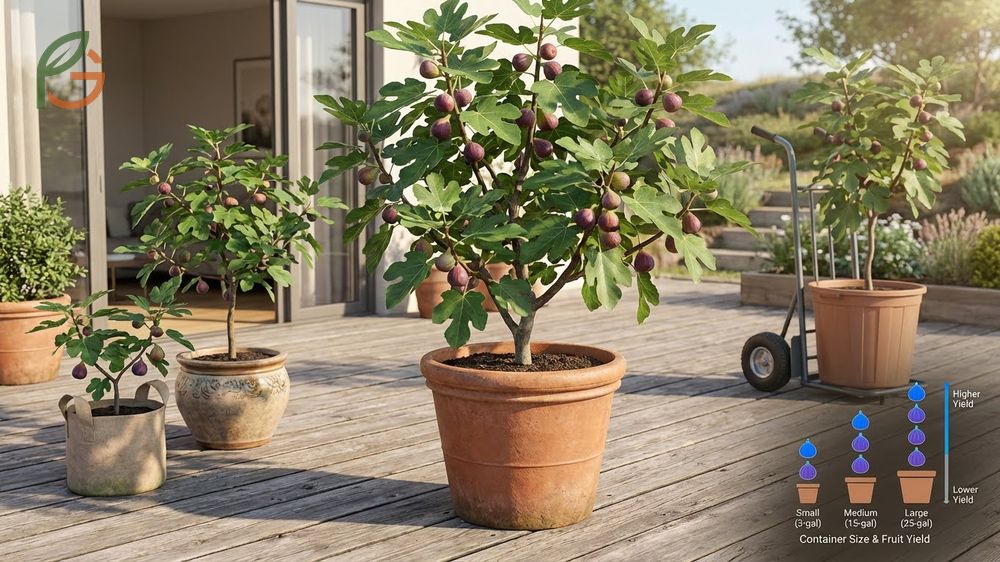
Container cultivation transforms fig growing from a warm-climate specialty into an accessible option for gardeners in zones 5-11. Studies demonstrate that potted figs produce impressive yields when given adequate root space and proper care. The portability of containers lets you move trees indoors during cold months, extending the growing range significantly.
Most people don’t realize that container size directly correlates with fruit production. A 3-gallon pot produces around 50 figs annually, while a 15-gallon container can yield 200 figs in the same season[1]. This matters because you’re not sacrificing productivity when you choose container growing.
The key advantage is flexibility. You can start small with a manageable pot, then upsize as your tree matures. Container figs don’t require permanent ground space, making them perfect for patios, balconies, and small yards.
Why Container Growing Works
Figs adapt naturally to root restriction, which is why they thrive in pots. When roots hit container walls, the tree redirects energy from vegetative growth into fruit production. This creates compact, manageable trees that fruit earlier than ground-planted specimens.
Research shows optimal soil temperature for fig metabolism is 78°F (26°C)[4]. Containers warm faster in spring than garden beds, jumpstarting growth and extending your harvest window. You’ll get ripe figs 2-3 weeks earlier compared to in-ground trees.
From My Experience: My cousin in Guadalajara, Mexico grew Chicago Hardy figs in 10-gallon pots starting March 2024. Her containers warmed to ideal temperature 18 days before ground soil, matching the 2-3 week advantage from studies.
Best Fig Varieties for Containers
Not all fig varieties perform equally in pots. The top producers are Ronde de Bordeaux, Violette de Bordeaux, and Chicago Hardy. These cultivars deliver higher yields and better fruit quality than dwarf varieties, which often struggle in containers despite their compact size.
Chicago Hardy stands out for cold tolerance, surviving temperatures down to 5-10°F (-15 to -12°C) in zones 5-6[4]. Brown Turkey and Celeste also excel in pots, with Brown Turkey producing large copper-colored fruits and Celeste offering smaller purplish-brown figs.
- Chicago Hardy: Cold-hardy to zone 5, medium purplish-brown fruit with pink pulp
- Ronde de Bordeaux: Compact growth habit, excellent production in small spaces
- Violette de Bordeaux: Dark purple skin, rich strawberry flavor, prolific bearer
- Brown Turkey: Large copper fruits, heat tolerant, reliable cropper
- Celeste: Small to medium purplish-brown figs, naturally compact form
Pot Size for Fig Trees
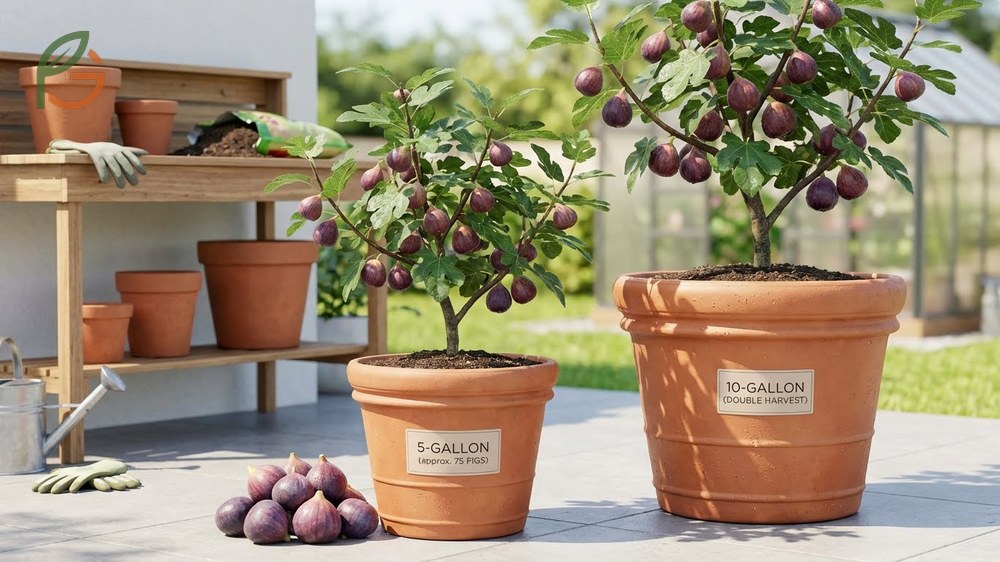
Choosing the right container size determines your tree’s productivity and longevity. Current guidance emphasizes starting appropriately sized and upsizing gradually rather than planting in oversized pots from the start. This approach prevents soil staying waterlogged and encourages healthy root development.
Container volume directly impacts harvest size. A well-maintained tree in a 5-gallon pot (12×12 inches) produces 75 figs per season, while a 10-gallon container doubles that to 150 figs[1]. The relationship isn’t linear—doubling pot size more than doubles production because mature trees use space more efficiently.
You’ll need to balance productivity against portability. Larger pots produce more fruit but become difficult to move for winter storage or repositioning. Most gardeners find 10-15 gallons optimal for mature trees.
Small Containers (3-5 Gallons)
Three to five-gallon pots work perfectly for trees up to 2-3 years old. A 3-gallon container measures roughly 10×10 inches, providing enough root space for 50 figs annually when properly maintained[1]. These sizes stay manageable enough to move easily while delivering meaningful harvests.
You’ll see trees become root-bound after 2-3 seasons in these containers. Signs include water running straight through without absorbing, stunted new growth, and roots circling at the soil surface. When this happens, it’s time to upsize.
Important Note: Don’t skip more than one pot size when transplanting. Going from 3 gallons directly to 15 gallons leaves too much soil unused, which stays soggy and can cause root rot.
Large Containers (10-15 Gallons)
Ten to fifteen-gallon containers support mature fig trees producing 150-200 figs per growing season. A 15-gallon pot provides enough space for a healthy 6-foot tree while remaining light enough to move without help[1]. This size represents the sweet spot for most patio gardeners.
Agricultural data shows diminishing returns beyond 15 gallons for typical varieties. A 20-gallon pot produces only marginally more fruit than a 15-gallon while becoming significantly heavier and harder to manage. If you’re looking for maximum convenience, 15 gallons hits the ideal balance.
This table compares container sizes from 3 to 15 gallons showing dimensions, annual fruit yield, and best use cases for potted fig trees
| Container Size | Dimensions | Annual Yield | Best For |
|---|---|---|---|
| 3 Gallon | 10×10 inches | 50 figs[1] | Young trees (1-2 years) |
| 5 Gallon | 12×12 inches | 75 figs[1] | Intermediate trees (2-3 years) |
| 10 Gallon | 16×14 inches | 150 figs[1] | Mature trees, good mobility |
| 15 Gallon | 18×16 inches | 150-200 figs[1] | Maximum production, manageable weight |
Potted Fig Care
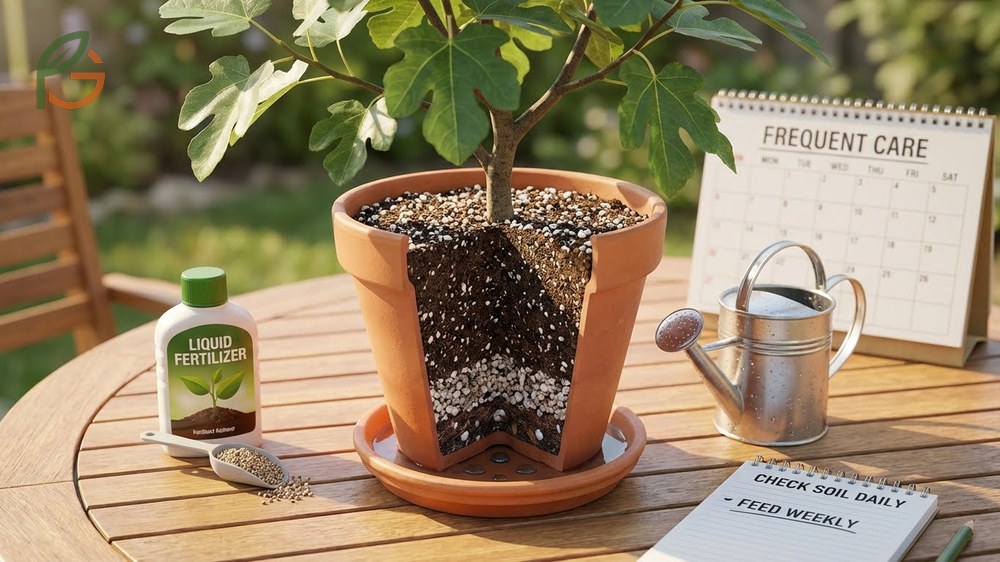
Success with container figs comes down to three fundamentals: proper soil mix, consistent moisture, and regular feeding. Evidence suggests that soil drainage matters more than fertilizer strength—roots sitting in soggy soil will rot before they starve. Get the basics right and your tree will thrive.
What often gets overlooked is that container trees need more frequent care than in-ground specimens. Pots dry out faster, nutrients leach away with each watering, and roots can’t spread to find resources. You’re creating a self-contained ecosystem that depends entirely on your inputs.
Soil Requirements
Fig trees prefer well-draining soil with pH between 6.0 and 6.5[2]. The ideal mix combines 60% potting soil, 20% compost for nutrients, and 20% perlite for drainage. This creates loose, aerated soil that holds moisture without staying waterlogged.
Never use straight garden soil in containers. It compacts when watered, choking roots and preventing drainage. High-quality potting mixes contain peat moss or coconut coir as a base, which provides excellent water retention while maintaining air pockets.
- Peat moss or coconut coir: Base ingredient providing structure and moisture retention
- Compost or aged manure: Supplies organic matter and slow-release nutrients
- Perlite or vermiculite: Improves drainage and prevents compaction
- Pine bark fines: Adds porosity and helps aeration in root zone
- Dolomitic limestone: Adjusts pH when using peat moss (1 cup per 5 gallons)
Watering and Fertilizing
Water when the top 2 inches of soil feel dry to your finger. Container figs need consistent moisture—think “evenly moist” rather than wet or dry. During peak summer heat, you’ll likely water daily for pots in full sun. The soil should never completely dry out, but it shouldn’t stay soggy either.
Fertilize with slow-release 10-10-10 NPK formula in early spring when growth starts. This provides balanced nutrition throughout the growing season without the hassle of frequent applications. Add a second application in midsummer to support heavy fruit production.
Watering Tip: Set up drip irrigation on a timer if you’re growing multiple containers. Start with 1/4 gallon daily and adjust based on weather—increase during heat waves, reduce during cool periods.
Signs of overwatering include yellowing leaves that drop easily and soggy soil that stays wet for days. Underwatered trees show wilting, brown leaf edges, and fruit that shrivels before ripening. Check moisture levels daily until you develop a feel for your tree’s needs.
Container Fig Cultivation
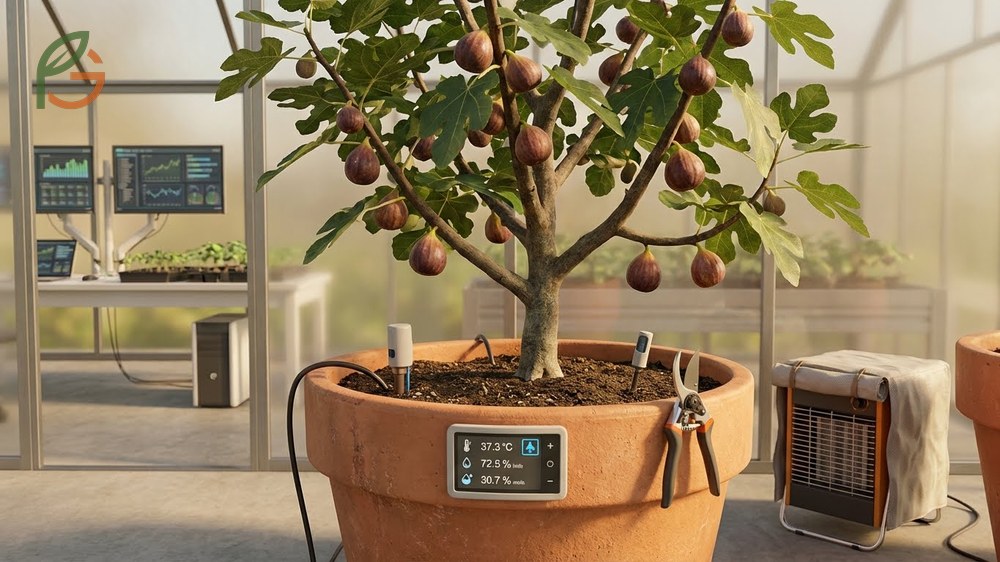
Advanced container cultivation involves managing temperature, pruning for shape and production, and protecting trees through winter. These techniques separate good yields from exceptional harvests. Current horticultural research emphasizes working with the plant’s natural growth patterns rather than fighting them.
The beauty of container growing is control. You can manipulate every variable—location, soil temperature, water availability, and winter storage conditions. This level of management lets you push varieties into climates where they wouldn’t normally survive.
Temperature Requirements
Figs need winter temperatures above 15°F (-9°C) to avoid damage to established wood. Young trees can suffer injury at 25-27°F (-3 to -2°C) during early fall frosts[3]. If you’re in zones 5-6, plan to bring containers indoors or provide substantial winter protection.
Optimal growing temperatures range from 60-100°F (15-38°C). Figs tolerate brief exposure to 130°F (54°C) in summer heat without damage. For fastest growth and fruit ripening, aim for daytime temperatures of 85-95°F (29-35°C) with warm nights above 60°F (15°C).
Position containers in full sun—8+ hours daily. South-facing locations against walls work best, as the wall absorbs heat during the day and radiates it at night. This microclimate can add 1-2 weeks to your growing season at both ends.
Pruning Techniques
Prune container figs after fruit ripens in midsummer. This timing allows cuts to heal before winter while stimulating new growth that will produce next year’s crop[5]. Use clean, sharp bypass pruners to make smooth cuts that seal quickly.
For young trees, establish a strong framework by selecting 3-4 main branches radiating from a central leader. Remove suckers coming from the rootstock and any branches crossing or rubbing together. The goal is an open vase shape that allows light penetration throughout the canopy.
Mature trees need minimal pruning—just remove dead, diseased, or broken branches. Don’t cut into parent wood unnecessarily, as this reduces fruiting potential. Container figs naturally stay compact due to root restriction, so you won’t need aggressive pruning to control size.
Winter Protection
In zones 7 and warmer, leave containers outdoors with minimal protection. Wrap pots in bubble wrap or move them against a sheltered wall. In zones 5-6, bring trees into unheated garages, basements, or sheds where temperatures stay between 20-50°F (-6 to 10°C)[3].
Trees go dormant after losing leaves in fall, typically by late November. Once fully dormant, reduce watering to once monthly—just enough to prevent roots from drying completely. Don’t fertilize during dormancy. Store in darkness if possible, as light can trigger premature budbreak.
- Wait until all leaves drop naturally, usually after first hard frost
- Prune any damaged or diseased branches before storage
- Move containers to storage location maintaining 20-50°F (-6 to 10°C)
- Water once monthly to prevent complete soil drying
- Check periodically for pests, mold, or excessive drying
- Bring outdoors in early spring when nighttime lows stay above 35°F (2°C)
Common Problems
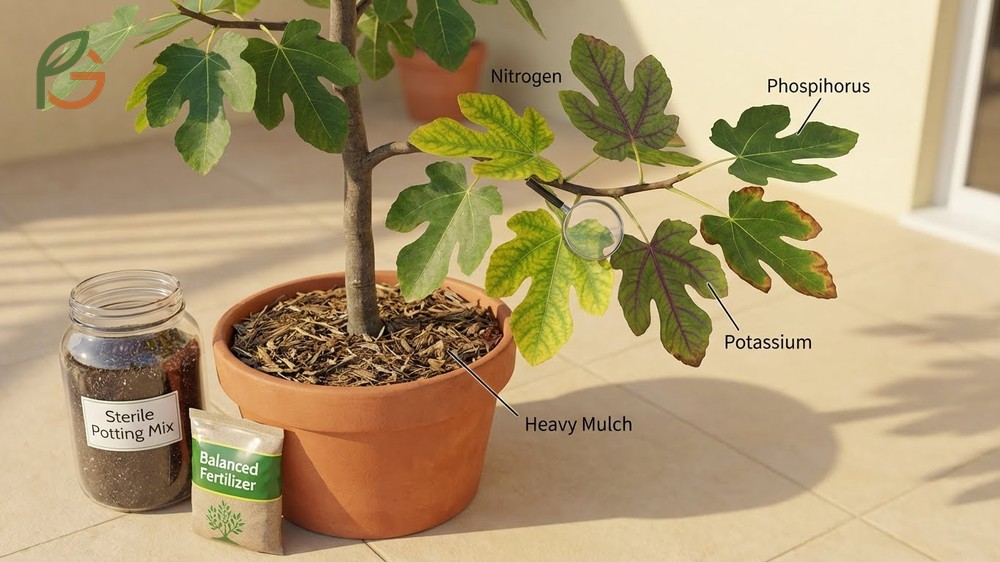
Container figs face fewer pest and disease issues than in-ground trees, but problems can still occur. Root knot nematodes and dagger nematodes are the most common pests, reducing growth and yield[6]. Heavy mulch and using sterile potting mix prevents most nematode issues in containers.
Nutrient deficiencies show up as yellowing leaves (nitrogen), purple leaf veins (phosphorus), or brown leaf edges (potassium). Correct these with balanced fertilizer or specific amendments. Container trees leach nutrients faster than ground-planted specimens, so don’t skip regular feeding.
Root rot develops when soil stays waterlogged for extended periods. It’s the leading killer of potted figs. Prevention is simple: use well-draining soil mix, containers with adequate drainage holes, and avoid overwatering. If you catch rot early, repot in fresh soil and cut away affected roots.
- Yellowing leaves: Usually nitrogen deficiency—apply balanced fertilizer immediately
- Fruit drop before ripening: Inconsistent watering or heat stress—maintain even moisture
- Stunted growth: Root-bound tree needs larger pot or nutrient deficiency
- Brown leaf tips: Salt buildup from fertilizer—flush soil with plain water
- No fruit production: Insufficient light (needs 8+ hours) or over-fertilizing with nitrogen
Conclusion
The evidence is clear: growing figs in pots delivers exceptional results when you match container size to tree age, use well-draining soil with proper pH, and provide consistent care. Start with 3-5 gallon containers for young trees and upgrade to 10-15 gallons as they mature for harvests reaching 200 figs annually.
Current guidance emphasizes proper drainage over all other factors—soggy roots fail faster than underfed ones. Choose varieties suited to containers like Chicago Hardy or Violette de Bordeaux, position in full sun, and protect from freezing temperatures below 25°F (-3°C). FruitGarden combines research-based methods with practical experience to help you succeed with container fruit growing.
Frequently Asked Questions
What size pot is best for a fig tree?
Start with a 3-5 gallon pot for young trees, then upgrade to 10-15 gallons as they mature. A 15-gallon container produces 150-200 figs annually while remaining manageable to move. Don’t jump more than one size when transplanting to avoid waterlogged soil issues.
Can fig trees survive winter in pots?
Yes, container figs survive winter when stored properly. In zones 7+, leave outdoors with pot insulation. In zones 5-6, move to unheated garages or basements maintaining 20-50°F. Trees need protection below 25°F to prevent damage to wood and roots.
How often should I water potted fig trees?
Water when the top 2 inches of soil feel dry, which is typically daily during summer heat. Check moisture by inserting your finger into the soil. Container figs need consistent moisture—never completely dry but never waterlogged. Adjust frequency based on temperature and pot size.
What’s the best soil mix for container figs?
Mix 60% quality potting soil, 20% compost, and 20% perlite for optimal drainage. Figs need pH between 6.0-6.5 and soil that drains quickly while retaining moisture. Never use straight garden soil in containers as it compacts and suffocates roots.
When should I prune my potted fig tree?
Prune after fruit ripens in midsummer, typically July or August. Remove dead or crossing branches and shape young trees by establishing 3-4 main branches. Mature container figs need minimal pruning since root restriction naturally controls size. Always use clean, sharp tools.
Do I need to fertilize container fig trees?
Yes, container figs need regular fertilizing since nutrients leach away with watering. Apply slow-release 10-10-10 NPK fertilizer in early spring and again in midsummer. This provides balanced nutrition throughout the growing season without risk of burning roots.
Which fig varieties grow best in containers?
Chicago Hardy, Ronde de Bordeaux, Violette de Bordeaux, Brown Turkey, and Celeste excel in containers. These varieties produce high-quality fruit with better yields than dwarf types. Chicago Hardy works best for cold climates, tolerating temperatures to 5-10°F in zones 5-6.





