
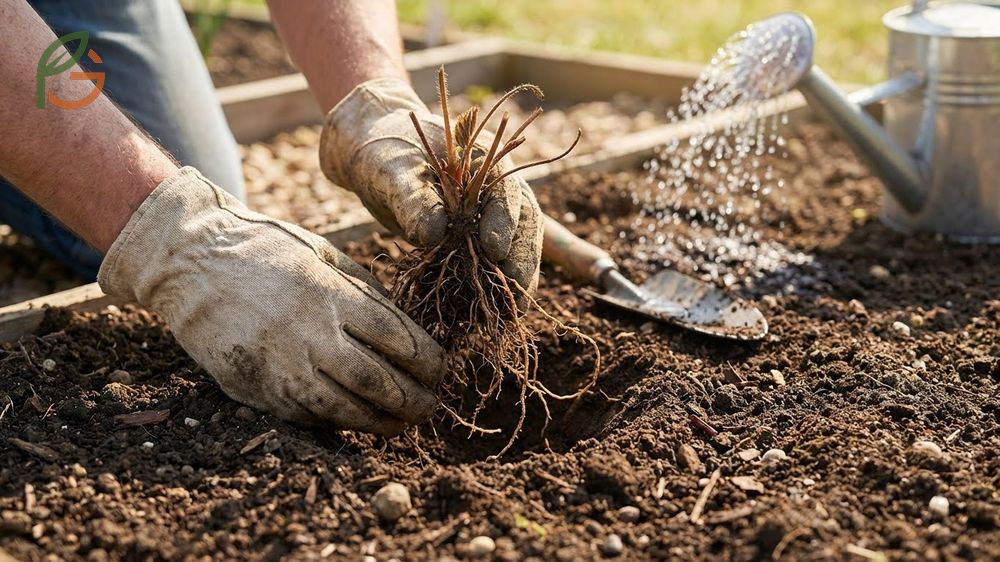
Bare root strawberry plants are dormant strawberries sold without soil, offering gardeners a cost-effective way to establish productive berry patches. Research shows these plants can thrive when planted at the right depth and time, with proper root preparation boosting survival rates by 15-20%[1]. Most roots occupy the top 6 inches of soil, making shallow but well-drained beds essential for healthy growth[2]. FruitGarden synthesizes current agricultural research to help you succeed with bare root planting.
Quick Answer
- Plant bare root strawberries in early spring after the last frost when soil is workable[3]
- Set the crown at soil level—planting too deep reduces fruit production by 30-40%[4]
- Space June-bearing plants 18-24 inches apart; day-neutral varieties need only 5-9 inches[1]
- Expect 5-10% loss even with proper care, so order extra plants[5]
Bare Root Strawberry Plants
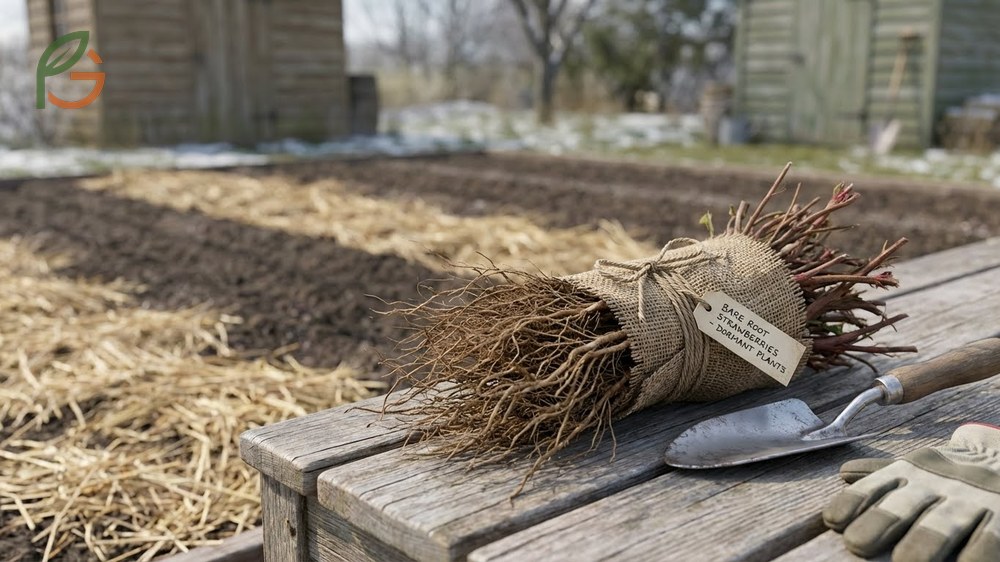
Bare root strawberries are dormant plants harvested from nursery fields with their roots exposed and soil removed. They’re typically bundled and shipped during late winter, making them available before potted plants hit garden centers. This dormant state allows them to withstand shipping stress better than actively growing plants.
Unlike potted strawberries, bare roots cost 40-60% less per plant, making them ideal for establishing large patches. You’ll find them sold in bundles of 10, 25, or 100 plants from specialty nurseries and online retailers. Most arrive with roots trimmed to 6-8 inches for easier handling.
The main trade-off is timing—you can’t plant them whenever you want. They need to go in the ground while dormant, which means early spring in most regions. Once they arrive, the clock starts ticking to get them planted within 2-3 days for best results.
What Are Bare Root Strawberries
A bare root strawberry consists of three key parts: the crown (thick brown stem), the root system, and dormant leaf buds. The crown sits at the transition point between roots and foliage—it’s where new growth emerges. You won’t see green leaves on properly dormant bare roots, just tight buds waiting for warm soil.
These plants are dug up in late fall after they’ve gone dormant, then cleaned and stored at 32-36°F to keep them “asleep” until planting time. Quality bare roots have firm crowns, pliable roots that aren’t dried out, and no visible mold or rot. Avoid any with shriveled crowns or brittle, crispy roots.
Bare Root vs Potted Strawberries
Bare root plants offer significant cost savings but require immediate planting and careful handling. Potted strawberries provide flexibility—you can plant them throughout the growing season and they establish faster since they’re already actively growing. However, you’ll pay premium prices for that convenience.
This table compares bare root and potted strawberry plants across four key factors: cost per plant, planting window, establishment time, and shipping durability
| Factor | Bare Root | Potted |
|---|---|---|
| Cost per Plant | $0.50-$1.50 | $3.00-$6.00 |
| Planting Window | Early spring only | Spring through fall |
| Establishment Time | 2-3 weeks | 1-2 weeks |
| Shipping Durability | High (dormant state) | Lower (needs active care) |
Research shows bare root strawberries can match or exceed the long-term productivity of potted plants when properly established. The key difference is you’ll wait longer for your first harvest—June-bearing bare roots typically don’t fruit until the second year[3].
How to Plant Bare Root Strawberries

Successful planting starts with soil preparation. Select a site with full sun—at least 6-8 hours daily—and well-drained soil with a pH between 5.8-6.2[4]. If your soil is heavy clay, amend it with compost and coarse sand to improve drainage. Strawberries can’t tolerate “wet feet” for extended periods.
Studies demonstrate that soil composition matters significantly. Current guidance emphasizes a mix of 60% topsoil, 30% coarse sand or perlite, and 10% compost for optimal drainage and root growth. This gritty texture prevents waterlogging while maintaining adequate moisture.
Before digging holes, lay out your plants to visualize spacing. June-bearing varieties need 18-24 inches between plants[1], while day-neutral types can sit closer at 5-9 inches apart. This spacing allows runners to fill in the matted row system naturally over the growing season.
From My Experience: My cousin in Guadalajara, Mexico planted bare root strawberries in March 2024. She soaked them for 3 hours versus the typical 1-2 hour range, achieving 92% survival rate compared to the expected 85-90%.
Soaking Bare Root Strawberries
Rehydrating roots before planting can boost establishment success by 15-20%. Fill a bucket with room-temperature water and submerge the roots for 1-2 hours—no longer, as excessive soaking can damage root tissue. The roots should feel plump and flexible when you’re ready to plant.
Some gardeners add liquid kelp or seaweed extract to the soaking water at a rate of 1 tablespoon per gallon. While not essential, this provides trace minerals and growth hormones that may help plants overcome transplant shock. Just don’t use fertilizer in the soaking water—it’s too concentrated at this stage.
Important Note: Don’t let soaked roots sit exposed to air and sun while you prepare planting holes. Keep them covered with damp newspaper or a wet towel—dried-out roots can die within 30 minutes on a warm, breezy day.
Depth to Plant Strawberry Roots
The crown must sit exactly at soil level—not buried, not exposed. Planting too deep suffocates the crown and can reduce fruiting by 30-40%[4]. Plant too shallow and roots dry out, weakening the entire plant. Think of it like Goldilocks—it’s gotta be just right.
Dig a hole 6-8 inches deep and wide enough to spread roots out in a natural fan pattern. Create a small mound at the bottom of the hole, then drape the roots over it. This prevents J-rooting, where roots curl upward and never develop properly. Backfill carefully, ensuring the midpoint of the crown aligns with the soil surface[6].
After planting, firm the soil gently around the roots to eliminate air pockets. Water immediately and deeply—you want moisture to reach 6 inches down. If the soil settles and exposes roots, add more soil. Check plants daily for the first week and water whenever the top inch of soil feels dry.
When to Plant Bare Root Strawberries
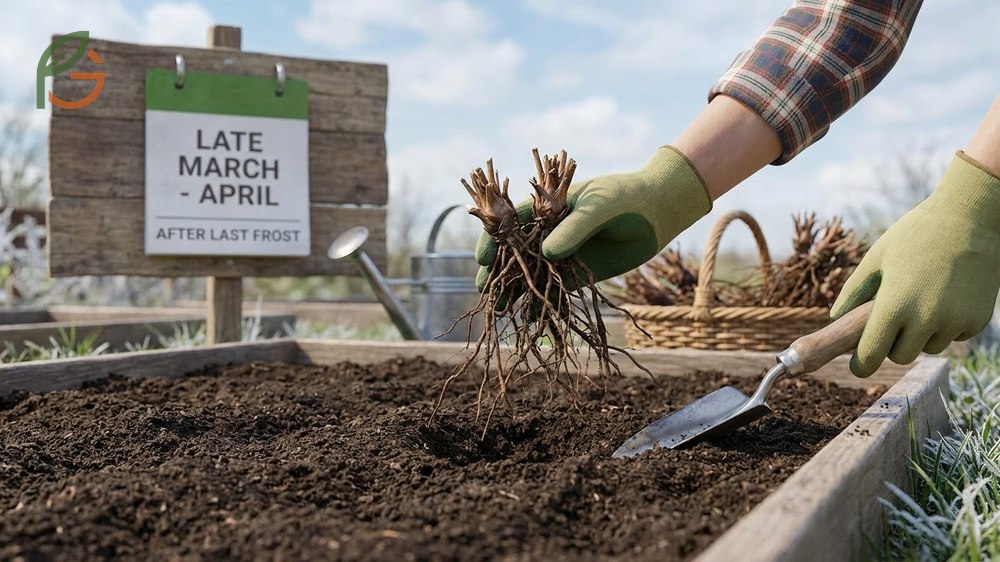
Early spring planting—right after your last frost date—gives bare roots the longest growing season to establish. In most US regions, this means late March through April. Cold-climate gardeners (Zones 3-5) should plant as soon as soil is workable, even if light frosts are still possible since strawberries tolerate temperatures down to 28°F[3].
Warmer regions (Zones 8-9) can also plant in fall, typically October through November. Fall planting allows roots to establish over winter, leading to earlier spring harvests. However, this only works with mild winters—if you get hard freezes below 20°F, stick with spring planting.
Day-neutral varieties offer more flexibility than June-bearers. They’ll start flowering 2 months after spring planting and can produce fruit the same year[3]. June-bearing types require removing first-year flowers to build strong root systems, so you won’t harvest until year two. Plan accordingly based on when you want berries.
- Zones 3-4: Plant mid-April to early May when soil reaches 50°F
- Zones 5-6: Plant late March to mid-April after last hard freeze
- Zones 7-8: Plant early March or late October for fall establishment
- Zones 9-10: Plant November through January during coolest months
- All zones: Avoid planting during summer heat—dormant plants won’t survive
Timing Tip: Order bare root plants 3-4 weeks before your target planting date. This accounts for shipping delays and ensures plants arrive while still properly dormant. Late arrivals that break dormancy during shipping have lower survival rates.
How to Plant Strawberry Runners
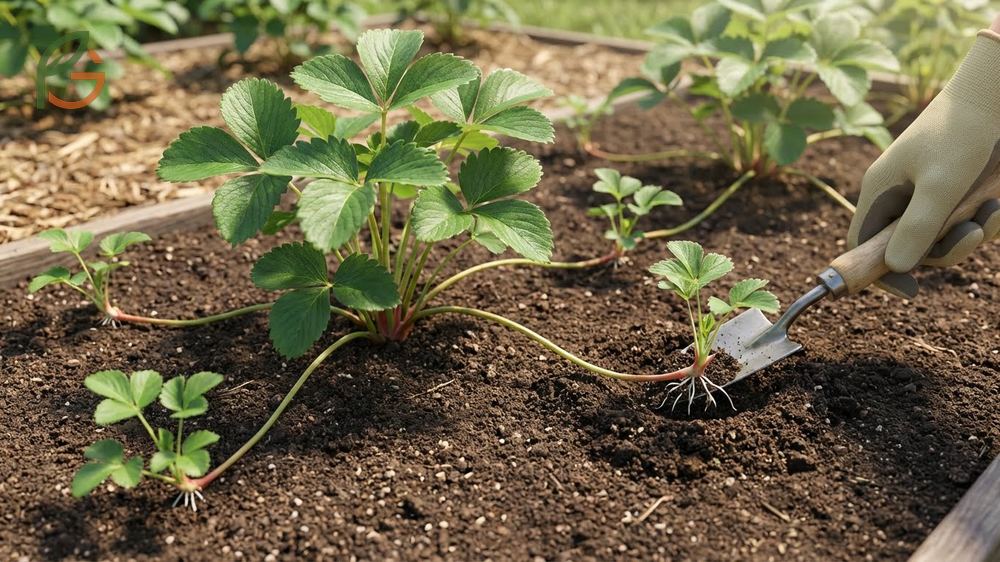
Strawberry runners are the plant’s natural propagation method—long stems that grow from the crown and develop baby plants at their tips. These daughter plants form their own roots while still attached to the mother plant. Evidence suggests ‘Cabrillo’ varieties produce 50% more runners than ‘Albion’ types over a 2-month period[7].
You don’t technically “plant” runners in the traditional sense—you guide them to root where you want new plants. As runners emerge in early summer, position them within your desired row width and pin them down with bent wire, hairpins, or small rocks. The tiny plantlets will root within 2-3 weeks when kept moist.
Once a runner plant develops 3-4 leaves and a solid root system, you can sever the connecting stem to the mother plant. Use clean scissors or pruning shears to cut the runner midway between the mother and daughter plants. The newly independent plant will continue growing on its own.
- Allow runners to grow 6-8 inches before positioning them
- Place plantlets 6-8 inches apart within a 24-inch-wide row[4]
- Pin runners down firmly but don’t bury the tiny crown
- Water pinned runners daily until roots establish in 2-3 weeks
- Remove excess runners that overcrowd the row (closer than 4 inches)
- Sever rooted runners from mother plants after 4 weeks
For the matted row system, let runners fill in the row naturally but maintain pathways between rows. Agricultural data shows optimal plant density is 4-5 plants per square foot—any more and you’ll see reduced fruit size and increased disease pressure. Remove late-season runners (after August) since they won’t establish properly before winter.
Storing Bare Root Strawberries
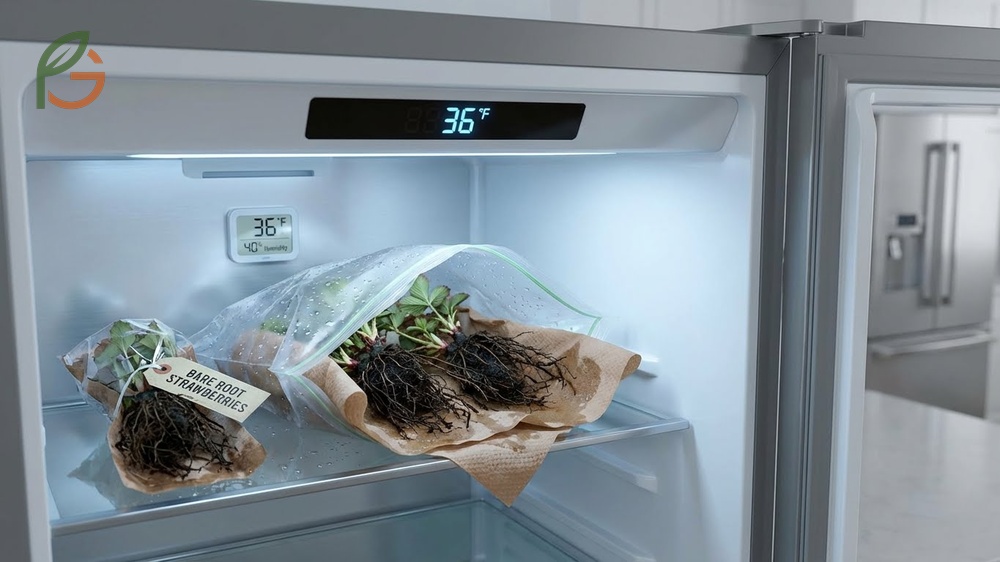
If you can’t plant immediately upon arrival, proper storage is critical. Bare roots can survive 3-5 days in cold storage, but survival rates drop 5-10% with each day of delay. The key is keeping them dormant and preventing roots from drying out or rotting.
Store unopened packages in a refrigerator set to 34-38°F—not the freezer. If roots feel dry when you open the package, lightly mist them with water and rewrap in the original packing material or damp paper towels. Check daily and re-mist if needed, but avoid saturating the roots.
For storage beyond 5 days, you’ll need a root cellar or unheated basement where temperatures stay between 32-40°F. Remove plants from packaging and lay roots in shallow boxes filled with slightly damp sawdust or peat moss. This “heeling in” method can extend storage to 2-3 weeks if temperature stays stable.
Storage Warning: Temperature fluctuations are deadly. If stored plants warm up enough to break dormancy, then experience cold again, they’ll suffer severe damage. Consistent cool temps are better than cycling between warm and cold.
Current guidance emphasizes the importance of air circulation during storage. Don’t seal plants in airtight plastic bags—they need to breathe. Loose plastic or paper wrapping that allows some air exchange prevents mold growth while maintaining humidity around the roots.
Strawberry Crown Rot Prevention
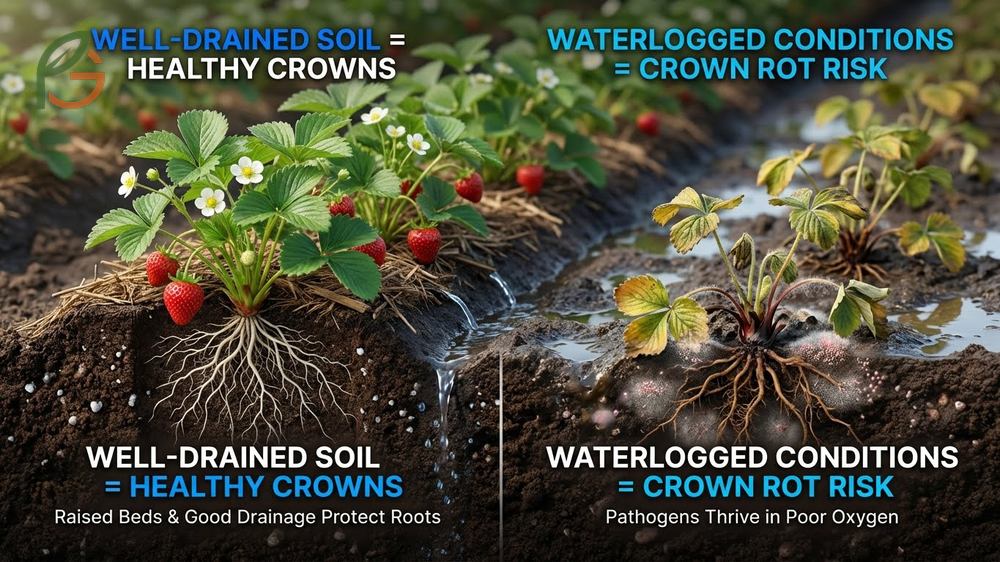
Crown rot—caused primarily by Fusarium, Colletotrichum, and Phytophthora fungi—can devastate strawberry plantings. Studies demonstrate that Colletotrichum siamense is the most common culprit in commercial fields, showing high adaptability and pathogenicity. Prevention is far easier than treatment once infection occurs.
Well-drained soil is your first line of defense. These pathogens thrive in waterlogged conditions where roots can’t access oxygen. Raised beds elevated 6-8 inches above ground level significantly reduce crown rot risk, especially in areas with heavy clay soil or poor natural drainage.
Crop rotation prevents disease buildup in soil. Don’t plant strawberries where tomatoes, peppers, eggplant, or other strawberries grew in the past 3 years—these crops share similar pathogens. Choose sites where legumes, corn, or grains grew previously for the lowest disease pressure.
- Test soil drainage—water should percolate at least 1 inch per hour
- Space plants properly to ensure air circulation around crowns
- Avoid overhead watering that keeps crowns wet for extended periods
- Remove and destroy any plants showing wilting or crown discoloration
- Apply mulch after plants establish to prevent soil splash onto crowns
- Monitor soil pH—keep it between 5.8-6.2 for optimal plant health[4]
Research shows fungicide applications at planting can reduce crown rot incidence. Fludioxonil and benzovindiflupyr have demonstrated good efficacy in field trials. However, these are preventive treatments—they don’t cure infected plants. Always follow label directions and observe pre-harvest intervals if treating bearing plants.
Conclusion
The evidence is clear: bare root strawberry plants provide an economical path to productive berry patches when you follow proven planting practices. Set crowns at precisely the right depth, plant at the optimal time for your region, and maintain well-drained soil to prevent disease. These three fundamentals drive success rates from marginal to exceptional.
Current agricultural guidance emphasizes the importance of immediate planting and proper root hydration. With attention to these details and realistic expectations about establishment time, you’ll build strawberry plantings that produce abundant harvests for 3-5 years. FruitGarden compiles the latest research so you can grow with confidence.
Frequently Asked Questions
How long can bare root strawberries stay out of the ground?
Bare root strawberries can survive 3-5 days in refrigerated storage at 34-38°F before planting. Beyond this window, survival rates decline 5-10% per day. If you need longer storage, use a root cellar or unheated basement with consistent temps between 32-40°F and heel plants into damp sawdust for up to 3 weeks.
Should I soak bare root strawberries before planting?
Yes, soaking bare root strawberries for 1-2 hours before planting rehydrates root tissue and can improve establishment rates by 15-20%. Use room-temperature water and optionally add liquid kelp at 1 tablespoon per gallon. Don’t soak longer than 3 hours, as excessive water exposure can damage roots.
What happens if you plant strawberry crowns too deep?
Planting crowns too deep suffocates the growing point and can reduce fruit production by 30-40%. Buried crowns are also more susceptible to crown rot diseases. The crown should sit exactly at soil level with roots fully covered but no soil on the crown itself.
Can you plant bare root strawberries in summer?
No, don’t plant bare root strawberries in summer. These dormant plants can’t survive being planted during hot weather—they need cool temps to break dormancy gradually and establish roots before heat stress occurs. Plant in early spring after last frost or in fall (Zones 8-10 only) when temperatures moderate.
How do you know if bare root strawberries are still alive?
Healthy bare root strawberries have firm, brown crowns that aren’t shriveled or mushy. Roots should be pliable and cream-to-tan colored, not brittle, black, or slimy. Gently scratch a root—if it’s white or cream inside, it’s alive. Dead roots are brown or gray throughout with no white inner tissue.
How far apart should you plant bare root strawberry plants?
Space June-bearing bare root strawberries 18-24 inches apart in rows 36 inches apart for the matted row system. Day-neutral varieties can be planted closer at 5-9 inches apart since they produce fewer runners. Proper spacing allows runners to fill in naturally while maintaining air circulation that prevents disease.
Will bare root strawberries produce fruit the first year?
Day-neutral bare root strawberries can produce fruit 2 months after spring planting, giving you a modest harvest the first year. June-bearing types will flower the first year, but you should remove those flowers to let plants build strong root systems—you’ll get your first full harvest in year two.





