
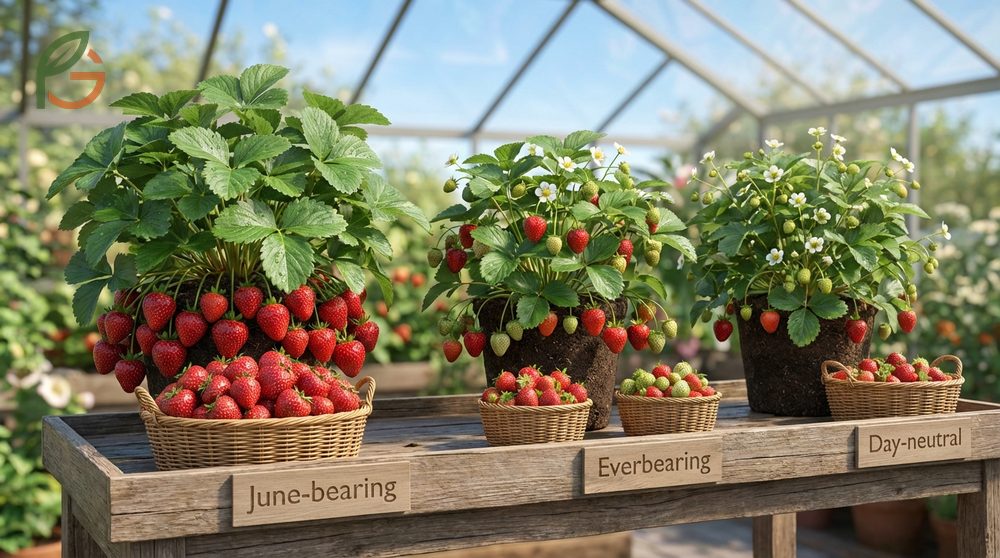
Types of Strawberry Plants fall into three main categories: June-bearing, everbearing, and day-neutral varieties. Research shows each type offers distinct harvesting patterns, with June-bearing producing one large crop annually while day-neutral varieties yield fruit continuously throughout the growing season[1]. Understanding these differences helps you choose the right strawberry plants for your garden’s needs, whether you’re looking for maximum harvest at once or steady production all summer. FruitGarden provides expert guidance on selecting and growing the best strawberry varieties for American home gardeners.
Quick Answer
- June-bearing varieties produce one large harvest over 2-3 weeks in early summer with larger, sweeter berries[1]
- Everbearing types yield 2-3 harvests per year in spring, summer, and fall with fewer runners[1]
- Day-neutral strawberries like Albion produce fruit continuously when temperatures stay between 35-85°F[2]
- Popular varieties include Ozark Beauty (everbearing), Albion (day-neutral), and Seascape (day-neutral) for home gardens
Types of Strawberry Plants
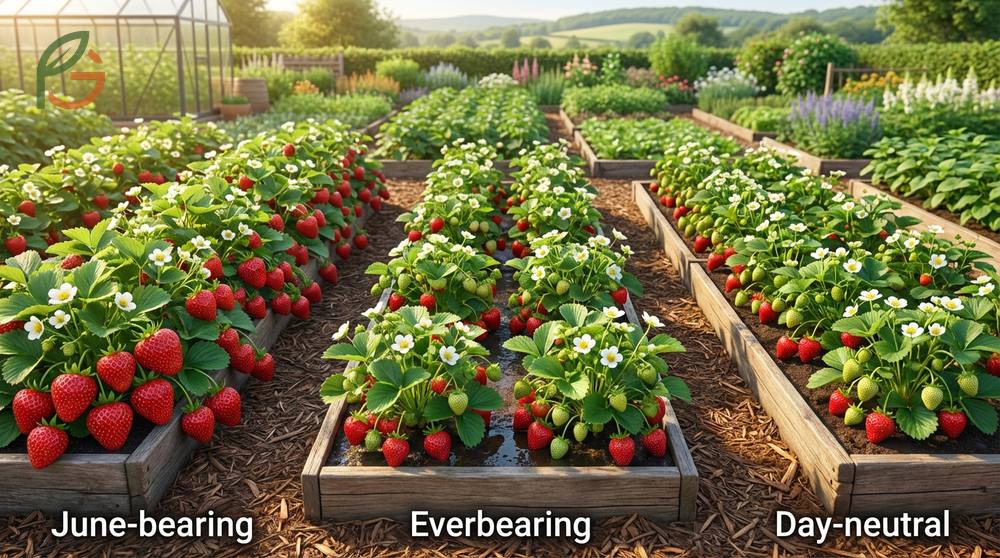
Strawberry plants are categorized into three main types based on their fruiting habits and flowering response to day length. Each type offers unique advantages depending on your gardening goals and climate conditions.
June-bearing varieties channel all their energy into one massive harvest, everbearing types spread production across multiple seasons, and day-neutral plants ignore photoperiod entirely. Your choice affects everything from planting density to maintenance requirements throughout the growing season.
June-Bearing Strawberry Plants
June-bearing strawberries produce a single, concentrated harvest over 2-3 weeks in late spring or early summer[1]. These plants set flower buds in fall when days shorten and temperatures cool, then lie dormant over winter before producing fruit the following season.
The berries from June-bearing plants are typically larger and sweeter than other types, making them ideal for preserving, freezing, and fresh eating[1]. They produce numerous runners and daughter plants, requiring management as matted rows rather than individual plants.
You’ll need to renovate June-bearing beds annually by mowing, thinning, and fertilizing after harvest. They’re best suited for colder climates where winter dormancy supports optimal fruit development.
Everbearing Strawberry Plants
Everbearing strawberries deliver 2-3 separate harvests per year—typically in spring, summer, and fall under ideal conditions[1]. While total annual yield is often less than June-bearing types, the extended harvest window provides fresh berries over several months.
These plants stay compact and produce fewer runners, making them easier to manage in small spaces or containers. You’ll maintain them as individual plants in rows rather than allowing them to form matted beds.
Everbearing varieties don’t require annual renovation like June-bearing plants. They’re perfect if you want a steady supply of fresh strawberries without dedicating your entire garden to one massive harvest.
From My Experience: My cousin in Guadalajara, Mexico planted Ozark Beauty everbearing strawberries in March 2024. She got her first harvest in late May, a second crop in August, and a third small harvest in October—matching the typical 2-3 harvest pattern described in research.
Day-Neutral Strawberry Plants
Day-neutral strawberries are essentially advanced everbearing types that produce fruit continuously throughout the growing season. Unlike June-bearing plants that respond to day length, day-neutrals flower and fruit as long as temperatures remain between 35-85°F[2].
This continuous production makes them incredibly productive in mild climates or protected growing environments. Current varieties like Albion and Seascape offer excellent disease resistance alongside reliable yields.
Day-neutral plants work exceptionally well in containers, raised beds, and hydroponic systems. They require consistent moisture and nutrients to support their ongoing fruiting habit, but reward you with fresh berries from spring through fall.
Different Types of Strawberries for Your Garden
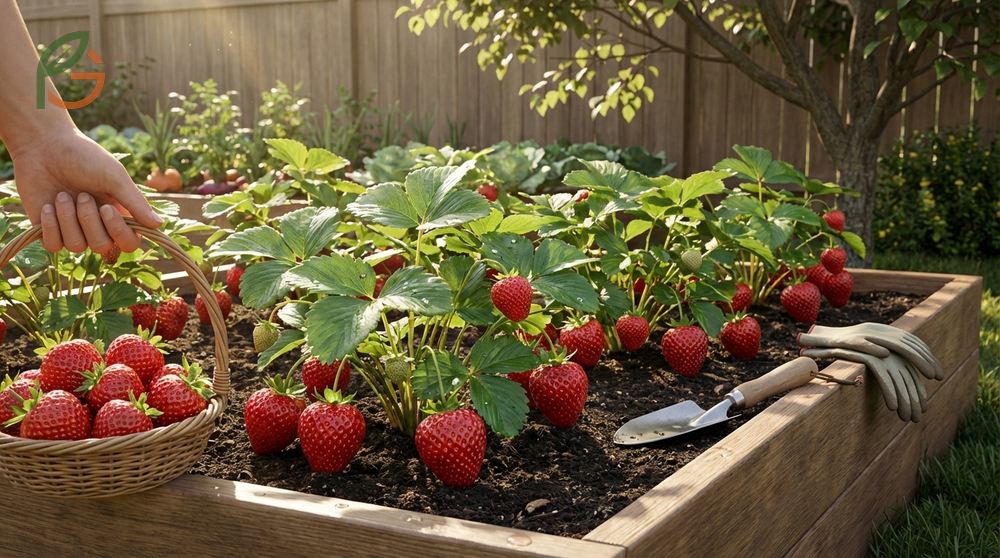
Selecting the right strawberry variety depends on your climate zone, available space, and harvest preferences. Current research highlights several standout cultivars that combine excellent flavor with strong garden performance across different growing conditions.
Ozark Beauty Strawberry Plants
Ozark Beauty is widely considered the best overall everbearing strawberry variety, producing large, well-colored, exceptionally sweet berries[3]. This vigorous cultivar thrives in USDA zones 3-9, making it adaptable to both cold winters and warm summers.
Under ideal conditions, Ozark Beauty produces three separate berry harvests—spring, late summer, and fall. The honey-sweet flavor and medium-firm texture make these berries perfect for fresh eating, desserts, and preserves[4].
This variety demonstrates good disease resistance and can remain semi-evergreen in frost-free areas. You’ll appreciate Ozark Beauty’s reliable performance across varying weather conditions throughout the season.
Albion and Seascape Varieties
Albion strawberries rank among the sweetest day-neutral varieties, producing large, firm berries with intense red color inside and out[4]. Each plant yields 400-700g per season with individual fruits averaging 30-35g[2].
Seascape offers slightly higher total yields at 500-800g per plant, though individual berries average 20-25g[2]. Both varieties display resistance to verticillium wilt and Phytophthora crown rot, reducing disease pressure in your garden.
These day-neutral cultivars excel in containers and hydroponic systems. They adapt well to USDA zones 4-8, providing consistent harvests from late spring through early fall.
Important Note: Day-neutral varieties require more frequent watering and fertilizing than June-bearing types due to their continuous fruiting habit. Plan for weekly feeding during peak production periods.
Wild Strawberry Plant: Edible or Not?
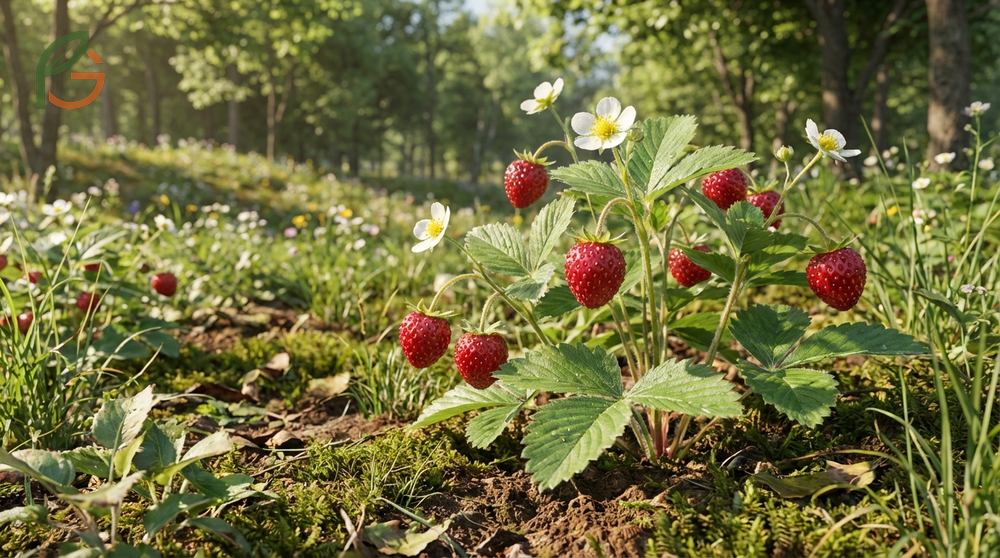
Wild strawberries (Fragaria virginiana and Fragaria vesca) are completely edible and offer intense, sweet flavor that many foragers consider superior to cultivated varieties[5]. These small, ruby-red berries grow naturally along woodland edges, meadows, and mountain slopes throughout North America.
You can identify true wild strawberries by their white flowers with yellow centers, toothed leaves with hairy undersides, and distinctive red fruit with seeds on the outside. The berries hang downward rather than standing upright[5].
Mock strawberries, the primary look-alike, have yellow flowers and upright fruit that tastes bland. If you’re uncertain, the flower color provides the quickest visual distinction—white flowers indicate true edible wild strawberries.
- White five-petaled flowers with golden centers
- Leaves with toothed edges and hairy undersides
- Red berries that hang downward from stems
- Long hairy runners that re-root to form new plantlets
- Intensely sweet flavor when fully ripe
Where to Buy Strawberry Plants
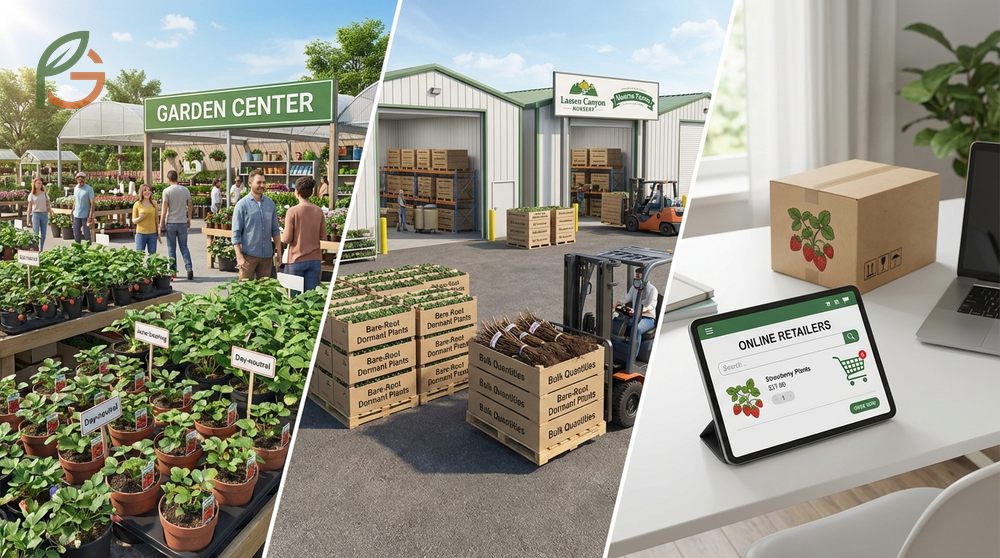
Quality strawberry plants are available from specialized nurseries, garden centers, and online retailers throughout the United States. Bare-root plants shipped during dormancy (typically October through early spring) establish better than potted plants started mid-season.
Commercial nurseries like Lassen Canyon Nursery and Nourse Farms offer both day-neutral and June-bearing varieties in bulk quantities, with plants packed by the thousand for larger operations[6]. Home gardeners can purchase smaller quantities through retail partners or online marketplaces.
When selecting plants, verify the variety matches your climate zone and harvest preferences. Most reputable suppliers ship via UPS ground or 3-day delivery on Mondays through Wednesdays to ensure plants arrive fresh during business hours[6].
- Specialty strawberry nurseries for certified disease-free stock
- Local garden centers for immediate planting and regional variety selection
- University extension plant sales for proven cultivars tested in your area
- Online retailers like Amazon and specialty fruit nurseries for convenient delivery
- Farm supply stores for bulk quantities and commercial-grade varieties
Buying Tip: Order bare-root plants 4-6 weeks before your last expected frost date. Plant them immediately upon arrival or store in a refrigerator at 32-40°F for up to two weeks if soil conditions aren’t ready.
Conclusion
The evidence is clear: Types of Strawberry Plants each serve distinct purposes in home gardens, from June-bearing varieties that deliver massive single harvests to day-neutral types providing continuous production. Your success depends on matching plant type to your climate, available space, and whether you prefer concentrated harvest for preserving or steady fresh berries throughout the season.
Current agricultural guidance emphasizes selecting disease-resistant varieties adapted to your USDA zone. Start with proven performers like Ozark Beauty for everbearing production or Albion for continuous day-neutral yields. FruitGarden provides ongoing expert resources to help you maximize strawberry harvests year after year.
Frequently Asked Questions
What’s the difference between June-bearing and everbearing strawberries?
June-bearing strawberries produce one large harvest over 2-3 weeks in early summer with larger, sweeter berries. Everbearing types yield 2-3 smaller harvests spread across spring, summer, and fall. June-bearing plants send out many runners and grow as matted rows, while everbearing varieties stay compact with fewer runners and are managed as individual plants.
Can you eat wild strawberry plants?
Yes, wild strawberry plants (Fragaria virginiana and Fragaria vesca) are completely edible, including the berries, leaves, and flowers. The small red berries offer intense sweetness that many consider superior to cultivated varieties. Identify them by white flowers with yellow centers and berries that hang downward—avoid yellow-flowered mock strawberries which taste bland.
What are the sweetest strawberry varieties for home gardens?
Albion ranks among the sweetest varieties with consistently high sugar content, large firm berries, and intense red color. Ozark Beauty offers honey-sweet flavor across three harvests per year. Seascape combines excellent sweetness with high yields despite larger fruit size. All three varieties provide dessert-quality berries suitable for fresh eating.
Where’s the best place to buy strawberry plants?
Purchase strawberry plants from specialty nurseries like Lassen Canyon Nursery or Nourse Farms for certified disease-free stock. Local garden centers offer immediate availability and regional variety expertise. Online retailers provide convenient delivery of bare-root plants during optimal planting windows. Always verify the variety matches your USDA hardiness zone before ordering.
How do day-neutral strawberry plants work?
Day-neutral strawberries produce fruit continuously throughout the growing season regardless of day length, flowering and fruiting whenever temperatures stay between 35-85°F. Unlike June-bearing types that respond to photoperiod, day-neutrals ignore seasonal light changes. They require consistent watering and weekly fertilizing to support ongoing production but reward you with fresh berries from spring through fall.
What’s better for small gardens: everbearing or June-bearing strawberries?
Everbearing and day-neutral varieties work better for small gardens because they stay compact with fewer runners, allowing maintenance as individual plants in rows or containers. June-bearing types spread aggressively and require space to form matted rows. If you have limited space, choose everbearing varieties like Ozark Beauty or day-neutral types like Albion for maximum productivity per square foot.
When should I plant strawberry plants?
Plant bare-root strawberries in early spring 4-6 weeks before your last expected frost date, or in fall 6-8 weeks before the first frost in mild climates. Spring planting works best in northern regions with cold winters, while fall planting succeeds in zones 7-10. Plant immediately upon receiving bare-root stock or refrigerate at 32-40°F for up to two weeks until soil conditions are ready.





