
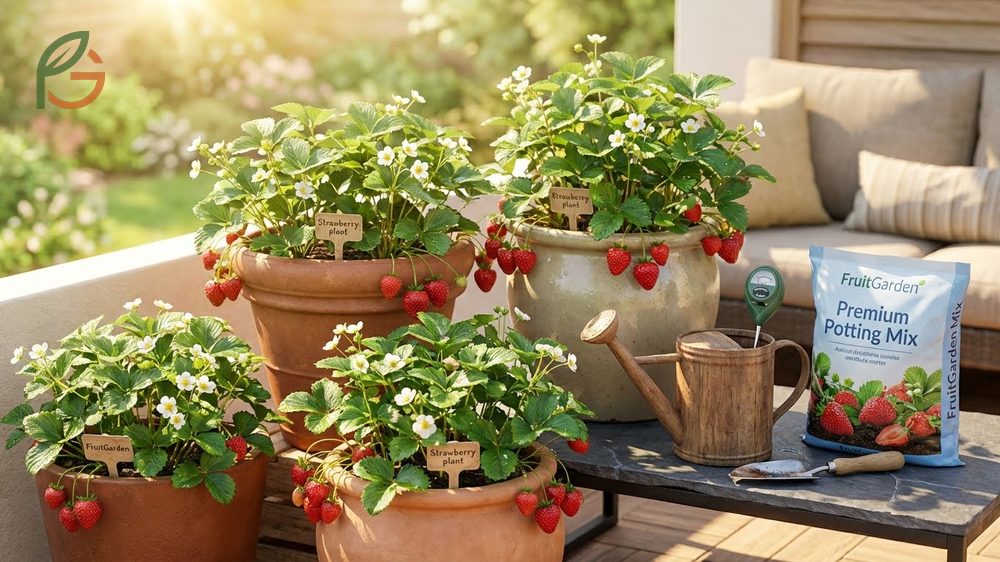
Growing strawberries in pots succeeds when you provide containers at least 12 inches deep, maintain consistent moisture, and ensure 6-8 hours of daily sunlight[1]. Research across university extension programs shows that container-grown strawberries produce abundant fruit when given proper drainage, nutrient-rich potting mix, and attention to watering schedules. FruitGarden synthesizes current horticultural research to help you cultivate thriving strawberry plants in any space, from balconies to patios.
Quick Answer
Growing Strawberries in Pots
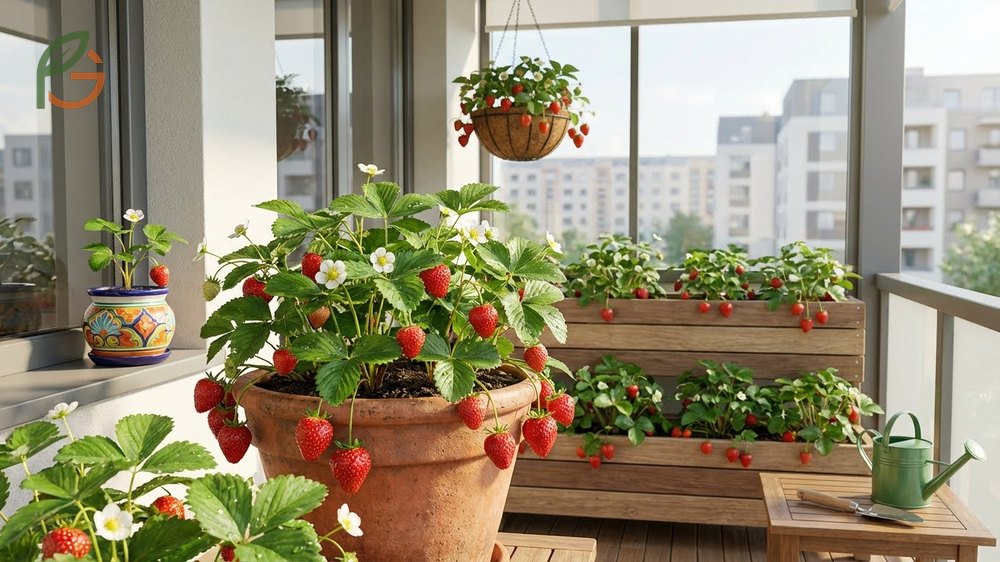
Container cultivation transforms strawberry growing from a garden-only activity into an accessible practice for apartment dwellers and homeowners with limited yard space. Studies demonstrate that potted strawberries can match or exceed ground-planted yields when given appropriate conditions[1]. The key lies in understanding how container environments differ from traditional garden beds.
Strawberry plants adapt well to pots because their shallow root systems typically extend only 6-12 inches into growing media[3]. This natural growth pattern makes them ideal candidates for container culture. Unlike deep-rooted crops that struggle in confined spaces, strawberries thrive when their root zones receive adequate moisture and nutrients within a compact volume.
From My Experience: My cousin in Guadalajara, Mexico grew ‘Albion’ strawberries in containers on her sunny terrace last spring. She harvested fruit within 12 weeks of planting—matching the typical 10-14 week timeline from university guidelines.
Container strawberries offer flexibility that ground planting can’t match. You can move pots to optimize sun exposure throughout the season, protect plants from unexpected frost, and refresh soil annually without disrupting permanent garden beds.
Why Containers Work for Strawberries
The confined environment of containers actually benefits strawberry cultivation in several ways. Potted plants experience fewer soil-borne disease issues compared to ground plantings where pathogens accumulate over seasons. Containers also warm faster in spring, giving you earlier harvests.
Research shows that containers provide superior drainage control, which is critical for strawberries. These plants can’t tolerate waterlogged roots but need consistent moisture during fruiting.
Container Advantages
- Mobility allows seasonal sun optimization and frost protection
- Fresh potting mix each year reduces disease pressure and pest issues
- Elevated growing reduces back strain during maintenance and harvesting
- Space efficiency enables vertical arrangements and tiered displays
- Pest barriers are easier to implement with raised, isolated containers
- Soil control eliminates concerns about ground contamination or poor native soil
Important Note: Container-grown strawberries dry out significantly faster than ground-planted ones. Plan to check soil moisture daily during hot weather, especially for plants in terracotta or fabric pots which lose moisture through sidewalls.
Strawberry Plants in Pots
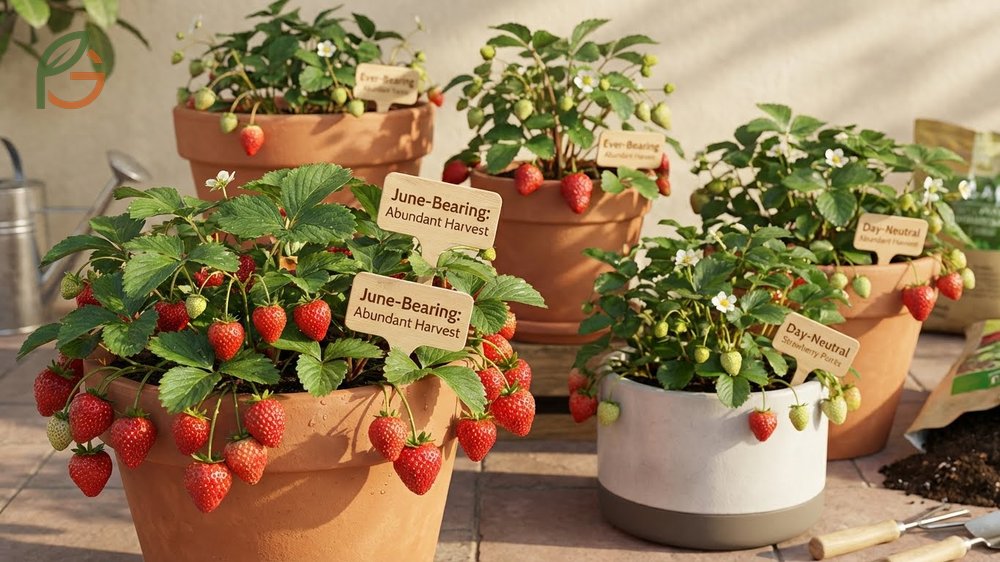
Variety selection impacts your container strawberry success as much as pot size or soil quality. Different strawberry types have distinct growth habits and fruiting patterns that affect their suitability for container culture. Current horticultural guidance emphasizes matching variety characteristics to your available space and harvest goals.
June-bearing varieties produce one large crop in late spring or early summer, delivering abundant fruit over 2-3 weeks. These cultivars work well if you want concentrated harvests for preserving. Everbearing and day-neutral types fruit repeatedly from late spring through fall, providing steady yields perfect for fresh eating.
Variety Selection
Compact cultivars with restrained runner production perform best in containers. Varieties that send out numerous runners quickly crowd pots and divert energy from fruit production. Day-neutral strawberries typically have more manageable growth habits than traditional June-bearers.
This table compares strawberry variety types by fruiting season, runner production level, and suitability for container growing
| Variety Type | Fruiting Season | Runner Production | Container Suitability |
|---|---|---|---|
| June-Bearing | Single crop, late spring | Heavy runner production | Moderate (requires runner pruning) |
| Everbearing | Two crops, spring and fall | Moderate runners | Good (balanced growth) |
| Day-Neutral | Continuous, spring through fall | Minimal runners | Excellent (compact habit) |
| Alpine | Continuous, smaller berries | No runners | Excellent (perfect for small pots) |
- ‘Albion’ – Day-neutral type with excellent disease resistance and large fruit
- ‘Seascape’ – Everbearing variety producing sweet berries spring through fall
- ‘Tristar’ – Compact day-neutral perfect for smaller containers and hanging baskets
- ‘Alpine’ – Produces intensely flavored small berries without runners
- ‘Quinault’ – Vigorous everbearing suited to larger pots and planters
- ‘Mara des Bois’ – French variety with woodland strawberry flavor and everbearing habit
How to Grow Strawberries in Containers
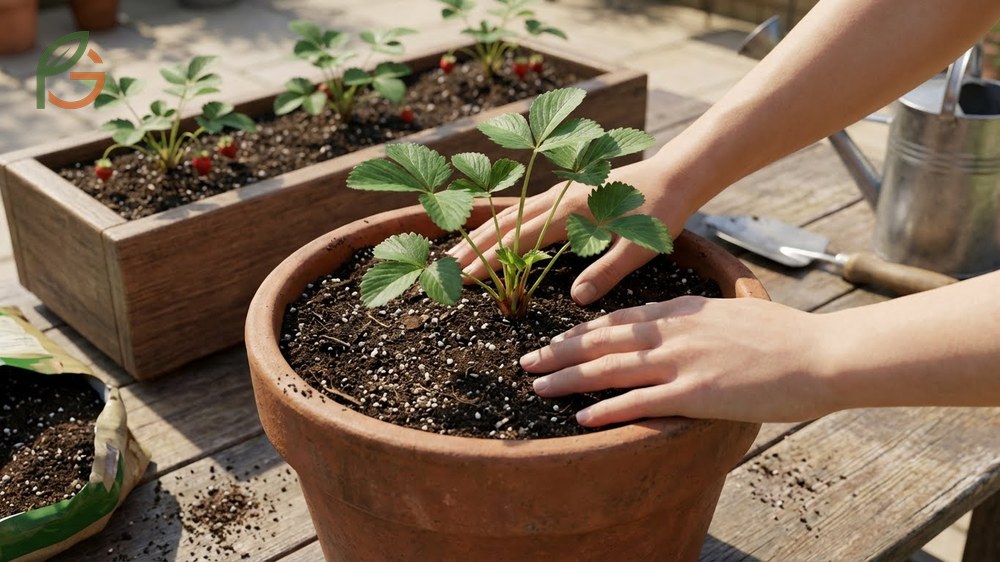
Successful container strawberry cultivation starts with proper planting technique. Position plants so their crowns—where leaves emerge—sit exactly at soil level, not buried and not exposed[4]. Buried crowns rot quickly, while exposed ones dry out and weaken. This precise placement determines plant survival and productivity.
Space plants 10-12 inches apart in large containers or place 3-4 plants in a standard 12-inch diameter pot[2]. Closer spacing works for day-neutral varieties with minimal runners. June-bearing types need more room to accommodate their spreading habit.
Planting Steps
Fill containers three-quarters full with moistened potting mix before positioning plants. This prevents settling that would bury crowns after watering. Spread roots over a small mound, then add mix around them until the crown sits at the final soil surface level.
Water thoroughly immediately after planting to eliminate air pockets around roots. This initial deep watering establishes good root-to-soil contact essential for nutrient uptake. Expect soil to settle slightly—add more mix if crowns sink below the surface.
Soil Requirements
Quality potting mix matters more in containers than in-ground beds because plants can’t access nutrients beyond the pot. Research indicates strawberries prefer slightly acidic growing media with pH 5.5-6.5 and high organic matter content[4]. Standard vegetable potting mixes work well, especially those containing compost or aged bark.
Avoid using garden soil in containers—it compacts under frequent watering, suffocating roots. Commercial potting mixes contain materials like peat moss, coconut coir, and perlite that maintain structure and drainage throughout the season.
Fertilization Tip: Feed container strawberries every 2-3 weeks with diluted liquid fertilizer during the growing season[4]. Frequent watering leaches nutrients from potting mix faster than from ground soil, making regular feeding essential for strong growth and fruiting.
Best Pot Size for Strawberries
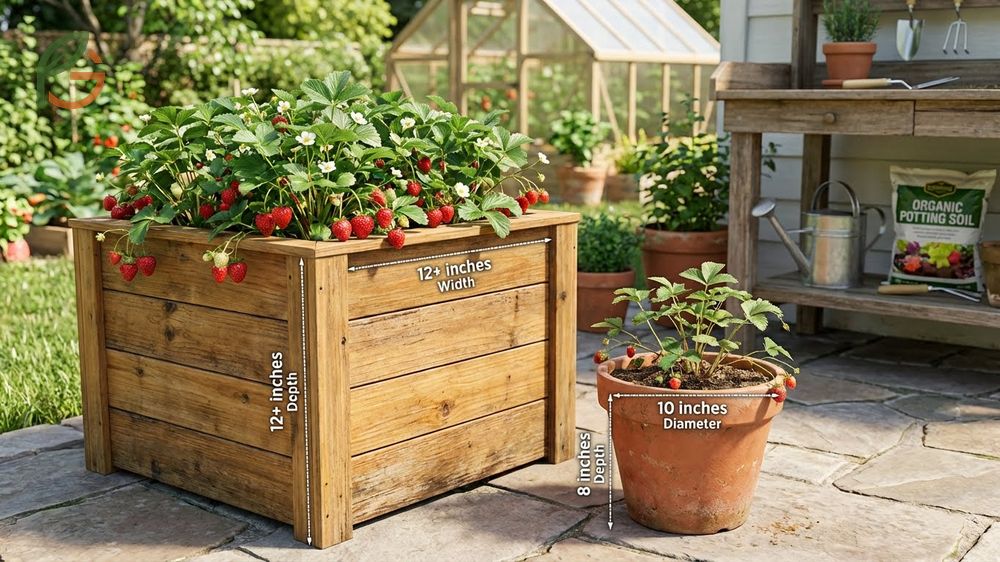
Container dimensions directly affect strawberry productivity and plant health. University research establishes minimum requirements of 12 inches diameter and 8 inches depth for successful cultivation[2]. Smaller pots dry out too quickly and restrict root development, reducing yields and requiring excessive watering attention.
Rectangular containers outperform round ones of similar volume. Studies from Wisconsin Extension show that long narrow planters produce heavier crops than circular pots because they provide more growing area per plant[1]. A 24-inch long window box supports 2-3 plants more effectively than individual 12-inch pots.
Specialized strawberry jars with side pockets create challenges despite their decorative appeal. Plants in upper pockets dry out faster than those near the bottom, requiring careful watering from both top and sides to maintain even moisture. Standard pots or long planters simplify care while delivering better results.
Material choice affects watering frequency and root temperature. Terracotta breathes well but dries quickly, demanding daily attention in summer. Plastic retains moisture longer, reducing watering to every 2-3 days. Fabric grow bags offer excellent drainage and air pruning of roots but need the most frequent watering—sometimes twice daily in heat.
Watering Strawberries in Pots
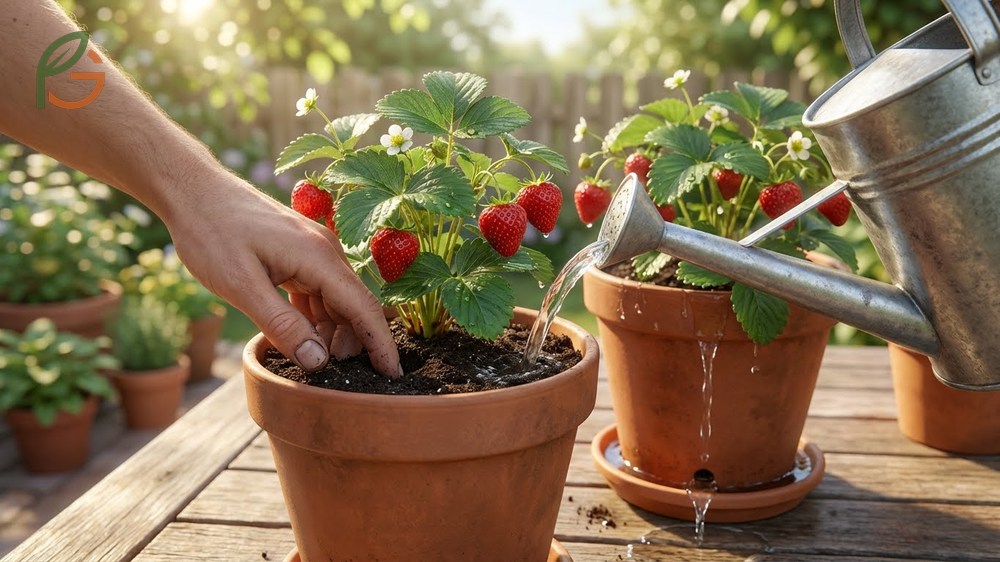
Consistent moisture separates successful container strawberry growers from frustrated ones. Research shows that containers dry 3-5 times faster than ground soil during summer, especially during fruiting when plants transpire heavily[3]. Check soil daily by inserting your finger 3 inches deep—if it feels dry at that depth, water thoroughly until liquid drains from pot holes.
Summer watering typically occurs every 1-3 days depending on temperature, humidity, and container material. During cooler spring and fall periods, you might water only every 4-7 days. Fruiting plants need more frequent irrigation than those in vegetative growth because developing berries contain 90% water.
Morning watering works best because foliage dries before nightfall, reducing disease risk. Water at soil level rather than overhead to keep leaves and developing fruit dry. Drip irrigation systems excel for containers, delivering steady moisture directly to roots while conserving water.
Watch for signs of water stress—wilting leaves, dry soil pulling away from pot sides, and small or misshapen berries all indicate insufficient moisture. Conversely, yellowing leaves, mushy crowns, and persistently soggy soil signal overwatering. Strike a balance by maintaining evenly moist but never waterlogged conditions.
- Check soil moisture daily during hot weather by finger test 3 inches deep
- Water early morning to allow foliage drying before evening
- Apply water at soil level, avoiding leaves and fruit
- Ensure thorough watering until drainage occurs, not frequent light sprinkles
- Group containers together to create humidity and reduce drying
- Mulch soil surface with straw to slow evaporation and keep fruit clean
Winterizing Potted Strawberries
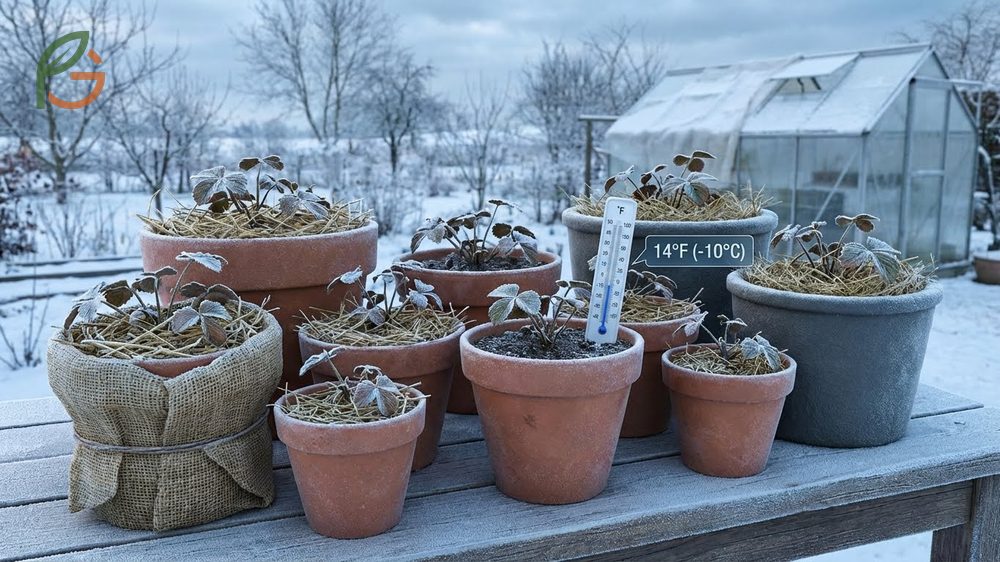
Container strawberries face harsher winter conditions than ground-planted ones because roots freeze more easily in exposed pots. Research indicates that strawberry crowns die when temperatures drop below 15°F (-9°C) without protection. In zones 7 and warmer, mulching usually provides adequate insulation, but colder regions require additional strategies.
Wait until plants enter dormancy before winterizing—typically after several nights of temperatures in the 20s°F (-6 to -3°C). Premature protection keeps plants active too late, making them vulnerable to subsequent hard freezes. Signs of dormancy include wilted, reddish foliage and complete cessation of new growth.
For zones 6 and colder, move containers to sheltered locations against a heated building’s south or east wall. Home heat loss through walls provides enough warmth to buffer extreme cold. Alternatively, bury entire pots to ground level in an unused garden area so surrounding soil insulates roots through winter.
Apply 3-5 inches of mulch over dormant plants after the first hard freeze but before soil freezes solid. Straw, pine needles, or shredded leaves work equally well. This layer prevents freeze-thaw cycles that heave crowns out of soil, exposing them to lethal cold and desiccation.
Water occasionally during dry winters when temperatures rise above freezing. Dormant plants still need some moisture—completely dry soil combined with cold kills more strawberries than cold alone. Check pots monthly and water lightly if soil feels powder-dry below the mulch layer.
Remove mulch in spring once temperatures consistently stay above 20°F (-6°C). Leaving it on too long delays soil warming and plant emergence. Gradual removal over several days acclimates plants to spring conditions better than abrupt exposure.
Conclusion
The evidence is clear: growing strawberries in pots delivers excellent results when you match container size to plant needs, maintain consistent moisture, and protect plants during winter extremes. Container cultivation opens strawberry growing to anyone with a sunny balcony, patio, or small yard by eliminating the need for garden space.
Current horticultural guidance emphasizes proper drainage, regular feeding, and variety selection as the foundation of container strawberry success. FruitGarden provides research-based growing information to help you cultivate productive fruit plants regardless of your available space or experience level.
Frequently Asked Questions
Can You Grow Strawberries Indoors?
Yes, but indoor strawberries require supplemental lighting to produce fruit. Position plants under full-spectrum grow lights providing 12-16 hours of illumination daily to compensate for lower indoor light intensity compared to outdoor sun.
How to Plant a Strawberry Pot with Multiple Pockets?
Fill the strawberry jar partway, insert plants through side openings from outside, then add more soil and the next layer of plants. Water from top and sides since upper plants dry faster. This method ensures roots spread properly at each level.
What Are Hydroponic Strawberries?
Hydroponic strawberries grow in nutrient solution without soil, using systems like NFT channels or vertical towers. Commercial operations favor hydroponics for year-round production and higher yields, though home setups require more equipment investment than container growing.
How Do I Grow Strawberries in a Pot on My Balcony?
Choose compact day-neutral varieties for continuous fruiting, use 12-inch diameter containers with drainage holes, and position pots where they receive 6-8 hours of direct sun. Water daily during hot weather and fertilize every 2-3 weeks throughout the growing season.
Growing Strawberry Plants in Hanging Baskets?
Hanging baskets work well for trailing varieties and day-neutral types. Use baskets at least 12 inches diameter, line with coconut coir if wire-framed, and expect to water twice daily in summer since hanging containers dry extremely fast from all-around air exposure.
Growing Strawberries in Rain Gutters?
Rain gutter systems create space-efficient vertical strawberry gardens when mounted on walls or fences. Drill drainage holes every 6 inches, use quality potting mix, and install drip irrigation since the narrow profile dries quickly. This method suits everbearing and alpine varieties best.
Should I Remove Strawberry Runners from Container Plants?
Yes, remove runners from container strawberries to concentrate plant energy on fruit production rather than vegetative spread. Snip them off at the base when they appear unless you want to root them in separate pots to propagate new plants.





