
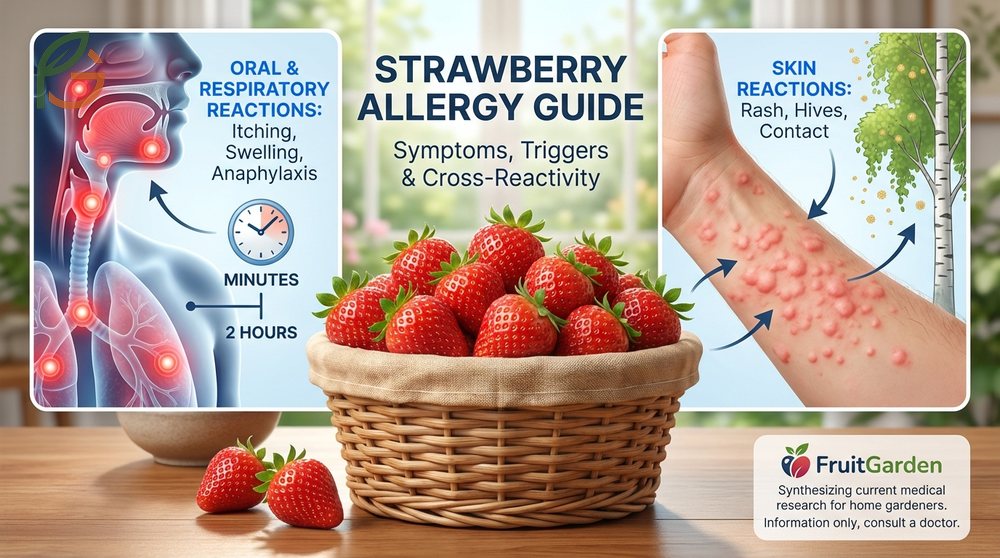
Strawberry allergy symptoms range from mild oral itching to severe anaphylaxis, affecting the mouth, throat, skin, and respiratory system within minutes to two hours of exposure[1]. Research shows that strawberry allergies are less common than other food allergies but can trigger reactions through direct consumption, skin contact, or cross-reactivity with birch pollen[2]. FruitGarden synthesizes current medical research to help home gardeners and fruit enthusiasts recognize and understand these allergic responses.
Quick Answer
- Most strawberry reactions cause mild to moderate symptoms like oral itching, hives, and throat tightness within minutes[1]
- Oral allergy syndrome affects up to 90% of birch pollen allergy patients who eat raw strawberries[2]
- Skin reactions include hives, eczema flare-ups, and contact dermatitis around the mouth[3]
- Severe reactions (anaphylaxis) are rare but require immediate epinephrine treatment and emergency care[4]
Strawberry Allergy Symptoms
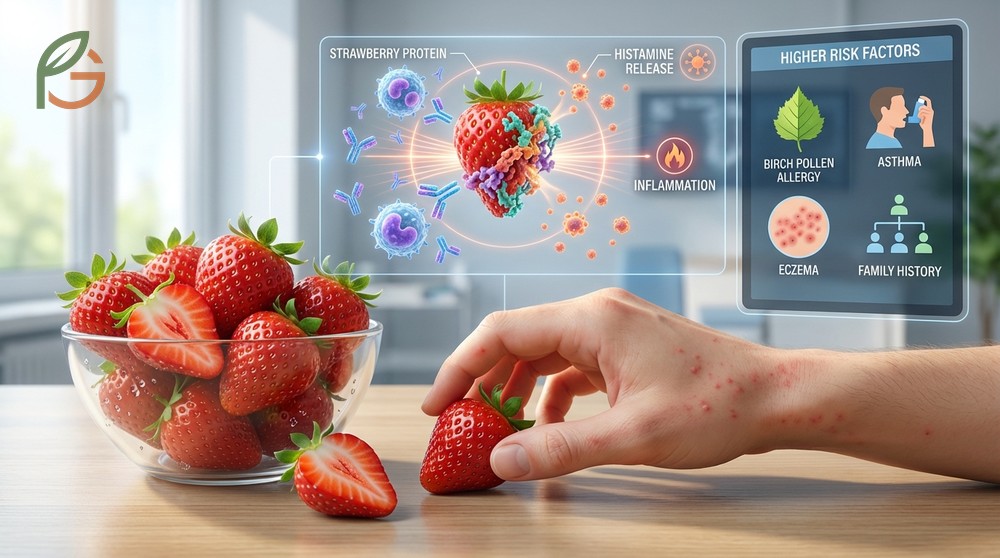
Studies demonstrate that strawberry allergies trigger immune responses when proteins in the fruit are mistakenly identified as harmful substances[3]. The body releases histamine and other chemicals, causing inflammation and various symptoms. Reactions typically develop within minutes to two hours after eating strawberries or touching them[1].
Current data indicates that individuals with family history of food allergies, birch pollen allergies, asthma, or eczema face higher risks[3]. These predisposing factors increase susceptibility to adverse reactions when exposed to strawberry proteins.
Mild to Moderate Symptoms
Research shows most strawberry allergy cases produce manageable symptoms affecting the mouth, skin, digestive system, and respiratory tract[1]. These reactions can be uncomfortable but don’t typically require emergency intervention.
- Itching and inflammation of the throat and mouth
- Itchy skin and hives (raised red welts)
- Tingling or burning sensation on lips and tongue
- Coughing, wheezing, and congestion
- Feeling of tightness in the throat
- Dizziness or lightheadedness
- Digestive issues including diarrhea, nausea, vomiting, and stomach cramps
- Runny or itchy nose and watery eyes
Severe Symptoms and Anaphylaxis
Evidence suggests that severe allergic reactions to strawberries are rare but potentially life-threatening[1]. Anaphylaxis occurs when multiple body systems react simultaneously, requiring immediate emergency treatment.
- Swollen tongue and throat that blocks the airway
- Rapid pulse rate
- Substantial drop in blood pressure
- Severe dizziness and lightheadedness
- Loss of consciousness or fainting
- Difficulty breathing or shortness of breath
- Pale or blue-tinged skin
Emergency Warning: Anyone showing signs of anaphylaxis requires immediate medical care. People with known severe allergies should always carry an epinephrine auto-injector (EpiPen) and use it at the first sign of severe symptoms[4].
Strawberry Allergic Reactions
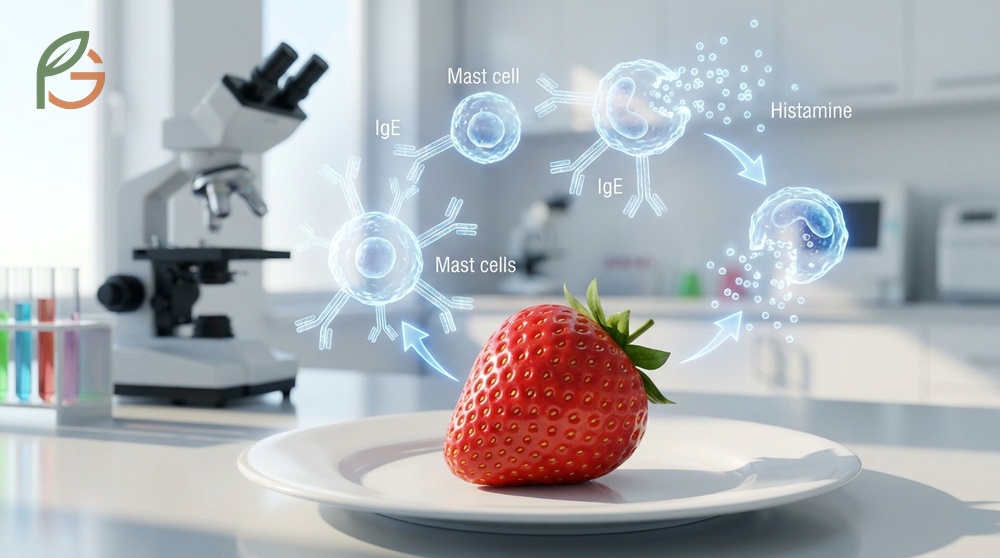
Medical research demonstrates that strawberry allergic reactions result from IgE antibody production when the immune system encounters specific fruit proteins[3]. These antibodies attach to mast cells and basophils, triggering histamine release upon subsequent exposures. The severity depends on individual sensitivity levels and the amount of allergen exposure.
Immediate vs Delayed Reactions
Studies show that true allergic reactions typically manifest within minutes of strawberry exposure, though some symptoms can appear up to two hours later[1]. The method of contact influences which symptoms appear first—ingestion causes oral and digestive symptoms, while skin contact primarily triggers localized reactions.
Agricultural data shows that strawberries grown in home gardens trigger the same allergic responses as commercial varieties. The allergen content doesn’t vary significantly based on cultivation methods or ripeness levels.
Understanding the Immune Response
Current medical guidance explains that the allergic cascade begins when allergen proteins cross-link IgE antibodies on cell surfaces[3]. This triggers degranulation, releasing histamine, tryptase, and other inflammatory mediators. These chemicals cause blood vessel dilation, increased mucus production, and smooth muscle contraction—the physiological basis for allergy symptoms.
- Individual immune sensitivity and previous exposure history
- Quantity of strawberries consumed or contacted
- Form of strawberry (raw fruit causes stronger reactions than cooked)
- Concurrent pollen allergies that cross-react
- Presence of asthma or other respiratory conditions
Oral Allergy Syndrome with Strawberries
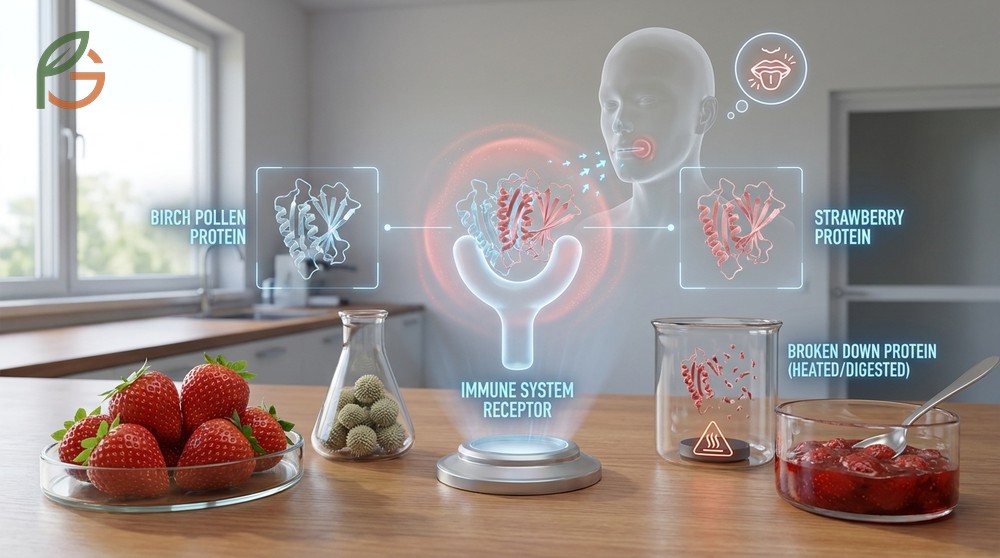
Research demonstrates that oral allergy syndrome (OAS), also called pollen-food allergy syndrome, represents a specific type of strawberry reaction caused by cross-reactivity between pollen proteins and fruit proteins[2]. The immune system mistakes similar protein structures, triggering localized reactions. Unlike standard food allergies, OAS proteins break down when heated or during digestion.
Birch Pollen Cross-Reactivity
Clinical data shows that up to 90% of individuals with birch pollen allergies experience oral allergy syndrome when eating raw strawberries[2]. Strawberries belong to the Rosaceae family, which shares protein structures with birch and alder tree pollens. Studies from birch-endemic regions found that 18-20% of birch pollen-sensitized patients develop OAS[5].
Evidence indicates that 60% of OAS patients react to three or more foods simultaneously[5]. Strawberries often cross-react with apples, peaches, cherries, plums, and other Rosaceae family members.
Important Note: Cooking neutralizes most OAS-causing proteins, allowing many affected individuals to safely consume cooked or processed strawberries in jams, pies, and sauces. However, strawberry and celery proteins remain stable even when heated[2].
OAS-Specific Symptoms
Medical literature describes OAS as a contact allergic reaction primarily affecting the mouth and throat where raw fruit touches tissue[6]. Symptoms typically begin within seconds to minutes of eating fresh strawberries. These reactions remain localized and rarely progress to systemic anaphylaxis.
- Itching and tingling of lips, tongue, and roof of mouth
- Scratchy or irritated sensation in the throat
- Mild swelling of lips, tongue, or throat
- Temporary burning sensation in oral cavity
- Symptoms that resolve within minutes to an hour after swallowing
Strawberry Skin Reactions
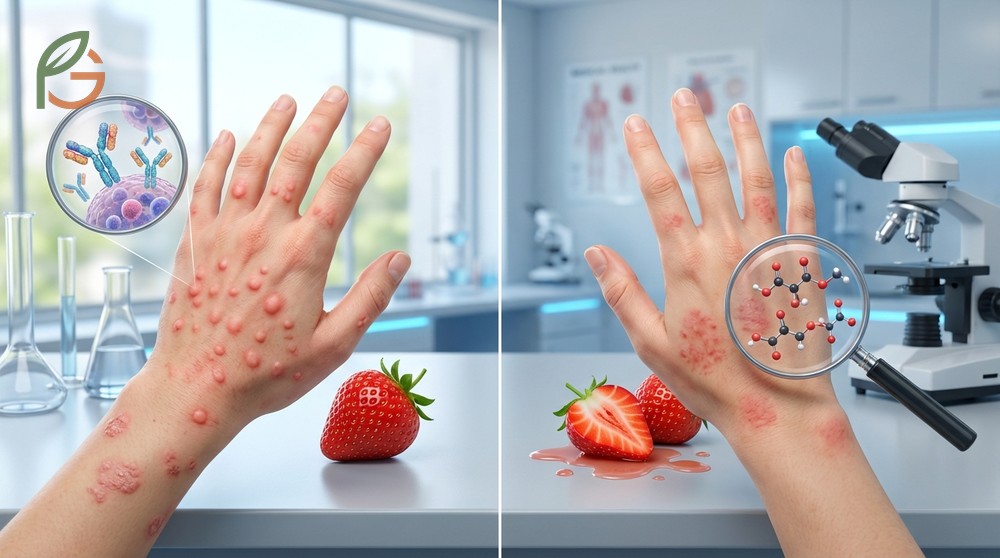
Dermatological research shows that strawberries trigger two distinct types of skin reactions—true allergic responses mediated by IgE antibodies and non-allergic contact irritation from fruit acids[3]. Understanding the difference helps gardeners and consumers respond appropriately. True allergic skin reactions produce itchy hives and can occur anywhere on the body, while contact irritation creates flat red patches limited to areas touched by fruit juice.
Hives and Eczema
Clinical evidence demonstrates that allergic hives (urticaria) appear as raised, red, intensely itchy welts that can migrate across the skin[4]. These develop within minutes to hours after strawberry exposure. Studies indicate that individuals with pre-existing atopic dermatitis (eczema) often experience worsened skin itchiness and inflammation after eating strawberries, with flare-ups lasting several days.
Agricultural workers handling strawberry plants may develop contact urticaria on hands and forearms even without eating the fruit. This occupational exposure represents a genuine allergic response requiring protective measures.
Contact Dermatitis
Pediatric allergy research reveals that contact reactions are particularly common in babies and young children but aren’t true allergies[3]. Strawberries contain high levels of natural ascorbic acid (vitamin C), which irritates sensitive skin around the mouth and neck. The acidic juice causes flat, red rashes that appear within seconds and persist for hours or trigger eczema flare-ups lasting days.
- True allergic reactions produce itchy, raised hives anywhere on the body
- Contact irritation creates flat, non-itchy red patches only where fruit touched skin
- Allergic reactions may include other symptoms like throat tightness or wheezing
- Contact reactions don’t involve immune system responses or produce systemic symptoms
- Allergic hives can appear even without direct skin contact with strawberries
Strawberry Intolerance vs Allergy
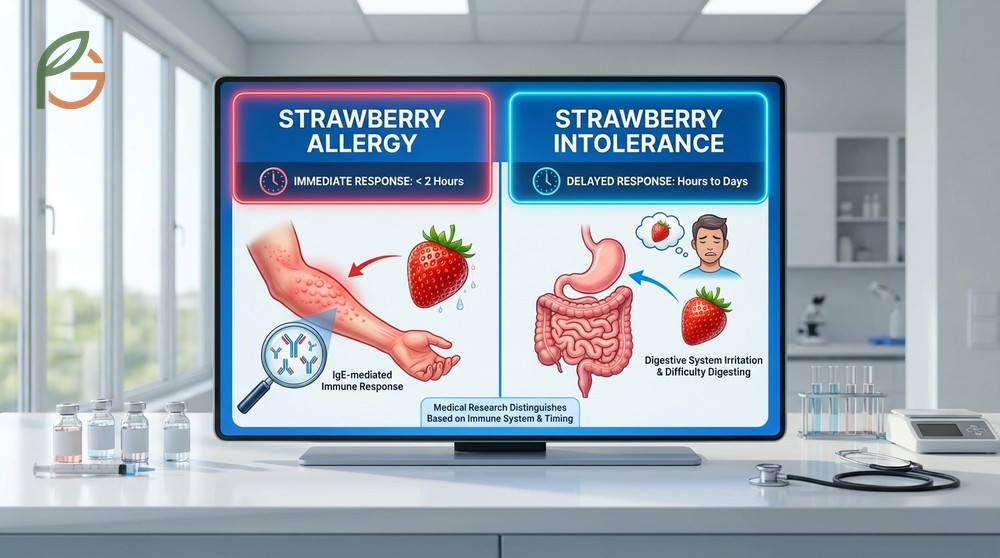
Medical research distinguishes between strawberry intolerance and true allergy based on immune system involvement and symptom timing[7]. Allergies trigger immediate IgE-mediated immune responses within minutes to two hours, while intolerances cause delayed digestive symptoms appearing hours to days later without immune involvement.
Studies show that strawberry intolerance primarily affects the gastrointestinal system through direct irritation or difficulty digesting specific compounds. Unlike allergies, intolerances don’t risk anaphylaxis and usually allow consumption of small quantities without severe consequences.
This table compares onset timing, symptoms, immune involvement, and severity between strawberry allergy and intolerance
| Characteristic | Strawberry Allergy | Strawberry Intolerance |
|---|---|---|
| Onset Timing | Minutes to 2 hours[1] | Hours to days[7] |
| Primary Symptoms | Oral itching, hives, throat tightness, breathing difficulty | Stomach pain, bloating, diarrhea, headaches |
| Immune System Involvement | Yes (IgE antibodies)[3] | No (digestive system issue) |
| Potential Severity | Can cause life-threatening anaphylaxis | Uncomfortable but not life-threatening |
| Reaction to Small Amounts | Yes, even trace amounts trigger symptoms | May tolerate small quantities |
- Stomach pain, upset, and cramping
- Bloating and gas
- Diarrhea or constipation
- Headaches
- Skin inflammation and flushing
- Mild facial or lip swelling (without throat involvement)
Managing Strawberry Allergy Symptoms

Current medical guidance emphasizes complete allergen avoidance as the primary management strategy for strawberry allergies[1]. This means carefully reading ingredient labels and avoiding foods containing strawberry extracts, flavorings, or derivatives. Home gardeners with strawberry allergies should wear gloves when handling plants and avoid breathing pollen during flowering.
Evidence shows that antihistamines effectively treat mild symptoms like itching, hives, and nasal congestion when taken after accidental exposure[4]. Over-the-counter options include cetirizine (Zyrtec) and loratadine (Claritin). However, antihistamines don’t prevent or reverse severe allergic reactions.
Research indicates that individuals diagnosed with severe strawberry allergies must carry epinephrine auto-injectors at all times[4]. Epinephrine counteracts anaphylaxis by constricting blood vessels, relaxing airway muscles, and reducing swelling. After using an auto-injector, immediate emergency medical care remains necessary.
- Avoid all strawberry-containing foods including jams, yogurts, desserts, and beverages
- Read ingredient labels carefully for strawberry derivatives and natural flavorings
- Inform restaurants and food establishments about your allergy before ordering
- Keep antihistamines readily available for accidental exposure
- Carry two epinephrine auto-injectors if diagnosed with severe allergy
- Wear medical alert identification indicating strawberry allergy
- Work with an allergist for proper diagnosis through skin prick or blood IgE testing
- Consider allergy testing for related foods if you have oral allergy syndrome
Conclusion
The evidence is clear: strawberry allergy symptoms range from mild oral itching and hives to severe anaphylaxis, requiring recognition and appropriate medical management. Most reactions remain manageable with antihistamines and allergen avoidance, but individuals with severe allergies need epinephrine auto-injectors and emergency action plans.
Current medical guidance emphasizes working with allergists for accurate diagnosis through IgE testing, especially for gardeners and fruit enthusiasts frequently handling strawberries. FruitGarden encourages readers experiencing repeated reactions to seek professional evaluation rather than self-diagnosing, as proper identification enables safer food choices and effective treatment strategies.
Medical Disclaimer
Important Medical Disclaimer: This content is for informational and educational purposes only. It’s not intended as a substitute for professional medical advice, diagnosis, or treatment. Always consult a qualified healthcare professional or board-certified allergist before making any changes to your diet, medication, or health routine, especially if you suspect a food allergy or have experienced allergic reactions. Severe allergic reactions require immediate emergency medical attention. If you experience difficulty breathing, throat swelling, or signs of anaphylaxis, call emergency services immediately.
Frequently Asked Questions
Can you suddenly develop a strawberry allergy as an adult?
Yes, adults can develop strawberry allergies at any age even if they’ve eaten strawberries safely for years. Research shows that new food allergies emerge when the immune system changes its response to specific proteins, though this is less common than childhood-onset allergies. Adults with new seasonal pollen allergies may simultaneously develop oral allergy syndrome to strawberries through cross-reactivity.
How long do strawberry allergy symptoms last?
Mild strawberry allergy symptoms typically resolve within a few hours, especially oral allergy syndrome reactions which often disappear within 15-60 minutes. Skin hives may persist for several hours to a day. Eczema flare-ups triggered by strawberry exposure can last several days. Severe anaphylactic reactions require immediate medical treatment and monitoring for hours afterward due to potential biphasic reactions.
Can I eat cooked strawberries if I have oral allergy syndrome?
Most people with oral allergy syndrome can safely eat cooked strawberries because heat breaks down the pollen-related proteins causing reactions. However, studies show strawberry proteins are more heat-stable than other fruits, so some individuals still react to cooked forms. Consult an allergist before trying cooked strawberries, and never test this if you’ve experienced severe reactions or anaphylaxis.
What foods should I avoid if I’m allergic to strawberries?
People with strawberry allergies should avoid all strawberry-containing products including jams, jellies, yogurts, smoothies, baked goods, and flavored beverages. Those with oral allergy syndrome may also react to related Rosaceae family fruits like apples, peaches, cherries, plums, pears, and apricots. Cross-reactivity with other berries is less common but possible, so introduce raspberries and blackberries cautiously under medical guidance.
Is strawberry intolerance the same as a strawberry allergy?
No, strawberry intolerance and allergy are different conditions. Allergies involve immune system IgE antibody responses causing rapid symptoms including hives, throat tightness, and potential anaphylaxis. Intolerances result from digestive system difficulties processing strawberries, causing delayed symptoms like bloating, stomach pain, and diarrhea hours to days later without immune involvement or risk of life-threatening reactions.
Can you outgrow a strawberry allergy?
Children may outgrow strawberry allergies, though this is less predictable than outgrowing milk or egg allergies. Studies suggest that many childhood food allergies resolve by adolescence as the immune system matures. Adults rarely outgrow food allergies that develop later in life. Periodic testing with an allergist can determine if the allergy has resolved, but never test at home by eating strawberries without medical supervision.
What’s the difference between contact dermatitis and allergic hives from strawberries?
Contact dermatitis from strawberries appears as flat, red, non-itchy patches only where acidic fruit juice touched skin, typically around the mouth in children. This isn’t a true allergy but irritation from natural acids. Allergic hives are raised, intensely itchy welts that can appear anywhere on the body, even without direct skin contact, indicating immune system involvement requiring different management.





