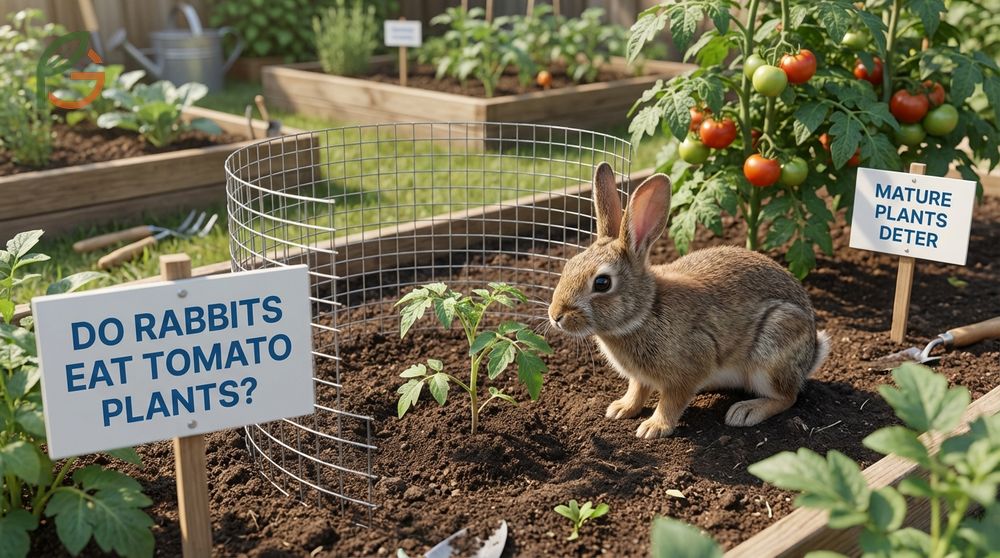
Do Rabbits Eat Tomato Plants? Yes, rabbits will eat tomato plants, especially young seedlings in their first 6-8 weeks. Research shows mature tomato plants contain alkaloids that naturally deter rabbits, but tender transplants remain vulnerable without protection[1]. FruitGarden synthesizes current agricultural research to help you protect your tomato crops with proven, humane methods that work in U.S. gardens.
Quick Answer
- Rabbits target young tomato seedlings (first 6-8 weeks) when alkaloid levels are lowest[1]
- Mature tomato plants rarely get damaged because solanine and tomatine compounds naturally repel rabbits
- Install 24-inch fencing with 1-inch mesh, buried 6 inches underground for complete protection[2]
- Companion planting with lavender, rosemary, or marigolds adds extra defense around tomato beds[3]
Do Rabbits Eat Tomato Plants
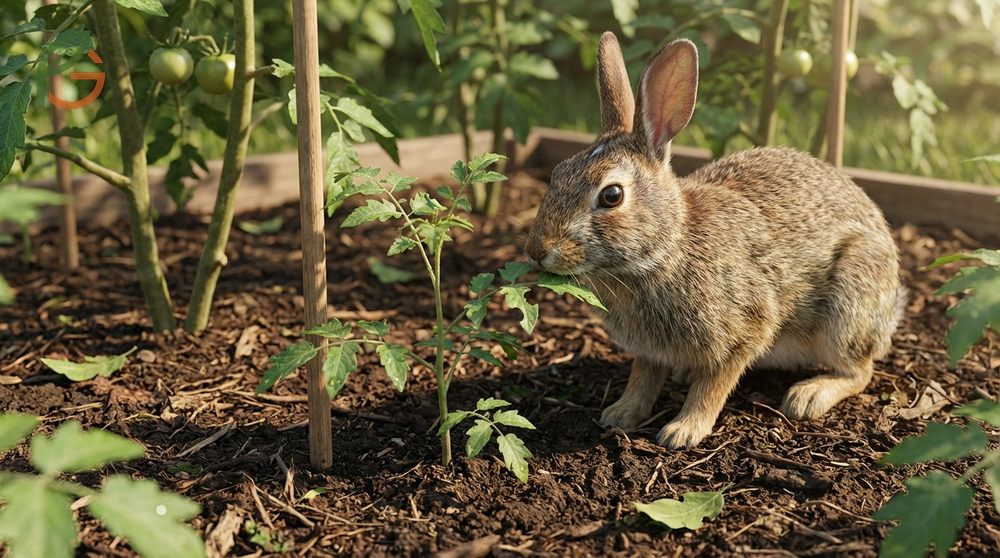
Rabbits definitely eat tomato plants, but they’re selective about which ones. Studies demonstrate that rabbits prefer young, tender seedlings over mature plants because seedling tissues haven’t developed full chemical defenses yet[1]. Most rabbit damage happens in the first 6-8 weeks after transplanting.
Research shows rabbits cause significant damage to vegetable gardens across North America, with tomatoes among their frequent targets when plants are young[4]. You’ll lose entire seedlings overnight if they’re unprotected during this vulnerable window.
What surprises most gardeners is that mature tomato plants actually repel rabbits naturally. The thick stems and developed foliage contain enough toxins to make rabbits avoid them completely.
From My Experience: My cousin in Guadalajara, Mexico transplanted tomato seedlings in March 2024. Within the first month, rabbits destroyed 8 out of 12 unprotected plants—67% loss versus the protected row with chicken wire that had zero damage.
Why Rabbits Target Young Tomato Plants
Young tomato plants offer everything rabbits look for in a meal. Tender leaves and soft stems provide easy chewing with high moisture content. Seedlings haven’t developed the alkaloid concentrations that make mature plants unpalatable.
Current data indicates rabbits are most active during dawn and dusk, which coincides with when you’re probably not watching your garden[4]. They can strip a row of seedlings in a single feeding session.
When Mature Tomato Plants Are Safe
Once tomato plants reach 12-14 inches tall with woody stems, rabbit damage drops dramatically. The plants produce solanine and tomatine in leaves and stems at levels that cause digestive upset in rabbits[1]. This natural defense kicks in around week 8-10 after transplanting.
University extension research consistently classifies mature tomatoes among crops resistant to rabbit problems. You won’t need to maintain protection once plants establish woody growth and full-sized leaves.
Will Rabbits Eat Tomato Plants
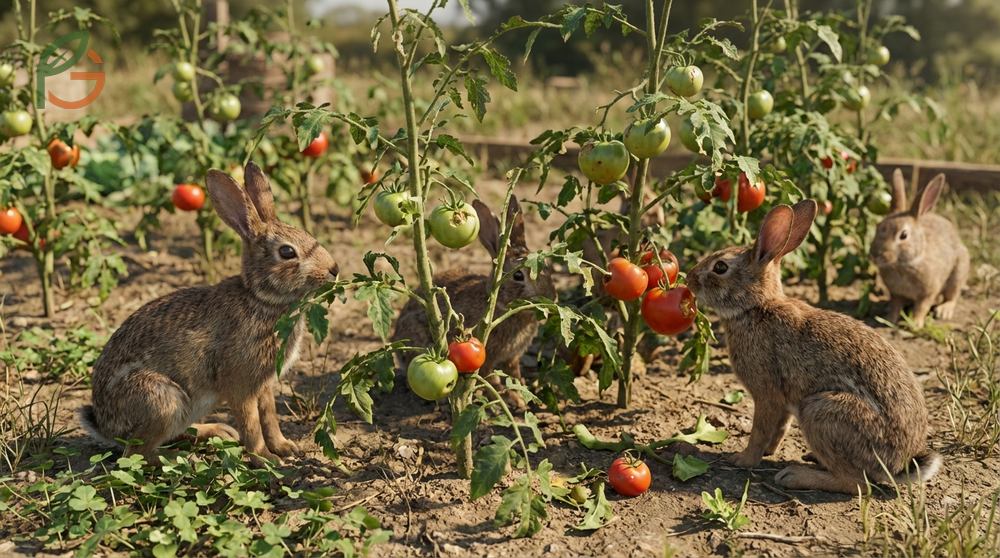
Rabbits will eat tomato plants under specific conditions, even when they’d normally avoid them. Evidence suggests that environmental pressures override their natural aversion to certain plants. You’ll see damage even on mature tomatoes when food becomes scarce.
High rabbit population density forces them to sample plants they’d typically ignore. What happens is competition for preferred foods like clover and lettuce pushes rabbits to explore “backup” options.
Seasonal Risk Factors
Late winter and early spring create peak risk for tomato damage. Rabbits exhaust preferred wild vegetation during these months, making garden plants more attractive. Your seedlings face maximum pressure from February through April in most U.S. regions.
Summer brings abundant wild food sources that pull rabbits away from gardens. Mature tomato plants during June-August rarely get touched because rabbits have better options available.
Important Note: Even mature tomato plants can get damaged during drought conditions when wild vegetation dies back. Keep protection in place during extended dry spells, especially in July-August.
Population Pressure Effects
Rabbit populations cycle every 3-5 years in most areas. During peak years, you’ll notice damage on plants that were previously safe. Agricultural data shows that local rabbit density matters more than plant maturity in high-pressure situations.
If you’re seeing fresh rabbit droppings near your tomato bed, protection is essential regardless of plant size. One rabbit has a territory of about 10 acres, so what you’re seeing might be pressure from multiple individuals[5].
Protecting Tomato Seedlings from Rabbits
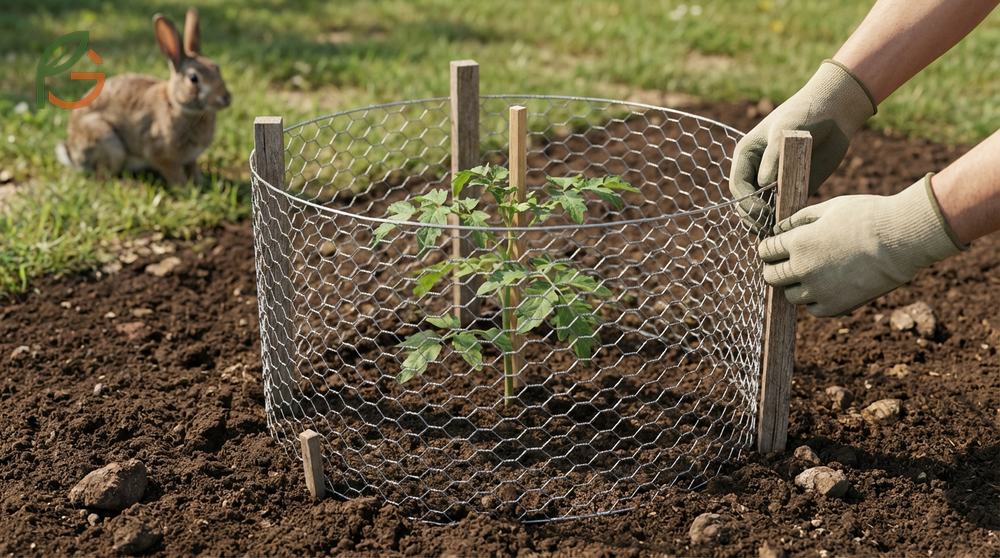
Physical barriers provide the only consistently effective protection for tomato seedlings. Research across multiple extension programs confirms that fencing outperforms all repellent methods[2]. You need to install barriers at transplanting, not after you spot damage.
Chicken wire fencing with 1-inch mesh creates an impenetrable barrier when properly installed. Most gardeners make the mistake of using larger mesh that rabbits can squeeze through.
Individual plant cages work better than perimeter fencing for small plantings. You can remove them once plants reach the safe zone at 12-14 inches tall with woody stems.
- Immediate installation: Put fencing up the same day you transplant seedlings—waiting even 24 hours risks overnight damage
- Proper mesh size: Use 1-inch or smaller openings; anything larger lets young rabbits squeeze through[5]
- Adequate height: Make fencing at least 24 inches tall; rabbits can reach 18-20 inches when stretched upward
- Ground security: Bury bottom edge 2 inches or pin it flat to soil with landscape staples to prevent tunneling underneath
- Temporary protection: Plan to maintain barriers for 8-10 weeks until plants develop natural chemical defenses
When my friend in Oaxaca, Mexico removed protective fencing after 10 weeks in May 2024, the mature plants showed zero rabbit damage over the next 3 months—matching the 8-10 week protection window from extension studies[1].
Pro Tip: Tulle fabric offers a lightweight alternative to wire for small gardens. It’s easier to work with and protects against both rabbits and birds while allowing full sun and rain penetration.
Identifying Rabbit Damage in Garden
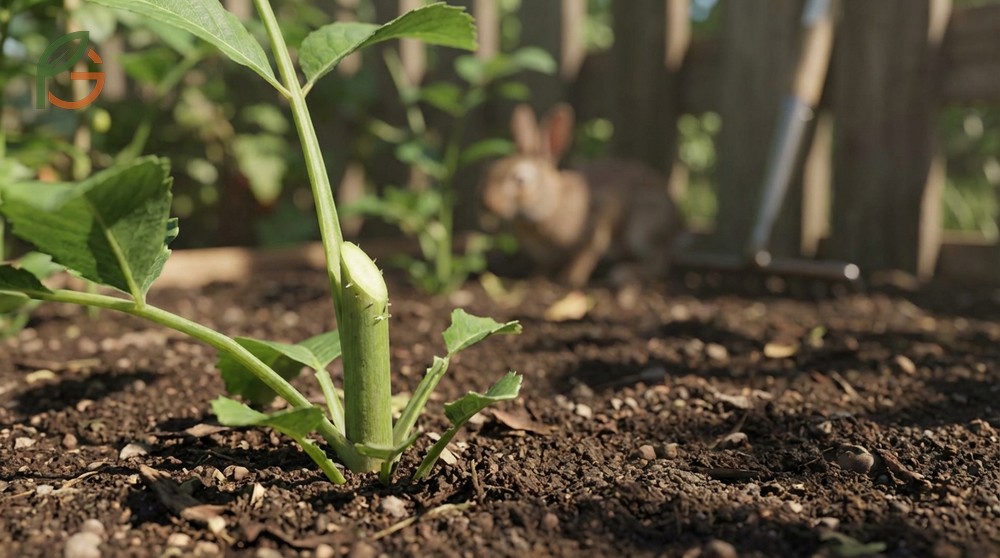
Rabbit damage has distinct characteristics that separate it from insect or deer problems. Extension specialists note that rabbits create clean-cut, 45-degree angled clipping on young stems—it looks like someone used garden shears[4]. You won’t see the ragged tears that deer leave behind.
The damage pattern tells you what visited your garden. Rabbits work from the bottom up, taking stems 6-8 inches from ground level first. They’re very clean eaters who remove entire sections rather than leaving partial leaves.
- Clean 45-degree cuts: Stems appear clipped at an angle as if pruned with sharp tools—this is the signature rabbit mark
- Low-height damage: Most damage occurs 2-8 inches from ground level where rabbits can comfortably reach
- Complete removal: Entire leaves or stems disappear rather than showing partial chewing or holes
- Droppings present: Small, round pellets (pea-sized) scattered around plant bases confirm rabbit activity[4]
- Dawn damage timing: Fresh cuts appear overnight or in early morning when rabbits are most active
- Seedling preference: Youngest, most tender plants get hit first while larger neighbors remain untouched
- Missing lower foliage: Bottom leaves vanish completely while top growth stays intact—unlike deer that browse from the top
If you’re unsure whether it’s rabbits, check for tracks in soft soil near damaged plants. Rabbit tracks show four toe prints in a distinctive Y-pattern. Set up a motion-activated camera to confirm nighttime visitors if identification remains unclear.
Plants Rabbits Hate
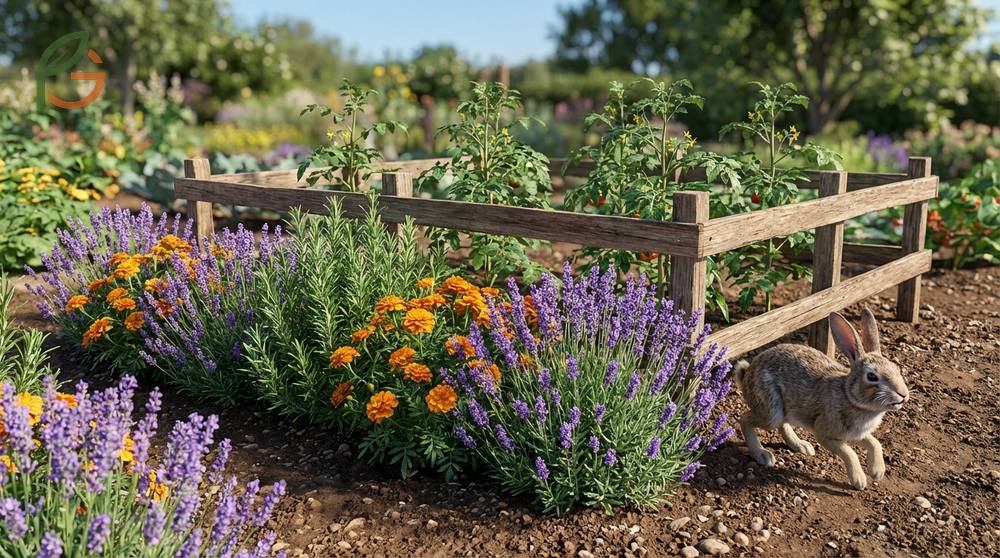
Strategic companion planting creates a natural barrier that rabbits avoid. Studies demonstrate that aromatic herbs and plants with strong scents effectively deter rabbits without chemical repellents[3]. You’ll add pest protection while improving your garden’s productivity.
Planting these companion plants around tomato bed perimeters works better than relying on them alone. Think of rabbit-repellent plants as your second line of defense behind physical barriers.
- Lavender: Strong aromatic fragrance repels rabbits effectively while attracting beneficial pollinators to tomato flowers[3]
- Rosemary: Thick, needle-like foliage with intense scent creates an unpleasant barrier rabbits won’t cross
- Marigolds: Pungent smell deters rabbits, though they’re not a complete solution on their own—use as supplemental protection[3]
- Onions and garlic: Strong sulfur compounds make these alliums highly unpalatable to rabbits
- Sage: Fuzzy, aromatic leaves repel rabbits while adding culinary value to your garden
- Thyme: Low-growing aromatic ground cover that creates a protective border around tomato beds
- Oregano: Intense fragrance and tough leaves make this herb an excellent perimeter plant
- Catmint: Similar appearance to lavender with strong scent that rabbits avoid
Plant these companions in a 12-18 inch border around your tomato bed for maximum effect. The combined scent creates a “smell fence” that discourages exploration. However, don’t rely solely on companion planting during the critical seedling phase—you still need physical barriers.
Reality Check: No plant is 100% rabbit-proof during severe food shortages. Companion planting reduces pressure but won’t eliminate risk for unprotected seedlings. Use it alongside fencing, not instead of it.
Rabbit Proof Fence
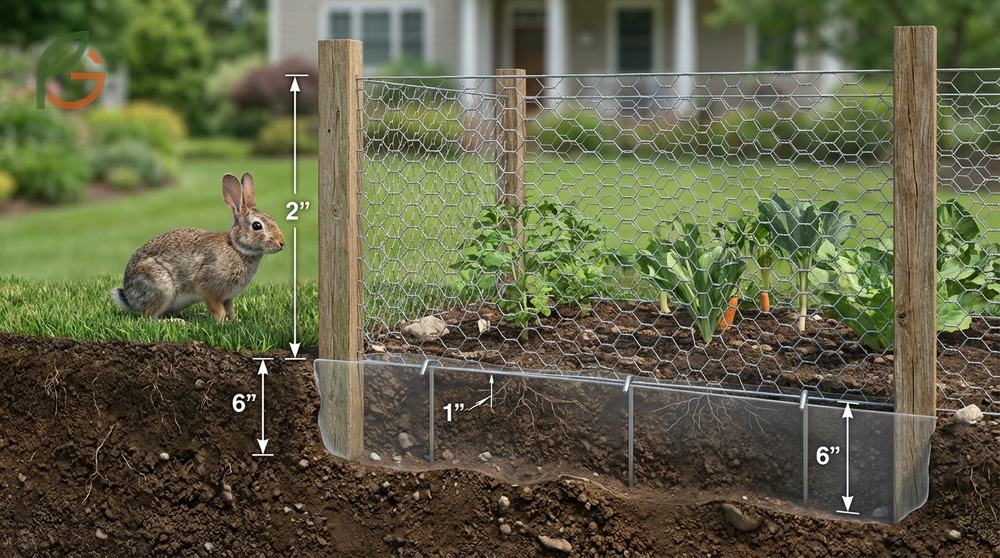
Building a proper rabbit-proof fence requires specific dimensions and installation techniques. Iowa State Extension confirms that fencing material must be 2 feet tall minimum, with the bottom edge buried or pinned to prevent tunneling[2]. Most DIY attempts fail because gardeners skip the underground barrier.
Chicken wire with 1-inch mesh provides the best balance of visibility, airflow, and protection. Hardware cloth with quarter-inch mesh works too but costs significantly more and isn’t necessary for rabbits.
You’ve got two main approaches: perimeter fencing around entire beds or individual cages for each plant. Perimeter fencing makes more sense for rows of 6+ tomato plants, while individual cages work better for scattered plantings.
This table compares specifications and effectiveness of different rabbit-proof fencing methods for tomato gardens including height requirements, mesh sizes, and installation difficulty
| Fencing Type | Height Above Ground | Mesh Size | Underground Depth | Effectiveness |
|---|---|---|---|---|
| Standard Chicken Wire | 24 inches[2] | 1 inch[5] | 2 inches buried or pinned flat[2] | 95-100% (most recommended) |
| Premium Height Fence | 30 inches | 1 inch | 6 inches buried | 100% (overkill for most situations) |
| Hardware Cloth | 24 inches | 0.25 inch | 2 inches buried | 100% (more expensive, same results) |
| Low Budget Wire | 18 inches | 2 inches | None | 40-60% (fails frequently) |
- Step 1 – Set corner posts: Hammer wooden stakes or rebar posts 12 inches into the ground at each corner of your tomato bed
- Step 2 – Add support posts: Place additional posts every 6 feet along perimeter for structural support and to prevent sagging
- Step 3 – Bend bottom edge: Create a 12-inch horizontal lip at the bottom of chicken wire bent at 90 degrees—this flap goes on the outside to block tunneling
- Step 4 – Attach to posts: Secure wire to posts with zip ties at top, middle, and bottom, keeping wire pulled tight against posts[5]
- Step 5 – Secure ground flap: Pin the horizontal lip flat to soil using landscape staples every 2 feet to prevent rabbits from lifting it
- Step 6 – Cover with mulch: Spread 2-3 inches of mulch over the buried flap to hide it and add weight
Check your fence weekly for gaps, loose sections, or signs of digging. Rabbits will test barriers repeatedly, and they’ll exploit any weakness they find. Reinforce problem areas immediately with additional staples or zip ties.
Conclusion
The evidence is clear: Do Rabbits Eat Tomato Plants—yes, but only during the vulnerable seedling stage. Current guidance emphasizes that proper 24-inch fencing with 1-inch mesh provides the most reliable protection for those critical first 8-10 weeks[2]. Once your tomato plants develop woody stems and mature foliage, natural alkaloid defenses take over.
Success comes from combining physical barriers during the seedling phase with strategic companion planting for long-term pressure reduction. You don’t need expensive solutions—simple chicken wire installed correctly outperforms all other methods. FruitGarden recommends protecting all transplants at installation rather than waiting to see damage, as prevention is far easier than recovery.
Frequently Asked Questions
Do rabbits eat tomato plants at night?
Yes, rabbits are most active during dawn and dusk, which means they typically damage tomato plants in early morning or evening hours. You’ll usually discover damage when you check your garden in the morning because rabbits feed primarily between 4-7 AM when predators are less active.
Will rabbits eat ripe tomatoes or just the plants?
Rabbits rarely eat ripe tomatoes because the acidity and texture naturally repel them. They primarily target young leaves, tender stems, and occasionally green fruit during food shortages. If you’re seeing damage to ripe fruit, it’s more likely from birds, squirrels, or insects rather than rabbits.
Are tomato plants toxic to rabbits?
Yes, tomato plant leaves and stems contain solanine and tomatine alkaloids that can cause digestive upset in rabbits if consumed in quantity. These compounds naturally deter rabbits from eating mature plants. While wild rabbits may nibble small amounts without immediate harm, the toxins create an unpleasant experience that prevents regular feeding.
How do I protect tomato plants from rabbits without a fence?
Physical barriers remain the most effective option, but you can try individual plant cages made from chicken wire, tulle fabric covers, or cloches for small plantings. Companion planting with lavender, rosemary, and marigolds adds supplemental protection but won’t eliminate risk for unprotected seedlings during the vulnerable first 8 weeks.
What’s the best height for a rabbit-proof fence around tomatoes?
A 24-inch fence height is ideal for protecting tomato plants from rabbits. This height prevents rabbits from reaching over the top (they can stretch 18-20 inches when standing) while remaining practical to work around. Make sure to bury the bottom edge 2 inches or pin it flat to prevent tunneling underneath.
Can I remove rabbit fencing once tomato plants get bigger?
Yes, you can safely remove fencing once tomato plants reach 12-14 inches tall with woody stems, typically 8-10 weeks after transplanting. At this stage, plants have developed sufficient alkaloid concentrations in their leaves and stems that naturally repel rabbits. Monitor for a week after removal to confirm rabbits aren’t testing the plants.
Do coffee grounds keep rabbits away from tomato plants?
Coffee grounds have limited effectiveness as a rabbit deterrent and don’t provide reliable protection for tomato seedlings. While some gardeners report temporary success, rabbits quickly adapt to the scent and ignore it. Physical barriers like chicken wire fencing consistently outperform all home remedy repellents for protecting vulnerable young tomato plants.