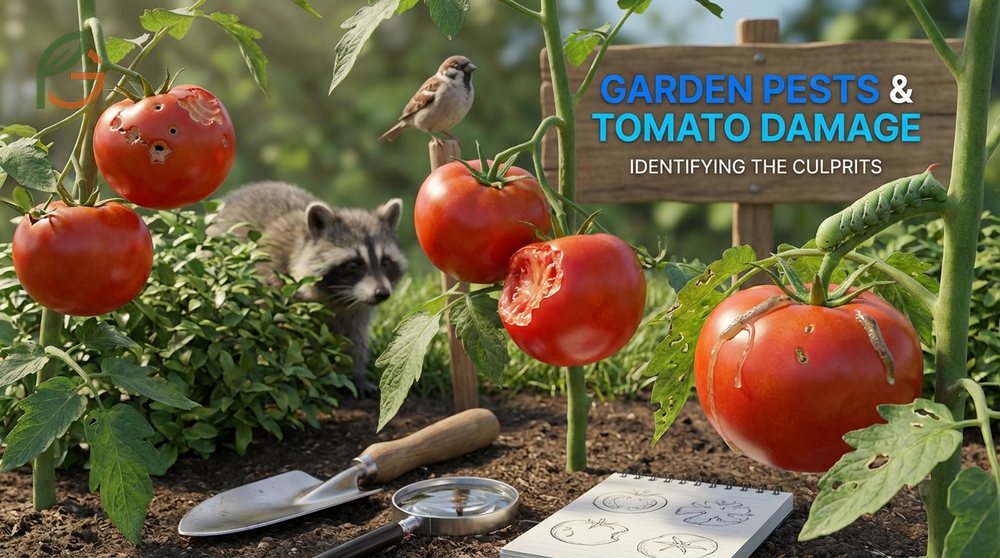
What is eating my tomatoes? The answer depends on the damage pattern you’re seeing. Research shows the most common culprits include birds like crows and sparrows, mammals such as raccoons and squirrels, rodents including rats and mice, and garden pests like slugs and tomato hornworms. Each pest leaves distinctive clues—from beak marks and slime trails to half-eaten fruits—that help you identify the thief and take targeted action. FruitGarden synthesizes current gardening research to help you protect your tomato harvest.
Quick Answer
- Birds create small puncture marks and shallow pecks on ripe tomatoes[2]
- Raccoons leave half-eaten tomatoes and scattered debris near plants[1]
- Slugs produce irregular holes with silvery slime trails on leaves and fruit[3]
- Rodents gouge rounded holes with incisor teeth marks visible on damaged tomatoes[2]
What Is Eating My Tomatoes
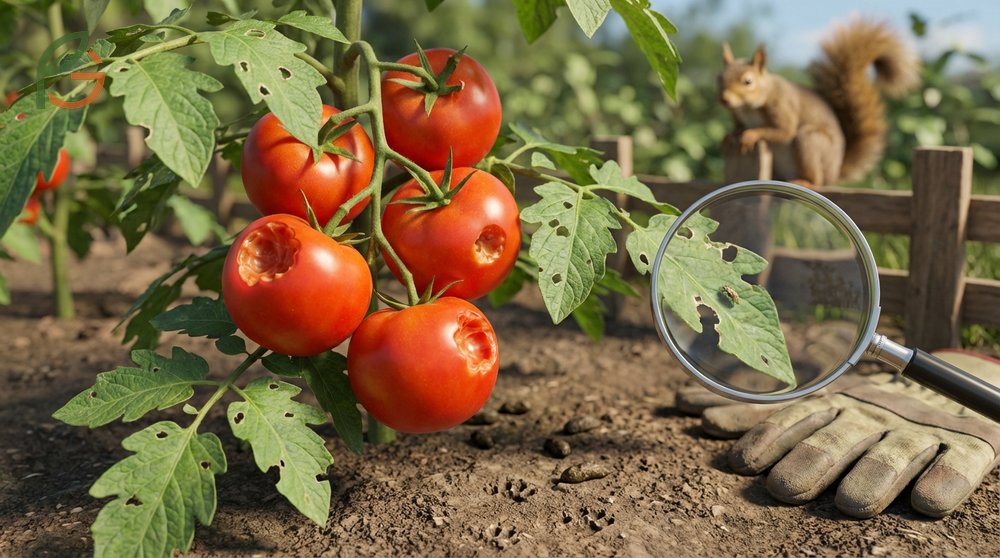
Studies show that tomato gardens face threats from both vertebrate animals and invertebrate pests. The damage you’re seeing could come from over a dozen different species, each targeting tomatoes at different times and leaving unique evidence behind. Most people don’t realize that identifying the culprit requires examining three key factors: the type of damage, the time of day it occurs, and physical evidence like tracks or droppings.
Daytime raiders include squirrels, chipmunks, and groundhogs that boldly attack in broad daylight, often taking bites from multiple tomatoes[1]. Birds like crows and sparrows cause significant damage by pecking at ripe fruits, particularly targeting the juiciest specimens. The reason timing matters is simple: if you’re seeing fresh damage only in the morning, you’re dealing with nocturnal feeders rather than daytime pests.
Current guidance emphasizes looking at where the damage appears on your plant. Fruits near the ground suggest groundhogs or rabbits, while damage high on the vine points to birds or climbing mammals. What often gets overlooked is that many pests prefer ripe tomatoes over green ones because they’re after both food and hydration from the juicy flesh.
Signs of Rodent Damage on Tomatoes
Rodent damage stands out because of distinctive gouging patterns. Rats and mice use their sharp incisor teeth to carve out sections of tomatoes, leaving rounded holes with visible track marks from their teeth[2]. Unlike bird pecks which create sharp punctures, rodent holes have smoother, more rounded edges.
You’ll often find droppings near the base of damaged plants, and half-eaten tomatoes scattered on the ground rather than left on the vine. Mice tend to work from the ground up while rats can climb, so damage at various heights suggests rat activity. Research indicates rodents prefer feeding at night when they’re protected from predators and the cooling temperatures make foraging more comfortable.
- Rounded gouges with visible incisor teeth marks on fruits
- Dark droppings scattered near plant bases and along pathways
- Half-eaten tomatoes found on the ground rather than attached to vines
- Damage concentrated at ground level for mice, at various heights for rats
- Fresh damage appearing overnight, typically discovered in early morning
Important Note: If you’re seeing both teeth marks and missing chunks but no droppings, you might be dealing with voles instead of rats. Voles leave grooves in leaves and create shallow tunnels near plant roots, distinguishing them from other rodents.
Bird Pecks on Tomatoes
Bird damage appears as small, deep puncture marks that look exactly like what they are—stab wounds from a beak. The key to identifying bird damage is examining tomatoes that have only been partially eaten, where you’ll find individual puncture marks consistent with beak strikes driven into the soft flesh[2]. Even severely damaged tomatoes show these puncture marks around the edges of the damaged area.
Birds typically leave fruits attached to the vine and don’t scatter remnants around the plant base. They’re active only during daylight hours, so if damage appears exclusively during the day, birds are your likely culprits. Most birds target ripe, brightly colored tomatoes because the red color signals peak ripeness and maximum moisture content for hydration.
From My Experience: My cousin in Guadalajara, Mexico had mockingbirds attacking her cherry tomatoes in June 2024. She counted 12 pecked fruits in a single morning—all had the distinctive small puncture marks but were still hanging on the vines, matching exactly what research describes about bird feeding patterns.
What Animals Eat Tomato Plants
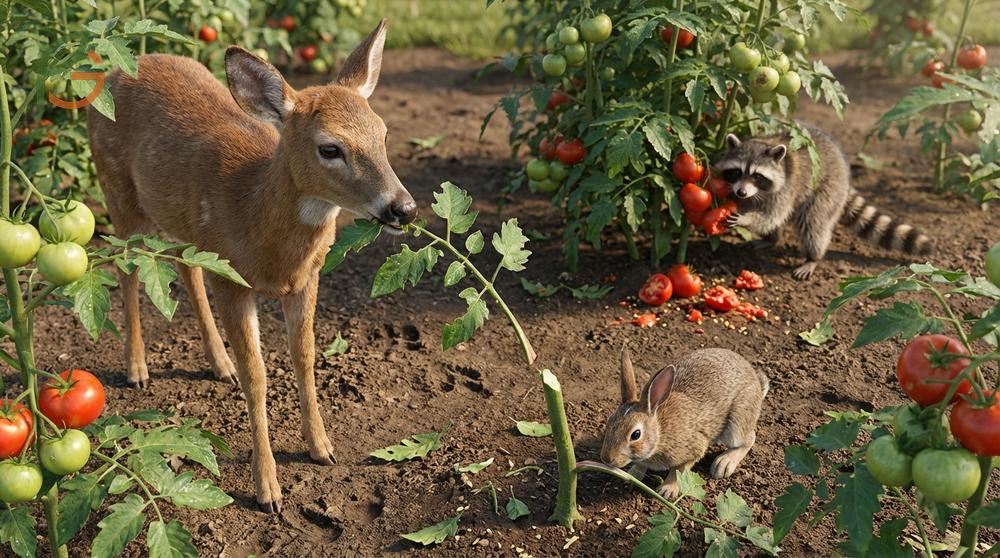
Evidence from agricultural studies shows mammals cause the most dramatic tomato damage. Deer leave ragged edges on leaves with rough, torn appearance. Rabbits create distinctive 45-degree angle cuts on stems and lower foliage, their sharp teeth making clean diagonal slices. The damage pattern tells you not just what’s eating your plants, but also how to prioritize your defenses.
Raccoons stand out as particularly destructive because they’re intelligent, persistent, and strong enough to overcome basic barriers. They often leave half-eaten tomatoes scattered around the garden and will return night after night once they’ve discovered your plants. Research indicates raccoons prefer eating tomatoes near water sources where they can wash their food, a distinctive behavioral pattern that helps with identification.
Larger mammals like groundhogs can devastate entire plants, consuming foliage along with fruits. They may also dig burrows near your garden, creating secondary problems with root damage and soil disturbance. Agricultural data shows groundhogs feed both during the day and at night, making them harder to catch in the act than strictly nocturnal pests.
- Deer create ragged, torn edges on leaves at heights of 2-6 feet
- Rabbits make clean 45-degree angle cuts on stems and lower branches
- Raccoons scatter half-eaten fruits and often seek nearby water sources
- Squirrels leave medium to large holes, taking bites from multiple tomatoes
- Groundhogs consume entire plants including stems, leaving burrow entrances nearby
Slug Damage on Tomatoes
Slugs use specialized file-like mouthparts called radula to rasp plant tissue, creating irregular-shaped holes in leaves, flowers, and fruits[3]. The most reliable sign isn’t just the holes themselves but the silvery slime trails they leave behind on leaves, stems, and soil. This dried mucus creates a telltale sheen that confirms slug activity even when you don’t see the pests.
Research shows slugs are generally active at night when it’s cool and damp, though they’ll feed during overcast, moist days. You’ll notice damage appears on lower leaves and fruits near the ground because slugs can’t climb well on dry surfaces. Severe slug feeding can injure seedlings significantly, while older, established tomato plants tolerate defoliation better.
Current data indicates slugs target fresh growth and ripening fruits with high moisture content. The irregular holes often appear inside leaves rather than just at edges—you’ll see round holes surrounded by otherwise intact leaf tissue. Slugs frequently crawl up the midrib of leaves and reach out to feed on the center sections, creating a distinctive damage pattern.
Quick Tip: Check for slime trails early in the morning when they’re still wet and visible. By midday, dried trails can be harder to spot, but they’ll still reflect light with a silvery sheen on close inspection.
Raccoon Proofing Tomatoes
The best approach to raccoon-proofing involves exclusion through properly designed fencing. Standard fences don’t work because raccoons are excellent climbers—they’ll simply scale a 6-foot fence with ease. Studies show adding an outward-angled top section prevents climbing, as raccoons can’t navigate the overhang[5].
First-tier defenses include removing water sources near your garden, as raccoons prefer washing their food before eating. Spreading blood meal or commercial raccoon repellent around your garden perimeter works but requires refreshing every few days, especially after rain. Keeping a bright light on near your garden at night deters raccoons, though results vary by individual animal boldness.
For persistent problems, motion-detector sprinklers provide effective deterrence without chemicals or traps. These devices cost around $65 and startle approaching raccoons with sudden water bursts, teaching them to avoid the area. Live trapping with fruit and vegetable bait offers a last resort—set traps near raccoon trails for best results, but be prepared to deal with captured animals humanely according to local regulations.
What Eats Tomato Plants at Night
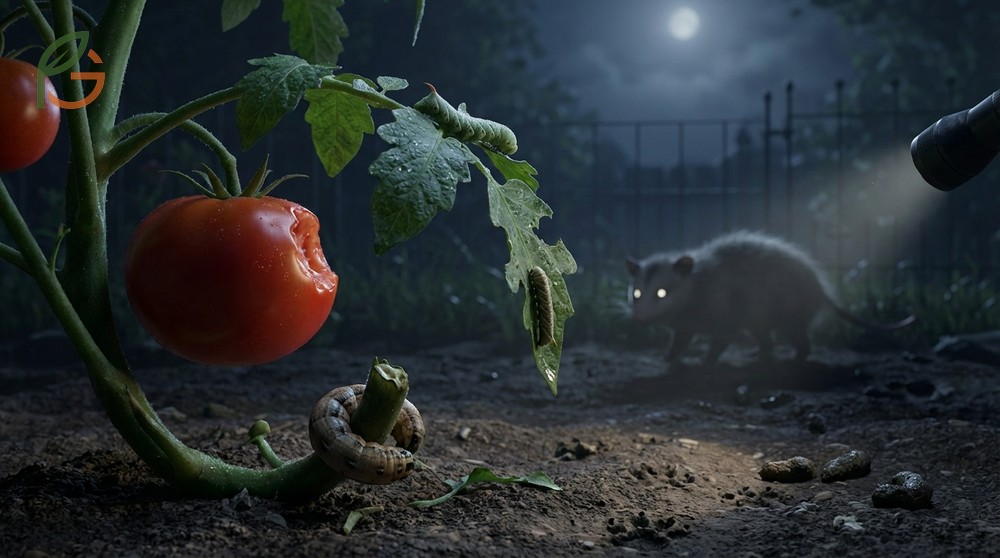
Nocturnal tomato pests present unique challenges because they feed under cover of darkness, making direct observation difficult. Common nighttime raiders include deer, raccoons, opossums, skunks, rabbits, and various insect pests like cutworms and tomato hornworms[1]. Each leaves distinctive evidence that helps you identify them without staying up all night.
Opossums feed on whole tomato fruits and typically work alone, creating less scattered mess than raccoons. Skunks can devastate young tomato plants on their first visit but usually move on afterward. Cutworms—caterpillars that sever young plants at the base—chew through stems overnight, leaving toppled seedlings as morning evidence.
What makes night pests particularly frustrating is they exploit your absence. While you’re sleeping, they’re feasting without interruption. The solution isn’t necessarily staying awake to guard your plants, but rather understanding their patterns so you can implement targeted defenses that work 24/7.
- Deer leave ragged leaf edges and can strip plants to bare stems overnight
- Raccoons scatter half-eaten tomatoes and create general garden chaos
- Opossums consume whole fruits cleanly without much scattered debris
- Rabbits make 45-degree angle cuts visible on stems and lower branches
- Cutworms sever seedlings at soil level, leaving toppled plants by morning
- Slugs create irregular holes with silvery slime trails as calling cards
Night Cam for Garden
Wildlife cameras eliminate guesswork by capturing photo or video evidence of exactly what’s attacking your tomatoes. These motion-activated devices use infrared technology to record nocturnal visitors without visible light that might spook animals. Current garden monitoring equipment ranges from basic trail cameras at $40 to sophisticated wireless models with smartphone connectivity at $150-200.
Position your camera 3-4 feet off the ground, angled toward your most damaged plants. Set the motion sensor to medium sensitivity to avoid triggering on wind-blown branches while still catching animal movement. You’ll want to check the memory card every few days initially to verify you’re capturing useful footage and adjust positioning as needed.
Research from gardening communities shows cameras often reveal surprising culprits. What you assumed was raccoon damage might actually be possums, or those “slug holes” could be nocturnal caterpillar feeding. The visual evidence lets you implement species-specific deterrents rather than wasting money on generic solutions that don’t address your actual pest.
Pro Tip: Use cameras with time-stamping features to identify peak feeding times. If damage occurs consistently between 2-4 AM, you can schedule motion-activated deterrents to operate during those specific hours, saving battery life and water.
Identifying Tomato Damage Patterns
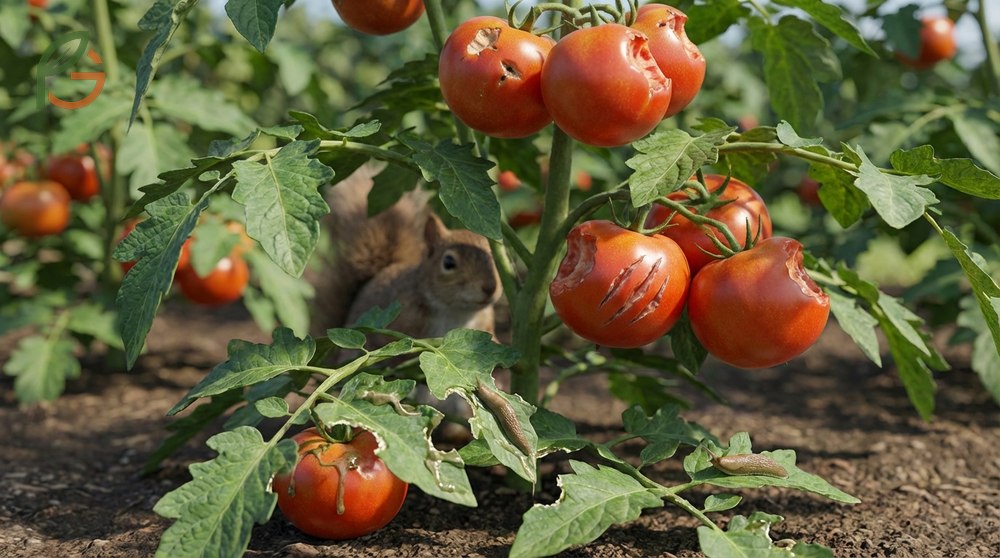
Accurate identification starts with examining three damage characteristics: location, pattern, and associated evidence. Damage on lower leaves and ground-level fruits suggests ground-dwelling pests like slugs or rabbits. Mid-height damage points to climbing animals or larger mammals, while damage concentrated on upper fruits indicates birds or tall animals like deer.
The damage pattern itself reveals feeding mechanisms. Clean cuts indicate teeth or mandibles, while rough tears suggest pulling or ripping. Puncture marks mean beaks, while gouges with teeth marks identify rodents. Irregular holes with smooth edges typically come from chewing insects with specialized mouthparts.
This table compares five types of tomato pests, their distinctive damage patterns, timing of activity, and physical evidence they leave behind
| Pest Type | Damage Pattern | Activity Time | Physical Evidence |
|---|---|---|---|
| Birds | Small puncture marks, shallow pecks[2] | Daylight only | Fruit stays on vine, no debris |
| Rodents | Rounded gouges with teeth marks[2] | Night | Droppings, half-eaten fruits on ground |
| Slugs | Irregular holes, smooth edges[3] | Night, damp days | Silvery slime trails, moist residue |
| Raccoons | Large chunks missing, scattered debris[1] | Night | Paw prints, tipped containers |
| Deer | Ragged tears on leaves and stems | Dawn, dusk, night | Hoof prints, browse line at 2-6 feet |
Physical evidence completes the identification puzzle. Droppings, tracks, slime trails, and scattered plant material all point to specific culprits. Fresh damage timing matters too—discovering new holes every morning means nocturnal feeders, while damage appearing throughout the day indicates diurnal pests or persistent feeding by multiple species.
Protecting Tomato Plants from Pests
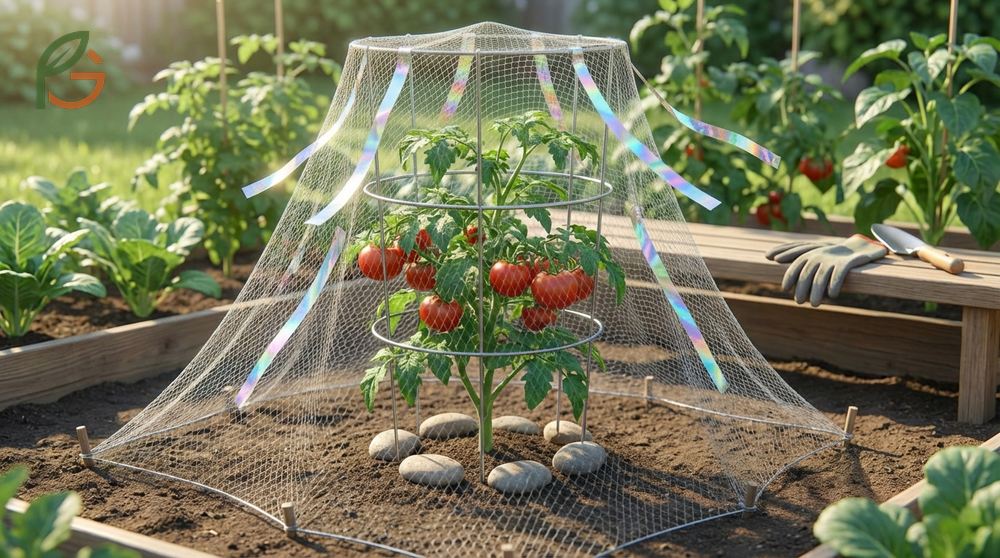
Effective protection combines physical barriers, biological controls, and behavioral deterrents tailored to your specific pests. For birds, netting provides the most reliable exclusion—drape lightweight bird netting over tomato cages, securing it at ground level to prevent access from below. Reflective tape fluttering in the breeze deters some birds through visual disturbance and noise.
Slug control works best with multiple approaches. Remove garden debris and mulch where slugs hide during the day. Hand-picking at night when they’re active removes immediate threats. Copper tape around raised beds creates a barrier slugs won’t cross, while beer traps sunk into soil attract and drown them. Studies demonstrate that reducing moisture through proper spacing and morning watering decreases slug populations over time[4].
For mammal pests, fencing height and design matter more than just presence. Rabbits need 2-foot fencing buried 6 inches underground to prevent burrowing. Deer require 8-foot heights or angled designs they can’t jump. Raccoon-proof fencing needs outward-angled tops they can’t climb over. Electric fencing with two strands—one at 6 inches and another at 12 inches—stops most ground animals through mild shock conditioning.
- Physical barriers like netting, row covers, and properly designed fencing
- Motion-activated deterrents including sprinklers and lights that startle pests
- Companion planting with marigolds, basil, and garlic that repel certain insects
- Hand-picking pests during their active hours for immediate population reduction
- Biological controls using beneficial insects like ladybugs and lacewings
- Habitat modification by removing hiding spots and water sources near gardens
- Harvest timing that picks tomatoes at first blush before peak ripeness attracts pests
Prevention Strategy: The most effective defense is layered protection. Don’t rely on a single method—combine fencing with motion deterrents, add companion plants, and maintain good garden hygiene. This multi-barrier approach forces pests to work harder for access, often convincing them to seek easier food sources elsewhere.
Conclusion
The evidence is clear: successfully protecting your tomatoes from pests requires accurate identification first, then targeted action based on the specific culprit. What is eating my tomatoes stops being a frustrating mystery once you learn to read the damage patterns, timing, and physical evidence each pest leaves behind. Whether you’re dealing with bird pecks, rodent gouges, slug holes, or raccoon raids, the solutions exist—you just need to match the right defense to the right pest.
Current guidance emphasizes prevention through smart garden design: proper spacing for airflow that discourages slugs, fencing designed for your specific animal threats, and harvest timing that beats pests to ripe fruits. FruitGarden provides research-backed strategies that work for home gardeners, helping you enjoy the tomato harvest you’ve worked hard to grow.
Frequently Asked Questions
How do I know if birds or squirrels are eating my tomatoes?
Birds leave small, deep puncture marks from their beaks and typically feed only during daylight hours, leaving fruits attached to vines. Squirrels create larger holes and often take bites from multiple tomatoes, leaving partially eaten fruits scattered on the ground or carried away to eating spots.
What animal eats tomatoes at night and leaves them half-eaten?
Raccoons commonly leave half-eaten tomatoes scattered around the garden after nocturnal feeding. They’re messy eaters who take large bites and often sample multiple fruits in one visit. Opossums also feed at night but tend to consume fruits more completely with less debris.
Can I use coffee grounds to stop slugs from eating tomato plants?
Coffee grounds show mixed results as a slug deterrent. While some gardeners report success, research indicates slugs will cross coffee barriers when sufficiently motivated by food. More reliable methods include copper tape barriers, beer traps, hand-picking at night, and reducing garden moisture through proper watering practices.
What leaves slime trails on tomato plants?
Slugs and snails produce silvery slime trails as they move across leaves, stems, and soil. This mucus helps them stay lubricated and traverse surfaces. Fresh trails appear wet and shiny, while older trails dry to a silvery sheen that’s still visible for several days after the pest has moved on.
How do I tell the difference between rat and possum damage on tomatoes?
Rats leave distinctive rounded gouges with visible incisor teeth marks and often scatter droppings near damaged plants. Possums create larger bite marks without teeth tracks and typically consume fruits more completely or carry them away. If damage lacks both beak punctures and teeth marks, possums are the likely culprit.
When should I harvest tomatoes to prevent pest damage?
Harvest tomatoes when they show first color change or “breaker” stage—when fruits just begin turning from green to pink or red. They’ll continue ripening indoors on a sunny windowsill, and picking at this stage prevents birds and mammals from targeting fully ripe fruits that signal peak moisture and sweetness.
What’s the best wildlife camera for monitoring garden pests?
Look for trail cameras with infrared night vision, motion activation, and at least 12-megapixel resolution. Models in the $60-100 range from brands like Bushnell or Moultrie work well for garden monitoring. Choose cameras with fast trigger speeds (under 0.5 seconds) to catch quick-moving animals, and consider battery life if you can’t check the camera daily.