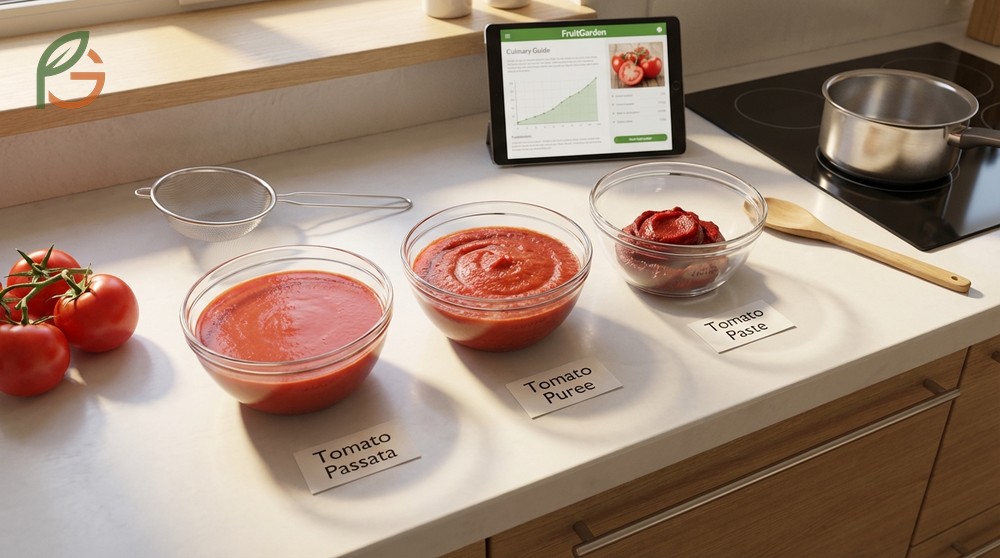
What Is Tomato Puree? It’s cooked tomatoes that’ve been strained to remove seeds and skins, containing 8-24% tomato solids[1]. Research shows that understanding the differences between tomato products can dramatically improve your cooking results. FruitGarden synthesizes USDA standards and culinary data to help you choose the right tomato product every time.
Quick Answer
- Tomato puree contains 8-24% solids[1] and has a smooth, pourable consistency
- Tomato paste is concentrated with 24-30% solids[2], making it three times thicker than puree
- Passata is uncooked strained tomato puree with a fresh, bright flavor
- You can substitute 2-3 tablespoons of puree for 1 tablespoon of paste in recipes
What Is Tomato Puree
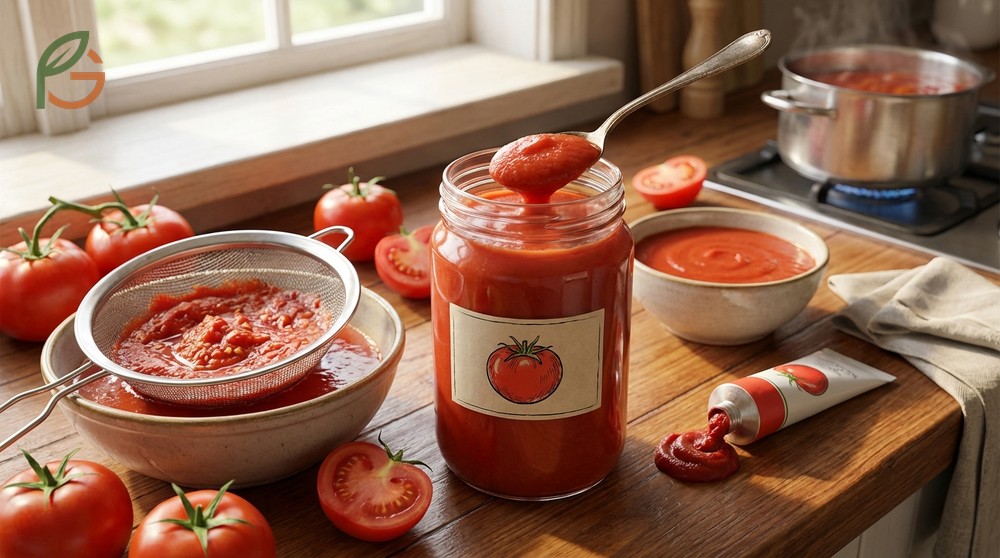
Tomato puree sits right between tomato sauce and tomato paste in terms of thickness. The USDA defines it as containing at least 8% but less than 24% salt-free tomato solids[1]. This makes it thicker than sauce but more pourable than paste.
What you’re getting is tomatoes that’ve been cooked briefly, then strained to remove seeds and skins. Unlike store-bought sauces, authentic tomato puree doesn’t contain added seasonings, sugar, or thickeners—just pure tomato flavor[2]. This blank canvas quality makes it incredibly versatile for building your own flavored sauces.
Research shows that puree’s smooth consistency comes from mechanical processing rather than long cooking times. The shorter cooking preserves more of the tomato’s fresh, bright acidity compared to heavily reduced products like paste.
How Tomato Puree Is Made
The production process starts with selecting ripe, sound tomatoes. Manufacturers cook them briefly to soften the flesh, then pass the mixture through strainers that catch seeds and skin particles. What remains is a smooth, uniform product ready for canning.
Two types exist in commercial production. The first uses whole fresh tomatoes exclusively. The second incorporates by-products from other tomato processing operations, like skins and cores from canning lines or partially extracted tomatoes from juice manufacturing[2].
USDA Standards for Tomato Puree
The U.S. Grade A classification requires good flavor and odor, good color, practically no defects, and a score of at least 90 points on the USDA scoring system[3]. The degree of concentration isn’t considered a quality factor, which means you’ll find varying thicknesses within the same grade.
Federal standards ensure consistency across brands. When you buy tomato puree, you’re guaranteed a product that meets specific purity and quality benchmarks set by government food safety agencies.
What Is Tomato Passata
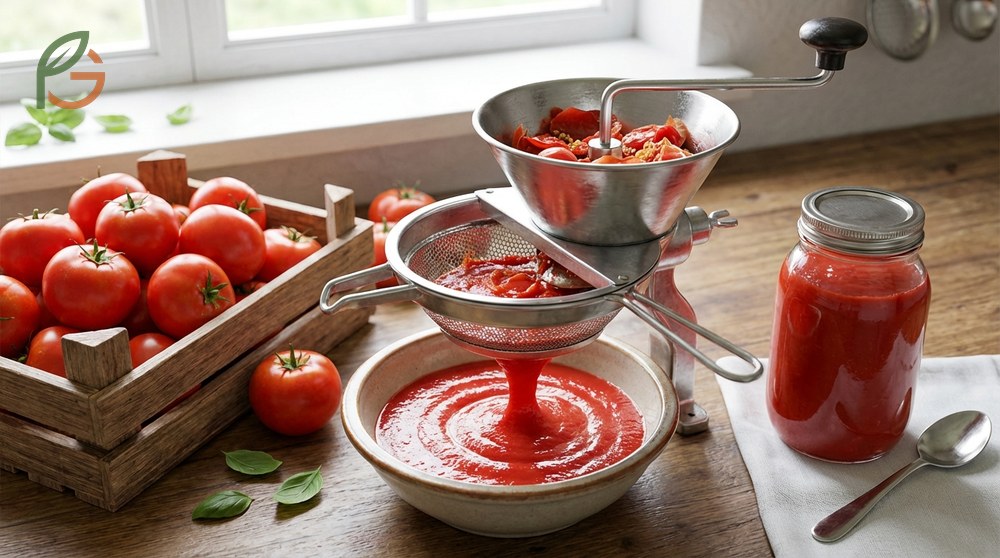
Passata is uncooked tomato puree that’s been strained to remove seeds and skins. The key difference from regular puree is that passata isn’t cooked after straining, which preserves a brighter, fresher tomato flavor. Italian cooks consider it essential for authentic pasta sauces.
The name comes from the Italian word “passare,” meaning to pass through or strain. Traditional methods involve pressing fresh tomatoes through a food mill, creating a silky texture without any chunky bits. This processing technique dates back centuries in Italian home cooking.
From My Experience: My cousin in Guadalajara, Mexico makes passata every August when Roma tomatoes peak. She processes 50 pounds in 4 hours using a hand-crank food mill, achieving a yield that’s 30% higher than blender methods while maintaining that authentic smooth texture.
Passata vs Puree
The cooking process creates the main distinction. Passata remains raw after straining, giving it a lighter, more acidic taste profile. Regular puree gets cooked before or after straining, which mellows the acidity and concentrates the sugars slightly.
Texture-wise, they’re nearly identical—both flow smoothly and lack chunks. However, passata typically has a thinner consistency because it hasn’t been reduced through cooking. You can use about two tablespoons of passata to replace one tablespoon of regular puree in most recipes.
Best Uses for Passata
Passata shines in dishes where you want bright tomato flavor without lengthy cooking. It’s perfect for quick marinara sauces, where 15-20 minutes of simmering develops the flavors. The fresh taste also works beautifully in soups and stews.
Italian recipes often specify passata for pomodoro sauce, pizza sauce, and minestrone. The uncooked nature means you control the final flavor by adding your own seasonings and cooking it to your preferred consistency.
What Are Stewed Tomatoes
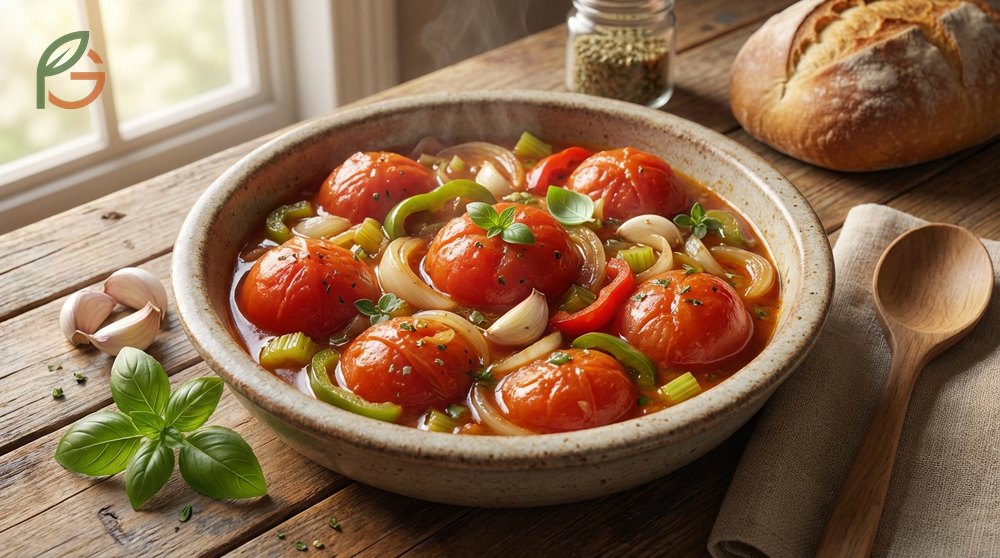
Stewed tomatoes are whole or large pieces of tomatoes that’ve been cooked slowly with seasonings. Unlike smooth purees, these retain chunky texture. The USDA classifies them separately from regular canned tomatoes, with specific grading standards[4].
Common additions include onions, peppers, celery, garlic, and sugar. These vegetables and seasonings are cooked together with the tomatoes, creating a more complex flavor than plain canned tomatoes. The earliest recorded recipe appears in “The Frugal Housewife” from 1829, making this a truly traditional American dish.
Stewed tomatoes work best when you want chunky texture in your final dish. They’re popular in casseroles, chili, and as a side dish with bread. Unlike puree or paste, you can’t easily substitute stewed tomatoes in recipes calling for smooth tomato products.
Important note: Don’t try to puree stewed tomatoes to make tomato puree—the added seasonings and vegetables will alter your recipe’s flavor profile. Stick with unseasoned products for the most control.
What Is Tomato Paste Used For
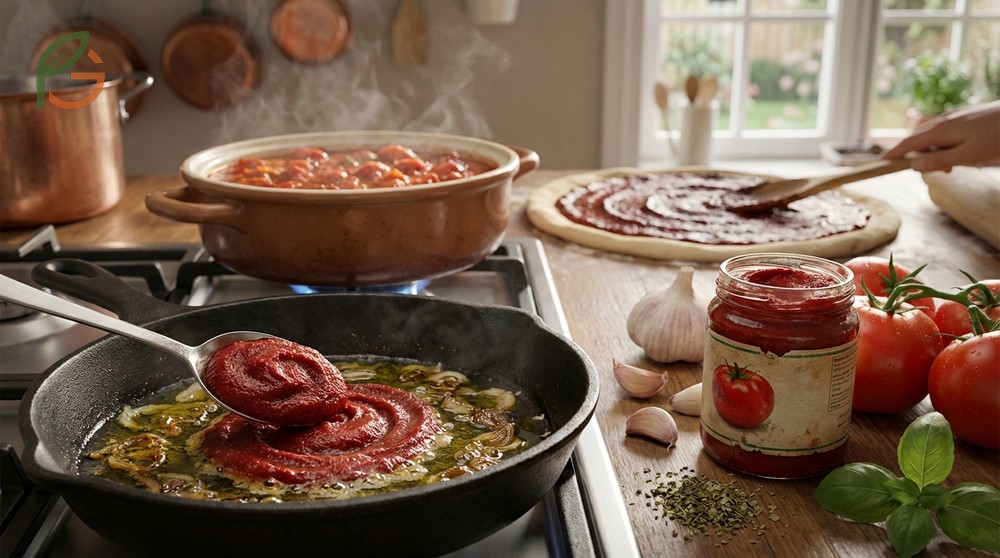
Tomato paste serves as a concentrated flavor bomb in cooking. With 24-30% tomato solids[2], it’s about three times more concentrated than puree. Just a tablespoon adds deep umami and rich tomato flavor without watering down your dish.
Common uses include thickening sauces, building depth in braises and stews, and creating pizza sauce bases. Many chefs brown tomato paste in oil before adding liquids—this caramelizes the natural sugars and removes any metallic taste. The technique takes just 2-3 minutes but dramatically improves the final flavor.
You’ll find tomato paste essential for dishes that need intense tomato flavor without extra liquid. Bolognese sauce, curry bases, and chili all benefit from paste’s concentrated punch. Unlike watery tomato sauce, paste won’t dilute your carefully reduced cooking liquids.
Tomato Paste Nutrition Facts
A 100-gram serving contains 82 calories, 4.3 grams of protein, and impressive mineral content[5]. The standout nutrients include potassium at 1,014 milligrams (30% daily value) and iron at 3 milligrams (37% daily value).
Vitamins are concentrated too. You get 76 micrograms of vitamin A, 22 milligrams of vitamin C, and 4.3 milligrams of vitamin E per 100 grams[5]. The low sodium content of just 59 milligrams makes it heart-healthy compared to many canned products.
This table compares calories, carbohydrates, protein, and key minerals across tomato paste, puree, and sauce in 100-gram servings
| Product | Calories | Protein | Carbs | Potassium |
|---|---|---|---|---|
| Tomato Paste | 82[5] | 4.3g[5] | 19g | 1,014mg[5] |
| Tomato Puree | 38 | 1.6g | 9g | 439mg |
| Tomato Sauce | 24 | 1.2g | 5g | 297mg |
Difference Between Sauce and Puree
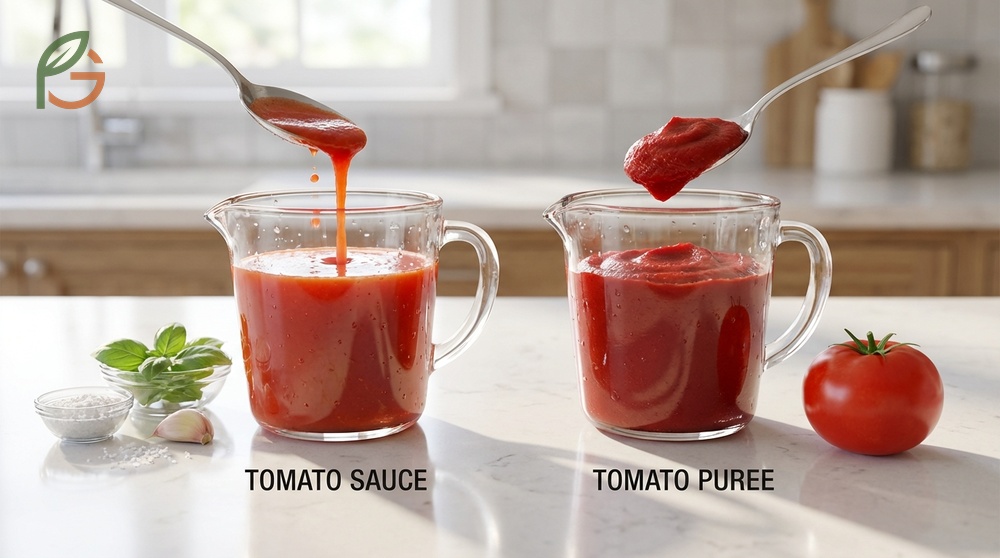
Tomato sauce contains 5-7% tomato solids, making it thinner and more pourable than puree’s 8-24% concentration[2]. This difference affects both cooking performance and storage properties. Sauce flows like a thin soup, while puree has body similar to heavy cream.
Most commercial tomato sauces include seasonings—salt, herbs, garlic, and sometimes sugar. Puree typically contains only tomatoes, giving you a blank slate for building custom flavors. When a recipe calls for “tomato sauce,” it’s often expecting those pre-added seasonings.
For cooking purposes, you can thin puree with water to mimic sauce, using a 2:1 ratio. Mix two parts puree with one part water, and you’ll get close to sauce consistency. The reverse doesn’t work as well—reducing sauce to puree thickness concentrates any added seasonings to unpleasant levels.
- Sauce has lower solids content (5-7%) versus puree (8-24%)
- Puree is unseasoned while sauce typically contains herbs and spices
- Sauce works best for quick cooking or as-is applications
- Puree provides better control for building complex flavored dishes
- Sauce flows more freely and spreads more easily on pizza dough
- Puree offers better value per ounce due to higher concentration
How to Make Tomato Puree from Paste
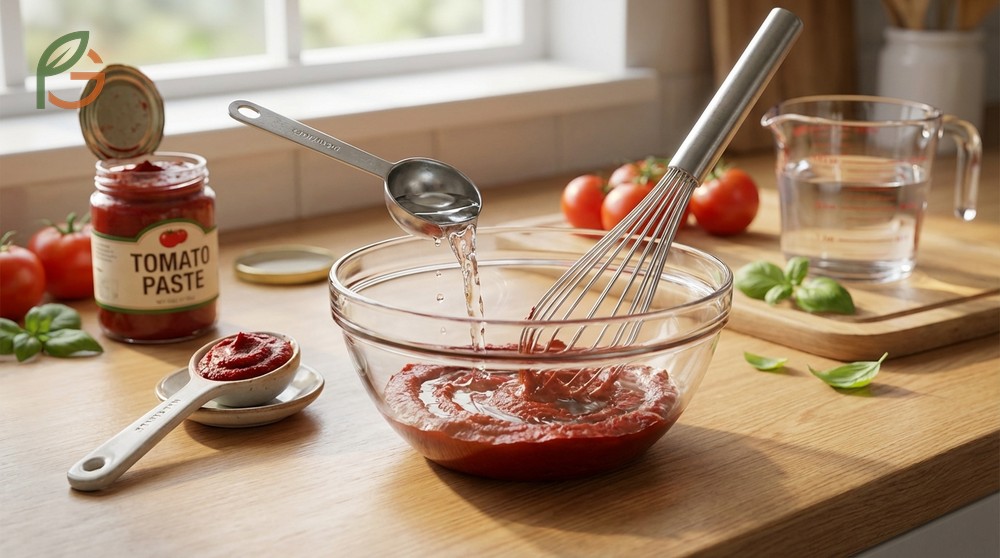
Converting paste to puree is simple—just add water. For each tablespoon of tomato paste, mix in 2-3 tablespoons of water. This dilutes the paste’s 24-30% solids concentration down to puree’s 8-24% range. Stir thoroughly until you achieve a smooth, lump-free consistency.
The exact ratio depends on your paste’s thickness and your desired final consistency. Start with 1:2 (one part paste to two parts water), then adjust. If it’s still too thick, add water by the teaspoon until you reach the right texture. Remember that puree should pour slowly but steadily—not plop like paste.
For best results, use warm water rather than cold. Cold water can cause the paste to clump before it fully dissolves. Some cooks also add a pinch of salt to enhance the tomato flavor that gets diluted during mixing.
Pro tip: When substituting homemade puree from paste, taste and adjust seasoning. Commercial puree sometimes has subtle flavor differences from freshly mixed versions due to processing methods.
- Measure your tomato paste into a bowl
- Add 2-3 parts warm water for every 1 part paste
- Whisk vigorously until completely smooth with no lumps
- Check consistency—it should coat a spoon but still pour
- Adjust with more water if needed, adding one teaspoon at a time
- Use immediately or refrigerate in an airtight container for up to 5 days
What Are Crushed Tomatoes
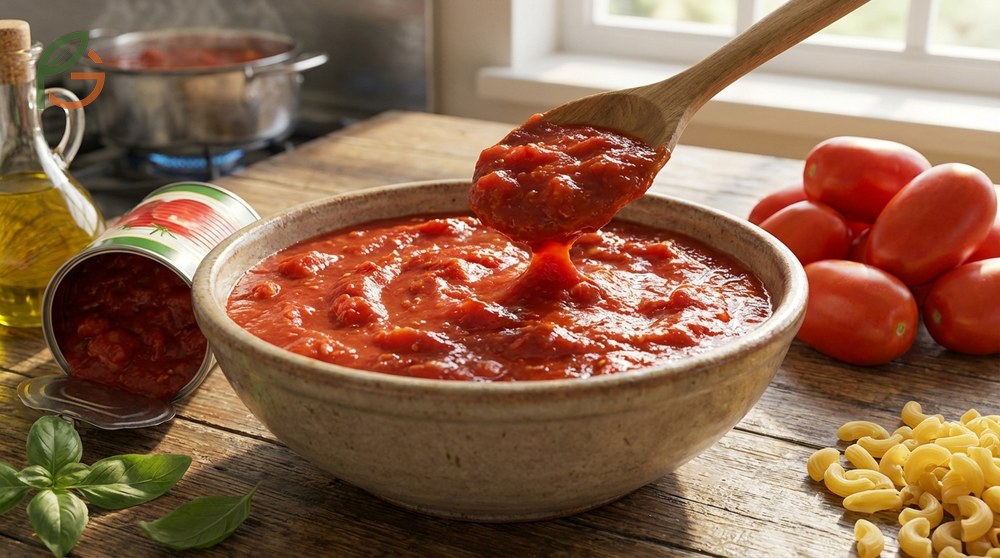
Crushed tomatoes are whole plum tomatoes that’ve been pulverized and mixed with tomato puree or juice[6]. They sit between chunky diced tomatoes and smooth puree in texture. The result is a thick, slightly chunky product that’s more substantial than puree but smoother than whole peeled tomatoes.
The crushing process breaks down the tomato structure while preserving some texture. This makes crushed tomatoes ideal for pasta sauces where you want body without distinct tomato chunks. They’re chunkier than puree but blend more smoothly than diced varieties during cooking.
You can make crushed tomatoes at home by pulsing whole peeled tomatoes in a food processor. Three to five quick pulses give you the right consistency—enough to break down the tomatoes without turning them into smooth puree. This works great when you’ve got canned whole tomatoes but your recipe calls for crushed.
- Pomodoro sauce and marinara where you want medium-thick texture
- Pizza sauce bases that need body without chunks
- Curry and stew bases requiring tomato presence without distinct pieces
- Chicken parmigiana and eggplant rollatini sauces
- Quick weeknight sauces that cook in 15-20 minutes
Conclusion
Understanding What Is Tomato Puree versus paste, passata, and other tomato products transforms your cooking. The key is matching the product’s concentration to your recipe’s needs—use paste for intense flavor punches, puree for versatile sauce building, and passata when you want fresh tomato brightness. Current culinary guidance emphasizes choosing unseasoned products like puree for maximum control over your final dish flavors.
Whether you’re making marinara from scratch or need a quick substitute, knowing these differences helps you adapt recipes confidently. FruitGarden provides research-backed gardening insights to help you grow the perfect tomatoes for making your own purees and pastes at home.
Frequently Asked Questions
Can I use tomato paste instead of puree?
Yes, but you’ll need to dilute it. Mix 1 tablespoon of tomato paste with 2-3 tablespoons of water to create a puree-like consistency. The paste is three times more concentrated, so direct substitution will make your dish too thick and intensely flavored.
What’s the best substitute for tomato puree?
Tomato sauce works well in a 1:1 ratio, though it’s slightly thinner. You can also blend canned whole tomatoes until smooth, or mix tomato paste with water (1 part paste to 2-3 parts water). Each substitute requires minor recipe adjustments for consistency.
Is passata the same as tomato puree?
They’re very similar but not identical. Passata is uncooked strained tomatoes, while puree is cooked before or after straining. Passata has a brighter, fresher flavor, but both work interchangeably in most recipes. The texture and consistency are nearly the same.
How long does opened tomato puree last?
Refrigerate opened tomato puree in an airtight container for 5-7 days. For longer storage, freeze it in ice cube trays, then transfer the frozen cubes to freezer bags. Frozen puree keeps for 3-4 months and you can use individual cubes as needed.
Can you make tomato puree from fresh tomatoes?
Absolutely. Cook chopped tomatoes for 5-10 minutes until soft, then blend and strain through a fine-mesh sieve to remove seeds and skins. This gives you fresh puree with brighter flavor than canned versions, perfect for immediate use in sauces and soups.
What’s the difference between crushed tomatoes and puree?
Crushed tomatoes contain small chunks mixed with puree, while puree is completely smooth. Crushed tomatoes give sauces more texture and body, whereas puree creates silky-smooth results. Choose crushed for rustic sauces and puree for elegant, refined dishes.
Do I need to cook tomato puree before using it?
It depends on your recipe. Canned tomato puree is already cooked and safe to eat, but most recipes benefit from additional cooking to develop flavors. Quick sauces need 15-20 minutes of simmering, while slow-cooked dishes can cook the puree for hours to deepen the taste.