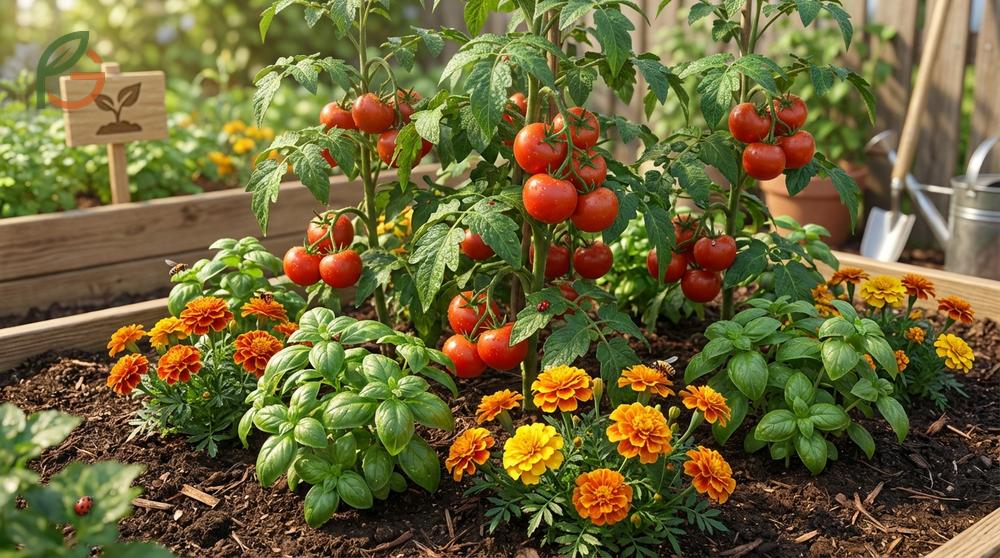
What to plant with tomatoes? Research shows that companion planting with basil increases tomato yields by an average of 20%[1], while marigolds reduce root-knot nematodes by up to 50%[2]. Strategic pairing of herbs, flowers, and nitrogen-fixing plants transforms your tomato patch into a thriving ecosystem. FruitGarden synthesizes current agricultural research to help you choose the best companion plants for bigger harvests and healthier tomatoes.
Quick Answer
- Basil planted 1:1 with tomatoes boosts plant size and root growth by 20%[1]
- French marigolds cut root-knot nematodes and increase fruit yields by up to 50%[2]
- Nitrogen-fixing beans and peas add 50-90% of nitrogen needs back to soil[3]
- Lettuce thrives in tomato shade while protecting soil moisture during 65-75°F (18-24°C) weather
What to Plant with Tomatoes
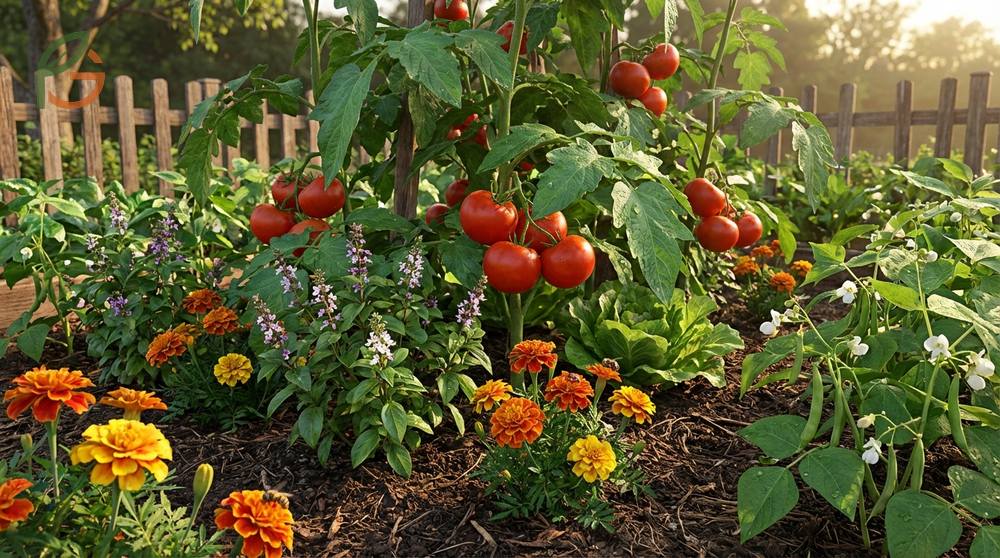
Companion planting transforms tomato gardens from monoculture rows into diverse ecosystems where plants support each other. Studies demonstrate that strategic plant pairings reduce pest pressure, improve soil health, and increase overall yields without synthetic inputs[4].
The best companions fall into four categories: aromatic herbs that repel pests, flowers that attract beneficial insects, nitrogen-fixing legumes that enrich soil, and shade-tolerant vegetables that maximize space. Each category addresses specific tomato needs while creating natural protection systems.
Current agricultural data shows tomatoes paired with basil companions achieve advantages averaging 20% across various densities and ratios[1]. These benefits multiply when you layer multiple companion types—herbs for pest control, flowers for pollination support, and legumes for long-term soil fertility.
From My Experience: My cousin in Guadalajara, Mexico interplanted basil with tomatoes in March 2024. By July, her tomato plants reached 15% larger size compared to solo plants, matching the 20% yield advantage from university studies[1].
Why Companion Planting Works
Research confirms companion plants communicate through airborne volatile compounds. When basil grows near tomatoes, it releases essential oils that prime tomato defense mechanisms through MAPK and ROS signaling pathways[4]. This molecular dialogue strengthens tomato wound responses before pests arrive.
Companion diversity also creates physical barriers and microclimates. Taller tomatoes shade lettuce from afternoon sun, while low-growing herbs cool soil and retain moisture. This layered structure confuses pests that rely on monoculture signals to locate host plants.
The Science Behind Plant Partnerships
Plant partnerships operate through four proven mechanisms: biological pest control through trap cropping and predator attraction, protection via physical shading and wind buffering, resource sharing through complementary root depths, and chemical signaling through volatile compounds. Each mechanism contributes measurable benefits when properly implemented.
The highest documented yields occur at inter-plant spacings of 25cm for both tomatoes and basil[1]. Dense planting maximizes light absorption and soil moisture retention, creating advantages most pronounced in high-density dicultures with elevated basil proportions.
Herbs to Plant with Tomatoes
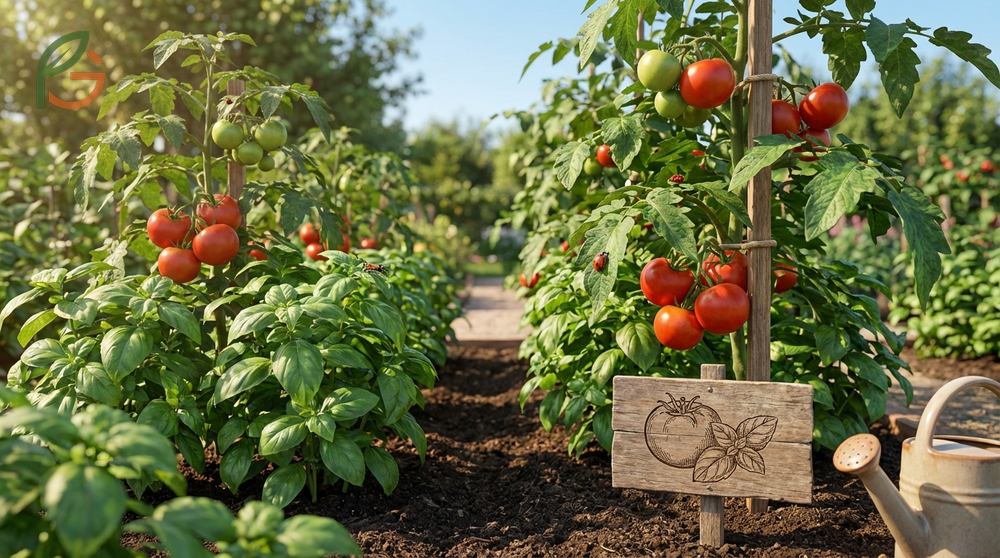
Aromatic herbs rank among the most effective tomato companions, with basil leading research-backed options. These plants release volatile compounds that mask tomato scent from pests while attracting beneficial predatory insects. Multiple studies confirm their protective and growth-enhancing properties.
When planted at 1:1 ratios, herb companions prove more effective at boosting tomato vigor than chemical fertilizers in controlled trials[2]. The key lies in strategic placement—herbs should surround tomato bases rather than competing for root space.
Basil: The Proven Tomato Booster
Basil stands out as the most scientifically validated tomato companion. Research demonstrates it increases tomato plant size, fruit yield, and root growth while simultaneously deterring aphids, tomato hornworms, and whiteflies[2]. This dual action—growth promotion plus pest deterrence—makes basil indispensable in organic gardens.
Molecular analysis reveals basil primes tomato wound responses through interplant volatile signaling[4]. Plant one basil per tomato for optimal results, maintaining 25cm spacing between all plants for maximum yield advantages.
Planting Tip: Don’t wait until tomatoes mature to add basil. Early companion planting allows plants to establish chemical communication before pest pressure peaks in midsummer.
Other Aromatic Herb Companions
Beyond basil, rosemary, thyme, and oregano offer pest-repelling properties through their essential oils. These Mediterranean herbs thrive in tomato-appropriate conditions—full sun and well-drained soil. Their woody growth habit won’t compete with tomato roots for resources.
Garlic and chives provide antibacterial and antifungal benefits that protect against soil-borne diseases. Plant these alliums in a circle around tomato bases, spacing bulbs 4-6 inches apart for adequate air circulation while maintaining protective coverage.
- Basil: Increases yields 20%, deters hornworms and aphids, enhances tomato flavor
- Garlic: Provides antibacterial protection, repels aphids and spider mites with sulfur compounds
- Chives: Prevents fungal diseases, attracts pollinators with purple blooms
- Thyme: Acts as living mulch, conserves soil moisture, repels cabbage worms
- Oregano: Attracts hoverflies that consume aphids, provides ground cover
- Parsley: Attracts beneficial wasps and hoverflies, tolerates tomato shade
Flowers for Tomato Pollination
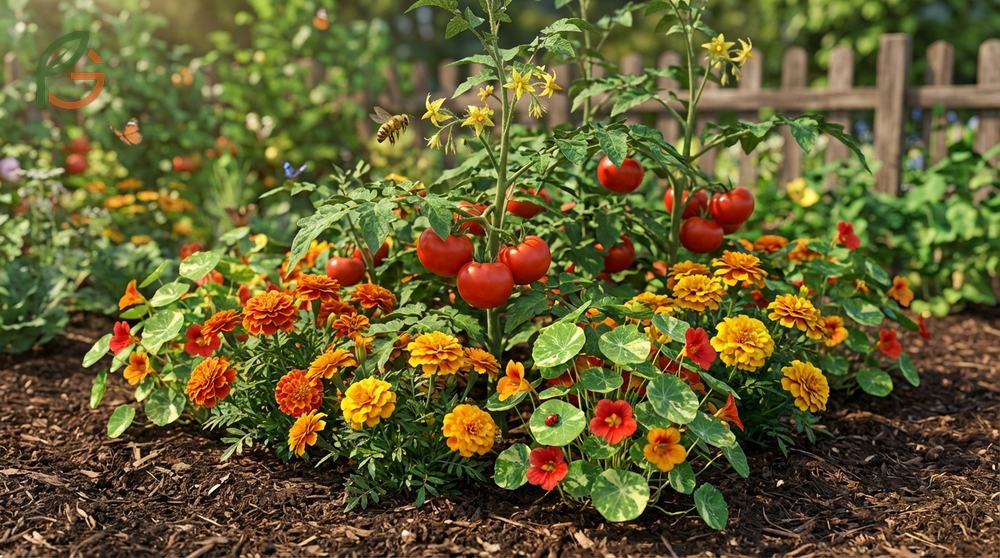
While tomatoes self-pollinate through wind and vibration, companion flowers dramatically improve garden ecosystem health. Blooms attract beneficial predatory insects that control pest populations naturally. Research shows flower interplanting reduces pest damage without synthetic pesticides.
The most effective flower companions serve dual purposes—marigolds actively suppress soil pests while nasturtiums function as trap crops that lure aphids away from tomatoes. This strategic layering creates a living pest management system that strengthens over seasons.
Marigolds: Nematode Fighters
French marigolds (Tagetes spp.) produce root exudates scientifically proven to suppress root-knot nematodes[2]. These microscopic pests stunt tomato growth and reduce yields, making marigolds essential in gardens with nematode history. Studies document yield increases up to 50% when marigolds surround tomato beds.
Plant marigolds as border rows around tomato patches, spacing plants 8-12 inches apart. Their compact growth won’t shade tomatoes, while root zones overlap sufficiently to provide nematode protection. Choose French or Signet marigold varieties for strongest pest-fighting compounds.
Important Note: Marigolds need full-season presence to suppress nematodes effectively. Plant them when setting out tomato transplants rather than adding them mid-season after pest problems appear.
Pollinator-Attracting Blooms
Zinnias, nasturtiums, and cosmos draw pollinators and beneficial insects into tomato patches. Though tomatoes don’t require insect pollination, these visitors prey on aphids, thrips, and other soft-bodied pests. Gardens with diverse flower companions show measurably lower pest populations.
Nasturtiums excel as trap crops—aphids prefer their tender leaves over tomato foliage. Plant nasturtiums as sacrificial borders, allowing them to absorb pest pressure while keeping tomatoes clean. Monitor and remove heavily infested nasturtium plants before aphid populations explode.
- French Marigolds: Suppress root-knot nematodes, increase yields up to 50%
- Nasturtiums: Trap aphids away from tomatoes, edible flowers for kitchen use
- Zinnias: Attract beneficial predatory insects, improve garden biodiversity
- Borage: Brings in bees and predatory wasps, adds trace minerals to soil
- Alyssum: Creates living mulch, houses beneficial insects year-round
- Cosmos: Long bloom season attracts diverse pollinators and pest predators
Nitrogen Fixers for Tomatoes
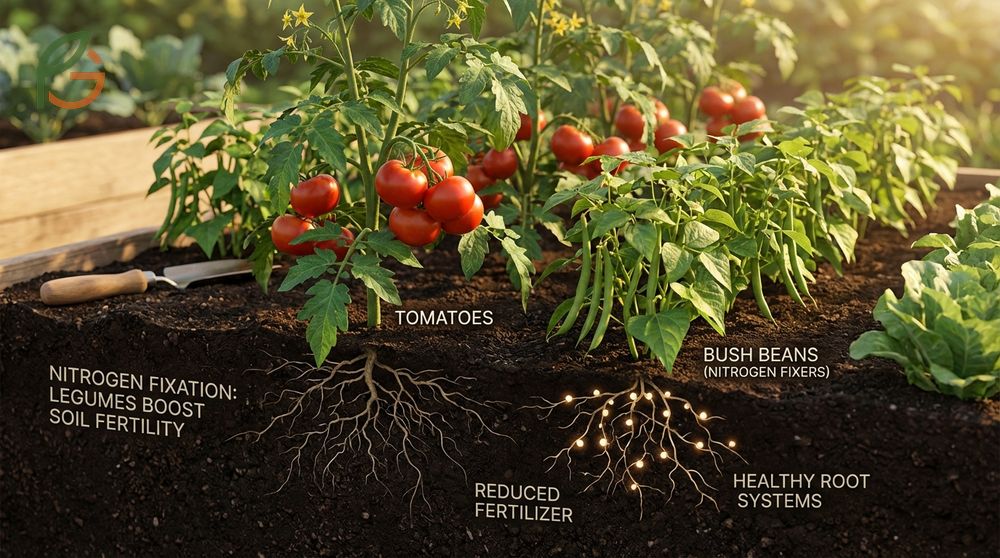
Legumes transform atmospheric nitrogen into plant-available forms through symbiotic root bacteria. This biological process reduces fertilizer needs while building long-term soil fertility. Different legumes fix nitrogen at varying rates—fava beans derive 90% of their nitrogen from fixation, peas and lentils reach 80%, and dry beans achieve 50%[3].
Plant bush beans between tomato rows rather than pole varieties that compete for vertical space. The beans mature quickly, allowing harvest before tomatoes reach full size. Leave bean roots in soil after harvest—their nitrogen-rich nodules decompose and feed tomatoes through peak fruiting season.
Peas work best as early spring companions planted 4-6 weeks before tomatoes. They’ll finish producing by the time tomatoes need maximum nutrients. Their roots remain to release fixed nitrogen exactly when tomatoes enter heavy feeding growth stages.
For maximum soil building, chop and drop fava beans before they flower. Cut plants at soil level and leave tops as mulch while roots decompose underground. This technique, called “green manuring,” delivers nitrogen directly to tomato root zones without competing for growing season resources.
- Fava Beans: Fix 90% of nitrogen needs, ideal for spring planting before tomatoes
- Peas (Garden and Field): Fix 80% of nitrogen, mature before tomatoes peak
- Bush Beans: Fix 50% of nitrogen, plant between tomato rows for succession harvests
- Clover: Fixes 150 pounds nitrogen per acre, use as living mulch under tomatoes
- Vetch: Cold-hardy cover crop, cut before tomato planting for nitrogen boost
Soil Building Strategy: Rotate tomato beds with legume cover crops annually. Plant fava beans or field peas in fall after tomato harvest, then cut and incorporate them in spring before replanting tomatoes for sustained fertility.
Planting Lettuce Under Tomatoes
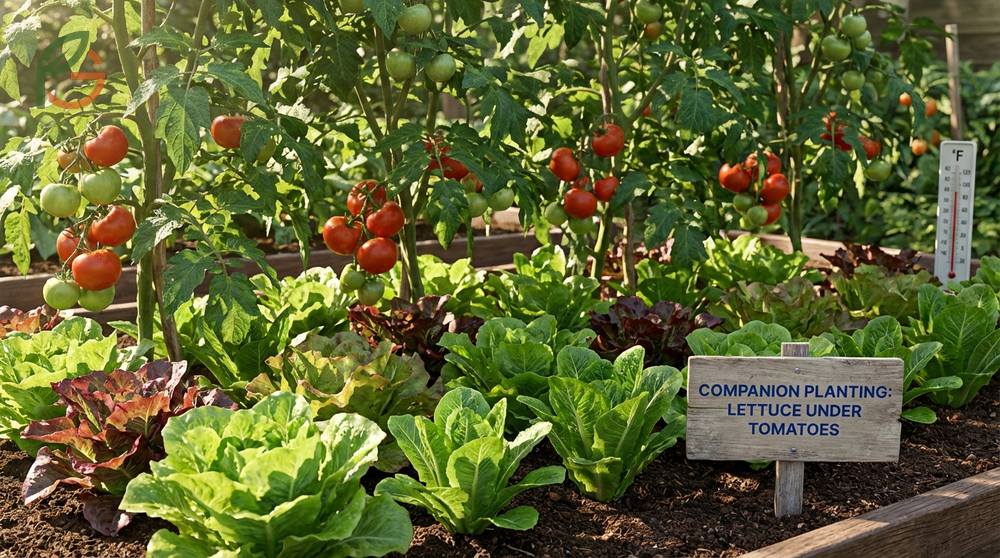
Lettuce thrives in the filtered shade that mature tomato plants provide during hot summer months. This vertical layering maximizes garden space while extending lettuce production beyond its typical spring season[5]. The tomato canopy moderates temperature and protects lettuce from bolting in 75-85°F (24-29°C) heat.
Plant lettuce seedlings in early spring alongside tomato transplants. As tomatoes grow upward, lettuce spreads horizontally as living mulch that conserves soil moisture and suppresses weeds. Harvest outer lettuce leaves continuously while inner leaves regenerate, extending production for 8-10 weeks.
Timing matters for successful lettuce-tomato partnerships. Early spring plantings allow lettuce to establish before tomatoes cast dense shade. Late summer plantings catch the cooling trend as tomato production slows, giving lettuce ideal conditions through fall.
Choose heat-tolerant lettuce varieties like Jericho, Magenta, or Oak Leaf types for summer underplanting. These cultivars resist bolting better than crisphead types when temperatures spike. Their looser growth habits also tolerate more shade than tight-heading varieties.
- Plant lettuce transplants 8-10 inches from tomato stems to avoid root competition
- Water consistently to maintain even soil moisture under developing tomato canopy
- Choose bolt-resistant varieties for extended summer production in partial shade
- Harvest outer leaves continuously rather than pulling entire plants
- Add succession plantings every 2-3 weeks for continuous lettuce supply
- Monitor for slug damage in moist understory conditions, use organic controls as needed
Companion Planting Chart
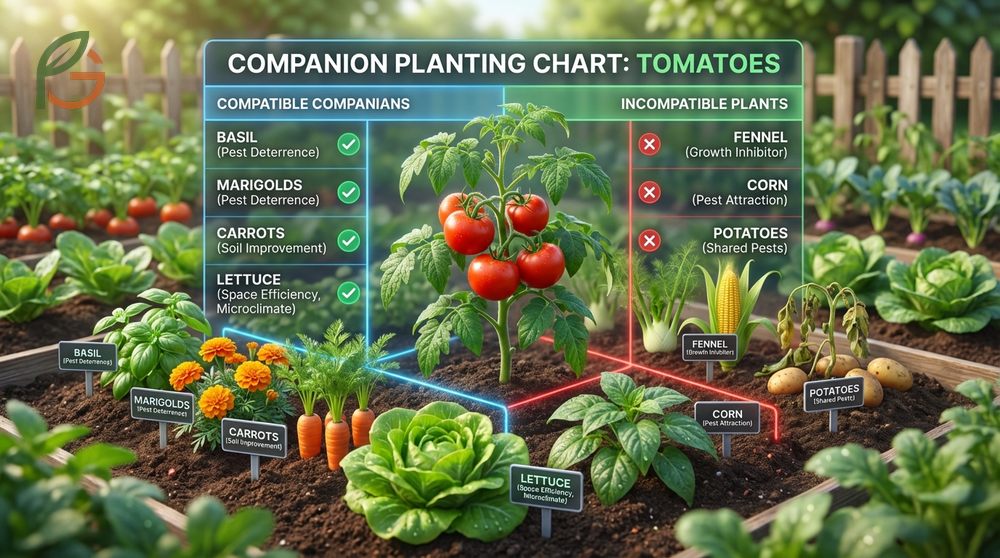
Strategic companion selection requires understanding which plants enhance tomatoes versus those that compete or attract shared pests. This chart synthesizes research-backed pairings with traditional wisdom tested across growing regions[6].
Compatible companions offer at least one clear benefit—pest deterrence, soil improvement, space efficiency, or microclimate modification. Incompatible plants compete for identical resources, attract the same pests, or release growth-inhibiting compounds through allelopathy.
This table compares beneficial and problematic companion plants for tomatoes, showing specific benefits for compatible plants and reasons to avoid incompatible ones
| Plant Type | Compatible Companions | Key Benefits | Avoid Planting With |
|---|---|---|---|
| Herbs | Basil, Parsley, Chives, Thyme, Oregano | Pest deterrence, yield boost 20%[1], flavor enhancement | Fennel, Dill (attract same pests) |
| Flowers | Marigolds, Nasturtiums, Zinnias, Borage | Nematode control, trap cropping, pollinator attraction | None documented |
| Legumes | Bush Beans, Peas, Fava Beans | Nitrogen fixation 50-90%[3], soil building | Pole Beans (compete vertically) |
| Vegetables | Lettuce, Carrots, Spinach, Celery | Space efficiency, living mulch, complementary harvest times | Brassicas, Corn, Potatoes[6] |
| Alliums | Garlic, Onions, Shallots, Leeks | Fungal disease protection, aphid deterrence | None for tomatoes |
Avoid planting tomatoes near brassicas (cabbage family), corn, or potatoes. Brassicas and tomatoes attract overlapping pest species, creating concentrated infestations. Corn competes for identical nutrients during peak growth periods. Potatoes share disease susceptibility with tomatoes, increasing blight risk when planted together[6].
Conclusion
The evidence is clear: what to plant with tomatoes directly impacts your harvest success. Basil delivers research-backed 20% yield increases, marigolds cut nematode damage in half, and nitrogen-fixing legumes build soil fertility for seasons to come. These partnerships work through proven mechanisms—chemical signaling, pest diversion, and resource sharing.
Start with the proven trio: one basil plant per tomato, marigold borders for nematode protection, and bush beans between rows for nitrogen. Current guidance emphasizes early companion planting so plants establish communication before pests arrive. FruitGarden recommends layering multiple companion types for maximum ecosystem benefits—you’ll see stronger plants, fewer pests, and bigger harvests season after season.
Frequently Asked Questions
What Should Not Be Planted with Tomatoes?
Avoid planting tomatoes near brassicas (cabbage, broccoli, cauliflower), corn, potatoes, and fennel. Brassicas and tomatoes attract identical pest species, creating concentrated infestations. Potatoes share disease susceptibility, increasing early and late blight risk. Corn competes for the same nutrients during peak growth periods, while fennel releases growth-inhibiting compounds that stunt tomato development.
How Close Should Basil Be Planted to Tomatoes?
Plant basil 25cm (10 inches) from tomato stems for optimal companion benefits. Research shows this spacing maximizes yield advantages while preventing root competition[1]. Maintain a 1:1 ratio—one basil plant per tomato—for best results. Closer spacing reduces airflow and increases humidity-related disease risk.
Do Marigolds Really Help Tomatoes?
Yes, French marigolds (Tagetes spp.) scientifically suppress root-knot nematodes through root exudates and can increase tomato yields by up to 50%[2]. They also improve airflow around tomato plants, reducing early blight occurrence. Plant marigolds as border rows around tomato beds for full-season nematode protection. The effect accumulates over multiple seasons as nematode populations decline.
Can You Grow Tomatoes and Peppers Together?
You can grow tomatoes and peppers together since both belong to the nightshade family with similar growing requirements. They need identical conditions—full sun, consistent moisture, and warm soil above 60°F (16°C). However, they attract the same pests (hornworms, aphids) and share disease susceptibility, so companion planting with basil and marigolds becomes essential when growing them together.
When Should You Plant Companion Plants with Tomatoes?
Plant most companions simultaneously with tomato transplants in spring after last frost. This timing allows plants to establish chemical communication before pests arrive. Exceptions include peas (plant 4-6 weeks before tomatoes) and succession lettuce (plant every 2-3 weeks through summer). Early companion planting delivers stronger benefits than adding plants mid-season after problems develop.
What Grows Well Under Tomato Plants?
Lettuce, spinach, and low-growing herbs like thyme thrive under tomato plants as living mulch. These shade-tolerant crops benefit from the filtered light and cooler soil temperatures beneath tomato canopies. Plant them 8-10 inches from tomato stems to avoid root competition. This vertical layering maximizes space while the understory plants conserve moisture and suppress weeds.
How Many Companion Plants Per Tomato?
Plant one basil per tomato as your primary companion, then add 2-3 marigolds around each plant’s base for nematode protection. Include bush beans between tomato rows at normal bean spacing for nitrogen fixation. This layered approach—one primary companion plus supporting cast—provides multiple benefits without overcrowding. Adjust quantities based on your available space and specific garden challenges like nematode pressure or pest history.