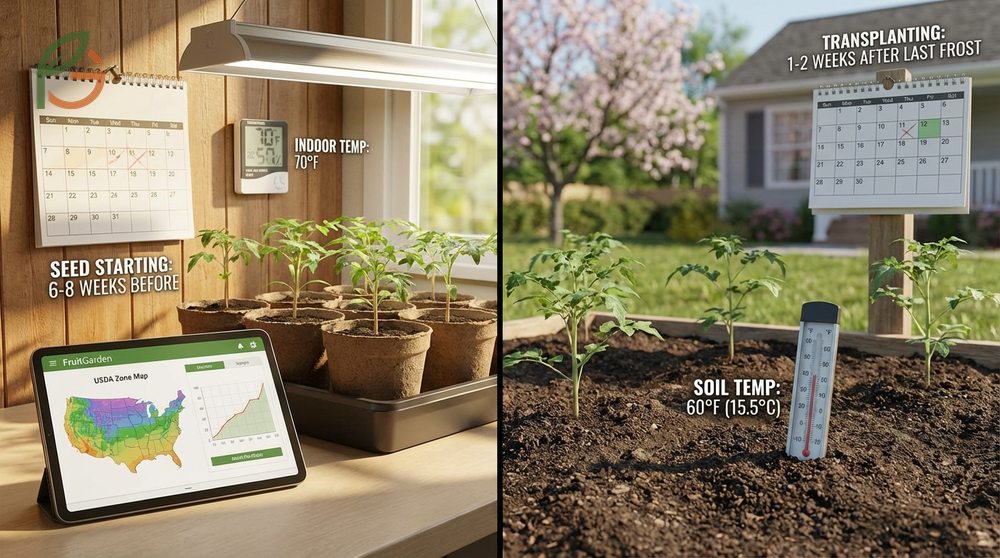
When To Plant Tomatoes depends on your local climate and planting method. Research shows transplants should go outdoors 1-2 weeks after your area’s last spring frost date when soil temperatures consistently reach 60°F (15.5°C)[1], while seeds started indoors need 6-8 weeks of growth before that date[2]. FruitGarden synthesizes current agricultural research and USDA zone data to help you time your tomato planting perfectly. Most gardeners don’t realize that starting too early can be just as problematic as planting too late—weak, leggy seedlings struggle to produce quality fruit.
Quick Answer
- Transplant seedlings outdoors 1-2 weeks after your last spring frost date[1]
- Start seeds indoors 6-8 weeks before the last frost for optimal growth[2]
- Soil temperature must reach 60-75°F (15.5-24°C) for healthy root development[3]
- Zone 5-6 gardeners typically plant mid-May to early June, while Zone 9-10 can plant in March[1]
When To Plant Tomatoes
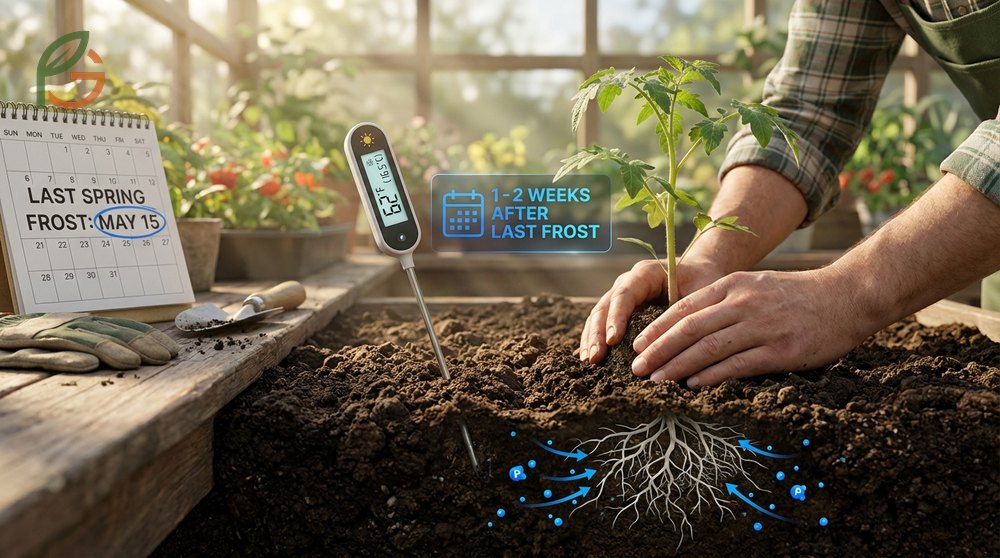
The timing for planting tomatoes hinges on two critical factors: your local frost dates and soil temperature. Studies demonstrate that tomatoes planted in soil below 60°F (15.5°C) develop roots very slowly and struggle to absorb nutrients, particularly phosphorus[3]. This temperature threshold isn’t arbitrary—it’s based on decades of cooperative extension data collection across North America.
Most US regions can safely transplant tomatoes 1-2 weeks after the last spring frost when daytime soil temperatures consistently reach 60°F (15.5°C) or higher[1]. Night temperatures should stay above 50°F (10°C) to prevent stress and stunted growth. You’ll get better results waiting an extra week than rushing to plant in cold soil.
What often gets overlooked is that microclimates in urban areas or near large bodies of water can shift ideal planting dates by 7-10 days[1]. If you’re in a city center or coastal area, your actual planting window might differ from the standard zone recommendations.
Understanding Your Last Frost Date
Your last frost date represents the average date of the final spring frost in your area. This isn’t an exact prediction—it’s a statistical average based on historical weather data. Some years you’ll have a late surprise frost, while others warm up earlier than expected.
The USDA provides frost date ranges by hardiness zone that serve as your planning baseline. Zone 3-4 gardeners typically see their last frost between May 15-June 15, while Zone 7-8 areas experience it between April 1-15[1]. Southern zones 9-11 are often frost-free year-round, allowing for fall tomato planting between October-February.
From My Experience: My cousin in Guadalajara, Mexico started tomato transplants outdoors in early March 2024. Even though their zone is similar to US Zone 10, a rare cold snap in mid-March dropped temperatures to 45°F (7°C) for three nights—the plants survived but took an extra 3 weeks to recover and start flowering.
Soil Temperature Requirements
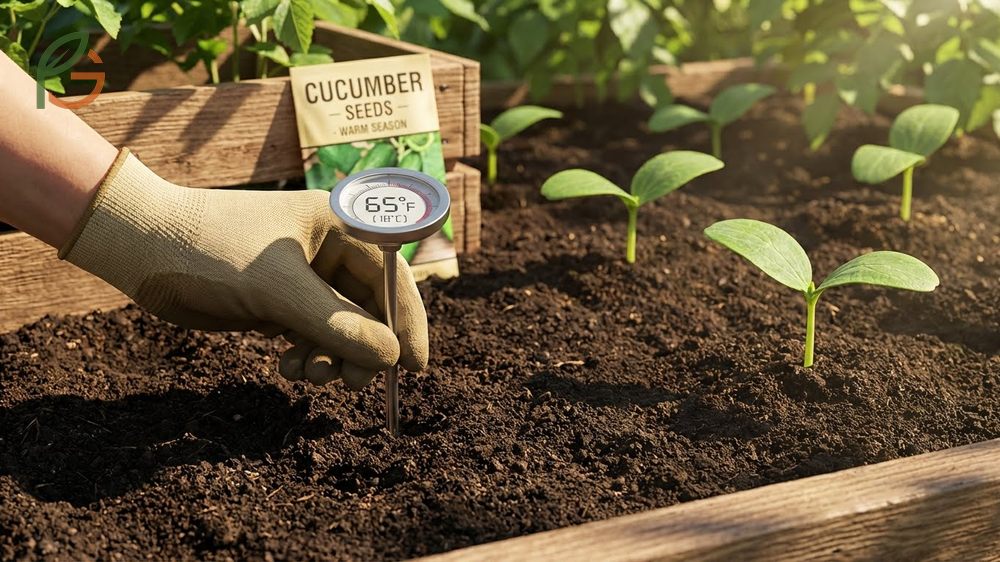
Soil temperature matters more than air temperature for tomato success. Research shows the ideal soil temperature for tomatoes ranges between 65-75°F (18-24°C), though they’ll tolerate a minimum of 60°F (15.5°C)[3]. At lower temperatures, root development slows dramatically and nutrient uptake becomes difficult.
You can measure soil temperature using a standard soil thermometer inserted 2-4 inches deep in your planting area. Take readings at midday for three consecutive days to get an accurate average. If your soil hasn’t warmed up sufficiently, you can use clear plastic mulch or row covers to increase soil temperature by 5-10°F (3-6°C) before planting.
Important Note: Don’t rely on air temperature alone. Even when daytime air temperatures reach 70°F (21°C), soil can still be too cold for tomatoes if you’ve had recent rain or cloudy weather. Always check soil temperature directly before transplanting.
When To Plant Tomato Plants
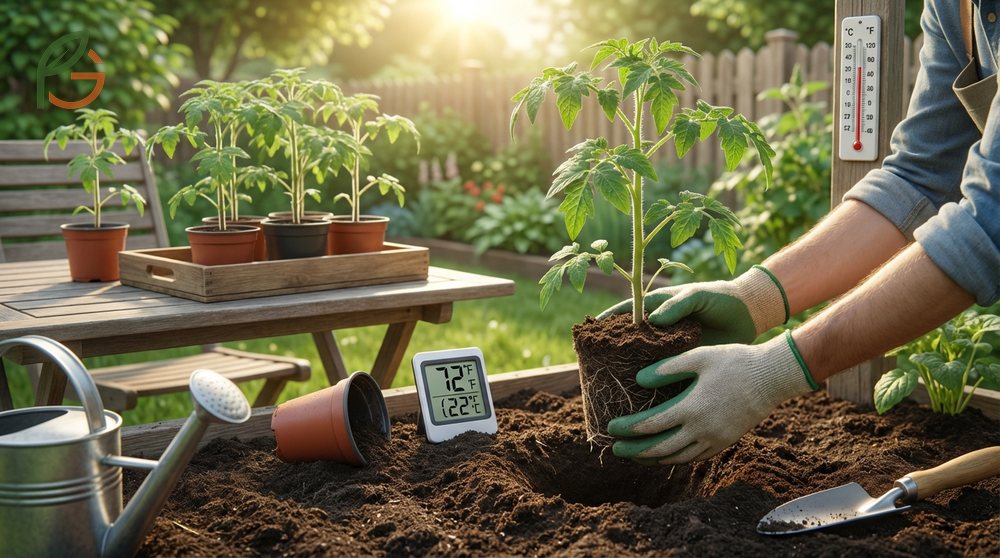
Transplanting timing differs from seed starting and requires more attention to weather conditions. Young tomato plants ready for outdoor planting should be 9-12 inches tall with sturdy stems and developed root systems[4]. They’ll need gradual exposure to outdoor conditions before permanent placement.
Current guidance emphasizes waiting until weather warms to 70-75°F (21-24°C) during the day and stays above 50°F (10°C) at night[4]. This typically occurs a few weeks after the last frost date. Greenhouse transplanting can happen in late April or early May, while outdoor plants need the warmer conditions of mid-to-late May in most regions.
Southern states support both spring and fall tomato crops. Agricultural data shows Texas gardeners can plant spring crops 2-4 weeks after the last frost, then establish a second crop in late July for fall harvest[1]. This dual-season approach maximizes production when summer heat becomes too intense for fruit set.
Hardening Off Transplants
Hardening off is the process of gradually acclimating indoor-grown seedlings to outdoor conditions. This transition period typically takes 7-10 days and prevents transplant shock. Start by placing plants outdoors in a sheltered location for 1-2 hours, then gradually increase exposure time each day.
During hardening off, protect plants from direct midday sun, strong winds, and temperatures below 50°F (10°C). Bring them indoors if frost threatens. By day 7-10, plants can stay outdoors 24 hours before final transplanting.
Zone-Specific Transplanting Schedule
Your USDA hardiness zone determines your specific transplanting window. The table below shows recommended planting periods based on verified cooperative extension data.
This table compares USDA hardiness zones with their average last frost dates and recommended tomato transplanting windows across five major US growing regions
| USDA Zone | Average Last Frost | Transplanting Window | Key States/Regions |
|---|---|---|---|
| Zone 3-4 | May 15 – June 15[1] | June 1 – June 20 | Minnesota, Wisconsin, parts of Michigan |
| Zone 5-6 | May 1 – May 15[1] | May 15 – June 1 | Illinois, Indiana, Ohio, Pennsylvania |
| Zone 7-8 | April 1 – April 15[1] | April 15 – May 1 | Virginia, North Carolina, Tennessee |
| Zone 9-10 | March 1 – March 15[1] | March 15 – April 1 | Florida, Southern California, Arizona |
| Zone 11-13 | Frost-free year-round[1] | October – February (fall) | Hawaii, Southern Florida |
Zone Shift Alert: The USDA updated its hardiness zone map in 2023 based on 1990-2020 data. Most areas are now a half-zone warmer than previous classifications, which means you might be able to plant 1-2 weeks earlier than old recommendations suggested. Check your current zone before planning your planting schedule.
When Should You Plant Tomatoes From Seed
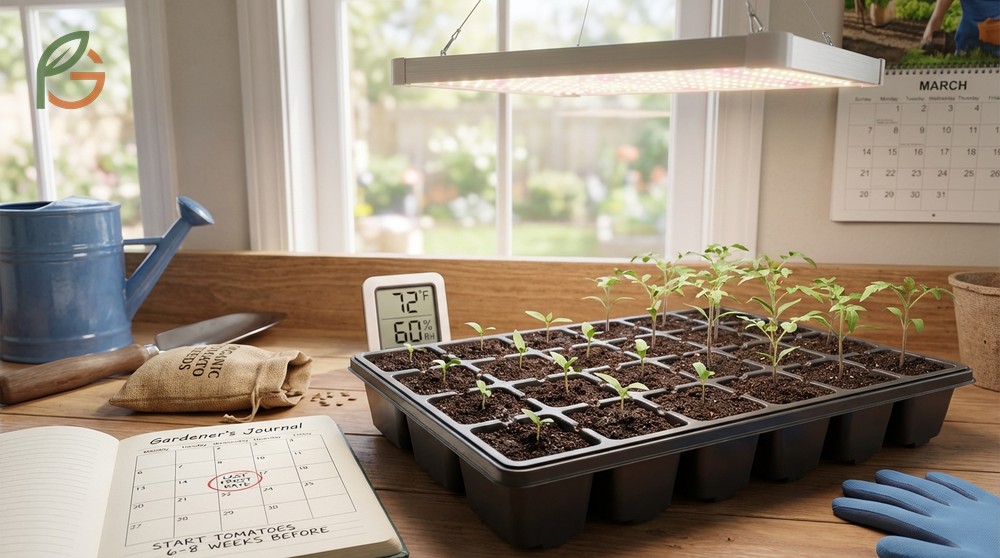
Starting tomatoes from seed indoors gives you a significant head start on the growing season. Research across home gardening programs shows that seeds should be sown indoors 6-8 weeks before your area’s last expected frost date[2]. This timing allows seedlings to develop strong root systems and reach transplant size exactly when outdoor conditions become favorable.
Tomato seeds germinate successfully at temperatures between 64-77°F (18-25°C) and typically sprout within 10 days[4]. Starting too early creates problems—seedlings become leggy, weak, and root-bound before outdoor conditions allow transplanting. Starting too late means plants won’t mature in time to produce a full harvest before fall frost.
For example, if your last frost date is May 15, you’d start seeds indoors between March 20-April 1. Zone 8 gardeners with an April 1 last frost should start seeds between February 10-20. This precision matters because it synchronizes your seedlings’ development with your region’s weather patterns.
Calculating Seed Starting Dates
To calculate your exact seed starting date, work backward from your last frost date. Count back 6-8 weeks depending on your growing conditions—use 6 weeks if you have ideal indoor growing conditions with grow lights, or 8 weeks if relying on natural window light. Mark this date on your calendar and prepare supplies at least one week in advance.
Another approach is to count forward from when night temperatures consistently stay in the mid-50s°F (13°C) range—this is when you’ll transplant outdoors. Agricultural extension offices recommend adding 2 weeks after the last frost date, then counting back 6-8 weeks to determine your seed starting window.
Indoor Seed Starting Conditions
Successful indoor seed starting requires sterile seed-starting mix, containers with drainage holes, consistent moisture, and warmth. Place two seeds per cell or pot and cover lightly with soil mix. Keep soil evenly moist but not waterlogged—using a clear plastic dome or plastic wrap maintains humidity until germination occurs.
Once seedlings emerge, they need strong light for 14-16 hours daily. Position grow lights 2-3 inches above seedlings or place plants in a south-facing window. Seedlings ready for their first transplant (potting up) will be 2-4 inches tall with their first set of true leaves[4].
- Sterile seed-starting mix (not regular potting soil)
- Containers with drainage holes (3-4 inches diameter)
- Clear plastic dome or plastic wrap for humidity
- Grow lights or sunny south-facing window
- Soil thermometer to monitor germination temperature
- Spray bottle for gentle watering
- Plant labels to track varieties
Planting Zone Map for Tomatoes
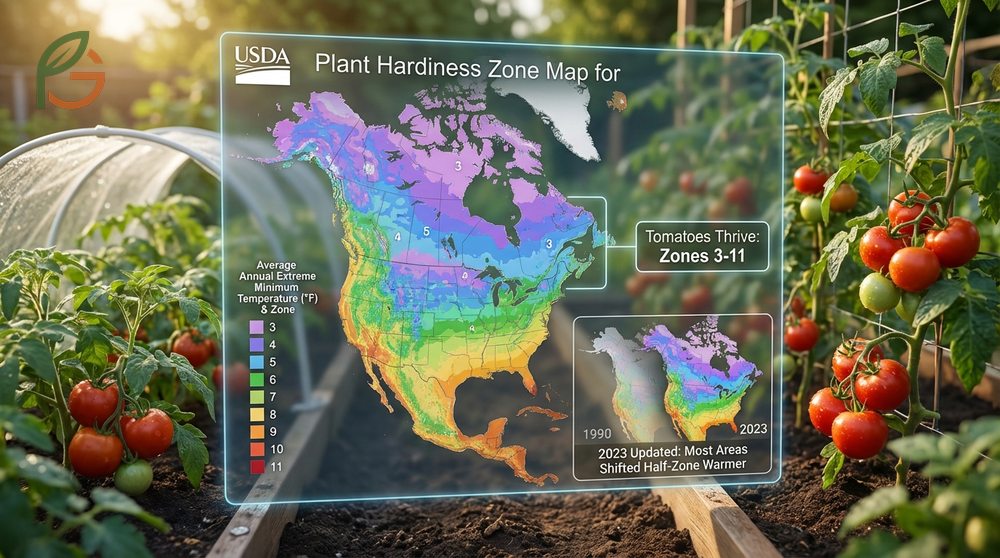
The USDA Plant Hardiness Zone Map divides North America into zones based on average annual minimum winter temperatures. This map serves as the foundation for all planting recommendations. Tomatoes thrive in USDA zones 3-11, though growing methods vary significantly between cold northern zones and warm southern regions.
The 2023 updated map reflects 1990-2020 climate data and shows that most US areas have shifted to a half-zone warmer classification compared to the previous 2012 map. This means traditional zone 5b areas may now be classified as zone 6a, allowing for slightly earlier planting dates. However, you should still watch for late frost events regardless of your zone designation.
Zones determine more than just planting dates—they influence variety selection, growing season length, and whether you can attempt fall crops. Northern zones 3-5 have short growing seasons requiring early-maturing varieties, while southern zones 8-11 can grow full-season varieties and often support two crops per year.
- Zones 3-4 (Northern): Short season (90-100 days), require early-maturing varieties, single crop per year, frost protection essential
- Zones 5-6 (Midwest): Moderate season (120-140 days), most varieties succeed, occasional late frost risk, single crop typical
- Zones 7-8 (Mid-Atlantic/South): Long season (180-210 days), all varieties thrive, possible fall crops, heat tolerance important
- Zones 9-11 (Deep South/Coastal): Extended season (240+ days), two crops common, winter growing possible, requires heat-resistant varieties
- Microclimates: Urban heat islands, south-facing slopes, and protected areas can create conditions one zone warmer than surrounding regions
When using zone maps, remember they’re based on winter minimum temperatures, not growing season characteristics. Your actual last frost date and growing season length matter more for tomato timing than your zone number alone. Consult local cooperative extension offices or experienced gardeners in your specific area for the most accurate planting dates.
Planting Tomatoes by Moon Phase
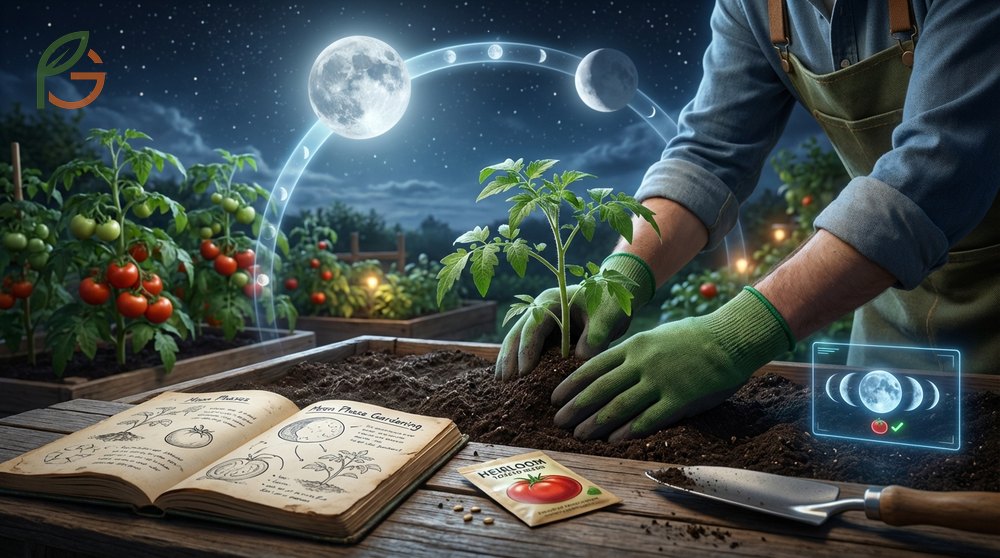
Moon phase gardening is a traditional practice based on the moon’s gravitational pull and light cycles. Practitioners claim this method produces plants that germinate faster, resist disease better, and yield more fruit. While scientific evidence remains limited, many gardeners continue this centuries-old approach and report positive results.
The moon moves through a complete 29-day cycle from new moon to full moon and back. Each phase creates different conditions that theoretically affect plant growth. During the first two quarters (waxing moon), moonlight increases while gravitational pull draws water upward in soil, which supporters say encourages above-ground growth.
For tomatoes specifically, moon phase gardening recommends planting during the second quarter—the week leading up to the full moon. This period combines strong moonlight (which strengthens leaf growth) with upward water movement[5]. This timing applies to both seed starting and transplanting, as tomatoes are above-ground crops with seeds inside their fruit.
- New Moon (First Quarter): Plant leafy crops with external seeds, not tomatoes
- Waxing Moon (Second Quarter): Best time to plant tomato seeds and transplant seedlings—moonlight strengthens leaf development[5]
- Full Moon: Ideal for fertilizing established tomato plants—energy begins moving downward into roots[6]
- Waning Moon (Third Quarter): Focus on root crops, not tomatoes
- Fourth Quarter: Dormant growth period—best time for weeding and maintenance[6]
If you want to try moon phase planting, you’ll need a gardening calendar that marks lunar cycles. These are available at garden centers or online. The key is coordinating moon phases with your regular frost date and temperature-based timing—moon phase becomes an additional factor, not a replacement for climate-based scheduling.
Practical Approach: If your ideal planting window (based on frost dates and soil temperature) spans 2-3 weeks, you can choose to plant during the second quarter moon phase within that window. Don’t sacrifice proper temperature conditions just to match the moon phase—soil temperature and frost risk take priority over lunar timing.
Conclusion
The evidence is clear: successful tomato planting requires coordinating three factors—your local last frost date, soil temperature reaching 60°F (15.5°C) minimum, and proper seedling development timing. When To Plant Tomatoes isn’t a single date but a calculated window based on your specific growing zone and weather patterns. You’ll achieve the best results by starting seeds 6-8 weeks before your last frost, then transplanting 1-2 weeks after that date when soil has warmed sufficiently.
Current agricultural guidance emphasizes patience over rushing—waiting an extra week for proper soil warmth produces stronger plants than early planting in cold conditions. FruitGarden provides zone-specific timing data and research-based recommendations to help you make informed planting decisions that maximize your harvest.
Frequently Asked Questions
What happens if I plant tomatoes too early?
Planting tomatoes in soil below 60°F (15.5°C) causes slow root development, poor nutrient absorption, and increased disease susceptibility. Early-planted tomatoes often get stunted and produce less fruit than those planted at proper temperatures. If frost occurs after planting, plants can die completely or suffer severe damage that delays fruiting by 3-4 weeks.
Can I plant tomatoes before the last frost date?
You shouldn’t plant tomatoes outdoors before your last frost date unless you provide frost protection like row covers, cloches, or a heated greenhouse. Even light frost (32°F/0°C) can kill tomato plants. If you must plant early, wait until soil reaches 60°F (15.5°C) and be prepared to cover plants if frost threatens. Most gardeners find waiting 1-2 weeks after the last frost date produces better results with less risk.
How do I know when my soil is warm enough for tomatoes?
Use a soil thermometer inserted 2-4 inches deep in your planting area and take readings at midday for three consecutive days. Your soil is ready when temperatures consistently reach 60°F (15.5°C) or higher, with 65-75°F (18-24°C) being ideal. Don’t rely on air temperature alone—soil warms more slowly than air, especially after rainy or cloudy periods.
What’s the latest I can plant tomatoes and still get a harvest?
Count backward from your first fall frost date based on your tomato variety’s days to maturity, then add 2-3 weeks as a buffer. For example, if your first frost is October 15 and you’re planting a 75-day variety, your latest planting date would be around July 20. Early-maturing varieties (55-65 days) extend your planting window, while full-season varieties (80+ days) need earlier planting.
Should I start tomatoes from seeds or buy transplants?
Starting from seed gives you more variety choices and costs less, but requires 6-8 weeks of indoor care before transplanting. Buying transplants is faster and easier but limits you to common varieties available at nurseries. If you’re new to gardening, purchased transplants reduce complexity. Experienced gardeners often prefer seeds for access to heirloom and specialty varieties.
Can I plant tomatoes in summer for a fall harvest?
Yes, if you’re in zones 7-11 with enough time before your first fall frost. Southern states commonly plant a second tomato crop in late July for fall harvest. Calculate your planting date by counting backward from your first frost date minus your variety’s days to maturity. Choose heat-tolerant varieties like Arkansas Traveler or Homestead 24, and provide afternoon shade during the hottest part of summer.
Do different tomato varieties have different planting times?
All tomato varieties have the same basic planting requirements—soil at 60°F (15.5°C) minimum and no frost risk. However, maturity timing varies significantly. Early varieties (55-65 days) work for short-season zones and late planting, while full-season varieties (80-90 days) need longer growing periods and earlier planting. Your planting date stays the same, but variety choice determines whether you’ll get a harvest before fall frost.