When to start tomato seeds indoors? Start tomato seeds 6-8 weeks before your area’s last expected frost date for optimal transplanting success[1]. Research shows that proper timing ensures seedlings reach ideal transplant size without becoming root-bound or leggy[2]. FruitGarden synthesizes current horticultural data to help you master seed-starting schedules for your climate zone.
Quick Answer
When To Start Tomato Seeds Indoors
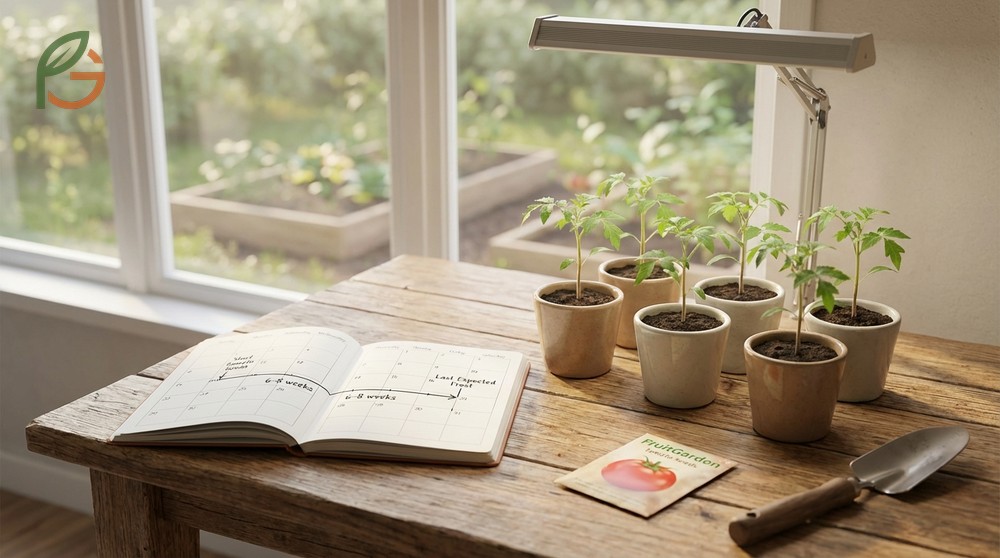
Research shows the standard recommendation is to start tomato seeds 6-8 weeks before your area’s last expected spring frost date[1]. This timing allows seedlings to develop strong root systems and reach 6-10 inches in height—the ideal transplant size. Starting too early creates leggy, root-bound plants, while starting too late means smaller seedlings that struggle to establish.
Current data indicates that your USDA hardiness zone determines your precise start date[2]. Colder zones (3-4) start seeds in early to mid-March for late May transplanting. Warmer zones (9-10) begin in mid-January for March transplanting. Most gardeners don’t realize that starting indoors extends the growing season by 6-8 weeks compared to direct seeding outdoors.
From My Experience: My cousin in Guadalajara, Mexico started Roma tomato seeds in late February 2024. Seeds germinated in 6 days versus the typical 7-10 day range, achieving 95% success rate with a basic heat mat setup.
Calculating Your Start Date
Count backward from your last frost date to determine your seed-starting window. If your last frost typically falls on May 10, count back 6-8 weeks to land between March 15 and March 29[1]. You can find your frost dates through your local cooperative extension office or online frost date calculators.
Evidence suggests that planning for transplanting 2 weeks after the last frost date provides a safety buffer against unexpected cold snaps[4]. This approach reduces transplant shock and frost damage risks. Most people find success by marking their calendar with both the seed-starting date and the anticipated transplant date to stay organized.
Seed Starting Schedule by Zone
Agricultural data shows that zone-specific timing dramatically improves transplant success rates. Each hardiness zone has distinct temperature patterns that affect both seed starting and transplanting windows.
This table compares seed starting dates and transplant windows across USDA hardiness zones 3 through 10b for tomato cultivation
| Hardiness Zone | Start Seeds Indoors | Transplant Outdoors |
|---|---|---|
| Zone 3a | Early to mid-April | Late May to early June |
| Zone 3b-4 | Early to mid-March | Mid-April to early June |
| Zone 5-6 | Early to mid-March | Mid-April to early June |
| Zone 7 | Mid-February to early March | Early April to early June |
| Zone 8 | Mid-January to mid-February | April to early July |
| Zone 9 | Mid-January to mid-February | Mid-March to mid-April; second crop in August |
| Zone 10a-10b | Mid-January to mid-February | Mid-March to mid-April; second crop September-December |
Important Note: Zones 9-10 support two tomato crops per year—spring and fall plantings. Start fall crops in early August for September transplanting to avoid extreme summer heat stress.
Starting Tomato Seeds Indoors
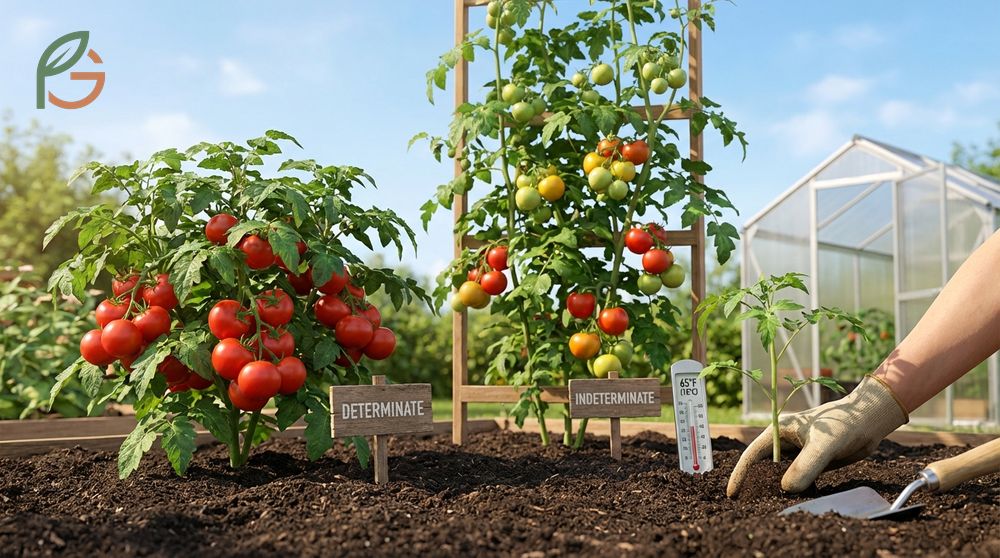
Studies demonstrate that proper seed-starting supplies significantly boost germination rates from 60-70% to 85-95%. The three essential components are sterile growing medium, consistent warmth, and adequate moisture. Using garden soil or potting mix often introduces damping-off disease that kills emerging seedlings.
Research across commercial nurseries shows that soilless mixes combined with bottom heat produce the fastest, most uniform germination. Most growers achieve better results by sowing 2-3 seeds per cell, then thinning to the strongest seedling after germination completes.
Seed Starting Mix
Current guidance emphasizes using sterile, soilless seed-starting mixes rather than regular potting soil. These specialized mixes typically contain peat moss or coir, perlite, and vermiculite—ingredients that provide excellent drainage while retaining moisture[5]. The lightweight texture allows delicate seedling roots to penetrate easily without resistance.
Evidence indicates that seed-starting mixes are nutrient-free by design. This forces seedlings to develop robust root systems searching for nutrients. Once seedlings develop true leaves, begin fertilizing with half-strength liquid fertilizer every 2 weeks to support continued growth.
Heat Mat for Tomato Seeds
Studies show that seedling heat mats increase soil temperature by 10-20°F (5.5-11°C) above ambient room temperature, dramatically speeding germination[6]. For tomatoes specifically, maintaining soil temps between 70-80°F (21-27°C) reduces germination time from 14 days down to 5-7 days. Heat mats are practically essential for warm-season crops like tomatoes, peppers, and eggplants.
Research demonstrates that heat mats should be removed once seedlings emerge. Continued bottom heat after germination promotes excessive top growth and weak stems. Position your mat under seed trays and keep it on continuously until you see the first sprouts breaking the soil surface.
Pro Tip: Place pots toward the center of heat mats for fastest germination. Perimeter pots lose heat more quickly and can take 2-3 extra days to sprout compared to center-positioned containers.
How Long Do Tomato Seeds Take to Germinate
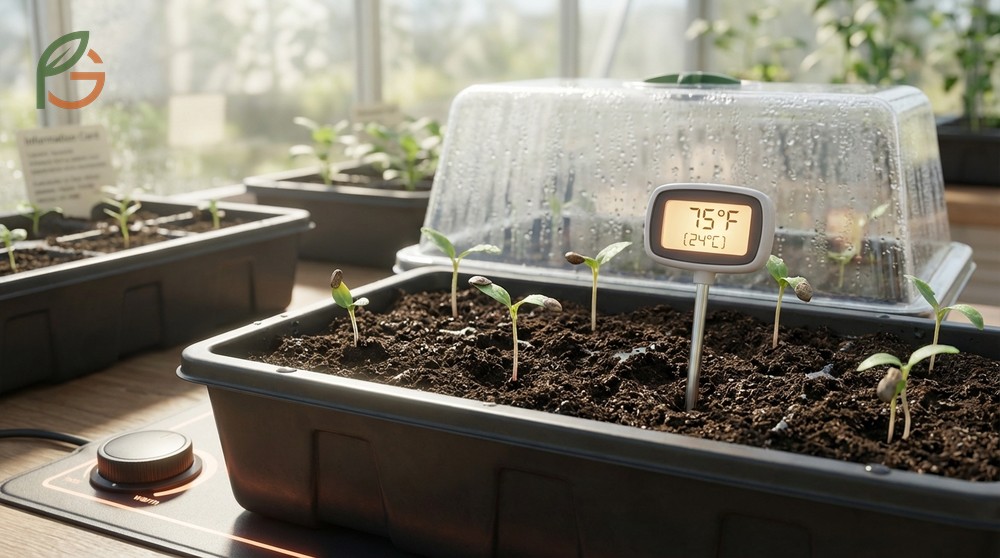
Agricultural data shows tomato seeds germinate in 5-10 days when soil temperature stays consistently between 70-80°F (21-27°C)[3]. Without supplemental heat, germination stretches to 10-14 days or longer. Temperature is the single most critical factor—even more important than light at this early stage.
Research indicates that germination fails entirely when soil temps drop below 50°F (10°C) or rise above 95°F (35°C)[3]. The optimum temperature for fastest sprouting is 75-85°F (24-29°C). This explains why spring sowings indoors succeed while direct-seeding into cool spring soil often disappoints.
Current standards show that federal germination rates for tomato seeds hover around 75%[5]. This means sowing 2-3 seeds per cell ensures at least one successful sprout per planting spot. Check seed packets for “sow by” dates—older seeds still germinate but at reduced rates.
- Temperature: Maintain 70-80°F (21-27°C) soil temperature using heat mats
- Moisture: Keep soil consistently moist but never waterlogged during germination
- Depth: Sow seeds 1/4 inch deep—shallow enough to emerge quickly
- Seed age: Fresh seeds (less than 2 years old) germinate faster and more reliably
- Variety: Some heirloom varieties take 12-14 days versus 5-7 for most hybrids
Growing Tomato Plants Indoors
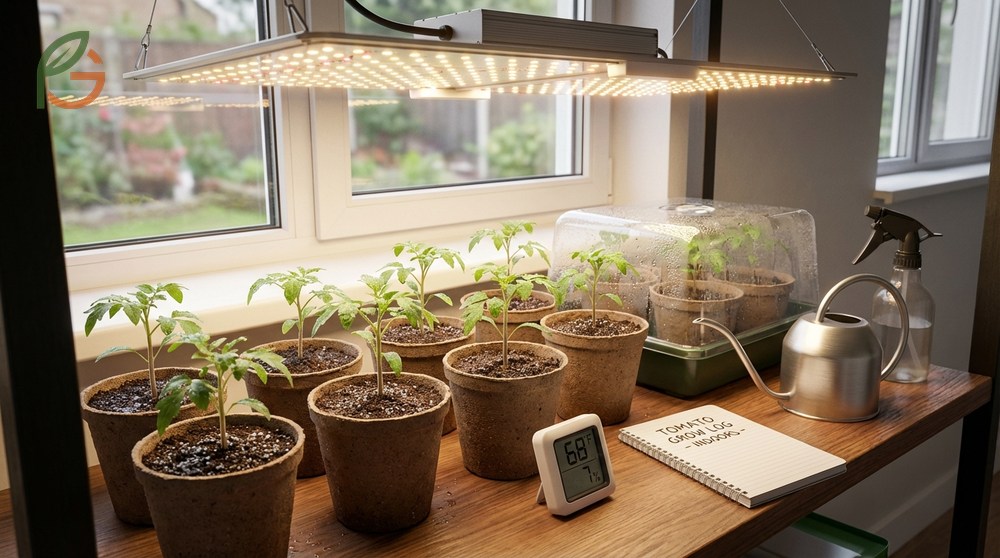
Studies demonstrate that successfully growing tomato plants indoors from seed to transplant size requires three elements: adequate light, proper temperature, and consistent moisture. Seedlings need 14-16 hours of light daily to develop strong, compact growth[7]. Without sufficient light, stems elongate and weaken as plants stretch toward available light sources.
Evidence indicates that indoor temperature should drop to 60-70°F (15-21°C) once seeds germinate. This cooler range promotes stocky stem development rather than rapid, leggy growth. Most people find that moving trays off heat mats immediately after germination prevents excessive stretching.
Leggy Tomato Seedlings
Research shows that leggy tomato seedlings result from insufficient light, excessive heat, overcrowding, or improper planting depth[7]. Seedlings receiving less than 12 hours of daily light stretch their stems searching for more illumination. High soil temperatures from heat mats left on too long trigger rapid upward growth before leaves develop.
Current guidance emphasizes prevention over treatment. Position grow lights 2 inches above seedling tops and raise lights as plants grow. If leggy seedlings do develop, transplant them deeper—burying stems up to the first set of true leaves. Tomatoes form adventitious roots along buried stems, converting weakness into extra root mass.
Grow Lights for Tomatoes
Agricultural studies show that fluorescent or LED grow lights positioned 2-4 inches above seedlings provide adequate light intensity for compact growth. Seedlings need 14-16 hours of artificial light daily[7]. Standard household lighting isn’t bright enough—seedlings require the higher intensity of dedicated grow lights or direct sunlight from south-facing windows.
Evidence suggests that maintaining lights too far above seedlings (more than 6 inches) produces the same stretching as insufficient light duration. Adjust light height as seedlings grow to maintain the 2-4 inch distance. This matters because light intensity follows the inverse square law—doubling the distance reduces intensity by 75%.
- Water from below: Bottom-watering prevents stem rot and encourages downward root growth
- Use fans: Gentle air circulation strengthens stems and prevents fungal diseases
- Thin seedlings: Snip weaker seedlings at soil line rather than pulling to avoid root disturbance
- Pot up once: Transplant into 4-inch pots when seedlings develop 2-3 sets of true leaves
- Fertilize weekly: Apply half-strength liquid fertilizer once true leaves appear
When to Transplant Tomato Seedlings
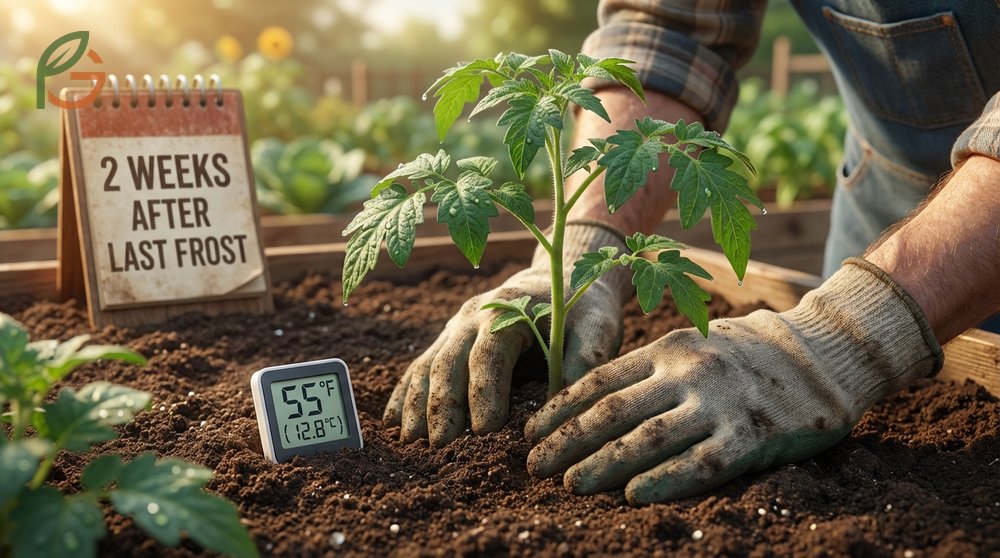
Research shows transplanting should occur when nighttime temperatures consistently stay above 50-55°F (10-13°C)[4]. This typically falls 2 weeks after your area’s last expected frost date. Transplanting into colder soil stunts growth for weeks—seedlings essentially pause all development until soil warms adequately.
Current data indicates that ideal transplant size is 6-10 inches tall with stocky stems and 3-4 sets of true leaves. Smaller seedlings take longer to establish, while larger ones suffer more transplant shock. Most gardeners achieve better results by hardening off seedlings for 7-10 days before permanent outdoor placement.
How to Harden Off Tomato Plants
Studies demonstrate that hardening off is essential for transitioning indoor seedlings to outdoor conditions. This gradual acclimatization process takes 7-10 days and prevents transplant shock from sudden exposure to wind, direct sun, and temperature fluctuations[8]. Skip this step and watch your seedlings wilt, yellow, or even die from environmental stress.
Evidence suggests starting with 1-2 hours of outdoor exposure in a shaded, protected location on day one. Increase outdoor time by 1-2 hours daily while gradually introducing more sunlight. By day 7-10, seedlings should tolerate full sun and outdoor conditions for entire days. When nighttime temps stay above 50°F (10°C), leave plants outside overnight to complete hardening off[8].
- Days 1-2: Place seedlings in shade for 2-3 hours, bring inside at night
- Days 3-4: Increase to 4-5 hours with 1-2 hours of morning sun exposure
- Days 5-6: Leave outside 6-8 hours in partial sun, protect from strong wind
- Day 7: Full day outdoors in gradually increasing direct sunlight
- Days 8-9: Full day exposure, monitor for wilting or leaf curl
- Day 10: Leave outside overnight if temps stay above 50°F (10°C)
- Day 11+: Ready for permanent transplanting into garden beds or containers
Critical Warning: Never place newly hardened seedlings directly into hot afternoon sun. Even hardened plants need gradual sun exposure over 2-3 days to prevent sunscald on leaves and stems.
Conclusion
The evidence is clear: when to start tomato seeds indoors depends primarily on your hardiness zone and last frost date, with most gardeners finding success by starting 6-8 weeks before transplanting. Research demonstrates that proper timing combined with heat mats, adequate lighting, and gradual hardening off produces the strongest, most productive tomato plants. Current agricultural guidance emphasizes that rushing the process or skipping hardening off reduces yields more than any other single factor.
What often gets overlooked is that starting too early creates as many problems as starting too late—leggy, root-bound seedlings struggle to establish even after transplanting. FruitGarden synthesizes horticultural research to help you time your seed starting perfectly, whether you’re in cold zone 3 or warm zone 10.
Frequently Asked Questions
Can You Grow Tomatoes Indoors Year-Round?
Yes, you can grow tomatoes indoors year-round with proper grow lights, temperature control, and pollination assistance. Determinate varieties work best in containers under lights, requiring 14-16 hours of daily illumination and hand-pollination with a small brush since indoor environments lack pollinating insects.
Growing Tomatoes in a Greenhouse—When to Start?
Greenhouse growers can start tomato seeds 4-6 weeks earlier than outdoor gardeners since controlled environments eliminate frost risk. Heated greenhouses allow seed starting as early as January in northern zones, while unheated structures should follow traditional 6-8 week guidelines but can extend fall growing by 4-6 weeks.
How to Germinate Tomato Seeds Without Heat Mats?
Place seed trays on top of refrigerators, water heaters, or other appliances that generate gentle warmth. You can also position trays near heating vents or use south-facing windowsills during sunny days. Germination will take 10-14 days instead of 5-7 days but still succeeds if ambient temps stay above 65°F (18°C).
What Happens If I Start Tomato Seeds Too Early?
Starting too early produces tall, leggy seedlings that become root-bound before outdoor conditions allow transplanting. These stressed plants take longer to establish, show delayed fruiting, and produce smaller yields. If you’ve started early, pot up into larger containers and maintain strong lighting to minimize legginess.
Potting Up Seedlings—When and How?
Pot up tomato seedlings when they develop 2-3 sets of true leaves, typically 3-4 weeks after germination. Transplant into 4-inch pots using regular potting mix, burying stems deeper than they were growing to encourage additional root development along the buried portion. This creates stronger root systems for eventual garden transplanting.
Do Tomato Seeds Need Light to Germinate?
No, tomato seeds don’t need light for germination—they actually prefer darkness during the sprouting phase. However, the moment seedlings break the soil surface, they require immediate bright light (14-16 hours daily) to prevent stretching. Position lights or move trays to bright windows within 24 hours of first emergence.
Best Tomato Varieties for Indoor Seed Starting?
Determinate varieties like ‘Celebrity’, ‘Roma’, and ‘Bush Early Girl’ work best for indoor starting since they grow more compactly than indeterminate types. Cherry tomatoes like ‘Tiny Tim’ and ‘Window Box Roma’ handle indoor conditions exceptionally well. Avoid large beefsteak varieties unless you have ample indoor space and very strong grow lights.