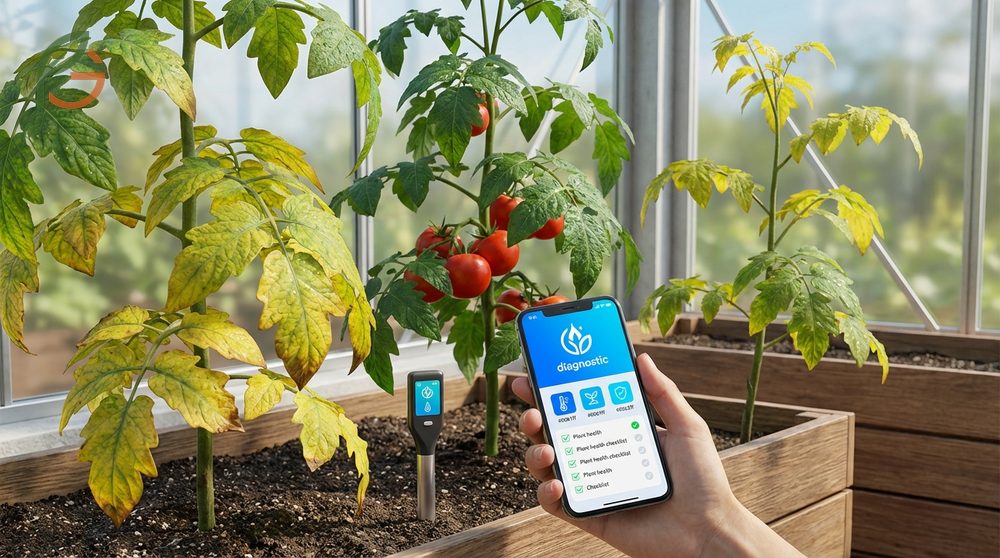
Yellow leaves on tomato plants typically indicate nitrogen deficiency, watering problems, or disease affecting your crop. Research shows that older leaves turning yellow first signals nitrogen shortage, while yellowing on younger leaves points to iron deficiency[1]. FruitGarden combines current agricultural research and plant science to help you diagnose and treat these common issues before they damage your harvest.
Quick Answer
- Nitrogen deficiency causes older leaves to turn yellow first and potentially drop[2]
- Iron deficiency creates yellowing in young leaves at shoot tips with white appearance in severe cases[3]
- Magnesium shortage shows interveinal chlorosis starting on leaf margins with necrotic dots[4]
- Water tomatoes deeply 1-1.5 inches per week to prevent both overwatering and underwatering stress[5]
Yellow Leaves on Tomato Plants
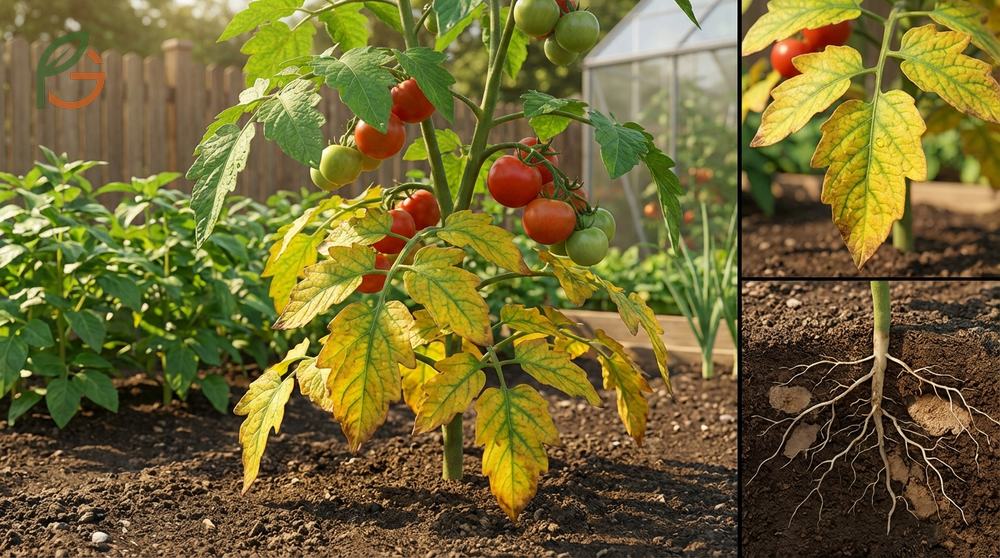
Yellow leaves signal that your tomato plant can’t produce enough chlorophyll for photosynthesis. This happens when essential nutrients become unavailable, water stress disrupts root function, or diseases attack plant tissues. The location and pattern of yellowing reveals exactly what’s wrong.
Studies demonstrate that nutrient mobility within the plant determines where symptoms appear first. Nitrogen moves freely from older growth to support new leaves, so deficiency starts at the bottom[1]. Iron stays put in older tissues, causing young leaves to yellow when supplies run short[3].
Temperature extremes compound these problems. Cool soil below 55°F (13°C) slows nutrient uptake even when fertilizer is present. Hot weather above 85°F (29°C) increases water demand and can trigger deficiency symptoms if irrigation doesn’t keep pace.
Identifying Yellowing Patterns
The specific pattern tells you what’s happening. Uniform yellowing across entire leaves indicates nitrogen shortage, while yellow leaves with green veins point to iron or manganese issues. Speckled yellowing on leaf margins suggests magnesium deficiency[4].
Check whether symptoms start on old or new growth. Bottom leaves yellowing first means the plant is robbing nutrients from older tissue to feed new growth—a clear sign of mobile nutrient deficiency. Top leaves turning yellow while lower foliage stays green indicates immobile nutrient problems or root damage preventing uptake.
Mobile vs Immobile Nutrients
Mobile nutrients like nitrogen, phosphorus, potassium, and magnesium relocate from old leaves to new growth when supplies run low. Plants sacrifice older foliage to keep producing new leaves and fruit. Immobile nutrients including calcium, iron, sulfur, and boron stay locked in place once deposited in tissues.
This mobility difference changes your diagnosis strategy. If you see yellowing creeping up from the bottom, test for nitrogen, potassium, or magnesium deficiency. Yellowing starting at the top means iron, calcium, or sulfur shortage—or pH problems preventing uptake of these immobile nutrients.
Nitrogen for Tomato Plants
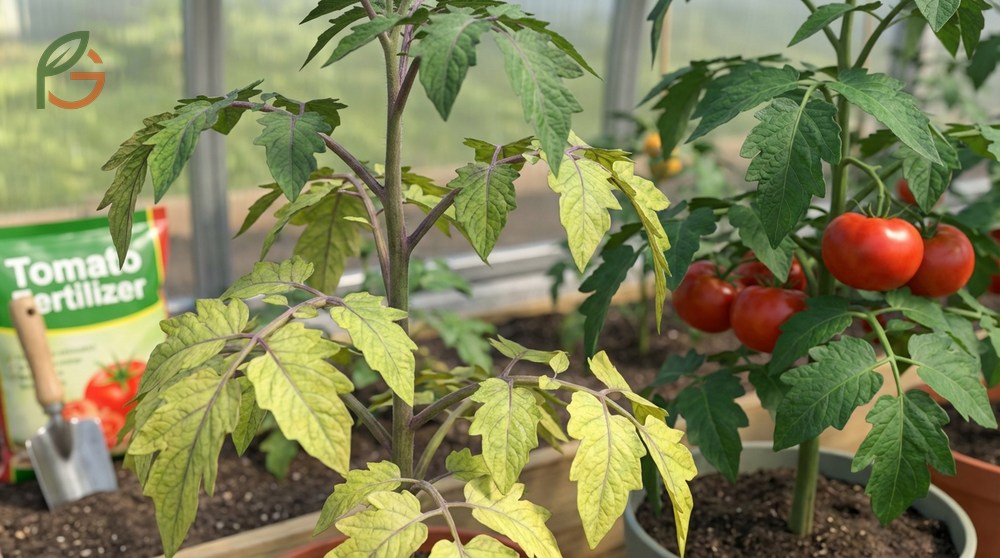
Nitrogen forms the backbone of chlorophyll molecules and amino acids that build plant proteins. When tomatoes don’t get enough, older leaves turn pale green to yellow as the plant breaks down these tissues to feed new growth[2]. Stems and leaf veins often develop purple tints as anthocyanin pigments become visible without green chlorophyll masking them.
Research shows nitrogen deficiency reduces fruit set and delays harvest by 10-14 days compared to properly fertilized plants. Yield drops by 30-50% in severe cases as plants produce fewer flowers and smaller fruit. The plant appears thin, upright, and stunted rather than bushy with robust foliage.
Heavy rains leach nitrogen from sandy soils faster than clay, making deficiency more common after wet periods. Container-grown tomatoes need more frequent nitrogen applications since water drains through potting mix quickly, carrying dissolved nutrients away.
From My Experience: My cousin in Monterrey, Mexico applied blood meal to yellowing tomato plants in July 2024. The older leaves stayed yellow, but new growth turned deep green within 9 days—matching the 7-10 day response time from university extension guidelines.
Nitrogen Deficiency Symptoms
Symptoms start with older leaves near the base turning light green. Within 5-7 days, these leaves become completely yellow if you don’t address the deficiency. Severe cases lead to brown, crispy leaves that drop from the plant entirely[2].
The whole plant takes on a pale appearance with thin stems and sparse foliage. Growth slows dramatically as photosynthesis drops. You’ll notice fewer flowers and fruit compared to healthy plants at the same growth stage.
- Lower leaves turn pale green, then yellow, progressing upward
- Entire leaf yellows uniformly, not just between veins
- Purple coloration appears on stems and leaf undersides
- Stunted, spindly growth with thin stems
- Reduced flowering and smaller fruit set
- Yellowed leaves eventually turn brown and drop off
Nitrogen Fertilizer Application
Apply a balanced fertilizer with NPK ratio of 5-5-5 or use blood meal (12-0-0) for quick nitrogen boost. Blood meal releases nitrogen rapidly, greening up plants within 7-10 days. Compost and aged manure provide slower release over several weeks.
Don’t overdo nitrogen applications. Excessive nitrogen creates lush, dark green foliage but reduces fruit production. Plants put energy into leaves rather than flowers and tomatoes. Aim for healthy green color without excessive vegetative growth.
Important: Apply nitrogen when plants are actively growing in temperatures between 65-85°F (18-29°C). Cold soil below 55°F (13°C) prevents root uptake even when fertilizer is present.
Calcium Deficiency in Tomato Plants
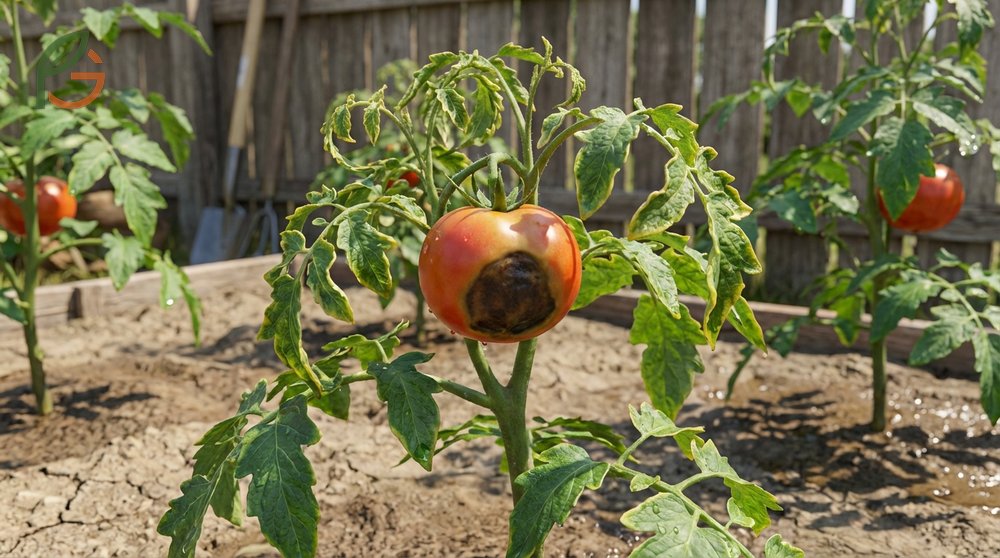
Calcium builds cell walls and helps plants withstand disease and heat stress. Unlike nitrogen, calcium doesn’t move within the plant once deposited in tissues. Deficiency appears in young leaves and growing fruit rather than older foliage.
The most visible calcium problem is blossom end rot—dark, sunken spots on the bottom of developing fruit. This happens when calcium can’t reach fruit fast enough during rapid growth. Inconsistent watering makes blossom end rot worse by disrupting calcium transport through plant tissues.
Young leaves may become distorted with brown edges in severe calcium deficiency. Growing tips die back as cells can’t form properly without adequate calcium. The plant appears stunted with weak stems that break easily.
- Blossom end rot: dark, leathery spots on fruit bottoms
- Young leaf tips turn brown and curl downward
- Growing points die back, stopping vertical growth
- Stems crack and break more easily than healthy plants
- More common in sandy, acidic soils with pH below 6.0
- Erratic watering—drought then heavy irrigation—triggers symptoms
Calcium is abundant in most soils but becomes unavailable in acidic conditions below pH 6.0. Test your soil and add lime to raise pH if needed. This makes existing calcium accessible rather than requiring heavy fertilizer applications.
Maintain consistent soil moisture through regular watering and mulching. Calcium moves through the plant dissolved in water, so drought periods followed by heavy watering disrupt transport. Drip irrigation or soaker hoses deliver steady moisture that supports calcium uptake.
Prevention Tip: Apply 1-2 inches of organic mulch around plants to maintain even soil moisture. This prevents the wet-dry cycles that trigger blossom end rot even when soil calcium is adequate.
Magnesium Deficiency in Tomato Plants
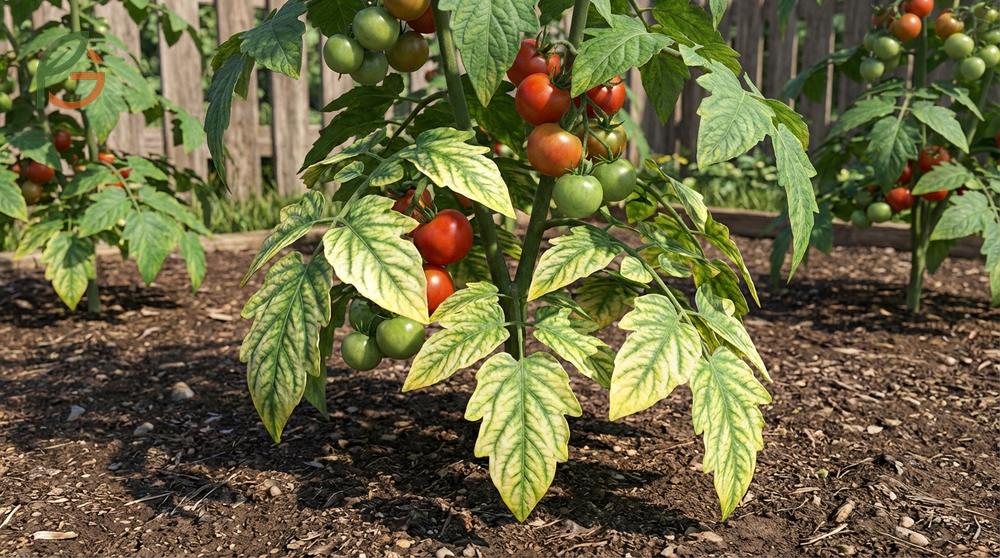
Magnesium sits at the center of every chlorophyll molecule, making it essential for photosynthesis. Symptoms show up mid-season on plants with heavy fruit loads as the crop pulls magnesium to developing tomatoes[6]. Older leaves lose green color between veins while veins themselves stay dark green—creating a distinctive striped appearance.
Research indicates that interveinal chlorosis starts on leaf margins and progresses toward the center as deficiency worsens[4]. Small whitish or light brown necrotic dots appear on yellowed areas. In advanced stages, affected leaves turn purple before dying and dropping off. Severe deficiency stresses plants and reduces fruit yield.
Sandy soils and acidic conditions below pH 5.5 increase magnesium deficiency risk. High potassium or calcium levels can block magnesium uptake even when the element is present in soil. Test your soil to check magnesium levels and pH together.
This table compares yellowing patterns, affected leaf locations, and distinguishing features for nitrogen, magnesium, and iron deficiencies in tomato plants
| Nutrient | Leaf Location | Yellowing Pattern | Key Distinguishing Feature |
|---|---|---|---|
| Nitrogen | Older leaves first[2] | Uniform yellowing across entire leaf | Purple stems and veins visible |
| Magnesium | Older leaves first[4] | Interveinal chlorosis with green veins | Whitish necrotic dots on margins |
| Iron | Young leaves first[3] | Interveinal chlorosis on new growth | Nearly white leaves in severe cases |
| Calcium | Young leaves and fruit | Brown leaf tips and edges | Blossom end rot on developing fruit |
Correct magnesium deficiency with foliar spray of 1 tablespoon Epsom salt (magnesium sulfate) dissolved in 1 gallon of water. Apply early morning when leaf pores are open for maximum absorption. Plants absorb foliar magnesium within 48-72 hours, faster than soil applications.
For long-term correction, incorporate dolomitic lime into soil before planting. This raises pH while adding both calcium and magnesium. Side-dress with Epsom salt (1 tablespoon per plant) monthly during heavy fruiting periods when demand peaks.
Overwatering vs Underwatering Yellow Leaves
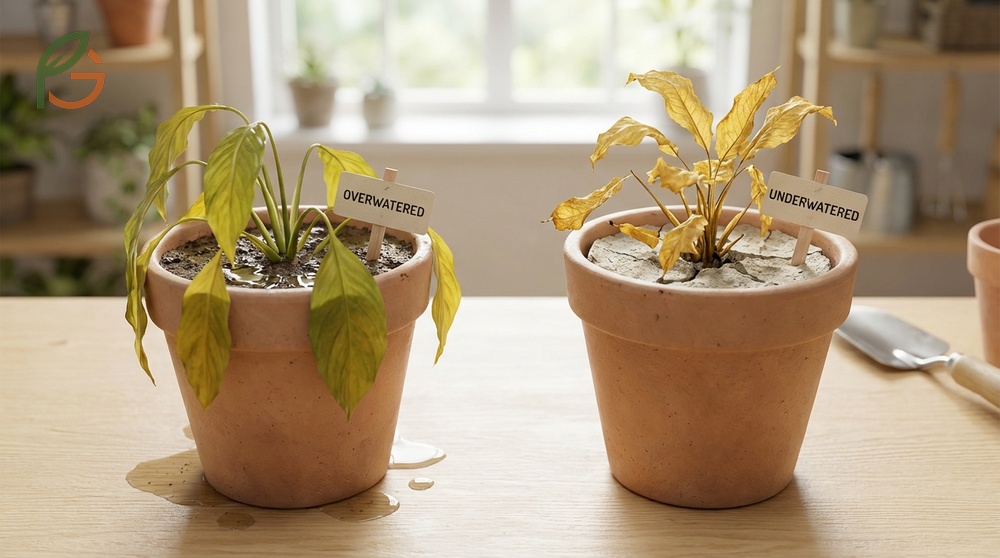
Both too much and too little water cause yellowing, but the accompanying symptoms differ. Overwatered plants show yellow leaves with wilting—a confusing combination that often leads gardeners to water more, making the problem worse[5]. Waterlogged soil suffocates roots, preventing oxygen uptake and nutrient absorption.
Underwatered plants wilt with crispy, brittle leaves that snap easily. Yellowing starts at leaf edges and moves inward. Soil pulls away from container edges when too dry. The key difference: overwatered soil stays wet 2 inches deep, while underwatered soil feels bone dry throughout.
Current data shows tomato roots need both moisture and oxygen[5]. Waterlogged conditions create anaerobic zones where beneficial soil bacteria die and root rot fungi thrive. Within 5-7 days, overwatered roots turn brown and mushy, unable to support plant growth.
- Overwatering: yellow leaves with soft, drooping stems despite wet soil
- Overwatering: soil surface stays muddy, water pools and drains slowly
- Overwatering: roots appear brown, mushy, and smell foul
- Underwatering: yellow leaves feel crispy and brittle, snap easily
- Underwatering: soil cracks and pulls away from container edges
- Underwatering: leaves curl upward at edges to reduce water loss
Water deeply but less frequently—delivering 1-1.5 inches per week depending on temperature and humidity[5]. Check soil moisture by inserting your finger 2 inches deep. Water only when soil feels dry at that depth. This encourages deep root growth rather than shallow roots that dry out quickly.
Apply water at soil level in early morning to reduce evaporation and give foliage time to dry before evening. Wet leaves overnight promote fungal diseases that cause additional yellowing. Use drip irrigation or soaker hoses to keep foliage dry while thoroughly moistening root zones.
Water Check: Container tomatoes may need daily watering during hot weather above 85°F (29°C), while in-ground plants typically need water 2-3 times weekly. Always base watering on soil moisture, not a fixed schedule.
Treating Yellow Leaves on Tomatoes
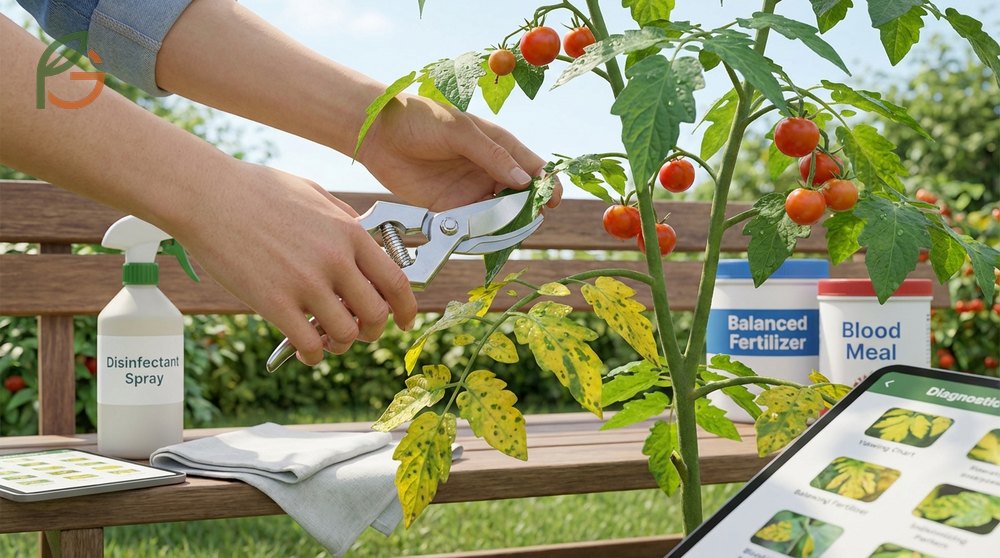
Treatment starts with accurate diagnosis using leaf location and yellowing pattern. Once you’ve identified the cause, remove severely affected leaves to prevent disease spread and redirect plant energy to healthy tissue. Cut leaves at the stem junction with clean, sharp pruners disinfected between cuts.
Apply the appropriate treatment based on your diagnosis. Nitrogen deficiency responds to balanced fertilizer or blood meal within 7-10 days. Magnesium shortage improves within 48-72 hours after foliar Epsom salt spray. Adjust watering immediately for water stress—recovery typically takes 5-7 days once conditions improve.
Yellow leaves won’t turn green again once damaged. Your goal is stopping symptom progression and ensuring new growth emerges healthy. Monitor upper leaves and growing tips for improvement over the next 1-2 weeks after treatment.
- Identify deficiency by checking whether old or young leaves yellow first
- Test soil pH and nutrient levels for accurate diagnosis if symptoms are unclear
- Remove severely yellowed leaves to reduce disease risk and improve air circulation
- Apply targeted fertilizer: balanced NPK for nitrogen, Epsom salt for magnesium
- Adjust watering schedule to deliver 1-1.5 inches weekly in 2-3 deep applications
- Add 2-3 inches of organic mulch to stabilize soil moisture and temperature
- Monitor new growth for 10-14 days to confirm treatment effectiveness
Prevention beats treatment for maintaining productive tomato plants. Conduct soil tests before planting and amend based on results. Apply balanced fertilizer at transplanting and monthly thereafter during active growth. Maintain consistent moisture through mulching and regular watering schedules.
Choose disease-resistant varieties to reduce yellowing from fungal and bacterial infections. Rotate planting locations yearly to prevent soil-borne disease buildup. Space plants 24-36 inches apart for good air circulation that reduces humidity and disease pressure on foliage.
Conclusion
The evidence is clear: yellow leaves on tomato plants serve as early warning signals that you can address before harvest suffers. Location matters most—older leaves yellowing indicates mobile nutrient deficiency, while young leaf problems point to immobile nutrients or root issues. Proper diagnosis based on leaf position and yellowing pattern leads to targeted treatment that restores plant health within 1-2 weeks.
Current agricultural guidance emphasizes prevention through soil testing, consistent watering, and balanced fertilization matched to plant growth stages. FruitGarden synthesizes research-based practices that help home gardeners maintain productive tomato plants from transplanting through final harvest.
Frequently Asked Questions
What nutrient deficiency causes yellow leaves on tomato plants?
Nitrogen deficiency is the most common cause, creating uniform yellowing on older leaves that progresses upward[2]. Magnesium shortage shows interveinal chlorosis with green veins, while iron deficiency affects young leaves at growing tips. Each nutrient creates a distinct pattern you can use for diagnosis.
Can yellow tomato leaves turn green again?
No, yellow leaves won’t return to green once damaged. Treatment stops symptom progression and ensures new growth emerges healthy. Remove severely yellowed leaves and focus on correcting the underlying cause through proper fertilization or watering adjustments.
How do you fix nitrogen deficiency in tomato plants?
Apply blood meal (12-0-0) at 1 cup per 25 square feet or use balanced organic fertilizer with NPK ratio of 5-5-5. Blood meal provides quick nitrogen that greens up plants within 7-10 days. Side-dress monthly during active growth to maintain adequate nitrogen levels through harvest.
How can you tell if tomato plants are overwatered or underwatered?
Overwatered plants show yellow leaves with wilting despite wet soil, and roots turn brown and mushy. Underwatered plants have crispy, brittle yellow leaves that snap easily, with soil pulling away from container edges. Check soil 2 inches deep—wet indicates overwatering, bone dry confirms underwatering[5].
What does magnesium deficiency look like in tomato plants?
Magnesium deficiency creates interveinal chlorosis on older leaves—yellowing between veins while veins stay green. Small whitish or brown necrotic dots appear on leaf margins. In advanced cases, yellowed areas turn purple before leaves drop off[4].
How much water do tomato plants need per week?
Tomato plants need 1-1.5 inches of water per week delivered in 2-3 deep watering sessions[5]. Water deeply to encourage root growth rather than daily light watering that creates shallow roots. Container plants may need daily watering during hot weather above 85°F (29°C).
Should I remove yellow leaves from tomato plants?
Yes, remove severely yellowed leaves to improve air circulation and redirect plant energy to healthy growth. Cut leaves at the stem junction with clean pruners disinfected between cuts to prevent disease spread. Leave mildly yellowed leaves until you’ve corrected the underlying problem and new growth shows improvement.