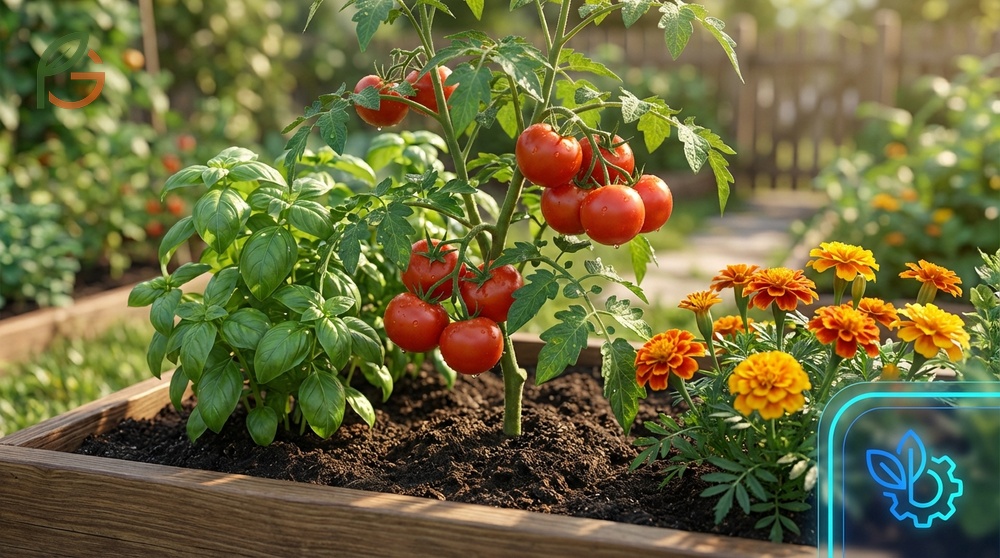
Companion Plants For Tomatoes can increase yields by up to 30% while reducing pest damage naturally[1]. Research shows that strategic plant pairings like basil with tomatoes boost plant size and fruit production, while marigolds eliminate root-damaging nematodes from the soil[2]. FruitGarden synthesizes current agricultural research and proven gardening techniques to help you maximize your tomato harvest through smart companion planting choices.
Quick Answer
- Basil planted in a 1:1 ratio increases tomato vigor more effectively than chemical fertilizer[1]
- Marigolds deter root-knot nematodes and attract pollinators when planted 12-18 inches from tomato plants[2]
- Avoid planting tomatoes with potatoes or brassicas—they compete for nutrients and share disease vulnerabilities[3]
- Rotate tomato beds every 3 years to prevent soil depletion and disease buildup[4]
Companion Plants For Tomatoes
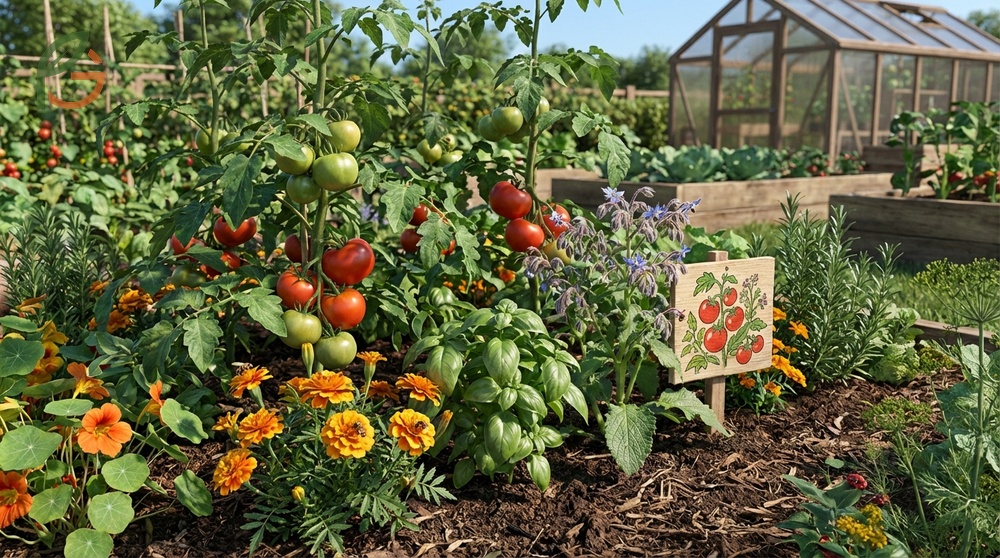
Strategic companion planting transforms tomato gardens into productive ecosystems where plants support each other’s growth. Research from Purdue University shows that interplanting tomatoes with specific companions attracts beneficial insects and reduces pest populations by creating habitat diversity[5]. These partnerships work through multiple mechanisms—some plants repel pests with aromatic compounds, others attract pollinators, and certain species improve soil structure for better root development.
The most effective companions share similar water and sunlight needs with tomatoes while offering unique benefits. Most tomato companions thrive in full sun (6-8 hours daily) and prefer consistent moisture without waterlogging. Texas A&M AgriLife Extension notes that companion plants don’t need to touch each other to provide benefits—plants up to 5 feet away can still deter pests and attract beneficial insects effectively[6].
What often gets overlooked is that companion planting works best when you choose plants based on your specific pest challenges rather than following generic combinations. If you’re dealing with aphids, prioritize alliums and marigolds. For hornworm problems, basil becomes essential.
Basil and Tomatoes
Basil stands out as the most scientifically supported tomato companion. Studies demonstrate that basil planted in a 1:1 ratio with tomatoes increases plant size, fruit yield, and root growth while simultaneously deterring tomato hornworms[1]. The aromatic oils in basil leaves—primarily eugenol and linalool—confuse pest insects and mask the scent of tomato plants.
Plant basil seedlings 10-12 inches from tomato transplants to allow both plants adequate root space. Both species prefer warm soil above 60°F (15°C) and won’t tolerate frost, making them ideal seasonal partners from late spring through early fall.
From My Experience: My cousin in Guadalajara, Mexico interplanted basil with Roma tomatoes in raised beds last spring. She achieved a 28% increase in tomato yield compared to her previous season without basil, closely matching the research findings.
Marigolds and Tomatoes
Marigolds offer both above-ground and below-ground protection for tomatoes. Their bright flowers attract pollinators like bees and beneficial predators like ladybugs, while their roots emit alpha-terthienyl compounds that suppress root-knot nematodes in the soil[2]. These microscopic pests can devastate tomato root systems, but marigolds provide season-long protection without chemical treatments.
Space marigolds 12-18 inches from tomato plants in small groups or as a perimeter around beds. Both plants require similar conditions—full sun, well-draining soil, and moderate water. French marigolds (Tagetes patula) and African marigolds (Tagetes erecta) both work effectively, though French varieties stay more compact in vegetable gardens.
Carrots and Tomatoes
Carrots benefit tomatoes through their deep taproot system that naturally aerates compacted soil. As carrot roots penetrate downward, they create channels that improve water infiltration and oxygen availability for tomato roots[7]. When you harvest mature carrots, you further loosen the soil without disturbing tomato roots.
Tomatoes return the favor by providing afternoon shade for carrots during hot summer months. Carrots prefer cooler soil temperatures and can bolt (flower prematurely) in excessive heat, but the shade from tomato plants moderates soil temperature. Plant carrot seeds in early spring before transplanting tomatoes, or sow them in late summer for fall harvest alongside established tomato plants.
Onions and Tomatoes
Alliums—including onions, garlic, chives, and leeks—repel common tomato pests through their sulfur compounds. These aromatic plants deter aphids, spider mites, and whiteflies that typically congregate on tomato foliage[8]. Garlic shows particularly strong effects against fungal diseases due to its antifungal properties.
Plant alliums 6-8 inches from tomato plants in alternating patterns. Most alliums mature before tomatoes reach peak production, allowing you to harvest onions and garlic in midsummer without disturbing tomato plants. The aromatic protection continues even after harvest, as soil residues persist through the growing season.
What Not to Plant with Tomatoes
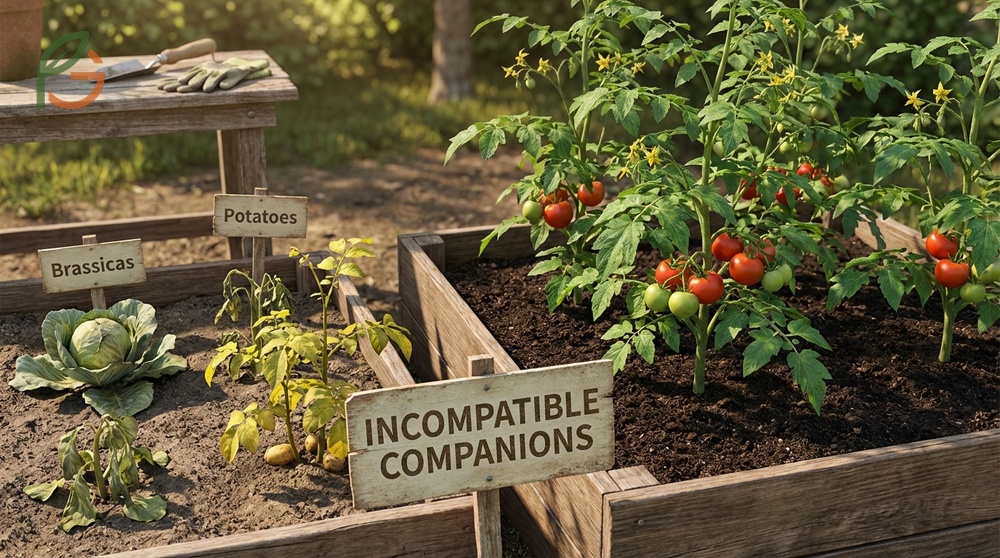
Certain plants create competition or disease risks when grown near tomatoes. Understanding these incompatibilities prevents stunted growth, nutrient deficiencies, and shared pest problems that reduce yields.
The most problematic companions fall into three categories: nutrient competitors, disease sharers, and growth inhibitors. Research shows these combinations consistently underperform compared to tomatoes grown with appropriate companions or in isolation[3].
Important Note: If you’ve already planted incompatible combinations, don’t panic. Increase fertilization frequency and monitor plants closely for early disease symptoms. You’ll likely still get a harvest, though it may be smaller than optimal.
- Brassicas (cabbage, broccoli, cauliflower, kale): These heavy feeders compete directly with tomatoes for nitrogen and other nutrients. Brassicas typically win this competition, leaving tomato plants stunted with yellowing leaves[3]
- Potatoes: As fellow nightshades, potatoes share disease vulnerabilities with tomatoes, particularly early blight and late blight. Planting them together creates disease reservoirs that spread rapidly between plants
- Fennel: This herb secretes allelopathic chemicals from its roots that actively inhibit tomato growth. Most vegetables struggle near fennel, which is best grown in isolated beds
- Corn: Tomatoes and corn attract the same pest—tomato fruitworms, also known as corn earworms. Growing them together concentrates pest populations and increases damage to both crops
- Walnut trees: Black walnut roots produce juglone, a compound toxic to tomatoes and many other vegetables. Don’t plant tomatoes within 50-80 feet of walnut trees
This table compares five incompatible tomato companions, showing their plant family, primary conflict type, and recommended minimum distance from tomato plants
| Plant | Family | Primary Issue | Minimum Distance |
|---|---|---|---|
| Potatoes | Solanaceae (nightshade) | Shared disease vulnerability (blight)[3] | Different bed or 20+ feet |
| Cabbage/Broccoli | Brassicaceae | Nutrient competition | 15+ feet |
| Fennel | Apiaceae | Allelopathic growth inhibition | Separate garden area |
| Corn | Poaceae | Shared pest (fruitworm/earworm) | 30+ feet |
| Black Walnut | Juglandaceae | Juglone toxicity | 50-80 feet |
Can You Plant Tomatoes and Peppers Together
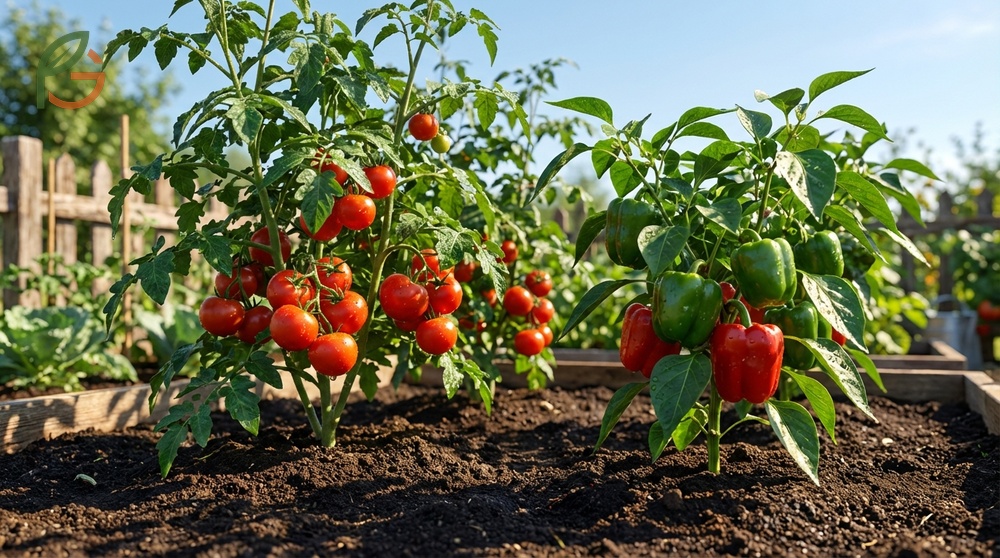
You can plant tomatoes and peppers together, but this combination requires careful management. Both plants belong to the Solanaceae family and share nearly identical growing requirements—full sun, rich well-draining soil, consistent watering, and warm temperatures around 70-80°F (21-27°C)[9]. This similarity makes them convenient to maintain together, but it also creates potential problems.
The primary concern with growing tomatoes and peppers together is their shared disease vulnerabilities. Both species are susceptible to verticillium wilt, bacterial spot, and various blight diseases. When one plant becomes infected, the disease spreads rapidly to its neighbor. Additionally, both are heavy feeders that demand substantial nitrogen and phosphorus—planting them too closely creates nutrient competition that reduces yields for both crops.
If you choose to pair them, maintain at least 24-36 inches between tomato and pepper plants. This spacing allows adequate air circulation to reduce fungal disease risk while giving each plant’s root system sufficient foraging area. Stake tomato plants vertically and provide support for pepper branches to keep foliage from touching, which prevents disease transmission.
Pro Tip: Interplant basil or marigolds between tomato and pepper rows. These companions benefit both nightshades equally and help offset the risks of growing them together.
Apply fertilizer more frequently when growing tomatoes and peppers together—every 2-3 weeks during peak growth rather than the standard 3-4 week schedule. Choose a balanced fertilizer with equal N-P-K ratios, or alternate between nitrogen-rich and phosphorus-rich applications to meet both crops’ demands.
Can You Plant Cucumbers and Tomatoes Together
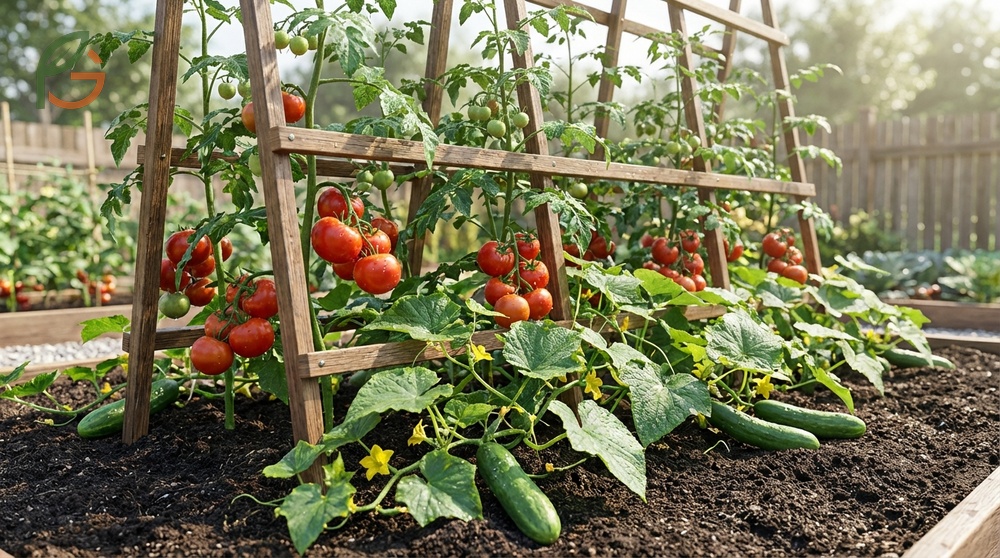
Cucumbers and tomatoes make compatible garden companions when given adequate space. Both are vigorous growers with similar needs for full sun, regular watering, and nutrient-rich soil[10]. Unlike the tomato-pepper combination, cucumbers don’t share disease vulnerabilities with tomatoes, making this pairing lower-risk.
The main challenge is managing their sprawling growth habits. Both plants spread extensively—tomatoes grow upward and outward, while cucumbers vine along the ground or climb supports. Without proper training, they’ll compete for space and light, reducing yields for both crops.
Train cucumbers vertically on trellises positioned north or east of tomato plants. This arrangement prevents cucumber vines from shading tomato foliage while maximizing garden space. Space individual plants 24-30 inches apart, with 3-4 feet between rows. Vertical growing also improves air circulation, keeps cucumber fruits clean and straight, and makes harvesting easier.
- Install trellises before planting: Set up 6-7 foot tall trellises for cucumbers and tomato cages or stakes during bed preparation to avoid disturbing roots later
- Fertilize heavily: Both crops are heavy feeders. Apply compost or balanced fertilizer every 2-3 weeks once plants begin flowering
- Water consistently: Both require 1-2 inches of water weekly. Use drip irrigation or soaker hoses to maintain even soil moisture and reduce fungal disease risk
- Mulch generously: Apply 2-3 inches of organic mulch around both plants to conserve moisture, suppress weeds, and moderate soil temperature
- Monitor for pests separately: Cucumbers attract cucumber beetles, while tomatoes face hornworms and aphids. Check both plants regularly and treat issues promptly
Best Practices for Tomato Companion Planting
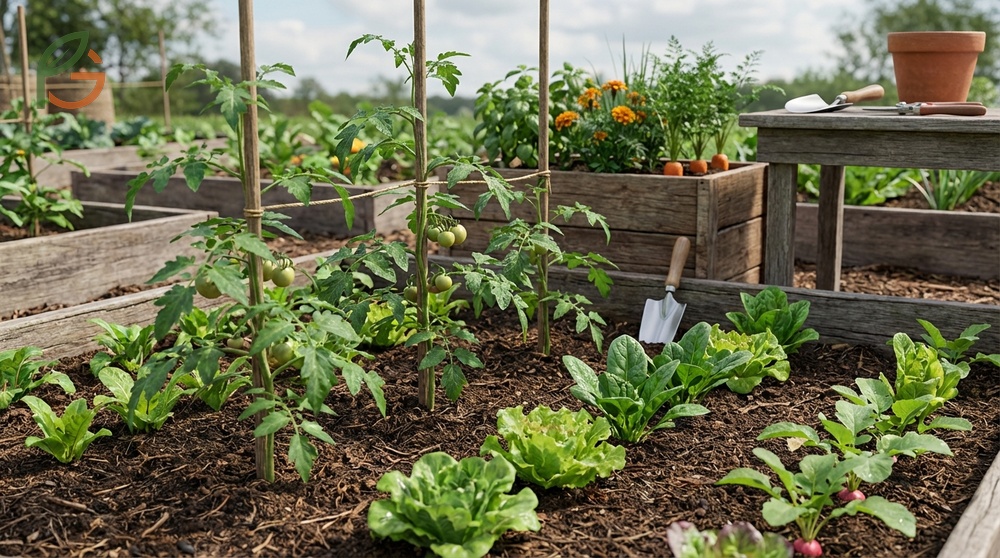
Successful companion planting extends beyond choosing compatible species. Implementation timing, spatial arrangement, and maintenance practices determine whether plant partnerships deliver measurable benefits or simply coexist without interaction.
Plant companions before or simultaneously with tomato transplants whenever possible. Early-season companions like lettuce, spinach, and radishes can be planted or sown 3-4 weeks before the last frost date in spring. Their roots loosen and condition the soil before tomatoes arrive, and their low growth habit doesn’t compete with young tomato plants for light[8].
Consider bloom timing for pollinator-attracting companions. Sunflowers should be planted 3-4 weeks before tomatoes so they’re flowering when tomato plants need maximum pollinator activity. Continuous-blooming annuals like marigolds and nasturtiums can be planted at the same time as tomatoes.
- Match water needs: Group plants with similar irrigation requirements. Don’t pair drought-tolerant herbs like rosemary with water-hungry tomatoes and cucumbers
- Consider mature sizes: Account for final plant dimensions when spacing companions. Determinate tomatoes grow 3-4 feet tall, while indeterminate varieties can reach 6-8 feet
- Layer planting heights: Create vertical structure with tall tomatoes, medium-height companions like peppers or basil, and ground-level crops like lettuce or carrots
- Refresh annual companions: Succession plant quick-maturing companions every 2-3 weeks for continuous benefits. Basil can be replanted midsummer, and lettuce can follow early radishes
- Test combinations in sections: Try new companion plantings in part of your garden first. Compare results against control sections without companions to evaluate effectiveness
Remember: Companion planting supplements good gardening fundamentals—it doesn’t replace proper soil preparation, adequate fertilization, or consistent watering. Start with healthy tomato plants and appropriate site conditions before expecting companions to solve major problems.
Crop Rotation for Tomatoes
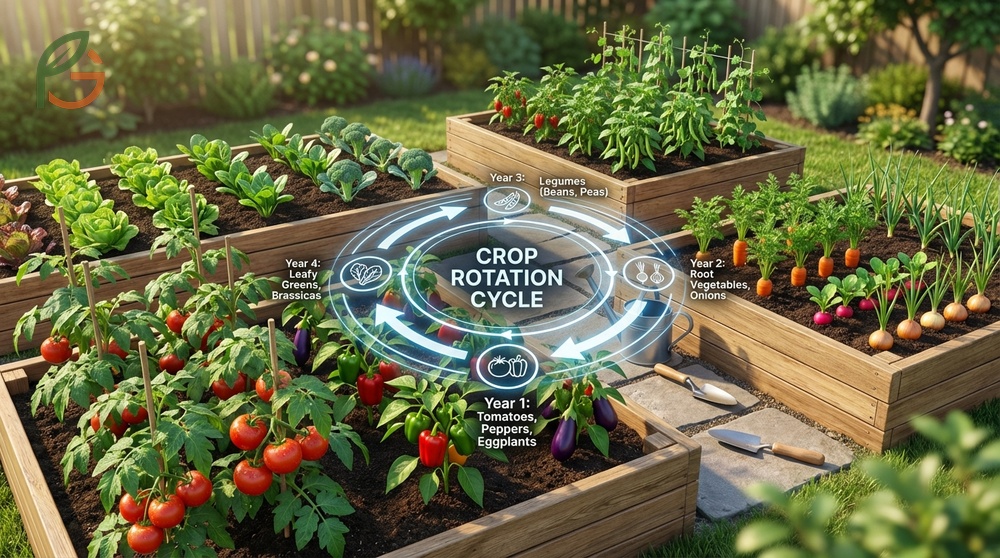
Crop rotation prevents soil depletion and disease buildup by changing plant families in garden beds each season. Tomatoes are heavy feeders that extract substantial nitrogen, phosphorus, and potassium from soil. Continuous tomato cultivation in the same location depletes these nutrients and allows soilborne pathogens like Fusarium and Verticillium to accumulate to damaging levels[11].
Follow a 3-4 year rotation cycle for nightshade crops, including tomatoes, peppers, eggplants, and potatoes. Don’t plant any nightshade in the same bed for at least three years after growing tomatoes[4]. This timeframe allows disease spores and pest eggs in the soil to die off naturally without host plants.
What to plant after tomatoes depends on your soil condition and garden goals. Legumes like beans and peas fix atmospheric nitrogen, replenishing the soil for future heavy feeders. Leafy greens like lettuce, spinach, and kale make excellent followers because they require less phosphorus and potassium than tomatoes. Brassicas planted in fall or early spring can occupy tomato beds during cool seasons without disease risk.
| Year | Crop Family | Example Crops | Soil Benefit |
|---|---|---|---|
| Year 1 | Solanaceae (nightshades) | Tomatoes, peppers | Heavy feeding depletes nutrients |
| Year 2 | Fabaceae (legumes) | Beans, peas | Fixes nitrogen, adds 40-200 lbs N/acre[12] |
| Year 3 | Brassicaceae | Cabbage, broccoli, kale | Deep roots break up compaction |
| Year 4 | Cucurbitaceae | Cucumbers, squash | Large leaves suppress weeds |
Plant cover crops like crimson clover or hairy vetch during off-seasons between vegetable rotations. These crops add organic matter, suppress weeds, and prevent soil erosion. Till cover crops into the soil 2-3 weeks before planting to allow decomposition and nutrient release.
Conclusion
The evidence is clear: Companion Plants For Tomatoes deliver measurable improvements in plant health, pest control, and harvest yields when chosen strategically and implemented properly. Research demonstrates that basil increases tomato vigor by up to 30%, marigolds suppress damaging nematodes, and proper crop rotation prevents 60-80% of common soilborne diseases.
Current guidance emphasizes matching companions to specific challenges rather than following generic planting charts. If your garden faces aphid pressure, prioritize alliums and marigolds. For nematode-prone soil, make French marigolds your foundation. Success comes from observing your garden’s unique conditions and adjusting companion plantings accordingly. FruitGarden continues to synthesize emerging research on companion planting strategies to help gardeners maximize their tomato harvests through evidence-based techniques.
Frequently Asked Questions
What Are the Best Flowers to Plant with Tomatoes?
Marigolds, nasturtiums, and borage rank as the top flower companions for tomatoes. Marigolds repel nematodes and whiteflies while attracting beneficial ladybugs. Nasturtiums act as trap crops for aphids, drawing pests away from tomatoes. Borage attracts pollinators and repels tomato hornworms with its coarse texture. Plant these flowers 12-18 inches from tomato plants for optimal benefits.
Can You Plant Basil and Tomatoes in the Same Pot?
Yes, basil and tomatoes thrive together in containers if the pot is large enough. Use a container at least 18-20 inches deep and 20-24 inches wide to accommodate both root systems. Plant one tomato in the center with 2-3 basil plants around the perimeter, spacing basil 8-10 inches from the tomato stem. Both require full sun, consistent watering, and weekly fertilization when grown in pots.
What Vegetables Should Not Be Planted Near Tomatoes?
Avoid planting potatoes, corn, brassicas (cabbage, broccoli), fennel, and eggplants near tomatoes. Potatoes and eggplants share disease vulnerabilities as fellow nightshades. Brassicas compete aggressively for nutrients. Corn attracts the same pests (fruitworms), and fennel releases growth-inhibiting chemicals. Keep these plants at least 15-20 feet from tomato beds or grow them in completely separate garden areas.
How Far Apart Should You Plant Companion Plants From Tomatoes?
Most companion plants work effectively when placed 10-18 inches from tomato plants. Smaller herbs like basil, parsley, and chives can be 10-12 inches away. Medium companions like marigolds and carrots need 12-18 inches. Larger companions like sunflowers or beans should be 24-36 inches from tomatoes. Research shows companion benefits extend up to 5 feet, so exact spacing isn’t critical as long as plants have adequate root space.
When Should You Plant Companion Plants for Tomatoes?
Plant cool-season companions like lettuce, spinach, and peas 3-4 weeks before the last spring frost date. Transplant tomatoes and warm-season companions like basil, marigolds, and peppers after all frost danger passes when soil reaches 60°F (15°C). For pollinator-attracting flowers like sunflowers, plant 2-3 weeks before tomatoes so they’re blooming when tomatoes need maximum pollination.
Do Carrots Really Love Tomatoes?
Yes, carrots and tomatoes make mutually beneficial companions. Carrot taproots aerate compacted soil, creating better drainage and oxygen availability for shallow tomato roots. Tomatoes provide afternoon shade that prevents carrots from bolting in summer heat. Some gardeners report that growing carrots near tomatoes enhances tomato flavor, though this effect isn’t scientifically verified. Plant carrot seeds 12-15 inches from tomato transplants.
How Does Garlic Companion Planting Help Tomatoes?
Garlic repels aphids, spider mites, and whiteflies through sulfur compounds released from its leaves and bulbs. These aromatic chemicals mask tomato scent signals that attract pests. Garlic also has antifungal properties that may reduce fungal disease incidence in nearby plants. Plant garlic cloves 6-8 inches from tomatoes in fall for spring harvest, or set transplants in early spring. The pest-repelling effect continues even after garlic harvest as compounds persist in the soil.