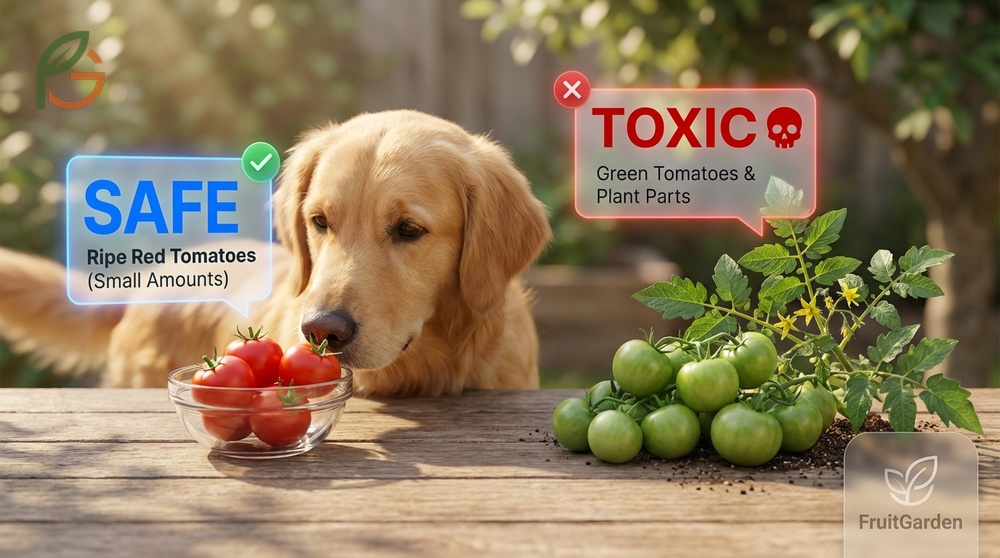
Can dogs eat tomatoes? Yes, but only fully ripe red tomatoes in small amounts. Research shows that green tomatoes and tomato plant parts contain toxic compounds called tomatine and solanine that cause serious digestive and neurological symptoms in dogs[1]. FruitGarden synthesizes current veterinary research and toxicology data to help pet owners make safe choices about sharing garden produce with their dogs.
Quick Answer
- Ripe red tomatoes contain minimal tomatine and are safe in moderation[1]
- Green tomatoes hold up to 5% tomatine concentration—highly toxic to dogs[2]
- Stems and leaves contain the highest toxin levels and should never be consumed[3]
- Limit treats to 10% of daily calories to maintain balanced nutrition[3]
Can Dogs Eat Tomatoes
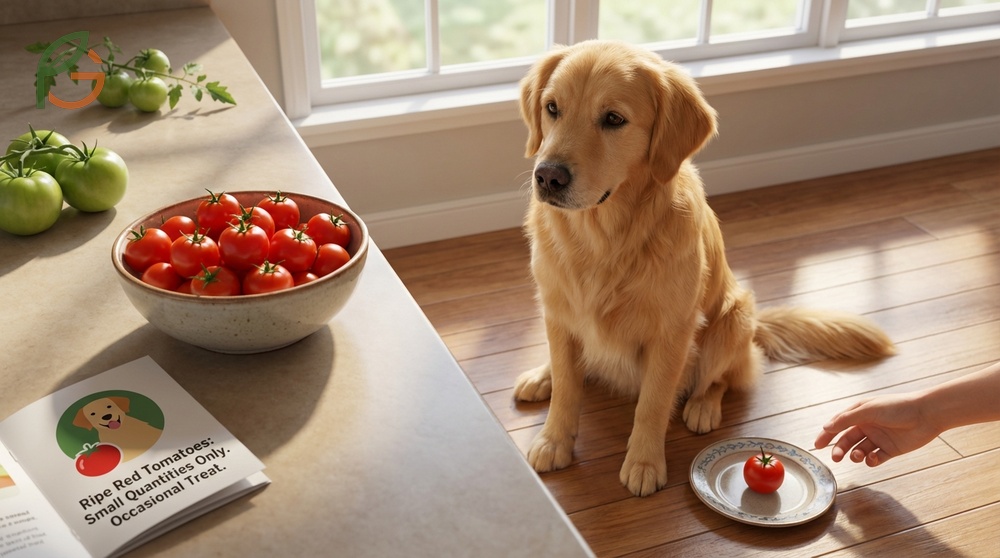
Dogs can safely consume fully ripened red tomatoes in small quantities. The American Kennel Club confirms that ripe tomatoes are generally safe for dogs when offered as occasional treats rather than regular meal components[4].
Current veterinary guidance emphasizes the importance of ripeness. As tomatoes mature and turn red, tomatine concentration drops dramatically from dangerous levels to nearly undetectable amounts[1]. Most dogs tolerate small pieces without issues, though individual sensitivities vary.
Tomatoes belong to the nightshade family alongside potatoes, peppers, and eggplants. This classification matters because nightshades naturally produce protective alkaloids that can affect canine nervous and digestive systems. What’s often overlooked is that cooking doesn’t eliminate these toxins—ripeness is the critical factor.
Ripe vs Unripe Tomatoes
Ripe red tomatoes contain minimal tomatine and solanine, making them safe for occasional consumption. The flesh should be completely red with no green patches or firm areas. Green or partially ripened tomatoes retain high toxin concentrations that pose genuine health risks.
Pet Poison Helpline reports that tomatine levels can reach up to 5% in unripe fruit and green plant parts[2]. This concentration drops rapidly during ripening, which explains why color matters so much. Cherry tomatoes, grape tomatoes, and beefsteak varieties follow the same safety pattern—red means safe, green means dangerous.
Tomatine and Solanine Explained
Tomatine is a glycoalkaloid compound that plants produce as natural pest defense. Dogs metabolize this substance poorly compared to humans, which increases their vulnerability to poisoning. Solanine functions similarly and appears throughout the nightshade family.
These compounds interfere with acetylcholinesterase, an enzyme crucial for proper nerve function. When dogs ingest significant amounts, nerve signals misfire, causing the tremors and weakness associated with tomato poisoning. The effects are dose-dependent—larger dogs typically tolerate more than smaller breeds.
Important Note: Dogs with existing digestive sensitivities or food allergies should avoid tomatoes entirely. Even ripe tomatoes can trigger upset stomach in sensitive individuals. Always introduce new foods gradually and monitor for adverse reactions.
Are Tomatoes Bad for Dogs
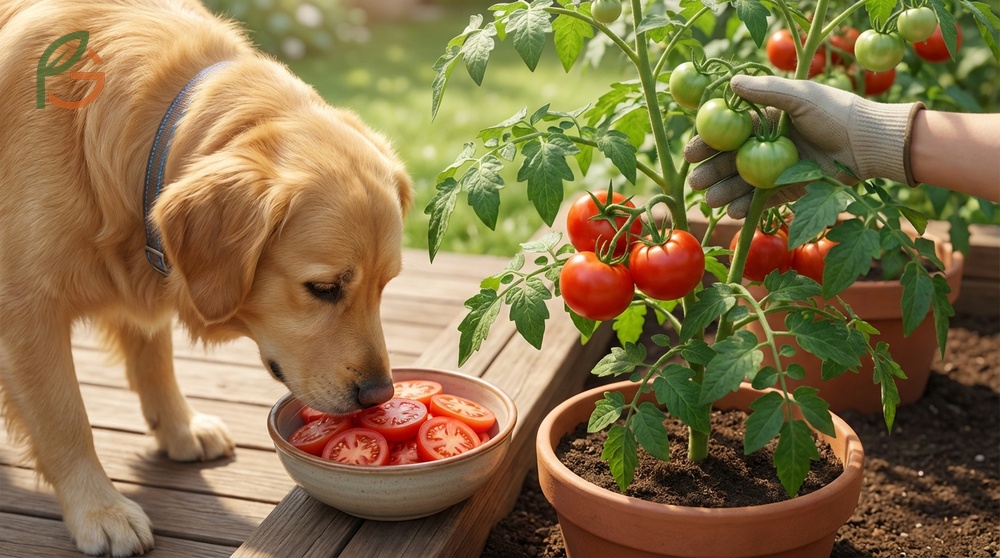
Tomatoes aren’t inherently bad for dogs—the danger lies in which parts they consume. Evidence shows that ripe tomato flesh poses minimal risk, while other plant components can cause serious illness[3]. The distinction between safe and dangerous parts is critical for pet owners with garden access.
Most tomato-related poisoning cases occur when dogs access gardens or compost piles. Studies indicate that tomato poisoning is relatively rare but happens often enough to warrant caution[2]. Dogs typically recover fully with supportive treatment, though severe cases require immediate veterinary intervention.
Another concern is tomato-based products. Sauces, ketchup, and canned tomatoes often contain onions, garlic, salt, and spices that are toxic or unhealthy for dogs. Even without toxic additives, the concentrated nature of these products can upset canine digestive systems.
Toxic Parts of Tomato Plants
The most dangerous components are stems, leaves, vines, and blossoms. These parts concentrate the highest tomatine levels throughout the growing season. Pet owners with backyard gardens should fence tomato plants or supervise outdoor time carefully.
Green unripe tomatoes contain substantially more tomatine than their red counterparts. Hill’s Pet Nutrition specifically warns against allowing dogs to consume any green portions of tomato plants[3]. Even a small green tomato can trigger symptoms in medium-sized dogs.
- Stems and leaves: Highest tomatine concentration, most toxic
- Vines and blossoms: High toxin levels, very dangerous
- Green unripe tomatoes: Moderate to high risk depending on size
- Partially ripe tomatoes: Lower risk but still contains significant tomatine
- Fully ripe red tomatoes: Minimal risk when fed in small amounts
How Much Is Dangerous
Toxicity depends on your dog’s size and what part they consumed. For a 20-pound dog, eating one to two green tomatoes could cause symptoms, while plant material poses danger in even smaller quantities. Ripe tomatoes would require much larger amounts to trigger issues.
Veterinary guidance suggests keeping all treats and extras under 10% of your dog’s daily caloric intake[3]. For most dogs, this means a few small pieces of ripe tomato rather than large servings. Individual tolerance varies based on body weight, metabolism, and previous exposure.
Garden Safety Tip: If you’re growing tomatoes at home, consider raised beds or barriers that prevent your dog from accessing plants. Fallen green tomatoes in grass pose particular risk since dogs may eat them during play without you noticing.
Signs of Tomato Poisoning in Dogs
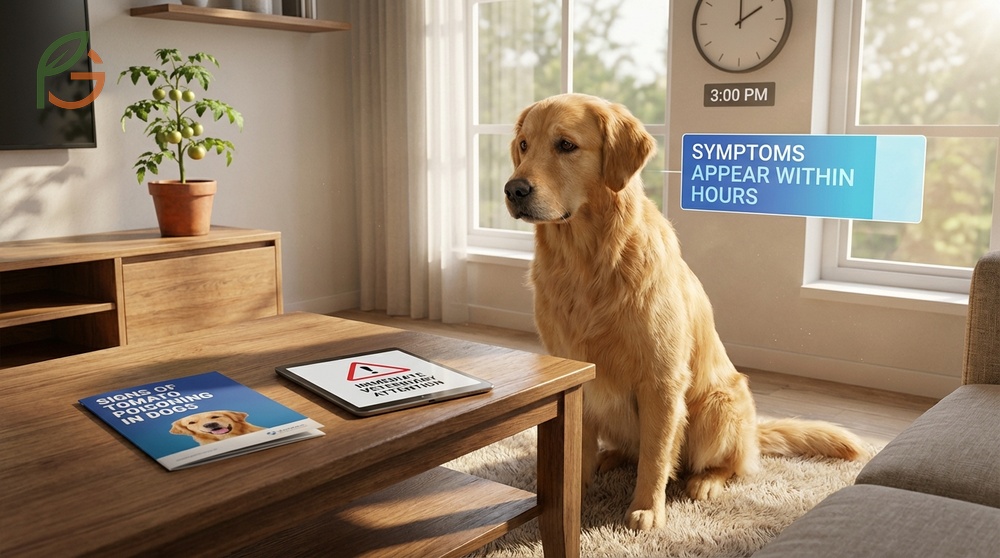
Recognizing poisoning symptoms early dramatically improves treatment outcomes. The ASPCA identifies several key warning signs that require immediate veterinary attention[5]. Symptoms typically appear within a few hours of ingestion, though timing varies by amount consumed.
The severity of symptoms correlates directly with how much toxic material your dog ate. Mild cases might show only slight digestive upset, while severe poisoning can cause life-threatening complications. Most dogs that receive prompt treatment recover completely within 24 to 48 hours.
Gastrointestinal Symptoms
Digestive issues are usually the first signs you’ll notice. Dogs may refuse food, seem uncomfortable, or show clear signs of nausea. Vomiting typically occurs within 2 to 6 hours after consuming toxic tomato parts.
Diarrhea often follows vomiting and can range from mild to severe. Some dogs experience both simultaneously, which increases dehydration risk. Excessive drooling and lip-licking indicate nausea even before vomiting begins.
- Vomiting: May contain plant material or appear foamy
- Diarrhea: Often watery or contains undigested plant matter
- Loss of appetite: Refusal to eat regular meals or treats
- Excessive drooling: Persistent salivation that seems abnormal
- Abdominal pain: Reluctance to move, hunched posture, or whining
- Lethargy: Unusual tiredness or lack of interest in normal activities
Neurological Symptoms
More serious poisoning affects the nervous system. The American Kennel Club warns that neurological symptoms indicate significant tomatine exposure requiring urgent care[3]. These signs suggest the toxin has entered your dog’s bloodstream and is interfering with nerve function.
Muscle weakness and coordination problems are particularly concerning. Dogs may stumble, struggle to stand, or show abnormal gait patterns. In severe cases, heart rate abnormalities can develop, though this is relatively rare.
- Muscle weakness: Difficulty standing or walking normally
- Tremors: Shaking or trembling, especially in the limbs
- Loss of coordination: Stumbling, swaying, or ataxia
- Seizures: In severe cases, though uncommon
- Dilated pupils: Abnormally large pupils that don’t respond to light
- Cardiac effects: Increased or irregular heart rate
Emergency Action: If your dog shows neurological symptoms after eating tomato plant material, contact your veterinarian or Pet Poison Helpline immediately. Don’t wait to see if symptoms improve—early intervention prevents serious complications.
Can Dogs Eat Tomatoes Raw
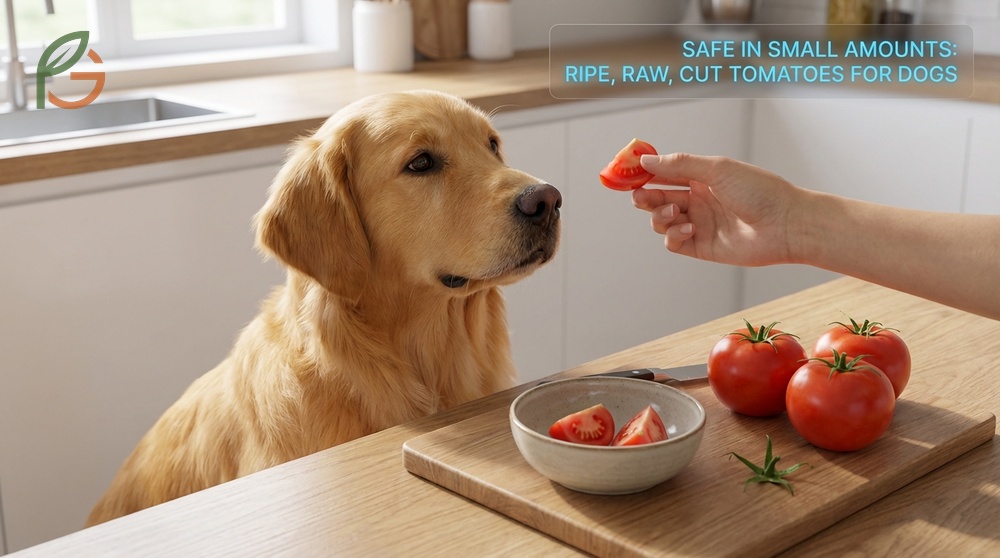
Raw ripe tomatoes are safe for dogs in small amounts. The raw form doesn’t increase toxicity—in fact, cooking doesn’t reduce tomatine levels in green tomatoes or plant parts. What matters most is choosing fully ripened red tomatoes without any green areas.
When offering raw tomatoes, remove stems and any remaining vine attachments. Cut tomatoes into bite-sized pieces appropriate for your dog’s size to prevent choking. One or two small pieces work well as occasional treats during training or as meal toppers.
Some dogs don’t enjoy raw tomato texture or flavor. The slightly acidic taste doesn’t appeal to every canine palate. If your dog refuses tomatoes, don’t force them—plenty of other safe fruits and vegetables provide similar nutritional benefits without the nightshade family concerns.
Cooked ripe tomatoes are equally safe, assuming you don’t add seasonings, onions, garlic, or salt. Plain steamed or roasted tomato pieces work well mixed into regular dog food. However, avoid tomato sauces, pastes, or commercial products that contain ingredients toxic to dogs.
This table compares safety levels and considerations for different tomato preparations when feeding dogs
| Tomato Type | Safety Level | Key Considerations |
|---|---|---|
| Raw Ripe Red | Safe in moderation | Remove stems, cut small pieces, limit to 10% of diet |
| Cooked Ripe (Plain) | Safe in moderation | No seasonings, onions, or garlic; same portion limits apply |
| Cherry/Grape Tomatoes | Safe when ripe | Cut in half to prevent choking, especially for small dogs |
| Tomato Sauce | Unsafe | Contains onions, garlic, salt, and spices toxic to dogs |
| Green Tomatoes | Toxic | High tomatine content causes vomiting and neurological issues[2] |
Safe Fruits for Dogs
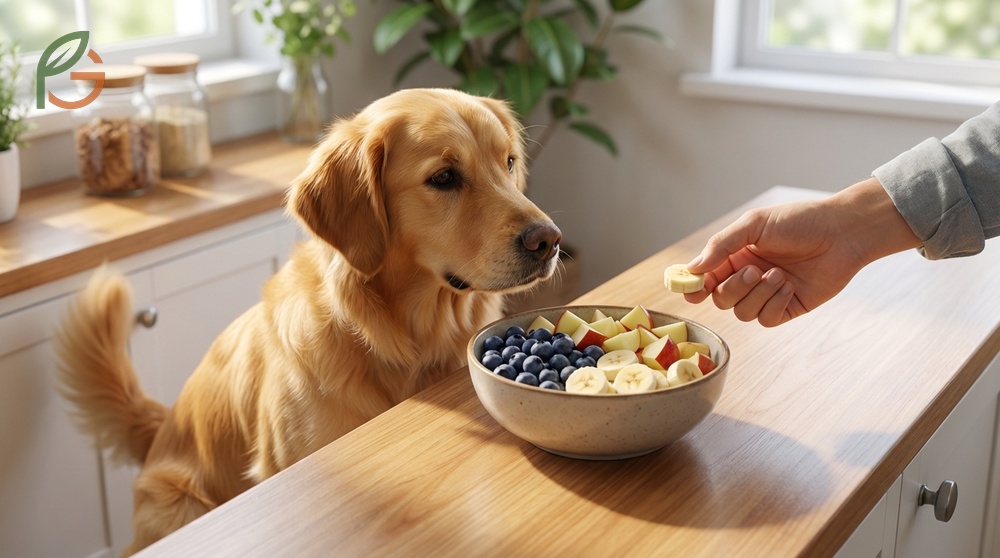
Many fruits offer dogs nutritional benefits without the concerns associated with nightshade plants. Current veterinary nutrition guidance supports incorporating safe fruits as occasional treats, provided they don’t exceed 10% of daily calories. These alternatives provide vitamins, fiber, and antioxidants that support canine health.
When introducing any new fruit, start with tiny amounts and watch for digestive upset or allergic reactions. Some dogs have sensitive stomachs that react poorly to changes in diet. Always remove seeds, pits, and rinds that could cause choking or intestinal blockage.
Fruits naturally contain sugar, so dogs with diabetes or weight issues need careful portion control. Water-rich options like watermelon and cucumbers work well for hydration on hot days while keeping calorie intake low. The variety below gives you multiple options to find what your dog enjoys most.
- Blueberries: Rich in antioxidants that support cognitive function and immune health
- Apples: High in fiber and vitamin C; remove seeds and core before feeding
- Carrots: Crunchy texture helps clean teeth; excellent source of beta-carotene
- Watermelon: Hydrating and low-calorie; remove seeds and rind completely
- Strawberries: Contains natural teeth-whitening enzymes; feed in moderation due to sugar
- Cucumbers: Very low calorie, perfect for overweight dogs needing treats
- Bananas: Potassium-rich but high in sugar; limit to small slices occasionally
Avoid These Fruits: Never feed dogs grapes, raisins, cherries with pits, or avocados. These fruits contain compounds that cause kidney failure, cyanide poisoning, or cardiovascular issues in dogs. When in doubt about any food’s safety, consult your veterinarian before offering it.
Conclusion
The evidence is clear: dogs can eat ripe red tomatoes safely when you follow proper guidelines. Keep portions small, ensure complete ripeness, and never allow access to green tomatoes or plant parts. Current veterinary guidance emphasizes that while ripe tomatoes pose minimal risk, the potential for confusion makes other fruits simpler choices for most pet owners.
If you’re growing tomatoes in your garden, protect your dog by fencing plants or supervising outdoor time carefully. FruitGarden encourages gardeners to create pet-safe spaces that let you enjoy homegrown produce without compromising animal welfare. When questions arise about any food’s safety for your dog, your veterinarian remains your best resource for personalized advice.
Medical Disclaimer
Important Pet Health Disclaimer: This content is for informational and educational purposes only. It’s not intended as a substitute for professional veterinary advice, diagnosis, or treatment. Always consult a qualified veterinarian before making any changes to your dog’s diet or if you suspect your pet has consumed toxic substances. Individual dogs may have allergies, sensitivities, or medical conditions that affect their ability to tolerate certain foods safely.
Frequently Asked Questions
Can Dogs Have Tomatoes Daily?
No, dogs shouldn’t eat tomatoes daily. Treats should stay under 10% of daily calories, and variety is better than repetition. Offer ripe tomatoes occasionally as part of a rotation with other safe fruits and vegetables.
Are Tomato Plants Toxic to Dogs?
Yes, all green parts of tomato plants are toxic to dogs. Stems, leaves, vines, and blossoms contain high concentrations of tomatine that cause vomiting, weakness, and neurological symptoms. Keep dogs away from tomato gardens and compost piles containing plant material.
What Should I Do If My Dog Ate Green Tomatoes?
Contact your veterinarian or Pet Poison Helpline immediately. Monitor for vomiting, diarrhea, weakness, tremors, or coordination problems. Don’t induce vomiting without professional guidance. Most dogs recover fully with supportive care when treated promptly.
Can Dogs Eat Tomato Sauce or Ketchup?
No, dogs shouldn’t eat tomato sauce or ketchup. These products contain onions, garlic, excessive salt, and spices that are toxic or unhealthy for dogs. Even small amounts can cause digestive upset or more serious health issues.
Are Cherry Tomatoes Safe for Dogs?
Yes, ripe cherry tomatoes are safe for dogs when cut into appropriate pieces. Their small size poses choking risk for small breeds, so cut them in half. Follow the same ripeness rules—only offer fully red tomatoes without green areas.
How Much Ripe Tomato Can I Give My Dog?
Start with one or two small pieces to test tolerance. For most dogs, a few cherry tomato halves or a couple tablespoons of chopped tomato is sufficient. Never exceed 10% of your dog’s daily caloric needs from treats and extras combined.
Do Cooked Tomatoes Have Less Tomatine?
No, cooking doesn’t significantly reduce tomatine in green tomatoes or plant parts. The toxin remains present after heating. Only ripening naturally reduces tomatine to safe levels. Ripe red tomatoes are equally safe whether raw or cooked, assuming no toxic seasonings are added.