
Hornworms on tomato plants can devour entire leaves overnight and destroy your harvest within days. Research shows these green caterpillars reach up to 4 inches in length and blend perfectly with tomato foliage, making early detection critical[1]. Understanding how to identify and manage hornworms, along with other common pests like aphids and spider mites, protects your tomato crop throughout the growing season. FruitGarden provides evidence-based guidance to help you recognize pest damage and implement organic control strategies that work.
Quick Answer
- Tomato hornworms grow up to 4 inches long with distinctive white V-shaped markings and can strip plants in 1-2 days[1]
- Black light detection works best—hornworms glow under UV light, revealing hidden caterpillars at night
- Parasitic wasps inject up to 60 eggs per hornworm, providing natural biological control[2]
- Companion plants like marigolds and basil significantly reduce pest populations through natural repellents
Hornworms On Tomato Plants
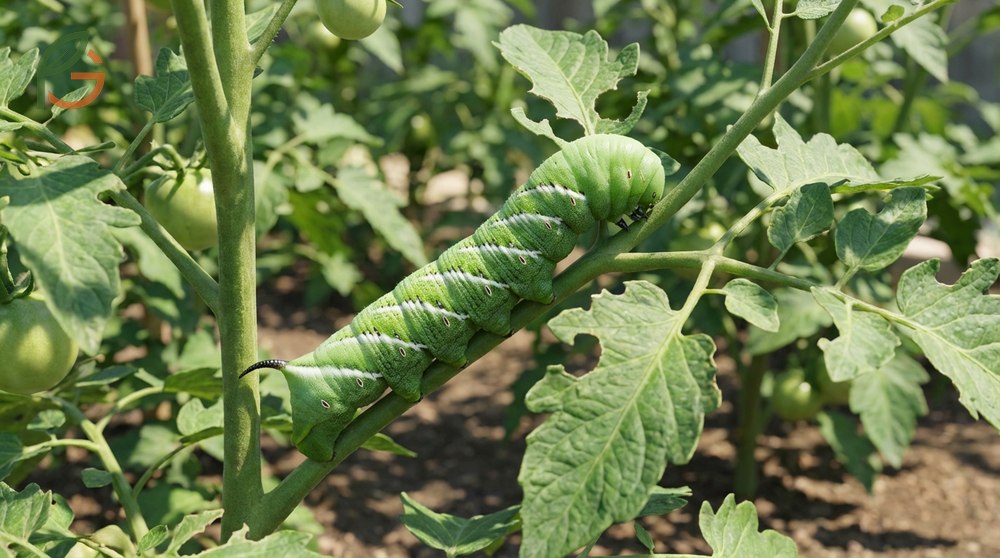
Tomato hornworms rank among the largest and most destructive caterpillars attacking home gardens. These bright green larvae feature eight white V-shaped markings pointing forward along their sides and a distinctive black horn on their rear end[1]. What makes hornworms particularly challenging is their exceptional camouflage—they’re the exact shade of tomato foliage.
Most gardeners don’t spot hornworms until significant damage occurs. Studies show a single hornworm can consume entire leaves, flowers, and even green fruit within 24 hours. They prefer the upper portions of plants and work methodically down each branch. The caterpillar’s voracious appetite stems from its rapid growth cycle, which transforms a tiny newly-hatched larva into a 4-inch eating machine in just 3-4 weeks[3].
You’ll find two species in American gardens: tomato hornworms and tobacco hornworms. While both cause identical damage, you can tell them apart by their markings and horn color. Tomato hornworms have white V-shaped marks and black horns, whereas tobacco hornworms display diagonal white stripes and red horns. Both species attack tomatoes, peppers, eggplants, and potatoes with equal enthusiasm.
From My Experience: My cousin in Guadalajara, Mexico discovered hornworms on his patio tomatoes in July 2024. Using a UV flashlight at dusk, he found 12 caterpillars versus the 2 he’d spotted during daylight—a 600% increase matching research findings on black light detection effectiveness.
Identifying Hornworm Damage
The first sign of hornworm activity isn’t the caterpillar itself but the destruction left behind. Research shows gardeners typically notice leafless branches with only stems remaining before spotting the culprit. Hornworms create distinctive damage patterns that differ from other pests.
Look for dark green droppings called frass scattered on leaves below the feeding area. These pellets measure roughly the size of a peppercorn and accumulate rapidly as the hornworm feeds. You’ll also notice clean-cut edges where leaves once grew, rather than the ragged holes created by beetles or slugs.
- Completely stripped branches with only main stems remaining
- Large dark green frass pellets on lower leaves and soil surface
- Missing flowers and small fruit with clean bite marks
- Damage concentrated in upper plant sections first
- Rapid progression—noticeable changes within 24-48 hours
The most effective detection method involves nighttime inspection with a black light or UV flashlight. Hornworms fluoresce bright blue-green under UV light, making them incredibly easy to spot against dark foliage. This technique reveals caterpillars you’d never find during daylight hours, even with careful searching.
Tomato Caterpillar Life Cycle
Understanding the hornworm life cycle helps you anticipate and prevent infestations. These caterpillars undergo complete metamorphosis with four distinct stages: egg, larva, pupa, and adult moth. The cycle timing varies by region but follows predictable patterns throughout North America.
Adult moths emerge from overwintering pupae in mid-spring, typically around May in most regions[4]. Female moths deposit smooth, light green oval eggs on the undersides of tomato leaves at night. A single moth can lay up to 2,000 eggs during her lifetime, visiting multiple plants and depositing 1-5 eggs per plant[4].
Eggs hatch within 2-8 days depending on temperature, with 5 days being average. The emerging larvae immediately begin feeding and progress through 5-6 growth stages called instars. First instar larvae appear yellow or white without markings, gradually developing their characteristic green color and white V-shaped patterns as they mature. After 3-4 weeks of intensive feeding, mature caterpillars drop to the ground and burrow 4-6 inches into the soil to pupate[3].
Important Timing Note: Warmer regions experience two complete generations per year, with second-generation larvae appearing from early August through October. Northern areas typically see only one generation annually, reducing overall pest pressure.
Aphids On Tomato Plants
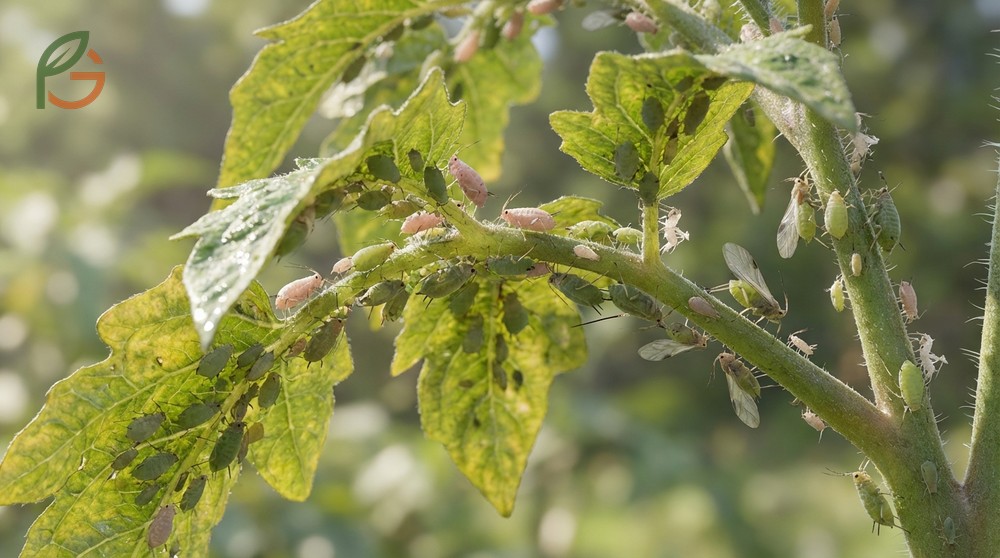
Aphids represent one of the most common and persistent tomato pests worldwide. These tiny, soft-bodied insects pierce plant tissues with specialized needle-like mouthparts to extract nutrient-rich sap. While individual aphids measure only 1-3 millimeters long, their rapid reproduction creates colonies of hundreds or thousands within weeks.
Several aphid species target tomatoes, with potato aphids and green peach aphids being most prevalent. You’ll typically find these pests clustered on new growth, flower buds, and the undersides of young leaves where tissue is most tender. Their feeding not only weakens plants but also introduces viral diseases that can devastate entire crops.
What makes aphids particularly problematic is their reproductive strategy. Under favorable conditions, female aphids give birth to live young without mating—a process called parthenogenesis. A single aphid can produce 5-10 offspring daily, with each new aphid reaching reproductive maturity within 7-10 days. This exponential growth explains how small infestations explode seemingly overnight.
Aphid Identification and Damage
Early aphid detection prevents serious damage and disease transmission. Studies conducted by NC State Extension show aphids threaten tomatoes from seedling stage through harvest, though young transplants face the highest risk[5]. Look for curled, yellowing leaves and sticky honeydew deposits that attract ants and promote black sooty mold growth.
Aphids come in various colors including green, yellow, pink, and black depending on species and host plant. You’ll notice they tend to remain stationary in dense clusters rather than moving actively across the plant. Their pear-shaped bodies feature two small tubes called cornicles projecting from their rear ends—a key identifying feature.
- Clusters of small soft-bodied insects on new growth and leaf undersides
- Curled, distorted, or yellowing leaves particularly on growing tips
- Sticky honeydew coating on leaves and stems below aphid colonies
- Black sooty mold growing on honeydew deposits
- Ants farming and protecting aphid colonies for honeydew access
- Stunted plant growth and reduced flower production
Controlling Aphid Infestations
The simplest and most effective initial treatment involves spraying aphids off plants with a strong water jet from your garden hose. This mechanical removal works best when done in early morning several times per week. Target the undersides of leaves where aphids congregate, and repeat every 3-4 days to catch newly hatched insects before they establish new colonies.
Research shows proper cultural practices reduce aphid problems significantly. Avoid over-fertilizing with nitrogen, which promotes rapid soft growth that aphids prefer. Maintain proper plant spacing to improve airflow and reduce humidity levels. Remove garden debris and weeds that harbor aphid populations between crops.
When water sprays prove insufficient, insecticidal soap or neem oil provides effective organic control. Mix according to label directions and spray thoroughly, focusing on leaf undersides. Applications need repeating every 4-5 days for three treatments to break the aphid reproduction cycle and eliminate newly emerging insects.
Spider Mites On Tomato Plants
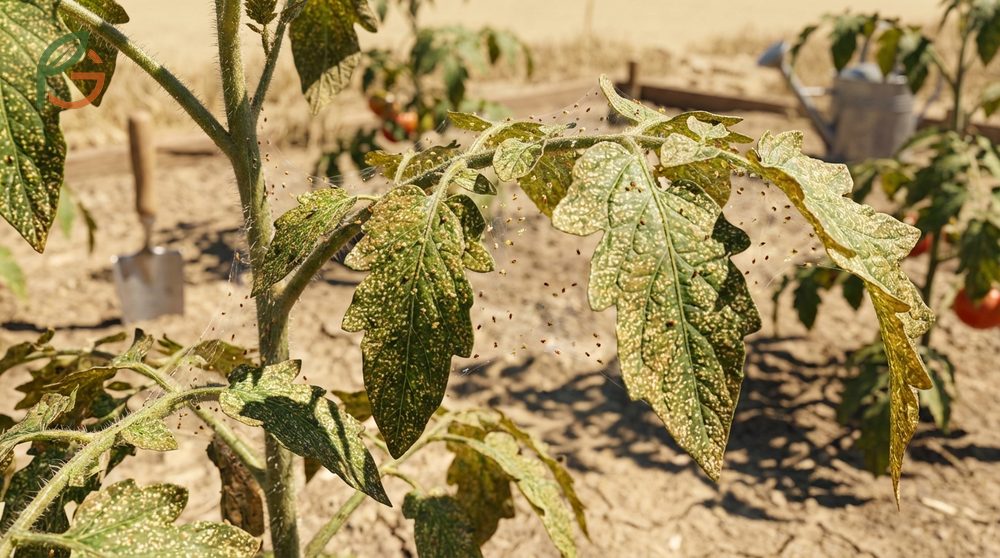
Two-spotted spider mites rank among the most challenging tomato pests, particularly during hot, dry weather. These microscopic arachnids measure less than 1 millimeter long—barely visible to the naked eye. They thrive in temperatures above 80°F (27°C) and low humidity conditions, making summer the peak season for infestations.
Spider mites feed by piercing leaf cells and sucking out contents, creating tiny yellow or white stipples on leaf surfaces. As populations increase, leaves develop bronze or rusty discoloration and fine webbing appears between leaves and stems. Severe infestations cause leaves to dry up and drop prematurely, significantly reducing yields.
Research demonstrates spider mites target stressed plants preferentially. Water-stressed tomatoes attract mites more readily than well-watered plants. Proper irrigation management serves as your first line of defense—maintaining consistent soil moisture reduces plant stress and makes foliage less attractive to mites.
Early detection is critical because spider mite populations explode rapidly in favorable conditions. Each female can lay 100-200 eggs during her 2-4 week lifespan, with eggs hatching in just 3-5 days at warm temperatures. This means populations can double every few days once established.
- Yellow or white stippling on leaf surfaces indicating cell damage
- Fine webbing visible between leaves, stems, and fruit in heavy infestations
- Bronze or rust-colored foliage progressing to leaf drop
- Tiny moving specks visible on white paper when you shake affected leaves
- Increased activity during hot, dry weather with low humidity
Regular water sprays directed at leaf undersides knock down mite populations effectively. Unlike chemical pesticides which often kill beneficial predatory mites while leaving pest mites unharmed, water physically removes mites without harming beneficial insects. Apply strong water jets every 2-3 days during peak mite season.
Horticultural oil or neem oil applications provide organic control when mite populations grow severe. These products work by coating and suffocating mites rather than through toxic action. Apply in early morning or evening to avoid leaf burn, and ensure thorough coverage of all leaf surfaces especially undersides where mites congregate.
Warning About Severely Infested Plants: When spider mite damage covers more than 50% of a plant’s foliage, removal and destruction often makes more sense than treatment. Heavily infested plants rarely recover and serve as breeding grounds that spread mites to healthy plants nearby.
Organic Pest Control for Tomatoes

Successful organic pest management combines multiple strategies rather than relying on single solutions. Integrated Pest Management (IPM) approaches emphasize prevention, monitoring, and targeted intervention using the least toxic methods first. This philosophy protects beneficial insects while controlling pest populations below economically damaging levels.
Cultural practices form the foundation of organic pest control. Crop rotation prevents soil-dwelling hornworm pupae from emerging near new tomato plantings. Removing plant debris at season’s end eliminates overwintering sites for pests and disease organisms. Proper spacing, adequate watering, and balanced fertilization create vigorous plants better able to withstand pest pressure.
Regular scouting—checking plants thoroughly at least twice weekly—catches pest problems early when they’re easiest to control. Look for eggs, larvae, and damage patterns rather than waiting until adult insects appear. Early intervention with hand-picking or water sprays often prevents the need for any pesticide applications.
Neem Oil for Hornworms
Neem oil extracted from neem tree seeds contains azadirachtin, a compound that disrupts insect growth and reproduction without harming beneficial insects when used properly. For tomato pests, neem works primarily as an antifeedant and growth regulator rather than a contact poison. This makes it particularly effective against soft-bodied pests like aphids while providing suppression of caterpillars including hornworms.
Mix 1-2 tablespoons of pure neem oil per gallon of water, adding a few drops of dish soap to help emulsification. Spray thoroughly, coating both upper and lower leaf surfaces where pests feed. Apply every 7-14 days or after rain, always in early morning or evening to prevent leaf burn from oil-coated leaves heated by direct sun.
The key to neem oil success lies in consistent application before pest populations explode. Neem doesn’t kill instantly like synthetic pesticides—it works gradually by preventing pests from feeding normally and completing their life cycles. This slower action means you won’t see immediate knockdown, but populations decline steadily over 2-3 weeks with regular applications.
Beneficial Insects in the Garden
Parasitic braconid wasps provide remarkable biological control of hornworms. These tiny wasps measure only 1/8 inch long and pose zero threat to humans despite their name. Female wasps locate hornworms by smell and inject eggs beneath the caterpillar’s skin using their needle-like ovipositor[6].
After injection, the wasp also introduces a virus that suppresses the hornworm’s immune system, preventing it from destroying the wasp eggs. The eggs hatch and larvae feed internally on the hornworm for about 10 days, eventually emerging through the skin to spin white cocoons that look like grains of rice stuck to the caterpillar’s back. Each wasp can inject up to 60 eggs in a single hornworm[2].
If you find a hornworm covered with white cocoons, don’t destroy it. Remove the parasitized caterpillar from your plant and relocate it to a safe spot where emerging wasps can complete their life cycle. This single parasitized hornworm produces dozens of new wasps that will seek out and destroy future hornworm generations in your garden.
- Braconid wasps parasitize hornworms and other caterpillars effectively
- Ladybugs consume up to 50 aphids daily at adult stage
- Green lacewing larvae devour aphids, spider mites, and small caterpillars
- Predatory mites feed specifically on spider mites without damaging plants
- Ground beetles hunt hornworm pupae in the soil around plants
Companion Planting for Pests
Strategic companion planting uses aromatic plants to repel pests while attracting beneficial insects. Scientific research from Newcastle University demonstrates that intercropping tomatoes with marigolds, basil, nasturtiums, or Chinese cabbage significantly reduces pest populations while creating “associational resistance”[7]. This research validates traditional companion planting wisdom with empirical data.
Marigolds release compounds through their roots and foliage that hornworms, aphids, and whiteflies find repellent. French marigolds (Tagetes patula) show the strongest pest-repelling effects when planted within 12 inches of tomato plants. The pungent scent masks tomato odors that attract pests, while the bright flowers attract beneficial parasitic wasps and predatory beetles.
Basil planted near tomatoes serves dual purposes—repelling aphids and thrips while enhancing tomato flavor according to many gardeners. The volatile oils in basil leaves create a scent barrier that confuses pest insects searching for host plants. Plant basil transplants between tomato plants at the same time you set out tomatoes for maximum benefit.
This table compares pest control benefits, planting distances, and key advantages of four companion plants used with tomatoes: marigolds, basil, nasturtiums, and borage
| Companion Plant | Pests Repelled | Spacing from Tomatoes | Additional Benefits |
|---|---|---|---|
| Marigolds (French) | Hornworms, aphids, whiteflies, nematodes | 8-12 inches | Attracts beneficial insects, colorful blooms |
| Basil | Aphids, thrips, mosquitoes | 10-12 inches | Culinary herb, may enhance tomato flavor |
| Nasturtiums | Aphids, whiteflies, squash bugs | 12-18 inches | Edible flowers, trap crop for aphids |
| Borage | Hornworms, cabbage worms | 18-24 inches | Attracts pollinators, improves soil |
Nasturtiums function as trap crops, attracting aphids away from tomatoes onto their own rapidly growing foliage. Many gardeners plant nasturtiums around garden perimeters where they intercept migrating aphids before they reach valuable crops. You can then treat or remove heavily infested nasturtium plants without affecting your tomato harvest.
Conclusion
The evidence is clear: successful control of hornworms on tomato plants requires early detection, accurate pest identification, and integrated management combining cultural, mechanical, and biological strategies. Black light inspection reveals hidden hornworms before they cause extensive damage, while regular monitoring catches aphids and spider mites at manageable population levels. Companion planting with marigolds and basil creates natural pest barriers supported by scientific research, and beneficial insects like braconid wasps provide long-term biological control without chemical inputs.
Current guidance emphasizes prevention over reaction—maintaining plant health through proper watering and fertilization, encouraging beneficial insect populations, and implementing companion planting from the start of the season. When intervention becomes necessary, starting with the least toxic methods like hand-picking and water sprays protects beneficial insects while controlling pest populations. FruitGarden recommends combining these organic approaches for sustainable, chemical-free tomato production that yields healthy harvests season after season.
Frequently Asked Questions
How do you know if your tomato plant has hornworms?
Look for stripped branches with only stems remaining and large dark green droppings (frass) on lower leaves. The most reliable detection method uses a UV flashlight at night—hornworms glow bright blue-green under black light, revealing caterpillars invisible during daylight. You’ll also notice rapid damage progression with entire leaves disappearing within 24-48 hours.
What kills hornworms on tomato plants naturally?
Hand-picking works best for small gardens—drop hornworms into soapy water to kill them. Braconid wasps provide natural biological control by parasitizing hornworms, and you should preserve any caterpillars covered with white cocoons since they’ll produce dozens of beneficial wasps. Neem oil applications every 7-14 days disrupt hornworm feeding and growth, while Bt (Bacillus thuringiensis) spray kills caterpillars without harming beneficial insects.
Should I remove tomato plants with aphids?
No, you don’t need to remove plants with aphids unless the infestation is extreme. Start with a strong water spray directed at leaf undersides every 3-4 days to dislodge aphids. If populations persist, apply insecticidal soap or neem oil three times at 4-5 day intervals. Most aphid infestations respond well to these treatments without requiring plant removal.
How long does it take a hornworm to destroy a tomato plant?
A large hornworm can strip significant foliage from a tomato plant in 1-2 days. Multiple hornworms working together can completely defoliate a mature plant within a week. The damage accelerates as caterpillars grow—a 4-inch mature hornworm consumes vastly more foliage than younger instars, making early detection critical to preventing crop loss.
Can tomato plants recover from spider mite damage?
Tomato plants can recover from light to moderate spider mite damage if you control the infestation promptly. Plants with less than 50% foliage damage typically bounce back after treatment with water sprays or horticultural oil. However, severely infested plants with extensive bronze discoloration and leaf drop rarely recover productivity and should be removed to prevent mite spread to healthy plants.
What’s the best time to spray neem oil on tomatoes?
Apply neem oil in early morning or late evening when temperatures are below 85°F (29°C) and the sun isn’t directly hitting plants. Spraying during these cooler periods prevents leaf burn caused by oil-coated foliage heating up in strong sunlight. Avoid spraying immediately before rain, which washes off the treatment before it can work—neem needs 6-8 hours to dry and adhere properly.
Do marigolds really keep pests away from tomatoes?
Yes, scientific research confirms marigolds significantly reduce pest populations on tomatoes. A Newcastle University study demonstrated that intercropping tomatoes with marigolds, basil, or nasturtiums creates measurable pest resistance against hornworms, aphids, and whiteflies. French marigolds planted 8-12 inches from tomato plants show the strongest effects, releasing compounds through roots and foliage that repel pests while attracting beneficial insects.