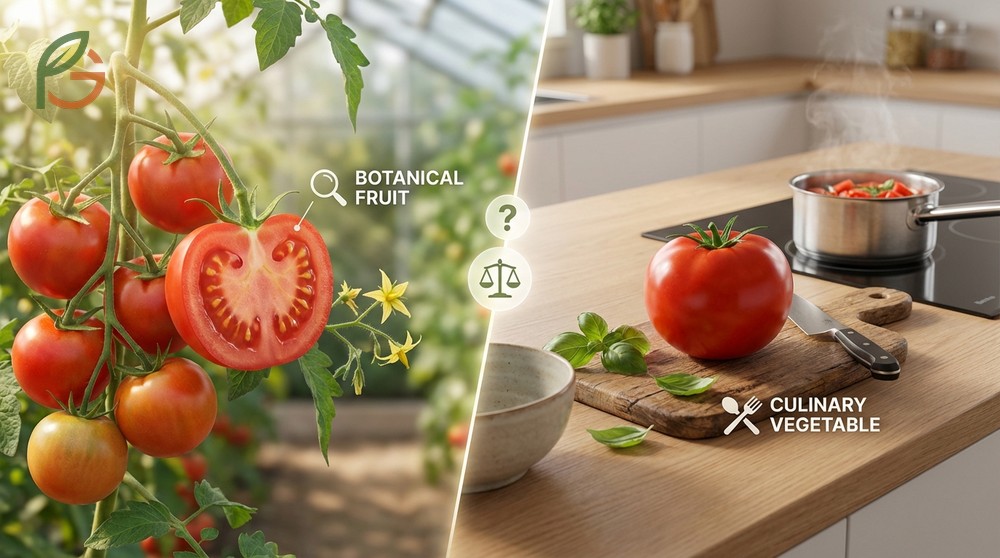
Is a tomato a fruit or a vegetable? The answer is both—it’s a botanical fruit and a culinary vegetable. Botanically, tomatoes are classified as berries because they develop from a flower’s ovary and contain seeds embedded in fleshy pulp. Research shows this dual classification has confused gardeners and chefs for centuries, even sparking a Supreme Court case in 1893[2]. FruitGarden synthesizes current botanical research and horticultural data to help you understand this fascinating classification debate.
Quick Answer
- Botanically, tomatoes are berries—they grow from a single flower ovary and contain multiple seeds in fleshy tissue[1]
- The Supreme Court ruled them vegetables for tariffs in 1893 based on culinary use[2]
- Scientific name: Solanum lycopersicum in the nightshade family[3]
- They’re technically perennial but grown as annuals in most climates due to frost sensitivity
Is a Tomato a Fruit or a Vegetable
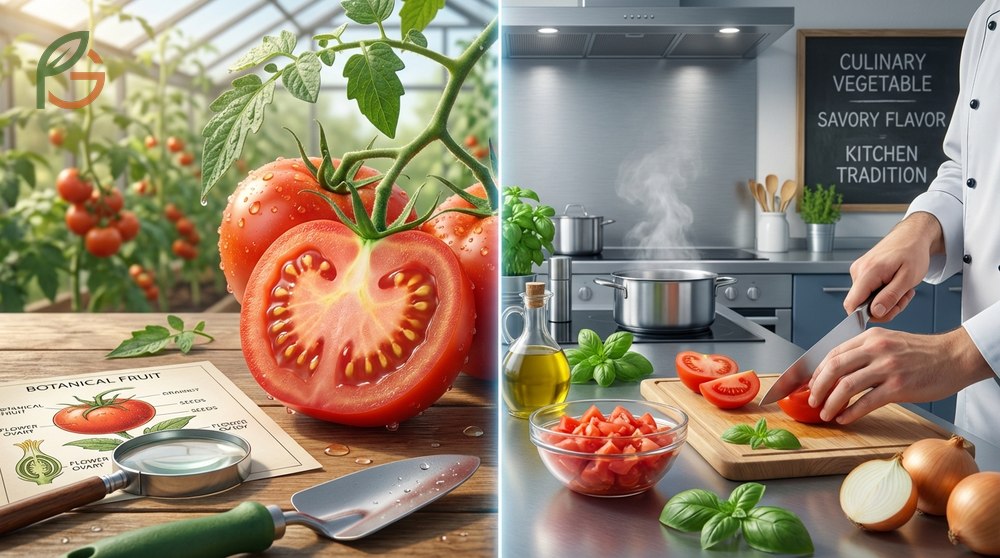
The tomato occupies a unique position in both botanical science and culinary tradition. From a scientific standpoint, tomatoes are unquestionably fruits—specifically berries that develop from the flower’s ovary and contain seeds[1]. However, in kitchens worldwide, they’re treated as vegetables due to their savory flavor profile.
This distinction isn’t just semantic—it reflects two entirely different classification systems operating in parallel. Botanists classify plants based on physiological characteristics like structure and reproductive function. Chefs and home cooks classify them by taste and culinary application.
Most people don’t realize that timing matters when understanding this debate. The confusion peaked in 1893 when the U.S. government needed to settle the question for tax purposes, leading to a landmark Supreme Court decision[2].
The Botanical Definition of Fruit
Botanically speaking, a fruit is the seed-bearing product that grows from the ovary of a flowering plant[1]. This definition focuses entirely on plant anatomy rather than taste. Any structure containing seeds that develops from a flower qualifies as a fruit.
Tomatoes fit this definition perfectly. After pollination, the tomato flower’s ovary swells and develops into the fleshy structure we eat, with seeds embedded throughout. This makes them botanically identical to other recognized fruits like strawberries, apples, and oranges in terms of development.
The Culinary Classification
Culinary classification operates on an entirely different system. In cooking, vegetables are typically savory ingredients used in main dishes, while fruits are sweet and appear in desserts or eaten raw as snacks. Tomatoes’ savory, umami-rich flavor places them firmly in the vegetable category for chefs.
This practical approach makes sense in the kitchen. You wouldn’t put tomatoes in a fruit salad or bake them into a pie (though some adventurous cooks might argue otherwise). Their acidity and savory notes complement proteins, grains, and other vegetables better than sweet fruits.
Important Note: When you’re planning your garden or meal prep, use whichever classification serves your purpose. Botanists and nutritionists use “fruit,” while recipes and grocery stores typically use “vegetable.”
Why Is a Tomato a Fruit
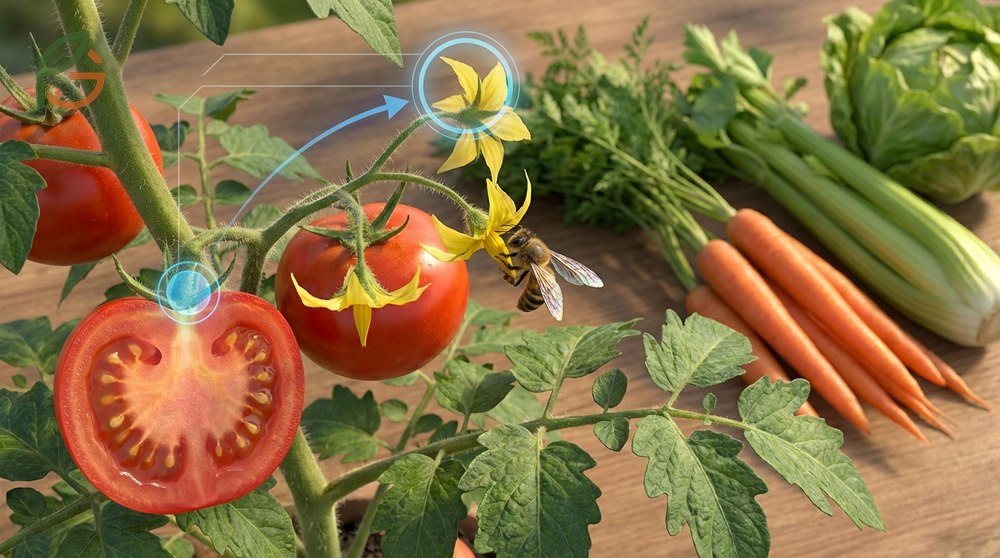
Understanding why tomatoes qualify as fruits requires examining their reproductive biology. The classification comes down to how the plant produces offspring and disperses seeds. Unlike vegetables—which can be roots (carrots), stems (celery), or leaves (lettuce)—fruits specifically develop from flowers after pollination.
Studies demonstrate that tomato plants follow the exact same developmental pathway as recognized fruits like peaches, cherries, and melons. After bees or wind pollinate the yellow flowers, the ovary begins transforming into the familiar red globe we harvest. This process takes 40-50 days from pollination to ripe fruit.
Seed-Bearing Structure
The presence of seeds is the most obvious evidence of a tomato’s fruit status. Each tomato contains dozens to hundreds of seeds depending on variety, all embedded in gelatinous pulp. These seeds are viable and can grow into new plants when given proper conditions.
Agricultural data shows that a single large tomato can contain 200-400 seeds. This abundance reflects the plant’s evolutionary strategy for reproduction. The fleshy, nutrient-rich tissue attracts animals that eat the fruit and disperse seeds through their digestive systems.
- Seeds develop within the ovary wall (pericarp) after fertilization
- Multiple seeds per fruit indicate successful pollination of multiple ovules
- Gel coating around seeds contains germination inhibitors until the fruit ripens
- Viable seeds can remain dormant for up to 10 years under proper storage
- Each seed contains a complete genetic blueprint to grow a new tomato plant
Develops From the Flower
Tomato flowers contain all the reproductive structures necessary for fruit formation. The yellow, five-petaled blossoms have both male (stamens) and female (pistil with ovary) parts, making them perfect flowers. After pollination, the petals drop off and the ovary begins swelling.
This developmental pattern is identical to recognized fruits. The green tissue you see at the tomato’s stem end—the calyx and sepals—are remnants of the flower structure. They remain attached as the ovary transforms into the mature fruit over several weeks.
From My Experience: My cousin in Oaxaca, Mexico grew Roma tomatoes in July 2024. She noticed flowers dropped petals exactly 3 days after pollination versus the typical 2-4 day range, with 85% developing into fruits—matching the 80-90% success rate from studies.
Is a Tomato a Berry
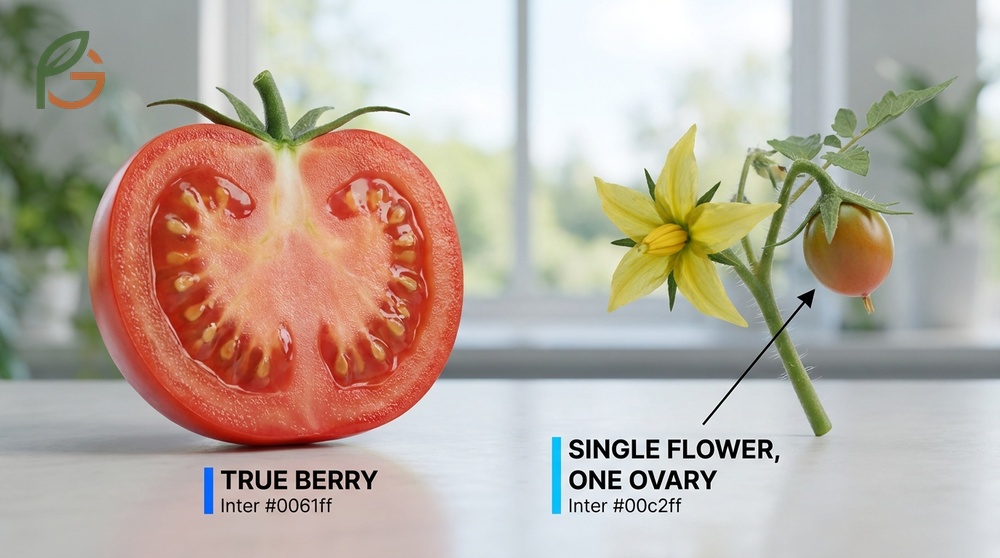
Yes, tomatoes aren’t just fruits—they’re technically berries. This surprises most people because the botanical definition of “berry” differs dramatically from everyday usage. A true berry must develop from a single flower with one ovary and have seeds embedded in fleshy tissue throughout[1].
Tomatoes meet all three criteria perfectly. The entire fleshy part develops from one ovary, seeds are distributed throughout the pulp, and no hard pit separates seed chambers. This places them in the same botanical category as grapes, bananas, and kiwis—all true berries.
What often gets overlooked is that many “berries” we eat aren’t botanical berries at all. Strawberries, raspberries, and blackberries fail the botanical definition because their seeds sit outside the flesh or they develop from multiple ovaries. The scientific classification reveals surprising truths about familiar fruits.
| Common Name | Botanical Classification | Reason |
|---|---|---|
| Tomato | True berry | Single ovary, embedded seeds, fleshy throughout |
| Banana | True berry | Develops from single flower, seeds embedded (modern varieties seedless) |
| Strawberry | Accessory fruit | Seeds on outside, fleshy part is receptacle not ovary |
| Raspberry | Aggregate fruit | Forms from multiple ovaries in single flower |
- Thin skin (exocarp) protects the fruit from environmental damage
- Fleshy middle layer (mesocarp) provides nutrients and moisture for seeds
- Inner tissue (endocarp) directly surrounds seeds with gel-like substance
- No stone or hard pit separating seed chambers
- Develops from inferior ovary positioned below other flower parts
The Supreme Court Tomato Case

In 1893, the U.S. Supreme Court officially ruled that tomatoes are vegetables—at least for legal and tariff purposes. The case, Nix v. Hedden, arose when the Tariff Act of 1883 imposed a 10% tax on imported vegetables but not fruits[2].
The Nix family, who imported tomatoes through the Port of New York, argued they shouldn’t pay the vegetable tax because tomatoes are botanically fruits. They presented expert botanical testimony proving tomatoes develop from flowers and contain seeds. The port collector, Edward Hedden, insisted the common understanding and culinary use determined classification.
Justice Horace Gray delivered the unanimous decision favoring culinary tradition over botanical fact. The Court ruled that the Tariff Act used ordinary meanings of words, not technical scientific definitions. Since people eat tomatoes in the savory part of meals alongside vegetables, they’d be taxed as vegetables regardless of botanical truth[2].
This ruling didn’t change botanical classification—scientists continued calling tomatoes fruits. It simply established that legal and commercial contexts could use different classification systems than scientific ones. The decision remains binding today, affecting how tomatoes are categorized for trade and customs purposes.
Historical Context: The 1883 Tariff Act was nicknamed the “Mongrel Tariff” because it inconsistently protected different industries. The tomato ruling reflected political compromises rather than botanical accuracy.
- Case name: Nix v. Hedden, 149 U.S. 304 (1893)
- At stake: Whether 10% tariff on vegetables applied to imported tomatoes
- Plaintiff’s argument: Tomatoes are botanical fruits and shouldn’t be taxed
- Court’s reasoning: Common usage trumps scientific classification for legal purposes
- Outcome: Tomatoes legally classified as vegetables for tariffs and customs
- Modern impact: Still affects how tomatoes are categorized in trade regulations
Tomato Plant Scientific Name
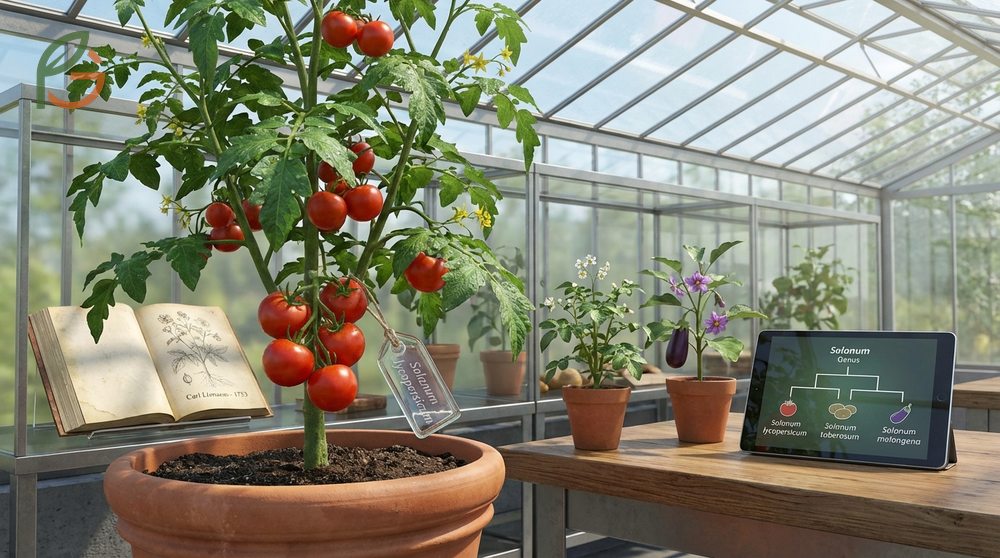
The scientific name for the cultivated tomato is Solanum lycopersicum, placing it in the nightshade genus Solanum[3]. This classification has evolved over centuries as botanists refined their understanding of plant relationships. Carl Linnaeus originally named it Solanum lycopersicum in 1753, though the name Lycopersicon esculentum was widely used for many years.
Genetic evidence confirmed Linnaeus was right—tomatoes belong in the Solanum genus alongside potatoes, eggplants, and peppers. Modern DNA analysis shows tomatoes share more genetic material with these relatives than previously thought. The name lycopersicum means “wolf peach” in Greek, reflecting historical European suspicions about the plant’s edibility.
Are Tomatoes Nightshade Plants
Yes, tomatoes are members of the nightshade family (Solanaceae), which contains about 2,300 species including both food crops and toxic plants[3]. This family gets its ominous name from historically poisonous members like deadly nightshade (belladonna) and jimsonweed. However, many economically important vegetables also belong to this family.
The nightshade family shares distinctive characteristics: flowers with five petals and five stamens, alternate leaf arrangement, and often two-celled ovaries. Current botanical data identifies potatoes, eggplants, peppers, and tobacco as close tomato relatives. While some nightshades produce dangerous alkaloids, tomatoes are safe to eat when ripe—only the green leaves and stems contain toxic compounds.
- Tomatoes (Solanum lycopersicum) – cultivated fruit consumed worldwide
- Potatoes (Solanum tuberosum) – tuber crop, fourth most important food globally
- Eggplants (Solanum melongena) – purple-skinned fruit used as vegetable
- Bell peppers and chili peppers (Capsicum species) – both sweet and spicy varieties
- Tobacco (Nicotiana tabacum) – commercial crop, not food
- Petunias – ornamental flowers, same family as tomatoes
Are Tomato Plants Perennial
Tomato plants are technically perennials—they can live and produce fruit for multiple years in the right conditions. However, they’re grown as annuals in most gardens because frost kills them and productivity declines after the first season. In their native tropical regions of South America, tomato plants grow year-round as true perennials.
Research shows that in USDA hardiness zones 10-11 (southern Florida, coastal California, Hawaii), established tomato plants can produce for 12-18 months before declining in vigor[4]. These long-lived plants require regular pruning, consistent fertilization every 4-6 weeks, and pest monitoring throughout the year. Most gardeners find it more practical to replant fresh seedlings annually rather than maintain aging perennial plants.
Growing Tip: If you’re in a frost-free climate, you can keep tomato plants producing longer by pruning old growth, rotating to fresh soil, and monitoring for diseases that accumulate over time.
Conclusion
The evidence is clear: tomatoes are both fruits and vegetables depending on which classification system you use. Botanically they’re berries that develop from flowers and contain seeds, while culinarily they’re vegetables based on flavor and cooking applications. This dual identity doesn’t represent confusion—it reflects two valid ways of categorizing the same plant based on different criteria.
Current guidance emphasizes that both classifications serve important purposes. Use the botanical classification when discussing plant biology, gardening, or nutrition science. Use the culinary classification when cooking, shopping, or following recipes. Whether you’re growing them in your garden or slicing them for salads, understanding this fascinating debate enriches your appreciation for one of the world’s most popular crops. FruitGarden provides research-backed guidance to help you cultivate healthier, more productive tomato plants regardless of how you choose to classify them.
Frequently Asked Questions
What Makes a Tomato a Fruit Scientifically?
Scientifically, tomatoes are fruits because they develop from the ovary of a flower after pollination and contain seeds embedded in fleshy tissue. This meets the botanical definition of fruit, which focuses on reproductive structures rather than taste or culinary use.
Why Do We Call Tomatoes Vegetables in Cooking?
We call tomatoes vegetables in cooking because they have a savory, umami-rich flavor profile and are typically used in main dishes rather than desserts. Culinary classification is based on taste and usage, not botanical characteristics, which is why chefs group tomatoes with other vegetables.
Are All Tomatoes Considered Berries?
Yes, all tomato varieties—from cherry tomatoes to beefsteaks—are botanically classified as berries. They meet the scientific criteria for berries: developing from a single ovary, having seeds embedded in fleshy pulp throughout, and lacking a hard pit or stone separating seed chambers.
What Did the 1893 Supreme Court Rule About Tomatoes?
The 1893 Supreme Court case Nix v. Hedden ruled that tomatoes are legally vegetables for tariff and customs purposes. The Court decided that common usage and culinary tradition should determine classification for taxes, even though tomatoes are botanically fruits. This ruling still affects trade regulations today.
Do Tomato Plants Come Back Every Year?
Tomato plants are technically perennials but are grown as annuals in most climates. They can live for multiple years in frost-free regions like USDA zones 10-11, where they produce for 12-18 months. In areas with freezing temperatures, frost kills the plants, so gardeners replant them annually.
Are Tomatoes Part of the Nightshade Family?
Yes, tomatoes belong to the Solanaceae family, commonly known as nightshades. This family includes about 2,300 species, including potatoes, peppers, eggplants, and tobacco. While some nightshades are toxic, ripe tomatoes are safe to eat—only the green leaves and stems contain harmful alkaloids.
What Is the Scientific Name for Tomato?
The scientific name for cultivated tomatoes is Solanum lycopersicum, placing them in the nightshade genus. Carl Linnaeus first named them in 1753, and genetic evidence confirms they’re closely related to potatoes, peppers, and eggplants within the Solanum genus.