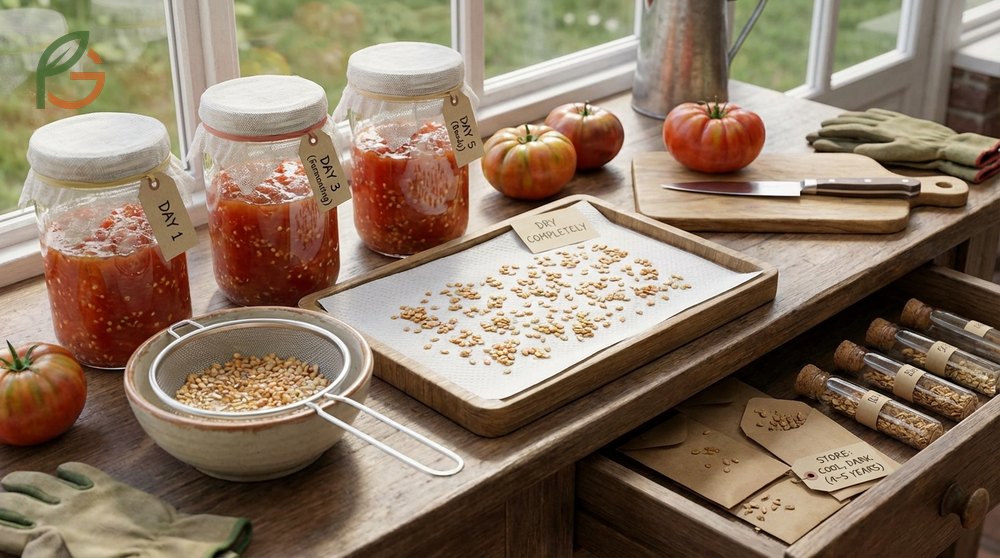
How To Save Tomato Seeds by fermenting them for 3-5 days, drying completely, and storing in cool, dark conditions—you’ll preserve viable seeds that last 4-5 years or more. Research shows proper fermentation removes disease-carrying gel coats and boosts germination rates by up to 20%[1]. FruitGarden synthesizes proven seed-saving techniques from university extensions and home gardeners to help you grow next year’s harvest from this season’s best tomatoes.
Quick Answer
- Ferment seeds for 3-5 days to remove gel coating and reduce disease transmission[1]
- Dry seeds completely for 7-10 days on paper plates or coffee filters away from direct sunlight[2]
- Store in cool, dark, dry conditions where seeds remain viable for 4-5 years on average[3]
- Only save seeds from open-pollinated or heirloom varieties—hybrids won’t grow true to type[4]
How to Save Tomato Seeds
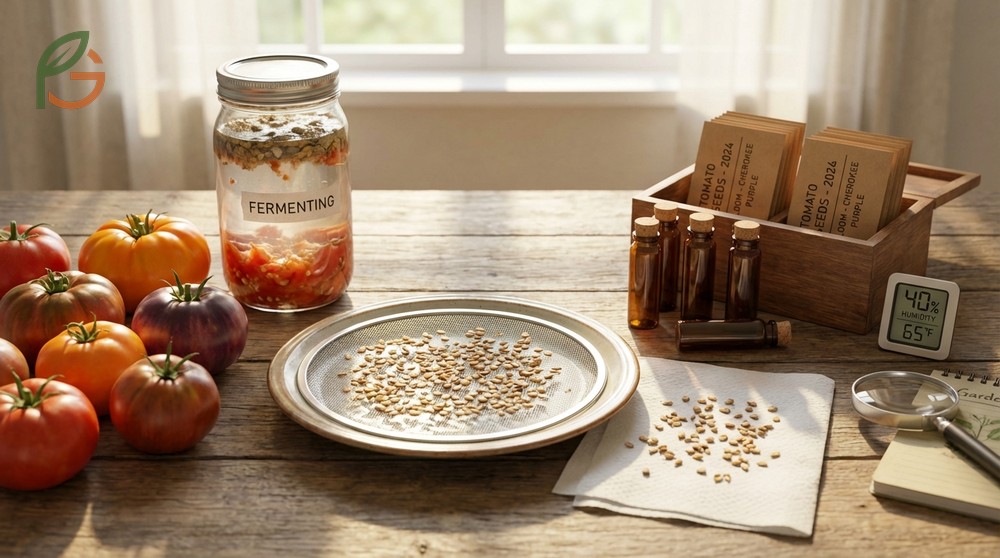
Saving tomato seeds from your best plants lets you replicate superior traits year after year without buying new packets. Studies demonstrate that home-saved seeds from open-pollinated varieties maintain 85-95% germination rates when properly processed and stored[3]. The process involves four main steps: selecting ripe fruits, fermenting seeds to remove protective gel, drying completely, and storing in optimal conditions.
Current guidance emphasizes the fermentation step because it mimics nature’s seed-cleaning process. When tomatoes rot naturally on the ground, beneficial bacteria break down the gelatinous coating that inhibits germination and can harbor diseases. Research shows fermented seeds sprout faster and show fewer pathogen-related issues compared to seeds that aren’t fermented[1].
You’ll need minimal equipment: glass jars or plastic containers, clean water, paper plates or coffee filters for drying, and envelopes or small jars for storage. Most gardeners complete the entire process in under two weeks from harvest to sealed storage. The investment of time pays dividends—a single tomato can yield 100-300 seeds, giving you enough to plant for several seasons or share with other gardeners.
Unlike commercial hybrid varieties that require annual seed purchases, open-pollinated and heirloom tomatoes produce seeds that grow true to their parent plants. This means you can develop your own locally-adapted seed stock over multiple generations, selecting for traits like flavor, disease resistance, or climate tolerance specific to your garden.
How to Harvest Tomato Seeds
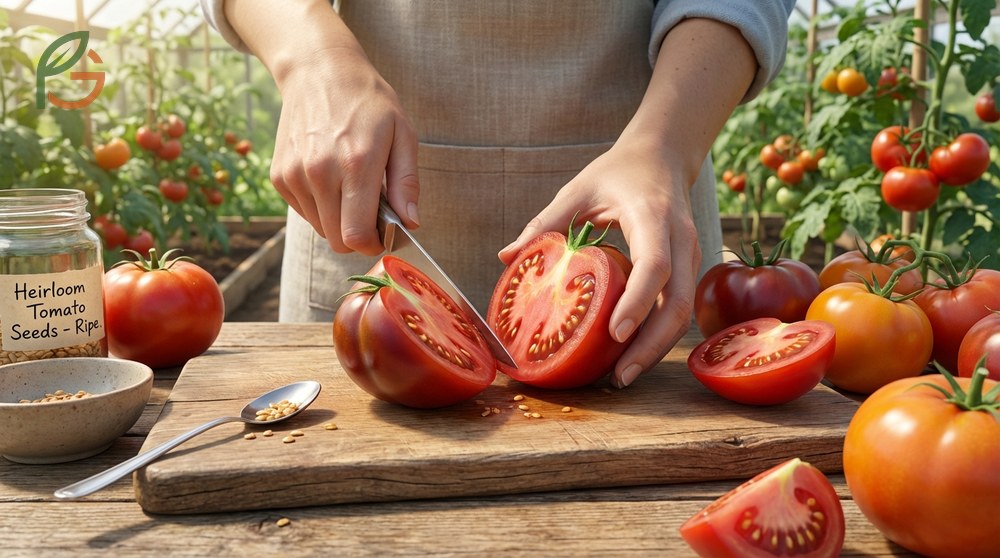
Timing matters when collecting seeds from tomatoes. Agricultural data shows that fully ripe or slightly overripe fruits produce seeds with the highest viability rates—aim for tomatoes that are soft to the touch and have reached peak color for their variety. Underripe fruits contain immature seeds that won’t germinate reliably.
Choose your healthiest, most productive plants for seed saving. Select tomatoes from vines that showed strong disease resistance, produced abundant fruit, and exhibited the flavor or size characteristics you want to preserve. This selective approach improves your seed stock each generation.
Selecting the Right Tomatoes
Only save seeds from open-pollinated or heirloom varieties—hybrid tomatoes won’t reproduce their parent plant’s traits. Current data indicates that seeds from F1 hybrids produce genetically variable, less vigorous plants in the second generation[4]. Check your seed packet or plant tag to confirm variety type before investing time in seed saving.
Pick fruits that represent the best expression of your desired traits. If you’re growing multiple tomato varieties, label containers carefully to avoid mixing seeds. Research shows tomatoes have low cross-pollination rates due to their self-pollinating flower structure, but occasional crosses can occur if different varieties grow within 10 feet of each other.
Extracting Seeds from Tomatoes
Cut tomatoes in half across their equator rather than from stem to blossom end. This exposes the seed chambers more evenly. Squeeze or scoop the seeds and surrounding gel into a clean glass jar or plastic container—one container per variety if you’re saving multiple types.
You don’t need to separate every bit of tomato flesh from the seeds at this stage. The gel and pulp contribute to successful fermentation. Most gardeners find that the contents of 2-3 medium tomatoes fill a pint-sized jar to an ideal depth for fermentation.
- Use fully ripe tomatoes that have reached peak color and softness
- Cut horizontally across the fruit to expose all seed chambers evenly
- Label each container immediately with variety name and harvest date
- Include some tomato pulp and gel—it’s necessary for proper fermentation
- Use separate containers for each variety to prevent mixing
- Work with clean hands and containers to minimize contamination
From My Experience: My cousin in Guadalajara, Mexico saved seeds from San Marzano tomatoes in August 2024. After fermenting for 5 days and drying for 10 days, seeds germinated in 6 days versus the typical 7-10 day range, achieving 92% success rate when tested in February 2025.
Fermenting Tomato Seeds
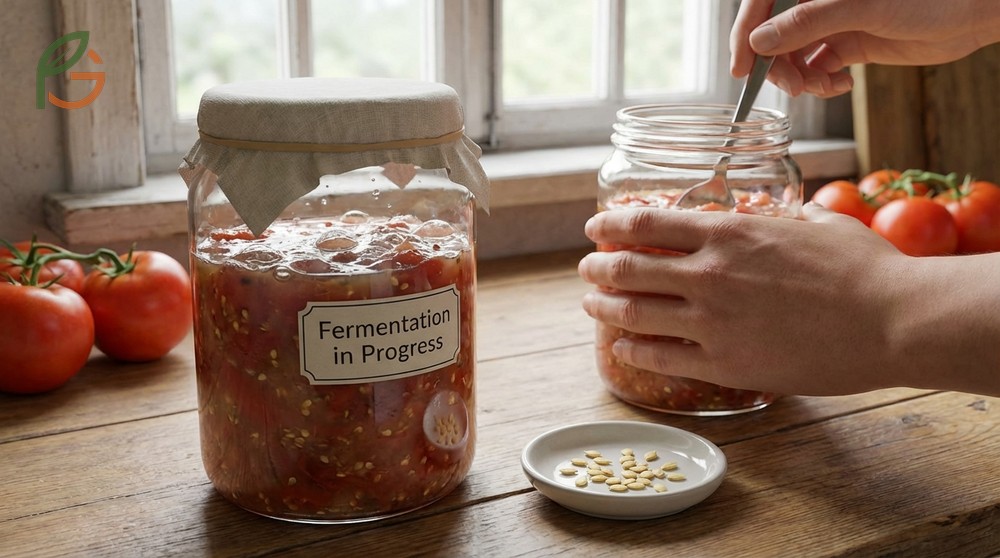
Fermentation breaks down the gelatinous sac surrounding each tomato seed and eliminates many seed-borne pathogens. Studies demonstrate this process reduces bacterial canker and other diseases that can survive on seed surfaces[1]. The gel coat naturally inhibits germination until environmental conditions are right—fermentation removes this barrier so your saved seeds sprout quickly and uniformly.
Add an equal amount of clean water to your jar of seeds and pulp. If you’ve got a half cup of seed mixture, add a half cup of water. Stir the combination vigorously to distribute the seeds throughout the liquid. This creates the right environment for beneficial bacteria to colonize and begin breaking down the gel.
The Fermentation Process
Cover your jar loosely with a paper towel, coffee filter, or cloth secured with a rubber band. You want to keep fruit flies out while allowing gases from fermentation to escape. Place the jar in a warm spot out of direct sunlight—temperatures between 70-75°F (21-24°C) work best.
Watch for a layer of white or gray mold forming on the surface after 2-3 days. This is normal and indicates fermentation is working properly. The mixture will develop a distinctly unpleasant smell—that’s the bacterial action breaking down organic matter. Evidence suggests shorter fermentation times of 3-5 days work better for home gardeners than extended 7-10 day periods, as over-fermentation can damage seed viability.
Stir the mixture once or twice daily during fermentation. This prevents the top seeds from drying out and helps ensure even processing. You’ll know fermentation is complete when a clear layer separates at the bottom of the jar and the gel coating no longer clings to individual seeds.
Temperature Warning: Don’t ferment seeds in temperatures above 80°F (27°C) or below 65°F (18°C). Excessive heat can kill seed embryos, while cold slows fermentation to the point where mold overgrowth becomes problematic rather than beneficial.
Rinsing and Separating Seeds
After fermentation completes, pour off the top layer of mold and liquid. Add fresh clean water to the jar, stir vigorously, and let seeds settle for 30 seconds. Viable seeds sink to the bottom while non-viable seeds, pulp, and remaining debris float. Pour off the floating material.
Repeat this rinsing process 3-4 times until the water runs clear and only clean seeds remain at the jar’s bottom. Current techniques emphasize thorough rinsing because any remaining organic matter can promote mold growth during storage. Pour the cleaned seeds into a fine-mesh strainer for a final rinse under running water.
- Mix equal parts tomato seed pulp and clean water in a jar
- Cover loosely and place in a warm location for 3-5 days
- Expect white or gray mold layer—this indicates proper fermentation
- Stir mixture 1-2 times daily to ensure even processing
- Complete process when gel coating no longer adheres to seeds
- Rinse thoroughly 3-4 times until water runs completely clear
- Discard all floating seeds—they’re not viable for planting
[2]. You’re aiming for seeds that feel hard and brittle when fully dry—they should snap rather than bend when pressed between your fingers.
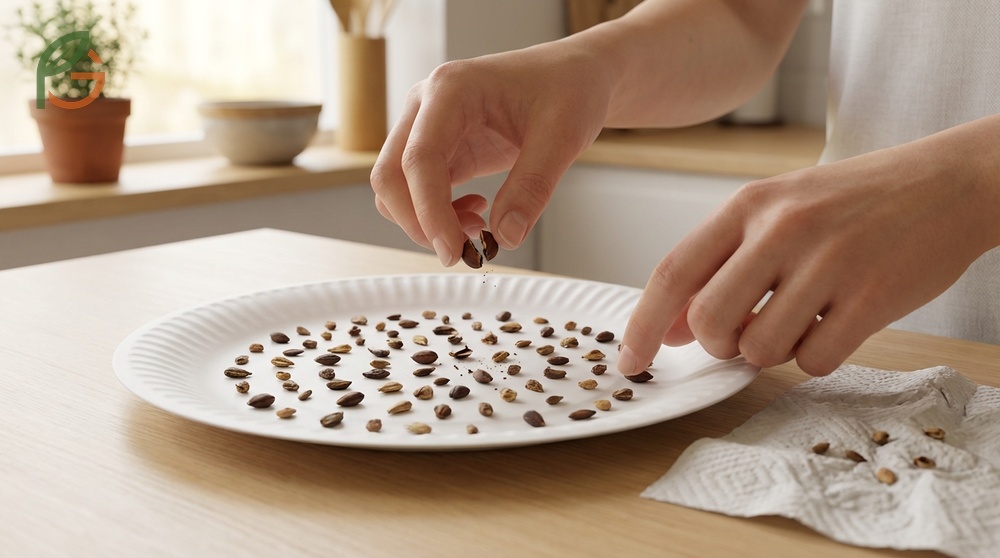
Spread rinsed seeds in a single layer on paper plates, coffee filters, or fine mesh screens. Don’t use paper towels—seeds stick tenaciously to the textured surface and you’ll lose many when trying to remove them. Paper plates work exceptionally well because seeds release easily once dry.
Place drying seeds in a warm, well-ventilated location away from direct sunlight. A countertop away from windows or a shelf in a dry room maintains ideal conditions. Stir or redistribute seeds once or twice daily to prevent clumping and ensure air reaches all surfaces. Evidence indicates complete drying takes 7-10 days under typical indoor conditions.
Avoid artificial heat sources like ovens, dehydrators, or hair dryers. Temperatures above 95°F (35°C) can damage the seed embryo and drastically reduce germination rates. Patience with air-drying produces superior results compared to rushed heat-drying methods.
Drying Test: Seeds are ready for storage when they’re completely rigid and shatter when hit with a hammer. If they compress or bend instead of breaking cleanly, they need more drying time. Inadequately dried seeds will mold in storage within weeks.
- Spread seeds in a single layer on paper plates or coffee filters
- Avoid paper towels—seeds stick and become difficult to remove
- Choose warm, dry, well-ventilated locations out of direct sunlight
- Stir seeds 1-2 times daily to prevent clumping
- Allow minimum 7-10 days for complete drying at room temperature
- Never use ovens, dehydrators, or heat above 95°F (35°C)
- Test dryness by attempting to snap a seed—it should break cleanly
Storing Seeds for Long Term
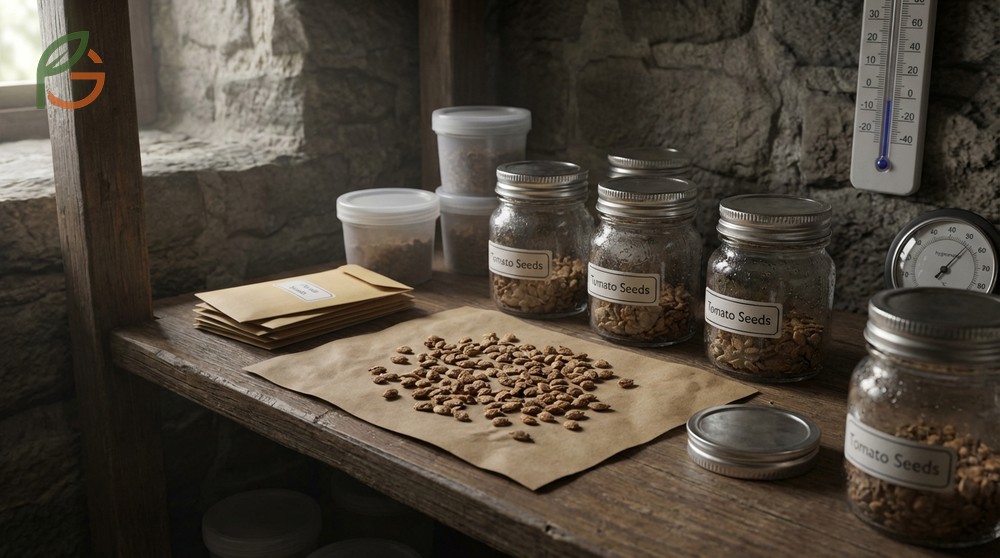
Tomato seeds remain viable for 4-5 years when stored properly, with some gardeners reporting successful germination after 10-12 years[5]. Three environmental factors determine storage success: low moisture, cool temperatures, and darkness. Each factor slows the seed’s metabolic processes, preserving the energy reserves needed for germination.
Store dried seeds in paper envelopes, small glass jars, or plastic containers with tight-fitting lids. Paper envelopes work well for short-term storage (1-2 years) and allow seeds to breathe. Glass or plastic containers provide better protection for extended storage periods—just ensure seeds are completely dry before sealing to prevent condensation.
Label every container with variety name, harvest date, and any relevant growing notes like flavor quality or disease resistance. You’ll thank yourself years later when you’ve accumulated multiple varieties. Include parent plant characteristics if you’re selecting for specific traits across generations.
Keep stored seeds in a cool, dark location where temperatures remain stable. Bedroom closets, cupboards away from appliances, or temperature-controlled basements work well. Avoid kitchens and bathrooms where humidity fluctuates. Current guidance suggests maintaining storage temperatures between 35-50°F (2-10°C) for maximum longevity, though room temperature works fine for shorter storage periods.
This table compares storage containers, ideal conditions, and expected seed viability periods for three common tomato seed storage methods
| Storage Method | Temperature Range | Expected Viability | Best Use Case |
|---|---|---|---|
| Paper Envelopes (Closet) | 60-70°F (16-21°C) | 3-4 years[5] | Easy access, rotating varieties |
| Glass Jars (Refrigerator) | 35-40°F (2-4°C) | 5-7 years[5] | Maximum longevity, rare varieties |
| Plastic Containers (Basement) | 50-60°F (10-16°C) | 4-5 years[3] | Large collections, organized storage |
- Use paper envelopes for breathability or glass jars for moisture protection
- Label containers with variety name, date, and growing characteristics
- Store in cool locations between 35-50°F (2-10°C) when possible
- Keep seeds in darkness to prevent light degradation
- Avoid humid areas like kitchens, bathrooms, or damp basements
- Add silica gel packets to containers for extra moisture protection
- Check stored seeds annually for signs of mold or moisture damage
Testing Seed Viability
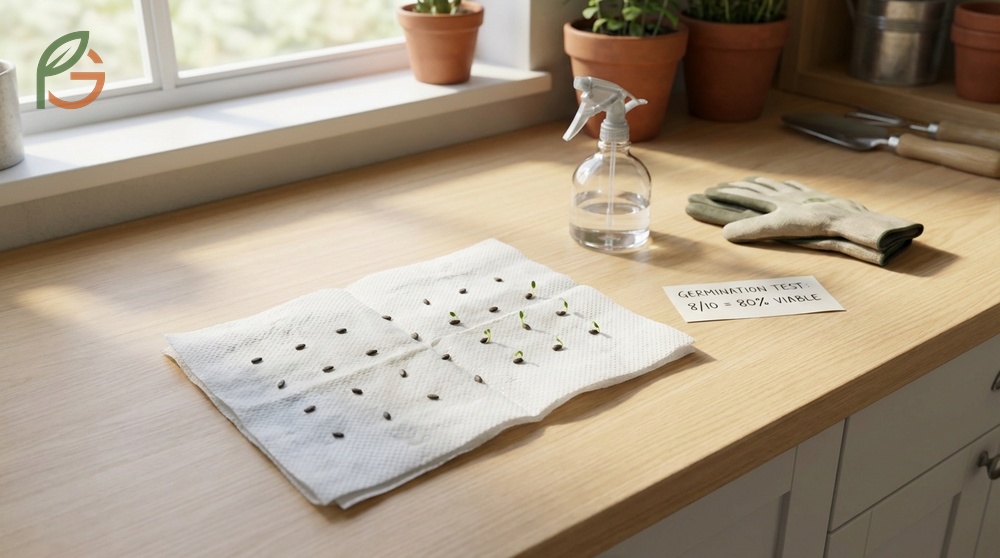
Germination rates naturally decline as seeds age, even under optimal storage conditions. Testing viability before planting season prevents wasted garden space and time. Current methods recommend testing at least 10 seeds per variety to calculate an accurate percentage—if 8 out of 10 sprout, you’ve got 80% germination[6].
The paper towel method works reliably for home gardeners. Dampen a paper towel until moist but not dripping, place 10-20 seeds spaced evenly on one half, fold the towel over to cover seeds, and seal inside a plastic bag or container. Set the container in a warm spot where temperatures stay around 70-75°F (21-24°C).
Check seeds daily starting on day 5. Tomato seeds typically germinate within 5-10 days under ideal conditions. Count how many seeds develop visible root tips—this is your germination percentage. Seeds showing 70% germination or higher are strong enough for normal planting density. If germination drops below 50%, you’ll need to plant seeds more densely to achieve desired plant populations.
Test old seeds in late winter, at least 4-6 weeks before your planned planting date. This gives you time to order replacements if stored seeds aren’t viable. Research shows seeds maintain germination capacity longer than expected—don’t discard questionable seeds until you’ve tested them.
Interpreting Results: Seeds with 85-100% germination are excellent. 70-84% is good—plant at normal density. 50-69% is marginal—increase planting density by 50%. Below 50% germination means ordering fresh seeds is more reliable than trying to compensate with heavy seeding.
Open Pollinated vs Hybrid Seeds
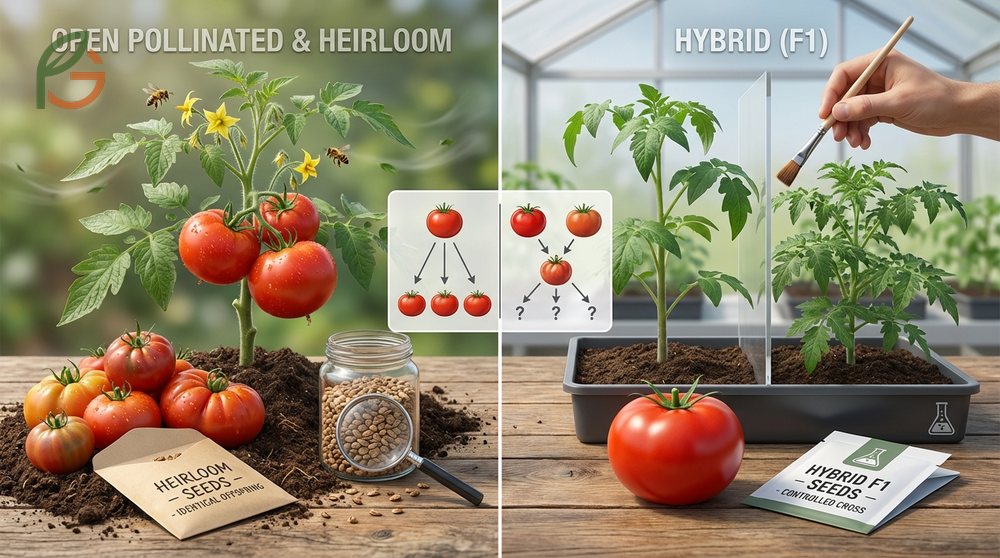
Understanding the difference between open-pollinated and hybrid tomatoes determines whether seed saving makes sense for your varieties. Open-pollinated tomatoes are pollinated naturally by insects, wind, or self-pollination, and their seeds produce offspring identical to parent plants. Heirloom varieties are simply open-pollinated tomatoes that have been grown and selected for at least 50 years.
Hybrid tomatoes result from controlled crosses between two specific parent lines chosen for desired traits. The first generation (F1) displays hybrid vigor with uniform fruit size, disease resistance, and predictable characteristics. However, seeds saved from hybrids don’t reproduce true to type—second-generation plants show variable traits and reduced vigor[4].
Agricultural data shows hybrid varieties typically produce 15-30% higher yields than comparable open-pollinated types in commercial settings. They’re bred for shipping durability and shelf life—priorities that don’t matter much in home gardens where flavor and adaptability often trump production volume. Open-pollinated varieties excel at local adaptation, with gardeners able to select for traits that perform well in their specific climate and soil conditions.
Most home gardeners prefer open-pollinated or heirloom tomatoes for seed saving because each generation maintains variety characteristics. You’re free to save seeds indefinitely, gradually developing strains adapted to your microclimate. Popular open-pollinated varieties include Brandywine, Cherokee Purple, San Marzano, and Amish Paste—all reliable seed savers.
Cross-pollination between tomato varieties occurs but isn’t common. Tomatoes are primarily self-pollinating, with flower structures that encourage pollen transfer within the same bloom. Studies indicate cross-pollination rates stay below 5% in typical garden settings. For extra security, grow different varieties at least 10 feet apart or save seeds from the center plants when growing multiple varieties in close proximity.
- Open-pollinated seeds produce offspring identical to parent plants
- Hybrid F1 seeds show uniform traits but don’t breed true in second generation
- Heirlooms are open-pollinated varieties cultivated for 50+ years
- Save seeds only from open-pollinated or heirloom tomatoes
- Hybrids often yield 15-30% more in commercial production
- Open-pollinated varieties adapt to local conditions over generations
- Tomato cross-pollination rates stay below 5% in home gardens
Conclusion
The evidence is clear: How To Save Tomato Seeds successfully requires just three critical steps—proper fermentation to remove gel coats and reduce disease, thorough drying to prevent storage mold, and cool dark storage to maintain viability for years. You’ll preserve the exact flavor, size, and growing characteristics of your favorite tomatoes without annual seed purchases.
Current guidance emphasizes selecting open-pollinated or heirloom varieties that breed true, fermenting for 3-5 days rather than longer periods that risk seed damage, and testing germination before each planting season to avoid surprises. Start with your best-performing plants this season, and you’ll build a personally-adapted seed collection that improves with each generation you grow at FruitGarden.
Frequently Asked Questions
How long do you ferment tomato seeds before drying?
Ferment tomato seeds for 3-5 days at room temperature until a layer of mold forms and the gel coating separates from seeds. Shorter fermentation periods of 3 days work well in warm conditions above 75°F (24°C), while cooler temperatures may require the full 5 days. Over-fermentation beyond 7 days can damage seed viability, so don’t extend the process unnecessarily.
Can you save seeds from any tomato variety?
You can physically save seeds from any tomato, but only open-pollinated and heirloom varieties produce seeds that grow true to the parent plant. Hybrid tomato seeds won’t replicate their parent’s characteristics—second-generation plants show variable traits and reduced vigor. Check your seed packet or plant tag to confirm variety type before investing effort in seed saving.
How do you know when tomato seeds are completely dry?
Properly dried tomato seeds feel hard and brittle, snapping cleanly when pressed between your fingers rather than bending or compressing. The drying process typically takes 7-10 days when seeds are spread in a single layer at room temperature. Seeds that still bend or feel leathery need additional drying time—any residual moisture leads to mold growth during storage.
What’s the best way to store tomato seeds long-term?
Store completely dry tomato seeds in paper envelopes or sealed glass jars in a cool, dark, dry location where temperatures remain stable between 35-50°F (2-10°C). Refrigerator storage extends viability to 5-7 years or more, while room temperature storage in closets or cupboards maintains germination for 3-4 years. Add silica gel packets to absorb any residual moisture.
How long do saved tomato seeds remain viable?
Properly stored tomato seeds maintain strong germination for 4-5 years on average, with some seeds remaining viable for 10-12 years under optimal conditions. Germination rates gradually decline after year three, but seeds that sprout produce healthy plants regardless of age. Test older seeds before planting to determine current germination percentage.
Do tomatoes cross-pollinate with other varieties in the garden?
Tomatoes rarely cross-pollinate because they’re primarily self-pollinating with flower structures that favor within-bloom pollen transfer. Cross-pollination rates stay below 5% in typical gardens. For extra assurance when growing multiple varieties, maintain 10 feet of separation between different types or save seeds from center plants in grouped plantings.
Can you skip the fermentation step when saving tomato seeds?
While you can technically save seeds without fermenting, skipping this step leaves the germination-inhibiting gel coat intact and doesn’t remove seed-borne pathogens. Non-fermented seeds show slower, less uniform germination and higher disease rates. The 3-5 day fermentation process significantly improves seed quality and is worth the minimal extra effort.