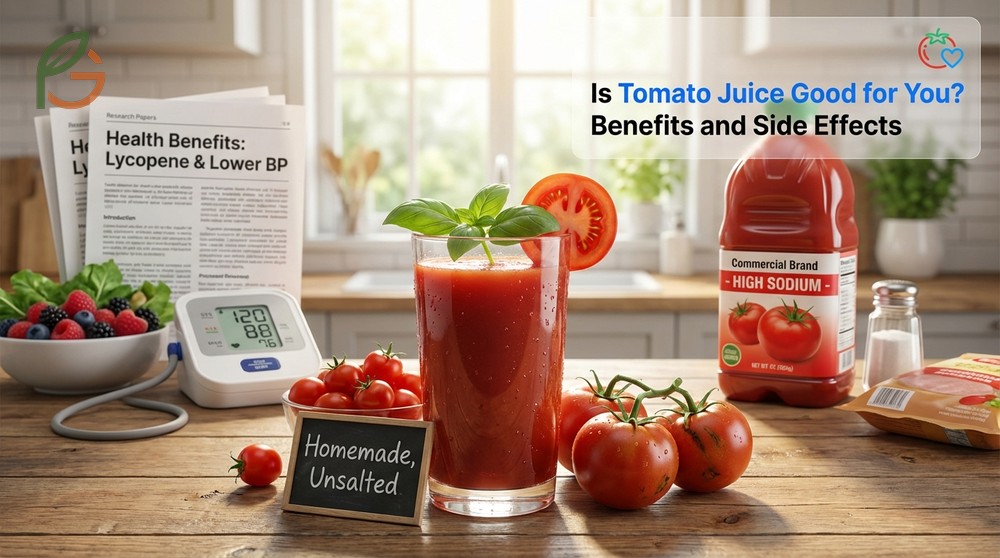
Is tomato juice good for you? Yes, when consumed unsalted and in moderation. Research shows that tomato juice delivers powerful antioxidants like lycopene, can lower blood pressure in people with hypertension, and provides essential vitamins while containing only 41 calories per cup[1]. However, commercial varieties often contain high sodium levels that can negate cardiovascular benefits. FruitGarden synthesizes current nutritional research to help you understand when tomato juice works for your health goals and when it doesn’t.
Quick Answer
- One cup of tomato juice provides 41 calories[2], 170mg vitamin C[2] (189% daily value), and 21,960mcg lycopene[2]
- Unsalted tomato juice reduced systolic blood pressure by 4.2 mmHg[1] in people with untreated hypertension
- Tomato juice has a low glycemic index of 31[3], making it suitable for diabetics when consumed strategically
- Commercial tomato juice contains 615mg sodium[2] per cup (27% daily value), which can raise blood pressure
Is Tomato Juice Good for You
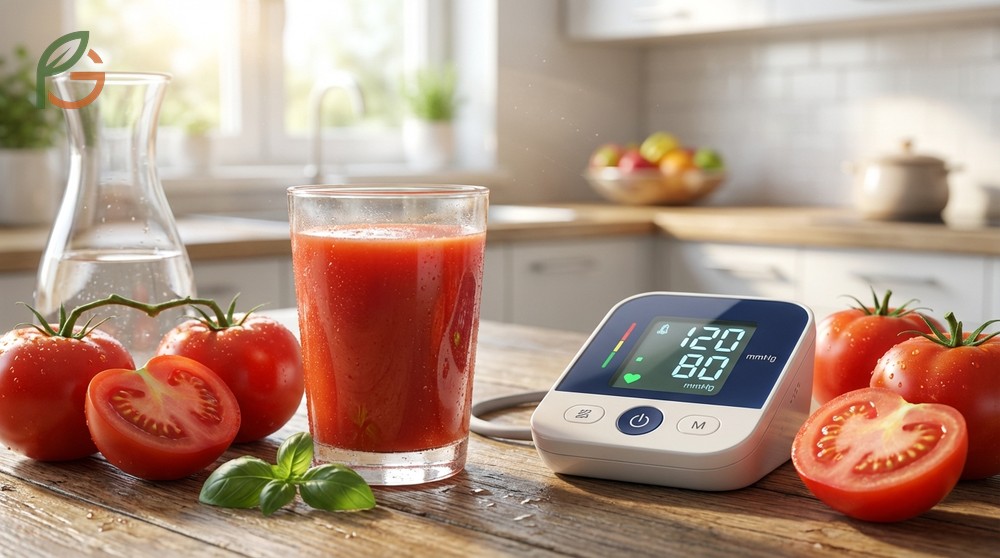
Tomato juice delivers concentrated nutrition with measurable health benefits for most people. Studies demonstrate that daily consumption of unsalted tomato juice improved blood pressure readings in 94 adults with prehypertension or hypertension over one year[1]. The average reduction was 4.2 mmHg systolic and 2.4 mmHg diastolic—clinically meaningful changes that occurred without medication.
What makes tomato juice effective isn’t one nutrient but a combination of bioactive compounds. You’re getting lycopene (an antioxidant stronger than beta-carotene), vitamin C, potassium, and unique compounds like 13-oxo-ODA that activate metabolic pathways[1]. Research across 481 Japanese residents found that these compounds work together to lower LDL cholesterol by an average of 5.1 mg/dL in people with untreated dyslipidemia[1].
The effectiveness depends entirely on choosing the right type. Unsalted tomato juice provides cardiovascular benefits, while commercial versions with added salt (615mg sodium per cup[2]) can raise blood pressure instead of lowering it. Most people don’t realize that processing actually increases lycopene absorption compared to raw tomatoes—you’ll absorb about 2.5 times more from juice than from fresh tomatoes[4].
Important Note: If you have kidney disease or take potassium-sparing medications, consult your doctor before drinking tomato juice regularly. One cup contains 527mg potassium[2], which can be problematic for impaired kidney function.
Benefits of Drinking Tomato Juice
Cardiovascular Benefits
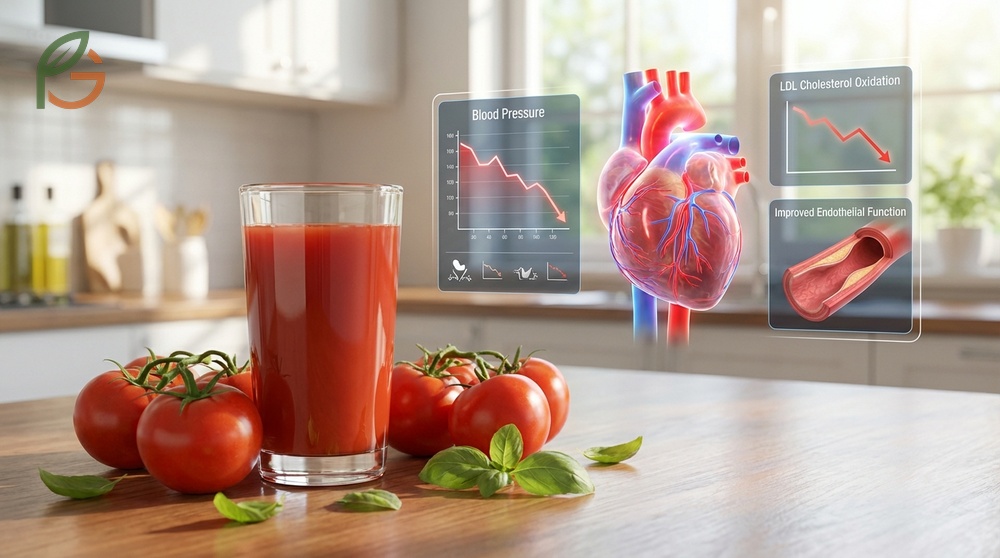
Tomato juice’s impact on heart health comes from multiple mechanisms working simultaneously. Current evidence shows that regular consumption lowers blood pressure, reduces LDL cholesterol oxidation, and decreases inflammatory markers in people at cardiovascular risk[1]. The blood pressure reduction occurs through improved endothelial function—the inner lining of blood vessels relaxes more effectively.
Participants in a year-long study consumed an average of 215ml unsalted tomato juice daily[1]. This modest amount (about 7 ounces) was enough to produce measurable changes in systolic blood pressure, diastolic blood pressure, and serum LDL cholesterol. The benefits appeared consistent across age groups from 23 to 74 years old and worked equally well for men and women.
Antioxidant Protection
Lycopene accounts for more than 80% of carotenoid intake in the American diet, with tomato products being the primary source. Research demonstrates that plasma lycopene levels increased by 50% after just three weeks of daily tomato juice consumption[4]. These elevated levels persisted throughout the study period and dropped back to baseline two weeks after stopping consumption.
The antioxidant capacity of tomato juice protects cells from oxidative damage caused by free radicals. Studies show that lycopene and beta-carotene in tomato juice act as strong radical scavengers, particularly effective at quenching singlet oxygen[4]. This protection extends to DNA, potentially reducing oxidative stress markers in individuals performing extensive physical activity.
Weight Management Support
Tomato juice supplementation produced significant reductions in waist circumference and body fat in controlled trials. Young women who consumed tomato juice daily for eight weeks experienced decreased waist measurements alongside reductions in serum cholesterol and inflammatory markers[5]. What’s notable is that these changes occurred even when total body fat didn’t decrease proportionally.
The weight management benefits appear linked to increased adiponectin levels and reduced inflammatory adipokines like MCP-1[5]. Adiponectin is a hormone that regulates glucose levels and fatty acid breakdown. Children with fatty liver disease who combined calorie restriction with tomato juice lost twice as much abdominal fat compared to those on calorie restriction alone.
- Reduces systolic blood pressure by 3-5 mmHg in people with hypertension without medication
- Lowers LDL cholesterol through inhibition of oxidation and improved lipid metabolism
- Increases serum lycopene levels by 50% within three weeks of daily consumption
- Decreases waist circumference measurements independent of overall weight changes
- Raises beneficial adiponectin levels while lowering inflammatory markers like MCP-1
- Provides 189% of daily vitamin C requirements per cup for immune and collagen support
- Delivers 527mg potassium per cup to support healthy blood pressure regulation
Is Tomato Juice Good for Diabetics
Glycemic Response
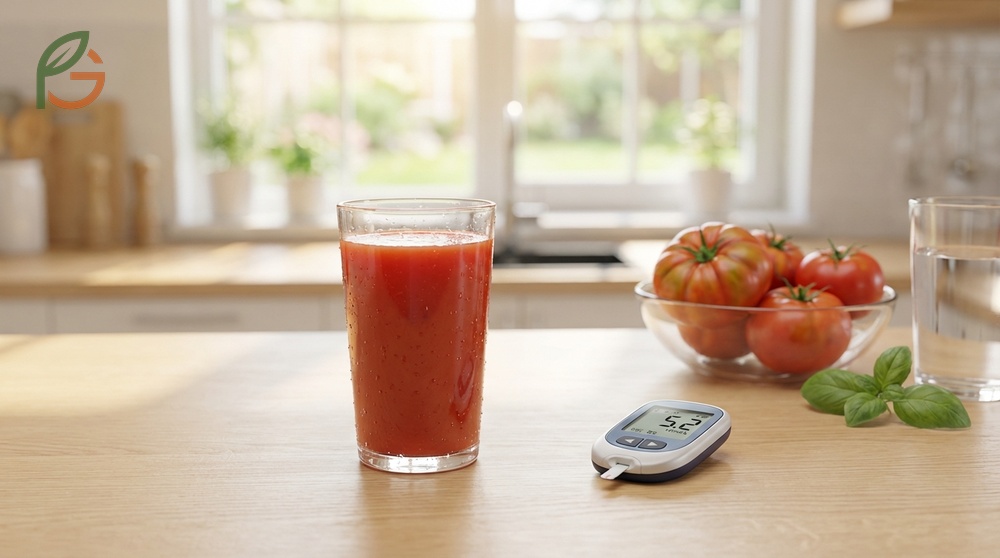
Tomato juice has a low glycemic index of 31[3], which means it won’t cause rapid blood sugar spikes. This makes it suitable for people with type 2 diabetes when consumed in appropriate amounts. Current data from controlled trials shows that tomato juice had no significant negative effect on blood glucose levels in diabetics who consumed moderate portions[6].
Research demonstrates that lycopene in tomato juice may actually improve insulin sensitivity and reduce inflammation—two critical factors in managing blood sugar long-term[6]. The antioxidant compounds help protect pancreatic beta cells from oxidative damage. However, portion control remains essential—stick to 4-6 ounces per serving rather than drinking multiple cups at once.
Timing Strategies
When you drink tomato juice matters as much as how much you consume. Studies show that consuming 200ml of tomato juice 30 minutes before a carbohydrate meal significantly lowered postprandial blood glucose concentrations[7]. Blood glucose levels at 60 and 90 minutes post-meal were notably lower compared to drinking water before the same meal.
The preload effect works by slowing gastric emptying and carbohydrate absorption. Incremental blood glucose concentrations dropped from 3.68 mmol/L with water to 2.77 mmol/L with tomato juice preload[7]. However, the benefit lasted only about four hours, so it won’t affect blood sugar control beyond your next meal.
- Limit portions to 4-6 ounces (120-180ml) per serving to control carbohydrate intake
- Drink tomato juice 30 minutes before carbohydrate-rich meals to blunt glucose spikes
- Choose unsalted varieties to avoid sodium-related blood pressure complications
- Monitor your individual glucose response with a meter for the first few times
- Pair tomato juice with protein or healthy fats to further slow absorption
Blood Sugar Tip: If you’re taking medications that lower blood sugar, drinking tomato juice before meals might increase your risk of hypoglycemia. Check with your healthcare provider about adjusting meal timing or medication doses.
Tomato Juice Nutritional Information
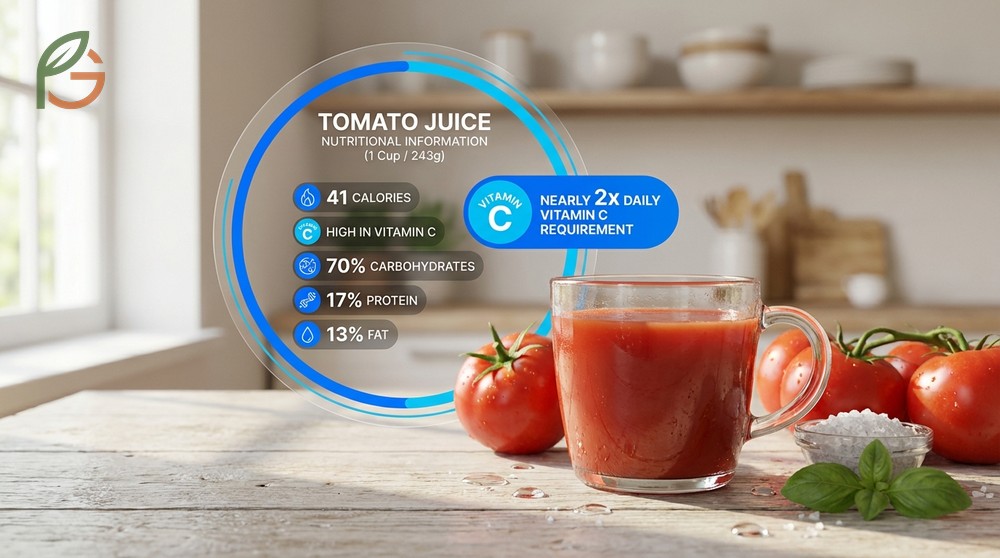
One cup (243g) of canned tomato juice with added salt provides a nutrient-dense profile with minimal calories[2]. You’re getting substantial vitamins and minerals for only 41 calories, making it one of the most nutrient-dense beverages available. The vitamin C content alone provides nearly twice your daily requirement in a single serving.
The macronutrient breakdown is 70% carbohydrates, 17% protein, and 13% fat by calorie[2]. Most of the carbohydrates come from natural sugars (6g per cup) with 1g of dietary fiber. This relatively low fiber content is one area where whole tomatoes have an advantage over juice—you lose some fiber during processing.
This table shows the complete nutritional composition of one cup of tomato juice including calories, macronutrients, vitamins, and minerals with daily value percentages
| Nutrient | Amount | % Daily Value |
|---|---|---|
| Calories | 41[2] | 2% |
| Protein | 2g[2] | 4% |
| Total Carbohydrates | 9g[2] | 3% |
| Dietary Fiber | 1g[2] | 3% |
| Sugars | 6g[2] | — |
| Total Fat | 1g[2] | 1% |
| Sodium | 615mg[2] | 27% |
| Potassium | 527mg[2] | 11% |
| Vitamin C | 170mg[2] | 189% |
| Vitamin A | 1094 IU[2] | 6% |
| Lycopene | 21,960mcg[2] | — |
The micronutrient profile is where tomato juice truly shines. You’re getting 12% of daily iron, 20% of thiamine, 15% of riboflavin, and 13% of vitamin B6 in just 41 calories[2]. The high vitamin C content enhances iron absorption, making this particularly valuable for people who need to boost iron levels.
Sodium in Tomato Juice
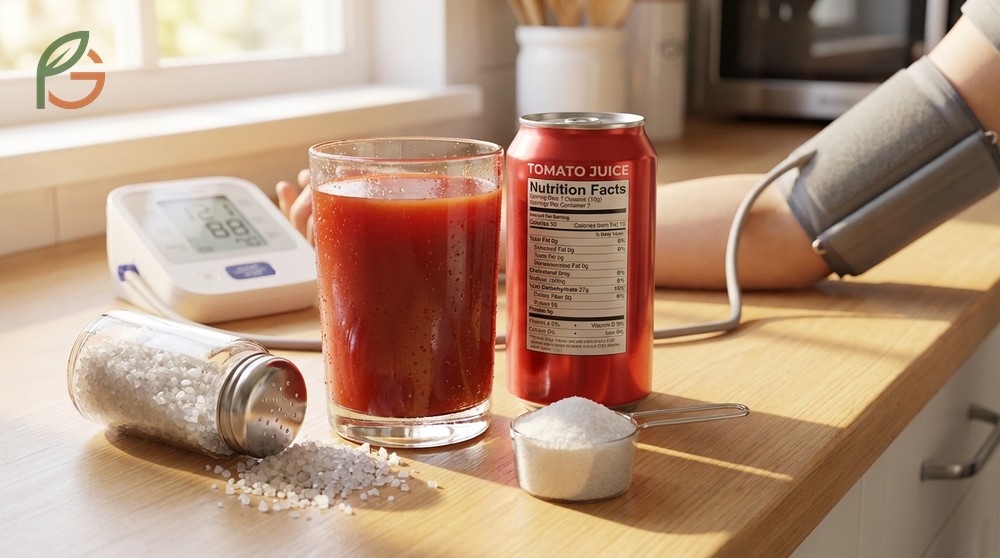
The sodium content is the single biggest concern with commercial tomato juice. Standard canned varieties contain 615mg sodium per cup[2]—that’s 27% of the 2,300mg daily limit recommended by health authorities. If you drink two cups daily, you’ve consumed more than half your sodium allowance before eating any food.
This matters because excessive sodium intake directly raises blood pressure in salt-sensitive individuals. The cardiovascular benefits documented in research studies used unsalted tomato juice with only 16mg sodium per 200ml serving[1]. That’s about 40 times less sodium than commercial varieties. The addition of salt completely changes whether tomato juice helps or harms blood pressure.
Your three options are buying no-salt-added commercial varieties, making homemade tomato juice, or limiting portions of regular tomato juice. Low-sodium commercial options typically contain 140mg or less per serving—still higher than unsalted but significantly better than standard versions. Read nutrition labels carefully since sodium content varies dramatically between brands.
- Regular commercial tomato juice: 615mg sodium per cup (27% daily value)
- Low-sodium commercial varieties: 140mg or less per cup (6% daily value)
- Unsalted tomato juice used in studies: 16mg per 200ml (less than 1% daily value)
- Homemade tomato juice with no added salt: 15-20mg per cup naturally occurring
- American Heart Association recommends ideally limiting sodium to 1,500mg daily for heart health
Sodium Warning: If you have high blood pressure, heart failure, or kidney disease, the sodium in regular tomato juice can worsen your condition. Always choose no-salt-added varieties or make your own to get the cardiovascular benefits without the sodium risks.
Lycopene in Tomato Juice vs Raw Tomatoes
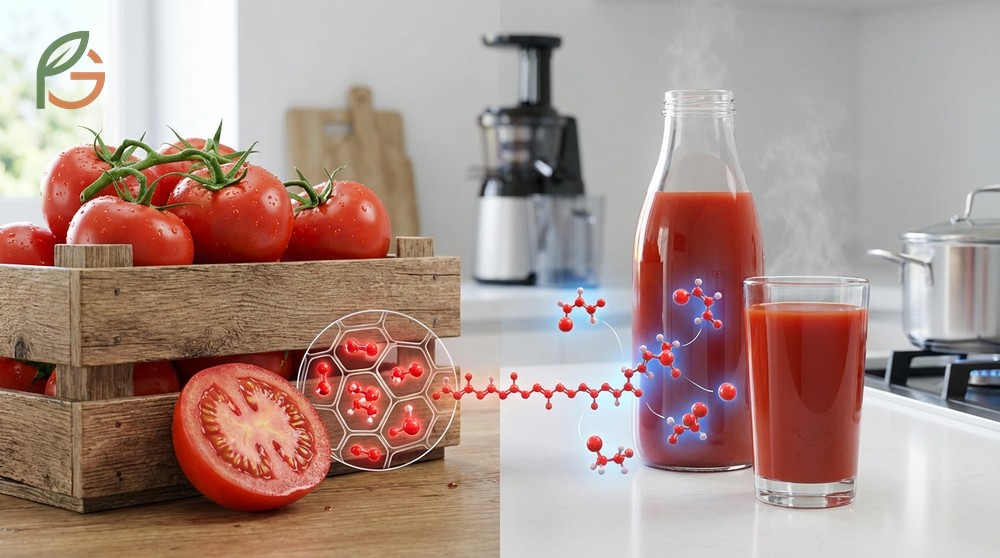
Processed tomato juice actually delivers more absorbable lycopene than raw tomatoes—an unusual case where processing improves nutritional value. Studies show that lycopene from processed tomatoes is significantly more bioavailable than from raw tomatoes[4]. The heat and mechanical processing used to make juice breaks down cell walls, releasing lycopene and making it easier for your body to absorb.
One cup of tomato juice contains approximately 21,960mcg of lycopene[2]. To get the same amount from raw tomatoes, you’d need to eat about three medium tomatoes—and your body would absorb only a fraction of that lycopene due to the intact cell structure. Research confirms that plasma lycopene levels increased 50% after three weeks of daily tomato juice intake[4], demonstrating excellent absorption.
The lycopene in tomato juice also appears to have synergistic effects with other nutrients[4]. When consumed as part of a meal rather than isolated as a supplement, lycopene works alongside vitamin C, beta-carotene, and other compounds to provide greater antioxidant protection. This explains why tomato juice consumption produces measurable health benefits while lycopene supplements show inconsistent results in trials.
Tomato Juice Side Effects
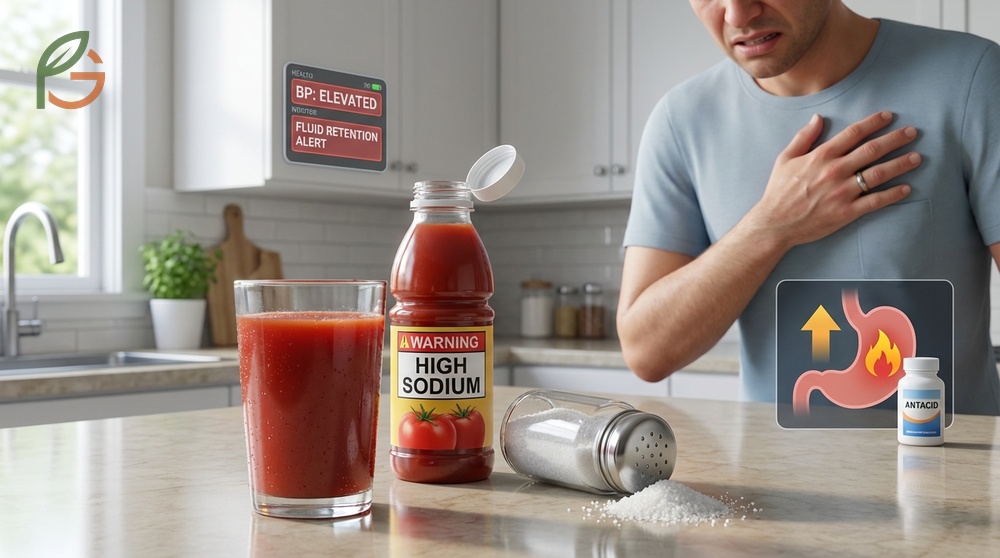
The high sodium content in commercial tomato juice can cause fluid retention, bloating, and elevated blood pressure in susceptible individuals. If you notice swelling in your hands or feet or feel bloated after drinking tomato juice, the sodium is likely the culprit. People with hypertension, heart disease, or kidney problems are especially vulnerable to these effects.
Tomato juice’s acidity (pH around 4.2) can trigger or worsen acid reflux and heartburn in people with gastroesophageal reflux disease. The natural acids in tomatoes stimulate stomach acid production. If you have GERD, drink tomato juice earlier in the day rather than close to bedtime, and don’t consume it on an empty stomach.
The high potassium content (527mg per cup[2]) poses risks for people with impaired kidney function. When kidneys don’t filter properly, potassium accumulates in the blood, potentially causing dangerous heart rhythm abnormalities. If you have chronic kidney disease or take potassium-sparing diuretics, limit tomato juice consumption.
- Blood pressure elevation from excessive sodium in commercial varieties (615mg per cup)
- Fluid retention and bloating, particularly in people with heart or kidney conditions
- Acid reflux and heartburn triggered by tomato acidity in GERD patients
- Hyperkalemia risk for people with kidney disease due to high potassium content
- Medication interactions with blood thinners, blood pressure drugs, and potassium-sparing diuretics
- Allergic reactions in people sensitive to nightshade vegetables (rare but possible)
Homemade Tomato Juice Recipe

Making tomato juice at home lets you control sodium content while maximizing flavor and nutrition. Fresh tomatoes picked at peak ripeness contain the highest concentrations of lycopene and other beneficial compounds. You’ll need about 3 pounds of ripe tomatoes to produce approximately 4 cups of juice.
Start by washing tomatoes thoroughly and removing stems and any blemished areas. Cut tomatoes into quarters—you don’t need to peel or seed them since you’ll strain the juice later. Place quartered tomatoes in a large pot with 1 cup of water and bring to a boil over medium-high heat.
Reduce heat and simmer for 15-20 minutes until tomatoes are completely soft and broken down. Stir occasionally to prevent sticking. The cooking process not only softens the tomatoes but also increases lycopene bioavailability—your body will absorb more antioxidants from cooked tomatoes than raw ones.
Remove from heat and let cool for 10 minutes. Pass the cooked tomatoes through a food mill or fine-mesh strainer to remove skins and seeds. For a thinner consistency, strain twice. If you prefer pulpy juice, strain once or blend briefly before straining.
Season your fresh tomato juice to taste with black pepper, celery salt, or a squeeze of lemon juice. Skip the table salt to keep sodium low—the natural sodium in tomatoes (about 15-20mg per cup) is sufficient. Store homemade tomato juice in the refrigerator for up to 5 days or freeze in portions for up to 3 months.
- 3 pounds ripe Roma or plum tomatoes (higher solid content, less watery)
- 1 cup filtered water for cooking
- Black pepper and celery seed for seasoning (optional, salt-free)
- Fresh lemon juice (1-2 tablespoons) to brighten flavor
- Large pot with heavy bottom to prevent scorching
- Food mill or fine-mesh strainer for smooth texture
- Glass storage containers with tight lids
Conclusion
The evidence is clear: tomato juice is good for you when you choose unsalted varieties and consume 6-8 ounces daily. Research demonstrates measurable improvements in blood pressure, cholesterol levels, and antioxidant status within weeks of regular consumption. However, commercial tomato juice loaded with sodium negates these cardiovascular benefits and can actually harm your health.
Current guidance emphasizes making informed choices based on your individual health profile. If you have hypertension or heart disease, unsalted tomato juice can be part of your dietary strategy. If you have kidney disease, the potassium content requires caution regardless of sodium levels. FruitGarden recommends prioritizing homemade or no-salt-added varieties to maximize benefits while minimizing risks—your cardiovascular system will thank you.
Medical Disclaimer
Important Medical Disclaimer: This content is for informational and educational purposes only. It’s not intended as a substitute for professional medical advice, diagnosis, or treatment. Always consult a qualified healthcare professional before making any changes to your diet, medication, or health routine, especially if you have hypertension, diabetes, kidney disease, or other medical conditions. The nutritional information and health claims presented here are based on scientific research but individual responses vary. Never disregard professional medical advice or delay seeking it because of information you read here.
Frequently Asked Questions
Is It Healthy to Drink Tomato Juice Every Day?
Yes, drinking 6-8 ounces of unsalted tomato juice daily is healthy for most people. Research shows that daily consumption over one year improved blood pressure and cholesterol levels without adverse effects[1]. However, choose no-salt-added varieties since commercial tomato juice contains 615mg sodium per cup[2]—too much for daily consumption if you have high blood pressure.
What’s the Best Time to Drink Tomato Juice for Weight Loss?
Drink tomato juice 30 minutes before carbohydrate-rich meals to blunt blood sugar spikes and enhance satiety. Studies show this timing reduced postprandial blood glucose by about 25%[7], which can help control appetite. The 41 calories per cup[2] makes it a low-calorie option that provides volume and nutrients without excessive energy intake.
Does Tomato Juice Lower Blood Pressure?
Yes, unsalted tomato juice lowers blood pressure in people with hypertension. A year-long study found that daily consumption reduced systolic blood pressure by an average of 4.2 mmHg and diastolic by 2.4 mmHg[1]. These reductions occurred in people with untreated prehypertension or hypertension who drank about 7 ounces daily. The key is choosing unsalted varieties—regular tomato juice with added salt can raise blood pressure instead.
Can Diabetics Drink Tomato Juice Safely?
Yes, diabetics can drink tomato juice safely in moderate amounts. Tomato juice has a low glycemic index of 31[3] and doesn’t cause rapid blood sugar spikes. Research shows that consuming tomato juice 30 minutes before carbohydrate meals actually lowered post-meal blood glucose levels[7]. Limit portions to 4-6 ounces per serving and monitor your individual response with a glucose meter.
How Much Lycopene Is in Tomato Juice?
One cup of tomato juice contains approximately 21,960 micrograms of lycopene[2], making it one of the richest dietary sources of this powerful antioxidant. Lycopene from processed tomato juice is more bioavailable than from raw tomatoes—your body absorbs it more easily[4]. Plasma lycopene levels increased by 50% after just three weeks of daily tomato juice consumption.
What Are the Side Effects of Drinking Too Much Tomato Juice?
Drinking excessive tomato juice can cause high blood pressure from sodium overload (commercial varieties contain 615mg per cup[2]), acid reflux from high acidity, and hyperkalemia in people with kidney disease due to high potassium content. The 527mg potassium per cup[2] can be dangerous if your kidneys can’t filter properly. Stick to 6-8 ounces daily of unsalted varieties to avoid these issues.
Is Homemade Tomato Juice Better Than Store-Bought?
Yes, homemade tomato juice is significantly better because you control the sodium content. Store-bought tomato juice contains 615mg sodium per cup[2] while homemade versions have only 15-20mg naturally occurring sodium. The cardiovascular benefits documented in research used unsalted tomato juice with only 16mg sodium per serving[1]. Homemade juice also has fresher flavor and no preservatives.