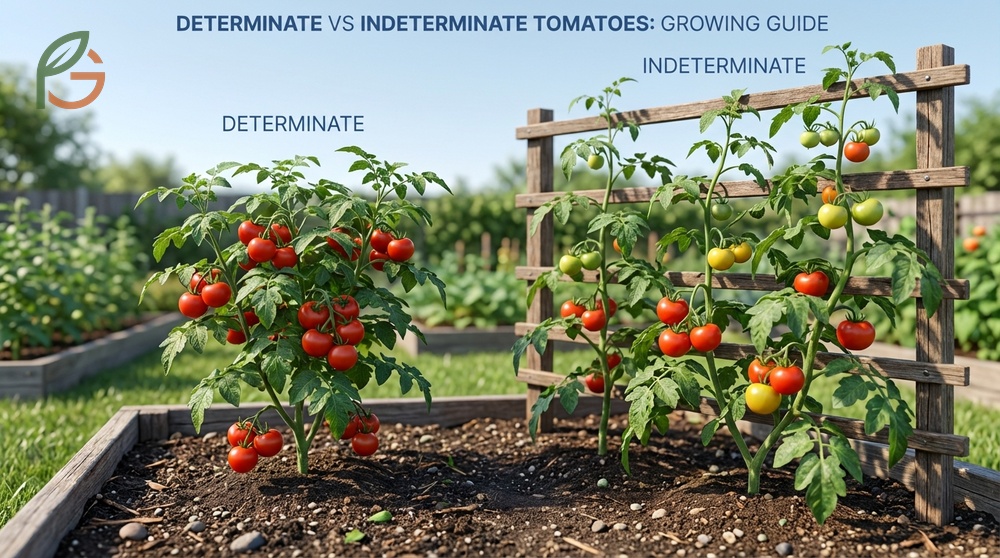
Determinate vs Indeterminate Tomatoes differ primarily in growth pattern and harvest timing. Research shows determinate varieties grow to 3-4 feet tall[1] and ripen all fruit within a 2-3 week window, while indeterminate types can reach 6-20 feet[2] and produce continuously until frost. FruitGarden synthesizes current horticultural research to help you choose the right tomato type for your garden space and harvest goals.
Quick Answer
- Determinate tomatoes grow 3-4 feet tall[1] with a bush-like habit, perfect for containers and small spaces
- Indeterminate varieties reach 6-20 feet[2] and require staking or caging throughout the season
- Bush types ripen all fruit within 2-3 weeks[3], ideal for canning and saucing
- Vining types produce continuously over 2-3 months[1] for fresh eating throughout summer
Determinate vs Indeterminate Tomatoes
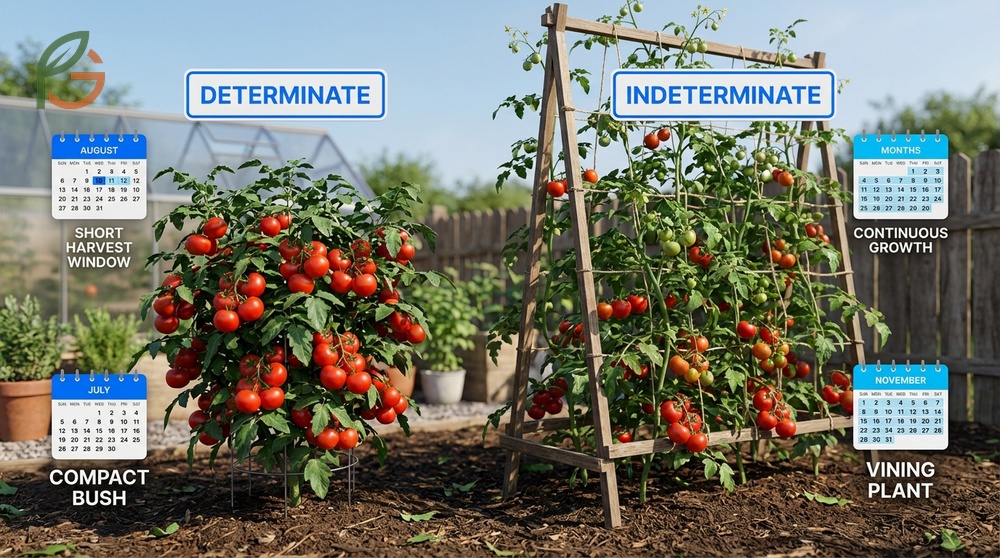
The main difference between these two tomato types lies in their growth habit and fruiting pattern. Determinate varieties stop growing once they set fruit at their terminal ends, creating a compact bush shape that’s self-supporting or needs minimal caging[1]. This concentrated growth makes them produce all their tomatoes within a short 2-3 week harvest window.
Indeterminate tomatoes behave differently—they’re vining plants that keep growing taller and producing new flower clusters throughout the growing season. Studies demonstrate these plants continue flowering and setting fruit until frost kills them[1]. Most gardeners train them to a single main stem by removing side shoots, which focuses energy on fruit production rather than excessive foliage.
Research shows that most heirloom varieties are indeterminate, including popular types like Brandywine, Cherokee Purple, and Black Krim[2]. Determinate types include well-known cultivars like Roma, Celebrity, and Mountain Fresh Plus. When you’re shopping for tomato transplants or seeds, the label will specify which growth type you’re getting.
From My Experience: My cousin in Guadalajara, Mexico planted Celebrity determinates in May 2024. The entire harvest arrived in a concentrated 3-week period versus the 8-10 week harvest from her Cherokee Purple indeterminates planted the same day.
What Determines Growth Type
The growth pattern is controlled by specific genes that dictate when the plant stops producing new leaves and starts setting fruit. Determinate plants have a self-terminating gene that stops vertical growth after 4-5 fruit clusters form. This genetic programming explains why you can’t change a determinate into an indeterminate through pruning or care techniques.
Plant breeders select for these traits based on what gardeners and commercial growers need. If you’re growing tomatoes in a small space or want a big harvest for canning, breeders have developed compact determinates. For fresh market growers who want continuous harvest over months, indeterminate breeding lines dominate.
Visual Identification Tips
You can spot the difference even before flowers appear. Determinate seedlings have shorter distances between leaf nodes, creating a stockier appearance. Indeterminate seedlings stretch more between leaves, giving them a lankier look from the start.
Once fruiting begins, determinate plants show flowers clustered at branch tips. Indeterminate varieties produce flowers along the main stem at regular intervals. If you see fruit forming only at the top of the plant while the lower portion stays vegetative, that’s a determinate.
Important Note: A third category called “semi-determinate” or “vigorous determinate” exists. These varieties grow slightly taller than standard determinates (4-5 feet) but still produce a concentrated harvest. Sugar Snack and Heatwave II fall into this category.
Tomato Growth Habits
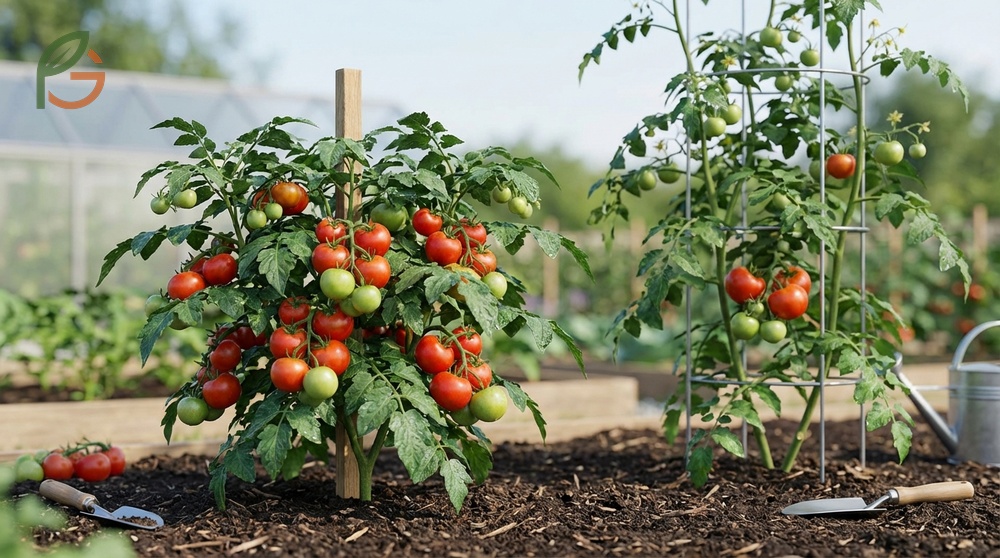
Understanding how each growth type develops helps you plan spacing, support systems, and harvest timing. Current agricultural guidance emphasizes matching growth habit to your garden’s specific constraints and your intended use for the harvest.
Bush-type growth concentrates energy into a compact frame. These plants put out strong lateral branches early in development, then shift all resources to ripening fruit simultaneously. This efficiency makes them mature earlier—typically 50-70 days from transplant[3]—compared to 70-90 days for most indeterminate varieties.
Vining habits prioritize continuous vegetative growth alongside fruiting. The plant keeps sending up new growth from the main stem while lower fruit clusters ripen. This dual-purpose approach means more total yield potential but spread over a longer harvest period. Most people find this works better for fresh eating since you’re not overwhelmed with 50 pounds of tomatoes in one week.
Bush Growth Pattern
Determinate plants grow vertically for 30-45 days after transplanting, then stop abruptly when the terminal bud sets flowers. All subsequent growth comes from side branches that were already initiated. This creates a predictable, dome-shaped canopy that rarely exceeds 4 feet in height.
The root system develops differently too. Research shows bush tomatoes put down roots that spread wider but shallower compared to indeterminate types. This makes them well-suited to containers with limited depth—a 12-14 inch deep pot works fine for most determinate varieties.
- Vertical growth stops at 3-4 feet tall after flowering begins
- Side branches develop early and grow vigorously
- All fruit clusters form within a 2-3 week window
- Root spread favors horizontal expansion over deep anchoring
- Plant energy shifts dramatically from vegetative to reproductive phase
Vining Growth Pattern
Indeterminate tomatoes never stop growing from the terminal bud. Each week brings new leaf sets and flower clusters as the main stem extends upward. Without support or pruning, these plants sprawl across 8-10 feet of ground space.
The continuous growth means you’ll see tomatoes at different stages on the same plant—green fruit near the top, ripe fruit in the middle, and often spent clusters at the bottom. This staggered development extends harvest from mid-summer through the first hard freeze.
- Main stem grows 6-20 feet tall depending on variety and season length
- New flower clusters appear every 1-2 leaf nodes throughout the season
- Fruit ripens continuously over 8-12 weeks or until frost
- Root system grows deeper (3-4 feet) to support tall structure
- Side shoots (suckers) emerge at every leaf axil and can become full stems
Bush vs Vining Tomatoes
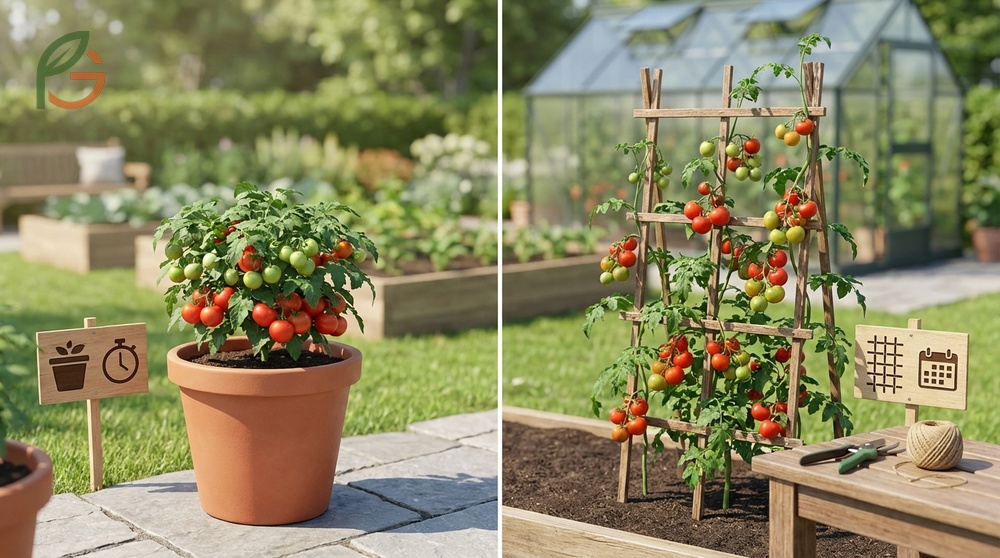
When you’re deciding between bush and vining types, consider three main factors: available space, time commitment, and how you’ll use the harvest. Bush varieties excel in containers, small raised beds, and situations where you want minimal maintenance. Vining types reward you with higher total yields but demand more attention to staking, pruning, and training.
Space requirements differ dramatically. You can plant determinate tomatoes 2 feet apart since they won’t spread beyond their cages[4]. Indeterminate varieties need 3-4 feet between plants to accommodate their sprawling growth and provide air circulation. If you’re working with a 4×4 foot raised bed, you might fit 4 determinate plants but only 1-2 indeterminates.
The harvest difference changes how you cook and preserve. Determinate varieties give you 15-25 pounds of tomatoes in one concentrated flush—perfect for spending a weekend making sauce or salsa. Indeterminate plants produce 20-30 pounds total but spread across the entire summer, which suits fresh eating and weekly meal prep.
This table compares bush and vining tomato types across growth dimensions, spacing needs, support requirements, harvest patterns, and best uses
| Characteristic | Bush (Determinate) | Vining (Indeterminate) |
|---|---|---|
| Height Range | 3-4 feet[1] | 6-20 feet[2] |
| Plant Spacing | 2 feet apart | 3-4 feet apart |
| Support Needs | Optional cage or minimal staking | Sturdy stakes or cages required |
| Harvest Window | 2-3 weeks[3] | 2-3 months[1] |
| Best Use | Canning, saucing, containers | Fresh eating, continuous harvest |
| Pruning Required | None | Regular sucker removal recommended |
Container Growing Tip: Determinate varieties thrive in 5-gallon containers, while indeterminate types need at least 10-gallon pots for adequate root space. Choose dwarf indeterminate varieties like Tasmanian Chocolate if you want continuous harvest in containers.
Determinate Tomato Characteristics
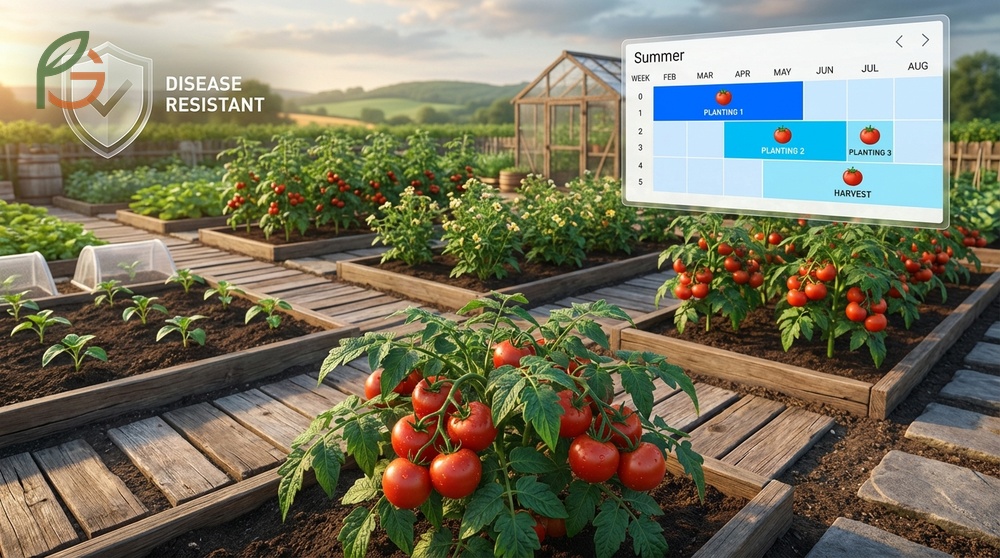
Determinate varieties offer predictability—you know exactly when they’ll ripen and how much space they’ll occupy. This makes garden planning simpler, especially if you’re succession planting or need to rotate crops. Plant a new set of determinates every 3 weeks for continuous harvests throughout summer without managing towering vines.
Current breeding programs focus on disease resistance in determinate lines. Many modern varieties resist verticillium wilt, fusarium wilt, and tobacco mosaic virus. Look for letter codes like VFN or VFNT on seed packets—these indicate built-in disease resistance that keeps plants productive even in challenging conditions.
The compact size makes determinates ideal for patios and balconies. Varieties like Patio Choice Yellow grow just 15-18 inches tall[5] and produce 100+ cherry tomatoes from a single hanging basket. This adaptability opens tomato growing to apartment dwellers and anyone with limited ground space.
- Earlier maturity (50-70 days) compared to indeterminate types
- Self-supporting growth reduces staking labor and materials cost
- Concentrated harvest simplifies canning and sauce-making sessions
- Smaller footprint allows higher plant density in limited space
- Easier to cover with row covers or frost protection when needed
- Predictable life cycle makes succession planting straightforward
The main drawback is the short harvest window. Once that 2-3 week flush ends, fruit production drops to nearly zero. Many varieties also produce smaller individual fruits compared to indeterminate beefsteaks. If you’re after 1-pound slicing tomatoes, you’ll find more options in the indeterminate category.
Indeterminate Tomato Features
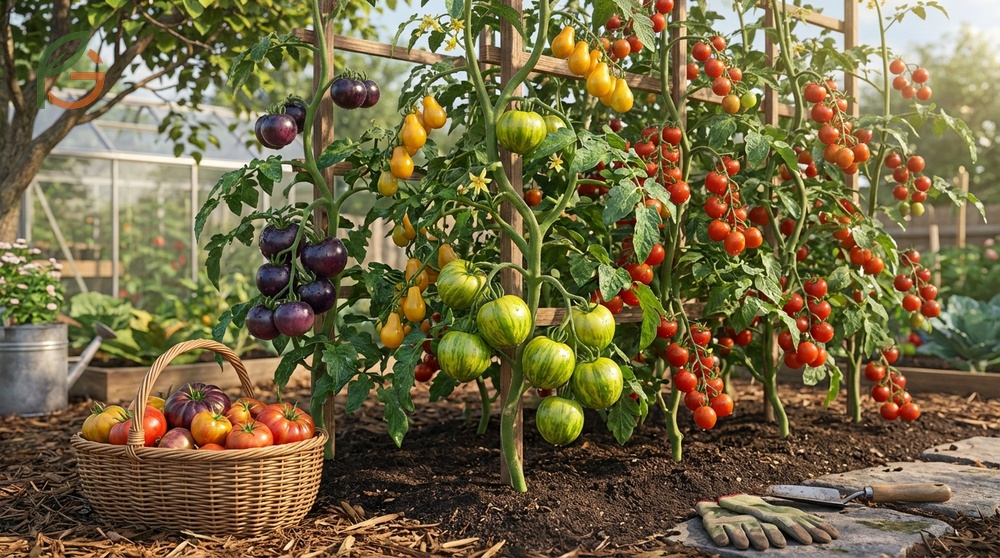
Indeterminate varieties dominate the heirloom market because traditional breeding favored continuous production over compact size. These genetics give you access to unique flavors and colors—think purple Cherokee, striped Green Zebra, or golden Yellow Pear. Most cherry tomato varieties are indeterminate, producing sweet fruit continuously for fresh snacking.
The extended harvest means better return on garden space over the full season. While determinates might yield 15-25 pounds total, vigorous indeterminate plants can produce 30-50 pounds from the same square footage when properly supported and fed. This productivity advantage matters most in small gardens where every plant counts.
Flavor often runs deeper in indeterminate types, especially heirlooms. The longer growth cycle and continuous production seem to concentrate sugars and acids that create complex taste profiles. Varieties like Brandywine and Black Krim consistently win taste tests among home gardeners, though they require 80+ days to first harvest.
- Continuous harvest from mid-summer through first frost
- Higher total yield potential (30-50 pounds per plant)
- Greater variety selection including most heirlooms
- Better flavor development in many cultivars
- Flexibility to harvest small amounts for daily fresh use
- Longer production season maximizes garden value
The challenges include managing height, preventing disease in dense foliage, and committing to regular pruning. You’ll spend 10-15 minutes per plant every week removing suckers and tying new growth to supports. This maintenance isn’t difficult, but it’s not optional if you want healthy, productive plants.
Support Systems: Indeterminate tomatoes need sturdy 6-8 foot stakes or heavy-duty cages. Flimsy cages from big-box stores collapse under the weight of a fully loaded plant. Invest in cattle panel trellises or 1-inch diameter bamboo stakes for reliable support.
Pruning Requirements
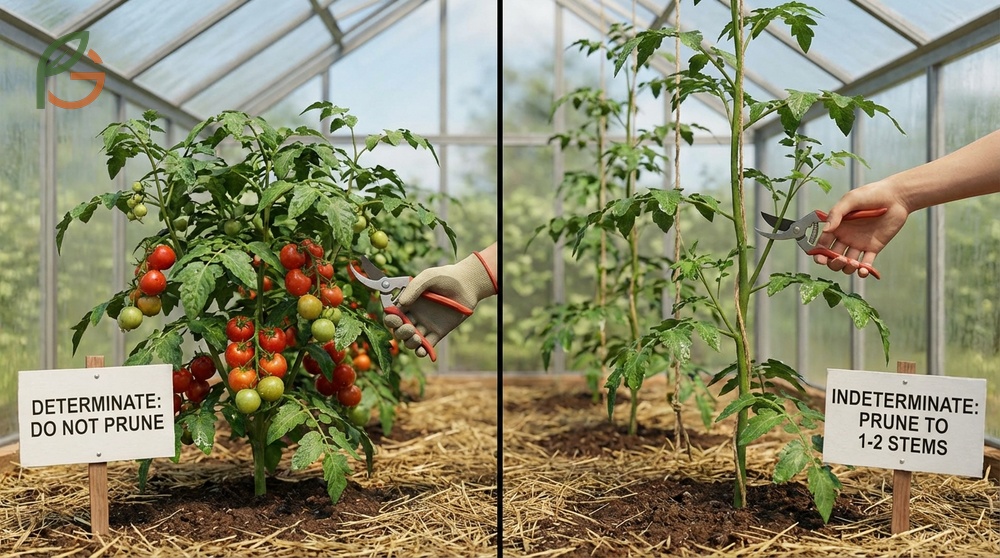
The pruning difference between these two types is dramatic and non-negotiable. Determinate tomatoes should never be pruned beyond removing damaged leaves or diseased branches[2]. Every branch and leaf contributes to the fruit load, so removing them cuts your harvest significantly. Even removing suckers hurts production since those side shoots carry future fruit clusters.
Indeterminate varieties respond completely differently to pruning. Research shows training to 1-2 main stems by removing all suckers increases fruit size and speeds ripening[6]. This technique redirects energy from excessive foliage production into fruit development. Most commercial growers and serious home gardeners prune indeterminates weekly during active growth.
Start pruning when indeterminate plants reach 12-18 inches tall, typically 3-4 weeks after transplanting. Look for suckers—those shoots emerging from the junction between main stem and leaf branches. Pinch these off when they’re 2-3 inches long. Once plants set fruit, remove all leaves below the lowest fruit cluster to improve air circulation and reduce disease pressure.
Late-season pruning differs from early-season techniques. In late August, pinch off all growing tips (terminal ends) to stop new flower production. This forces the plant to ripen existing fruit before frost arrives rather than wasting energy on tomatoes that won’t mature. This single cut can increase your harvestable yield by 20-30% in areas with early fall frosts.
| Pruning Task | Determinate | Indeterminate |
|---|---|---|
| Remove Suckers | Never | Weekly when 2-3 inches long |
| Remove Lower Leaves | Only if diseased | Yes, below first fruit cluster |
| Top/Pinch Growing Tip | Never | Late August to redirect energy |
| Thin Fruit Clusters | Rarely needed | Optional for larger fruit |
Use clean, sharp pruners or simply pinch soft growth with your fingers. Avoid pruning when foliage is wet, as this spreads bacterial and fungal diseases. Make cuts at a 45-degree angle about 1/4 inch above the main stem to promote quick healing.
Conclusion
The evidence is clear: Determinate vs Indeterminate Tomatoes serve different purposes in home gardens. Choose determinate varieties when you’re working with containers, limited space, or want a concentrated harvest for preserving. Pick indeterminate types when you’ve got room for tall supports and prefer fresh tomatoes throughout summer and fall.
Most successful gardeners grow both types—determinates for early season eating and canning projects, indeterminates for sustained harvest into autumn. Current horticultural guidance emphasizes matching variety selection to your specific garden conditions and harvest goals. FruitGarden recommends starting with 2-3 plants of each type to discover which growth habit suits your gardening style best.
Frequently Asked Questions
Which tomato type is better for beginners?
Determinate tomatoes work better for beginners because they need minimal pruning and support. Varieties like Roma or Celebrity are forgiving and productive with basic care. You’ll get a successful harvest without learning complex training techniques.
Can you grow indeterminate tomatoes in containers?
Yes, but you’ll need at least 10-gallon containers and sturdy 6-foot stakes. Dwarf indeterminate varieties like Tasmanian Chocolate perform better in pots than full-sized types. Expect to water daily during hot weather since container soil dries quickly.
Do determinate tomatoes produce less than indeterminate?
Not necessarily—determinate varieties produce 15-25 pounds per plant in one concentrated harvest, while indeterminates yield 30-50 pounds spread over months. Total yield favors indeterminate, but determinate gives you more fruit at once for canning projects.
How do you tell if a tomato plant is determinate or indeterminate?
Check the seed packet or plant tag first. If that’s unavailable, watch the growth pattern—determinate plants stop at 3-4 feet and set all flowers at branch tips, while indeterminate plants keep growing taller with flowers appearing along the main stem continuously.
What’s the best determinate variety for containers?
Patio Choice Yellow grows just 15-18 inches tall and produces 100+ cherry tomatoes in a single season. Other excellent container determinates include Tiny Tim, Bush Early Girl, and Red Robin. All thrive in 5-gallon pots with minimal staking.
Should you prune determinate tomato plants?
No, never prune determinate varieties except to remove diseased or damaged growth. Every branch and sucker contributes to the fruit load, so pruning reduces your total harvest. Let the plant grow naturally within its cage for maximum production.
When do indeterminate tomatoes start producing?
Most indeterminate varieties produce first ripe fruit 70-90 days after transplanting, roughly 2-3 weeks later than determinate types. However, they continue producing new fruit every week until frost, giving you a much longer harvest window overall.