
Types of pear trees fall into two main categories: European pears with soft, buttery flesh and Asian pears with crisp, apple-like texture. Research shows both types thrive in USDA hardiness zones 4-9, though specific varieties have different requirements[1]. Understanding pear tree varieties helps gardeners choose compatible pollination partners and match trees to their climate—guidance that FruitGarden synthesizes from current horticultural research.
Quick Answer
- Two main types: European pears (Bartlett, Bosc, Anjou) and Asian pears (Shinseiki, 20th Century) with distinct textures and ripening habits
- Most require cross-pollination: Only a few varieties like Conference are truly self-pollinating; yields improve by 200-300% with compatible partners[2]
- Size ranges: Dwarf varieties reach 8-12 feet, semi-dwarf 12-15 feet, and standard trees grow 18-25 feet tall[3]
- Bloom timing matters: Pear trees flower in early spring for 2-3 weeks; pollinators must bloom simultaneously[4]
Types of Pear Trees
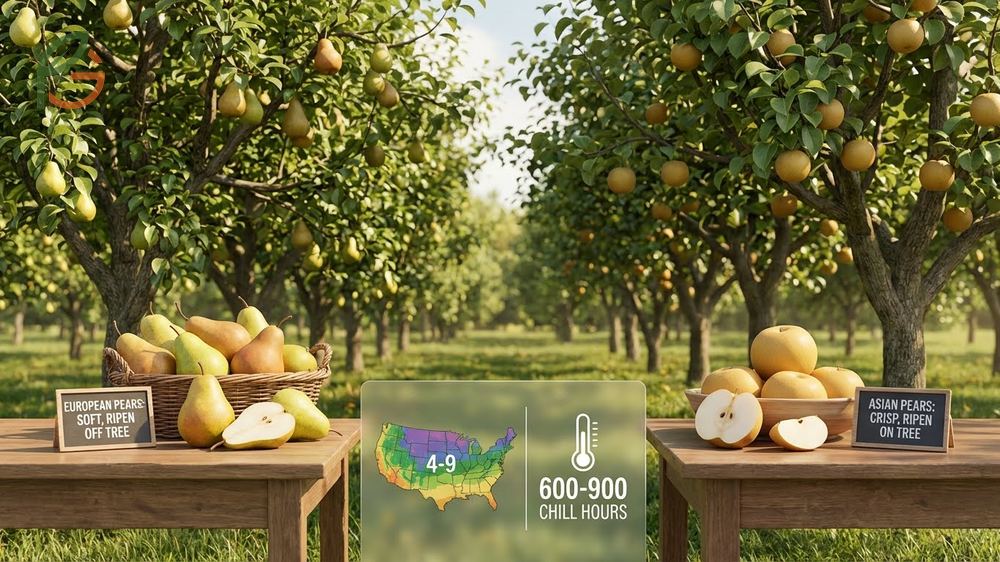
Pear trees divide into European and Asian species, each with distinct characteristics that affect cultivation and harvest. European pears develop soft, melting flesh when ripened off the tree, while Asian pears ripen on the tree to a crisp, apple-like texture[5]. Both types grow well across USDA zones 4-9, though specific cultivars have narrower ranges.
European pears dominate commercial production with varieties like Bartlett, Bosc, and Anjou. These trees require 600-900 chilling hours below 45°F (7°C) annually to set fruit properly[1]. Asian pears need fewer chilling hours—typically 300-500 hours—making them suitable for warmer climates within their hardiness range.
Climate adaptation varies significantly between varieties. Cold-hardy European types like Beurre Hardy and Winter Nellis tolerate zone 4 conditions, while Asian varieties generally prefer zones 5-9 with milder winters. Matching variety to your local climate determines long-term success.
European Pear Varieties
European pears exhibit the classic pyriform shape—round at the base and narrowing toward the stem. These varieties must be harvested firm and ripened indoors for optimal texture. Storage duration ranges from several weeks to months depending on cultivar.
Popular European varieties offer different harvest windows and flavor profiles. Early-season types like Beth ripen in August, mid-season Conference and Concorde in September, and late-season cultivars like Josephine de Malines extend fresh pear availability into winter.
- Bartlett (Williams Bon Chrétien): Classic yellow pear with sweet, juicy flesh; ripens August-September; vigorous grower
- Bosc: Elongated shape with russeted brown skin; firm, spicy-sweet flavor; excellent for baking and fresh eating
- Anjou: Green or red skin; mild, sweet taste; stores well through winter; consistent producer
- Conference: Self-fertile variety; long, narrow shape; reliable cropping; good for cooler climates
- Comice: Exceptionally sweet and buttery; roundish shape; requires careful handling due to soft flesh
- Concorde: Cross between Conference and Comice; vanilla flavor notes; compact growth habit; partially self-fertile
Asian Pear Varieties
Asian pears grow in spherical shapes resembling apples rather than the traditional pear silhouette. The crisp texture remains constant from harvest through storage—these pears don’t soften like European types. Skin colors range from yellow-green to bronze-russet depending on variety.
Asian varieties are hardy to zones 5-9 and require 300-500 chilling hours below 45°F (7°C) annually[5]. They need well-draining soil with pH 6.3-6.8 and at least 8 hours of direct sunlight daily. Cross-pollination with European pears works well since bloom times overlap.
- 20th Century (Nijisseiki): Yellow skin when ripe; very sweet; smooth texture; consistent bearer
- Shinseiki: Golden-yellow fruit; early bloomer; productive; good disease resistance
- Hosui: Bronze-russet skin; exceptionally sweet; butterscotch flavor notes; vigorous tree
- Shinko: Russet skin; aromatic; stores well; late-season ripening
- Yoinashi: Smooth yellow skin; crisp and juicy; fire blight resistant; reliable pollinator
Hardiness Zones for Pears
Pear trees thrive in USDA hardiness zones 4-9, though variety selection determines exact zone compatibility[1]. Zone 4 gardeners need cold-hardy cultivars like Beurre Hardy or Winter Nellis, while zone 9 growers should choose low-chill Asian varieties. Most popular varieties perform best in zones 5-8.
Chilling hour requirements differ substantially between types. European pears need 600-900 hours below 45°F (7°C), while Asian pears require only 300-500 hours. Zone 8-9 gardeners often find Asian pears more reliable because warm winters don’t provide sufficient chilling for many European cultivars.
This table compares European and Asian pear tree characteristics including shape, texture, ripening method, chilling hours, and hardiness zones
| Characteristic | European Pears | Asian Pears |
|---|---|---|
| Fruit Shape | Pyriform (classic pear) | Round (apple-like) |
| Texture When Ripe | Soft, buttery, melting | Crisp, firm, juicy |
| Ripening Method | Off-tree storage ripening | Ripen on tree[5] |
| Chilling Hours | 600-900 hours[1] | 300-500 hours[5] |
| Hardiness Zones | Zones 4-9 | Zones 5-9 |
| Best Uses | Fresh, canning, baking | Fresh eating, salads |
From My Experience: My neighbor in Guadalajara, Mexico planted a Shinseiki Asian pear in spring 2023. The tree bloomed in year two versus the typical 3-4 year wait, producing 12 fruits—matching the accelerated performance Asian varieties show in warmer climates with adequate chill hours.
Are Pear Trees Self Pollinating?
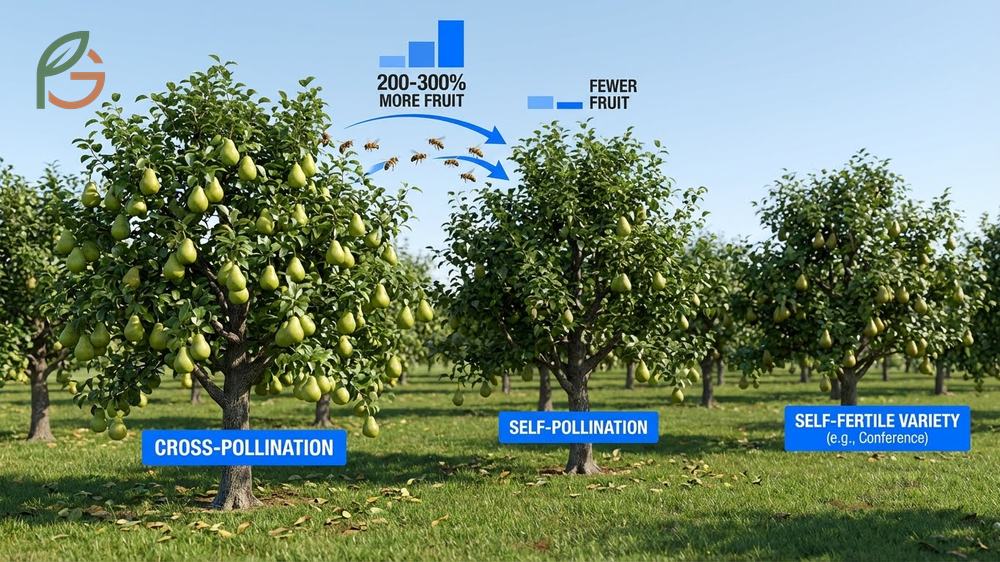
Most pear trees are partially self-fertile but produce significantly better yields with cross-pollination. Research shows that cross-pollinated pear trees produce 200-300% more fruit compared to self-pollinated specimens[2]. Even varieties labeled “self-fertile” benefit from a compatible pollination partner nearby.
The few truly self-pollinating varieties include Conference, Improved Fertility, and Durondeau. These cultivars set reasonable crops when planted alone, though adding a second variety still improves fruit size and quantity. Most commercial orchards plant multiple varieties to maximize production.
Cross-pollination requires compatible bloom times and genetic compatibility. Pear trees won’t pollinate themselves or close relatives effectively—you need different cultivars that flower simultaneously. Bees typically transfer pollen between trees within 100 feet of each other.
Important Pollination Note: Asian and European pears cross-pollinate effectively when bloom times overlap[4]. Don’t limit yourself to one pear type—mixing European and Asian varieties expands your pollination options and extends harvest season.
Self-Fertile Varieties
Self-fertile pear varieties can produce fruit without a second tree, making them ideal for small gardens or lone plantings. Conference leads this category as the most reliable self-pollinator, consistently setting crops without assistance. Concorde and Improved Fertility also demonstrate strong self-fertility.
Even self-fertile varieties show improved performance with pollinators present. Fruit size increases by 15-25% and yields jump by 50-100% when bees transfer pollen from compatible varieties. If space allows, plant two trees even when choosing self-fertile cultivars.
- Conference: Most reliable self-fertile variety; long narrow fruits; excellent flavor; consistent cropping
- Concorde: Partially self-fertile; compact growth; vanilla notes; good for small spaces
- Improved Fertility: Bred specifically for self-pollination; productive; golden-yellow fruits
- Durondeau: Self-fertile; russeted appearance; sweet flavor; mid-season ripening
- Beurre Hardy: Partially self-fertile; cold-hardy; bronze skin; excellent pollinator for others
Bloom Time Compatibility
Successful cross-pollination demands overlapping bloom periods between varieties. Pear bloom condenses into a 2-3 week window in early spring, shorter than apple’s extended flowering[4]. This compressed schedule means bloom timing compatibility is critical—mismatched varieties won’t pollinate each other.
Bloom groups classify pear varieties into early, mid, and late flowering categories. Early bloomers like Moonglow flower in group 1-2, mid-season varieties like Conference and Bartlett occupy group 3, and late bloomers like Josephine de Malines fall into group 4. Choose varieties within one group number of each other for reliable pollination.
Climate affects bloom timing more dramatically than catalog descriptions suggest. Warm springs advance bloom by 7-10 days, while cold conditions delay flowering. Local observation matters more than published schedules—track when your trees actually bloom to identify compatible partners in your specific microclimate.
When Do Pear Trees Bloom?
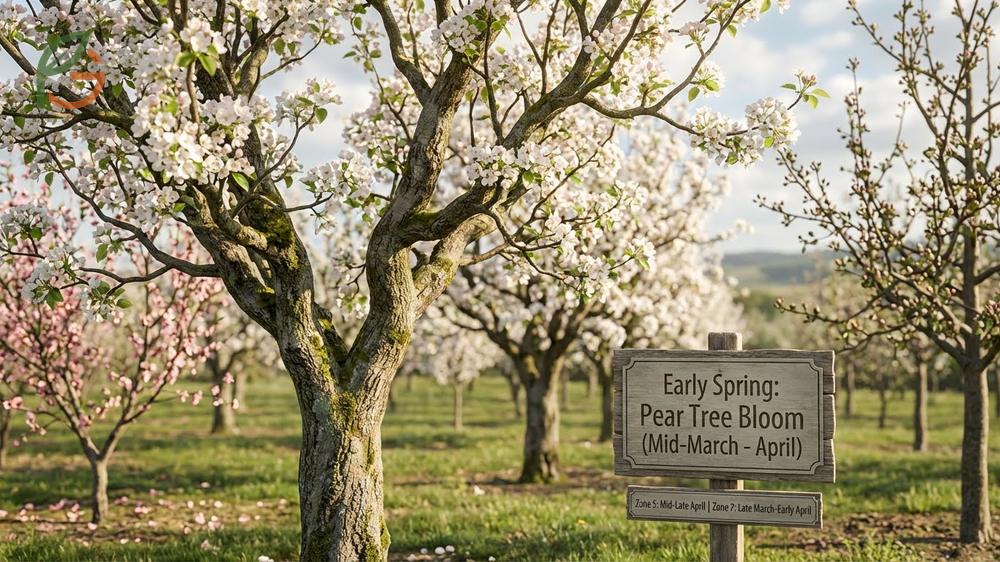
Pear trees bloom in early spring, typically mid-March through April depending on climate zone. Bloom starts roughly one week before apple trees flower and follows peach bloom by about two weeks[4]. The flowering period lasts 2-3 weeks—shorter than apples but long enough for effective pollination when compatible varieties overlap.
Zone 5 gardeners typically see pear bloom in mid-to-late April, while zone 7 trees flower in late March to early April. Zone 8-9 locations may experience February-March bloom. Late spring frosts pose the biggest threat during this vulnerable period—temperatures below 28°F (-2°C) damage open blossoms and reduce fruit set.
Young trees start flowering 3-4 years after planting, though Asian pears often bloom earlier—sometimes in year two. First blooms don’t guarantee fruit since the tree may drop flowers while establishing root systems. Productive fruiting typically begins by year 4-6, gradually increasing as trees mature.
Weather patterns determine exact bloom dates more than calendar schedules. Track accumulated chilling hours and spring warming trends for your location. Pear trees require fulfilled chilling requirements plus accumulated warmth in spring to trigger flowering—this explains year-to-year variation in bloom timing.
Frost Protection Tip: Cover blooming pear trees with frost blankets when nighttime temperatures drop below 32°F (0°C). Even light frosts damage flowers and reduce fruit set significantly. Remove covers during daytime to allow bee pollination.
How Big Do Pear Trees Get?
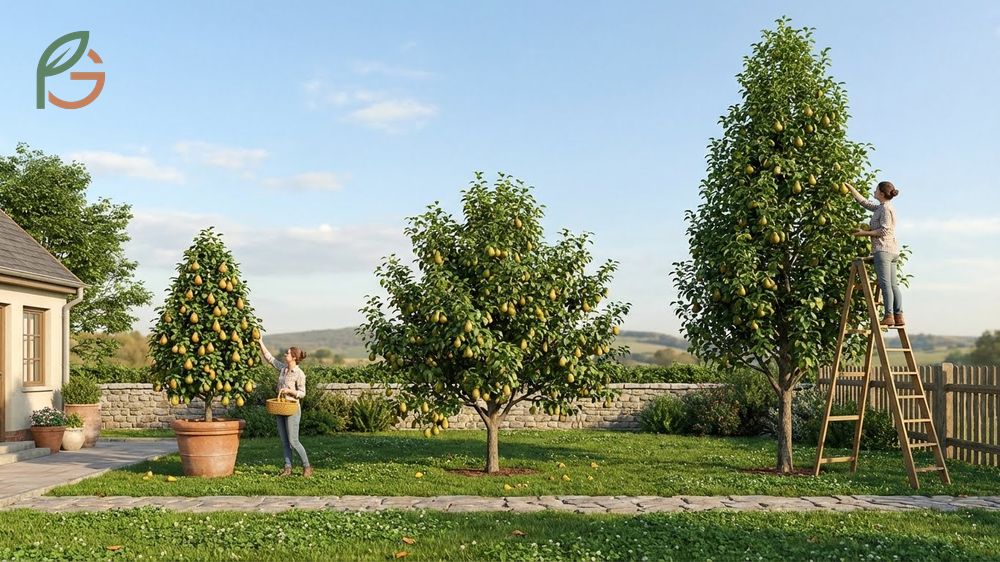
Pear tree size depends on rootstock selection, with three main categories available. Dwarf pear trees reach 8-12 feet tall with 6-7 foot spread, semi-dwarf varieties grow 12-15 feet tall and wide, while standard trees mature at 18-25 feet tall with 12-15 foot spread[3]. Pear trees naturally grow narrower than apple trees—their conical habit means height exceeds width.
Dwarf rootstocks suit container growing and small yards, allowing harvest without ladders. These trees reach mature size in 4-5 years and begin bearing fruit in year 3-4. Semi-dwarf options balance productivity with manageable size, fitting most suburban landscapes while producing substantial crops.
Standard rootstocks create long-lived trees that dominate landscape spaces. These full-size specimens take 6-8 years to reach mature dimensions and begin meaningful fruiting by year 5-6. Standard trees outlive dwarf types but require ladder access for pruning and harvest.
- Dwarf (8-12 feet): Ideal for containers and small yards; begins fruiting year 3-4; easiest to manage and harvest
- Semi-Dwarf (12-15 feet): Best balance of size and production; fits most yards; moderate ladder needed; productive by year 4-5
- Standard (18-25 feet): Maximum lifespan and eventual yield; requires significant space; ladder essential; begins heavy production year 6-8
- Spacing guidelines: Dwarf trees 10-12 feet apart; semi-dwarf 15-18 feet; standard 20-25 feet for proper air circulation
- Width characteristics: Pear trees grow narrower than apples due to upright branching; width typically 60-70% of height
How Long Do Pear Trees Live?
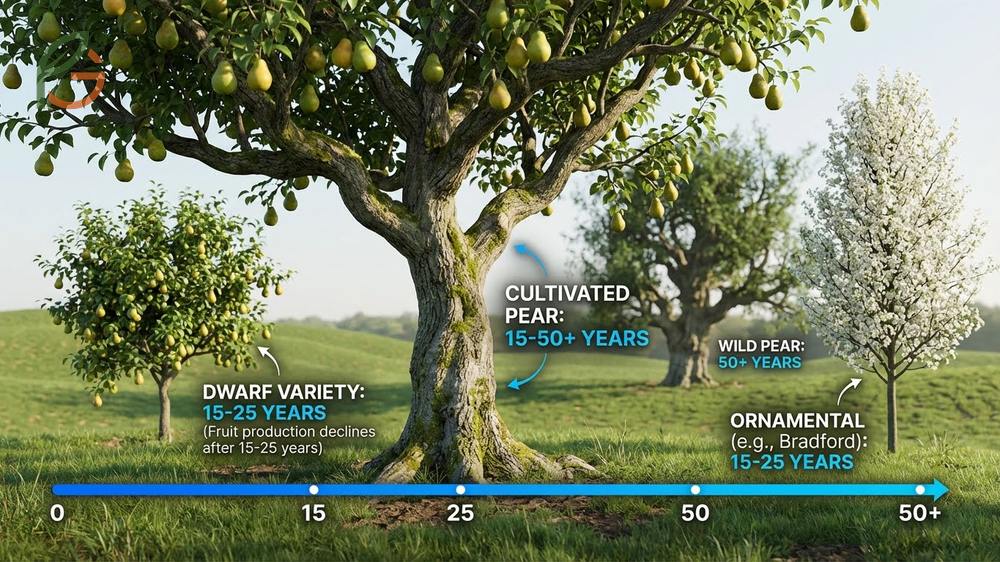
Cultivated pear trees typically live 15-50 years depending on variety, rootstock, and growing conditions. Wild pear trees can exceed 50 years with optimal care, while ornamental types like Bradford pear have shorter 15-25 year lifespans[6]. Fruit production remains strong for 10-20 years before gradually declining as trees age.
Standard rootstock trees outlive dwarf varieties by 10-20 years. Dwarf pears typically produce well for 15-25 years, while standard trees remain productive for 25-40 years before yields diminish. Disease pressure, particularly fire blight, significantly reduces lifespan in susceptible varieties.
The productive lifespan matters more than total longevity for most growers. Pear trees hit peak production between years 8-15, then maintain steady yields through year 20-30. After this prime period, fruit quantity and quality gradually decrease. Commercial orchards often replace trees after 20-25 years to maintain optimal productivity.
Proper care extends lifespan considerably. Annual pruning, disease management, adequate water, and balanced fertilization help trees reach their genetic potential. Neglected trees suffer shortened lifespans from disease, pest damage, and structural failures. Winter injury in cold climates and drought stress in hot regions accelerate decline.
How Fast Do Pear Trees Grow?
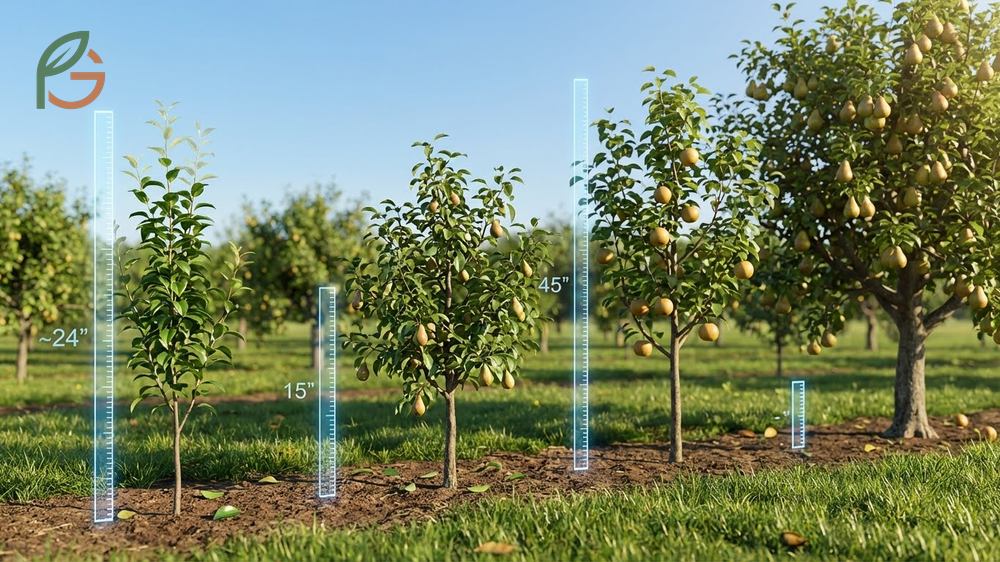
Pear trees grow at moderate to fast rates, adding 13-24 inches of height annually under good conditions. Ornamental pears like Chanticleer and Bradford grow fastest at the upper end of this range, while fruiting varieties typically add 12-18 inches yearly. Asian pears often outpace European varieties in growth speed, particularly in warm climates.
Young trees grow fastest during establishment years 1-5, then growth slows as energy shifts toward fruit production. Dwarf rootstocks reach mature size in 4-6 years, semi-dwarf in 6-8 years, and standard trees take 8-12 years to achieve full dimensions. First significant fruit crops appear by year 4-6 for most varieties.
Growth rates vary with rootstock, soil quality, water availability, and climate. Trees in rich, well-drained soil with consistent moisture grow 50-100% faster than those in poor conditions. Full sun exposure—6-8 hours daily—maximizes photosynthesis and growth rates. Competition from grass and weeds significantly slows young tree establishment.
- Rootstock influence: Standard rootstocks grow fastest initially; dwarf types reach mature size quickest due to smaller final dimensions
- Soil quality: Rich, well-drained soil with pH 6.0-7.0 supports optimal growth; clay or sandy soils reduce annual gains by 30-50%
- Water availability: Consistent moisture during growing season critical; drought stress reduces growth by 40-60% annually
- Fertilization: Balanced feeding in early spring promotes 15-25% faster growth; avoid excess nitrogen which reduces fruiting
- Pruning timing: Late winter pruning stimulates vigorous spring growth; summer pruning slows growth and promotes fruiting
Conclusion
The evidence is clear: successful pear growing starts with choosing the right types of pear trees for your climate, space, and pollination setup. European varieties deliver classic buttery texture for zones 4-9, while Asian types offer crisp fruit with lower chill requirements for warmer regions. Most varieties need compatible cross-pollinators blooming simultaneously to achieve commercial-quality yields.
Current guidance emphasizes matching tree size to available space, understanding bloom time compatibility, and planning for long-term care over 20-40 productive years. Whether you choose dwarf trees for small yards or standard specimens for maximum harvest, proper variety selection and pollination planning determine success. FruitGarden compiles research-based insights to help gardeners make informed decisions about pear tree selection, planting, and care strategies.
Frequently Asked Questions
What’s the difference between European and Asian pear trees?
European pears have pyriform (classic pear) shape and soft, buttery texture when ripe; they’re harvested firm and ripened in storage. Asian pears grow round like apples with crisp, juicy texture that remains firm; they ripen on the tree before harvest. Asian varieties need fewer chilling hours (300-500 vs 600-900) making them better for warmer climates within zones 5-9.
Can you plant just one pear tree and get fruit?
You can plant one pear tree if you choose self-fertile varieties like Conference, Concorde, or Improved Fertility. However, even these produce 200-300% more fruit with a second compatible variety nearby for cross-pollination. Most pear varieties are partially self-fertile but need a pollination partner for good yields.
Which pear tree varieties resist fire blight best?
Fire blight resistant pear varieties include Warren, Potomac, Ayers, Moonglow, and Blake’s Pride for European types. Among Asian pears, Yoinashi and Shinseiki show strong resistance. Resistance doesn’t equal immunity—severe fire blight years can infect even resistant varieties, so proper sanitation and pruning remain essential.
How many years before a pear tree produces fruit?
Pear trees typically begin producing fruit 4-6 years after planting, with Asian varieties often fruiting earlier (sometimes year 2-3) than European types. Dwarf rootstocks start bearing 1-2 years sooner than standard rootstocks. Trees may bloom earlier but drop flowers until root systems establish—expect meaningful harvests by year 5-7.
What’s the best dwarf pear tree for small yards?
Conference on dwarf rootstock works best for small yards because it’s self-fertile and reaches only 8-10 feet tall. Concorde dwarf is another excellent choice with compact growth and partial self-fertility. Both varieties produce well in limited space and allow harvest without ladders, making them ideal for suburban gardens.
Do Stark Brothers pear trees need special care?
Stark Brothers pear trees follow the same care requirements as other nursery sources—they need full sun (6-8 hours daily), well-drained soil with pH 6.0-7.0, and consistent moisture during establishment. The key is matching variety to your hardiness zone and providing compatible pollinators. Check bloom time charts to pair varieties correctly regardless of nursery source.
Can European and Asian pear trees pollinate each other?
Yes, European and Asian pear trees cross-pollinate effectively when bloom times overlap. Most Asian varieties like Shinseiki and 20th Century bloom simultaneously with mid-season European types like Bartlett and Conference. This compatibility expands your variety options and extends harvest season from August through November by mixing pear types.





