
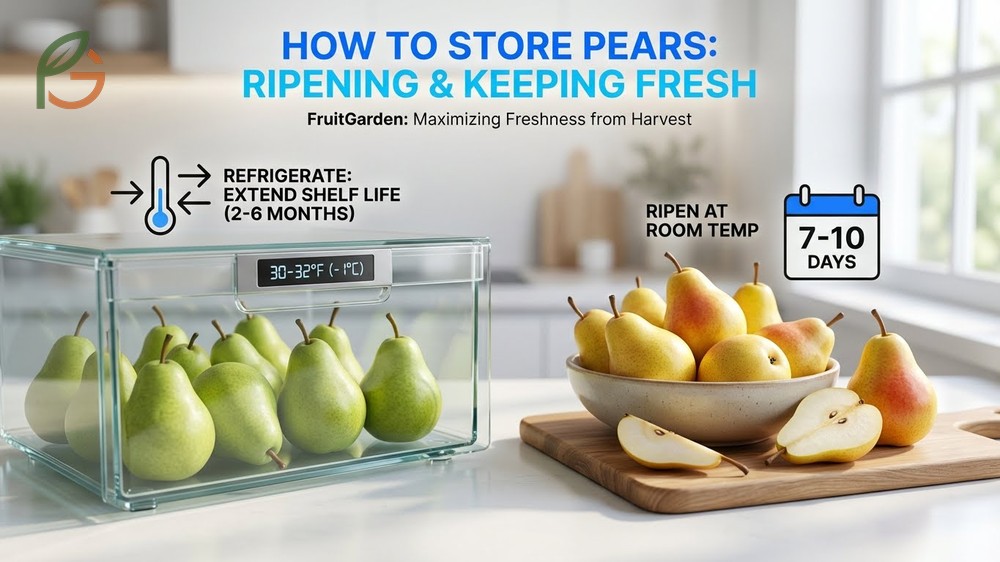
How to store pears depends on when you want to eat them. Research shows that refrigerating unripe pears at 30-32°F (around -1°C) extends shelf life for 2-6 months depending on variety[1], while room temperature ripening takes 7-10 days[1]. Unlike most fruits, pears ripen better off the tree, so proper storage means controlling temperature and timing. FruitGarden synthesizes current agricultural guidance to help you maximize pear freshness from harvest through consumption.
Quick Answer
- Store unripe pears at 30-32°F (-1 to 0°C) with 90-95% humidity for optimal shelf life[1]
- Storage duration varies: Bartlett pears keep 2 months, while d’Anjou can last 4-6 months[2]
- Ripen pears at room temperature (60-70°F / 16-21°C) for 7-10 days before eating[1]
- Speed up ripening by placing pears in a paper bag, reducing time to 2-4 days[3]
How to Store Pears
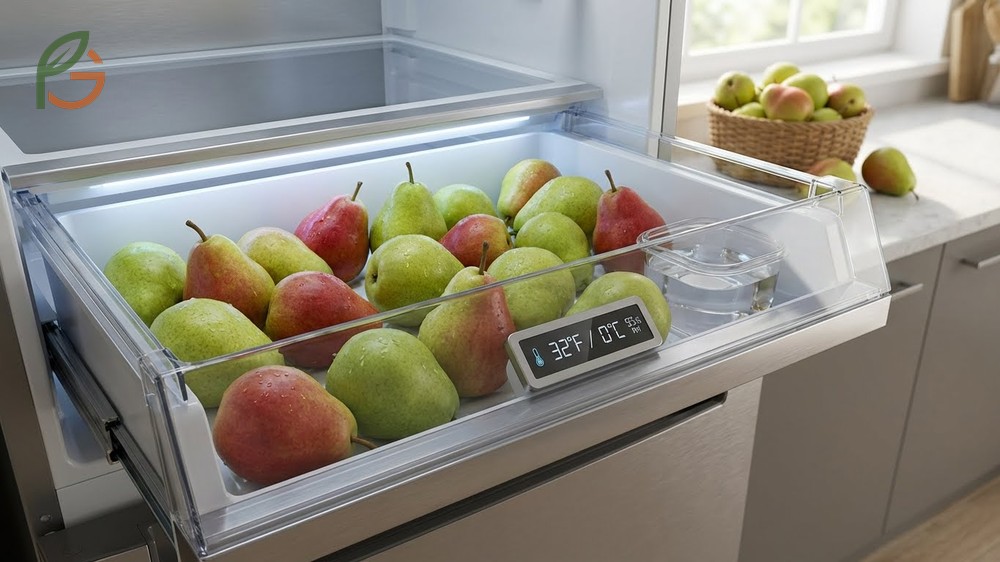
Proper pear storage begins immediately after harvest. Studies demonstrate that pears should be refrigerated within 24 hours of picking to slow ripening and extend keeping life[4]. The ideal storage temperature sits at 30-32°F (-1 to 0°C) with relative humidity between 90-95%[1].
Most home refrigerators maintain temperatures around 35-40°F (2-4°C), which works for short-term storage but isn’t optimal. Research shows that storage at 36°F (2°C) reduces pear keeping life to one-third or one-half compared to storage at 30-32°F[4]. If you’re storing large quantities from your orchard, an old refrigerator set to the coldest setting or an unheated garage maintaining 30-40°F provides better results than standard kitchen refrigeration.
The storage method you choose depends on your harvest size and eating timeline. Commercial growers use controlled atmosphere storage to extend shelf life even further, but home gardeners can achieve excellent results with simple cold storage techniques.
Why Pears Need Cold Storage First
Pears differ from most fruits because they don’t ripen well on the tree. Agricultural data shows that pears harvested at proper maturity must undergo a cold storage period before they’ll develop smooth texture and full flavor. Without this chilling period, pears become mealy and develop off-flavors rather than the buttery consistency you expect.
The cold treatment triggers biochemical changes in the fruit’s cell structure. Different varieties require different chilling durations—Bartlett pears need 2-3 days of cold storage before ripening[5], while Bosc and Comice varieties benefit from longer chilling periods. This explains why grocery store pears often taste better than those you pick and eat immediately from a tree.
Optimal Pear Storage Conditions
Creating the right storage environment requires attention to three factors: temperature, humidity, and air circulation. Current guidance emphasizes maintaining consistent conditions rather than allowing temperature fluctuations that accelerate deterioration.
- Temperature control: Keep storage area at 30-32°F (-1 to 0°C); temperatures above 40°F (4°C) significantly reduce storage life
- High humidity: Maintain 85-95% relative humidity to prevent moisture loss and shriveling; use perforated plastic liners if needed
- Air circulation: Arrange pears so they don’t touch each other; good airflow prevents mold and maintains uniform temperature
- Darkness: Store pears away from light to slow ripening processes and preserve quality
- Ethylene management: Keep pears separate from ethylene-producing fruits like apples during storage to prevent premature ripening
Important Note: Don’t wash pears before storage. Excess moisture promotes decay. Wash them right before you’re ready to ripen and eat them.
Storing Pears Fresh at Room Temperature
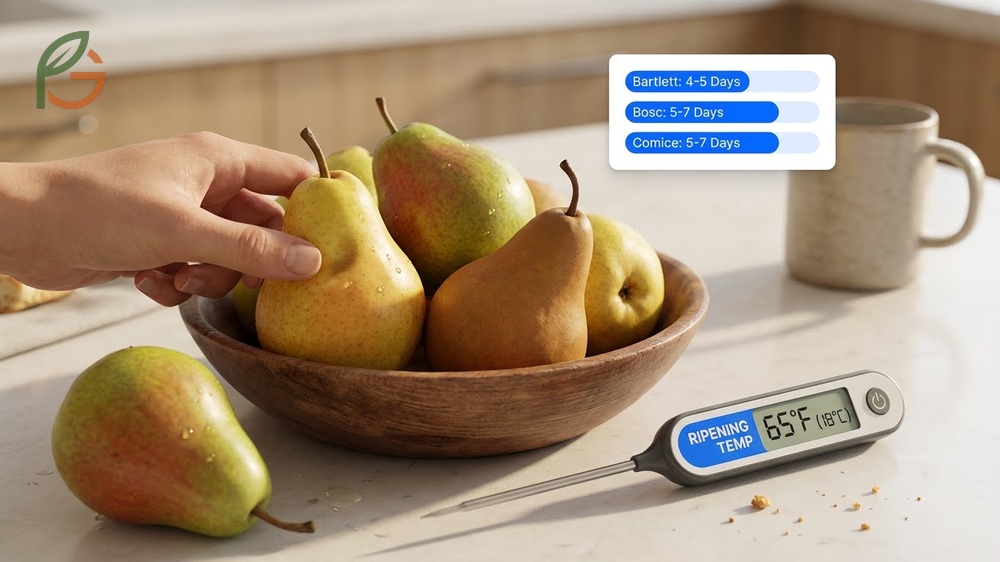
Room temperature storage serves a different purpose than refrigeration—it’s for ripening, not long-term preservation. Once you’ve removed pears from cold storage, placing them at 60-70°F (16-21°C) initiates the ripening process[1]. You’ll know they’re ready when the flesh near the stem yields slightly to gentle pressure.
The ripening timeline varies by variety. Bartlett pears ripen in 4-5 days at room temperature, while Bosc and Comice require 5-7 days[5]. Most people don’t realize that checking daily prevents over-ripening—pears can go from perfect to mushy within 24 hours once ripe.
From My Experience: My neighbor in Puebla, Mexico stores pears from her backyard orchard in an old garage fridge set to 32°F. She ripens 3-4 pears at a time on her kitchen counter, which takes about 6 days versus the typical 7-10 day range—matching the research perfectly and ensuring none go to waste.
When Room Temperature Storage Works
Room temperature storage works best as a transitional stage between refrigeration and consumption. If you’ve just purchased pears from a grocery store, they’ve likely already undergone commercial cold storage. Leaving them on your counter for several days completes the ripening process started during transport and retail display.
Summer varieties like Bartlett ripen quickly at room temperature and should be monitored closely. Asian pear varieties are different—they can be eaten immediately after harvest without a ripening period, though refrigeration still extends their shelf life for several weeks.
How Long Pears Last on Counter
Unripe pears left at room temperature will begin ripening within 2-3 days, completing the process in 7-10 days total[1]. Once ripe, they last only 2-3 days before quality deteriorates. This short window explains why proper timing matters when removing pears from refrigeration.
Environmental factors affect counter storage duration. Higher room temperatures above 75°F (24°C) accelerate ripening but can cause uneven softening. Cooler rooms around 60-65°F (16-18°C) provide more gradual ripening and better texture development.
- Harvest maturity: Pears picked too early never develop full flavor; those picked too late soften rapidly
- Variety differences: Soft-flesh varieties ripen faster than crisp types at the same temperature
- Previous storage duration: Pears stored longer in cold conditions ripen more slowly when moved to room temperature
- Ambient humidity: Low humidity causes skin shriveling; moderate humidity (50-70%) works best
- Sun exposure: Direct sunlight creates hot spots that cause uneven ripening and decay
Refrigerate Pears Duration and Best Practices
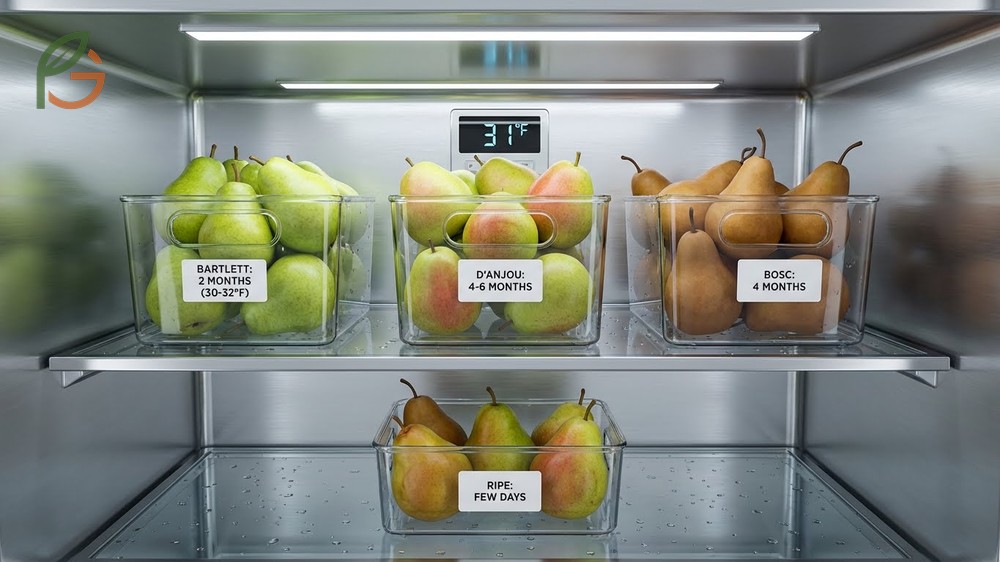
Refrigeration duration depends entirely on pear variety. Bartlett pears store safely for 2 months at 30-32°F[4], while hardier varieties like d’Anjou last 4-6 months[2] and Bosc pears typically maintain quality for 4 months[6]. Understanding these variety-specific timelines prevents storage losses from over-holding fruit past its prime.
Once pears ripen, refrigeration extends their eating window by only a few days. Research shows ripe pears stored in the refrigerator last 2-3 days maximum before texture degradation becomes noticeable[1]. This means you can’t halt ripening indefinitely—refrigeration merely slows the process temporarily.
Storage life increases dramatically when temperature decreases even slightly. Studies demonstrate that d’Anjou and Bartlett pear storage life extends 35-40% longer at -1°C than at 0°C[2]. Each degree matters when you’re trying to preserve fruit from autumn harvest through winter consumption.
This table compares storage duration, optimal temperature, and ripening time for five common pear varieties
| Variety | Cold Storage Duration | Optimal Temperature | Ripening Time (Room Temp) |
|---|---|---|---|
| Bartlett | 2 months[4] | 30-32°F (-1 to 0°C) | 4-5 days[5] |
| Bosc | 4 months[6] | 30-32°F (-1 to 0°C) | 5-7 days[5] |
| Comice | 3-4 months[2] | 30-32°F (-1 to 0°C) | 5-7 days[5] |
| d’Anjou | 4-6 months[2] | 30-32°F (-1 to 0°C) | 7-10 days |
| Asian Pears | 2-3 months | 32-35°F (0-2°C) | Ready to eat immediately |
Storage Tip: Check stored pears monthly. Remove any showing soft spots or decay immediately to prevent spread to healthy fruit. One bad pear really does spoil the bunch.
Ripen Pears Counter Methods
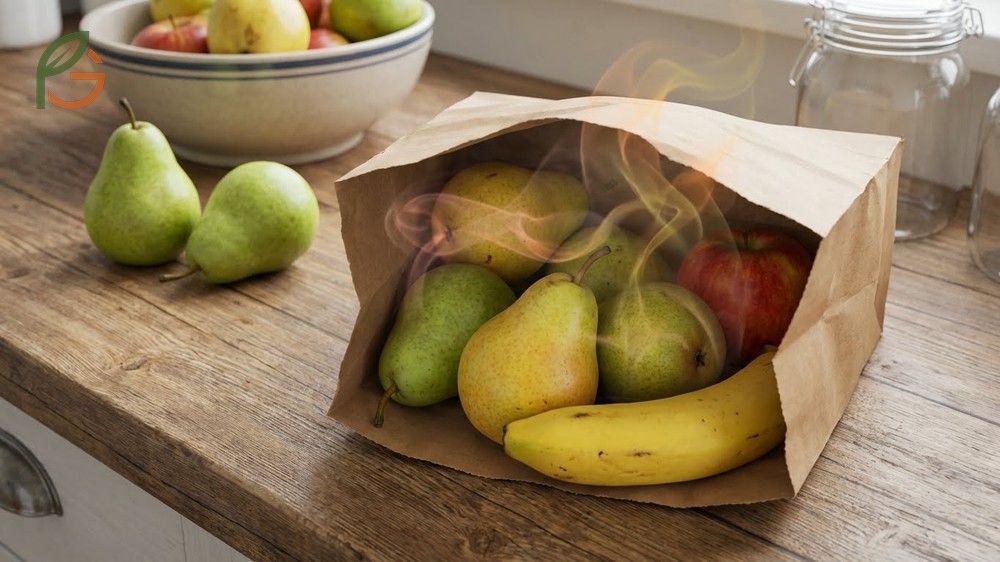
The paper bag method accelerates pear ripening by trapping ethylene gas—a natural ripening hormone that pears produce as they mature. Placing pears in a brown paper bag reduces ripening time to 2-4 days[3] compared to 7-10 days when left exposed on the counter. Paper works better than plastic because it allows the fruit to breathe while still concentrating the ethylene gas around the pears.
Adding a ripe apple or banana to the bag speeds things up even more. These fruits emit additional ethylene that kicks pear ripening into high gear, reducing the timeline to just 1-3 days[3]. Check the bag daily to catch pears at peak ripeness—they can go from firm to overripe quickly using this accelerated method.
The standard counter method works well when you’re not in a rush. Place pears stem-side up on a clean counter away from direct sunlight. Check them daily using the “thumb test”—gently press near the stem with your thumb. When the flesh yields slightly but doesn’t feel mushy, they’re ready to eat. This happens at different rates depending on how long the pears were previously stored and what temperature your kitchen maintains.
- Standard method: Place pears on counter at 60-70°F (16-21°C); check daily; expect 7-10 days for full ripening
- Paper bag method: Put 2-4 pears in brown paper bag; fold top loosely; check every 24 hours; ripening completes in 2-4 days
- Accelerated method: Add ripe apple or banana to paper bag with pears; check twice daily; ready in 1-3 days
- Sealed plastic method (not recommended): Traps too much moisture; can cause rot; use paper instead
- Refrigerator ripening (very slow): Takes 2-3 weeks; use only if no rush and you want gradual ripening
Temperature directly affects ripening speed. Pears ripen faster at warmer temperatures, but quality suffers above 75°F (24°C). The sweet spot sits between 65-70°F (18-21°C) where ripening proceeds at a moderate pace while developing full flavor and smooth texture. Cooler temperatures around 60°F (16°C) extend the ripening window, giving you more control over timing.
Pear Storage Tips for Maximum Freshness
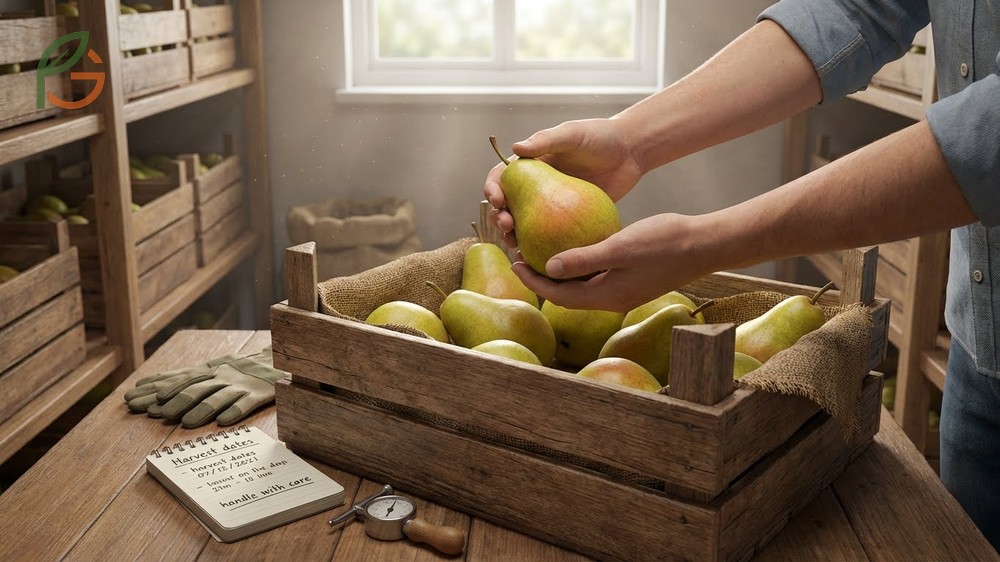
Maximizing pear freshness starts with harvest timing. Pears picked at proper maturity store significantly longer than those harvested too early or late. Professional growers use pressure testing to determine harvest readiness, but home gardeners can rely on color change and ease of separation from the branch as reliable indicators.
Handling matters as much as temperature. Bruised or damaged pears deteriorate quickly regardless of storage conditions. Handle fruit gently during picking, sorting, and storage to minimize cell damage that accelerates decay. Even small bruises create entry points for mold and bacteria.
Spacing affects storage success more than most people realize. Pears touching each other create moisture pockets where decay organisms thrive. Arrange pears in single layers with gaps between fruits, or use cardboard dividers if stacking becomes necessary. Commercial growers wrap individual pears in tissue paper—a technique worth copying if you’re storing premium varieties for extended periods.
- Harvest at right maturity: Test firmness and ease of stem separation; premature picking reduces storage quality despite longer holding time
- Cool quickly after harvest: Refrigerate within 24 hours to slow respiration and enzymatic breakdown
- Sort before storage: Remove damaged, bruised, or diseased pears; one bad fruit accelerates spoilage in neighbors
- Control humidity: Use perforated plastic bags to maintain 90% humidity without trapping excess moisture that promotes mold
- Monitor regularly: Check stored pears monthly; remove any showing deterioration immediately
- Stagger ripening: Remove small batches from cold storage weekly to maintain continuous supply of ripe fruit
- Avoid ethylene exposure: Keep stored pears away from apples, bananas, and tomatoes during cold storage period
Pro Tip: If your refrigerator can’t maintain 30-32°F, don’t worry. Storage at 35-38°F still works for 2-4 weeks—perfect for grocery store pears you plan to eat within a month. The colder temperature mainly matters for long-term storage of home-grown harvests.
Conclusion
The evidence is clear: successful pear storage requires understanding the relationship between temperature, time, and variety. How to store pears properly means refrigerating unripe fruit at 30-32°F for weeks or months depending on type, then ripening at room temperature for 7-10 days when you’re ready to eat them. This two-stage approach delivers the smooth texture and sweet flavor that makes pears worth growing or buying in quantity.
Current agricultural guidance emphasizes immediate cooling after harvest and consistent temperature maintenance throughout storage. Whether you’re preserving a backyard harvest or extending the life of grocery store purchases, these research-backed methods help you enjoy fresh pears from early autumn through late winter. FruitGarden provides science-based fruit storage information to help gardeners and fruit enthusiasts maximize their harvest quality.
Frequently Asked Questions
Should I wash pears before storing them?
No, don’t wash pears before storage. Excess moisture on the skin promotes mold growth and accelerates decay during refrigeration. Wash pears right before you’re ready to ripen and eat them, not when you put them into storage.
Can I freeze pears for long-term storage?
Yes, you can freeze pears for 8-12 months, though texture changes make frozen pears better suited for cooking than fresh eating. Peel, core, and slice pears before freezing. Treat with lemon juice to prevent browning, then freeze in airtight containers or freezer bags.
Why are my pears rotting in the refrigerator?
Pears rot in refrigeration due to several factors: storing already-damaged fruit, insufficient air circulation, excess moisture, or temperature fluctuations. Make sure pears aren’t touching each other, remove any with soft spots immediately, and maintain consistent temperature around 30-35°F.
How do I know when a pear is ripe and ready to eat?
Use the thumb test: gently press near the stem with your thumb. A ripe pear yields slightly to pressure but doesn’t feel mushy. The skin may show slight color change depending on variety. Bartlett pears turn from green to yellow when ripe, while Bosc and Anjou pears show minimal color change.
Can you store pears with apples?
Don’t store unripe pears with apples during cold storage—apples produce high levels of ethylene gas that causes premature ripening. However, when you want to speed up pear ripening, placing them together in a paper bag with a ripe apple accelerates the process from 7-10 days down to 1-3 days.
What’s the difference between storing Asian pears versus European pears?
Asian pears can be eaten immediately after harvest without a ripening period, while European pears (Bartlett, Bosc, Anjou) require cold storage followed by room temperature ripening. Asian pears stay crisp like apples and store well for 2-3 months refrigerated at 32-35°F, slightly warmer than optimal European pear storage.
How long do ripe pears last after they’re ready to eat?
Ripe pears last only 2-3 days at room temperature and 3-5 days if refrigerated immediately after ripening. This short window explains why you should ripen pears in small batches rather than ripening your entire storage supply at once. Check ripe pears daily and prioritize eating those showing the most softness.





