
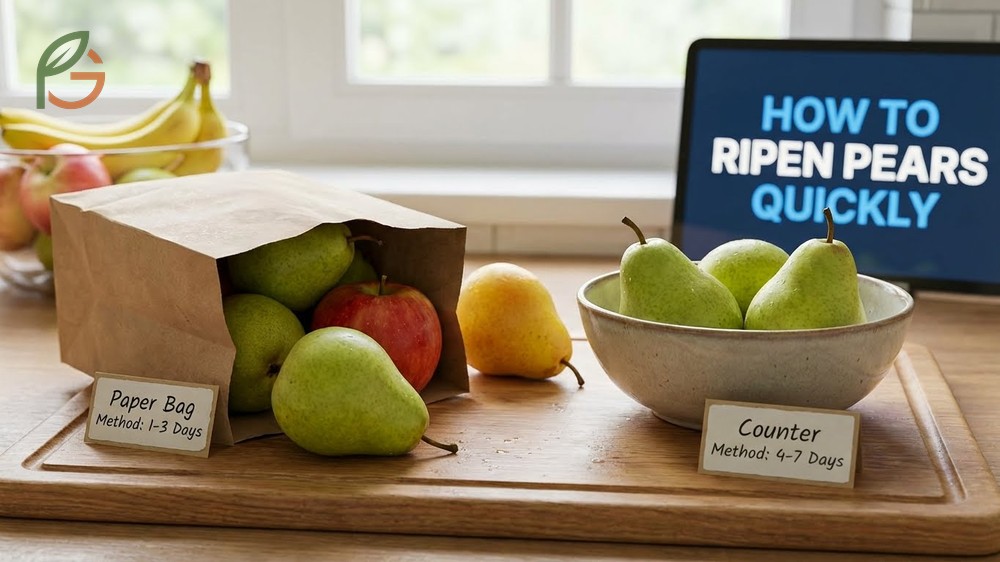
How to ripen pears? Pears ripen fastest using the paper bag method with ripe apples or bananas, taking just 1-3 days compared to 4-7 days on the counter alone[1]. Research shows that pears naturally produce ethylene gas, and trapping this gas in a paper bag accelerates the ripening process significantly[2]. FruitGarden provides research-based guidance on optimal ripening techniques and storage methods to help you enjoy perfectly ripe pears every time.
Quick Answer
- Paper bag with ripe apple or banana: 1-3 days[1]
- Paper bag alone: 2-4 days[1]
- Counter ripening: 4-7 days[1]
- Store ripe pears at 30-32°F (−1 to 0°C) to prevent over-ripening[3]
How to Ripen Pears
Pears are unique among fruits because they don’t ripen properly on the tree. They’re picked at full size but unripe, then require off-tree ripening to develop their characteristic sweet, juicy texture[4]. This process relies on ethylene gas, a natural ripening hormone that pears produce as they mature.
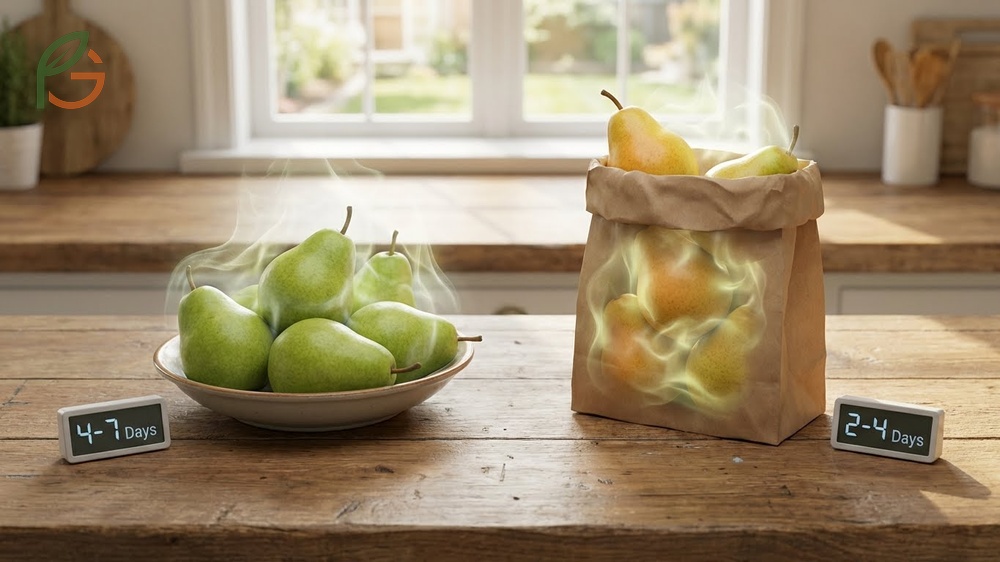
The ripening timeline varies based on your method. Leaving pears on the counter at room temperature takes 4-7 days, while using a paper bag reduces this to 2-4 days[1]. What determines the speed is how much ethylene gas surrounds the fruit during ripening.
Different pear varieties require different ripening approaches after cold storage. Bartlett pears need 1-2 days of cold storage before ripening, while winter varieties like Anjou and Bosc require 2-6 weeks of refrigeration to ripen properly[5]. Without this cold period, winter pears won’t develop their full flavor and texture.
Understanding Ethylene Gas
Ethylene gas is the key to ripening pears at home. Like bananas and avocados, pears naturally release this ripening hormone as they mature[2]. The more ethylene that surrounds the fruit, the faster it ripens.
Placing pears near other ethylene-producing fruits like apples, bananas, or avocados speeds up the process. These fruits emit additional ethylene gas that triggers ripening in nearby pears[2]. This is why the paper bag method works so effectively—it traps ethylene in a confined space.
Commercial operations use controlled ethylene application at 100-150 PPM (parts per million) with fruit pulp temperatures at 65°F (18.3°C) for 24-72 hours[6]. While you won’t replicate these exact conditions at home, understanding this principle helps you create an ethylene-rich environment using simple household methods.
Checking the Neck for Ripeness
The “Check the Neck” method is the most reliable way to test pear ripeness. Apply gentle pressure to the narrow part of the pear near the stem with your thumb[4]. If it yields to gentle pressure, the pear is ripe, sweet, and ready to eat.
Don’t judge ripeness by pressing the wider bottom part of the pear. That area can feel soft even when the fruit isn’t fully ripe inside. The neck is where ripening happens last, making it the best indicator of overall readiness.
Check your pears daily once you’ve started the ripening process. Pears can go from perfectly ripe to overripe quickly, especially when using accelerated methods[1]. This daily check prevents spoilage and ensures you catch them at peak flavor.
How to Ripen Pears Quickly
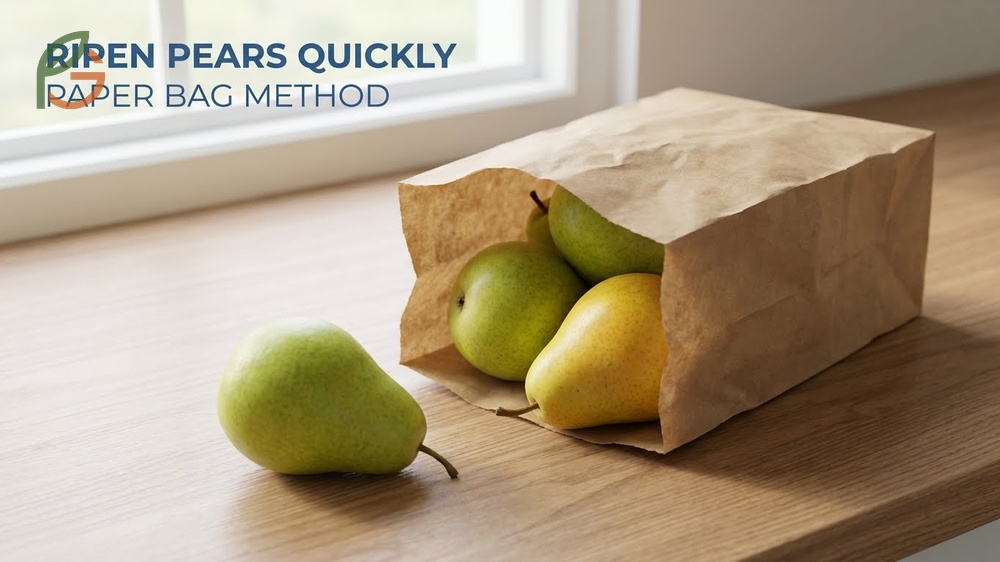
When you need ripe pears fast, the paper bag method delivers results in a fraction of the time. This technique concentrates ethylene gas around the fruit, creating an accelerated ripening environment that’s both effective and consistent.
The key difference between methods is ethylene concentration. Counter ripening exposes pears to ambient air where ethylene disperses, while paper bags trap the gas near the fruit[2]. Paper is preferred over plastic because it allows the fruit to breathe while still containing ethylene.
Current research confirms that combining ethylene-producing fruits in an enclosed space multiplies the ripening effect. This is why adding an apple or banana to your paper bag reduces ripening time by roughly 50% compared to using the bag alone[1].
Paper Bag Method
Place your pears in a brown paper bag and fold the top loosely to close it. Leave the bag at room temperature on your kitchen counter[1]. This method typically ripens pears in 2-4 days.
Don’t use plastic bags for ripening. Plastic doesn’t breathe, which can cause condensation buildup and lead to spoilage rather than proper ripening[1]. The natural gases produced by the pears need some air circulation even as they’re being concentrated.
Check your pears daily by opening the bag and testing the neck. Remove any pears that have ripened to prevent them from becoming overripe or affecting others in the bag.
Important Note: Room temperature should be around 60-70°F (15-21°C) for optimal ripening[3]. Temperatures outside this range can slow ripening or cause uneven texture development.
Fastest Method with Apples and Bananas
Add a ripe apple or banana to your paper bag with the pears for the fastest ripening method. This combination ripens pears in just 1-3 days[1]. The additional ethylene from the apple or banana doubles the gas concentration around your pears.
Ripe apples and bananas are particularly effective ethylene producers. A single ripe banana can emit enough ethylene to ripen multiple pears simultaneously[7]. Make sure the apple or banana you use is already ripe—unripe fruits produce less ethylene.
Check your pears even more frequently with this method. The accelerated ripening means pears can go from firm to overripe in less than 24 hours once they start softening. Test the neck every 12 hours after day one.
- Choose a brown paper bag large enough for your pears and one apple or banana
- Place unripe pears in the bag with one ripe apple or ripe banana
- Fold the top of the bag loosely to trap ethylene while allowing minimal air circulation
- Leave at room temperature (60-70°F / 15-21°C) on your counter
- Check the neck every 12-24 hours starting after day one
- Remove pears immediately once they yield to gentle pressure at the neck
- Transfer ripe pears to refrigerator to slow further ripening
How to Store Pears
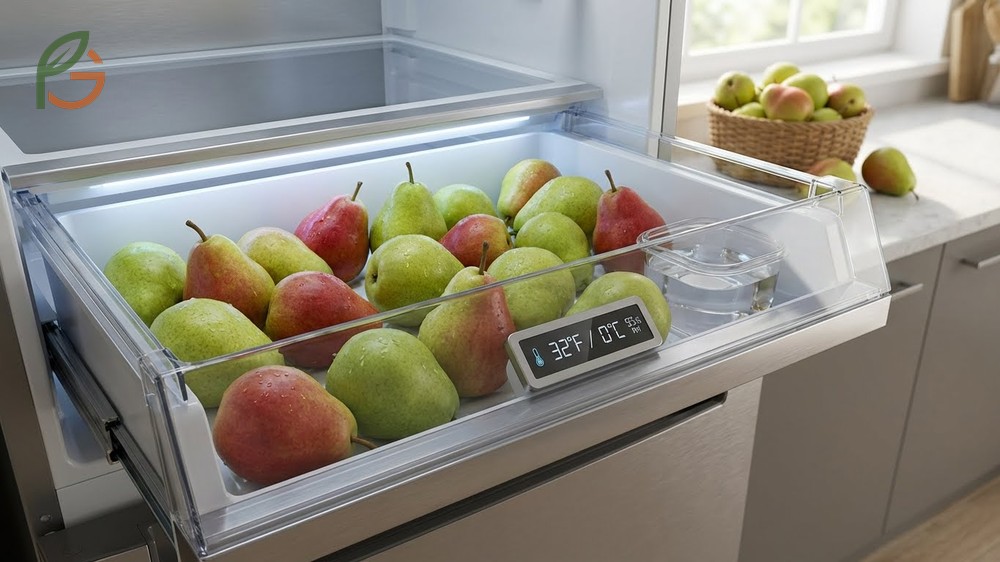
Proper storage determines whether your pears last days or months. Temperature is the critical factor—cold storage at 30-32°F (−1 to 0°C) with 85-90% humidity preserves pears for extended periods[5].
Different varieties have different storage capabilities. Bartlett pears store for 2-3 months at proper temperature, while winter varieties like Anjou, Bosc, and Comice last 3-5 months[5]. This makes winter pears ideal if you’re planning long-term storage.
Once ripe, pears last about one week in the refrigerator when stored in the crisper drawer[8]. Use a paper bag or perforated container to maintain proper humidity while preventing bruising. Keep them away from foods with strong odors since pears absorb smells easily.
Cold Storage for Winter Pears
Winter pear varieties need cold storage before they’ll ripen properly. Store them at 30-32°F (−1 to 0°C) for a minimum chill period before attempting to ripen them[5]. Without this cold period, they won’t develop proper texture or sweetness.
The minimum chill times vary by variety. Bartletts need just 1-2 days, while Anjou, Bosc, and Comice require 2-6 weeks of cold storage[5]. After this cold period, move them to room temperature to complete the ripening process.
Store pears in a spare refrigerator, cold basement, root cellar, or unheated shed that stays above freezing. Temperatures between 35-45°F (2-7°C) work for shorter-term storage, though colder is better for months-long preservation[9].
Storage Warning: Any temperature below 30°F (−1°C) will damage the fruit through freezing, while temperatures above 32°F (0°C) speed up ripening and reduce storage life[5]. Monitor your storage area carefully if using non-refrigerated spaces.
Counter vs Fridge Storage
Unripe pears belong on the counter at room temperature where they can complete the ripening process. Store them in a cool, dry spot with good airflow, avoiding stacking them too high[10]. This typically takes 4-7 days for full ripening.
Once pears ripen, immediately move them to the refrigerator to slow further ripening and prevent over-ripening. Ripe pears last about one week in the fridge’s crisper drawer when stored properly[8]. Use paper bags rather than plastic to maintain humidity while allowing air circulation.
Never refrigerate unripe pears unless you’re planning long-term cold storage for winter varieties. Cold temperatures halt the ripening process, meaning an unripe pear placed in the fridge will stay hard indefinitely without completing its flavor development.
- Store unripe pears at room temperature (60-70°F / 15-21°C) until the neck softens
- Keep unripe pears in a single layer with space between them for air circulation
- Move pears to refrigerator immediately once they ripen to slow further softening
- Store ripe pears in the crisper drawer in a paper bag or perforated container
- Keep pears away from strong-smelling foods in the refrigerator to prevent odor absorption
- Use ripe refrigerated pears within one week for best quality
How to Ripen Bartlett Pears
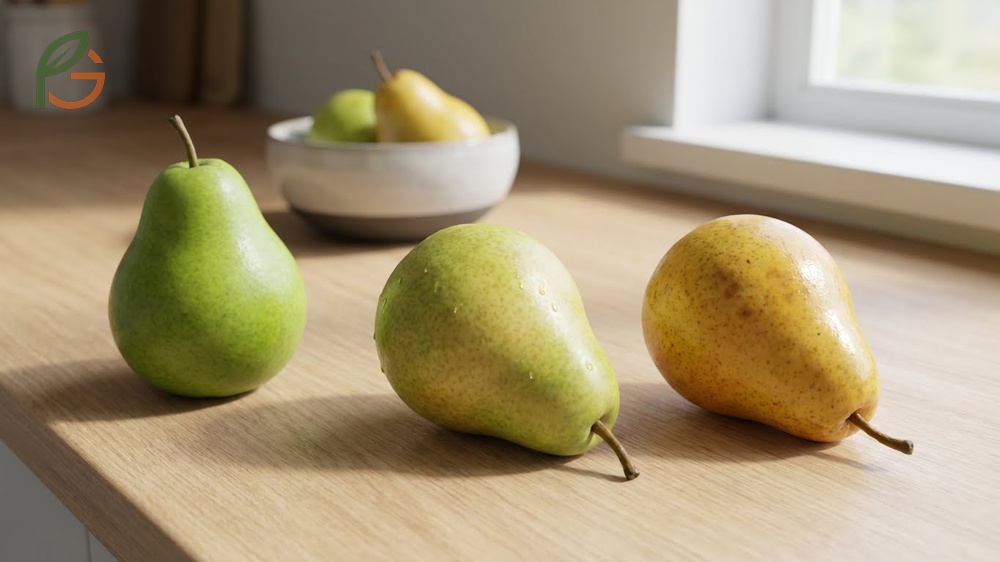
Bartlett pears are unique because they change color as they ripen, going from green to yellow[11]. This visual cue makes them easier to monitor than other varieties that stay green when ripe. A green Bartlett will soften and turn yellow if left on the counter for 1-2 days.
Bartlett pears ripen faster than winter varieties after harvest. They need only 1-2 days of cold storage before room-temperature ripening, compared to the 2-6 weeks required by Anjou or Bosc[5]. This makes them ideal for quick use after purchase.
California harvests Bartlett pears in July and August, delivering fresh crops during summer months[11]. These pears often arrive at stores slightly hard and green, allowing you to ripen them at home according to when you plan to eat them. This flexibility reduces food waste.
To ripen Bartlett pears quickly, use the paper bag method with a ripe apple. The combination of the Bartlett’s natural ethylene production and the apple’s additional gas ripens them in 1-2 days once they’ve completed their minimal cold storage requirement. Check the neck daily and watch for the color change from green to yellow.
Bartlett Ripening Tip: After the longer a Bartlett pear has been in cold storage, the faster it’ll ripen once removed[5]. Store-bought Bartletts that have been refrigerated for weeks may ripen in just 24 hours at room temperature.
Preventing Over-Ripening
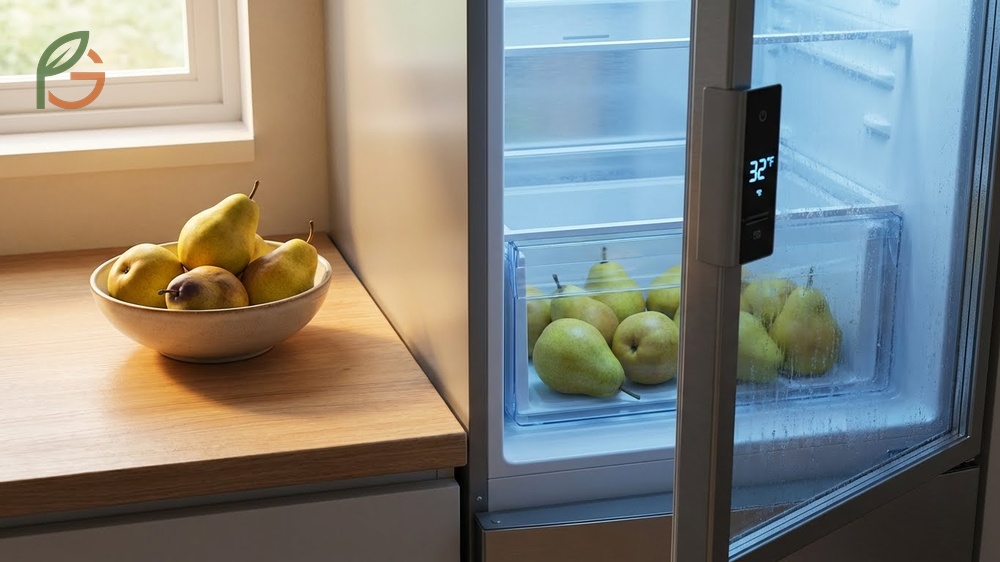
Over-ripening happens when pears continue to soften past their peak, becoming mushy and losing flavor. The window between perfectly ripe and overripe can be as short as 24 hours, especially with accelerated ripening methods[1]. Daily checking prevents this problem.
Once pears ripen, they continue producing ethylene and will keep softening at room temperature. Moving ripe pears to the refrigerator immediately drops the temperature to 30-32°F (−1 to 0°C), which dramatically slows enzymatic activity and extends shelf life to about one week[3].
Ripe pears are easily bruised, making gentle handling essential. Store them in the crisper drawer in a container that prevents bumping and bruising[10]. Bruised areas accelerate spoilage and produce off-flavors that affect the entire fruit.
If you’re ripening multiple pears simultaneously, remove each one as it reaches peak ripeness rather than waiting for all of them. Pears in the same bag or bowl can ripen at different rates depending on their initial firmness. This staggered removal ensures each pear is enjoyed at its best.
- Check the neck daily once pears start ripening to catch peak ripeness
- Transfer pears to refrigerator (30-32°F / −1 to 0°C) immediately when ripe
- Remove individual pears from the ripening bag as each one reaches optimal softness
- Handle ripe pears gently to prevent bruising that accelerates spoilage
- Store ripe pears in perforated containers or paper bags to maintain humidity without trapping excess moisture
- Use ripe refrigerated pears within one week before quality declines
Conclusion
The evidence is clear: how to ripen pears successfully depends on controlling ethylene gas exposure and temperature. Using the paper bag method with ripe apples or bananas reduces ripening time from a week to just 1-3 days, while proper cold storage at 30-32°F (−1 to 0°C) preserves pears for 2-5 months depending on variety.
Current agricultural guidance emphasizes checking the neck for ripeness rather than relying on color or feel elsewhere on the fruit. This simple test, combined with daily monitoring during ripening, prevents over-ripening and ensures you catch pears at peak flavor. FruitGarden provides science-based fruit cultivation and storage information to help gardeners and fruit enthusiasts maximize quality and minimize waste.
Frequently Asked Questions
How do you ripen pears overnight?
You can’t fully ripen pears overnight from a completely unripe state, but you can accelerate ripening to 1-3 days by placing pears in a paper bag with a ripe apple or banana[1]. If pears are already close to ripe, this method may finish ripening them within 12-24 hours.
Can you ripen pears off the tree?
Yes, pears must ripen off the tree to develop proper texture and sweetness[4]. Pears are picked at full size but unripe, then complete ripening at room temperature through natural ethylene gas production. This is why store-bought pears are typically firm.
How long do pears take to ripen at room temperature?
Pears take 4-7 days to ripen at room temperature on the counter[1]. You can reduce this to 2-4 days using a paper bag alone, or 1-3 days by adding a ripe apple or banana to the bag. Room temperature should be around 60-70°F (15-21°C) for optimal ripening.
What temperature should pears be stored at to prevent ripening?
Store pears at 30-32°F (−1 to 0°C) with 85-90% humidity to prevent ripening and preserve them for 2-5 months depending on variety[5]. Any warmer than 32°F (0°C) will allow ripening to continue, while temperatures below 30°F (−1°C) will damage the fruit through freezing.
How do you know when a pear is ripe?
Apply gentle pressure to the neck (narrow part near the stem) with your thumb[4]. If it yields to gentle pressure, the pear is ripe and ready to eat. Don’t judge by pressing the bottom of the pear, as that area can feel soft even when the fruit isn’t fully ripe inside.
Do Bartlett pears ripen faster than other varieties?
Yes, Bartlett pears ripen faster than winter varieties like Anjou, Bosc, and Comice. Bartletts need only 1-2 days of cold storage before ripening, while winter pears require 2-6 weeks[5]. Bartletts also change from green to yellow as they ripen, providing a visual ripeness indicator.
Should you refrigerate ripe pears?
Yes, refrigerate ripe pears immediately to slow further ripening and prevent over-ripening. Store them in the crisper drawer in a paper bag or perforated container where they’ll last about one week[8]. Never refrigerate unripe pears unless you’re doing long-term cold storage, as cold temperatures halt the ripening process.





