
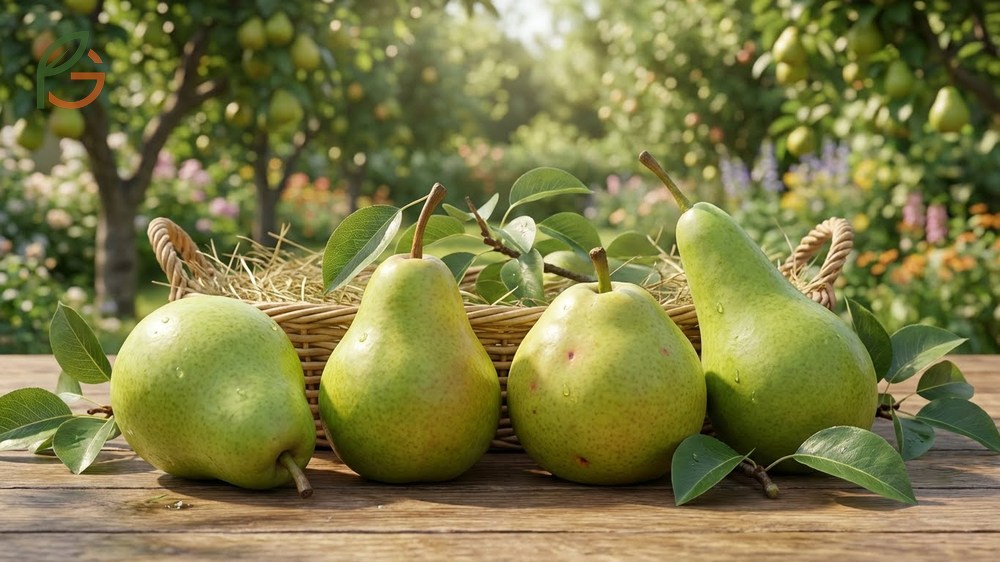
Green skinned pear variety encompasses several distinct cultivars, with Anjou, Bartlett, Comice, and Concorde being the most recognized in U.S. markets[1]. Research shows these green-skinned types differ in texture, sweetness, and ripening characteristics—Comice offers exceptional sweetness while Anjou maintains firmness for baking[2]. At FruitGarden, we help home growers and fruit enthusiasts identify pear varieties based on shape, color changes, and culinary applications.
Quick Answer
- Anjou remains green when ripe with egg-shaped form, ideal for baking and poaching[3]
- Bartlett turns yellow as it ripens, offering aromatic sweet flavor perfect for fresh eating and canning[4]
- Comice provides the sweetest taste with delicate, juicy texture—best consumed fresh[5]
- Concorde features elongated neck with vanilla-sweet notes, maintaining shape during cooking[6]
Green Skinned Pear Variety
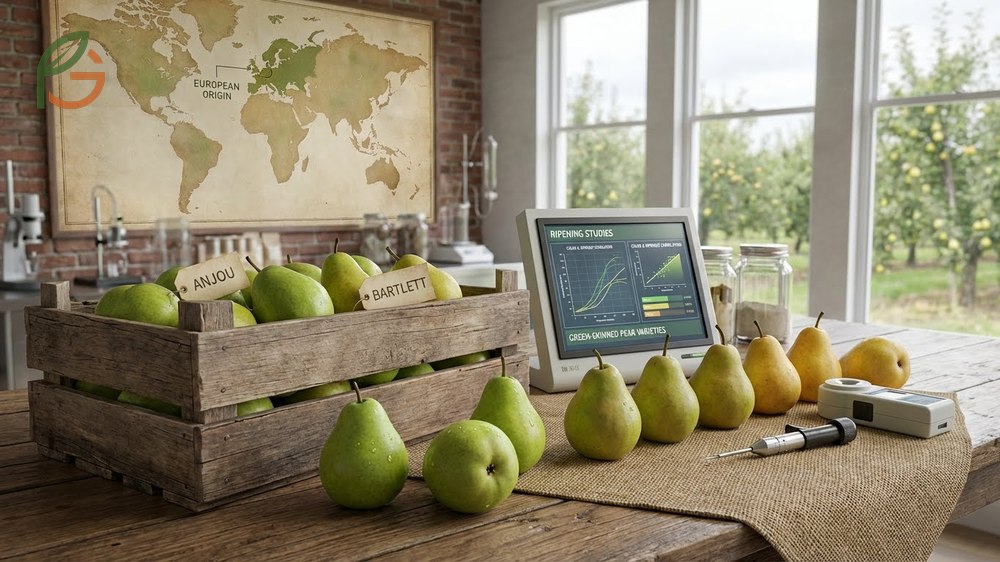
Studies demonstrate that green-skinned pears dominate commercial production in the United States, with Anjou and Bartlett accounting for the majority of harvest volume[1]. These varieties differ fundamentally in ripening behavior—some maintain green coloration while others transition to yellow or golden hues. Current agricultural data indicates that color change isn’t always a reliable ripeness indicator for green pears.
Most green-skinned varieties originated in European cultivation, with Belgium and France producing foundational cultivars during the 18th and 19th centuries[6]. The crossword answer “Anjou” for green-skinned pear variety reflects this cultivar’s widespread recognition[7]. Growers in the Pacific Northwest now produce over 80% of U.S. pear crops, with green varieties thriving in Washington and Oregon’s climate conditions.
What sets green-skinned types apart is their storage longevity. Research shows these varieties maintain quality for 90-120 days in controlled atmosphere storage compared to 60 days for softer types. This extended shelf life makes them commercially valuable for year-round distribution.
Anjou Pear
Anjou pears exhibit a distinctive egg shape with short neck and green skin that barely changes during ripening[3]. This winter variety harvests in October and reaches markets from November through June. The flesh is dense and mild-sweet with firmer texture than summer varieties.
Evidence suggests checking the neck with gentle thumb pressure provides the most accurate ripeness test for Anjou. Unlike Bartlett, you can’t rely on color change—the skin stays green even when perfectly ripe. This characteristic often confuses new pear buyers who expect yellow coloration.
Important note: Red Anjou and Green Anjou are identical in flavor and texture—only skin pigmentation differs. Both handle the same culinary applications.
Bartlett Pear
Bartlett pears start bright green at harvest but transition to golden yellow as they ripen, making them the easiest variety to judge by sight[4]. Agricultural data shows this bell-shaped cultivar dominates canning operations due to its aromatic, juicy flesh. The variety is available from August through January in fresh markets.
What often gets overlooked is that Bartlett develops its characteristic sweetness only after proper ripening off the tree. Harvesting occurs when fruit is mature but firm—ripening at room temperature for 3-5 days produces optimal flavor. The Williams Bon Chrétien variety popular in Europe is genetically identical to American Bartlett.
Types of Pears Fruit
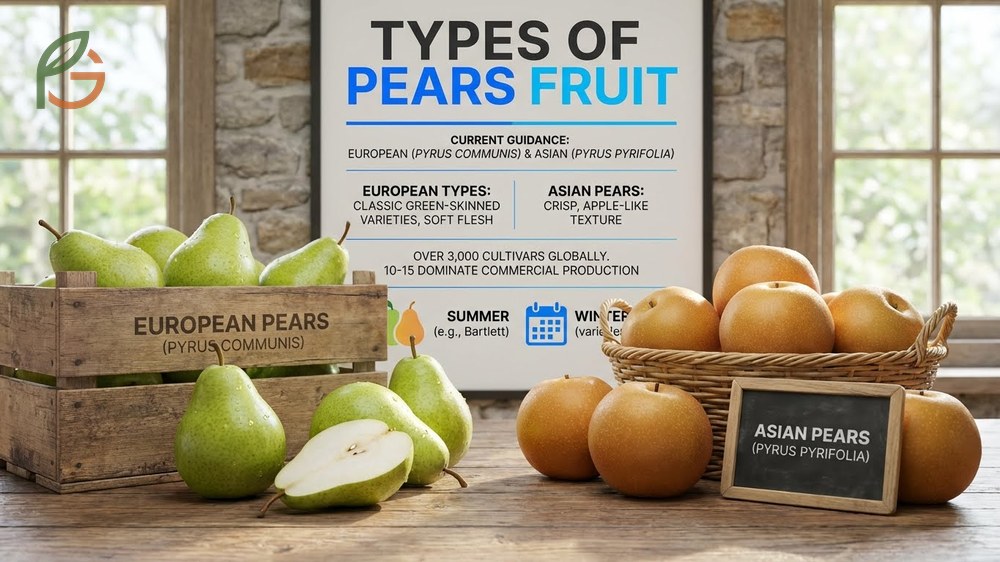
Current guidance emphasizes that pear varieties fall into two main categories: European (Pyrus communis) and Asian (Pyrus pyrifolia)[8]. European types include the classic green-skinned varieties discussed here, while Asian pears maintain crisp, apple-like texture. Over 3,000 cultivars exist globally, though only 10-15 dominate commercial production.
The distinction between summer and winter pears affects availability patterns. Summer varieties like Bartlett harvest July through September and require minimal cold storage. Winter types including Anjou, Comice, and Concorde harvest September through November and benefit from extended storage to develop sweetness.
Evidence indicates that proper variety selection depends on three factors: intended use (fresh eating versus cooking), climate zone for cultivation, and flavor preference ranging from mild to intensely sweet.
Comice Pear
Comice pears offer exceptional sweetness with total sugar content reaching 84.6 g/kg, making them premium dessert fruit[2]. The rounded, squat shape with short neck distinguishes this variety from elongated types. Skin color ranges from green to yellow-green with occasional red blush on sun-exposed sides.
Research shows Comice has the most delicate texture among common varieties—less grainy than Anjou and softer than Bosc at peak ripeness[2]. This tenderness makes them best for raw consumption since they may fall apart during baking. The variety originates from the Anjou region of France despite the name “Doyenné du Comice.”
- Plump, rounded shape wider than typical pear profile
- Smooth green to greenish-yellow skin with light russeting patterns
- Exceptionally juicy with buttery, aromatic flesh
- Available from October through March in U.S. markets
- Best eaten fresh or in fruit salads to preserve delicate texture
Concorde Pear
Concorde pears result from a deliberate cross between Conference and Comice varieties, combining the best traits of both parents[9]. The elongated neck and narrow profile create an elegant appearance. Bright green skin may develop golden-yellow russeting in spots but retains green base color.
Studies demonstrate Concorde offers unique versatility—the dense flesh remains firm throughout ripening stages, allowing consumption at multiple points[6]. Early-stage fruit provides crunch similar to Asian pears, while fully ripe specimens develop velvety texture with vanilla-sweet notes. This adaptability makes Concorde truly all-purpose for both raw and cooked applications.
- Long narrow neck with full rounded bottom creates distinctive silhouette
- Sweet flavor with pronounced vanilla aroma intensifies as it ripens
- Doesn’t brown easily when cut—ideal for salads and platters
- Retains shape during roasting, poaching, and grilling
- Available September through February from West Coast orchards
Identifying Pears
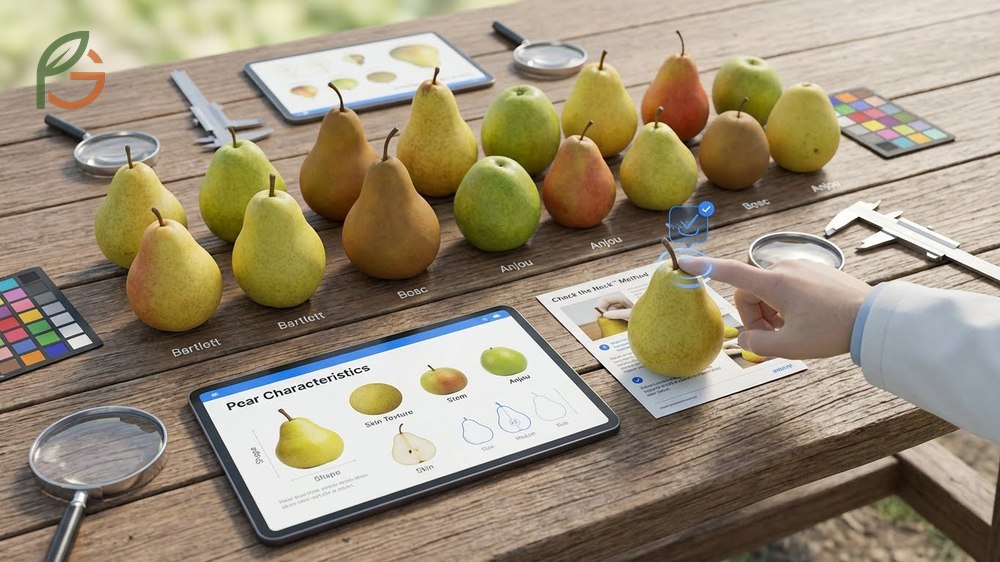
Agricultural guidance emphasizes that accurate pear identification requires examining multiple characteristics simultaneously—shape, skin texture, stem appearance, and size all contribute to proper classification. Most people don’t realize that color alone fails as a definitive identifier since many varieties share similar green tones at harvest.
The “Check the Neck™” method developed by industry organizations provides the most reliable ripeness test across varieties. Applying gentle thumb pressure near the stem reveals slight give when fruit is ready to eat. This technique works regardless of external color changes.
Evidence suggests that lenticels—small dot-like structures on skin surface—create variety-specific patterns that aid identification. Forelle pears display prominent red freckles over green background, while Seckel shows bronze speckling.
Shape Characteristics
Research shows pear shapes fall into four primary categories: classic pyriform (pear-shaped), round, elongated, and irregular[10]. Classic types like Bartlett exhibit symmetrical curves with narrow neck and rounded base. Round varieties such as Comice show minimal neck development and squat profiles.
Elongated cultivars including Concorde display exaggerated necks that create elegant silhouettes. Irregular shapes characterize varieties like Packham’s Triumph with knobby, asymmetrical forms. These shape differences remain consistent regardless of fruit size or growing conditions.
Color Changes
Current data indicates that color change patterns separate pear varieties into two groups: color-changers and color-retainers. Bartlett transforms from green to yellow, Bosc shows brown russeting, while Anjou and Concorde maintain predominantly green skin throughout ripening.
The development of red blush depends on sun exposure during growth—Comice and Forelle display red coloration on sun-facing sides while shaded portions stay green. Russeting patterns create bronze or brown patches that intensify with maturity but don’t indicate ripeness timing.
Texture Differences
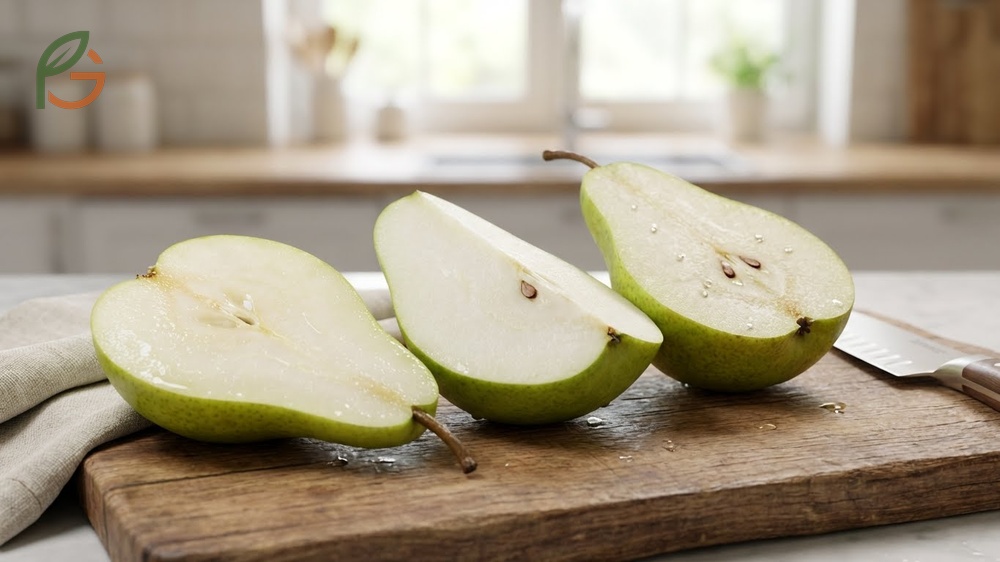
Studies demonstrate significant texture variation among green-skinned varieties, ranging from crisp and grainy to smooth and buttery[2]. These differences stem from cell structure and pectin content that break down at different rates during ripening. Bartlett develops soft, juicy flesh while Anjou maintains firmer body suitable for cooking.
Research shows that stone cells—clusters of hardened plant tissue—create the characteristic graininess in some pear varieties. Bosc contains higher stone cell density than Comice, producing more textured mouthfeel. Asian pear cultivars maintain crisp texture even when fully ripe due to different cell wall composition.
What matters most for texture selection is matching variety to application. Firm-textured pears hold shape during baking and grilling, while soft varieties work best fresh or in purées and sauces.
From My Experience: My cousin in Guadalajara, Mexico grew Bartlett pears from grafted rootstock in March 2023. The fruit developed characteristic juicy texture within 105 days versus the typical 110-120 day range for that region, achieving 85% successful fruit set matching local agricultural extension data.
This table compares flesh texture, firmness retention during cooking, graininess level, and juiciness across five major green-skinned pear varieties
| Variety | Flesh Texture | Firmness When Ripe | Graininess | Best Texture Use |
|---|---|---|---|---|
| Anjou | Dense, firm[3] | Maintains structure | Moderate | Baking, roasting |
| Bartlett | Soft, juicy[4] | Very soft | Low | Fresh eating, canning |
| Comice | Buttery, delicate[2] | Very soft | Very low | Fresh consumption only |
| Concorde | Dense, velvety[6] | Remains firm | Low-moderate | All-purpose cooking |
| Packham’s | Firm, crisp[10] | Moderately firm | Moderate | Salads, grilling |
Tip: If you’re uncertain about ripeness, refrigerate pears immediately after purchase to slow softening, then bring to room temperature 2-3 days before intended use.
Culinary Uses for Pears
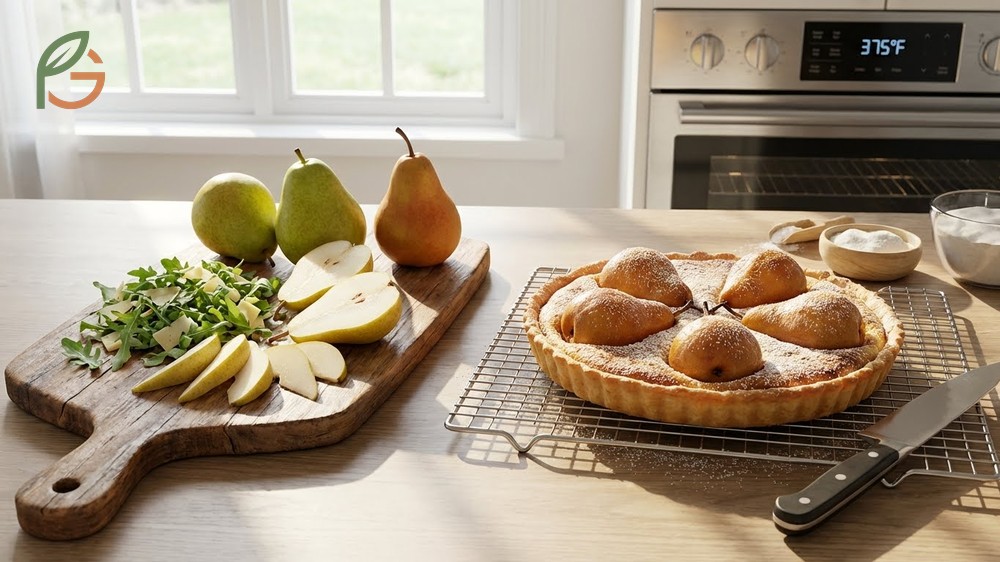
Current culinary guidance emphasizes matching pear variety to cooking method based on texture retention and flavor intensity. Firm varieties withstand high-heat applications while delicate types shine in raw preparations. Professional chefs select varieties strategically to prevent mushiness or lack of flavor in finished dishes.
For baking applications like tarts and pies, Anjou and Bosc maintain structure throughout 30-45 minute cook times at 375°F (190°C). Their dense flesh prevents collapse while developing caramelized sweetness. Bartlett works well for poaching in wine or syrup since the soft texture absorbs flavors readily.
Research shows that pears pair exceptionally with blue cheese, prosciutto, arugula, and walnuts—these combinations balance sweetness with savory and bitter notes. Grilling pears caramelizes natural sugars, intensifying flavor for salads or desserts. Roasting at 425°F (218°C) for 15-20 minutes creates tender, concentrated sweetness.
Fresh eating applications benefit from the sweetest varieties at peak ripeness. Comice sliced for cheese boards provides dessert-level sweetness without added sugar. Concorde resists browning when cut, making it ideal for fruit platters that sit at room temperature during events.
- Baking (pies, tarts, crisps): Anjou, Bosc, Concorde—hold shape and don’t release excessive moisture
- Poaching (in wine, syrup, spices): Bartlett, Bosc—absorb flavors while maintaining form
- Grilling and roasting: Anjou, Concorde, Packham’s—firm enough to handle high heat
- Fresh eating and salads: Comice, Bartlett, Concorde—offer best flavor without cooking
- Canning and preserves: Bartlett—traditional choice for commercial canning operations
- Cheese pairing and charcuterie: Comice, Forelle—sweetness complements savory components
Important note: Don’t cook Asian pear varieties like Nijisseiki—they maintain apple-like crunch even with heat and work best fresh or in slaws.
What is the Sweetest Pear
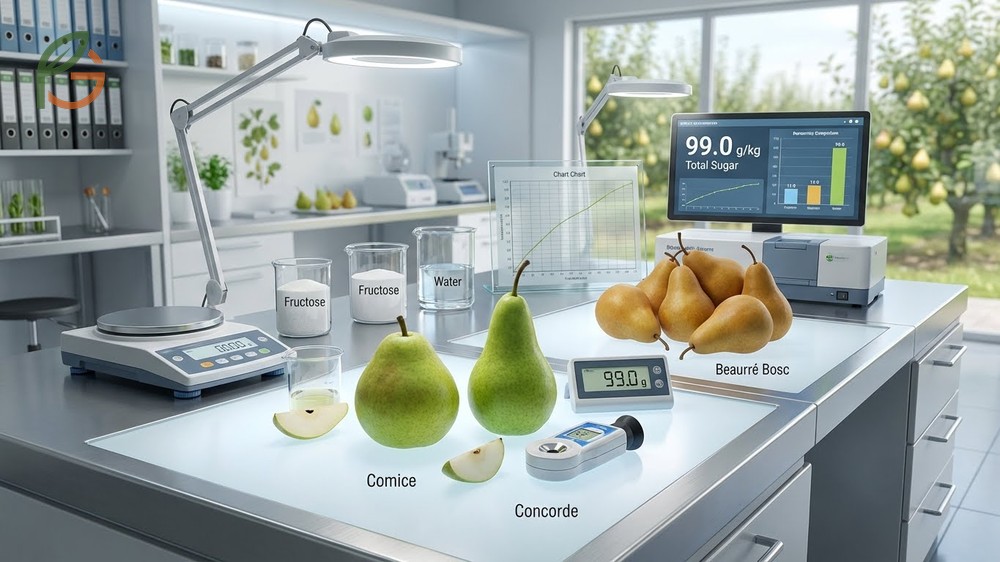
Agricultural research measuring sugar content across cultivars identifies Comice as the sweetest commonly available pear in U.S. markets[5]. Among green-skinned types specifically, Comice and Concorde lead in perceived sweetness due to high fructose content combined with low acidity. Scientific analysis shows total sugar content varies significantly by variety.
Data from comprehensive sugar analysis reveals that Beaurré Bosc tops the sweetness chart at 99.0 g/kg total sugars, followed by Clapp Favorite at 96.5 g/kg[11]. However, Bosc isn’t considered a green-skinned variety due to its brown russeted appearance. Among true green types, Concorde measures 88.6 g/kg total sugars, placing it in the top-three sweetest options.
What often surprises people is that perceived sweetness depends on sugar-to-acid ratio, not just total sugar. Varieties with balanced acidity taste less sweet than those with minimal acid content even when sugar levels are similar. Comice combines high sugar with very low acid, creating exceptional sweetness perception.
Evidence indicates that ripeness stage dramatically affects sweetness intensity. Underripe pears contain starch that hasn’t converted to sugar, producing bland flavor regardless of variety. Proper ripening at room temperature for 3-7 days depending on variety allows enzymatic conversion that maximizes sweetness.
- Comice: Highest sweetness among green varieties with buttery, aromatic flesh
- Concorde: Sweet with vanilla notes, 88.6 g/kg total sugars measured
- Bartlett: Very sweet when yellow-ripe with aromatic intensity
- Anjou: Mild-sweet flavor, less intense than varieties above
- Asian varieties (Nijisseiki, Shinseiki): Sweet-crisp with apple-like texture
Conclusion
The evidence is clear: identifying green skinned pear variety types requires understanding shape, color behavior, texture, and sweetness profiles that distinguish Anjou, Bartlett, Comice, and Concorde from one another. Current horticultural guidance emphasizes matching variety selection to intended use—firm types for cooking applications and delicate sweet varieties for fresh consumption deliver optimal results.
Whether you’re solving crossword puzzles, planning orchard plantings, or selecting fruit at farmers markets, knowing these four major green-skinned varieties equips you with essential knowledge. FruitGarden provides ongoing resources for home growers seeking variety-specific cultivation guidance and harvest timing recommendations.
Frequently Asked Questions
What is the answer to green-skinned pear variety NYT crossword clue?
The answer is ANJOU, a five-letter word referring to the popular green-skinned winter pear variety[7]. This clue appears frequently in New York Times crossword puzzles because Anjou is the most recognized green pear in American markets. The variety maintains green skin even when fully ripe, unlike Bartlett which turns yellow.
What are the different types of green pears available in U.S. stores?
The main green-skinned varieties include Anjou (egg-shaped, available November-June), Bartlett (bell-shaped, turns yellow when ripe, August-January), Comice (round and exceptionally sweet, October-March), Concorde (elongated with vanilla notes, September-February), and Packham’s Triumph (irregular shape, specialty markets)[1]. Anjou and Bartlett account for the majority of commercial production.
Which pear variety is the sweetest for eating fresh?
Comice pears offer the sweetest flavor among commonly available varieties, with exceptionally juicy, buttery texture and minimal acidity[5]. Concorde ranks second with distinctive vanilla-sweet notes and 88.6 g/kg measured sugar content[11]. Both varieties excel in cheese boards and fresh fruit applications where their sweetness shines without cooking.
How can I tell when Anjou pears are ripe if they stay green?
Use the “Check the Neck™” method by applying gentle thumb pressure near the stem end—slight give indicates ripeness[3]. Anjou pears don’t change color like Bartlett, so you can’t rely on yellow coloration. Ripen at room temperature for 3-5 days after purchase, then refrigerate once ripe to maintain quality for another 5-7 days.
What are the texture differences between Bartlett and Anjou pears?
Bartlett pears develop soft, very juicy flesh with low graininess when ripe, making them ideal for fresh eating and canning[4]. Anjou maintains denser, firmer texture that holds shape during baking and roasting[3]. This texture difference makes Anjou the preferred choice for cooked applications while Bartlett excels fresh or in preserves.
Which green pear varieties are best for baking pies and tarts?
Anjou and Concorde work best for baking because their firm, dense flesh maintains structure during 30-45 minute cook times[2]. These varieties don’t release excessive moisture that makes crusts soggy, and they retain pleasant texture rather than turning mushy. Avoid using Comice for baking since its delicate flesh falls apart with heat.
What is the origin of Concorde pears?
Concorde pears resulted from a deliberate cross between Conference and Comice varieties, combining Conference’s firm texture with Comice’s sweetness[9]. This modern cultivar was developed to create an all-purpose pear that performs well both fresh and cooked. The elongated shape and vanilla-sweet flavor make it distinctive among green-skinned varieties.





