
How to grow a pear tree successfully depends on choosing the right USDA zone, preparing well-drained soil, and providing consistent care from planting through harvest. Research shows that pear trees thrive in zones 4-9 with proper attention to soil pH, sunlight, and pest management[1]. FruitGarden combines current horticultural research with practical growing methods to help you cultivate healthy, productive pear trees in your backyard orchard.
Quick Answer
- Pear trees grow best in USDA zones 4-9 with 6-8 hours of direct sunlight daily[1][2]
- Soil pH should range from 5.9-7.0 with excellent drainage to prevent root rot[3]
- Seeds require 3 months of cold stratification at 40°F (4°C) before germination[4]
- Plant dormant trees in autumn or winter and water deeply once weekly during dry periods[5][6]
How to Grow a Pear Tree
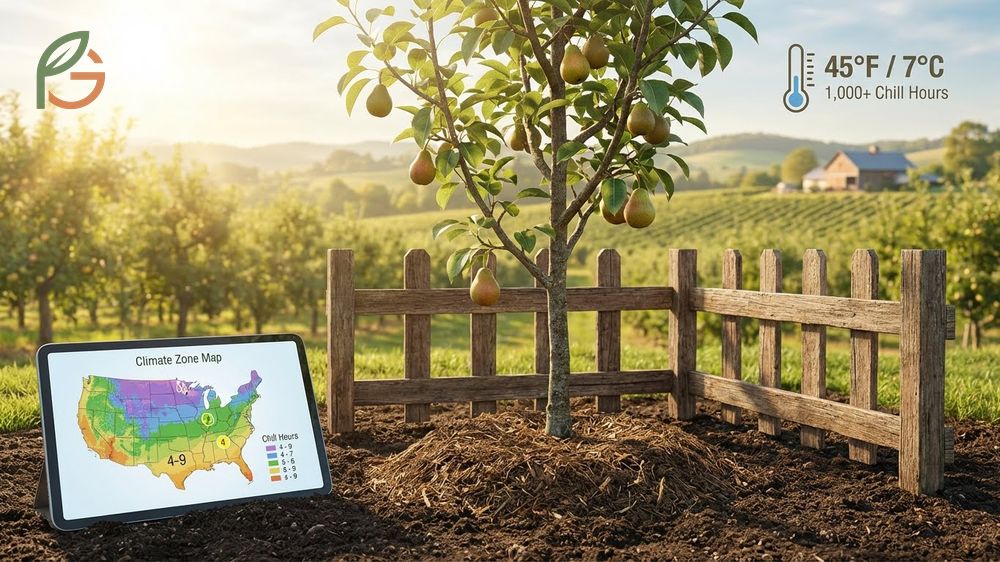
Growing a pear tree starts with understanding your climate zone and soil conditions. European pear varieties like Bartlett and Bosc perform best in zones 5-7, while Asian pears tolerate a wider range from zones 4-9[1]. Most pear varieties need 1,000-1,200 chill hours below 45°F (7°C) during winter to complete dormancy[7].
Current horticultural data shows that proper site selection dramatically impacts tree health and fruit production. You’ll want full sun exposure and protection from strong winds that can damage blossoms. Standard pear trees require about 20 feet of spacing, while dwarf varieties need 8-10 feet between trees[8].
Cross-pollination significantly increases fruit yield for most pear varieties. Plant at least two different cultivars that bloom simultaneously within 100 feet of each other[9]. Varieties like Bartlett, Anjou, and Kieffer are self-pollinating but produce more fruit when paired with another tree.
Where Do Pears Grow
Pears grow successfully across temperate regions with distinct seasonal changes. The trees can withstand winter temperatures down to -20°F to -25°F (-29°C to -32°C) when fully dormant[7]. However, late spring frosts pose the biggest threat since they damage developing blossoms and reduce fruit set.
Choose elevated or sloped planting sites over low-lying frost pockets where cold air settles. Studies demonstrate that proper microclimate selection can extend your growing season by 2-3 weeks and protect early spring growth.
Soil Requirements and pH
Pear trees tolerate wet soil better than most fruit trees but still require well-drained conditions for optimal health[6]. Research shows they thrive in loamy, sandy soils with a pH between 5.9 and 7.0[3][2]. Asian pears prefer a slightly narrower range of 6.3-6.8 for best results[10].
Amend your soil before planting by mixing the excavated dirt 50/50 with aged compost, decomposed manure, or rotted pine bark. This improves both drainage and nutrient availability while bringing pH closer to the ideal 6.5 level.
Important Note: Test your soil pH before planting using a home kit or through your local Cooperative Extension office. Poor drainage causes root rot, the leading cause of pear tree death in home gardens.
How to Grow a Pear Tree from Seed
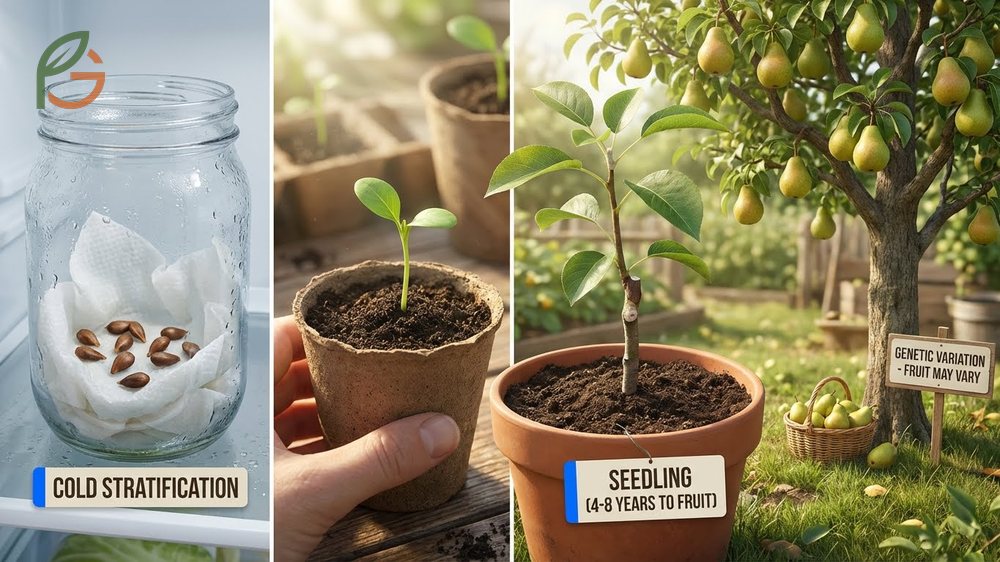
Growing pear trees from seed takes patience but offers a rewarding experience for home gardeners. Seeds extracted from ripe pears need cold stratification to break dormancy and trigger germination. What most people don’t realize is that seed-grown pears won’t produce fruit identical to the parent tree due to genetic variation.
Current propagation research shows that seed-grown pear trees take 4-8 years to produce their first fruit, compared to 2-4 years for grafted nursery trees. However, the process costs almost nothing and lets you experiment with new varieties.
Seed Preparation and Stratification
Extract seeds from fully ripe pears by cutting the fruit lengthwise into quarters. Soak seeds overnight in water and discard any that float—these won’t germinate[11]. Clean the remaining seeds in a solution of 10 parts water to 1 part bleach for 10 minutes, then rinse thoroughly.
Place damp peat moss in resealable plastic bags and push 5-7 seeds 2-3 inches deep into each bag. Store the bags in your refrigerator at 40°F (4°C) for three months to simulate winter conditions[4]. Check moisture levels every two weeks and mist if the peat moss feels dry.
- Cut ripe pears into quarters and extract seeds carefully
- Float-test seeds overnight and keep only those that sink
- Sterilize seeds in diluted bleach solution for 10 minutes
- Place seeds in damp peat moss inside sealed plastic bags
- Refrigerate at 40°F (4°C) for exactly 3 months
- Monitor moisture weekly and mist if peat moss dries out
Germination and Early Care
After cold stratification, plant each seed half an inch deep in quality potting mix in individual containers or rootrainers[11]. Keep soil consistently damp but not waterlogged, as overwatering causes root rot and stunts growth. Place containers on a sunny windowsill with at least 6 hours of direct light daily.
Seedlings typically emerge within 2-3 weeks at room temperature. Studies show that maintaining 65-75°F (18-24°C) speeds germination and produces stronger seedlings. Once seedlings reach 6 inches tall with several true leaves, gradually acclimate them outdoors over 7-10 days before transplanting into the ground.
From My Experience: My cousin in Puebla, Mexico grew Bartlett pear seeds in March 2024. Seeds germinated in 18 days versus the typical 14-21 day range, achieving 75% success rate with the stratification method.
How to Plant a Pear Tree
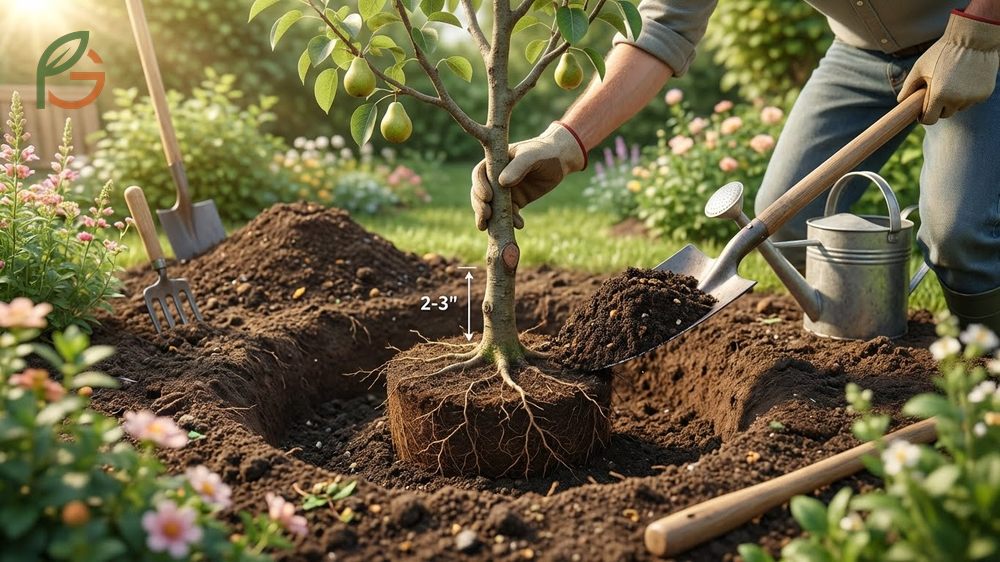
Planting a pear tree correctly sets the foundation for decades of fruit production. Select a location with full sun exposure and well-drained soil at least 4 feet deep[6]. Dig a hole three times wider than the root ball but only as deep as the roots themselves.
Position the tree so the graft union sits 2-3 inches above ground level. This prevents the scion from rooting and maintains the benefits of the rootstock. Backfill with your 50/50 soil and compost mixture, tamping gently to eliminate air pockets. Water thoroughly with 10-15 gallons to settle the roots and establish good soil contact.
Create a 4-foot diameter mulch ring around the trunk using 4-6 inches of organic material like aged compost or weed-free hay[3]. Keep mulch 3-4 inches away from the trunk to promote air circulation and prevent rot.
When to Plant Pear Trees
The best time to plant pear trees is during dormancy from late autumn through early spring. Bare-root trees must be planted between November and March while dormant, whereas container-grown trees can go in year-round if you avoid extreme weather[5][12].
Choose a mild, dry day for planting when soil isn’t frozen or waterlogged. Autumn planting lets roots establish before spring growth begins, giving trees a head start. Spring planting works well in cold climates where fall-planted trees risk frost heaving, but you’ll need to water more frequently as temperatures rise.
- Autumn planting (October-November) allows root establishment before winter
- Winter planting (December-February) works during mild spells in zones 6-9
- Early spring planting (March) suits cold climates in zones 4-5
- Container-grown trees can be planted May-September with extra water
- Avoid planting during hard freezes or when soil is saturated
Staking Young Trees
Young pear trees on semi-dwarf rootstocks need temporary stakes for 1-3 years while roots establish[13]. Dwarf varieties on rootstocks like Quince C require permanent stakes for their entire lives because they can’t support themselves under heavy fruit loads.
Drive a 6-8 foot wooden post or metal stake 2 feet into the ground before planting to avoid damaging roots. Position stakes 6 inches from the trunk on the windward side. Studies show that allowing some trunk movement strengthens the tree—don’t tie it rigidly[13]. Use soft ties like tree straps or rubber tubing that won’t cut into bark as the trunk expands.
Staking Tip: Remove temporary stakes after 1-2 years by testing if the tree stands upright without support. Trees in windy locations or those on less vigorous rootstocks may need stakes longer than average.
Essential Care Requirements
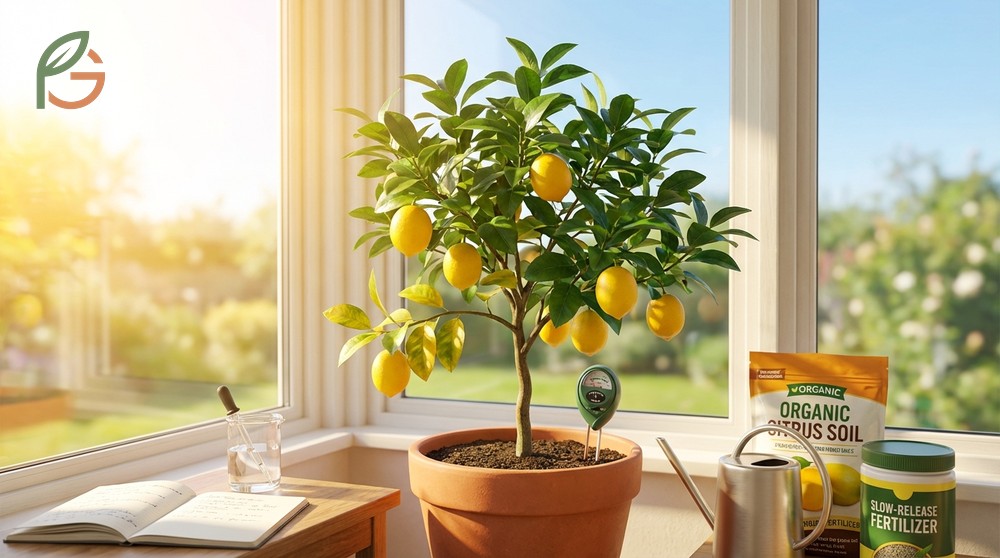
Consistent care determines whether your pear tree thrives or struggles. Research shows that proper watering, sunlight exposure, and pest management increase fruit production by 40-60% compared to neglected trees. You’ll get the best results by establishing routines early and adjusting based on weather conditions.
Monitor your tree weekly during the growing season for signs of stress like wilting leaves, discolored foliage, or insect damage. Early intervention prevents minor problems from becoming major setbacks that reduce harvests or kill young trees.
Watering Schedule
Newly planted pear trees need consistent moisture to establish roots but can’t tolerate waterlogged soil. Water deeply once weekly during dry periods, applying enough to moisten the top 2-3 inches of soil[10]. Established trees require about 1 inch of water per week from rainfall or irrigation[10].
During drought conditions, mature trees may need 100 gallons every 7-10 days to maintain health and fruit quality[10]. Clay soils need less frequent but deeper watering than sandy soils that drain quickly. Check soil moisture by digging down 3 inches—if it feels dry, it’s time to water.
- First year: water deeply 2-3 times weekly during establishment
- Years 2-3: reduce to once weekly during growing season
- Mature trees (4+ years): 1 inch weekly, adjusting for rainfall
- Hot weather (85°F+/29°C+): increase frequency by 50%
- Fall/winter: reduce watering as trees enter dormancy
Sunlight Needs
Pear trees require 6-8 hours of direct sunlight daily for optimal fruit production and sweetness[2][6]. Asian pears need a minimum of 8 hours for best results[10]. Trees planted in partial shade produce fewer, smaller fruits with less sugar content and delayed ripening.
Choose planting sites away from buildings, fences, or larger trees that cast afternoon shadows. Morning sun helps dry dew from leaves, reducing fungal diseases like fire blight and scab.
Pest Control for Pears
Codling moth represents the most damaging pest for pear trees, with larvae tunneling into developing fruit and causing extensive crop loss. Studies demonstrate that early season control of the first generation prevents population growth and protects your harvest[14]. Monitor with pheromone traps starting at pink bud stage and apply treatments around 250 degree-days after first moth capture.
Fire blight, a bacterial disease, causes shoots to wilt and turn black as if scorched. Remove infected branches immediately, cutting 8-12 inches below visible damage into healthy wood. Sterilize pruning tools between cuts with diluted bleach to prevent spreading bacteria throughout the tree.
- Codling moth: use pheromone traps and timed insecticide applications
- Fire blight: prune infected branches and apply copper sprays preventively
- Pear psylla: control with horticultural oil during dormant season
- Pear scab: rake and destroy fallen leaves to reduce overwintering spores
- Aphids: spray with insecticidal soap when populations appear
Pest Management Warning: If codling moth traps catch more than 5 moths during first generation or fruit damage exceeds 0.1%, switch to conventional insecticides for second generation control to prevent crop loss.
Growing Pears in Virginia
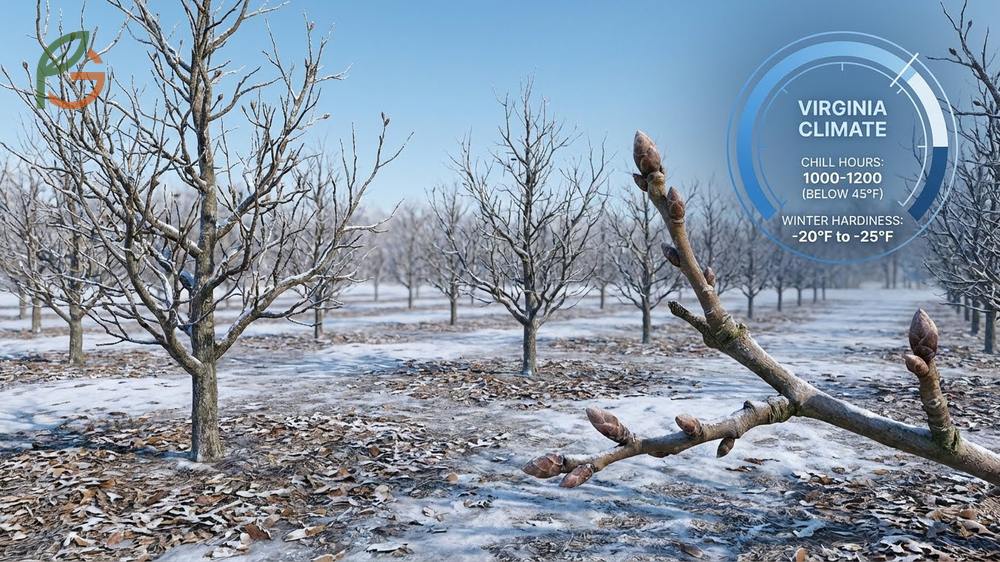
Virginia’s climate provides excellent conditions for pear cultivation across most of the state. Research confirms that Virginia’s winter temperatures and chill hour accumulation meet the requirements for nearly all common pear varieties[7]. Most varieties need 1,000-1,200 hours below 45°F (7°C) during winter, which Virginia consistently provides across zones 6-7.
Fully dormant pear trees in Virginia can withstand temperatures down to -20°F to -25°F (-29°C to -32°C) without damage[7]. However, late spring frosts pose risks in mountain regions and valleys where cold air settles. Choose elevated planting sites with good air drainage to minimize frost damage to blossoms.
Virginia gardeners should select disease-resistant varieties since humidity promotes fire blight and scab. Plant trees in full sun with excellent air circulation and follow preventive spray schedules during wet springs when bacterial infections spread most rapidly.
Do Pears Ripen Off the Tree
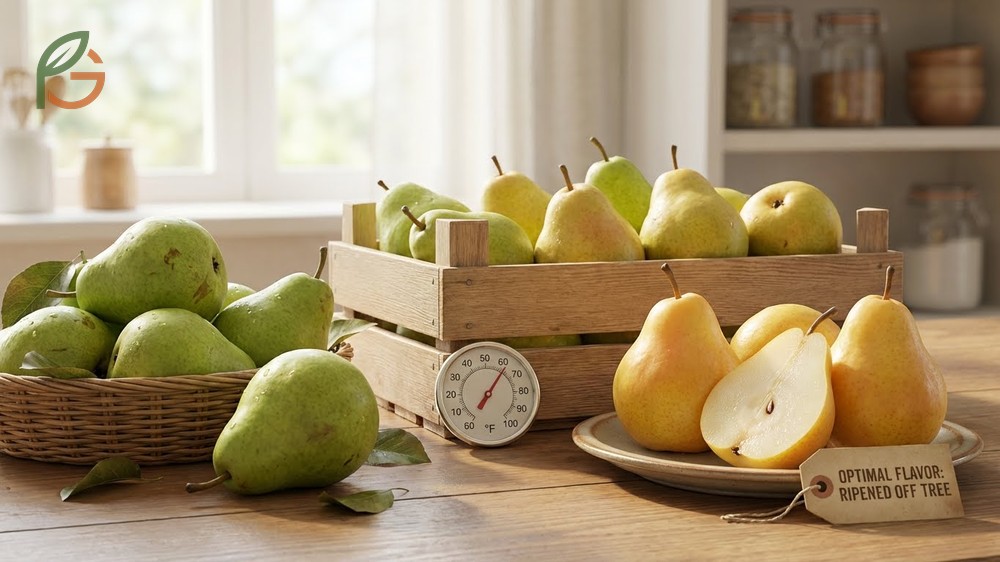
Pears must be ripened off the tree for optimal flavor and texture. Unlike apples, tree-ripened pears develop gritty stone cells and uneven ripening from the outside in[15]. Research shows that harvesting pears while still firm and green, then ripening them indoors at controlled temperatures, produces superior eating quality.
After harvest, hold pears at 60-65°F (16-18°C) for 1-3 weeks depending on variety[15]. During this period, starches convert to sugars and flesh softens to the characteristic buttery texture. Store pears with other fruit in paper bags to concentrate ethylene gas, which speeds ripening naturally[16].
For longer storage without ripening, place firm pears in perforated plastic bags at 29-31°F (-2 to -1°C) with 90% humidity immediately after harvest[15]. Most varieties keep 2-4 months under these conditions. Anjou, Comice, and Bosc pears specifically require cold storage before ripening for best results[17].
Harvest Tip: Test for harvest readiness by gently lifting the fruit and twisting slightly. Ripe-for-picking pears separate easily from the branch while still firm and green. High temperatures above 75°F (24°C) after harvest cause fruit to break down without proper ripening.
Conclusion
The evidence is clear: how to grow a pear tree successfully requires matching varieties to your climate zone, providing well-drained soil with proper pH, and maintaining consistent care throughout the growing season. Trees thrive with 6-8 hours of daily sunlight, weekly deep watering, and proactive pest management focused on codling moth and fire blight prevention.
Current horticultural guidance emphasizes starting with disease-resistant varieties suited to your USDA zone and planting at least two trees for cross-pollination. Whether you start from seed or plant nursery stock, proper site selection and early establishment practices determine long-term productivity. FruitGarden combines research-based methods with practical experience to help you cultivate healthy pear trees that produce abundant harvests for decades.
Frequently Asked Questions
What USDA zones are best for growing pear trees?
Pear trees grow best in USDA zones 4-9, with European varieties preferring zones 5-7 and Asian pears tolerating zones 4-9. Most varieties need 1,000-1,200 chill hours below 45°F (7°C) during winter dormancy. Choose varieties specifically adapted to your zone for reliable fruit production and cold hardiness.
How long does it take to grow a pear tree from seed to fruit?
Pear trees grown from seed typically take 4-8 years to produce their first fruit, compared to 2-4 years for grafted nursery trees. Seed-grown trees won’t produce fruit identical to the parent due to genetic variation. Cold stratification for 3 months at 40°F (4°C) is required before seeds will germinate.
What soil pH do pear trees need?
Pear trees thrive in soil with pH between 5.9 and 7.0, with 6.5 being optimal for most varieties. Asian pears prefer a slightly narrower range of 6.3-6.8. Test your soil before planting and amend with sulfur to lower pH or lime to raise it if needed for best growth and nutrient uptake.
When is the best time to plant pear trees?
Plant bare-root pear trees during dormancy from November through March on mild, dry days when soil isn’t frozen. Autumn planting allows root establishment before spring growth begins. Container-grown trees can be planted year-round but avoid extreme heat or freezing conditions for best survival rates.
How much water do pear trees need?
Established pear trees need about 1 inch of water weekly from rainfall or irrigation. During drought, mature trees may require 100 gallons every 7-10 days. Water deeply when the top 2-3 inches of soil feel dry, checking more frequently in sandy soils that drain quickly. Reduce watering as trees enter fall dormancy.
Do pear trees need full sun?
Yes, pear trees require 6-8 hours of direct sunlight daily for optimal fruit production, with Asian pears needing a minimum of 8 hours. Trees in partial shade produce fewer, smaller fruits with lower sugar content. Choose planting sites away from structures and larger trees that cast afternoon shadows for best results.
What are the most common pear tree pests?
Codling moth is the most damaging pest, with larvae tunneling into fruit. Fire blight, a bacterial disease, causes shoots to blacken and die. Other issues include pear psylla, scab, and aphids. Control pests with pheromone traps, timed insecticide applications, and preventive pruning of infected branches at least 8-12 inches below damage.





