
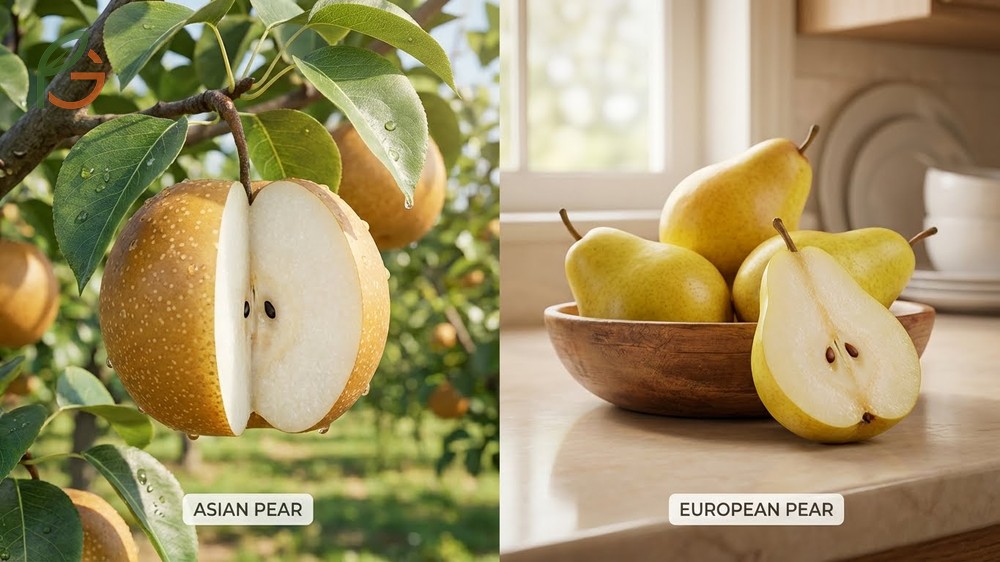
Asian pears vs regular pears show distinct differences in texture and ripening behavior. Asian pears (Pyrus pyrifolia) stay crisp and apple-like when ripe, while European pears (Pyrus communis) soften to a buttery texture[1]. Research shows Asian pears ripen on the tree like apples, ready to eat at harvest, whereas European varieties must be picked firm and ripened indoors for 7-10 days. FruitGarden synthesizes current horticultural research to help gardeners choose the right pear variety for their orchard.
Quick Answer
- Asian pears maintain a crisp, crunchy texture when ripe, similar to apples[1]
- European pears develop a soft, juicy, buttery texture after proper ripening off the tree[1]
- Asian pears ripen on the tree from August to October and are ready to eat immediately[2]
- European pears must be harvested firm and ripened indoors at 60-70°F (16-21°C) for best quality[2]
Asian Pears vs Regular Pears
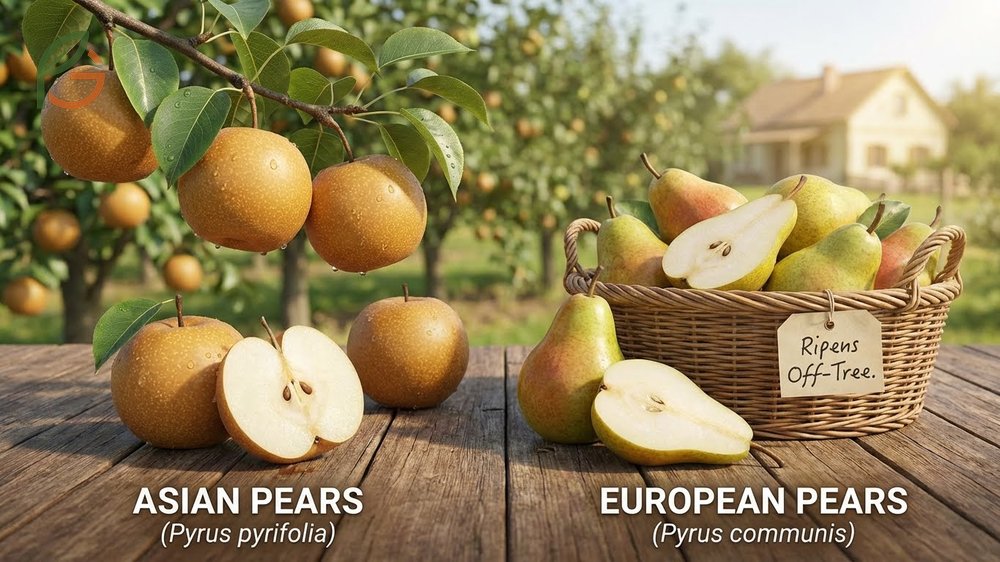
The primary difference between Asian and European pears lies in their ripening behavior and final texture. Asian pears (Pyrus pyrifolia) reach peak quality while still on the tree and maintain their firmness throughout ripeness[1]. European pears (Pyrus communis) must be harvested while still firm and ripened off the tree to develop their characteristic soft, melting texture.
These botanical differences stem from their evolutionary origins. Studies show that Asian pears developed in regions of China, Japan, and Korea, adapting to climates where fruit needed to remain firm longer[3]. European pears evolved in temperate regions where softer fruit could be stored and ripened gradually.
Both pear types belong to the genus Pyrus but represent distinct species with different growth habits. Asian pears typically grow to 70-150 dm in height with purplish-brown branches, while European varieties reach 50-300 dm with grayish-brown branches[4]. These structural differences affect how you’ll manage them in your orchard.
From My Experience: My uncle in Jalisco, Mexico planted both Asian and European pears in his small orchard in 2022. The Asian pear trees yielded fruit ready to eat straight from the tree by late August, while the European Bartlett pears required picking firm in early September and ripening indoors for 10 days—matching the typical 7-10 day range from horticultural studies.
Asian Pear Characteristics
Asian pears exhibit a round, apple-like shape with skin ranging from yellow-green to russet brown. The flesh remains crisp and grainy even when fully ripe, with high water content that makes them exceptionally juicy[3]. Most fruits measure 3-4 inches in diameter and weigh substantially more than you’d expect due to their moisture content.
The flavor profile leans toward sweet with subtle tartness near the core. Unlike European pears that develop aromatic compounds during ripening, Asian pears maintain a lighter, refreshing taste. They’re harvested from late August through early October depending on the variety[2].
- Round, apple-shaped fruits typically 3-4 inches in diameter[4]
- Skin colors range from yellow-green (like Shinseiki) to russet brown (like Hosui)
- Crisp, crunchy texture remains firm throughout ripeness
- High water content makes them extremely juicy when bitten
- Sweet flavor with mild tartness, lacking the aromatic complexity of European types
- Ready to eat immediately after picking from the tree
- Can be stored for several weeks when wrapped carefully in cold conditions[3]
European Pear Features
European pears display the classic pyriform (pear) shape with a rounded bottom tapering to a narrow neck, though some varieties like Seckel are more rounded. The fruit must be harvested at the “firm mature” stage before full ripeness develops on the tree. This counterintuitive practice ensures the best texture and flavor.
After harvest, European pears undergo a ripening process at room temperature that transforms their starchy flesh into a soft, buttery consistency. This change happens over 7-10 days at 60-70°F (16-21°C)[2]. The flesh develops rich aromatic compounds that give varieties like Bartlett and Bosc their distinctive sweet, mellow character[1].
- Classic pear shape (pyriform) with narrow neck and rounded base
- Must be harvested firm and green before tree ripening occurs
- Require 7-10 days of room temperature ripening after harvest[2]
- Develop soft, buttery, melting texture when properly ripened
- Sweet, aromatic flavor with complex undertones
- Skin colors vary from green (Anjou) to brown-russet (Bosc) to red (Starkrimson)
- Check ripeness using the “check the neck” method—gentle pressure near the stem
Important Ripening Note: Don’t wait for Asian pears to soften like European varieties. If an Asian pear feels soft, it’s overripe and will taste mushy and bland. Always eat them crisp.
Crisp vs Soft Pears
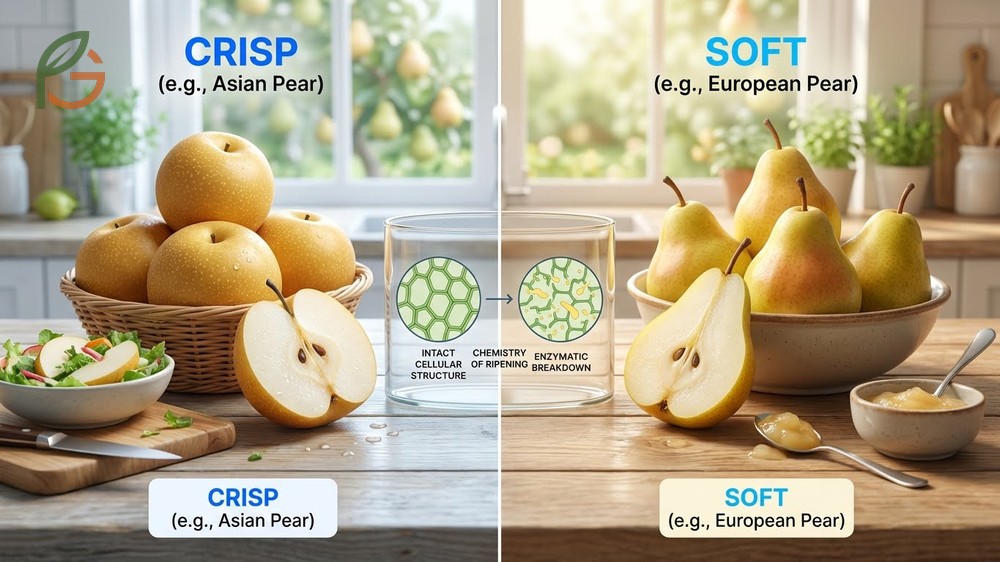
The texture difference between crisp and soft pears defines how you’ll use them in your kitchen and garden. Crisp pears maintain cellular structure that resists breaking down, making them ideal for fresh applications where you want crunch. Soft pears undergo enzymatic changes during ripening that break down cell walls, creating that signature buttery mouthfeel.
This isn’t just about preference—it’s about chemistry. Research demonstrates that Asian pears retain higher levels of lignin and cellulose in their cell walls, which keeps them firm[3]. European pears produce more ethylene gas during ripening, triggering enzymes that soften the fruit rapidly once the process begins.
Hybrid varieties exist that blur these lines. Pears like Kieffer, Orient, and Pineapple—crosses between Asian and European types—can exhibit characteristics of both parents. Some hybrids ripen to a semi-soft texture that’s firmer than pure European varieties but softer than pure Asian types.
Crisp Pear Varieties
If you’re planting for crisp texture, you’ve got excellent options beyond the standard Asian varieties. Pure Asian pears like Shinseiki, Hosui, and Twentieth Century remain the gold standard for crunch. These varieties stay crisp throughout their storage life and never develop the soft texture some people expect from pears.
Hybrid varieties that maintain crispness include Early Gold, Garber, and Tennosui. These crosses often combine the crisp texture of Asian parents with some disease resistance from European breeding lines. They’re particularly valuable in regions where fire blight poses challenges to pure Asian varieties.
- Shinseiki – Yellow-skinned Asian pear, exceptionally crisp and juicy, early season harvest
- Hosui – Russet-brown Asian variety with complex sweet flavor and firm texture[2]
- Twentieth Century (Nijisseiki) – Classic green Asian pear, mild and refreshing
- Korean Giant – Large-fruited Asian variety, excellent for fresh eating
- Kieffer – Asian-European hybrid, crisp when fresh, moderately fire blight resistant
- Orient – Hybrid with apple-like crunch, good disease tolerance
Texture Differences
The textural contrast between pear types affects everything from eating experience to culinary applications. Asian pears provide satisfying crunch with every bite, similar to biting into a firm apple. The cells break cleanly, releasing juice without mushiness. European pears, when properly ripened, feel smooth and almost creamy on the tongue.
This texture difference also impacts storage and handling. Crisp Asian pears bruise easily despite their firmness because of high juice content. You’ll need to wrap them individually for storage. Soft European pears become fragile once ripened and should be eaten within days of reaching peak texture.
Taste Texture Comparison
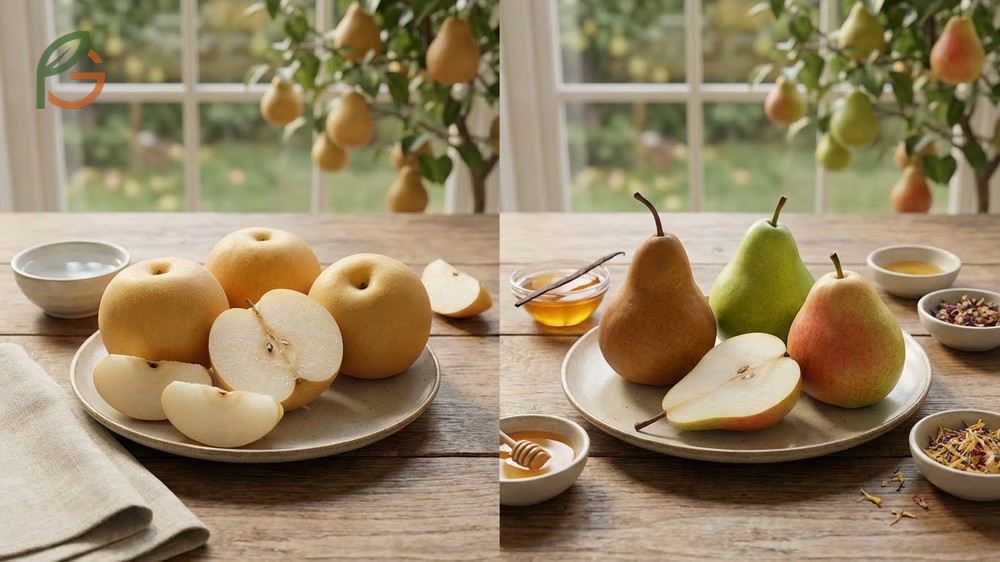
Comparing taste and texture side-by-side reveals why gardeners often grow both types. Asian pears offer clean, refreshing sweetness with subtle flavor that doesn’t overwhelm. The taste is straightforward—you get pear flavor without the complexity. European pears develop layered flavors during ripening, with some varieties showing honey notes (Bosc), vanilla hints (Concorde), or floral aromatics (Comice).
The texture experience differs dramatically. When you bite an Asian pear, it snaps cleanly with audible crunch. Juice floods your mouth immediately. European pears yield softly under tooth pressure, with flesh that feels almost buttery. The softer texture allows aromatic compounds to release more readily, making them taste more intensely “pear-like” to most people[1].
This table compares texture, taste, ripening method, and best uses between Asian and European pear varieties across multiple attributes
| Attribute | Asian Pears | European Pears |
|---|---|---|
| Texture When Ripe | Crisp, crunchy, apple-like[1] | Soft, buttery, melting[1] |
| Taste Profile | Sweet, mildly tart, refreshing | Sweet, aromatic, complex flavor |
| Ripening Location | On the tree[2] | Off the tree after harvest[2] |
| Harvest Timing | August to October when crisp | When firm and green |
| Water Content | Very high, extremely juicy[3] | Moderate to high |
| Best Fresh Use | Salads, fresh snacking, slaws | Fresh eating, cheese boards |
| Cooking Suitability | Limited—stays firm, high moisture | Excellent for baking, poaching, pies |
| Storage Duration | Several weeks when cold[3] | Months when properly stored |
Another key difference affects meal planning: European pears can be purchased firm and ripened over several days, letting you time their use. Asian pears must be eaten ripe or stored cold—there’s no “ripening window” to manage. This makes European varieties more flexible for commercial distribution but Asian types better for immediate harvest-to-table use in home gardens.
Flavor Intensity Tip: If European pears taste bland, they weren’t properly ripened. Always ripen them at room temperature until the neck yields to gentle pressure, then refrigerate to slow further softening.
Which Pear Is Better for Different Uses
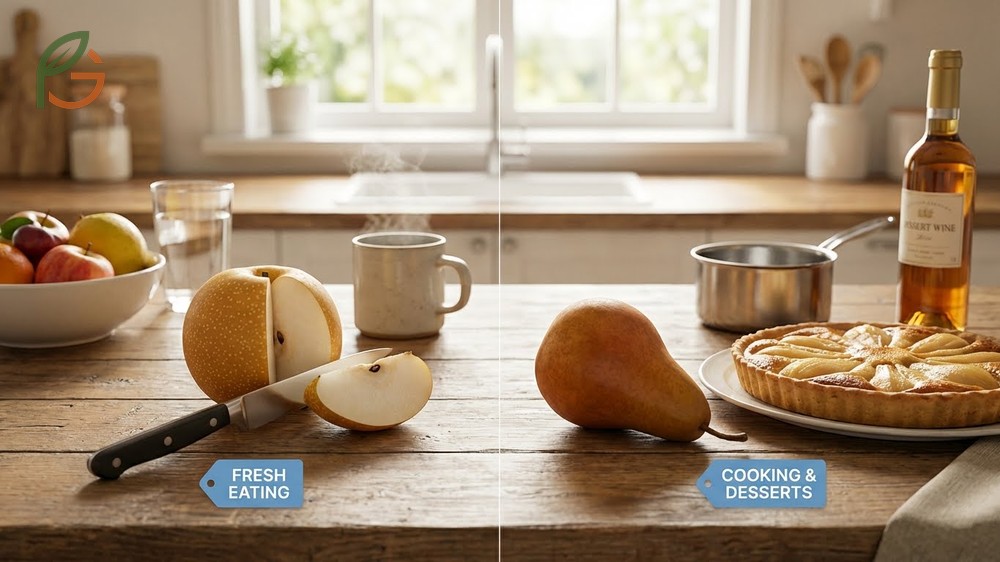
Choosing between Asian and European pears depends entirely on how you’ll use them. Neither type is objectively “better”—they excel in different applications. Your decision should match your cooking style, fresh eating preferences, and garden goals.
For fresh eating straight from the tree or fridge, many people prefer Asian pears. That crisp texture satisfies cravings for crunchy fruit, and you don’t need to plan ahead for ripening. For elegant desserts, baked goods, and recipes requiring soft pear texture, European varieties dominate. Their ability to soften without disintegrating makes them superior for cooked applications.
Fresh Eating
Asian pears win for fresh applications where texture matters. Their crisp bite makes them perfect for fruit salads, slaws, and lunch boxes. They won’t brown as quickly as apples when cut, and their high juice content makes them refreshing in hot weather. Slice them thin for salads or cut into wedges for snacking—they maintain structure either way.
European pears shine when you want that classic soft pear experience. Perfectly ripened Bartlett or Comice pears pair beautifully with cheese, work well in fruit plates, and offer that buttery texture many people associate with premium pears. They’re ideal for breakfast alongside yogurt or granola.
- Asian pears for salads – Their crisp texture adds crunch without wilting or becoming mushy over time
- Asian pears in lunch boxes – No ripening needed; stays fresh and crisp all day without softening
- European pears with cheese – Soft texture and aromatic flavor complement sharp cheeses perfectly
- Asian pears in slaws and fresh salsas – Firmness holds up to dressings and acidic ingredients
- European pears for elegant presentation – Classic pear shape and soft texture suit formal fruit plates
Cooking and Baking
European pears dominate the cooking realm. Their flesh softens beautifully when baked, poached, or stewed, absorbing flavors while maintaining enough structure to hold shape. Varieties like Bosc and Anjou have denser flesh that stands up to longer cooking times. They’re the go-to choice for pear pies, tarts, crisps, and poached pear desserts.
Asian pears generally don’t work well in traditional baked desserts. Their high water content releases too much liquid during cooking, and their firm texture doesn’t soften appealingly[3]. However, they can work in savory applications like stir-fries or grilled dishes where you want fruit to maintain firmness.
- European pears for pies and tarts – Bosc and Anjou maintain shape while softening to ideal texture
- European pears for poaching – Absorb wine, spices, and sugar syrup while becoming tender
- European pears for preserves – Make excellent jams, chutneys, and canned goods
- Asian pears for pickling – Firm texture holds up to vinegar brines and stays crunchy
- Asian pears for grilling – Brush with honey and grill for a side dish that won’t fall apart
- European pears for sauces – Cook down smoothly into purees and sauces without graininess
Recipe Substitution Warning: Don’t substitute Asian pears for European varieties in traditional baking recipes. The results will be watery and texturally disappointing. Stick with European types for pies, cobblers, and baked desserts.
Growing Pear Varieties in Your Garden
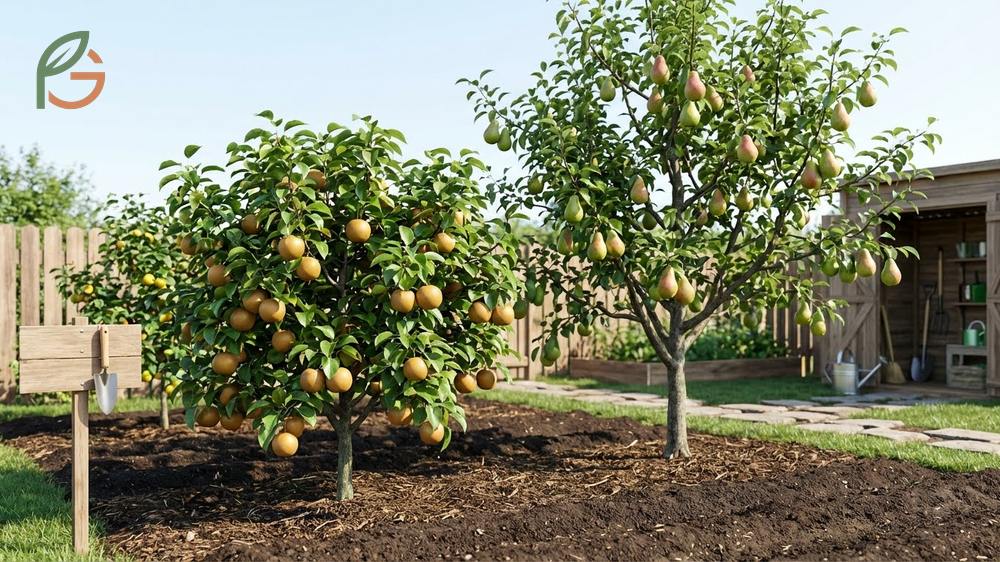
Both pear types require similar growing conditions but differ in tree management and disease susceptibility. Pear trees need full sun for at least six hours daily and prefer well-drained soil, though they tolerate heavier clay better than apples[5]. Site selection matters since standard trees require 18-foot spacing and can grow quite large without dwarfing rootstock.
Asian pear trees tend to be more compact than European varieties, making them suitable for smaller gardens or even large containers. They generally grow 70-150 dm tall compared to European types that can reach 50-300 dm[4]. This size difference affects pruning strategies and orchard planning.
Fire blight poses the biggest disease challenge for both types. This bacterial disease can kill entire trees if left unchecked. Some European varieties like Warren, Aires, and Moonglow show resistance, while the Asian variety Shinko demonstrates above-average fire blight tolerance[2]. In areas with high fire blight pressure, variety selection becomes critical to success.
Cross-pollination requirements add complexity to planting decisions. You’ll need at least two varieties that bloom simultaneously for good fruit set. However, European varieties won’t pollinate Asian types and vice versa—they bloom at different times[2]. Plan to plant two Asian varieties together or two European varieties together, or grow one of each type as separate mini-orchards with appropriate pollinizers.
- Plant in full sun with at least six hours of direct sunlight daily[5]
- Space standard trees 18 feet apart to allow for mature canopy spread
- Water deeply once monthly during dry season; adjust frequency based on soil type and tree size[5]
- Plant two varieties of the same type (Asian or European) for cross-pollination
- Choose fire blight resistant varieties in regions where the disease is common
- Prune to maintain open center for air circulation and disease prevention
- Asian pears work well in containers due to their more compact growth habit
Conclusion
The evidence is clear: Asian pears vs regular pears represent fundamentally different fruit experiences that serve distinct purposes in your garden and kitchen. Asian varieties deliver crisp, apple-like texture perfect for fresh eating and salads, while European types offer soft, buttery flesh ideal for baking and elegant presentations. Current horticultural guidance emphasizes choosing varieties based on intended use rather than declaring one type superior to the other.
For home gardeners, FruitGarden recommends planting at least one tree of each type if space allows. This strategy gives you versatile harvest options from August through fall, with fruit suitable for everything from quick snacks to sophisticated desserts. Remember that both types need compatible pollinizers and share similar cultural requirements, making them excellent companions in mixed fruit orchards.
Frequently Asked Questions
Are Asian pears healthier than regular pears?
Both pear types offer similar nutritional profiles with slight variations. Asian pears contain approximately 42 calories per 100 grams with 3.6g fiber, while European pears have comparable values. The main differences lie in water content (Asian pears are juicier) and texture rather than significant nutritional advantages. Both provide vitamin C, potassium, and beneficial fiber that supports digestive health.
Can I eat Asian pears when they’re soft?
No, you shouldn’t eat Asian pears once they soften. Unlike European pears that improve as they soften, Asian pears become overripe, mushy, and bland when soft. They’re meant to be eaten crisp, just like apples. If your Asian pear feels soft, it’s past its prime eating quality.
Why do European pears ripen off the tree?
European pears develop better texture and flavor when ripened off the tree. If left to ripen on the tree, they develop gritty texture around the core and can become mealy. Harvesting them firm and ripening indoors at room temperature for 7-10 days allows proper starch conversion to sugars while developing that characteristic soft, buttery texture.
Which pear type is better for weight loss?
Both pear types work equally well for weight management as they contain similar calories and high fiber content. Asian pears might feel more filling due to their crisp texture and high water content, which can increase satiety. Choose based on your texture preference—both provide satisfying, low-calorie snacks that support healthy eating patterns.
Can Asian and European pear trees pollinate each other?
No, Asian and European pear varieties can’t cross-pollinate each other. They bloom at different times, with Asian pears typically flowering several days later than European types. You need to plant two varieties within the same species group—two Asian varieties together or two European varieties together—to ensure successful pollination and fruit set.
How long do Asian pears last in the refrigerator?
Asian pears can last several weeks or more when properly stored in cold conditions. Wrap each fruit individually to prevent bruising due to their high juice content. Store them in the crisper drawer of your refrigerator at 32-40°F (0-4°C). Unlike European pears, they won’t continue ripening in storage—they’ll maintain their crisp texture throughout the storage period.
What’s the easiest pear type for beginner gardeners?
Asian pears are often easier for beginners because you don’t need to master the timing of harvest and ripening. The fruit is ready to eat when picked, eliminating guesswork about ripeness. Choose fire blight resistant varieties like Shinko for your first tree. However, both types require similar care regarding watering, pruning, and pollination needs, so success with either depends more on variety selection than species type.





