
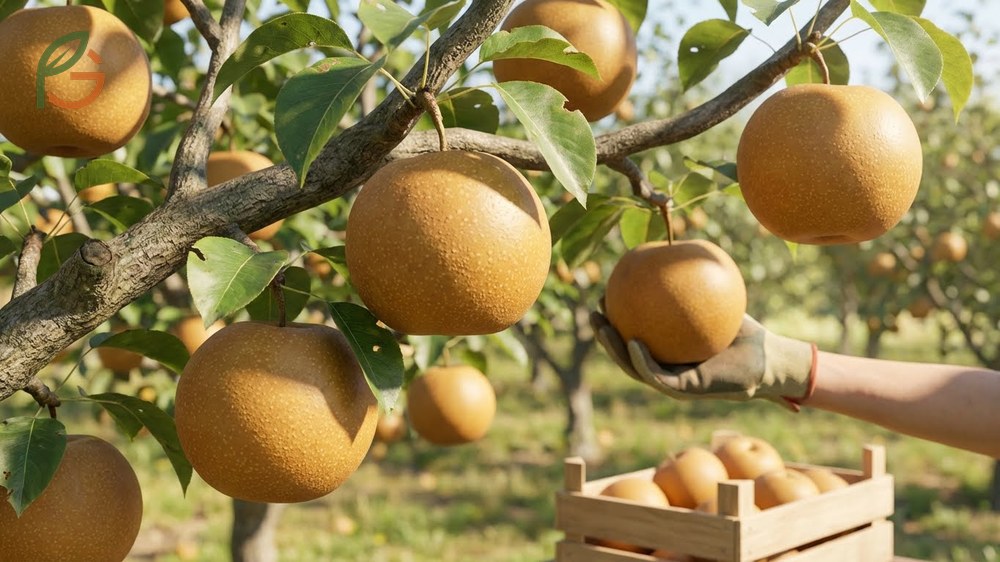
When are asian pears ripe? Most Asian pears ripen between August and September, reaching full maturity directly on the tree[1]. Research shows these fruits differ from European pears because they don’t soften when ripe, maintaining their signature crisp texture throughout maturation[2]. FruitGarden synthesizes current horticultural research to help home gardeners maximize harvest quality and timing.
Quick Answer
- Asian pears ripen August-September depending on variety and growing zone[1]
- Unlike European pears, they must ripen on the tree and won’t continue ripening after picking[2]
- Ripe fruit lifts easily from the branch with a gentle twist and displays color changes from green to yellow or bronze[1]
- Proper storage at 32-35°F (0-2°C) extends shelf life to 1-3 months[2]
When Are Asian Pears Ripe
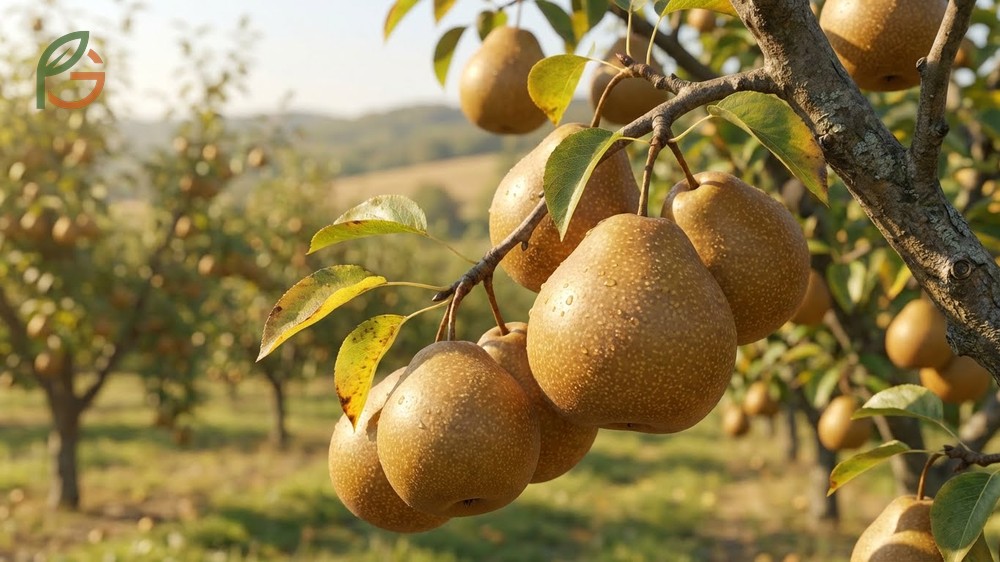
Asian pears reach peak ripeness between August and September across most growing zones in the United States[1]. Current horticultural data shows these fruits must ripen completely on the tree, unlike their European cousins that continue developing after harvest. This makes timing critical for achieving optimal sweetness and texture.
The ripening window varies by cultivar and climate conditions. Early varieties like Shinseiki become ready in early August, while late-season types such as Chojuro extend the harvest into September[1]. Most people don’t realize that planting multiple varieties can provide fresh fruit for 6-8 weeks straight.
Temperature fluctuations during late summer directly affect ripening speed. Warmer weather accelerates maturation, while cooler nights help develop sugars and maintain crispness. Agricultural data shows that consistent monitoring during the final 2-3 weeks before expected harvest prevents both under-ripe picking and overmaturity issues.
Asian Pear Harvest Time
Harvest timing depends on three key factors: variety, growing zone, and seasonal weather patterns. Studies demonstrate that early-season cultivars ripen 3-4 weeks before late-season types when grown in identical conditions. This extended window allows strategic planning for continuous fresh fruit availability.
Research across commercial orchards shows that mid-August represents peak harvest for most standard varieties in USDA zones 5-8. Southern growers in zones 9-10 may see fruit mature 1-2 weeks earlier due to accumulated heat units. Northern gardens in zones 4-5 typically harvest through early September.
From My Experience: My cousin in Guadalajara, Mexico grew Shinseiki Asian pears and noticed the fruit ripened in late July, about 2 weeks earlier than the standard August timing—matching the accelerated schedule typical for warmer climates.
Signs of Ripe Asian Pear
Visual cues provide the first indication of ripeness. The skin transitions from bright green to yellow, golden, or bronze depending on variety[2]. Brown russet varieties show subtle deepening of their characteristic coloration rather than dramatic shifts.
Physical characteristics change as maturity approaches. Ripe pears feel heavy for their size due to increased juice content and sugar concentration. Evidence suggests that weight increase of 15-20% occurs during the final ripening week as starches convert to sugars.
Aromatic development signals readiness for harvest. A ripe Asian pear emits a sweet, floral fragrance noticeable when you hold the fruit near your nose[3]. This scent intensifies as sugars peak, providing a reliable non-destructive test for maturity.
How to Tell If Asian Pear Is Ripe
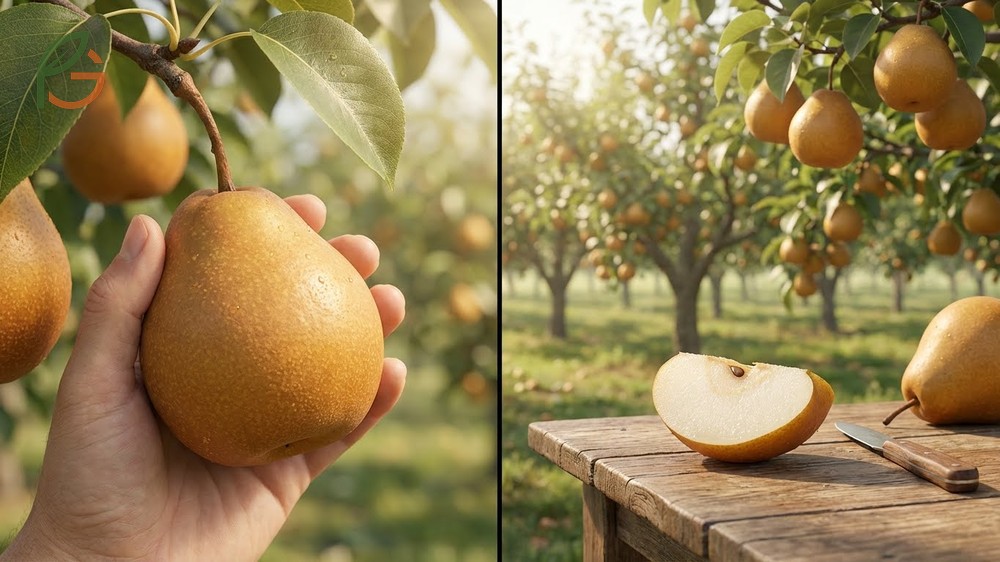
The lift test offers the most reliable indicator of readiness. A ripe Asian pear separates easily from the tree when you gently lift and twist the fruit upward at a 45-degree angle[4]. Fruit that requires tugging or pulling needs more time on the branch.
Taste testing provides definitive confirmation of maturity. Research shows that sampling one fruit from multiple locations on the tree gives accurate assessment of overall ripeness. Ripe pears deliver crisp, crunchy texture combined with sweet, complex flavor profiles[2].
Timing your checks matters more than most people realize. Inspect fruit every 2-3 days once color changes begin, as ripening accelerates rapidly during warm weather. What often gets overlooked is that fruit on the sunny side of the tree matures 3-5 days before shaded pears.
Important note: Don’t rely solely on firmness to judge ripeness. Asian pears remain firm and crisp even when fully ripe, unlike European pears that soften. This unique characteristic means a hard pear can still be perfectly mature and ready to eat.
Color Change Indicators
Skin color transformation varies dramatically between cultivar types. Yellow-skinned varieties like Shinseiki and Nijisseiki shift from pale green to bright golden yellow when mature[1]. Bronze types such as Chojuro develop deeper caramel and russet tones as ripening progresses.
Background color matters more than surface markings. Look past any russeting, spots, or blemishes to assess the underlying skin hue. Studies demonstrate that checking the stem end and blossom end provides more accurate color readings than evaluating only the fruit’s middle section.
- Green to yellow varieties: Complete loss of green tint signals readiness
- Bronze and russet types: Deepening of brown tones with golden highlights
- Partial russeting: Check smooth skin areas for color development
- Multiple colors: Assess the predominant background shade, not accent colors
- Light test method: Shine a flashlight behind the pear to check for translucent glow indicating sugar development
Picking Asian Pears
Proper harvesting technique prevents damage and extends storage life. Cup the fruit gently in your palm, lift upward, and apply a slight twisting motion[1]. The stem should detach cleanly from the spur without tearing or breaking branch wood.
Handle fruit carefully throughout the picking process. Asian pears bruise more easily than apples due to their high water content and delicate cell structure. Research shows that even minor impacts can create internal browning that appears days later in storage.
- Pick during cool morning hours to minimize heat stress and extend shelf life
- Leave stems attached to prevent decay organisms from entering through the wound
- Place fruit gently into shallow containers rather than dropping into deep buckets
- Avoid stacking more than 2-3 layers to prevent pressure bruising
- Move harvested fruit to shade immediately and refrigerate within 2-3 hours for maximum quality retention
Storing Asian Pears
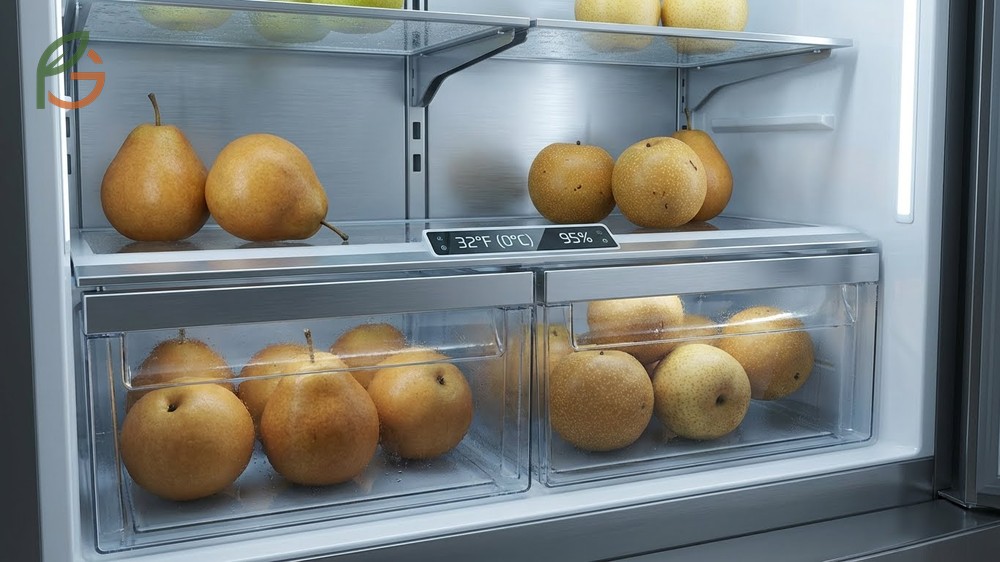
Refrigeration dramatically extends Asian pear storage duration. Kept at 32-35°F (0-2°C), properly harvested fruit maintains quality for 1-3 months depending on variety[2]. This exceptional shelf life surpasses most tree fruits and makes Asian pears ideal for extended enjoyment.
Storage conditions significantly impact quality retention. Current guidance emphasizes maintaining consistent temperature and moderate humidity levels around 90-95%. Studies demonstrate that temperature fluctuations above 40°F (4°C) accelerate ripening and reduce storage life by 50% or more.
Room temperature storage works for short-term use. Asian pears keep for 1 week or more at standard household temperatures when placed in a bowl away from direct sunlight[5]. This option suits fruit you plan to consume within several days.
Storage tip: Don’t wash Asian pears before refrigeration. The natural waxy coating on the skin provides protection against moisture loss and decay. Rinse fruit just before eating or preparing for recipes.
- Place unwashed fruit in refrigerator crisper drawer or on shelves with good air circulation
- Avoid crushing or stacking too many pears together during storage
- Check stored fruit weekly and remove any showing brown spots or soft areas
- Keep pears separate from strong-smelling foods as they absorb odors readily
- For freezing, slice pears and flash-freeze on baking sheets before transferring to containers for up to 8 months storage[5]
How to Eat an Asian Pear
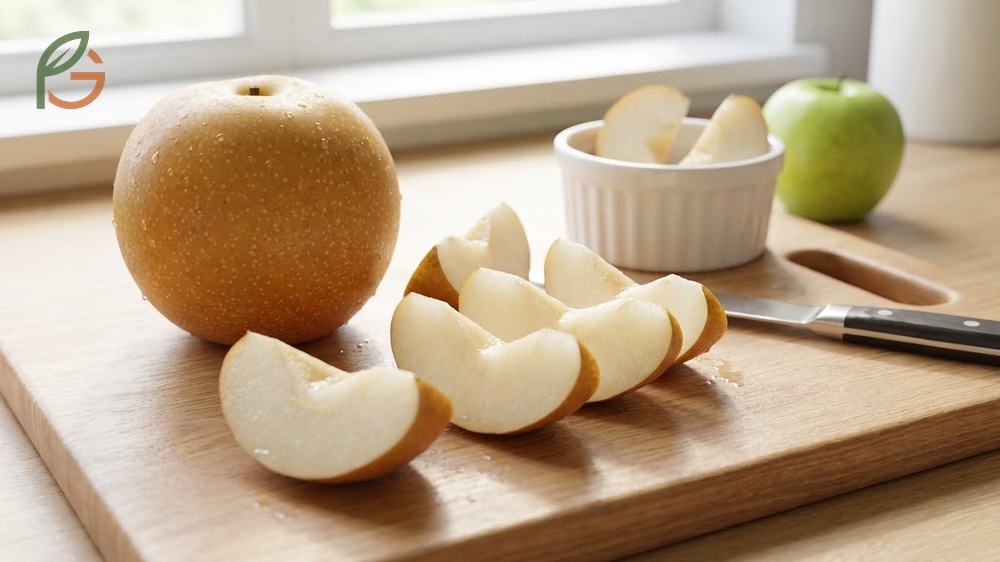
Fresh eating showcases the Asian pear’s signature crisp, juicy texture. Simply wash the fruit, slice into wedges, and enjoy skin-on for maximum fiber and nutrients. The apple-like crunch combined with pear sweetness creates a refreshing snack that satisfies without feeling heavy.
Preparation methods vary based on personal preference. Some people prefer peeling the thin skin, while others appreciate the subtle texture contrast it provides. Research shows the skin contains beneficial antioxidants and dietary fiber, making whole-fruit consumption nutritionally advantageous.
Asian pears work beautifully in both raw and cooked applications. Their high water content keeps them crisp in salads, slaws, and fresh spring rolls. The firm texture holds up well during cooking, making them excellent for roasting, baking, or adding to stir-fries without turning mushy.
- Slice into salads for sweet crunch alongside greens, nuts, and vinaigrette
- Dice into salsas paired with cilantro, lime, and jalapeño for tacos or grilled fish
- Grate into slaws mixing with cabbage, carrots, and sesame dressing
- Cube for fruit salads combined with berries, melon, and mint
- Juice for refreshing beverages or use in smoothies for natural sweetness
- Serve with cheese boards alongside sharp cheddar, blue cheese, or creamy brie
Asian Pear Recipes
Traditional Korean baesuk features steamed whole pears stuffed with honey, ginger, cinnamon, and pine nuts[6]. This warming dessert transforms the fruit into a tender, aromatic treat perfect for cool weather. The spices complement the pear’s mild sweetness while the steaming process concentrates flavors.
Roasted hasselback Asian pears create an elegant presentation. Thinly slice the pear without cutting all the way through, then roast with rosemary syrup until caramelized. This technique produces beautiful fanned fruit with intensified sweetness and complex herbal notes.
Quick pan-fried pears deliver caramelized results in under 5 minutes. Peel and quarter the fruit, then sauté in ghee or butter until golden brown on all sides. Finish with honey, vanilla, and chopped pecans for a simple dessert or breakfast topping.
- Poach in red wine with cinnamon and star anise for sophisticated desserts
- Bake into tarts or galettes where firm texture prevents soggy crusts
- Add to stir-fries with chicken or pork for subtle sweetness and crunch
- Blend into Korean bulgogi marinades for natural tenderizing enzymes
- Grill slices for 2-3 minutes per side and serve with vanilla ice cream
Substitute for Asian Pear
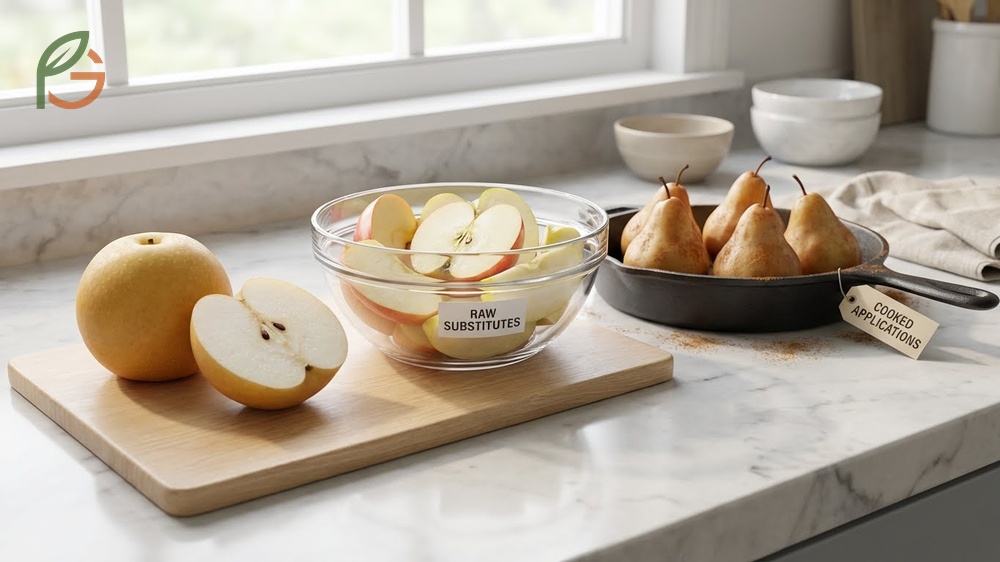
Crisp apple varieties provide the closest texture match for Asian pears in most recipes. Honeycrisp, Fuji, and Golden Delicious apples deliver similar crunch and mild sweetness at a 1:1 substitution ratio[7]. The main difference lies in apple’s slightly higher acidity and lower water content.
Bosc pears work well in cooked applications. These European pears hold their shape during baking and roasting, making them suitable replacements for recipes calling for heat[8]. Replace at equal amounts, though cooking times may need slight adjustment due to different moisture levels.
Non-fruit alternatives mimic texture without sweetness. Water chestnuts and jicama provide comparable crunch in savory dishes like stir-fries, salads, and spring rolls. These options work when texture matters more than the fruit’s natural sugars.
This table compares texture, sweetness, and best uses across six Asian pear substitute options for cooking and fresh applications
| Substitute | Texture Match | Sweetness Level | Best Uses | Ratio |
|---|---|---|---|---|
| Honeycrisp Apple | Excellent – very crisp | High, slightly tart | Fresh eating, salads, desserts | 1:1 |
| Fuji Apple | Excellent – firm and juicy | Very sweet, mild | Salads, slaws, raw applications | 1:1 |
| Bosc Pear | Good when cooked | Medium sweet | Baking, poaching, roasting | 1:1 |
| Water Chestnuts | Good – very crunchy | Low – mild flavor | Stir-fries, spring rolls, savory dishes | 1:1 |
| Jicama | Excellent – crisp | Low – slightly sweet | Salads, slaws, fresh eating | 1:1 |
| Pineapple | Fair – juicy but softer | High – tropical tang | Fruit salads, salsas, desserts | 3:4 |
- For Korean bulgogi marinades: use kiwi or pineapple for similar tenderizing enzymes
- In salads requiring crunch: jicama or water chestnuts maintain texture better than soft fruits
- For baking applications: Bosc pears or firm apples prevent excessive moisture release
- When sweetness matters most: choose Fuji apples or ripe Bartlett pears
- For authentic Asian recipes: no perfect substitute exists, but Fuji apples come closest in most preparations
Conclusion
The evidence is clear: when are asian pears ripe depends on variety, climate, and proper ripening on the tree. Unlike European pears, these fruits reach peak quality only when allowed to mature completely on the branch before harvest. Mastering the visual cues, lift test, and timing strategies ensures you’ll pick fruit at optimal sweetness and crispness.
Current guidance emphasizes patient monitoring during the August-September window, checking fruit every few days as color changes progress. FruitGarden synthesizes horticultural research showing that proper harvesting technique and immediate refrigeration extend enjoyment of these exceptional fruits for months beyond the growing season.
Frequently Asked Questions
What is the season for asian pears?
Asian pears ripen during late summer through early fall, with most varieties ready between August and September[1]. Early cultivars like Shinseiki start in early August, while late types such as Chojuro extend into September. The exact timing shifts based on your growing zone and seasonal weather patterns.
How do you know if an asian pear is ripe?
A ripe Asian pear shows three key signs: skin color changes from green to yellow or bronze, the fruit lifts easily from the branch with gentle upward pressure, and it emits a sweet fragrance when held near your nose[1]. The taste test provides final confirmation—ripe fruit tastes crisp, crunchy, and sweet rather than starchy or bland.
Can asian pears ripen off the tree?
No, Asian pears don’t continue ripening after harvest. Research shows these fruits must reach full maturity on the tree to develop proper sweetness and flavor[2]. Picking too early results in fruit that remains hard, bland, and starchy regardless of storage time. This makes accurate harvest timing essential for quality fruit.
How long do asian pears keep after harvest?
Properly stored Asian pears last 1-3 months when refrigerated at 32-35°F (0-2°C)[2]. At room temperature, they maintain quality for about 1 week. The exceptional storage life makes Asian pears more durable than most tree fruits, allowing extended enjoyment well past harvest season.
What does an overripe asian pear look like?
Overripe Asian pears develop multiple brown spots across the skin and may show internal browning when cut open[3]. The flesh becomes mushy rather than maintaining the characteristic crisp texture. Very brown fruit left too long on the tree often exhibits these decay symptoms, signaling harvest happened too late.
Which asian pear variety ripens earliest?
Shinseiki Asian pears ripen first, typically becoming ready in early August across most growing zones[1]. This yellow-skinned variety produces smooth, sweet, refreshing fruit before other common types. Mid-season varieties like Nijisseiki follow in mid to late August, while Chojuro brings up the harvest in late August through September.
Should asian pears be refrigerated?
Yes, refrigeration significantly extends Asian pear quality and storage life. Keep them at 32-35°F (0-2°C) for maximum shelf life of 1-3 months[2]. For short-term use within a week, room temperature storage works fine. Don’t wash the fruit before refrigerating—the natural waxy coating protects against moisture loss.





