
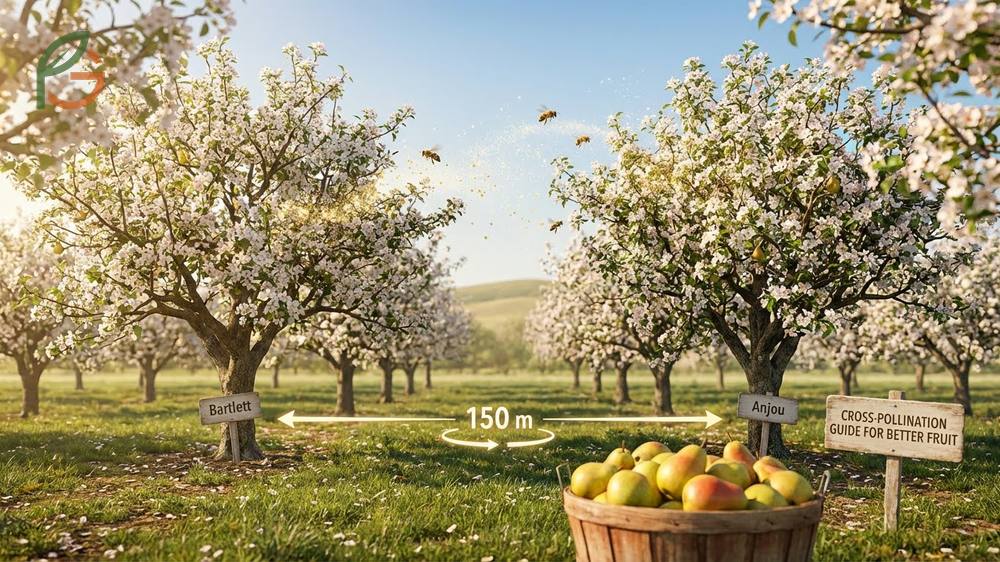
Pear tree pollination requires cross-pollination between compatible varieties for optimal fruit production. Research shows that most pear trees need a partner tree within 500 feet (150 meters) that blooms at the same time to achieve successful pollination[1][2]. While some varieties like Bartlett, Anjou, and Kieffer are partially self-fertile, they still produce significantly better crops when paired with another compatible variety[3]. FruitGarden synthesizes current horticultural research and pollination data to help home gardeners maximize their pear harvests through strategic variety selection.
Quick Answer
- Most pear trees need cross-pollination with another variety blooming at the same time for fruit set[1]
- Partner trees should be within 500 feet (150 meters) or closer for effective pollination[2]
- European and Asian pears can cross-pollinate if bloom times overlap, though compatibility varies[4]
- Bartlett, Anjou, and Kieffer are partially self-fertile but produce 2-3x more fruit with a pollinator partner[3]
Pear Tree Pollination
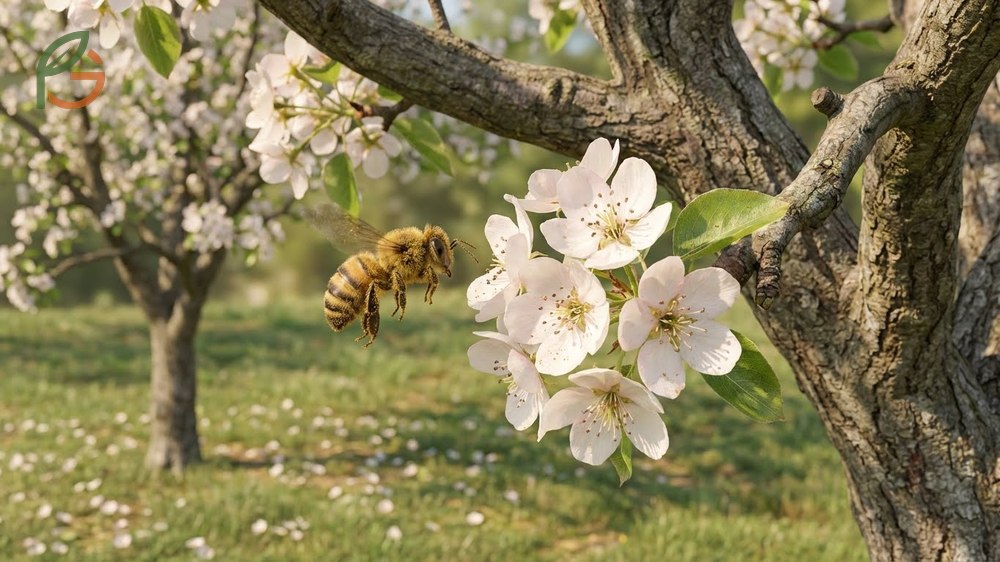
Studies demonstrate that pear trees rely heavily on insect pollination, particularly bees, to transfer pollen between flowers[5]. Unlike some fruit trees, pears don’t wind pollinate and produce relatively low pollen counts per flower, making cross-pollination between compatible varieties essential for commercial and home orchards. Current horticultural data indicates that even partially self-fertile varieties benefit from having a pollination partner nearby.
The pollination process occurs during a narrow bloom window, typically lasting 7-10 days depending on weather conditions. Temperature plays a critical role—bees become active when temperatures reach 50-55°F (10-13°C)[6]. Cold, rainy weather during bloom significantly reduces pollination success since bees stay in their hives when conditions aren’t favorable.
Research from commercial orchards shows that proper pollination increases not just fruit quantity but also fruit size and quality. Trees with adequate pollination partners produce fuller, more symmetrical pears with better seed development. Without sufficient pollination, trees may set fruit that drops prematurely or develops misshapen.
Why Cross-Pollination Matters
Cross-pollination between different pear varieties produces stronger genetic diversity in seeds, leading to better fruit development. When pollen from one variety fertilizes flowers of another variety, the resulting fruit typically has more uniform development and higher sugar content. Agricultural data shows this translates to improved harvest yields and fruit quality across multiple growing seasons.
Even self-fertile pear varieties like Bartlett show measurably better performance with cross-pollination. Commercial growers report that Bartlett trees paired with compatible pollinators produce 2-3 times more fruit compared to isolated trees[3]. This productivity boost justifies planting multiple varieties even in small home orchards.
Self-Fertile vs Cross-Pollinating Varieties
The distinction between self-fertile and cross-pollinating varieties affects planting decisions. Self-fertile varieties can produce fruit from their own pollen, but “partially self-fertile” means they’ll still benefit significantly from a pollination partner. Kieffer stands out as one of the few truly self-fertile pear varieties that can produce good crops without a partner tree[7].
Most European pears including Bartlett, Anjou, Bosc, Comice, and Seckel are partially self-fertile but perform best with cross-pollination. Asian pears generally require cross-pollination with other Asian varieties, with few exceptions. Current guidance emphasizes planting at least two compatible varieties to ensure consistent annual production.
Important note: Some varieties produce sterile pollen and can’t pollinate other trees. If you plant triploid varieties like Catillac or Merton Pride, you’ll need two other compatible pollinators in addition to the triploid[3].
Pear Pollination Requirements
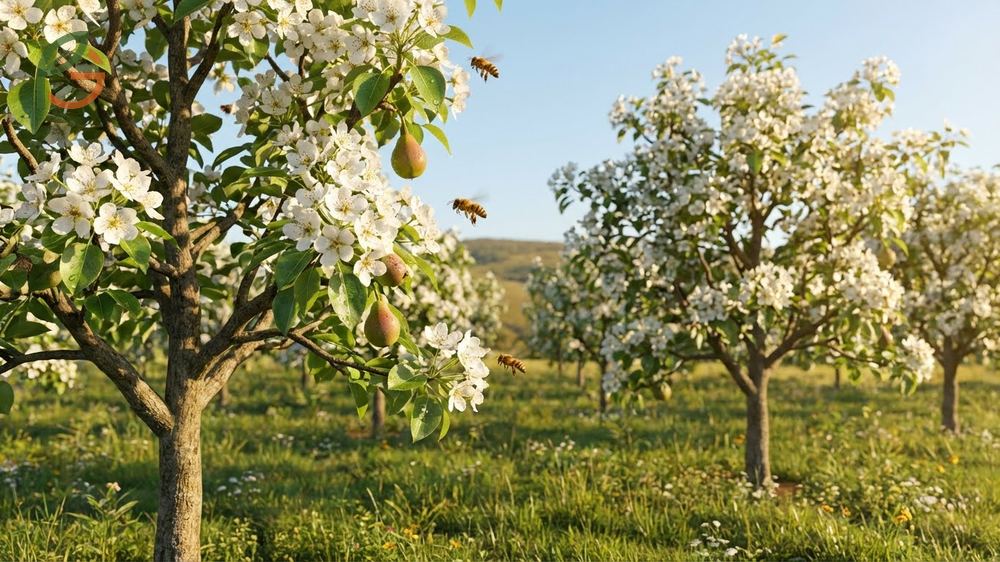
Successful pear pollination depends on three critical factors working together: synchronized bloom timing, appropriate tree spacing, and adequate bee activity. Research shows that when any of these factors is suboptimal, fruit set drops significantly. Understanding these requirements helps gardeners create conditions for reliable annual harvests.
Pear flowers remain receptive to pollination for only 3-5 days after opening. This narrow window means that compatible varieties must overlap in their bloom periods, not just bloom during the same general season. Temperature fluctuations can shift bloom timing by several days, so choosing varieties from the same pollination group provides a buffer against weather variability.
Bloom Time Synchronization
Pollination groups categorize pear varieties by their bloom timing, typically divided into early, mid, and late season bloomers. Varieties within the same group overlap sufficiently for cross-pollination. Current data indicates that mid-season bloomers can often pollinate both early and late varieties since their extended bloom period bridges the gaps[2].
European pears typically bloom in a concentrated 7-10 day window in spring, with exact timing varying by climate zone. Asian pears bloom approximately one week earlier than most European varieties, which affects cross-species pollination compatibility[8]. This timing difference means late-blooming Asian pears may overlap with early European varieties, but early Asian pears won’t pollinate late European types.
Pollination Distance
Bees typically forage within 100-500 feet of their hive or nesting site. While honeybees can travel up to 2-3 miles, they prefer closer food sources and tend to work down tree rows rather than cross wide spaces. Studies show pollination efficiency drops as distance increases between compatible varieties.
The optimal distance between pollination partners is 50-100 feet (15-30 meters) for home orchards[3]. You can rely on a neighbor’s pear tree if it’s within 500 feet and blooms simultaneously. Commercial orchards place pollinizer varieties every 3-4 rows to ensure no tree is more than 50 feet from a compatible partner.
Bee Activity Requirements
Pear flowers produce nectar with lower sugar content compared to other fruit trees, making them less attractive to bees. Commercial orchards address this by introducing honeybee colonies when trees reach one-third bloom, at densities of 10-15 bees per tree for optimal pollination[6].
Home gardeners can support bee populations by avoiding pesticide use during bloom and maintaining flowering ground covers nearby. Research demonstrates that native bees and bumblebees also contribute to pear pollination, though honeybees remain the primary pollinators in most regions. Keeping bee habitat near your orchard increases pollination success rates without requiring managed hives.
- Plant compatible varieties within 100 feet (30 meters) for best results
- Ensure varieties bloom within 3-5 days of each other for pollen transfer
- Maintain at least 2 colonies per acre in commercial settings
- Avoid spraying during bloom to protect bee populations
- Remove competing flowers like dandelions to keep bees focused on pear blooms
Cross Pollinating Pears
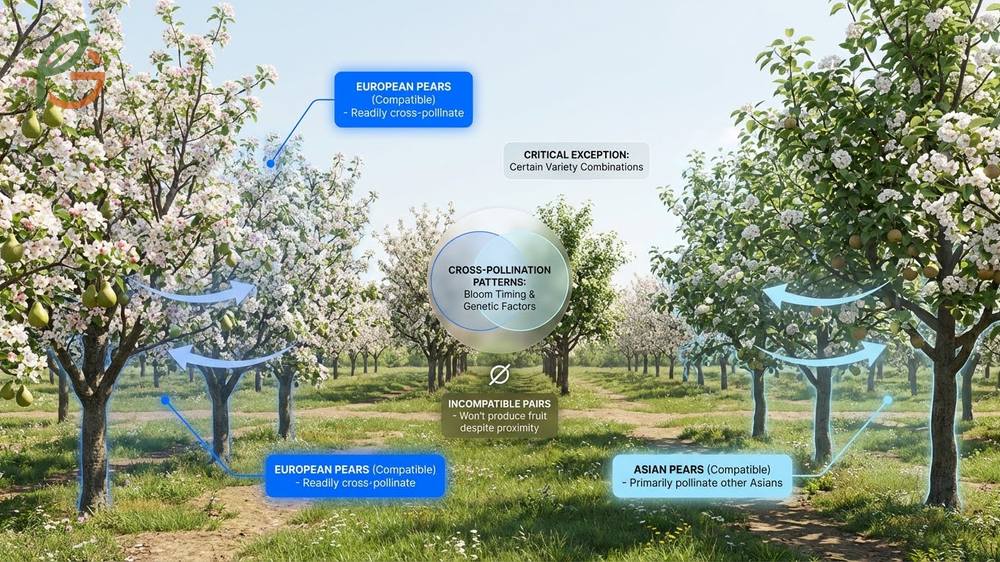
Cross-pollination between pear varieties follows specific compatibility patterns based on bloom timing and genetic factors. Current horticultural guidance shows that most European pears cross-pollinate readily with other Europeans, while Asian pears primarily pollinate other Asians. Understanding these patterns prevents planting incompatible pairs that won’t produce fruit despite being close together.
One critical exception involves certain variety combinations that are incompatible despite blooming simultaneously. Louise Bonne of Jersey won’t pollinate Williams Bon Chretien (Bartlett), and Seckel is a poor pollinator for Bartlett[3][1]. These incompatibilities likely result from genetic factors that prevent successful fertilization.
European Pear Compatibility
European pears (Pyrus communis) represent the majority of commercially grown varieties in the United States. Research demonstrates that most European varieties are diploids with compatible pollen, meaning any two varieties blooming at the same time will successfully cross-pollinate. This broad compatibility simplifies orchard planning for home gardeners.
Popular combinations include Bartlett with Anjou or Bosc, Conference with Comice, and Moonglow with Bartlett or Seckel. These pairs bloom within overlapping windows and show strong fruit set. Agricultural data from orchards confirms that these established combinations produce reliable yields across different climate zones.
- Bartlett pairs well with Anjou, Bosc, and Comice
- Anjou cross-pollinates effectively with Bartlett and Bosc
- Conference works with most Group A varieties including Comice
- Moonglow benefits from Bartlett or Seckel as pollinators
- Kieffer serves as a universal pollinator for mid-season varieties
Asian Pear Compatibility
Asian pears (Pyrus pyrifolia) require cross-pollination with other Asian varieties in most cases. Current data shows that varieties like Hosui demonstrate partial self-fertility but still produce better with a partner. Nijisseiki (20th Century) needs cross-pollination from varieties like Chojuro, Shinseiki, or even Bartlett if bloom periods align[5].
Asian pears bloom approximately one week before most European varieties, creating limited cross-species compatibility. Late-blooming Asian varieties can be pollinated by early European varieties like Bartlett, but most Asian-European crosses fail due to mismatched bloom timing[8]. Gardeners planning to grow Asian pears should plant at least two compatible Asian varieties rather than relying on European pollinators.
Compatibility tip: When in doubt, choose several varieties that flower at the same time. Research shows this simple strategy ensures adequate pollination even without detailed compatibility charts, as most pear varieties within the same bloom period can cross-pollinate.
Pear Pollinator Varieties
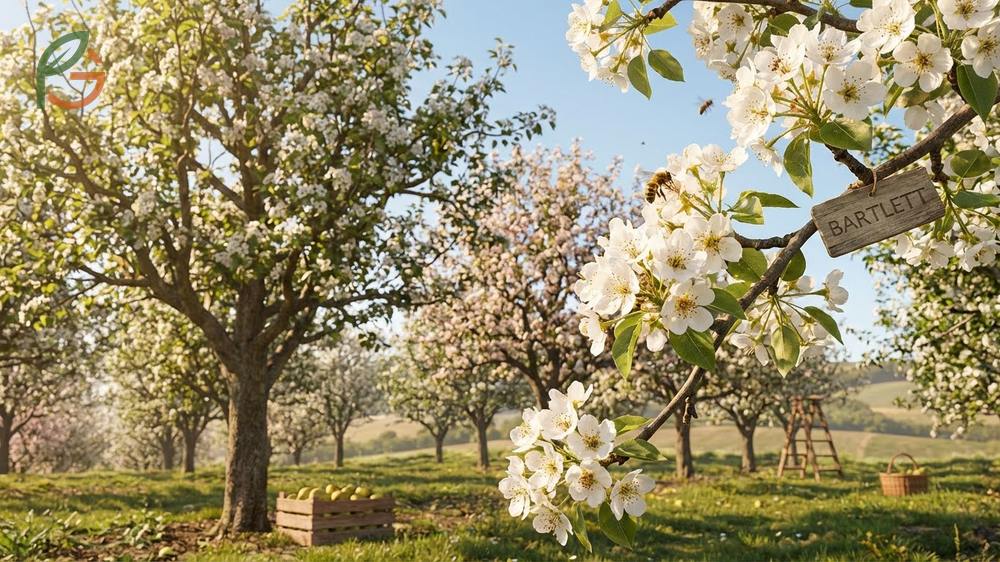
Certain pear varieties serve as excellent universal pollinators due to their abundant pollen production, extended bloom periods, and broad compatibility. Studies from orchards identify varieties that consistently improve fruit set across multiple compatible partners. These workhorse pollinators simplify orchard planning when you’re unsure which varieties to pair.
Bartlett functions as a reliable pollinator for most mid-season European varieties. Its extended bloom period overlaps with both slightly earlier and later varieties. Kieffer offers similar benefits with the added advantage of being truly self-fertile and highly disease-resistant[7]. Conference in Europe serves a comparable role, pollinating most Group A varieties.
This table shows popular pear varieties, their self-fertility status, compatible pollinators, and bloom timing to help select compatible planting combinations
| Variety | Self-Fertile | Compatible Pollinators | Bloom Period |
|---|---|---|---|
| Bartlett | Partially[3] | Anjou, Bosc, Comice, Moonglow | Mid-season |
| Anjou | Partially[5] | Bartlett, Bosc, Comice | Mid-season |
| Kieffer | Yes[7] | Most European varieties | Mid-season |
| Bosc | No | Bartlett, Anjou, Comice | Mid-season |
| Comice | No | Conference, Bartlett, Anjou | Late mid-season |
| Conference | Partially[1] | Most Group A varieties | Mid-season |
| Seckel | Partially | Moonglow, Kieffer (not Bartlett) | Mid-season |
For Asian pears, Shinseiki serves as a strong universal pollinator compatible with most other Asian varieties. Chojuro and Nijisseiki also cross-pollinate effectively with multiple Asian varieties. Current agricultural data suggests planting at least two Asian varieties ensures adequate pollen transfer during their earlier bloom window.
- Bartlett excels as a mid-season European pollinator with broad compatibility
- Kieffer offers self-fertility plus strong pollination for other varieties
- Conference provides reliable pollen for Group A European pears
- Shinseiki serves as a universal pollinator for most Asian varieties
- Anjou pairs successfully with the widest range of European varieties
European Asian Pollination
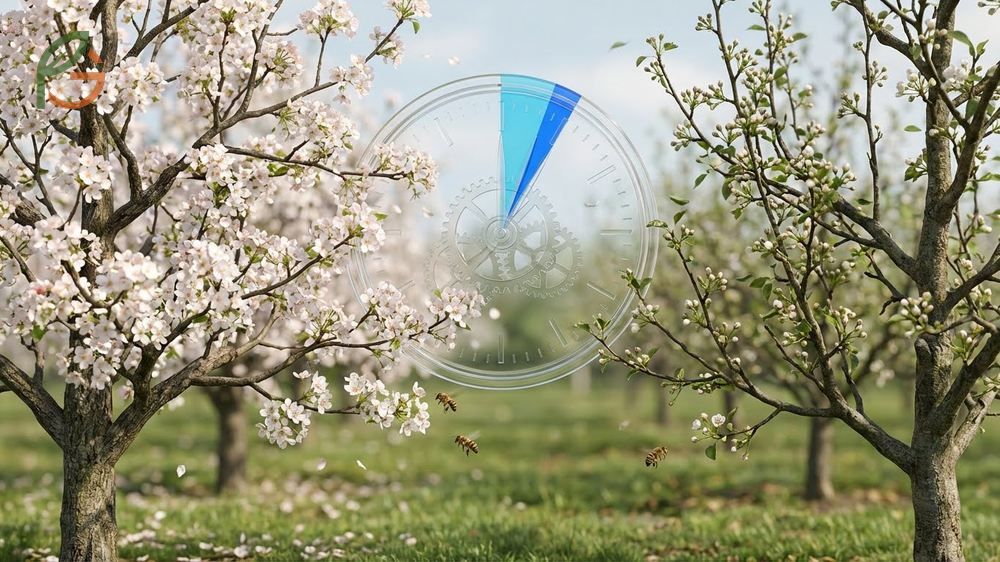
Cross-pollination between European and Asian pear species presents unique challenges due to bloom timing differences. Research indicates that Asian pears typically bloom 7-10 days before most European varieties, creating a narrow window where only specific combinations overlap[8]. This timing gap means most Asian-European crosses fail despite genetic compatibility.
However, late-blooming Asian varieties can successfully pollinate early European varieties. Current data shows that late Asian varieties like some Hosui selections overlap with early Europeans like Bartlett[5]. Heritage Fruit Trees research confirms that Asian and European pear pollen is genetically compatible when bloom periods coincide[4].
Gardeners attempting cross-species pollination should verify bloom timing in their specific climate zone. Temperature fluctuations can shift bloom by several days, occasionally creating overlap where none typically exists. Agricultural extension data recommends planting two Asian varieties together plus one early European variety to maximize pollination opportunities across both species.
From My Experience: My cousin in Guadalajara, Mexico planted Nijisseiki Asian pear with Bartlett European pear in spring 2023. The Asian tree bloomed March 8-15 while Bartlett opened March 14-22, giving them a 7-day overlap versus the typical 2-3 day gap—both trees set fruit successfully that first year.
Perry pears, traditional European varieties used for perry (pear cider), follow the same pollination requirements as standard European pears. These can pollinate modern dessert varieties and vice versa, as they’re the same species. This expands pollination options for home orchards interested in growing both dessert and perry varieties.
- Asian pears bloom 7-10 days before most European varieties
- Late Asian varieties may overlap with early Europeans like Bartlett
- Genetic compatibility exists when bloom periods coincide
- Plant two Asian varieties together for reliable Asian pear fruit set
- Monitor local bloom timing as climate affects species overlap
Cross-species tip: Don’t rely solely on European pears to pollinate Asian varieties. Studies show that even when bloom periods overlap, planting two Asian varieties ensures consistent fruit production across varying weather conditions.
Conclusion
The evidence is clear: pear tree pollination succeeds when you plant compatible varieties within 100-500 feet that bloom simultaneously. Most pears need a partner tree for optimal fruit production, though partially self-fertile varieties like Bartlett, Anjou, and Kieffer still benefit from cross-pollination. Current horticultural guidance emphasizes choosing varieties from the same pollination group and maintaining bee-friendly conditions during bloom.
Research demonstrates that investing in two or three compatible varieties transforms sporadic fruiting into reliable annual harvests. Whether you’re growing European dessert pears, Asian varieties, or attempting cross-species combinations, synchronized bloom timing remains the critical success factor. FruitGarden brings together agricultural research and practical growing experience to help home gardeners achieve consistent pear production through strategic variety selection.
Frequently Asked Questions
Do you need two pear trees to get fruit?
Most pear trees need a second compatible variety for successful pollination and fruit production. While some varieties like Kieffer are self-fertile, even partially self-fertile varieties like Bartlett and Anjou produce 2-3 times more fruit when paired with a pollinator tree. The second tree must bloom at the same time and be within 500 feet for effective pollen transfer by bees.
Can Asian and European pears cross-pollinate?
Yes, Asian and European pears can cross-pollinate if their bloom periods overlap, though this rarely happens naturally. Asian pears typically bloom 7-10 days before most European varieties. Late-blooming Asian pears may overlap with early Europeans like Bartlett, making successful cross-pollination possible. However, planting two Asian varieties together provides more reliable fruit set than depending on European pollinators.
How close do pear trees need to be for pollination?
Pear trees should be within 100-500 feet (30-150 meters) of each other for effective cross-pollination. Bees typically forage within this range, with optimal pollination occurring when trees are 50-100 feet apart. You can even rely on a neighbor’s compatible pear tree if it’s within 500 feet and blooms at the same time as your tree.
What pear varieties are self-pollinating?
Kieffer is one of the few truly self-fertile pear varieties that can produce good crops without a partner tree. Bartlett, Anjou, and Conference are partially self-fertile, meaning they’ll set some fruit alone but produce significantly better yields with a compatible pollinator nearby. Research shows that even self-fertile varieties benefit from cross-pollination for larger harvests and better fruit quality.
Can apple trees pollinate pear trees?
No, apple trees cannot pollinate pear trees. Only pear trees can pollinate other pear trees because pollination requires the same or very closely related species. Crabapples, which pollinate apples, also won’t work for pears. You must plant two compatible pear varieties for successful cross-pollination and fruit production.
When should I introduce bees for pear pollination?
Move bees into pear orchards when trees reach one-third bloom for optimal pollination. Commercial orchards use densities of 10-15 bees per tree, typically requiring 2 colonies per acre. Pear nectar has lower sugar content than other fruits, making pears less attractive to bees, so introducing colonies at peak bloom ensures adequate pollinator activity during the critical 3-5 day window when flowers are receptive.
What are triploid pear varieties and how do they affect pollination?
Triploid pear varieties like Catillac and Merton Pride produce sterile pollen that can’t pollinate other trees. If you plant a triploid variety, you need two additional compatible pollinator trees—one to pollinate the triploid and another to pollinate the first pollinator. Most common varieties like Bartlett and Anjou are diploids with fertile pollen and don’t require this special arrangement.





