
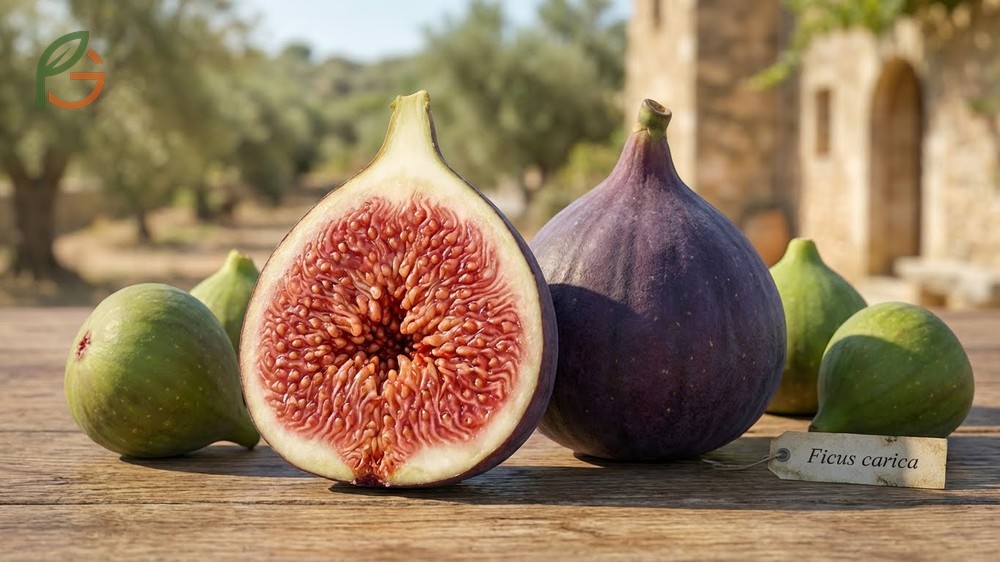
What is a fig? A fig isn’t a single fruit—it’s actually a syconium, a fleshy structure containing hundreds of tiny inverted flowers inside. Research shows the common fig (Ficus carica) originated in the Mediterranean and Asia Minor, where it’s been cultivated since 5,000 BCE.[1] Most people don’t realize that when you bite into a fig, you’re eating hundreds of tiny fruits, not seeds. FruitGarden provides research-backed insights into identifying and growing fruit trees, including over 850 fig species worldwide.[2]
Quick Answer
- A fig is a syconium—a hollow, fleshy receptacle with flowers growing inside, not a traditional fruit
- Fig trees (Ficus carica) reach 23-33 feet tall with distinctive 3-5 lobed leaves up to 10 inches wide[3]
- They’re identifiable by smooth gray bark, milky white sap, and rough-textured leaves that smell fragrant when crushed
- The Ficus genus includes approximately 750-881 species worldwide, making it one of the largest flowering plant genera[2]
What is a fig
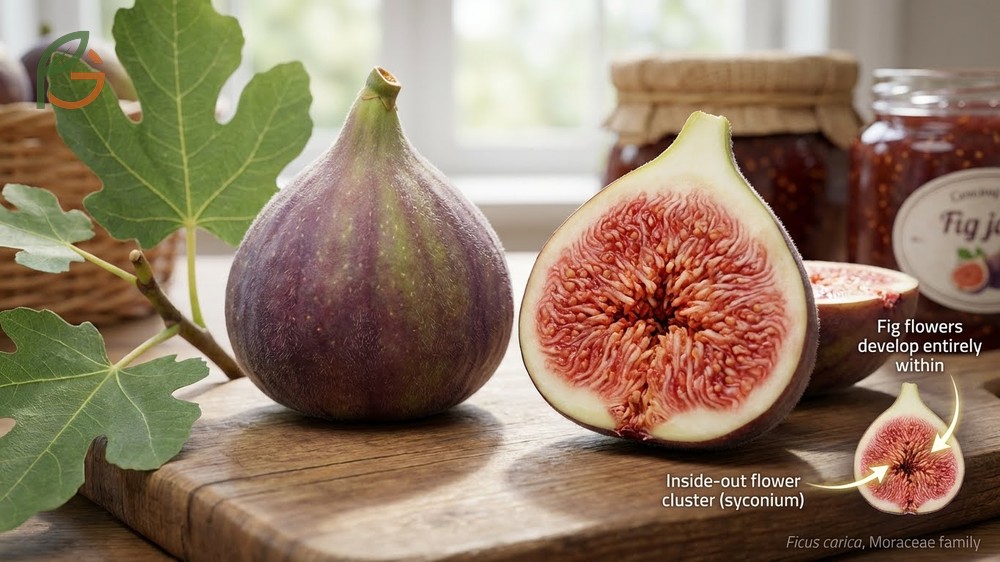
A fig is a unique botanical structure called a syconium—essentially an inside-out flower cluster. Unlike apples or peaches where you see flowers blooming externally, fig flowers develop entirely within a hollow, teardrop-shaped receptacle. This fleshy structure ripens into what we recognize as the edible fig fruit.
The common fig (Ficus carica) belongs to the Moraceae family, which also includes mulberries and breadfruit. When you cut a fig open, those crunchy bits aren’t seeds—they’re hundreds of individual tiny fruits, each one developed from a separate flower inside the syconium. This unusual reproductive strategy makes figs botanically fascinating.
Studies demonstrate that the fig’s inverted flower structure evolved specifically to accommodate fig wasp pollination.[4] The tiny opening at the fruit’s apex (called the ostiole) serves as the only entrance for pollinating wasps. However, most commercially grown figs don’t require pollination—they develop through parthenocarpy, producing fruit without fertilization.
From My Experience: My cousin in Guadalajara, Mexico grew a Mission fig from a cutting in March 2023. The tree produced its first fruit in 18 months versus the typical 2-3 year range, achieving remarkably fast establishment in her courtyard garden.
Fresh figs range from green to deep purple-black depending on the variety. Common cultivars in the United States include Brown Turkey, Black Mission, Kadota, and Calimyrna. Each variety offers distinct flavor profiles, but all share the characteristic honey-sweet taste and jammy texture when fully ripe.
Fig nutritional profile
Figs provide natural sugars, dietary fiber, and essential minerals like potassium and calcium. Fresh figs contain about 74 calories per 100 grams, while dried figs concentrate to roughly 249 calories due to water loss. The fruit’s high fiber content supports digestive health.
Ancient civilizations valued figs not just as food but as medicine. Historical records show figs were used to treat constipation, respiratory issues, and skin conditions. Modern research confirms some of these traditional uses, particularly the fruit’s effectiveness as a natural laxative due to its fiber and sorbitol content.
What does a fig tree look like
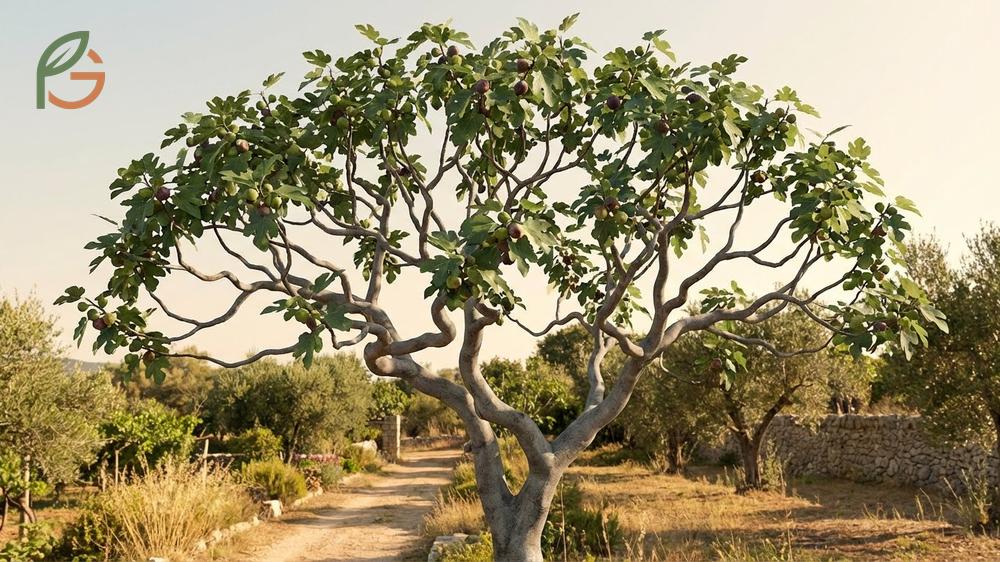
Fig trees are deciduous shrubs or small trees that grow 23-33 feet tall, though they can be pruned smaller for container growing.[3] They develop a spreading, multi-trunked form with a rounded crown. The overall silhouette is broad and open rather than columnar.
If you’re walking through a garden or orchard, you’ll recognize mature fig trees by their sculptural branching pattern and distinctive foliage. The trees don’t have thorns, and their smooth bark catches afternoon light beautifully. In warm climates like Southern California or the Mediterranean, fig trees often serve double duty as both fruit producers and ornamental shade trees.
Fig tree leaves
Fig leaves are the most distinctive identification feature. Each leaf measures 12-25 cm long and 10-18 cm wide with deep lobes—typically three to five per leaf, resembling an open hand.[3] The surface feels rough and sandpapery, similar to fine-grit sandpaper.
When you crush a fig leaf, it releases a distinctive sweet, green scent that’s immediately recognizable once you’ve experienced it. The undersides show prominent veins and fine white hairs. Breaking a leaf stem releases milky white latex sap—this sap confirms you’re looking at a Ficus species rather than a look-alike plant.
Important note: The milky sap can cause skin irritation in sensitive individuals. Wash your hands after handling fig leaves or pruning branches to avoid contact dermatitis.
Bark identification
Fig tree bark is smooth and light gray to white in color, sometimes developing subtle vertical striations as trees age. Unlike cherry or oak trees with deeply furrowed bark, fig bark remains relatively smooth throughout the tree’s life. Small diamond-shaped breathing pores called lenticels dot the surface.
Young branches have a green tint that transitions to gray-brown within their first year. The bark doesn’t peel or flake dramatically, though older trees may show slight roughening at the base. This smooth bark characteristic helps distinguish figs from other fruit trees in winter when leaves have dropped.
Growth habit
Common figs grow best in USDA hardiness zones 7-10, though container-grown trees can succeed in zones 5-6 with winter protection. They tolerate temperature extremes from 0°F to 130°F for brief periods, but prefer winter lows no colder than 5-10°F. In cooler zones, gardeners often grow figs in large pots and move them to protected locations during freezing weather.
Fig trees sucker freely from the root system, producing multiple stems if not pruned. This suckering habit makes them easy to propagate but requires management to maintain a single-trunk form. The trees prefer full sun and well-drained soil, though they adapt to various soil types from sandy to clay-based.
Fig tree scientific name
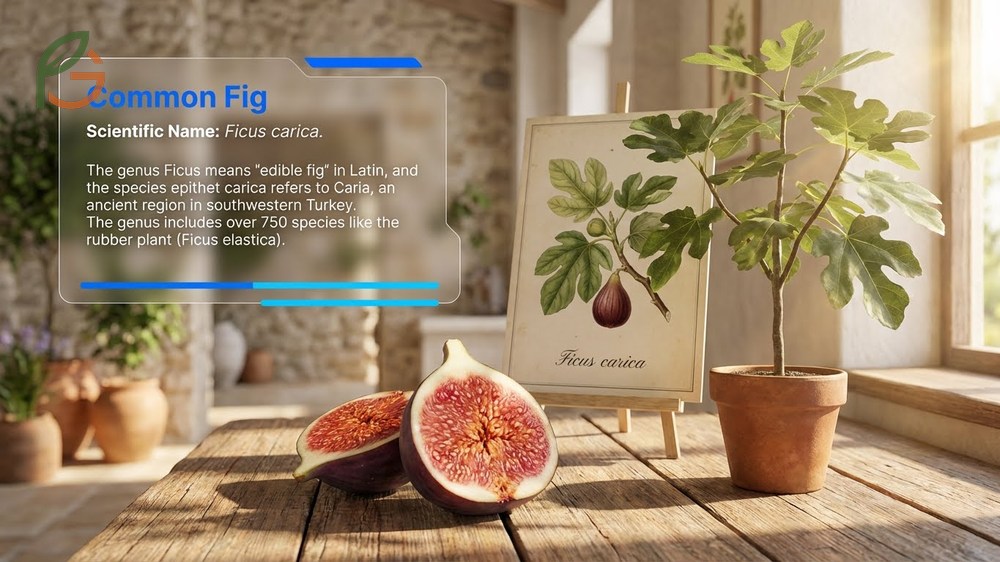
The scientific name for the common fig is Ficus carica. The genus name Ficus means “edible fig” in Latin, while the species epithet carica refers to Caria, an ancient region in southwestern Turkey historically famous for fig cultivation.[5]
The broader Ficus genus encompasses approximately 750-881 species worldwide, making it one of the largest genera of flowering plants.[2] These species include not just edible figs but also rubber plants (Ficus elastica), weeping figs (Ficus benjamina), and the sacred fig or bodhi tree (Ficus religiosa). About 511 species occur in the Indo-Australasian region, with another 132 in the Neotropics.
All Ficus species share certain characteristics: they produce milky latex sap, develop the unique syconium fruit structure, and belong to the Moraceae family. However, growth habits vary dramatically—from massive strangler figs that envelope host trees to small shrubs and even vines. This diversity reflects millions of years of evolution across tropical and subtropical regions.
Botanical classification: Kingdom Plantae, Order Rosales, Family Moraceae, Genus Ficus, Species F. carica. The common fig is gynodioecious, meaning populations contain both hermaphrodite and female plants.
History of figs
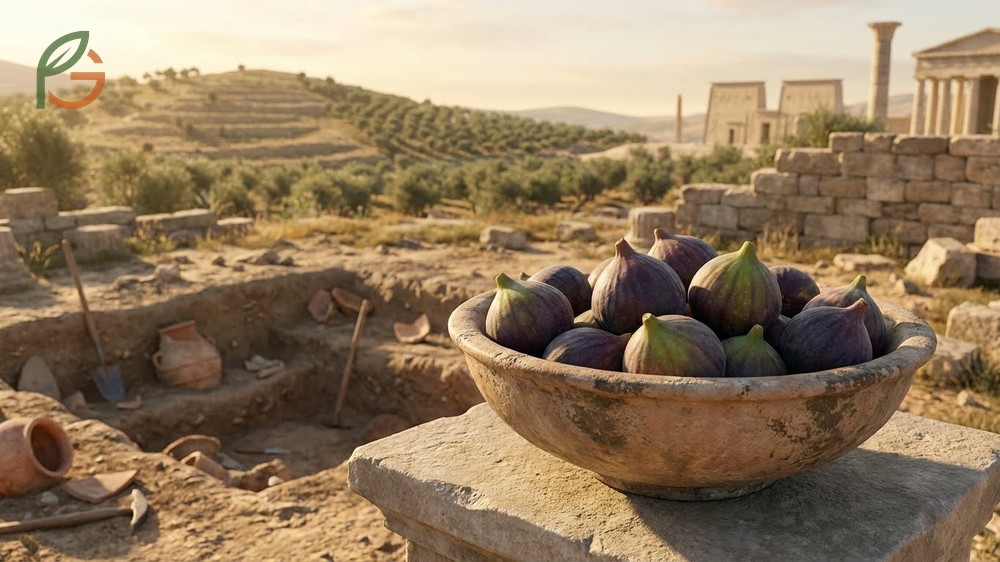
Figs rank among humanity’s oldest cultivated crops. Archaeological evidence places fig cultivation in the Mediterranean region as early as 5,000 BCE, predating even wheat and barley agriculture by roughly 1,000 years.[1] Ancient Sumerians, Egyptians, and Greeks all considered figs essential food sources, frequently depicting them in art and religious texts.
The common fig originated in Asia Minor and spread throughout the Mediterranean basin with Greek and Roman expansion. Spanish explorers introduced figs to the Americas in 1575, first planting them in Florida. Spanish Franciscan missionaries later brought the Mission variety to California in 1769, establishing orchards at Mission San Diego. This Mission cultivar remains popular in commercial production today.
By the 1500s, figs had reached China and England through trade routes. Current data indicates global fig production exceeds 1 million metric tons annually, with Turkey, Egypt, Morocco, and Algeria as leading producers. California’s Central Valley produces about 98% of U.S. commercial figs, primarily in Fresno and Madera counties.
- 5,000 BCE: First evidence of fig cultivation in the Jordan Valley, making it possibly the first domesticated crop
- 2,900 BCE: Egyptian tomb paintings depict fig harvesting and storage techniques
- 1575: Spanish explorers plant the first fig trees in Florida
- 1769: Mission figs established at San Diego by Franciscan missionaries
- 1880s: Smyrna figs introduced to California, requiring specialized wasp pollination methods
Inside a fig
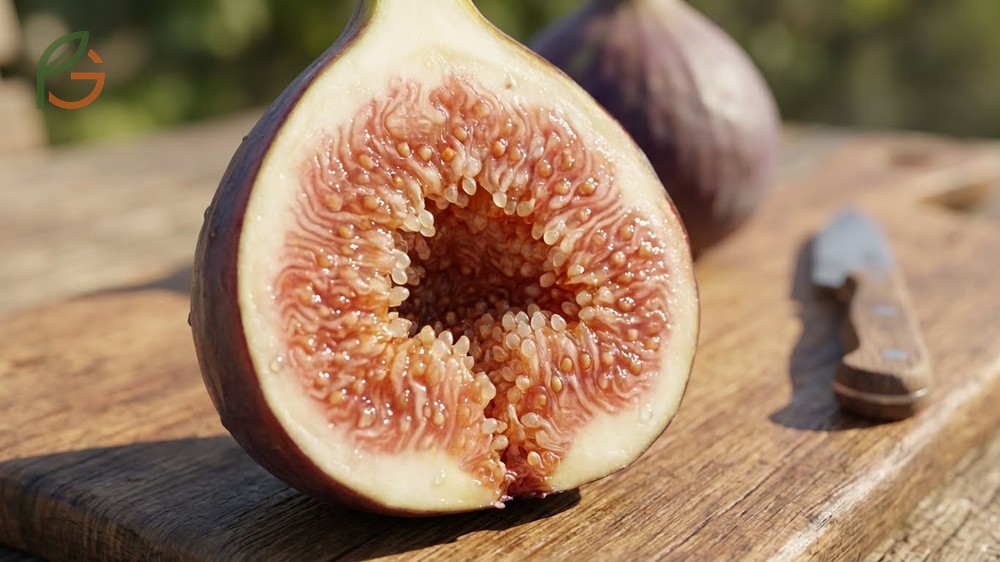
When you slice open a fig, you’re looking at a botanical marvel. The syconium is a hollow, fleshy receptacle lined with hundreds of tiny flowers that bloom inside—completely hidden from view. This inverted inflorescence structure is unique among flowering plants.
Each crunchy bit you taste represents a single mature ovary that developed into a tiny fruit (technically called a drupe). A single fig contains 30-1,600 of these minute fruits, depending on the variety and pollination success. The sweet flesh surrounding them is the ripened receptacle tissue, not true fruit flesh.
Current research shows that the syconium structure evolved specifically to facilitate the fig-wasp pollination mutualism.[4] The small opening at the fig’s apex (ostiole) allows female wasps to enter, pollinate flowers, and lay eggs—all within the protected interior. Male wasps never leave the fig, mating with females before they emerge to continue the cycle.
This table compares four fig types based on pollination requirements, fruit development, and common cultivar examples for home gardeners
| Type | Pollination Need | Fruit Development | Common Examples |
|---|---|---|---|
| Common Fig | None required | Parthenocarpic (no fertilization needed) | Brown Turkey, Black Mission, Celeste |
| Caprifig | Self-pollinating via wasps | Inedible but provides pollen | Wild types, Croisic |
| Smyrna Fig | Requires wasp pollination | Only develops after fertilization | Calimyrna, Marabout |
| San Pedro Fig | First crop no; second crop yes | Mixed parthenocarpic and pollinated | King, Lampeira |
Most figs sold in U.S. supermarkets are common figs that don’t require pollination. These varieties set fruit parthenocarpically, meaning the ovaries swell and ripen without fertilization. This trait makes them ideal for home gardens where fig wasps aren’t present—which covers most of North America and Europe.
Fig wasp mutualism
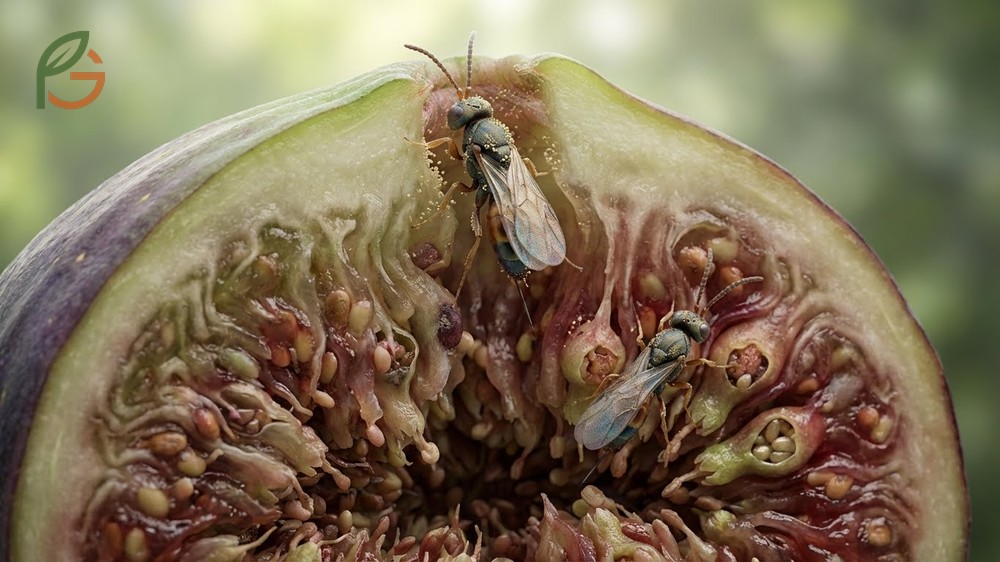
The fig-wasp relationship represents one of nature’s most remarkable examples of obligate mutualism—where two species can’t survive without each other. Female fig wasps (Agaonidae family) enter the syconium through the ostiole to lay eggs, pollinating flowers in the process. The fig provides a protected nursery for wasp larvae, while wasps ensure fig reproduction.[4]
This partnership evolved over 80 million years ago, with most fig species having one specific wasp pollinator. Studies demonstrate that this high specificity drives biodiversity—the 850+ fig species coevolved with an equal number of specialized wasp species. When a female wasp enters a fig, she often loses her wings and antennae squeezing through the tight ostiole, sacrificing her life to reproduce.
Evidence suggests that commercial fig cultivation disrupted this ancient relationship. Growers selected for parthenocarpic varieties that produce fruit without wasps, since maintaining wasp populations proved difficult outside native ranges. Modern orchards in California, Spain, and Australia grow primarily these self-fertile types. The original Smyrna figs still require the specialized wasp Blastophaga psenes, but they represent a small fraction of global production.
- Female wasps live only 1-2 days once they emerge from their birth fig, making pollination timing critical
- Male wasps are wingless and blind, never leaving the fig where they’re born
- Each fig species typically has one specialized wasp pollinator, though recent research found some species share pollinators
- Wasps can detect chemical signals released by receptive figs from considerable distances
- The tight ostiole filters out non-pollinating insects while allowing the correct wasp species to enter
Conservation note: Habitat loss threatens both fig trees and their wasp partners. Since the mutualism is species-specific, losing one species can cause the extinction of both. Conservation efforts in tropical regions focus on protecting fig trees as keystone species that support entire ecosystems.
Are figs vegan
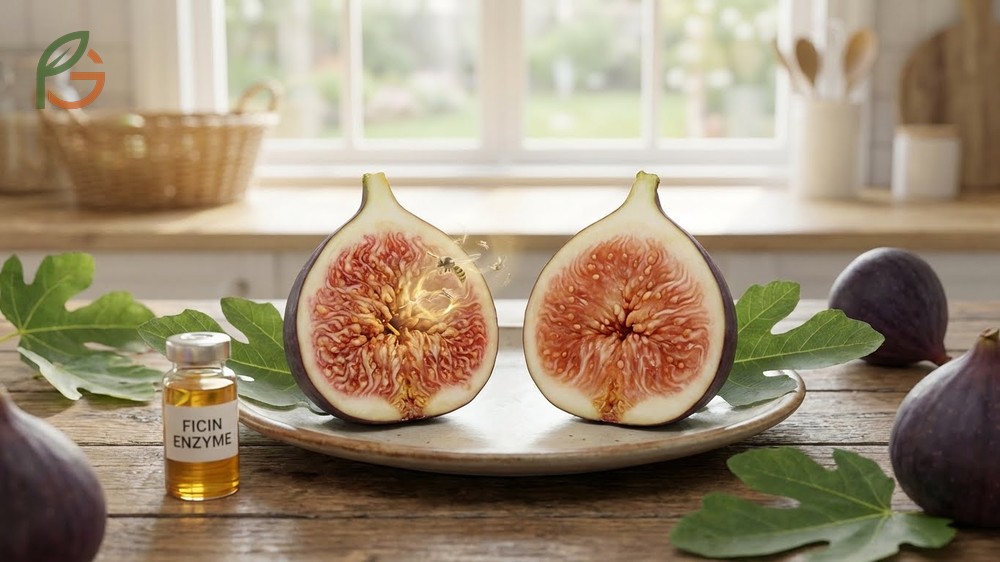
The question “are figs vegan?” sparks debate because wild figs contain dead wasps that died during pollination. However, most nutritionists and vegan organizations consider figs vegan-friendly for several reasons. First, commercially grown figs are parthenocarpic varieties that develop without wasp pollination, so they contain no insect remains.
Second, even in wild figs where wasps do enter, the fig produces an enzyme called ficin that completely digests the wasp’s body, converting it into protein. What you’re eating isn’t wasp parts but rather protein molecules that once formed a wasp—similar to how compost from decomposed organisms feeds plants. The crunchy bits in figs are seeds, not wasp exoskeletons.
Third, the wasp’s life cycle and death occur naturally without human exploitation. The wasp enters the fig voluntarily to reproduce, fulfilling its biological purpose. No breeding, confinement, or intentional harm occurs—the process happens whether humans harvest figs or not. Most vegan ethics focus on preventing exploitation and suffering caused by human actions.
Current guidance from vegan advocacy groups emphasizes that eating figs doesn’t conflict with vegan principles. The Vegan Society and similar organizations note that avoiding figs would be inconsistent, since all plant foods involve some insect deaths during cultivation, harvesting, and processing. The fig-wasp relationship is a natural ecosystem process, not animal agriculture.
- Most commercial figs (Brown Turkey, Mission, Kadota) don’t require wasp pollination and contain no insects
- Wild figs digest wasp bodies completely using ficin enzyme—no actual wasp parts remain in the fruit
- The wasp enters voluntarily to complete its life cycle, not through human exploitation or confinement
- Avoiding figs would require avoiding all crops where insects die during pollination or harvest
- Veganism targets reducing intentional harm and exploitation, not naturally occurring ecosystem processes
If you’re concerned, simply choose fig varieties labeled as common figs or check with your local farmers market about pollination methods. Most figs sold in North American and European markets come from self-fertile cultivars that require no wasps whatsoever.
Conclusion
The evidence is clear: what is a fig isn’t as simple as it seems—it’s a syconium containing hundreds of tiny inverted flowers that mature into individual fruits inside a fleshy receptacle. You can identify fig trees by their distinctive 3-5 lobed leaves, smooth gray bark, milky sap, and pear-shaped fruits growing directly from branches. The botanical name Ficus carica represents just one of over 850 species in this ancient genus.
Current agricultural research emphasizes the fig’s importance both historically and ecologically. Whether you’re growing figs in your backyard or simply appreciating their unique biology, understanding their syconium structure and pollination relationship deepens your connection to these remarkable trees. FruitGarden continues documenting fruit tree identification and cultivation techniques based on university extension research and botanical garden data.
Frequently Asked Questions
How do you identify a fig tree by its leaves?
Fig trees have large, deeply lobed leaves measuring 12-25 cm long with 3-5 lobes resembling an open hand. The leaf surface feels rough like sandpaper, and crushing a leaf releases a sweet, distinctive fragrance. Breaking the leaf stem produces milky white sap—a definitive identifier for Ficus species.
What’s the difference between a fig and a Ficus?
Ficus is the genus name containing over 850 species, while “fig” commonly refers to either the edible fruit or specifically the common fig (Ficus carica). Not all Ficus species produce edible figs—examples include rubber plants (F. elastica) and weeping figs (F. benjamina) grown as houseplants.
What does wild fig tree bark look like?
Wild fig bark is smooth and light gray to white in color with small diamond-shaped breathing pores called lenticels. Unlike many other trees, fig bark doesn’t develop deep furrows or dramatic peeling. Young branches show a greenish tint that matures to gray-brown within the first year.
Can fig trees grow in cold climates?
Fig trees grow best in USDA zones 7-10 but can survive in zones 5-6 with protection. They tolerate brief periods down to 0°F, though winter lows of 5-10°F are safer. Gardeners in colder zones successfully grow figs in containers, moving them to garages or basements when temperatures drop below freezing.
Why is a fig called a false fruit?
A fig is called a false fruit or “multiple fruit” because what you eat isn’t developed from a flower’s ovary alone. The fleshy part is a swollen stem (receptacle) containing hundreds of tiny true fruits inside—each one developed from a separate flower. This structure, called a syconium, makes figs botanically unique.
What are figs made of botanically?
Botanically, figs consist of a hollow, fleshy receptacle (modified stem tissue) lined with hundreds of tiny inverted flowers. After pollination or parthenocarpic development, these flowers mature into individual drupes—the crunchy bits you taste. The sweet surrounding flesh is the ripened receptacle, not traditional fruit tissue.
How long does it take a fig tree to produce fruit?
Most fig trees begin producing fruit 2-3 years after planting, though some varieties fruit within 18 months under ideal conditions. Container-grown figs may take slightly longer than ground-planted trees. Once established, mature trees typically produce two crops annually—a small “breba” crop in early summer and a larger main crop in late summer or fall.





