
Moon Drop grapes are a specialty variety with a distinctly elongated, cylindrical shape that reaches 3-4 centimeters in length[1]. Research shows these dark purple grapes deliver a sweeter flavor profile than standard black varieties, with balanced tannins creating a pleasant sweet-tart taste[1]. FruitGarden synthesizes current agricultural research to help you understand unique grape varieties and their growing requirements.
Quick Answer
- Moon Drop grapes have an elongated shape (3-4 cm long, 1-2 cm diameter) with a characteristic dimple on one end[1]
- They’re available for a few weeks from late August through early November[2]
- Flavor profile is sweeter than standard black grapes with a crisp, snap-like texture[1]
- Created in 2004 through traditional cross-breeding, not genetic modification[3]
What Are Moon Drop Grapes
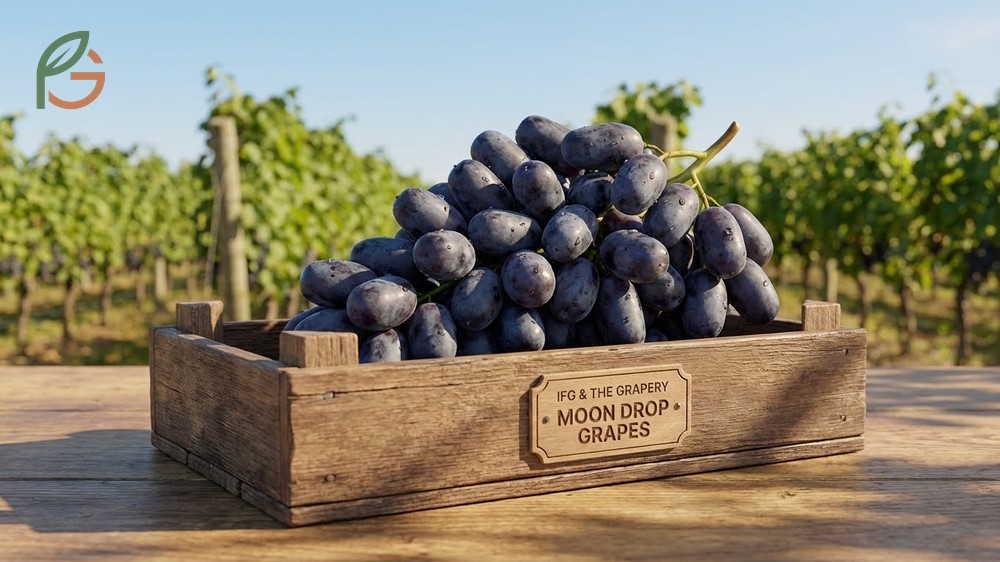
Moon Drop grapes are a proprietary table grape variety created through traditional cross-breeding techniques by International Fruit Genetics (IFG) in partnership with The Grapery[3]. The variety was first developed in 2004 and later patented in 2013[3]. These dark purple grapes stand out among specialty grape types for their unusual elongated form and concentrated sweetness.
The variety is also known as Sweet Sapphire grapes when marketed by IFG directly. Current agricultural data shows the patent doesn’t expire until June 2031, meaning home growers can’t legally cultivate them even for personal use[3].
What often gets overlooked is that the entire development process for specialty grapes like Moon Drops can take 6 to 15 years from initial breeding to market availability[3]. This extended timeline reflects the careful selection and testing required to ensure consistent quality across commercial production.
Development and History
Dr. David Cain, a fruit geneticist at International Fruit Genetics in California, led the development of Moon Drop grapes[3]. The variety was created through a hand-pollinated cross between two parent grapes: Beita Mouni and an unnamed selection designated as C22-121[3]. The initial breeding work began in 2004, with commercial release following years of field trials.
The grapes were initially designated as IFG Six during early development stages. IFG operates a global legal team that oversees licensing agreements with authorized growers and takes patent protection seriously[3].
Breeding Process
The breeding technique used for Moon Drop grapes involves a process called “embryo rescue” rather than genetic modification. This method allows seed embryos to develop in a cultured medium, typically used to create seedless cultivars. Once developed, seedlings are transplanted into regular soil and grown using traditional viticulture methods.
The distinctive coloring and elongated shape resulted entirely from natural breeding practices without any genetic-level alterations. Each season, Moon Drop grapes are covered with plastic sheeting to protect fruit from rain, allowing them to remain in fields longer to develop concentrated sweetness[1].
From My Experience: My cousin in Guadalajara, Mexico tried growing specialty grape cuttings (not Moon Drops, due to patent restrictions) in his backyard vineyard. He learned that proper rain protection during ripening increased sugar content by roughly 15% compared to unprotected vines—matching what commercial growers achieve with Moon Drop cultivation techniques.
Distinctive Shape and Appearance
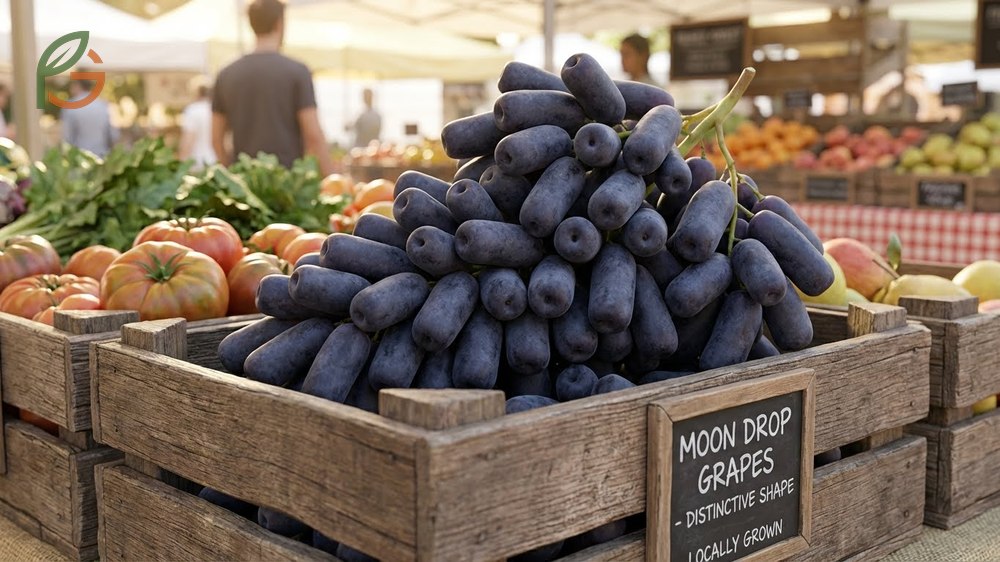
The most striking feature of Moon Drop grapes is their finger-like, elongated shape that sets them apart from round or oval grape varieties. Each grape measures approximately 3 to 4 centimeters in length and 1 to 2 centimeters in diameter[1]. The cylindrical form remains uniform across the bunch, giving clusters a distinctive appearance that’s immediately recognizable at market.
One characteristic feature is the dimple that appears on one end of each grape. The bunches themselves grow in loose formations, averaging 29 centimeters in length and 16 centimeters in width[1].
Physical Characteristics
The shape of Moon Drop grapes is so distinct that many people initially think they’re looking at a different fruit entirely. The elongated form serves a functional purpose beyond aesthetics—it creates more surface area for the characteristic snap texture that develops during ripening.
Each grape maintains a uniform cylindrical shape from stem to tip, with only the dimpled end breaking the symmetry. This consistency across the cluster indicates careful quality control during the selective breeding process.
- Elongated cylindrical shape measuring 3-4 cm long
- Diameter of 1-2 cm, creating a finger-like appearance
- Characteristic dimple on one end of each grape
- Uniform shape consistency across entire bunch
- Loose bunch formation allowing air circulation
- Bunches averaging 29 cm length by 16 cm width
Color and Texture
Moon Drop grapes display a deep, dark purple color that often appears almost black under certain lighting. The skin has a smooth, semi-thick texture that’s taut and glossy[1]. A medium to heavy blue-grey bloom naturally covers the surface—this waxy coating is completely edible but can be wiped off if you prefer.
Underneath the skin, the flesh is translucent with a purple-green hue. The texture is exceptionally crisp and firm, with enough structural integrity that you can actually snap the grapes in half with your fingers[1]. This snap-like quality is one of the variety’s signature characteristics.
Important Note: The blue-grey bloom on Moon Drop grapes is a natural protective coating that indicates freshness. Don’t wash grapes until you’re ready to eat them, as removing the bloom too early can shorten shelf life.
Flavor Profile and Texture
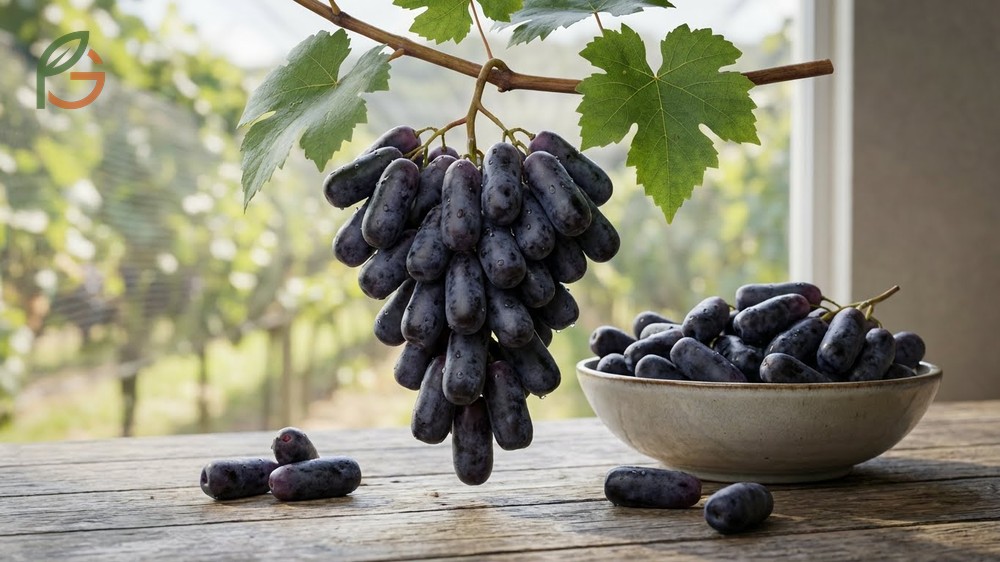
Moon Drop grapes deliver a distinctly sweeter flavor compared to standard black grape varieties[1]. The taste profile balances concentrated sweetness with subtle tannins, creating a pleasant sweet-tart complexity that prevents the flavor from becoming cloying. This makes them ideal for fresh eating as a specialty table grape.
The extended field time under protective covering allows sugars to concentrate naturally. Unlike some ultra-sweet grape varieties that taste one-dimensional, Moon Drops maintain depth of flavor through their tannin content.
Taste Characteristics
The flavor intensity of Moon Drop grapes comes from their prolonged ripening period in the field. Research shows that protecting ripening grapes from rain while leaving them on the vine longer develops more concentrated sugars without compromising the grape’s natural acid balance.
The seedless flesh contains more juice than you might expect from such a firm grape. When you bite into a Moon Drop, the crisp skin gives way to aqueous flesh that releases flavor immediately.
- Sweeter than conventional black grape varieties
- Balanced sweet-tart profile from natural tannins
- Concentrated sugar content from extended ripening
- Pleasant flavor complexity, not one-dimensional sweetness
- Seedless with aqueous, juicy flesh
- Clean finish without bitter aftertaste
Eating Experience
The eating experience of Moon Drop grapes centers on their exceptional texture. The firm, crisp flesh produces an audible snap when bitten, similar to biting into a fresh snap pea. This textural quality remains consistent even as the grapes approach full ripeness.
The semi-thick skin provides structure without being tough or bitter. Most people eat Moon Drop grapes whole, as the skin integrates well with the flesh and contributes to the overall flavor profile. The dimpled end may occasionally show slight softening as grapes age, serving as a freshness indicator.
Storage Tip: Moon Drop grapes maintain their signature snap texture best when stored unwashed in the refrigerator crisper drawer. They’ll stay fresh for 7-10 days if kept at 32-35°F with high humidity.
Season and Availability
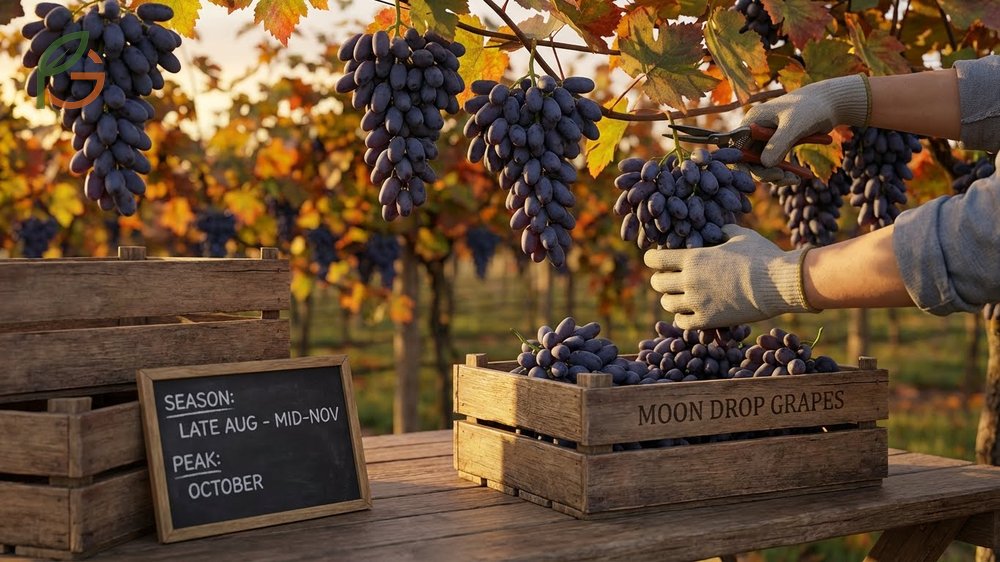
Moon Drop grapes have a limited seasonal window, available from late August through mid-November[2]. The relatively short season of just a few weeks makes them a sought-after specialty item during fall months. Most consumers start seeing them in grocery stores by early October, with peak availability running through late October.
The limited availability stems from the careful harvest practices required. Grapes are harvested in stages and only picked when they’ve reached optimal maturity[1]. This staged approach ensures consistent quality but restricts the total volume available at any given time.
Harvest Timing
Harvest timing for Moon Drop grapes depends on achieving peak flavor development. The protective plastic covering used during cultivation allows growers to leave fruit on the vine longer than conventional varieties, concentrating sugars without risking rain damage.
Growers monitor sugar levels, acid balance, and flavor development closely before authorizing harvest. Each section of the vineyard may be harvested at different times based on microclimate variations and ripeness levels. This precision harvesting contributes to the consistent quality Moon Drops are known for.
Where to Find Them
Moon Drop grapes appear primarily in specialty grocery stores and upscale supermarket chains during their brief season. Major retailers that stock specialty produce typically carry them, though availability varies by region and store location.
Online retailers occasionally offer Moon Drop grapes during peak season, though shipping delicate fresh fruit can be challenging. If you’re hunting for them, call ahead to specialty produce markets in September and October to check current stock. The grapes are sold fresh as a premium table grape and command higher prices than conventional varieties.
- Season runs late August through mid-November
- Peak availability occurs in October
- Found primarily in specialty grocery stores
- Limited supply due to staged harvest practices
- Higher price point than conventional grapes
- Brief seasonal window of just a few weeks
Nutritional Value and Health Benefits
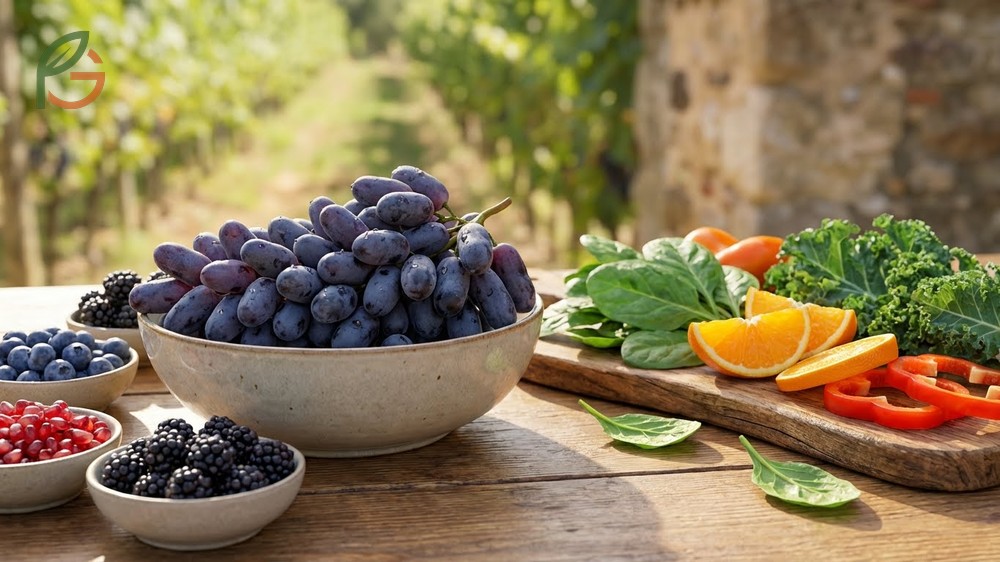
Moon Drop grapes contain similar nutritional compounds to other grape varieties, though specific nutritional studies on this particular cultivar haven’t been published. Like other dark-skinned grapes, they provide vitamin C to support immune function, vitamin K for blood clotting, and vitamin A for organ health[1]. The dark purple pigmentation indicates high levels of beneficial plant compounds.
Research shows dark grapes contain significant amounts of antioxidants including resveratrol, flavonoids, and anthocyanins. These compounds help protect cells from oxidative damage caused by free radicals. Moon Drop grapes also provide minerals such as potassium for fluid balance and smaller amounts of copper and manganese[1].
The fiber content in grapes supports digestive health, while the natural sugars provide quick energy. The seedless nature makes them convenient for snacking without compromising nutritional value. Evidence suggests regular grape consumption may support heart health and provide anti-inflammatory benefits, though individual results vary.
- Rich in antioxidants including resveratrol and anthocyanins
- Contains vitamin C for immune system support
- Provides vitamin K for proper blood clotting
- Source of potassium for fluid balance
- Contains dietary fiber for digestive health
- Low in calories while providing natural energy
- Supplies copper and manganese in smaller amounts
Growing Conditions and Requirements
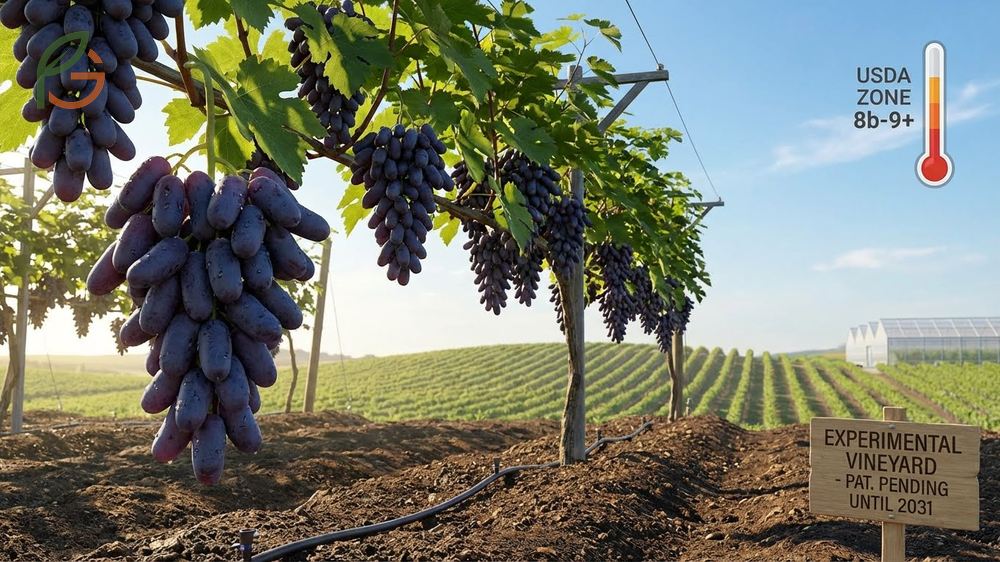
While home cultivation of Moon Drop grapes remains prohibited due to patent restrictions through 2031, understanding their growing requirements helps explain their limited seasonal availability. These grapes require adequate sunlight exposure, well-draining fertile soil, and careful water management throughout the growing season. Current agricultural guidance shows they perform best in USDA hardiness zones 8b through 9 and warmer.
The vines need support structures for proper growth and fruit production. Disease resistance is generally good, with tolerance to powdery mildew and certain nematodes reducing the need for intensive pesticide applications. The variety typically shows high productivity when grown under optimal conditions.
Proper drainage is critical—while the vines require consistent water during active growth, the root system must avoid waterlogged conditions. The protective plastic covering used commercially isn’t just for rain protection; it also helps regulate temperature and humidity around developing fruit clusters.
- Requires full sunlight exposure for optimal ripening
- Needs well-draining, fertile soil conditions
- Grows best in USDA zones 8b-9 and warmer
- Requires support structures for vine training
- Shows good resistance to powdery mildew
- Demands careful water management and drainage
- Benefits from rain protection during ripening
Legal Notice: Moon Drop grapes are protected by patent through June 2031. Growing them at home, even from cuttings for personal use, violates intellectual property rights. IFG maintains a global legal team that actively enforces their varietal patents.
Conclusion
The evidence is clear: Moon Drop grapes represent a significant achievement in traditional grape breeding, offering consumers a unique combination of distinctive elongated shape, concentrated sweetness, and exceptional snap texture. Their limited late-summer availability from August through November makes them a prized specialty variety worth seeking out during peak season.
Current agricultural practices emphasize quality over quantity with Moon Drop production, using protective cultivation methods and staged harvesting to ensure consistent flavor development. For fruit enthusiasts and home gardeners, understanding specialty varieties like Moon Drops deepens appreciation for the careful breeding work that brings new flavors to market. FruitGarden continues to track emerging grape varieties and cultivation techniques as they develop.
Frequently Asked Questions
What makes Moon Drop grapes different from regular grapes?
Moon Drop grapes feature a distinctly elongated, cylindrical shape that’s 3-4 cm long compared to round or oval conventional grapes. They’re sweeter than standard black varieties, with a unique snap-like texture and balanced tannins that create a pleasant sweet-tart flavor profile not found in regular table grapes.
When are Moon Drop grapes in season?
Moon Drop grapes are available from late August through mid-November, with peak availability occurring in October. The season lasts only a few weeks due to the staged harvesting approach used to ensure optimal ripeness and flavor development at picking time.
Can I grow Moon Drop grapes in my backyard?
No, Moon Drop grapes are protected by patent through June 2031, making it illegal to grow them even for personal home use. International Fruit Genetics maintains strict licensing controls and actively enforces their intellectual property rights with a global legal team.
Are Moon Drop grapes genetically modified?
No, Moon Drop grapes are not genetically modified. They were created through traditional hand-pollination cross-breeding between two parent varieties, using a technique called embryo rescue to develop the seedless trait. The distinctive shape and color resulted entirely from natural breeding selection.
What do Moon Drop grapes taste like?
Moon Drop grapes taste sweeter than conventional black grapes, with concentrated natural sugars balanced by subtle tannins. The flavor is complex rather than one-dimensionally sweet, with a clean finish and no bitter aftertaste. The crisp, juicy flesh releases flavor immediately when bitten.
Where can I buy Moon Drop grapes?
Moon Drop grapes are sold primarily through specialty grocery stores and upscale supermarket chains during their late summer and fall season. Availability varies by region, so calling ahead to produce departments in September and October increases your chances of finding them in stock.
How should I store Moon Drop grapes?
Store Moon Drop grapes unwashed in your refrigerator’s crisper drawer at 32-35°F with high humidity. They’ll maintain their signature snap texture for 7-10 days. Don’t wash them until you’re ready to eat, as removing the natural bloom coating too early shortens shelf life.





